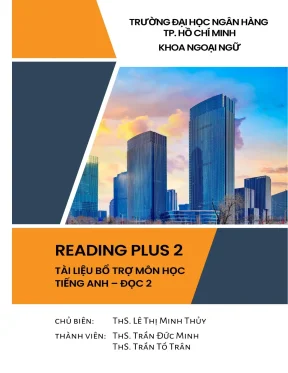
Tài Liệu Học Tiếng Anh Đọc 2 – Reading Plus 2
Tổng quan về giáo trình
Tài Liệu Học Tiếng Anh Đọc 2 – Reading Plus 2 là tài liệu bổ trợ học tập (supplementary resource book) được biên soạn bởi nhóm ba giảng viên dành riêng cho sinh viên chuyên ngành Tiếng Anh Thương mại (Business English) tại Trường Đại học Ngân hàng Thành phố Hồ Chí Minh (HCM University of Banking). Trong chương trình đào tạo, tài liệu này được thiết kế để sử dụng song hành cùng giáo trình chính Q Skills for Success 2: Reading & Writing, phục vụ trực tiếp cho học phần Tiếng Anh Đọc 2 (Reading 2).
Mục tiêu học tập của tài liệu tập trung vào việc củng cố và nâng cao năng lực đọc hiểu văn bản học thuật và chuyên ngành ở trình độ B2 theo Khung tham chiếu trình độ ngôn ngữ chung Châu Âu (CEFR). Thông qua hệ thống ngữ liệu kinh tế, tài liệu hỗ trợ người học mở rộng vốn từ vựng chuyên ngành, nắm bắt cấu trúc ngữ pháp nâng cao, đồng thời xây dựng hệ thống kiến thức nền tảng về môi trường kinh doanh quốc tế.
Về cấu trúc và cách tiếp cận, Reading Plus 2 bao gồm 8 đơn vị bài học (units) theo các chủ đề chuyên sâu của ngành kinh tế. Mỗi bài học được tổ chức theo quy trình sư phạm chặt chẽ: giới thiệu chiến lược đọc trọng tâm (Reading strategy), hệ thống bài tập từ vựng chuẩn bị (Vocabulary practice), các bài đọc phân tầng độ khó (từ mức độ một sao * đến ba sao ***) kèm hệ thống câu hỏi kiểm tra đọc hiểu, và hướng dẫn từng bước thực hiện dạng bài (Action plans).
Điểm đặc trưng của tài liệu là định hướng chuyên biệt hóa ngữ cảnh thương mại (business-focused context). Trong khi giáo trình chính cung cấp các chủ đề mang tính tổng quát, Reading Plus 2 đi sâu vào các tình huống thực tế của doanh nghiệp, giúp sinh viên tiếp cận các báo cáo nghiên cứu thị trường, dữ liệu phân tích và các nghiên cứu trường hợp (case studies) từ các tập đoàn toàn cầu.
+-----------------------------------------------------------------------------------+
|                        TỔNG QUAN TÀI LIỆU READING PLUS 2                          |
+----------------------+------------------------------------------------------------+
| Đơn vị đào tạo       | Trường Đại học Ngân hàng TP.HCM (HCM University of Banking)|
| Chuyên ngành         | Tiếng Anh Thương mại (Business English)                    |
| Học phần             | Tiếng Anh Đọc 2 (Reading 2)                                |
| Giáo trình chính     | Q Skills for Success 2: Reading & Writing                  |
| Trình độ mục tiêu    | B2 (CEFR)                                                  |
| Cấu trúc tổng thể    | 8 Units theo chủ đề chuyên ngành + Đáp án (Answer Keys)    |
| Tác giả              | Nhóm 3 giảng viên chuyên ngữ                               |
+----------------------+------------------------------------------------------------+
Nội dung kiến thức cốt lõi
Các chương và chủ đề chính
Tài liệu bao gồm 8 bài học theo chủ đề, trong đó các chương trọng tâm được triển khai với hệ thống ngữ liệu và bài tập chi tiết:
+-----------------------------------------------------------------------------------------+
|                    CẤU TRÚC CÁC CHỦ ĐỀ CHÍNH TRONG TÀI LIỆU                             |
+--------+----------------------------+---------------------------------------------------+
| Unit   | Chủ đề                     | Trọng tâm bài đọc & Nghiên cứu trường hợp         |
+--------+----------------------------+---------------------------------------------------+
| Unit 1 | Communication              | Mô hình cộng tác (HBR), Chatbot AI, Nonverbal     |
|        | (Giao tiếp doanh nghiệp)   | communication, Thư điện tử (Email dynamics)       |
+--------+----------------------------+---------------------------------------------------+
| Unit 2 | International Marketing    | 5 xu hướng tiếp thị số, Social marketing tools    |
|        | (Tiếp thị quốc tế)         | (Revinate, Radian6), Case Tod's Group & Shell Oil |
+--------+----------------------------+---------------------------------------------------+
| Unit 3 | Mergers & Acquisitions     | Bản chất & rủi ro M&A, Chiến lược tích hợp        |
|        | (Mua bán và Sáp nhập)      | Dixons Carphone, Xung đột quyền lực (Egos)        |
+--------+----------------------------+---------------------------------------------------+
| Unit 4 | Advertising                | Quảng cáo đa kênh, Tài trợ, Đặt sản phẩm          |
|        | (Quảng cáo thương mại)     | (Product placement), Tương tác số (Red Bull)      |
+--------+----------------------------+---------------------------------------------------+
| Unit 5 | Crisis Management          | Quản trị và xử lý khủng hoảng truyền thông        |
+--------+----------------------------+---------------------------------------------------+
| Unit 6 | Management Style           | Các phong cách quản trị và lãnh đạo tổ chức       |
+--------+----------------------------+---------------------------------------------------+
| Unit 7 | Social Entrepreneurship    | Doanh nghiệp xã hội và giá trị cộng đồng          |
+--------+----------------------------+---------------------------------------------------+
- Unit 1 – Communication (Giao tiếp): Khảo sát các hình thức truyền thông nội bộ và đối ngoại trong doanh nghiệp. Bài đọc phân tích cơ chế hợp tác hiệu quả dựa trên nghiên cứu của Harvard Business Review, ứng dụng công nghệ trí tuệ nhân tạo (AI Chatbots) trong tối ưu hóa dịch vụ khách hàng 24/7, sáu tín hiệu giao tiếp phi ngôn ngữ (nonverbal cues: nét mặt, ánh mắt, giọng nói, cử chỉ, trang phục, xúc giác, không gian - thời gian), và các rủi ro pháp lý - hành vi khi sử dụng thư điện tử (email) tại nơi làm việc.
- Unit 2 – International Marketing (Tiếp thị quốc tế): Tập trung vào năm xu hướng tiếp thị số gồm mua sắm qua mạng xã hội (Instagram, Pinterest), trải nghiệm khách hàng theo khảo sát của PricewaterhouseCoopers (PwC), cá nhân hóa dữ liệu, nội dung video tương tác và tối ưu hóa công cụ tìm kiếm (SEO). Bài học cũng phân tích các công cụ giám sát mạng xã hội chuyên biệt như Revinate, ScanBuzz, Radian6, chiến lược định vị thương hiệu xa xỉ của Tod’s Group và dự án nghiên cứu 55.000 người tiêu dùng của Shell Oil.
- Unit 3 – Mergers and Acquisitions (Mua bán và Sáp nhập): Phân tích các hình thức liên doanh (Joint venture), sáp nhập (Merger) và thâu tóm (Acquisition). Nội dung đề cập đến tỷ lệ thất bại hơn 70% của các thương vụ M&A, nghiên cứu của Delaney School of Business và Cass Business School, trường hợp tích hợp cơ sở hạ tầng giữa Dixons Retail và Carphone Warehouse, cùng các yếu tố tâm lý lãnh đạo (executive ego) trong các thương vụ lịch sử như GlaxoWellcome – SmithKline Beecham, Volvo – Renault, Novartis (Ciba – Sandoz) và thương vụ $250 tỷ giữa Exxon và Mobil.
- Unit 4 – Advertising (Quảng cáo): Khám phá sự chuyển dịch từ quảng cáo truyền thông truyền thống sang tiếp thị tương tác (engagement marketing). Các nội dung nghiên cứu bao gồm chiến lược nhận diện thương hiệu logo (Nike, Gucci, Louis Vuitton), tài trợ chương trình truyền hình (American Idol và Coca-Cola), đặt sản phẩm trong điện ảnh (Ford trong phim Casino Royale), và sản xuất nội dung thể thao mạo hiểm trên kênh YouTube của Red Bull.
- Unit 5 – Crisis Management (Quản trị khủng hoảng), Unit 6 – Management Style (Phong cách quản trị), Unit 7 – Social Entrepreneurship (Doanh nghiệp xã hội): Tiếp tục phát triển các chủ đề quản trị nâng cao, hoàn thiện khung kiến thức kinh doanh toàn diện cho người học.
Logic phát triển nội dung của tài liệu đi từ cấp độ vi mô (kỹ năng giao tiếp cá nhân và đội nhóm) đến cấp độ chiến lược chức năng (tiếp thị, quảng cáo), mở rộng sang cấp độ chiến lược doanh nghiệp vĩ mô (tái cấu trúc M&A, xử lý khủng hoảng và định hình mô hình kinh doanh).
Kiến thức nền tảng được xây dựng
Tài liệu cung cấp nền tảng lý thuyết và thuật ngữ gắn liền với các nguyên lý kinh tế học và quản trị kinh doanh hiện đại:
- Hành vi tổ chức và quản trị nhân sự: Khái niệm lãnh đạo linh hoạt (task-focused và relationship-oriented leadership), văn hóa hợp tác nội bộ, rào cản giao tiếp đa văn hóa và tác động tâm lý học hành vi của nhà quản trị cấp cao trong quá trình tích hợp văn hóa doanh nghiệp.
- Nguyên lý tiếp thị và phân khúc thị trường: Mô hình phân khúc khách hàng mục tiêu (ví dụ: nhóm Premium Speeders, Simplicity Seekers, Safety Firsters trong nghiên cứu của Shell Oil), khái niệm tiếp thị phản hồi xã hội (socially-reactive marketing), và ranh giới chiến lược giữa sản phẩm thời trang đại chúng và hàng hóa xa xỉ (fashion company vs. luxury-goods company).
- Kinh tế học tài chính doanh nghiệp: Cơ chế sáp nhập qua hoán đổi cổ phiếu (stock swap deal), hiệu quả kinh tế nhờ quy mô (economies of scale), hiệp lực kinh doanh (synergies), đa dạng hóa danh mục đầu tư (diversification), và biện pháp phòng vệ thâu tóm thù địch (poison pill).
Kỹ năng phát triển
- Kỹ thuật đọc học thuật chuyên sâu (Academic Reading Skills):
- Identifying the main ideas: Xác định ý chính thông qua tiêu đề, kỹ thuật đọc lướt (skimming) và nhận diện câu chủ đề (topic sentence).
- Previewing a text: Xem trước cấu trúc văn bản qua tiêu đề phụ, hình ảnh minh họa, đoạn mở đầu và đoạn kết luận để định hình nội dung.
- Taking notes: Ghi chú ngắn gọn ngoài lề (margins), gạch chân dữ kiện quan trọng (facts, figures, proper names) và tập trung vào các từ mang nội dung (content words).
- Distinguishing facts from opinions: Phân biệt giữa dữ kiện khách quan có thể kiểm chứng và nhận định chủ quan của tác giả.
- Kỹ năng phân tích ngôn ngữ thương mại: Nhận diện và xử lý các cụm từ cố định (collocations) chuyên ngành kinh tế, thành ngữ kinh doanh, phép ẩn dụ quân sự và săn bắt trong thương trường (on the prowl, surprise attack, campaign, casualties, strongholds).
- Năng lực xử lý dữ liệu và đánh giá logic: Khả năng đối chiếu dữ liệu khảo sát, liên kết thông tin giữa các đoạn văn để giải quyết các dạng bài kiểm tra học thuật phức tạp.
Phương pháp giảng dạy và học tập
Tiếp cận sư phạm (Pedagogical Approach)
Tài liệu áp dụng phương pháp giảng dạy ngôn ngữ tích hợp nội dung chuyên ngành (Content-Based Instruction - CBI). Quy trình tiếp cận được thiết kế theo hướng phát triển kỹ năng từng bước: cung cấp ngữ liệu từ vựng trước (input vocabulary), định hướng chiến lược xử lý văn bản (reading strategies), sau đó đưa người học vào trải nghiệm văn bản chuyên ngành đa tầng và đánh giá mức độ tiếp thu qua hệ thống câu hỏi tương thích.
+-----------------------------------------------------------------------------------+
|                        TIẾN TRÌNH HỌC TẬP KHUYẾN NGHỊ                             |
|                                                                                   |
|   [Bước 1: Vocabulary Practice]                                                   |
|   Hoàn thành bài tập từ vựng để xây dựng kiến thức nền về tình huống kinh doanh   |
|                               |                                                   |
|                               v                                                   |
|   [Bước 2: Reading Strategy & Practice]                                           |
|   Áp dụng chiến lược đọc (Skimming, Scanning, Note-taking) vào bài đọc (*, **, ***) |
|                               |                                                   |
|                               v                                                   |
|   [Bước 3: Comprehension & Verification]                                          |
|   Hoàn thành bài tập đọc hiểu và đối chiếu kết quả với Đáp án (Answer Keys)       |
+-----------------------------------------------------------------------------------+
Hệ thống bài tập và nghiên cứu trường hợp (Practical Exercises & Case Studies)
Hệ thống bài tập trong giáo trình được xây dựng đa dạng, tương thích với định dạng các bài thi năng lực học thuật quốc tế:
- Bài tập từ vựng: Nối từ với định nghĩa (matching definitions), hoàn thành câu theo dạng thức từ (word forms), chọn từ điền vào văn bản tóm tắt, và ghép cụm từ cố định (word partnerships).
- Bài tập đọc hiểu:
- Xác định tính đúng - sai - không có trong bài (True / False / Not Given).
- Câu hỏi trắc nghiệm nhiều lựa chọn (Multiple choice questions).
- Nối tiêu đề đoạn văn (Matching headings) và nối đặc điểm thông tin (Matching features).
- Hoàn thành câu và hoàn thành văn bản tóm tắt có giới hạn số lượng từ (NO MORE THAN TWO WORDS).
- Nghiên cứu trường hợp thực tế: Tài liệu đưa các tình huống kinh doanh có thật vào bài đọc, bao gồm thương vụ sáp nhập giữa Dixons và Carphone Warehouse, chiến lược mở rộng toàn cầu của thương hiệu Tod's Group, và quy trình nghiên cứu hành vi khách hàng của Shell Oil Products.
Hướng dẫn tự học và đánh giá (Assessment & Self-Study Guidelines)
Giáo trình đi kèm các khung hướng dẫn hành động (Action Plans) cụ thể cho từng dạng câu hỏi, giúp sinh viên tự rèn luyện phương pháp làm bài:
- Đối với dạng True / False / Not Given: Gạch chân từ khóa trong câu nhận định, quét văn bản (scan) để tìm vị trí thông tin, đọc kỹ câu chứa từ khóa và đối chiếu tính logic.
- Đối với dạng Matching Headings: Đọc danh sách tiêu đề, gạch chân từ khóa, đọc lướt đoạn văn để nắm ý chính toàn cục và chọn tiêu đề bao quát chính xác nhất.
- Đối với dạng Summary / Sentence Completion: Xác định giới hạn từ cho phép, phân tích cấu trúc ngữ pháp và từ loại cần điền, quét từ khóa trong bài và kiểm tra lại tính chính xác về ngữ pháp, chính tả của đáp án.
Cuối tài liệu có hệ thống đáp án chi tiết (Answer Keys) hỗ trợ sinh viên tự kiểm tra, đánh giá kết quả sau mỗi bài học.
Điểm nổi bật và cập nhật
Tích hợp dữ liệu nghiên cứu và thực tiễn ngành
Khác với các tài liệu luyện đọc tổng quát, Reading Plus 2 cập nhật các nguồn ngữ liệu chất lượng cao từ các tổ chức nghiên cứu và cơ quan báo chí kinh tế uy tín trên thế giới:
- Báo cáo nghiên cứu quản trị từ Harvard Business Review về phong cách lãnh đạo trong các nhóm đổi mới sáng tạo.
- Khảo sát hành vi tiêu dùng số và trải nghiệm khách hàng từ tập đoàn kiểm toán PricewaterhouseCoopers (PwC) và tạp chí Forbes.
- Các nghiên cứu về tỷ lệ thành công của các thương vụ sáp nhập từ Cass Business School và European Business School.
+-----------------------------------------------------------------------------------+
|               DỮ LIỆU THỰC TIỄN & NGUỒN NGHIÊN CỨU TRONG TÀI LIỆU                 |
+--------------------------+--------------------------------------------------------+
| Nguồn trích dẫn / Đơn vị | Dữ liệu / Trọng tâm nghiên cứu                         |
+--------------------------+--------------------------------------------------------+
| Harvard Business Review  | Lãnh đạo linh hoạt và hiệu quả làm việc nhóm           |
| PricewaterhouseCoopers   | 73% người tiêu dùng coi trọng trải nghiệm khách hàng   |
| Forbes Reports           | Tỷ lệ mua sắm qua Instagram (72%) và nội dung video    |
| Cass Business School     | Tầm quan trọng của định hướng chiến lược và truyền thông|
| European Business School | Tác động tâm lý học quản trị trong các vụ sáp nhập     |
+--------------------------+--------------------------------------------------------+
Cập nhật các xu hướng công nghệ và kinh doanh hiện đại
Tài liệu phản ánh trực tiếp sự phát triển của công nghệ và tác động của nó đối với môi trường thương mại quốc tế:
- Trí tuệ nhân tạo và xử lý ngôn ngữ tự nhiên: Phân tích ứng dụng của học sâu (deep learning) và AI trong việc phát triển hệ thống trợ lý ảo/chatbot xử lý khối lượng lớn tương tác khách hàng trong các ngành bán lẻ, du lịch, viễn thông và dịch vụ tài chính.
- Nền tảng số và công cụ quản trị: Tích hợp việc sử dụng các phần mềm cộng tác doanh nghiệp hiện đại như Microsoft Teams, Slack, ứng dụng nhắn tin tức thời (WhatsApp, LINE), cùng các công cụ lắng nghe mạng xã hội chuyên ngành (social listening dashboards).
- Chiến lược tiếp thị kỹ thuật số: Phân tích vai trò của tối ưu hóa công cụ tìm kiếm (SEO), tiếp thị video trực tiếp (live video), và phương pháp tiếp thị phản hồi xã hội không xâm phạm quyền riêng tư.
Đối tượng sử dụng giáo trình
+-----------------------------------------------------------------------------------+
|                        ĐỐI TƯỢNG SỬ DỤNG VÀ YÊU CẦU ĐẦU VÀO                       |
+-------------------+---------------------------------------------------------------+
| Đối tượng chính   | Sinh viên chuyên ngành Tiếng Anh Thương mại (Học phần Đọc 2)  |
| Yêu cầu đầu vào   | Trình độ tương đương B1+ đến B2; hoàn thành học phần Đọc 1    |
| Giảng viên        | Sử dụng làm ngân hàng bài tập bổ trợ, chuẩn hóa giảng dạy     |
| Người tự học      | Học viên khối ngành Kinh tế - Tài chính cần luyện đọc B2      |
+-------------------+---------------------------------------------------------------+
- Sinh viên chuyên ngành Tiếng Anh Thương mại: Giáo trình được thiết kế chuyên biệt cho sinh viên theo học chuyên ngành Tiếng Anh Thương mại tại Trường Đại học Ngân hàng TP.HCM trong khuôn khổ học phần Tiếng Anh Đọc 2.
- Yêu cầu kiến thức tiên quyết (Prerequisites): Người học cần đạt năng lực tiếng Anh tổng quát ở trình độ tối thiểu B1+ đến B2 theo khung CEFR, đã hoàn thành học phần Tiếng Anh Đọc 1, và có hiểu biết cơ bản về các thuật ngữ kinh tế - kinh doanh căn bản.
- Giảng viên chuyên ngữ: Tài liệu đóng vai trò là khung tài liệu giảng dạy đồng bộ và ngân hàng bài tập tham khảo chuẩn hóa cho đội ngũ giảng viên phụ trách các lớp học phần Đọc 2, đảm bảo tính thống nhất về chủ đề và chuẩn đầu ra trong toàn bộ khóa đào tạo.
- Học viên tự học và nghiên cứu: Phù hợp làm tài liệu tham khảo cho sinh viên các khối ngành Kinh tế, Quản trị kinh doanh, Tài chính - Ngân hàng có nhu cầu nâng cao năng lực đọc hiểu tài liệu chuyên ngành bằng tiếng Anh và phát triển vốn từ vựng học thuật.
Câu hỏi thường gặp
1. Giáo trình này phù hợp với đối tượng người học nào?
Tài liệu được biên soạn phục vụ trực tiếp cho sinh viên chuyên ngành Tiếng Anh Thương mại tại Trường Đại học Ngân hàng TP.HCM đang theo học học phần Tiếng Anh Đọc 2, đồng thời phù hợp với người học tiếng Anh thương mại ở trình độ trung cao cấp (B2).
2. Cần kiến thức nền tảng nào trước khi sử dụng tài liệu?
Người học cần đạt trình độ tiếng Anh tương đương bậc 4/B2, nắm vững các cấu trúc ngữ pháp học thuật cơ bản và đã làm quen với các kỹ thuật đọc hiểu tổng quát từ học phần Tiếng Anh Đọc 1 hoặc các giáo trình tương đương như Q Skills for Success 1.
3. Điểm khác biệt cơ bản giữa tài liệu này và các giáo trình đọc tổng quát là gì?
Tài liệu tập trung hoàn toàn vào ngữ cảnh kinh tế và quản trị kinh doanh (Business focus), sử dụng dữ liệu thực tế từ các doanh nghiệp (Tod's Group, Shell Oil, Dixons Carphone) và các tổ chức nghiên cứu kinh tế, thay vì các chủ đề xã hội tổng quát thường gặp trong các giáo trình đọc đại trà.
4. Quy trình tự học tài liệu như thế nào để đạt hiệu quả cao nhất?
Người học nên thực hiện theo trình tự 3 bước:
- Hoàn thành phần Vocabulary Practice để nắm bắt thuật ngữ trước khi đọc.
- Áp dụng chiến lược đọc được hướng dẫn trong bài để xử lý bài đọc và trả lời câu hỏi theo Action Plan.
- Đối chiếu câu trả lời với phần Answer Keys ở cuối sách để kiểm tra và củng cố kiến thức.
5. Tài liệu này đi kèm và bổ trợ cho giáo trình chính khóa nào?
Tài liệu được thiết kế làm tài liệu bổ trợ chính thức cho giáo trình Q Skills for Success 2: Reading & Writing, bám sát các chủ đề tương ứng nhưng cung cấp ngữ cảnh kinh doanh chuyên sâu hơn cho sinh viên chuyên ngành.
Kết luận
Tài Liệu Học Tiếng Anh Đọc 2 – Reading Plus 2 là tài liệu bổ trợ học thuật có cấu trúc sư phạm chặt chẽ, kết hợp hài hòa giữa việc phát triển kỹ năng đọc học thuật chuẩn B2 và việc trang bị kiến thức chuyên sâu về quản trị kinh doanh, tiếp thị và tài chính quốc tế. Lộ trình học tập khuyến nghị cho sinh viên là kết hợp chặt chẽ việc học lý thuyết trên giáo trình chính Q Skills for Success 2 với việc thực hành các bài tập chuyên ngành trong tài liệu này, kết hợp tra cứu các từ điển chuyên dụng về kết hợp từ (như Oxford Collocations Dictionary, Longman Collocations Dictionary) để hoàn thiện năng lực ngôn ngữ thương mại.