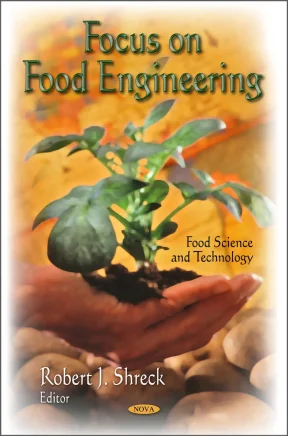
GIÁO TRÌNH KỸ THUẬT THỰC PHẨM: TẬP TRUNG VÀO KỸ THUẬT THỰC PHẨM (FOCUS ON FOOD ENGINEERING)
Tổng quan về giáo trình
Focus on Food Engineering là tài liệu chuyên khảo và giáo trình học thuật chuyên sâu thuộc bộ sách Food Science and Technology Series, do Robert J. Shreck chủ biên, được xuất bản bởi Nhà xuất bản Khoa học Nova (Nova Science Publishers, Inc., New York, ISBN: 978-1-61209-598-1, mã phân loại Thư viện Quốc hội Hoa Kỳ: TP370.F528 2011). Trong chương trình đào tạo bậc đại học và sau đại học ngành Công nghệ Thực phẩm, Kỹ thuật Thực phẩm và Kỹ thuật Sinh học, tài liệu này giữ vị trí cầu nối giữa các nguyên lý cơ bản của kỹ thuật quá trình và các ứng dụng công nghệ hiện đại.
Mục tiêu học tập của giáo trình là trang bị cho người học năng lực phân tích định lượng các hiện tượng cơ học, nhiệt, sinh học và cấu trúc vật liệu sinh học trong quá trình chế biến và bảo quản thực phẩm. Người học được tiếp cận với các phương pháp giải quyết vấn đề cốt lõi trong kỹ thuật thực phẩm hiện đại: phát triển sản phẩm mới, cải tiến chất lượng và an toàn thực phẩm, kiểm soát quá trình và tự động hóa.
Cấu trúc giáo trình bao gồm 11 chương chuyên đề độc lập nhưng liên kết chặt chẽ về mặt phương pháp luận, phản ánh toàn diện các chủ đề từ đặc tính cơ học của vật liệu sinh học, công nghệ màng bao sinh học, kỹ thuật chế biến áp suất cao (High Pressure Processing - HPP), công nghệ sấy phun, mô hình hóa số quá trình sấy đối lưu, chẩn đoán không phá hủy bằng chụp cắt lớp vi tính (Computed Tomography - CT), cho đến động học biến đổi lưu biến và sinh hóa trong chế biến phô mai và rau quả. Điểm đặc thù của tài liệu là sự kết hợp chặt chẽ giữa dữ liệu đo đạc thực nghiệm chính xác cao và các mô hình mô phỏng số học (như phương pháp phần tử hữu hạn FEM và mạng nơ-ron nhân tạo ANN).
Nội dung kiến thức cốt lõi
Các chương và chủ đề chính
Tài liệu được cấu trúc thành 11 chương chuyên môn sâu với tiến trình từ cơ học vật liệu thực phẩm, kỹ thuật bảo quản phi nhiệt, công nghệ sấy và vi bao, phương pháp chẩn đoán hình ảnh, đến mô hình hóa và biến đổi sinh hóa:
- Chương 1: Hành vi của trứng gà dưới tác dụng của tải trọng va đập (Behavior of Hen’s Eggs at Impact Loading - Šárka Nedomová và cộng sự): Khảo sát phản ứng động học và độ bền cơ học của vỏ trứng gà (giống Hisex Brown) thông qua kích thích va đập không phá hủy bằng bi thép kết hợp đo dao động laser (laser-vibrometer) và nén tĩnh/va đập động bằng thanh rơi tự do. Thiết lập mô hình giải tích biên dạng vỏ trứng theo chuỗi Fourier, tính toán bán kính cong và mô phỏng số biến dạng bằng phần tử hữu hạn 3D (mã nguồn LS-DYNA 3D) dựa trên giả định vật liệu đàn hồi tuyến tính đẳng hướng (mô đun Young $E$, hệ số Poisson $\nu$).
- Chương 2: Chiến lược kéo dài thời hạn bảo quản thực phẩm bằng màng ăn được kháng khuẩn (Strategies for Extending Shelf Life of Foods Using Antimicrobial Edible Films - Silvia K. Jagus và Karen J. Sanjurjo): Nghiên cứu phát triển màng bao hoạt tính phân hủy sinh học từ tinh bột sắn (tapioca starch) dẻo hóa bằng glycerol, bổ sung chất bảo quản kali sorbat (potassium sorbate - KS) hoặc nisin. Đánh giá ảnh hưởng của việc bổ sung dầu đậu nành, liên kết ngang bằng sodium trimetaphosphate đến cấu trúc tinh thể, độ hòa tan, đẳng nhiệt hấp phụ và khả năng ức chế vi sinh vật.
- Chương 3 & Chương 6: Phát triển công nghệ chế biến thực phẩm bằng áp suất cao (Developments in High-Pressure Food Processing - Carl J. Schaschke; High Pressure Processing of Meat, Meat Products and Seafood - Marco Campus): Cung cấp cơ sở nhiệt động học và động học của kỹ thuật HPP (áp suất lên đến hàng nghìn atmosphere). Phân tích hiện tượng biến tính protein, đông tụ albumin trứng không cần nhiệt, vô hoạt vi sinh vật gây bệnh và enzyme nội tại trên thịt, sản phẩm thịt chế biến sẵn và thủy hải sản, đáp ứng tiêu chuẩn an toàn của cơ quan quản lý (như USDA-FSIS).
- Chương 4: Sấy phun nước quả Açai (Spray Drying of Açai Juice - Renata V. Tonon, Catherine Brabet, Míriam D. Hubinger): Khảo sát công nghệ vi bao hoạt chất sinh học (anthocyanin) từ quả Açai (Euterpe oleracea Mart.) bằng thiết bị sấy phun. Sử dụng ma trận quy hoạch thực nghiệm trực giao tâm xoay (Central Composite Design) để đánh giá các thông số: nhiệt độ khí vào (140°C), lưu lượng nạp liệu (15 g/phút), tỷ lệ chất mang (6%) gồm maltodextrin 10DE, maltodextrin 20DE, gum Arabic và tinh bột sắn. Phân tích nhiệt độ chuyển dịch thủy tinh ($T_g$), hoạt độ nước ($a_w$) và độ suy giảm sắc tố theo nhiệt độ và độ ẩm bảo quản.
- Chương 5: Chụp cắt lớp vi tính trong khoa học thực phẩm (Computed Tomography in Food Science - Elena Fulladosa và cộng sự): Ứng dụng kỹ thuật chụp X-quang cắt lớp vi tính (CT) để phân tích không phá hủy sự khuếch tán muối và nước trong quy trình sản xuất giăm bông sấy khô (dry-cured ham) và phân loại thân thịt lợn (xác định tỷ lệ nạc, mỡ, xương dựa trên sự sai biệt mật độ quang sai).
- Chương 7: Mô hình hóa nâng cao quá trình sấy đối lưu thực phẩm (Advanced Modeling of Food Convective Drying - Stefano Curcio, Maria Aversa, Alessandra Saraceno): So sánh ba phương pháp mô hình hóa: mô hình dựa trên các định luật vật lý cơ bản (fundamental conservation laws), mô hình mạng nơ-ron nhân tạo (Artificial Neural Networks - ANN) và mô hình lai (hybrid modeling) nhằm dự đoán động học truyền nhiệt - truyền ẩm và hỗ trợ kiểm soát tự động thiết bị sấy.
- Chương 8, 9, 10, 11: Biến đổi lưu biến, công nghệ lên men và xử lý mô thực vật: Khảo sát khả năng chịu stress của vi khuẩn trong huyết thanh phô mai khi xử lý bằng chất kháng khuẩn tự nhiên (nisin, Microgard™, chiết xuất trà xanh); phân tích lưu biến phi tuyến (viscoelasticity) của phô mai cứng (Edam, Gouda, Brie) trong quá trình ủ chín bằng phép thử nén tĩnh và sóng xung kích; ứng dụng men dịch vị cừu (lamb rennet paste) kết hợp vi khuẩn probiotic (Lactobacillus acidophilus, Bifidobacterium) để giải phóng các đồng phân axit linoleic liên hợp (9c,11t-CLA, 9t,11t-CLA, 10t,12c-CLA); và ảnh hưởng của xử lý thẩm thấu, chiếu xạ gamma, chần đến enzyme, màu sắc và cấu trúc tế bào thực vật (dưa chuột, bí đỏ, củ dền, kiwi).
Kiến thức nền tảng được xây dựng
- Cơ học vật liệu sinh học và truyền sóng: Lý thuyết đàn hồi tuyến tính đẳng hướng, cơ học phá hủy vật liệu dưới tải trọng động, lý thuyết biến dạng nhớt đàn hồi phi tuyến (viscoelasticity), phép biến đổi Fourier nhanh (Fast Fourier Transform - FFT) để chuyển đổi tín hiệu phản hồi từ miền thời gian sang miền tần số, xác định hàm truyền $T(\omega)$:
$$T(\omega) = \frac{S(\omega){\text{Equator}}}{S(\omega){A0}}$$
- Nhiệt động lực học và truyền khối trong chế biến: Động học truyền nhiệt và tách ẩm trong sấy đối lưu, cân bằng ẩm thông qua đường đẳng nhiệt hấp phụ (sorption isotherms), trạng thái vô định hình và nhiệt độ chuyển dịch thủy tinh ($T_g$) của hệ bột thực phẩm vi bao.
- Cơ sở khoa học của công nghệ phi nhiệt và rào cản sinh học: Nguyên lý tác động của áp suất thủy tĩnh cao lên liên kết hydro và cấu trúc bậc ba, bậc bốn của protein mà không phá vỡ liên kết cộng hóa trị; động học vô hoạt vi khuẩn và bào tử; thuyết rào cản kết hợp (hurdle technology) giữa áp suất, chất kháng khuẩn tự nhiên và pH.
Kỹ năng phát triển
- Kỹ năng kỹ thuật: Thiết lập và vận hành các hệ thống đo lường thực nghiệm chuyên dụng như hệ đo laser-vibrometer không tiếp xúc, máy nén cơ học vật liệu (TIRATEST 27025), thiết bị sấy phun phòng thí nghiệm, hệ thống xử lý áp suất thủy tĩnh cao và hệ thống chụp cắt lớp vi tính phân tích mật độ mô.
- Kỹ năng phân tích và mô hình hóa: Xử lý và phân tích phổ tín hiệu dao động động học, lập trình và huấn luyện mạng nơ-ron nhân tạo (ANN) mô phỏng quá trình nhiệt, thiết lập điều kiện biên và lưới phần tử hữu hạn trong phần mềm mô phỏng kết cấu LS-DYNA 3D.
- Năng lực đánh giá thực nghiệm: Đánh giá định lượng các chỉ tiêu hóa lý, độ xốp, khối lượng riêng biểu kiến, hoạt độ nước, khả năng giữ nước (WHC), động học suy giảm hoạt chất sinh học và đánh giá cấu trúc mô tế bào thực vật sau xử lý bảo quản.
Phương pháp giảng dạy và học tập
Phương pháp tiếp cận sư phạm
Giáo trình áp dụng phương pháp tiếp cận sư phạm dựa trên bằng chứng thực nghiệm kết hợp mô hình hóa định lượng (evidence-based and modeling-driven approach). Thay vì chỉ liệt kê các quy trình công nghệ mô tả, mỗi chủ đề đều khởi đầu bằng việc phân tích cơ chế vật lý - hóa học cơ bản, thiết lập hệ thống phương trình chi phối hoặc thiết lập ma trận thực nghiệm, tiếp nối bằng phân tích dữ liệu đo đạc thực tế và thảo luận về tính ứng dụng trong công nghiệp.
Bài tập và nghiên cứu tình huống (Case Studies)
Tài liệu cung cấp các nghiên cứu tình huống thực nghiệm điển hình:
- Tình huống phân tích cơ học va đập vỏ trứng gà: Kiểm chứng giả thuyết về tính độc lập giữa hình dạng/độ dày vỏ và lực phá hủy cục bộ dưới tác động của thanh rơi, so sánh giữa nén tĩnh 2 trục (trục X dọc và trục Z ngang) và va đập động.
- Tình huống tối ưu hóa thông số sấy phun nước quả Açai: Xác định vùng vận hành tối ưu nhằm đạt hiệu suất thu hồi cao nhất và độ lưu giữ anthocyanin cực đại khi sử dụng chất mang maltodextrin 10DE so với maltodextrin 20DE và gum Arabic.
- Tình huống giám sát khuếch tán muối trong giăm bông sấy: Xây dựng mô hình tương quan giữa giá trị mật độ quang học trên ảnh CT và nồng độ muối/nước thực tế tại từng vị trí cắt lát của thân thịt.
Phương pháp đánh giá và tự học
Giảng viên có thể sử dụng giáo trình để thiết kế các hình thức đánh giá:
- Bài tập tính toán và mô phỏng: Yêu cầu người học giải các phương trình biên dạng vỏ trứng theo công thức Narushin hoặc chuỗi Fourier, tính toán bán kính cong $R$, hoặc xây dựng thuật toán hồi quy mạng nơ-ron nhân tạo dự đoán độ ẩm trong quá trình sấy.
- Đánh giá báo cáo phân tích dữ liệu: Giao dữ liệu thực nghiệm (phổ tần số dao động, đường cong lực - độ biến dạng, đường đẳng nhiệt hấp phụ) để người học xử lý thống kê, vẽ đồ thị và giải thích hiện tượng chuyển pha hoặc cơ chế phá hủy cấu trúc.
- Hướng dẫn tự học: Người học cần chủ động đọc tài liệu theo trình tự: nắm vững hệ thống ký hiệu và đơn vị đo $\rightarrow$ phân tích sơ đồ bố trí thí nghiệm $\rightarrow$ theo dõi các bước biến đổi toán học $\rightarrow$ đối chiếu kết quả mô phỏng với dữ liệu thực nghiệm được trình bày trong các bảng biểu và đồ thị.
Điểm nổi bật và cập nhật
- Tích hợp kỹ thuật chẩn đoán không phá hủy tiên tiến: Giới thiệu các phương pháp đo lường hiện đại như phân tích cộng hưởng âm học (acoustic resonance analysis), cảm biến đo vận tốc dao động bằng laser (laser vibrometry) và chụp cắt lớp vi tính (CT). Các phương pháp này khắc phục nhược điểm của các phép thử phá hủy mẫu truyền thống.
- Ứng dụng công nghệ xử lý phi nhiệt (HPP): Cập nhật toàn diện cơ chế khử khuẩn và biến tính protein dưới áp suất thủy tĩnh cao (lên đến trên 10.000 atm), phân tích khả năng giữ nguyên các hợp chất mẫn cảm với nhiệt như đường, vitamin, lipid và sắc tố tự nhiên.
- Mô hình hóa thông minh bằng trí tuệ nhân tạo: Đưa phương pháp mạng nơ-ron nhân tạo (ANN) và mô hình lai (Hybrid Modeling) vào phân tích quá trình sấy đối lưu công nghiệp, cung cấp công cụ dự báo chính xác động thái hệ thống khi chịu các nhiễu loạn bên ngoài.
- Phát triển bao bì sinh học và hoạt chất tự nhiên: Nghiên cứu cấu trúc màng ăn được từ tinh bột sắn liên kết ngang bổ sung nisin/kali sorbat và men rennet cừu truyền thống bổ sung chủng vi khuẩn sinh học (L. acidophilus, Bifidobacterium lactis/longum) nhằm thúc đẩy quá trình sinh tổng hợp các đồng phân axit béo có lợi (CLA).
Đối tượng sử dụng giáo trình
| Đối tượng |
Mục đích sử dụng |
Yêu cầu kiến thức tiên quyết (Prerequisites) |
| Sinh viên đại học (Năm 3, Năm 4) |
Học phần Kỹ thuật Thực phẩm, Cơ học Vật liệu Thực phẩm, Quá trình & Thiết bị Chế biến |
Toán giải tích, Vật lý đại cương, Cơ học lưu chất, Động học truyền nhiệt và truyền khối |
| Học viên cao học & Nghiên cứu sinh |
Nghiên cứu chuyên đề Mô hình hóa quá trình, Công nghệ chế biến phi nhiệt, Phương pháp phân tích cấu trúc thực phẩm |
Toán ứng dụng, Hóa sinh thực phẩm nâng cao, Vi sinh vật học thực phẩm, Phương pháp phần tử hữu hạn |
| Giảng viên & Nhà nghiên cứu |
Biên soạn bài giảng chuyên sâu, thiết kế đề tài thí nghiệm, tham khảo các quy trình mô phỏng số |
Kinh nghiệm thực nghiệm phòng thí nghiệm và lập trình tính toán kỹ thuật |
| Kỹ sư R&D và Chuyên viên công nghệ |
Tra cứu thông số quy trình (sấy phun, HPP, bảo quản màng sinh học), tối ưu hóa dây chuyền công nghiệp |
Kiến thức về quy chuẩn an toàn thực phẩm (USDA-FSIS, HACCP) và vận hành thiết bị |
Câu hỏi thường gặp (FAQ)
1. Giáo trình này phù hợp với học phần nào trong chương trình đào tạo?
Tài liệu phù hợp cho các học phần chuyên ngành và chuyên đề nâng cao ở bậc đại học năm cuối và sau đại học, bao gồm: Kỹ thuật Thực phẩm Nâng cao, Cơ học Vật liệu Sinh học, Mô hình hóa và Mô phỏng Quá trình Chế biến Thực phẩm, và Các Công nghệ Chế biến Thực phẩm Mới.
2. Người học cần chuẩn bị kiến thức nền tảng gì trước khi nghiên cứu giáo trình?
Cần nắm vững toán học kỹ thuật (phương trình vi phân, đại số tuyến tính, phép biến đổi Fourier), các nguyên lý truyền nhiệt - truyền khối, nhiệt động lực học, cơ học biến dạng vật chất và kiến thức cơ sở về hóa sinh/vi sinh thực phẩm.
3. Điểm khác biệt của giáo trình này so với các tài liệu kỹ thuật thực phẩm truyền thống là gì?
Các tài liệu truyền thống thường tập trung chủ yếu vào các phép tính toán thiết bị nhiệt cơ bản (như tiệt trùng Pasteur, bay hơi, làm lạnh). Giáo trình này tập trung vào các phương pháp phân tích phi nhiệt (HPP), đo lường quang học/dao động không phá hủy (Laser, CT), kỹ thuật vi bao hoạt chất sinh học và các công cụ mô phỏng số học hiện đại (LS-DYNA 3D, ANN).
4. Làm thế nào để khai thác hiệu quả các mô hình toán học trong tài liệu?
Người học nên phân tích các phương trình giải tích kết hợp với các bảng thông số thực nghiệm đi kèm trong từng chương (ví dụ: các hệ số chuỗi Fourier mô tả biên dạng, mô đun đàn hồi $E$, hệ số Poisson $\nu$), sau đó sử dụng các công cụ tính toán số (như MATLAB hoặc phần mềm phần tử hữu hạn) để tái lập lại các kết quả mô phỏng.
5. Dữ liệu thực nghiệm trong sách có thể ứng dụng trực tiếp vào sản xuất công nghiệp không?
Có. Các dữ liệu như điều kiện sấy phun nước quả Açai (nhiệt độ 140°C, lưu lượng 15 g/phút), các ngưỡng áp suất khử khuẩn HPP trên thịt và thủy sản đáp ứng quy định kiểm định của USDA-FSIS, và quy trình bổ sung men vi sinh vào lamb rennet paste đều là kết quả nghiên cứu ứng dụng có giá trị tham chiếu trực tiếp cho các kỹ sư công nghệ.
Kết luận
Focus on Food Engineering (Robert J. Shreck chủ biên) là tài liệu học thuật cung cấp các nghiên cứu chuyên sâu và giải pháp kỹ thuật định lượng trong lĩnh vực công nghệ thực phẩm hiện đại. Lộ trình học tập khuyến nghị là tiếp cận từ việc phân tích đặc tính cơ lý và cấu trúc của nguyên liệu sinh học, nắm vững các công nghệ chế biến nhiệt/phi nhiệt tiên tiến, và tiến tới làm chủ các công cụ mô hình hóa số và chẩn đoán không phá hủy. Để mở rộng kiến thức, người học có thể tham khảo thêm các chuyên khảo liên quan trong bộ sách Food Science and Technology Series do Nova Science Publishers phát hành.