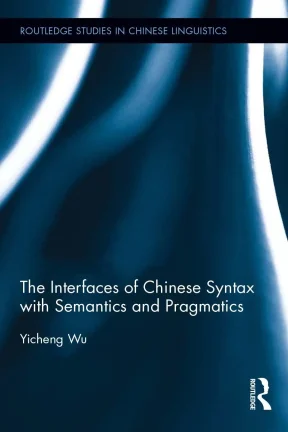
Giao diện Ngữ pháp, Ngữ nghĩa và Ngữ dụng Tiếng Trung - Yicheng Wu

Trường đại học

Đại học Chiết Giang

Chuyên ngành

Ngôn ngữ học

Người đăng

Ẩn danh

Thể loại

Sách học thuật

2017

231
0
0

Phí lưu trữ

55 Point

Tóm tắt

I. Tổng quan về giao diện cú pháp ngữ nghĩa ngữ dụng tiếng Trung

Các giao diện cú pháp tiếng Trung với ngữ nghĩa và ngữ dụng học là lĩnh vực nghiên cứu khám phá mối quan hệ phức tạp giữa cấu trúc ngôn ngữ, ý nghĩa và bối cảnh sử dụng. Tiếng Trung thuộc loại ngôn ngữ không có hình thái biến đổi, nơi thứ tự từ đóng vai trò quyết định trong việc diễn giải ý nghĩa và xác định chức năng ngữ pháp. Phương pháp tiếp cận Dynamic Syntax (Cú pháp động) cung cấp một khung lý thuyết mạnh mẽ để phân tích hiện tượng giao diện này. Theo cách tiếp cận này, quá trình xử lý ngôn ngữ diễn ra theo chiều từ trái sang phải, tăng dần, phản ánh tính tuyến tính thời gian trong việc xây dựng thông tin. Nghiên cứu tập trung vào các cấu trúc ngữ pháp quan trọng như câu chủ đề, câu bị động, câu copular và câu chẻ. Cuốn sách của Yicheng Wu tại Đại học Chiết Giang mang đến cái nhìn sâu sắc về cách các yếu tố cú pháp, ngữ nghĩa và ngữ dụng học tương tác trong tiếng Trung hiện đại, phục vụ cho sinh viên sau đại học và học giả nghiên cứu ngôn ngữ học.

1.1. Định nghĩa và phạm vi nghiên cứu giao diện ngôn ngữ

Giao diện cú pháp-ngữ nghĩa-ngữ dụng học nghiên cứu cách cấu trúc câu tương tác với ý nghĩa và bối cảnh sử dụng. Trong tiếng Trung, do thiếu hình thái biến đổi, thứ tự từ trở thành yếu tố chính quyết định diễn giải ngữ pháp. Phạm vi nghiên cứu bao gồm các cấu trúc như câu chủ đề-marking, câu bị động, câu copular và câu chẻ. Phương pháp Dynamic Syntax xem xét quá trình xây dựng biểu diễn ngữ nghĩa theo thời gian thực, từ trái sang phải, phản ánh cách người nghe xử lý ngôn ngữ tự nhiên.

1.2. Đặc điểm ngôn ngữ học của tiếng Trung và tầm quan trọng của giao diện

Tiếng Trung có đặc điểm nổi bật là không có hệ thống hình thái biến đổi phức tạp như các ngôn ngữ Ấn-Âu. Điều này khiến thứ tự từ và cấu trúc cú pháp đóng vai trò then chốt trong việc truyền đạt ý nghĩa. Nghiên cứu giao diện giúp hiểu rõ cách thức ngữ pháp tiếng Trung liên kết với ngữ nghĩa học và ngữ dụng học. Khung lý thuyết Dynamic Syntax nhấn mạnh tính tăng dần và hướng ngữ cảnh của quá trình xử lý ngôn ngữ, phù hợp với đặc trưng của tiếng Trung.

II. Phân tích vấn đề giao diện trong cấu trúc ngữ pháp tiếng Trung

Các vấn đề giao diện trong cú pháp tiếng Trung xuất phát từ sự phức tạp trong mối quan hệ giữa hình thức ngôn ngữ và ý nghĩa. Một thách thức lớn là ranh giới giữa argument và adjunct không rõ ràng, với một số adjunct hành xử như argument và ngược lại. Phương pháp Dynamic Syntax giải quyết vấn đề này bằng cách xem tất cả động từ là không xác định đầy đủ về số lượng argument. Đối với tiếng Trung, động từ được phân loại thành bất động từ Ty(e* → (e → t)) và ngoại động từ Ty(e* → (e → (e → t))). Quá trình phân tích cú pháp yêu cầu toàn bộ vật liệu sau động từ phải được phân tích trước khi xác định loại của động từ. Điều này đặc biệt thách thức trong tiếng Trung nơi vị trí sau động từ có thể chứa nhiều loại thành phần khác nhau. Các cấu trúc như câu chủ đề và câu bị động đòi hỏi sự kết hợp giữa phân tích cú pháp, diễn giải ngữ nghĩa và vận dụng ngữ dụng học để hiểu đầy đủ.

2.1. Thách thức trong phân loại argument và adjunct tiếng Trung

Trong tiếng Trung, ranh giới giữa argument (bổ ngữ) và adjunct (phụ ngữ) không rõ ràng như trong nhiều ngôn ngữ khác. Một số adjunct có thể hành xử như argument và ngược lại, tạo ra khó khăn trong phân tích cú pháp truyền thống. Marten (2002) đề xuất cách tiếp cận động, xem adjunct là argument tùy chọn. Tất cả động từ được giới thiệu với loại không xác định, sử dụng phép toán Kleene star. Điều này cho phép động từ có các loại biến đổi, phù hợp với tính linh hoạt của cú pháp tiếng Trung.

2.2. Vấn đề xác định loại động từ trong Dynamic Syntax

Động từ tiếng Trung đối mặt với vấn đề underspecification về loại hình. Trong Dynamic Syntax, loại của động từ chỉ được xác định sau khi toàn bộ vật liệu sau động từ được phân tích. Điều này phản ánh tính tăng dần của quá trình xử lý ngôn ngữ tự nhiên. Đối với tiếng Trung, cách tiếp cận này đặc biệt quan trọng vì thứ tự từ linh hoạt và thiếu đánh dấu hình thái. Quá trình phân tích liên quan đến việc xây dựng biểu diễn ngữ nghĩa bit by bit, từ cấu trúc không hoàn chỉnh đến cấu trúc mệnh đề đầy đủ.

III. Phương pháp tiếp cận Dynamic Syntax cho giao diện tiếng Trung

Dynamic Syntax cung cấp phương pháp tiếp cận hiệu quả để giải quyết các vấn đề giao diện trong cú pháp tiếng Trung. Phương pháp này dựa trên nguyên tắc xử lý tăng dần từ trái sang phải, phản ánh cách thức con người thực sự xử lý ngôn ngữ tự nhiên. Trong Dynamic Syntax, quá trình phân tích câu là quá trình xây dựng biểu diễn ngữ nghĩa minh bạch, bit by bit, bắt đầu từ cấu trúc rất không hoàn chỉnh và cuối cùng dẫn đến cấu trúc mệnh đề đầy đủ. Từ điển đóng vai trò trung tâm, với thông tin từ vựng được sử dụng để xây dựng biểu diễn chi tiết hơn bằng cách thêm thông tin và cung cấp hướng dẫn. Để phản ánh tính chất phụ thuộc ngữ cảnh của ngôn ngữ, quá trình phân tích cũng liên quan đến việc lấy thông tin từ ngữ cảnh, như trong quá trình xử lý anaphora đòi hỏi thao tác ngữ dụng học. Phương pháp này giải thích hiệu quả các cấu trúc như câu chủ đề, câu bị động, câu copular và câu chẻ trong tiếng Trung.

3.1. Nguyên tắc xử lý tăng dần và xây dựng biểu diễn ngữ nghĩa

Dynamic Syntax áp dụng nguyên tắc xử lý tăng dần từ trái sang phải, phản ánh tính tuyến tính thời gian của quá trình xây dựng thông tin trong xử lý ngôn ngữ tự nhiên. Quá trình phân tích bắt đầu với cấu trúc rất không hoàn chỉnh, mỗi từ vựng được phân tích thêm thông tin vào biểu diễn. Mục tiêu cuối cùng là xây dựng cấu trúc mệnh đề đầy đủ đại diện cho diễn giải của câu. Cách tiếp cận này phù hợp với đặc trưng của tiếng Trung, nơi thứ tự từ và ngữ cảnh đóng vai trò quan trọng trong diễn giải.

3.2. Vai trò của từ điển và thao tác ngữ dụng trong Dynamic Syntax

Trong Dynamic Syntax, từ điển đóng vai trò trung tâm, cung cấp thông tin từ vựng để xây dựng biểu diễn chi tiết hơn. Thông tin từ vựng không chỉ bao gồm ý nghĩa mà còn cả hướng dẫn về cách xây dựng cấu trúc. Để xử lý các hiện tượng phụ thuộc ngữ cảnh như anaphora, Dynamic Syntax kết hợp thao tác ngữ dụng học. Điều này phản ánh cách thức ngôn ngữ thực sự hoạt động trong giao tiếp, nơi ngữ cảnh và kiến thức chung đóng vai trò quan trọng trong diễn giải.

IV. Kết luận và ứng dụng nghiên cứu giao diện cú pháp tiếng Trung

Nghiên cứu về giao diện cú pháp-ngữ nghĩa-ngữ dụng học tiếng Trung mang lại nhiều ứng dụng quan trọng trong ngôn ngữ học và khoa học nhận thức. Phương pháp Dynamic Syntax cung cấp khung lý thuyết hiệu quả để giải thích cách thức ngôn ngữ không hình thái biến đổi như tiếng Trung xử lý thông tin theo thời gian thực. Nghiên cứu này có giá trị cho sinh viên sau đại học và học giả trong các lĩnh vực ngôn ngữ tiếng Trung, ngôn ngữ học tổng quát và khoa học nhận thức. Các phát hiện giúp hiểu rõ hơn về cách thức bộ não xử lý ngôn ngữ tự nhiên, đặc biệt trong các ngôn ngữ có đặc trưng cú pháp khác biệt. Ứng dụng thực tế bao gồm giảng dạy ngôn ngữ, dịch thuật máy và phát triển hệ thống xử lý ngôn ngữ tự nhiên cho tiếng Trung. Nghiên cứu cũng đóng góp vào lý thuyết ngôn ngữ học nhận thức, nhấn mạnh vai trò của quá trình tăng dần và ngữ cảnh trong việc hiểu và sản xuất ngôn ngữ.

4.1. Ứng dụng trong giảng dạy và học tập ngôn ngữ tiếng Trung

Nghiên cứu giao diện cú pháp tiếng Trung có ứng dụng quan trọng trong giảng dạy ngôn ngữ. Hiểu biết về cách thức cú pháp tương tác với ngữ nghĩa giúp giáo viên thiết kế phương pháp giảng dạy hiệu quả hơn. Người học tiếng Trung có thể hưởng lợi từ việc hiểu rõ vai trò của thứ tự từ và ngữ cảnh trong diễn giải. Nghiên cứu cũng cung cấp cơ sở khoa học cho việc phát triển tài liệu học tập và công cụ hỗ trợ học ngôn ngữ.

4.2. Đóng góp cho ngôn ngữ học nhận thức và trí tuệ nhân tạo

Nghiên cứu này đóng góp quan trọng vào ngôn ngữ học nhận thức, giúp hiểu cách thức bộ não xử lý ngôn ngữ. Phương pháp Dynamic Syntax phản ánh quá trình xử lý tăng dần trong nhận thức ngôn ngữ tự nhiên. Đối với trí tuệ nhân tạo và xử lý ngôn ngữ tự nhiên, nghiên cứu cung cấp mô hình xử lý hiệu quả cho tiếng Trung. Các nguyên tắc từ nghiên cứu này có thể áp dụng vào phát triển hệ thống dịch thuật máy, chatbot và công cụ phân tích văn bản tiếng Trung.
21/04/2026

Trích đoạn nội dung tài liệu

The Interfaces of Chinese Syntax with Semantics and Pragmatics The Interfaces of Chinese Syntax with Semantics and Pragmatics provides an in-depth exploration of a variety of interface phenomena in Chinese, a non- inflectional language, where to a large extent word order constrains its inter- pretation and defines its grammatical functions. Under the Dynamic Syntax approach, which takes the incremental left-to- right processing of linguistic forms to be a fundamental part of character- izing the relation between syntactic structure and semantic interpretation, a straightforward explanation is provided. The study features detailed analysis of a range of key grammatical constructions such as topic, passive, copular and cleft, where previous analyses were sought in pure syntactic, semantic or pragmatic terms. Clear and straightforward throughout, The Interfaces of Chinese Syntax with Semantics and Pragmatics will be of interest to graduate students and scholars of Chinese, linguistics and cognitive science. Yicheng Wu is Professor of Linguistics at the Centre for the Study of Lan- guage and Cognition, and Department of Linguistics and Translation, Zhejiang University, P. Routledge Studies in Chinese Linguistics Series editor: Hongming Zhang Titles in the series: Modern Chinese Grammar: A Clause-Pivot Theoretical Approach Fuyi Xing, translated by Yong Wang and Fangfeng Dong Cognition-based Studies on Chinese Grammar (forthcoming) Yulin Yuan, translated by Guoxiang Wu Dimensions of Variation in Written Chinese (forthcoming) Zheng-Sheng Zhang Lexical Ontological Semantics (forthcoming) Yulin Yuan, translated by Guoxiang Wu Mandarin Chinese Words and Parts of Speech: Corpus-based Foundational Studies (forthcoming) Huang Chu-Ren, Keh-Jiann Chen and Shu-Kai Hsieh Partition and Quantity: Numeral Classifiers, Measurement, and Partitive Constructions in Mandarin Chinese (forthcoming) Jing Jin Syntax-Phonology Interface: Argumentation from Tone Sandhi in Chinese Dialects Hongming Zhang The Interfaces of Chinese Syntax with Semantics and Pragmatics Yicheng Wu First published 2017 by Routledge 2 Park Square, Milton Park, Abingdon, Oxon OX14 4RN and by Routledge 711 Third Avenue, New York, NY 10017 Routledge is an imprint of the Taylor€& Francis Group, an informa business © 2017 Taylor€& Francis The right of Yicheng Wu to be identified as the author of this work has been asserted by him in accordance with sections€77 and 78 of the Copyright, Designs and Patents Act 1988. All rights reserved. No part of this book may be reprinted or reproduced or utilised in any form or by any electronic, mechanical, or other means, now known or hereafter invented, including photocopying and recording, or in any information storage or retrieval system, without permission in writing from the publishers. Trademark notice: Product or corporate names may be trademarks or registered trademarks, and are used only for identification and explanation without intent to infringe. Library of Congress Cataloging-in-Publication Data A catalog record for this book has been requested ISBN: 978-1-138-24132-9 (hbk) ISBN: 978-1-315-28065-3 (ebk) Typeset in Times New Roman by Apex CoVantage, LLC Contents Acknowledgementsviii Introductionix 1 Chinese syntax: A general description 1 1 Introduction╇ 1 2 Word-order flexibility╇ 1 3 Semantics in syntax╇ 4 4 Pragmatics in syntax╇ 6 5 Overview of the book╇ 8 2 The dynamics of language processing 11 1 A€preliminary introduction╇ 11 1.1 Compositionality and context-dependency╇ 11 1.2 Interpretation and representation╇ 13 1.3 Underspecification and resolution╇ 14 2 The tools of dynamic syntax╇ 16 2.1 Tree-logic and treenode decorations╇ 16 2.2 Requirements and tree growth╇ 19 3 The dynamics of the parsing process╇ 20 3.3 A€basic example╇ 29 3.4 Pragmatic actions╇ 33 4 Simple-clause structure in Chinese╇ 36 5 Summary╇ 40 3 The dynamics of verbal underspecification in Chinese 42 1 Introduction╇ 42 2 Previous analyses╇ 46 3 A€dynamic analysis╇ 51 4 Summary╇ 59 viâ•… Contents 4 Topic constructions 62 1 Introduction╇ 62 2 Previous analyses╇ 65 2.1 The variable analysis╇ 65 2.2 The pragmatic analysis╇ 68 2.3 The structural analysis╇ 71 3 A€preliminary analysis╇ 73 3.1 Single-topic structure╇ 74 3.2 Multiple-topic structure╇ 76 4 A€dynamic analysis╇ 78 4.1 English-style topic construction╇ 79 4.2 Chinese-style topic construction╇ 85 5 Summary╇ 90 5 Passive constructions 92 1 Introduction╇ 92 2 Previous analyses╇ 94 2.1 The preposition hypothesis╇ 94 2.2 The dual-function hypothesis╇ 96 2.3 The verb hypothesis╇ 99 3 A€preliminary analysis╇ 102 3.3 The characterization of the canonical patterns╇ 107 4 Problematic patterns╇ 111 4.1 Bei construction with a retained object (BCRO)╇ 111 4.2 Bei construction with an embedded ba construction (BCBC)╇119 4.3 Bei construction with a locative patient (BCLP)╇ 127 5 Summary╇ 130 6 Copular constructions 136 1 Introduction╇ 136 2 Previous analyses╇ 137 3 A€preliminary analysis╇ 142 4 A€dynamic analysis╇ 145 4.2 Emphatic construction╇ 148 5 Summary╇ 155 Contentsâ•…vii 7 The cleft construction 158 1 Introduction╇ 158 2 Previous analyses╇ 162 3 A€dynamic analysis╇ 168 4 Summary╇ 173 8 Semantic underspecification: Cases of personal pronouns 176 1 Introduction╇ 176 2 Previous analysis of expletive ta╇179 3 A€dynamic analysis╇ 182 3.1 A€dynamic analysis of the typical and non-typical referential construal of ta╇182 3.2 A€dynamic analysis of the expletive construal of ta╇186 3.3 Scope interpretation and expletive ta╇191 3.4 Some implications╇ 193 4 Summary╇ 194 9 Conclusion 198 1 Contributions to Chinese linguistics╇ 198 2 Reflections on linguistic theorizing╇ 200 Bibliography 204 Index 215 Acknowledgements The author and publishers would like to thank the following publishers for granting permission to reproduce material in this work: Elsevier for permission to reprint Y. Wu “The interpretation of copular constructions in Chinese: Semantic underspecifi- cation and pragmatic enrichment”, Lingua, 121:4 (2011), pp. Matthews “How different are expletive and referential pronouns? A€pars- ing perspective”, Lingua, 120:7 (2010), pp. Wu “Topic expression, information saliency and anaphora resolution”, Journal of Pragmatics, 41:9 (2009), pp. Soochow University for permission to reprint Y. Wu “Common verbs are uncommon: The dynamics of verbal underspecification in Chinese”, Language and Semiotic Studies, 1:4 (2015), pp. Every effort has been made to contact copyright holders for their permission to reprint material in this book. The publishers would be grateful to hear from any copyright holder who is not here acknowledged and will undertake to rec- tify any errors or omissions in future editions of this book. Introduction The notion of ‘interface’ plays an increasingly central role in the development of grammatical theory. Linguists of all theoretical persuasions generally agree that a proper understanding of language-specific phenomena and the architec- ture of the human mind all require reference to the interfaces between com- ponents of the grammatical system of natural language, syntax, semantics, pragmatics, phonetics, phonology, etc. Thus there is a need to shift the perspec- tive of linguistic study from static (i., a characterization of a string of words and its fixed structure) to dynamic (i., a characterization of the incremental process of building up structures) so that the interfaces of syntax with seman- tics and pragmatics (or other areas) can be studied in a unified way. This book provides an in-depth exploration of a variety of interface phenom- ena in Chinese, a non-inflectional language where to a large extent word order constrains its interpretation and defines its grammatical functions. Under the Dynamic Syntax approach, which takes the incremental left-to-right process- ing of linguistic forms to be a fundamental part of characterizing the relation between syntactic structure and semantic interpretation, and also makes prag- matic inference a part of linguistic formalism, a parsimonious, straightforward explanation is provided through detailed analysis for a range of key grammati- cal constructions such as topic, passive, copular and cleft. Previous analyses of these constructions are sought in pure syntactic, semantic or pragmatic terms. In chapter€ 1, I€ present a general picture of Chinese syntax and a sketch of how syntax interacts with semantics and pragmatics in the production and interpretation of the Chinese language. Chapter€2 introduces the technical tools used in the Dynamic Syntax model. In the following chapters, I€provide an in- depth exploration of prominent grammatical phenomena in Chinese, some of its major grammatical constructions in particular, within the theoretical frame- work of Dynamic Syntax. As a parsing-based model of grammar, Dynamic Syntax takes the incremental left-to-right processing of linguistic forms to be a fundamental part of characterizing the relation between syntactic structure and semantic interpretation and makes pragmatic inference a central part of linguistic formalism. I devote chapter€3 to addressing a prominent grammatical phenomenon – i., verbal underspecification in Chinese, which is manifested in the way verbs xâ•… Introduction are lexically underspecified as to the number and the type of complements (i., arguments and argument-like adjuncts) they can take. I€show that (i) the representation of predicate-argument structure can be established dynamically at the level of propositional form, which is constructed incrementally, and (ii) just like semantically selected expressions, semantically unselected yet syntactically expressed expressions contribute to the enriched semantic com- position that no abstract syntactic mechanisms need to be invoked for. In chapters€4 and 5, I€investigate topic and passive constructions, Â�respectively, which are two major grammatical constructions, in the hope that their struc- tural properties will be characterized from a dynamic perspective. Â�Chapter€4 presents a comprehensive account of topic constructions, both English style and Chinese style, employing two strategies, linked structures and unfixed node. Chapter€5 provides a principled account of various patterns of the pas- sives formed by the morpheme bei, and argues that the morpheme is a gram- maticalized particle whose fundamental function is to signal that the pre-Â�bei argument functions as an affected argument of the event expressed by the fol- lowing clause, giving rise to a pragmatic type of passive interpretation. Chapters€6, 7 and 8 explore cases of semantic underspecification. Chapter€6 proposes an analysis of copular constructions, with a particular focus on the copular morpheme shi, which is shown to share the characteristics of anaphoric expressions and is thus treated uniformly as a semantic placeholder – precisely, a predicate pro-form, which takes its value from context, either from the copu- lar clause itself or from the discourse context. Chapter€7 looks at cleft construc- tion formed by shi, which still treats the morpheme as a pro-predicate, which is semantically underspecified and pragmatically enriched from the local context. The dynamic analysis shows that the realization of focus in the construction is entirely through syntactic means – namely, by dislocating one of the arguments to the postcopular position. Therefore, the construction in question is a purely syntactic-focusing construction. Chapter€8 demonstrates how a unitary account of anaphora as a pragmatic process can be given. It provides both structural and functional characterizations of the different uses of ta, assuming that there is only a single representation of the same pronominal form, while sustaining a unitary account of anaphora as a pragmatic process. Finally, I€ summarize the major findings of this study in chapter€ 9, where the theoretical implications of these findings for linguistic research are also discussed. Although I€develop a parsing-based dynamic account of a variety of inter- face phenomena in Chinese, implicit in it are some findings about the general properties of this language. Looked at from a descriptive viewpoint, the major findings of the present study are as follows: (i) the extent to which syntax, semantics and pragmatics interact in the interpretation of grammatical struc- tures in Chinese is considerable; (ii) verbal underspecification, which is mani- fested in the way verbs are lexically underspecified as to the number and the type of complements, is a salient characteristic of the Chinese language; and Introductionâ•…xi (iii) a full account of linguistic structures in Chinese cannot be sought in only syntactic, semantic or pragmatic terms, but should be grounded in a dynamic perspective that combines all three. The present study demonstrates that with the dynamics of natural language encoded in linguistic formalisms, the grammatical machinery required to account for linguistic phenomena is massively simplified. The parsimonious, straight- forward nature of the proposed analyses is reflected in the economical use of technical entities throughout the present study. The dynamic approach devel- oped in the book does not involve a multiplicity of abstract, static notions but only two dynamic notions: underspecification (both syntactic and semantic) and pragmatic enrichment. The study not only provides a novel analysis of a particular language from an interpretive viewpoint but also justifies the stance of Dynamic Syntax about linguistic knowledge.

Nội dung được bảo vệ bản quyền — Tải xuống đầy đủ