Tổng quan luận án
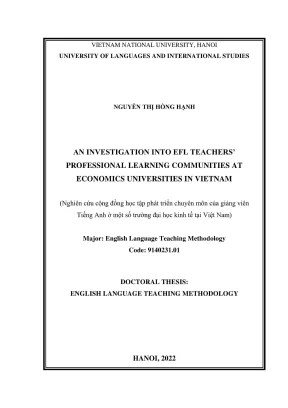
Nghiên cứu về cộng đồng học tập chuyên môn (Professional Learning Communities - PLC) của giảng viên tiếng Anh tại các trường đại học khối ngành kinh tế ở Việt Nam (English as a Foreign Language Teachers at Economics Universities in Vietnam - EETs) do nghiên cứu sinh Nguyễn Thị Hồng Hạnh thực hiện tại Trường Đại học Ngoại ngữ - Đại học Quốc gia Hà Nội (chuyên ngành Phương pháp Giảng dạy Tiếng Anh, mã số 9140231.01, năm 2022) dưới sự hướng dẫn khoa học của PGS.TS. Nguyễn Văn Trào và TS. Huỳnh Anh Tuấn.
Tính cấp thiết và khoảng trống nghiên cứu
Trong bối cảnh hội nhập kinh tế quốc tế và cải cách giáo dục, việc nâng cao năng lực giảng dạy và chuẩn đầu ra tiếng Anh cho sinh viên khối kinh tế tại Việt Nam trở thành một yêu cầu trọng tâm, được thể chế hóa qua Đề án Ngoại ngữ Quốc gia (Quyết định 1400/QĐ-TTg năm 2008 và điều chỉnh bổ sung theo Quyết định 2080/QĐ-TTg năm 2017 giai đoạn 2017–2025) cùng Chiến lược phát triển giáo dục 2011–2020 (Quyết định 711/QĐ-TTg năm 2012). Theo các văn bản quy phạm của Bộ Giáo dục và Đào tạo (Thông tư liên tịch số 06/2011/TTLT-BNV-BGDĐT), giảng viên đại học phải đáp ứng định mức công việc cao: giảng dạy trực tiếp từ 200 đến 350 giờ (tương đương 600 đến 1.050 giờ làm việc định mức), đồng thời phải dành ít nhất 1/3 tổng quỹ thời gian (khoảng 586 giờ) cho hoạt động nghiên cứu khoa học và công bố ít nhất một công trình trên tạp chí khoa học chuyên ngành trong nước hoặc quốc tế mỗi năm.
Đối với giảng viên tiếng Anh tại các trường đại học kinh tế (VEUs), thách thức chuyên môn càng gia tăng khi phần lớn giảng viên được đào tạo chuyên môn về ngôn ngữ học tiếng Anh hoặc sư phạm tiếng Anh nhưng thiếu nền tảng chuyên sâu về kinh tế thương mại. Khảo sát thực tế trong luận án cho thấy chỉ có 43 trong tổng số 273 giảng viên tiếng Anh sở hữu văn bằng đại học thứ hai về khối ngành kinh tế. Đồng thời, giảng viên nữ chiếm khoảng 95% tổng số nhân sự, chịu nhiều áp lực trong việc cân bằng giữa công việc gia đình và nhiệm vụ chuyên môn. Dù các hình thức sinh hoạt chuyên môn truyền thống (họp tổ bộ môn đầu và cuối kỳ, họp nhóm thiết kế đề thi, nhóm kỹ năng) đã tồn tại, hoạt động học tập tích lũy của giảng viên vẫn mang tính tự phát, phân tán, thiếu quy trình triển khai đồng bộ và chưa được vận hành theo một mô hình cộng đồng học tập chuyên môn (PLC) chính thức.
Khoảng trống nghiên cứu được tác giả xác định là: Mặc dù mô hình PLC đã được nghiên cứu và áp dụng rộng rãi tại nhiều quốc gia phương Tây cũng như một số nước châu Á (như Trung Quốc), tại Việt Nam chưa có công trình nào nghiên cứu toàn diện về thực trạng, cơ chế vận hành, sự tương tác của các chiều cạnh PLC và quản lý chất lượng PLC trong bối cảnh giáo dục đại học, đặc biệt là tại các trường đại học chuyên ngành kinh tế.
Mục tiêu nghiên cứu
Luận án xác định hai mục tiêu nghiên cứu cụ thể:
- Mục tiêu 1 (Objective 1): Khám phá thực trạng vận hành PLC của giảng viên tiếng Anh tại một số trường đại học kinh tế ở Việt Nam nhằm phân tích (1) hoạt động học tập tích lũy của giảng viên; (2) thực trạng thực hiện các chiều cạnh của PLC cùng với phân loại các chiều cạnh và xác định giai đoạn phát triển hiện tại của PLC; (3) thực trạng triển khai và thực hiện PLC (Deployment and Implementation of PLCs - DIP); và (4) thực trạng quản lý chất lượng PLC (Quality Management of PLCs - QMP).
- Mục tiêu 2 (Objective 2): Tìm ra các yếu tố ảnh hưởng đến việc thực hiện các chiều cạnh PLC, đến công tác triển khai - thực hiện PLC và công tác quản lý chất lượng PLC; từ đó phân tích, đánh giá và đề xuất hệ thống mô hình cùng các khuyến nghị thực tiễn nhằm khởi xướng, duy trì và thúc đẩy vận hành PLC cho giảng viên tiếng Anh tại các trường đại học kinh tế.
Câu hỏi nghiên cứu
Luận án tập trung giải quyết hai câu hỏi nghiên cứu:
- Câu hỏi nghiên cứu 1 (Research question 1): Các cộng đồng học tập chuyên môn của giảng viên tiếng Anh tại các trường đại học kinh tế ở Việt Nam hiện đang vận hành như thế nào? (How do PLCs of EFL teachers at VEUs currently operate?)
- Câu hỏi nghiên cứu 2 (Research question 2): Những yếu tố nào ảnh hưởng đến sự vận hành của các cộng đồng học tập chuyên môn này? (What are the factors affecting the operation of those communities?)
Đối tượng và phạm vi nghiên cứu
- Đối tượng nghiên cứu: Hoạt động vận hành cộng đồng học tập chuyên môn của giảng viên tiếng Anh tại các trường đại học kinh tế (EETs), bao gồm: hoạt động học tập tích lũy chuyên môn, mức độ thực hiện 6 chiều cạnh PLC, quy trình triển khai thực hiện (DIP) và quản lý chất lượng (QMP).
- Phạm vi không gian: Nghiên cứu được tiến hành tại 4 trường đại học khối ngành kinh tế điển hình tại Hà Nội, miền Bắc Việt Nam (trong đó có Khoa Ngoại ngữ / Bộ môn Tiếng Anh chuyên ngành - Trường Đại học Kinh tế Quốc dân).
- Phạm vi thời gian: Dữ liệu thực trạng được thu thập và đánh giá trong giai đoạn 2018–2020.
- Khách thể nghiên cứu: Giảng viên tiếng Anh trực tiếp giảng dạy, trưởng bộ môn, lãnh đạo khoa và các trưởng nhóm chuyên môn tại 4 trường đại học được khảo sát.
Tổng quan tài liệu và vị trí của luận án
Các hướng nghiên cứu trước trong y văn
Luận án đã hệ thống hóa lịch sử phát triển và các hướng tiếp cận lý thuyết về cộng đồng học tập chuyên môn (PLC), bắt nguồn từ khái niệm học tập trong bối cảnh văn hóa - xã hội và cộng đồng thực hành (Community of Practice - CoP) của Wenger (1998), Lave & Wenger (1991), cũng như các định nghĩa về cộng đồng giáo viên của Astuto et al. (1993), Grossman, Wineburg & Woolworth (2001), Little (2002, 2005, 2006, 2012), DuFour (2003, 2004), DuFour, Eaker & DuFour (2005, 2006), Bolam et al. (2005), Stoll et al. (2006), Reichstetter (2006), Hipp & Huffman (2010), Rodriguez Bonces (2014), Ingvarson (2016) và Hashimoto & Nguyen (2018).
| Tác giả |
Năm |
Luận điểm / Định nghĩa cốt lõi về PLC |
| Lave & Wenger |
1991 |
Nhóm người có chung mối quan tâm hoặc đam mê về một công việc và học cách làm tốt hơn thông qua tương tác thường xuyên. |
| Hord; Hord & Rutherford |
1997, 1998 |
Tiến trình liên tục trong đó giáo viên và nhà quản lý hợp tác tìm kiếm, chia sẻ và hành động dựa trên việc học tập vì lợi ích học sinh. |
| DuFour; DuFour et al. |
2003, 2004, 2006 |
Các nhà giáo dục cam kết cộng tác trong tiến trình liên tục nghiên cứu tập thể và nghiên cứu hành động để đạt kết quả tốt hơn cho người học. |
| McREL |
2003 |
Nhóm người cùng chia sẻ và phản tư sâu sắc thực hành nghề nghiệp theo hướng hòa nhập, thúc đẩy phát triển và học tập liên tục. |
| Huffman & Hipp |
2003, 2010 |
Đội ngũ nhân sự chuyên môn của cơ sở giáo dục liên tục tìm kiếm câu trả lời qua truy vấn và hành động để cải thiện chất lượng học tập. |
| Bolam et al. |
2005 |
Nhóm người hòa nhập, được thúc đẩy bởi tầm nhìn học tập chung, hỗ trợ lẫn nhau nghiên cứu thực tiễn để tìm ra phương pháp tốt hơn. |
| Timperley et al. |
2009 |
Nhóm cá nhân cộng tác nâng cao kiến thức và kỹ năng chuyên môn nhằm đạt được các kết quả có giá trị cho cộng đồng. |
| Welsh Government |
2011 |
Nhóm người hành nghề làm việc cùng nhau theo quy trình truy vấn có cấu trúc tập trung vào một lĩnh vực giảng dạy cụ thể. |
| Hashimoto & Nguyen |
2018 |
Nhóm người gặp gỡ thường xuyên (trực tiếp hoặc trực tuyến) để chia sẻ kinh nghiệm, kiến thức và nâng cao năng lực ngôn ngữ của từng thành viên. |
Về lợi ích của PLC, luận án điểm lại các công trình khẳng định PLC giúp nâng cao kết quả học tập của người học (Fullan, 2003; Darling-Hammond, 1996, 2009; Strahan, 2003; Voelkel et al., 2017); phá vỡ sự cô lập nghề nghiệp truyền thống và tăng cường văn hóa hợp tác (Morse, 2000; Rentfro, 2007; Hord & Hirsh, 2008, 2009; Lieberman, 1995; Kelchterman, 2006; Robert et al., 2017); nâng cao sự hài lòng nghề nghiệp và hiệu quả chi phí trong phát triển chuyên môn (Lumpe, 2007; Rosenholtz, 1989; Guskey, 2013).
Về rào cản và thách thức, y văn chỉ ra các trở ngại lớn gồm: thiếu quỹ thời gian, áp lực công việc nặng nề, sự ngần ngại chia sẻ của giáo viên, thiếu vắng sự lãnh đạo hỗ trợ và thiếu hiểu biết đầy đủ về bản chất của PLC (DuFour et al., 2005; East, 2015; Lujan & Day, 2010; Maslow, 2008; Hughes-Hassell et al., 2012; Dove & Freeley, 2011).
Về hoạt động học tập tích lũy và phát triển chuyên môn giáo viên (TPD), tác giả phân tích sự khác biệt giữa các hoạt động bồi dưỡng truyền thống (ngắn hạn, hội thảo rời rạc, ít hiệu quả - theo Birman et al., 2000; Boyle et al., 2004; Corcoran, 1995; Kelleher, 2003) và bồi dưỡng phi truyền thống gắn liền với công việc thực tế tại cơ sở (on-the-job, job-embedded learning - theo Ganser, 2000; Pedder & Opfer, 2013; McLaughlin & Talbert, 2006; Borko & Putnam, 1995).
Vị trí và khoảng trống luận án lựa chọn giải quyết
Dựa trên nghiên cứu của Zhang & Pang (2016) về phiên bản PLC tại Trung Quốc, tác giả nhấn mạnh tính đặc thù của bối cảnh thể chế, tổ chức và văn hóa - xã hội đối với sự hình thành PLC. Luận án đặt vị trí nghiên cứu vào việc khám phá thực trạng và xây dựng mô hình PLC phiên bản Việt Nam dành riêng cho giảng viên tiếng Anh khối đại học kinh tế, lấp đầy khoảng trống về dữ liệu thực nghiệm và khung vận hành đồng bộ (tích lũy cá nhân - thực thi chiều cạnh - quy trình triển khai DIP - quản lý chất lượng QMP).
Cơ sở lý thuyết và phương pháp nghiên cứu
Khung lý thuyết và khái niệm sử dụng
Nghiên cứu tích hợp hai nền tảng lý thuyết lớn:
- Lý thuyết học tập văn hóa - xã hội (Socio-cultural Learning Theory): Tiếp cận việc học của giảng viên như một tiến trình xã hội hóa, diễn ra thông qua tương tác, chia sẻ và hợp tác trong bối cảnh thực tiễn công việc.
- Lý thuyết học tập tổ chức (Organizational Learning Theory): Xem xét nhà trường như một tổ chức học tập, trong đó sự chuyển dịch tri thức từ cấp độ cá nhân lên cấp độ tập thể và toàn trường diễn ra qua các cấu trúc và cơ chế hỗ trợ.
Khung phân tích các chiều cạnh PLC dựa trên mô hình 6 chiều cạnh của Hord (1997) và Hipp & Huffman (2010), được luận án tái cấu trúc thành 4 nhóm tương tác:
| STT |
Chiều cạnh PLC gốc (Hipp & Huffman, 2010) |
Nội dung bản chất |
Nhóm phân tích trong luận án |
| 1 |
Lãnh đạo chia sẻ và hỗ trợ (Shared and supportive leadership) |
Chia sẻ thông tin, cùng tham gia ra quyết định và thực thi giữa lãnh đạo và giảng viên. |
Nhóm 1: Lãnh đạo chia sẻ và hỗ trợ (Đóng vai trò trung tâm điều phối). |
| 2 |
Giá trị và tầm nhìn chung (Shared values and vision) |
Cam kết và cùng chia sẻ các mục tiêu, tầm nhìn và giá trị chung trong học tập cộng đồng. |
Nhóm 2: Giá trị và tầm nhìn chung. |
| 3 |
Học tập tập thể và ứng dụng (Collective learning and application) |
Quan sát, chia sẻ, phản hồi, trao đổi chuyên môn, phân tích đánh giá kết quả nhằm nâng cao kỹ năng. |
Nhóm 3: Học tập tập thể, ứng dụng và chia sẻ thực hành cá nhân. |
| 4 |
Thực hành cá nhân chia sẻ (Shared personal practice) |
Dự giờ đồng nghiệp, quan sát lớp học, phản hồi về phương pháp giảng dạy để phát triển năng lực. |
|
| 5 |
Điều kiện hỗ trợ: Quan hệ (Supportive conditions - Relationships) |
Bầu không khí tin cậy, tôn trọng, cởi mở để các nhóm giáo viên gặp gỡ, giải quyết vấn đề. |
Nhóm 4: Các điều kiện hỗ trợ (bao gồm Quan hệ và Cấu trúc). |
| 6 |
Điều kiện hỗ trợ: Cấu trúc (Supportive conditions - Structures) |
Thời gian, địa điểm, cơ sở vật chất, công nghệ, tài chính và chính sách tạo điều kiện cho PLC. |
|
Đồng thời, luận án sử dụng khung 4 giai đoạn phát triển của PLC (Professional Learning Community Organizer - PLCO theo Hipp & Huffman, 2010):
- Giai đoạn 1: Chưa khởi xướng / Không thể hiện (Non-demonstration / Not initiated).
- Giai đoạn 2: Khởi xướng (Initiation).
- Giai đoạn 3: Triển khai thực hiện (Implementation).
- Giai đoạn 4: Thể chế hóa (Institutionalization).
Phương pháp nghiên cứu và quy trình thu thập dữ liệu
Luận án áp dụng thiết kế nghiên cứu hỗn hợp giải thích tuần tự (Explanatory sequential mixed-methods design, Creswell, 2014) dựa trên thế giới quan kết hợp giữa thực chứng (positivism) và kiến tạo (constructivism). Tiến trình thực hiện qua 4 giai đoạn chính:
Giai đoạn 1: Xác định câu hỏi và mục tiêu nghiên cứu
Giai đoạn 2: Tổng quan lý luận, xây dựng khung khái niệm (Conceptual Framework)
Giai đoạn 3: Thu thập và phân tích dữ liệu (Định lượng qua Bảng hỏi -> Định tính qua Phỏng vấn)
Giai đoạn 4: Tổng hợp kết quả, xây dựng mô hình và hoàn thiện luận án
- Phương pháp định lượng: Sử dụng bảng hỏi khảo sát cấu trúc gồm thang đo đánh giá cộng đồng học tập chuyên môn đã sửa đổi (Professional Learning Community Assessment - Revised: PLCA-R) kết hợp các phần khảo sát về học tập tích lũy, DIP, QMP và các yếu tố ảnh hưởng. Mẫu khảo sát gồm 273 giảng viên tiếng Anh tại 4 trường đại học kinh tế ở Hà Nội. Dữ liệu được kiểm định độ tin cậy nhất quán nội tại (Cronbach's alpha), phân tích điểm trung bình (Mean score) và so sánh sự khác biệt theo giới tính, vị trí công tác, thâm niên giảng dạy và trình độ đào tạo.
- Phương pháp định tính: Tiến hành phỏng vấn bán cấu trúc cá nhân (Individual semi-structured interviews, Bogdan & Biklen, 1992) với các cán bộ quản lý khoa/bộ môn, trưởng nhóm chuyên môn và giảng viên tiếng Anh nhằm làm rõ các yếu tố văn hóa - xã hội ẩn sâu, đánh giá thực trạng quy trình DIP, QMP và thẩm định các mô hình đề xuất.
- Tính giá trị và độ tin cậy: Đảm bảo độ giá trị (Validity), độ tin cậy (Reliability), tính xác thực (Trustworthiness) và độ khả tín (Credibility) thông qua việc đối chiếu chéo nguồn dữ liệu (triangulation) và quy trình chuẩn hóa công cụ phỏng vấn (protocol).
Nội dung chính theo từng chương
Chapter 1: Introduction (Mở đầu)
Chương 1 thiết lập bức tranh tổng quan về giảng dạy tiếng Anh và sự phát triển chuyên môn của giảng viên tiếng Anh đại học tại Việt Nam trong thế kỷ 21. Tác giả phân tích các yêu cầu pháp lý và chuẩn nghề nghiệp theo các văn bản của Thủ tướng Chính phủ và Bộ GD&ĐT; nêu rõ thực trạng hoạt động chuyên môn của giảng viên tại các trường đại học kinh tế (VEUs); trình bày lý do chọn đề tài, mục tiêu nghiên cứu (2 mục tiêu), câu hỏi nghiên cứu (2 câu hỏi), ý nghĩa khoa học, quy trình nghiên cứu, thiết kế nghiên cứu, phạm vi nghiên cứu và bố cục tổng thể của luận án.
Chapter 2: Literature Review (Tổng quan tài liệu)
Chương 2 trình bày cơ sở lý luận toàn diện gồm 6 phần:
- Bản chất vận hành của PLC: định nghĩa, học tập tích lũy của giảng viên cho TPD, 6 chiều cạnh PLC, quy trình triển khai thực hiện (DIP) và quản lý chất lượng (QMP).
- Các yếu tố ảnh hưởng đến vận hành PLC thành công: nhóm yếu tố học tập tích lũy, nhóm yếu tố chiều cạnh PLC, nhóm yếu tố DIP và nhóm yếu tố QMP.
- Lý thuyết học tập văn hóa - xã hội và lý thuyết học tập tổ chức, cùng mô hình kết hợp hai lý thuyết này làm khung lý thuyết nền tảng.
- Các nghiên cứu thực nghiệm trong và ngoài nước cùng khoảng trống nghiên cứu.
- Khung khái niệm đề xuất của nghiên cứu (The conceptual framework of PLC operation).
- Tóm tắt chương.
Chapter 3: Research Methodology (Phương pháp nghiên cứu)
Chương 3 trình bày chi tiết về thế giới quan nghiên cứu; thiết kế nghiên cứu hỗn hợp giải thích tuần tự; bối cảnh nghiên cứu tại 4 trường đại học kinh tế ở Hà Nội; mẫu khảo sát định lượng (273 giảng viên) và tiêu chí lựa chọn người tham gia phỏng vấn định tính; công cụ thu thập dữ liệu (bảng hỏi PLCA-R bổ sung, đề cương phỏng vấn song ngữ); quy trình thu thập dữ liệu; quy trình phân tích dữ liệu thống kê và định tính; các biện pháp kiểm soát tính giá trị, độ tin cậy, độ chuẩn xác và tính khả tín của nghiên cứu.
Chapter 4: Findings and Discussion (Kết quả nghiên cứu và Thảo luận)
Chương 4 tích hợp và đối thoại giữa dữ liệu định lượng và định tính trên 5 nội dung chính:
- Thực trạng học tập tích lũy của giảng viên (EETs): Giảng viên chủ yếu dựa vào tự học, tự tích lũy cá nhân để đáp ứng yêu cầu giảng dạy tiếng Anh chuyên ngành kinh tế và nghiên cứu khoa học. Dù nhận thức PLC là công cụ hỗ trợ cần thiết nhưng mức độ tham gia học tập tích lũy qua PLC còn hạn chế.
- Thực trạng thực hiện các chiều cạnh PLC: Phân tích điểm trung bình các chiều cạnh theo thang đo PLCA-R (Lãnh đạo chia sẻ; Tầm nhìn và giá trị chung; Học tập tập thể; Thực hành cá nhân chia sẻ; Điều kiện hỗ trợ về quan hệ và cấu trúc). Đánh giá sự khác biệt thống kê theo giới tính, chức vụ, thâm niên và trình độ.
- Giai đoạn phát triển của PLC: Kết quả chỉ ra các PLC tại các trường đại học kinh tế Việt Nam hiện đang nằm ở Giai đoạn 2: Khởi xướng (Initiation stage) trong 4 giai đoạn phát triển; các hoạt động chuyên môn còn rời rạc, chưa tạo thành văn hóa cộng đồng bền vững.
- Thực trạng triển khai thực hiện (DIP) và quản lý chất lượng (QMP): Quá trình triển khai còn phân mảnh, mang tính hành chính cơ học; chưa thiết lập được hệ thống tiêu chí đánh giá chất lượng và kiểm tra hiệu quả vận hành PLC một cách đồng bộ.
- Các yếu tố ảnh hưởng: Làm rõ tác động của các yếu tố bên trong (động lực cá nhân, năng lực chuyên môn, sự tin cậy đồng nghiệp) và các yếu tố bên ngoài (chính sách của trường, quỹ thời gian, áp lực nghiên cứu khoa học, nguồn lực tài chính, cơ sở vật chất và văn hóa phân cấp quyền lực).
Chapter 5: Conclusion (Kết luận)
Chương 5 tổng kết toàn bộ kết quả nghiên cứu; đưa ra các kết luận chính về học tập tích lũy, thực hiện chiều cạnh PLC, DIP và QMP; đề xuất hệ thống 12 mô hình và sơ đồ khuyến nghị tương ứng với các giai đoạn phát triển (từ Chưa khởi xướng, Khởi xướng, Triển khai đến Thể chế hóa); rút ra các hàm ý chính sách cho cấp quản lý vĩ mô, cấp trường/khoa và định hướng nghiên cứu tiếp theo; trình bày những đóng góp mới và hạn chế của luận án.
Kết quả và những đóng góp mới
Những đóng góp mới về mặt lý luận
- Xây dựng khung khái niệm tích hợp: Luận án đã tích hợp thành công lý thuyết học tập văn hóa - xã hội (Socio-cultural Learning Theory) và lý thuyết học tập tổ chức (Organizational Learning Theory) để xây dựng một khung khái niệm hoàn chỉnh về vận hành PLC trong giáo dục đại học, bao gồm 4 trụ cột: Học tập tích lũy của giảng viên, Các chiều cạnh PLC (PDP), Triển khai thực hiện (DIP) và Quản lý chất lượng (QMP).
- Làm rõ bản chất "phiên bản PLC Việt Nam" (Vietnamese version of PLCs): Luận án chỉ ra sự tác động sâu sắc của bối cảnh thể chế giáo dục, cấu trúc tổ chức phòng ban và các chuẩn mực văn hóa truyền thống đối với cách thức giảng viên đại học tiếp cận và thực hành cộng đồng học tập chuyên môn.
Những đóng góp mới về mặt thực tiễn
- Xác định giai đoạn phát triển thực tế của PLC: Khẳng định các trường đại học kinh tế tại Việt Nam hiện đang ở Giai đoạn 2 (Khởi xướng - Initiation) trong tiến trình 4 giai đoạn phát triển PLC; chỉ rõ sự thiếu đồng bộ giữa nhận thức tích cực của giảng viên và việc thiếu hụt cơ chế vận hành chính thức từ phía nhà trường.
- Đề xuất hệ thống mô hình vận hành và quản lý PLC: Luận án đề xuất hệ thống mô hình thực tiễn gồm:
- Mô hình khởi xướng PLC (Model for PLC initiation).
- Mô hình cơ chế vận hành PLC (Model of PLCs running mechanism).
- Mô hình hệ thống tổ chức của PLC (Model of the organizational system of PLCs).
- Mô hình hệ thống yếu tố động lực thúc đẩy PLC (Model of PLCs motivation factor system).
- Mô hình quản lý chất lượng PLC (QMP) và mô hình phối hợp kế hoạch DIP & QMP.
- Bộ tiêu chí đánh giá vận hành PLC (PLC operation evaluation criteria).
- Khuyến nghị theo từng giai đoạn phát triển: Đưa ra các khuyến nghị cụ thể tương ứng với từng giai đoạn: Giai đoạn Chưa thể hiện (Non-demonstration), Giai đoạn Khởi xướng (Initiation), Giai đoạn Triển khai (Implementation) và Giai đoạn Thể chế hóa (Institutionalization).
Kiến nghị và hàm ý đề xuất
- Đối với cấp hoạch định chính sách (Bộ GD&ĐT, các cơ quan quản lý): Cần thể chế hóa mô hình PLC như một phương thức phát triển chuyên môn chính thức, được công nhận tương đương hoặc tích hợp vào quy chuẩn đánh giá bồi dưỡng thường xuyên; điều chỉnh định mức giảng dạy và nghiên cứu khoa học để tạo không gian thời gian cho giảng viên tham gia cộng đồng chuyên môn.
- Đối với cấp thực thi (Lãnh đạo trường, Ban Chủ nhiệm Khoa/Bộ môn): Cần chuyển đổi phong cách quản lý từ chỉ đạo hành chính sang lãnh đạo chia sẻ (Shared leadership); đầu tư cơ sở vật chất, không gian gặp gỡ chuyên môn (trực tiếp và trực tuyến); xây dựng cơ chế khen thưởng, ghi nhận đóng góp trong PLC; tổ chức các chương trình đào tạo kỹ năng điều phối (PLC facilitators).
- Đối với giảng viên tiếng Anh (EETs): Cần chủ động chuyển đổi từ hình thức tự học đơn lẻ sang học tập tập thể; tích cực tham gia dự giờ, phản hồi chuyên môn và đồng thiết kế chương trình, học liệu tiếng Anh chuyên ngành kinh tế.
Hạn chế và hướng nghiên cứu tiếp
Hạn chế của luận án
- Phạm vi khách thể: Nghiên cứu chỉ tập trung vào đối tượng giảng viên tiếng Anh tại các trường đại học khối ngành kinh tế (VEUs), chưa khảo sát giảng viên tiếng Anh thuộc các khối ngành khác (kỹ thuật, y dược, sư phạm, khoa học tự nhiên) hoặc các bậc học khác.
- Phạm vi địa lý: Dữ liệu khảo sát định lượng và định tính giới hạn tại 4 trường đại học kinh tế tại khu vực Hà Nội (miền Bắc Việt Nam), chưa mở rộng ra các trường đại học khối kinh tế ở miền Trung và miền Nam.
- Tính chất mô hình: Các mô hình vận hành và quản lý chất lượng PLC do luận án đề xuất mang tính chất định hướng khung chung cho giảng viên tiếng Anh kinh tế, chưa được thử nghiệm can thiệp thực địa trong khuôn khổ thời gian của đề tài để đo lường định lượng mức độ chuyển biến sau can thiệp.
Hướng nghiên cứu tiếp theo
- Mở rộng phạm vi khảo sát đối với giảng viên tiếng Anh tại các trường đại học đa ngành và ở các vùng miền khác nhau trên cả nước để so sánh sự khác biệt vùng miền.
- Tiến hành các nghiên cứu can thiệp thực nghiệm (action research hoặc experimental design) bằng việc áp dụng các mô hình vận hành PLC và tiêu chí đánh giá chất lượng đã đề xuất vào một khoa/bộ môn cụ thể trong thời gian từ 1 đến 2 năm học để kiểm chứng hiệu quả thực tế.
- Đi sâu nghiên cứu việc ứng dụng công nghệ thông tin và không gian làm việc trực tuyến (online workspaces, blogs, wikis) trong việc duy trì PLC kết hợp (blended PLCs) cho giảng viên đại học.
Giá trị tham khảo
Luận án mang lại giá trị tham khảo học thuật và thực tiễn cho nhiều nhóm đối tượng:
- Nghiên cứu sinh và học viên cao học chuyên ngành ELT, Quản lý giáo dục: Nguồn tham khảo chuẩn xác về phương pháp luận nghiên cứu hỗn hợp giải thích tuần tự (Sequential Explanatory Mixed-Methods); cách thức vận dụng và bản địa hóa bộ công cụ đánh giá PLCA-R cùng hệ thống bảng biểu tổng hợp lý thuyết về các chiều cạnh PLC (Bảng 2.1, Bảng 2.2, Bảng 2.3).
- Lãnh đạo các trường đại học và Ban Chủ nhiệm Khoa Ngoại ngữ: Nguồn cứ liệu thực tiễn và khung hướng dẫn hành động để thiết lập cơ chế vận hành PLC, xây dựng chính sách hỗ trợ thời gian và triển khai quản lý chất lượng hoạt động chuyên môn theo hướng bền vững.
- Giảng viên tiếng Anh chuyên ngành (ESP): Cung cấp các định hướng cụ thể về phương pháp học tập tích lũy chuyên môn kép (vừa nâng cao phương pháp sư phạm, vừa tích lũy tri thức chuyên ngành kinh tế) thông qua hợp tác nhóm và phản tư thực hành nghề nghiệp.
Câu hỏi thường gặp
1. Luận án xác định các cộng đồng học tập chuyên môn (PLC) của giảng viên tiếng Anh tại các trường đại học kinh tế Việt Nam đang ở giai đoạn phát triển nào?
Theo khung đánh giá 4 giai đoạn phát triển (Professional Learning Community Organizer - PLCO), luận án xác định các PLC của giảng viên tiếng Anh tại các trường đại học kinh tế Việt Nam hiện đang ở Giai đoạn 2: Khởi xướng (Initiation stage). Hoạt động chuyên môn hiện tại vẫn diễn ra phân tán, rời rạc, chưa có kế hoạch đồng bộ và chưa hình thành cơ chế vận hành chính thức từ phía tổ chức.
2. Vì sao giảng viên tiếng Anh tại các trường đại học kinh tế (EETs) có nhu cầu học tập tích lũy đặc thù?
Khảo sát thực tế của luận án cho thấy trong số 273 giảng viên tiếng Anh được khảo sát, chỉ có 43 giảng viên có bằng đại học thứ hai về chuyên ngành kinh tế. Trong khi đó, nhiệm vụ giảng dạy đòi hỏi phải cung cấp kiến thức tiếng Anh chuyên ngành kinh tế (ESP) cho sinh viên, đáp ứng chuẩn đầu ra cao (như chứng chỉ IELTS) và hoàn thành định mức 586 giờ nghiên cứu khoa học mỗi năm. Do đó, giảng viên có nhu cầu cấp thiết phải tích lũy song song cả năng lực ngôn ngữ, phương pháp giảng dạy và kiến thức chuyên ngành kinh tế.
3. Luận án sử dụng những công cụ định lượng và định tính nào để thu thập dữ liệu?
Luận án áp dụng thiết kế nghiên cứu hỗn hợp giải thích tuần tự (Creswell, 2014):
- Định lượng: Sử dụng Bảng hỏi khảo sát đánh giá cộng đồng học tập chuyên môn đã sửa đổi (PLCA-R) trên mẫu 273 giảng viên tiếng Anh tại 4 trường đại học kinh tế ở Hà Nội.
- Định tính: Sử dụng đề cương phỏng vấn bán cấu trúc cá nhân (semi-structured interview protocol) thực hiện với lãnh đạo khoa, trưởng bộ môn, trưởng nhóm chuyên môn và giảng viên tiếng Anh.
4. Những rào cản chính nào cản trở giảng viên tiếng Anh tham gia vào PLC?
Các rào cản chính được chỉ ra gồm:
- Thiếu quỹ thời gian do khối lượng giờ giảng thực tế vượt định mức và áp lực hoàn thành nghĩa vụ nghiên cứu khoa học (ít nhất 1 bài báo/năm).
- Tỷ lệ giảng viên nữ cao (chiếm khoảng 95% mẫu khảo sát), gặp nhiều khó khăn trong việc cân đối giữa trách nhiệm gia đình và công việc chuyên môn.
- Thiếu cơ chế hỗ trợ về cấu trúc (kinh phí, thời gian biểu làm việc nhóm, địa điểm) và sự hỗ trợ lãnh đạo chưa được thể chế hóa thành văn bản hướng dẫn cụ thể.
5. Khung phân tích 6 chiều cạnh PLC được tác giả nhóm lại như thế nào trong nghiên cứu?
Sáu chiều cạnh PLC của Hipp & Huffman (2010) được tác giả phân chia thành 4 nhóm tương tác để phân tích:
- Lãnh đạo chia sẻ và hỗ trợ (Shared and supportive leadership - đóng vai trò hạt nhân điều phối).
- Giá trị và tầm nhìn chung (Shared values and vision).
- Học tập tập thể, ứng dụng và chia sẻ thực hành cá nhân (Collective learning & application and shared personal practice).
- Các điều kiện hỗ trợ gồm Quan hệ và Cấu trúc (Supportive conditions: Relationships and Structures).
Kết luận
Luận án tiến sĩ của tác giả Nguyễn Thị Hồng Hạnh là một công trình nghiên cứu hệ thống về thực trạng vận hành cộng đồng học tập chuyên môn của giảng viên tiếng Anh tại các trường đại học kinh tế ở Việt Nam. Bằng việc kết hợp lý thuyết học tập văn hóa - xã hội và lý thuyết học tập tổ chức cùng phương pháp nghiên cứu hỗn hợp tuần tự, luận án đã xác định thực trạng PLC đang ở giai đoạn khởi xướng và làm rõ các nhân tố ảnh hưởng từ bối cảnh thể chế, tổ chức và văn hóa. Trên cơ sở đó, tác giả đã đề xuất hệ thống các mô hình vận hành, cơ chế điều phối và bộ tiêu chí quản lý chất lượng khả thi, cung cấp cơ sở khoa học giá trị cho các nhà hoạch định chính sách và lãnh đạo các cơ sở giáo dục đại học trong việc nâng cao chất lượng đội ngũ giảng viên tiếng Anh đáp ứng yêu cầu hội nhập.