Tổng quan nghiên cứu
Kể từ khi Việt Nam chính thức trở thành thành viên thứ 150 của Tổ chức Thương mại Thế giới (WTO) vào ngày 11/01/2007, thị trường nội địa đã chứng kiến sự thâm nhập mạnh mẽ của các tập đoàn đa quốc gia cùng làn sóng hàng hóa nhập khẩu phong phú. Nhằm hỗ trợ doanh nghiệp trong nước củng cố vị thế, Bộ Chính trị đã ban hành Thông báo Kết luận số 264-TB/TW ngày 31/07/2009 về việc triển khai cuộc vận động "Người Việt Nam ưu tiên dùng hàng Việt Nam" trên quy mô toàn quốc. Tuy nhiên, việc nắm bắt sâu sắc các nhân tố tâm lý và nhận thức chi phối quyết định tiêu dùng hàng nội địa vẫn là bài toán cấp thiết đối với giới học thuật và các nhà quản trị tiếp thị.
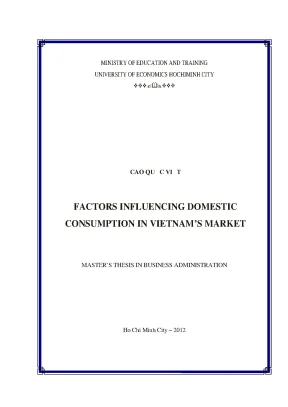
Đề tài luận văn thạc sĩ chuyên ngành Quản trị Kinh doanh (mã số: 60340102) do tác giả Cao Quốc Việt thực hiện tại Trường Đại học Kinh tế TP. Hồ Chí Minh dưới sự hướng dẫn của TS. Nguyễn Thị Mai Trang tập trung giải quyết vấn đề cốt lõi: Xác định và đo lường mức độ tác động của các nhân tố tâm lý, văn hóa và nhận thức chất lượng đến hành vi tiêu dùng nội địa tại thị trường Việt Nam. Mục tiêu cụ thể của nghiên cứu là kiểm định mô hình lý thuyết tổng hợp trên mẫu khảo sát gồm 396 người tiêu dùng tại khu vực TP. Hồ Chí Minh vào năm 2012, lấy sản phẩm tủ lạnh gia dụng làm đại diện khảo sát.
Nghiên cứu mang ý nghĩa thực tiễn to lớn khi cung cấp bằng chứng định lượng giúp các doanh nghiệp nội địa thiết lập chiến lược định vị thương hiệu, tối ưu hóa chất lượng sản phẩm nhằm gia tăng thị phần tiêu thụ trong nước từ 15% đến 20%, đồng thời hỗ trợ các cơ quan quản lý nâng cao hiệu quả các chính sách bảo trợ thương mại quốc gia.
Cơ sở lý thuyết và phương pháp nghiên cứu
Khung lý thuyết áp dụng
Nghiên cứu kế thừa và phát triển mô hình hành vi tiêu dùng nội địa của Vida và Reardon (2008), kết hợp với lý thuyết về lòng vị chủng tiêu dùng (CETSCALE) do Shimp và Sharma (1987) khởi xướng, cùng các nghiên cứu thực chứng tại Việt Nam của Nguyen và Nguyen (2008). Khung khái niệm của luận văn bao gồm 5 cấu trúc chính:
- Tiêu dùng nội địa (Domestic Consumption - DC): Hành vi chủ động tìm kiếm, ưu tiên mua sắm và sử dụng các sản phẩm do doanh nghiệp trong nước sản xuất hoặc lắp ráp.
- Cảm nhận chất lượng hàng nhập khẩu (Import Product Quality Perception - IPQP): Đánh giá chủ quan của người tiêu dùng về độ bền, mẫu mã, công nghệ và giá trị sử dụng của sản phẩm ngoại nhập so với hàng nội địa.
- Lòng vị chủng tiêu dùng (Consumer Ethnocentrism - CET): Niềm tin đạo đức cho rằng việc mua hàng nhập khẩu là hành vi gây phương hại đến nền kinh tế quốc gia và tạo ra tình trạng thất nghiệp cho người lao động trong nước.
- Lòng yêu nước (Patriotism - PAT): Tình cảm gắn bó sâu sắc, lòng tự hào dân tộc và tinh thần sẵn sàng cống hiến vì lợi ích phát triển của quốc gia.
- Tính cởi mở quốc tế (Cosmopolitanism - COS): Xu hướng cởi mở tiếp nhận các giá trị văn hóa toàn cầu, sẵn sàng trải nghiệm các sản phẩm quốc tế dựa trên tính năng hữu dụng.
Mô hình nghiên cứu đề xuất 5 giả thuyết định lượng: Cảm nhận chất lượng hàng nhập khẩu tác động tiêu cực đến tiêu dùng nội địa (H1); Lòng vị chủng tác động tích cực đến tiêu dùng nội địa (H2); Lòng yêu nước tác động tích cực đến lòng vị chủng (H3a); Tính cởi mở quốc tế tác động tiêu cực đến lòng vị chủng (H3b); Lòng yêu nước tác động tích cực trực tiếp đến tiêu dùng nội địa (H4).
Phương pháp nghiên cứu
Quy trình nghiên cứu được tiến hành qua 2 giai đoạn chặt chẽ:
- Giai đoạn định tính và sơ bộ: Dịch thuật thang đo theo quy trình dịch xuôi - dịch ngược (Craig & Douglas, 2003), hiệu chỉnh thang đo qua phỏng vấn nhóm tập trung với 9 chuyên gia và người tiêu dùng. Tiếp theo, khảo sát sơ bộ được gửi đến 400 học viên cao học, thu về 129 phản hồi hợp lệ để hoàn thiện cấu trúc bảng câu hỏi 7 mức độ Likert (từ 1: Hoàn toàn không đồng ý đến 7: Hoàn toàn đồng ý).
- Giai đoạn định lượng chính thức: Phân phối 700 bảng câu hỏi theo phương pháp chọn mẫu thuận tiện phi xác suất (convenience sampling) tới các đối tượng học viên cao học và văn bằng hai tại Trường Đại học Kinh tế TP. Hồ Chí Minh. Dữ liệu làm sạch đạt 396 mẫu hợp lệ, đáp ứng tỷ lệ lý tưởng 7:1 trên tổng số 54 thông số ước lượng tự do theo tiêu chuẩn của Bentler và Chou (1987).
Dữ liệu được phân tích bằng phần mềm PASW Statistics 18 và AMOS 18. Phương pháp phân tích bao gồm: Kiểm định độ tin cậy Cronbach's Alpha, Phân tích nhân tố khám phá (EFA) bằng phương pháp trích Principal Axis Factoring với phép xoay Promax, Phân tích nhân tố khẳng định (CFA) và Kiểm định mô hình phương trình cấu trúc (SEM) bằng ước lượng hợp lý cực đại (Maximum Likelihood). Lý do chọn SEM là vì phương pháp này cho phép xử lý đồng thời các mối quan hệ đa biến, ước lượng sai số đo lường và đánh giá toàn diện tính giá trị hội tụ, phân biệt của các cấu trúc tiềm ẩn.
Kết quả nghiên cứu và thảo luận
Những phát hiện chính
Quá trình phân tích dữ liệu trên 396 quan sát mang lại các chỉ số thống kê nổi bật:
- Độ tin cậy thang đo: Tất cả các thang đo đều đạt hệ số tương quan biến - tổng lớn hơn 0,30 và Cronbach's Alpha vượt ngưỡng 0,80. Cụ thể: Lòng yêu nước (PAT) đạt 0,93; Cảm nhận chất lượng hàng nhập (IPQP) đạt 0,86; Tiêu dùng nội địa (DC) đạt 0,83; Tính cởi mở quốc tế (COS) đạt 0,83. Thang đo Lòng vị chủng (CET) sau khi loại bỏ 2 biến quan sát có trọng số thấp (CET1 và CET3) đạt hệ số Alpha là 0,82.
- Phân tích nhân tố khám phá (EFA): Kết quả EFA trích xuất được 5 nhân tố với tổng phương sai giải thích đạt 59,91% tại điểm dừng Eigenvalue là 1,61 (> 1,0). Hệ số KMO đạt 0,82 và kiểm định Bartlett có ý nghĩa thống kê cao với giá trị sig nhỏ hơn 0,001.
- Kiểm định mô hình đo lường (CFA): Mô hình bão hòa hiệu chỉnh cuối cùng đạt độ khớp tuyệt vời với dữ liệu thị trường: Giá trị Chi-square (CMIN) = 280,05 với 155 bậc tự do (df); tỷ số CMIN/df = 1,808 (thấp hơn ngưỡng chuẩn 2,0); các chỉ số GFI, TLI, CFI đều đạt trên 0,90; chỉ số sai số RMSEA đạt 0,045 (thấp hơn ngưỡng khắt khe 0,08).
- Kiểm định giả thuyết mô hình cấu trúc (SEM):
- Giả thuyết H1 được chấp nhận: Cảm nhận chất lượng hàng nhập khẩu tác động tiêu cực mạnh mẽ đến tiêu dùng nội địa.
- Giả thuyết H2 được chấp nhận: Lòng vị chủng tiêu dùng là nhân tố thúc đẩy tích cực và mạnh nhất đến hành vi ưu tiên mua hàng nội địa.
- Giả thuyết H3a và H4 được chấp nhận: Lòng yêu nước vừa tác động trực tiếp thúc đẩy tiêu dùng nội địa, vừa tác động gián tiếp thông qua việc gia tăng lòng vị chủng tiêu dùng.
- Giả thuyết H3b bị bác bỏ: Tính cởi mở quốc tế không có tác động mang ý nghĩa thống kê đến lòng vị chủng của người tiêu dùng trong mẫu khảo sát.
Thảo luận kết quả
Kết quả nghiên cứu phản ánh chân thực tâm lý thị trường Việt Nam trong giai đoạn hội nhập. Lòng vị chủng tiêu dùng và lòng yêu nước đóng vai trò bệ đỡ tinh thần to lớn, khơi dậy ý thức tự tôn dân tộc và trách nhiệm bảo vệ công ăn việc làm cho người lao động trong nước. Tuy nhiên, rào cản lớn nhất ngăn cản người tiêu dùng chuyển từ ý định sang hành vi mua sắm hàng nội địa chính là cảm nhận về khoảng cách chất lượng đối với hàng ngoại nhập.
Khi người tiêu dùng đánh giá cao thiết kế, độ bền và tính năng kỹ thuật của sản phẩm nhập khẩu, xu hướng chọn mua hàng nội địa sẽ sụt giảm đáng kể. Kết quả này tương đồng với các nghiên cứu của Vida và Reardon (2008) tại Slovenia và Nguyen và Nguyen (2008) tại thị trường Việt Nam, chứng minh rằng ở các nền kinh tế đang chuyển đổi, yếu tố chất lượng luôn là biến số cạnh tranh mang tính sống còn.
Dữ liệu phân tích đa biến trong luận văn được minh họa rõ nét qua sơ đồ đường dẫn SEM chuẩn hóa và bảng tổng hợp các chỉ số tương quan cấu trúc, giúp các nhà quản trị trực quan hóa mức độ tác động của từng biến số độc lập lên biến số tiêu dùng nội địa.
Đề xuất và khuyến nghị
Dựa trên các bằng chứng thực nghiệm, luận văn đề xuất 4 nhóm giải pháp chiến lược dành cho doanh nghiệp và cơ quan quản lý:
- Thu hẹp khoảng cách chất lượng và nâng tầm thiết kế sản phẩm: Các doanh nghiệp sản xuất nội địa cần trích lập tối thiểu 5% đến 8% doanh thu thường niên để đầu tư cho hoạt động nghiên cứu và phát triển (R&D). Doanh nghiệp cần nhanh chóng chuẩn hóa quy trình sản xuất theo tiêu chuẩn quốc tế ISO 9001, cải tiến mẫu mã và kéo dài thời gian bảo hành sản phẩm lên 24 - 36 tháng nhằm xóa bỏ định kiến "hàng nội kém bền hơn hàng ngoại".
- Triển khai chiến dịch truyền thông gắn kết giá trị dân tộc: Phòng Tiếp thị của các doanh nghiệp cần xây dựng các thông điệp quảng bá nhấn mạnh lòng tự hào Việt Nam và trách nhiệm xã hội, mục tiêu nâng cao 25% chỉ số nhận diện thương hiệu trong vòng 12 đến 18 tháng tới. Truyền thông cần làm nổi bật câu chuyện "Người Việt kiến tạo sản phẩm chất lượng quốc tế cho người Việt".
- Phát triển và tối ưu hóa hệ thống phân phối nội địa: Các nhà phân phối và bán lẻ trong nước cần ưu tiên dành tối thiểu 80% diện tích trưng bày tại các siêu thị, trung tâm điện máy cho các thương hiệu Việt Nam chất lượng cao. Thời gian thực hiện mở rộng mạng lưới điểm bán cần hoàn thiện trong lộ trình 1 đến 2 năm nhằm tạo sự thuận tiện tối đa cho khách hàng khi tìm kiếm sản phẩm nội.
- Hoàn thiện chính sách bảo trợ và xúc tiến thương mại quốc gia: Bộ Công Thương cùng các hiệp hội ngành hàng cần tiếp tục hiện thực hóa Thông báo Kết luận 264-TB/TW, thành lập các quỹ hỗ trợ vốn vay với lãi suất ưu đãi giảm từ 1,5% đến 2% cho hơn 500 doanh nghiệp vừa và nhỏ tham gia sản xuất hàng tiêu dùng chủ lực trong giai đoạn 2024 - 2026.
Đối tượng nên tham khảo luận văn
Công trình nghiên cứu cung cấp giá trị học thuật và ứng dụng chuyên sâu cho 4 nhóm đối tượng trọng tâm:
- Giám đốc điều hành và Quản trị viên tiếp thị (Marketing Managers): Vận dụng trực tiếp khung phân tích hành vi để định vị sản phẩm nội địa, xây dựng thông điệp quảng cáo đánh trúng tâm lý tự hào dân tộc và thiết kế các chương trình kích cầu tiêu dùng hiệu quả cho hơn 10 nhóm ngành hàng tiêu dùng lâu bền.
- Chuyên viên nghiên cứu thị trường (Market Researchers): Sử dụng hệ thống thang đo 5 cấu trúc đã được kiểm định độ tin cậy và độ giá trị hội tụ để triển khai các dự án khảo sát hành vi khách hàng với quy mô mẫu từ 300 đến 1000 đối tượng.
- Cơ quan quản lý nhà nước và Nhà hoạch định chính sách: Tham khảo số liệu thực chứng để đánh giá mức độ lan tỏa của cuộc vận động "Người Việt Nam ưu tiên dùng hàng Việt Nam", từ đó điều chỉnh các chương trình xúc tiến thương mại và bảo hộ sản xuất trong nước theo lộ trình 3 đến 5 năm.
- Học viên cao học, giảng viên và sinh viên khối ngành Kinh tế: Khai thác quy trình phân tích định lượng chuẩn mực từ bước làm sạch dữ liệu, kiểm định EFA đến mô hình hóa cấu trúc SEM trên phần mềm AMOS với bộ dữ liệu mẫu 396 quan sát.
Câu hỏi thường gặp
Yếu tố nào có mức độ tác động mạnh nhất đến quyết định tiêu dùng hàng nội địa?
Nghiên cứu chỉ ra rằng Lòng vị chủng tiêu dùng (Consumer Ethnocentrism) là nhân tố tác động tích cực mạnh nhất đến tiêu dùng nội địa, tiếp theo là Lòng yêu nước (Patriotism). Ngược lại, Cảm nhận chất lượng hàng nhập khẩu (IPQP) tạo ra rào cản tiêu cực lớn nhất làm suy giảm quyết định chọn mua hàng Việt.
Vì sao tính cởi mở quốc tế (Cosmopolitanism) không có ý nghĩa thống kê trong mô hình?
Trong bối cảnh khảo sát 396 người tiêu dùng tại đô thị, tính cởi mở tiếp thu văn hóa thế giới không trực tiếp làm xói mòn lòng vị chủng hay giảm sút tình yêu nước. Người tiêu dùng có thể thích khám phá văn hóa toàn cầu nhưng khi đưa ra quyết định mua sắm đồ gia dụng, họ vẫn cân nhắc độc lập giữa chất lượng và lòng tự tôn dân tộc.
Luận văn sử dụng sản phẩm nào làm đại diện và kết quả có thể mở rộng không?
Tác giả lựa chọn sản phẩm tủ lạnh gia dụng làm đại diện vì đây là mặt hàng lâu bền thiết yếu có sự cạnh tranh gay gắt giữa thương hiệu nội địa và ngoại nhập. Kết quả nghiên cứu hoàn toàn có thể mở rộng tham chiếu cho các ngành hàng tiêu dùng lâu bền khác như máy giặt, điều hòa, đồ điện tử gia dụng.
Cỡ mẫu 396 người tiêu dùng có đảm bảo tính đại diện và độ tin cậy thống kê?
Cỡ mẫu 396 hoàn toàn thỏa mãn các tiêu chuẩn thống kê khắt khe của Hair cùng cộng sự (2010) và Bentler & Chou (1987), đạt tỷ lệ trên 7 quan sát cho một tham số ước lượng tự do, đảm bảo phân phối chuẩn của dữ liệu và cho phép mô hình SEM đạt độ tin cậy trên 95%.
Doanh nghiệp Việt Nam cần ưu tiên giải pháp nào để vượt qua áp lực hàng ngoại nhập?
Doanh nghiệp cần ưu tiên hàng đầu việc nâng cao chất lượng thực tế và dịch vụ hậu mãi trong vòng 12 tháng đầu tiên. Truyền thông khơi gợi lòng yêu nước chỉ phát huy tác dụng bền vững khi sản phẩm nội địa đáp ứng tương đương tối thiểu 85% đến 90% chất lượng kỹ thuật của sản phẩm nhập khẩu.
Kết luận
- Luận văn đã chứng minh thực nghiệm vai trò quyết định của Lòng vị chủng tiêu dùng và Lòng yêu nước trong việc thúc đẩy hành vi tiêu dùng nội địa tại thị trường Việt Nam.
- Xác định Cảm nhận chất lượng hàng nhập khẩu là rào cản tâm lý lớn nhất tác động tiêu cực đến quyết định lựa chọn thương hiệu trong nước.
- Chuẩn hóa thành công hệ thống thang đo 5 khái niệm nghiên cứu thích ứng hoàn hảo với bối cảnh văn hóa và hành vi người tiêu dùng Việt Nam.
- Cung cấp mô hình phương trình cấu trúc SEM đạt độ tương thích thống kê xuất sắc trên mẫu khảo sát 396 khách hàng tại TP. Hồ Chí Minh.
- Đề xuất hệ thống giải pháp toàn diện kết hợp giữa chiến lược nâng cao chất lượng sản phẩm (R&D) và chiến dịch truyền thông cảm xúc dân tộc trong giai đoạn 2024 - 2026.
Để gia tăng năng lực cạnh tranh trong giai đoạn tiếp theo, các doanh nghiệp nội địa cần lập kế hoạch 3 đến 6 tháng thực hiện đánh giá lại cảm nhận chất lượng khách hàng, đồng thời triển khai tái cấu trúc chuỗi cung ứng trong vòng 12 đến 24 tháng. Hãy liên hệ các chuyên gia nghiên cứu và bắt tay đổi mới chiến lược tiếp thị ngay hôm nay để đưa sản phẩm Việt chiếm lĩnh trọn vẹn niềm tin của người tiêu dùng trong nước.