Tổng quan luận án
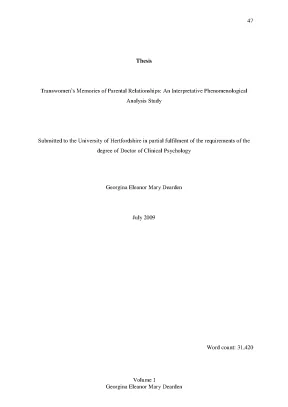
Luận án tiến sĩ tâm lý học lâm sàng (Doctor of Clinical Psychology) của tác giả Georgina Eleanor Mary Dearden (còn được ghi nhận là Georgina de Lacy Staunton trong phần phụ lục), thực hiện tại Đại học Hertfordshire (University of Hertfordshire, Vương quốc Anh) vào tháng 7 năm 2009 với độ dài văn bản 31.420 từ (Tập I), mang tiêu đề: "Transwomen’s Memories of Parental Relationships: An Interpretative Phenomenological Analysis Study" (Ký ức của người chuyển giới nữ về mối quan hệ với cha mẹ: Một nghiên cứu phân tích hiện tượng học diễn giải).
Về tính cấp thiết và khoảng trống nghiên cứu, tác giả chỉ ra rằng các công trình khoa học trong lịch sử thường tiếp cận người chuyển giới dưới lăng kính bệnh lý hóa, chủ yếu tập trung vào căn nguyên sinh học, tỷ lệ lưu hành hoặc các yếu tố rủi ro và hành vi nguy cơ mà bỏ qua tiếng nói chủ quan của chính người trong cuộc. Trong khi mối quan hệ ban đầu với người chăm sóc chính (cha mẹ) được tâm lý học thừa nhận là nền tảng cốt lõi định hình sự phát triển tâm lý, lòng tự trắc ẩn và các mối quan hệ xã hội suốt đời, chưa có nghiên cứu nào đi sâu tìm hiểu trải nghiệm của người chuyển giới nữ (Transwomen) về mối quan hệ thời thơ ấu với cha mẹ cũng như tác động của các mối quan hệ này đối với bản thân họ và các mối quan hệ tương lai.
Mục tiêu tổng quát của luận án là đạt được cái nhìn sâu sắc mang tính hiện tượng học về trải nghiệm mối quan hệ với cha mẹ của người chuyển giới nữ từ góc nhìn hồi tưởng. Luận án xác định 4 câu hỏi nghiên cứu cụ thể được đánh số theo văn bản như sau:
- Trải nghiệm ban đầu của người chuyển giới nữ về mối quan hệ với cha mẹ của họ là gì? (What were the Transwomen’s experiences of their early relationships with their parents?)
- Bản sắc chuyển giới nữ đang phát triển có tác động như thế nào đến mối quan hệ với cha mẹ? (What was the impact of a developing Transwoman identity on relationships with parents?)
- Tác động của những mối quan hệ ban đầu này đối với bản thân người chuyển giới nữ là gì? (What was the impact of these relationships on the individual?)
- Tác động của những trải nghiệm ban đầu này đối với các mối quan hệ khác sau này như thế nào? (What was the impact of these early experiences upon other relationships?)
Về đối tượng và phạm vi nghiên cứu, đối tượng nghiên cứu là 6 người chuyển giới nữ trưởng thành đã hoàn tất quá trình chuyển giới (post-transition Transwomen) tại Vương quốc Anh, có ký ức nhận thức về cảm xúc chuyển giới từ thời thơ ấu. Phạm vi không gian nghiên cứu gắn liền với địa bàn nước Anh (chủ yếu tại khu vực Luân Đôn và các vùng phụ cận), thông qua mạng lưới các tổ chức cộng đồng người chuyển giới. Phạm vi thời gian bao hàm toàn bộ tiến trình cuộc đời của người tham gia từ giai đoạn thơ ấu, thiếu niên cho đến thời điểm trưởng thành sau chuyển giới.
Tổng quan tài liệu và vị trí của luận án
Trong phần tổng quan tài liệu (Mục 2.3), tác giả đã hệ thống hóa toàn diện các lý thuyết và nghiên cứu thực nghiệm về giới, căn nguyên chuyển giới và các phản ứng gia đình:
- Phân biệt giới và giới tính: Tác giả điểm lại quan điểm phân biệt giữa giới tính sinh học (sex) và đặc điểm xã hội (gender) của Deaux (1985), Newman (2002), đối chiếu với quan điểm của Maccoby (1988) về sự tương tác không thể tách rời giữa sinh học và xã hội, cùng sự phân biệt giữa bản sắc giới (gender identity) và vai trò giới (gender role) của Golombok & Fivush (1994).
- Quan điểm sinh học và thần kinh học: Các nghiên cứu di truyền song sinh chỉ ra thành phần di truyền đối với hành vi phi điển hình giới (van Beijsterveldt, Hudziak & Boomsma, 2006; Knafo, Iervolino & Plomin, 2005; Coolidge, Thede & Young, 2002). Các nghiên cứu tử thiết của Zhou, Hofman, Gooren & Swaab (1995), Kruijver và cộng sự (2000), cùng Garcia-Falgueras & Swaab (2008) phát hiện cấu trúc nhân đệm dải tận cùng (BSTc) và nhân uncinate vùng dưới đồi ở người chuyển giới nữ có thể tích và số lượng tế bào thần kinh tương đương với nữ giới thuận tính.
- Lý thuyết phân tâm học: Phân tâm học cổ điển của Freud (1931/1967), tái cấu trúc của Chodorow (1978), cùng các mô hình bệnh lý hóa của Stoller (1968) và Mayer (1982) giải thích chuyển giới qua xung đột gia đình hoặc gắn bó quá mức với mẹ, vốn bị phê phán vì thiếu bằng chứng thực nghiệm vững chắc.
- Lý thuyết học tập xã hội và nhận thức: Bandura (1977), Mischel (1966), Maccoby & Jacklin (1974), Lytton & Romney (1991) giải thích vai trò củng cố và bắt chước khuôn mẫu. Trường hợp "John/Joan" (Money, 1975; Diamond & Sigmundson, 1997) và nghiên cứu của Roberts và cộng sự (1987) đã phản bác giả thuyết cho rằng việc nuôi dạy thuần túy quyết định bản sắc giới. Lý thuyết phát triển nhận thức của Kohlberg (1966), Slaby & Frey (1975), lý thuyết lược đồ giới (Martin & Ruble, 2004), và mô hình đa chiều của Egan & Perry (2001; Carver, Yunger & Perry, 2003) giải thích áp lực tuân thủ chuẩn mực giới.
- Lý thuyết Queer và bối cảnh xã hội: Ảnh hưởng từ Michel Foucault (1981, 1988, 2004), Hall (2003), xem xét giới như một kiến tạo xã hội phi nhị nguyên, dẫn chứng hiện tượng "Fa'afafine" ở Samoa (Vasey & Bartlett, 2007), "giới thứ ba" trong văn hóa Hindu (Nanda, 1986). Đồng thời, các tài liệu ghi nhận mức độ kỳ thị, bạo lực và phân biệt đối xử cao đối với người chuyển giới (Lombardi và cộng sự, 2001; Blackham, 2006; Ryan & Rivers, 2003).
- Mô hình giai đoạn phát triển bản sắc và phản ứng gia đình: Các mô hình giai đoạn của Gagne, Tewksbury & McGaughey (1997), Devor (2004 - mô hình 14 giai đoạn), Bockting & Coleman (2007). Các mô hình phản ứng gia đình của Emerson & Rosenfeld (1996), Lev (2004), Zamboni (2006), Wren (2002), và quan điểm tương tác của Jones & Tinker (1982).
- Lý thuyết gắn bó: Nền tảng của Bowlby (1970, 1979, 1982), Ainsworth & Bell (1970), các nghiên cứu gắn bó ở trẻ em và người lớn (Hazan & Shaver, 1994; Landolt và cộng sự, 2004; Birkenfeld-Adams, 1999).
Khoảng trống nghiên cứu được luận án giải quyết: Phần lớn các nghiên cứu trước đây là định lượng, tiếp cận từ góc độ y khoa hoặc dịch tễ học, hoặc phỏng vấn cha mẹ có con rối loạn định dạng giới (như nghiên cứu của Wren, 2002). Luận án của Dearden lấp đầy khoảng trống bằng cách sử dụng phương pháp tiếp cận định tính trực tiếp, tôn trọng tiếng nói chủ quan của người chuyển giới nữ để làm sáng tỏ cách thức họ trải nghiệm và gán ý nghĩa cho các mối quan hệ với cha mẹ trong quá khứ.
Cơ sở lý thuyết và phương pháp nghiên cứu
Cơ sở lý thuyết và lập trường nhận thức luận
Luận án đứng trên lập trường nhận thức luận kiến tạo (constructivist paradigm) (Magoon, 1977; Ponterotto, 2005), khẳng định sự tồn tại của nhiều thực tại chủ quan và ưu tiên giá trị trải nghiệm của cá nhân. Nghiên cứu kết hợp khung lý thuyết hiện tượng học (Phenomenology) từ Edmund Husserl và lý thuyết thông diễn học (Hermeneutics) từ Martin Heidegger:
- Husserl: Nhấn mạnh việc khám phá trải nghiệm chủ quan và khái niệm "đặt trong ngoặc" (bracketing) để gạt bỏ các định kiến sẵn có.
- Heidegger: Nhấn mạnh rằng mọi sự hiểu biết đều mang tính diễn giải và gắn liền với thế giới văn hóa, ngôn ngữ, quan hệ xã hội.
- Thông diễn học kép (Double hermeneutic): Quá trình nhà nghiên cứu cố gắng giải nghĩa cách thức mà người tham gia tự giải nghĩa trải nghiệm của chính họ.
Trong phần thảo luận kết quả, tác giả vận dụng lý thuyết về Sự gắn kết giữa cha mẹ và con cái (Parent Child Connectedness - PCC) và quyền tự chủ tâm lý (psychological autonomy) để phân tích các cơ chế thích ứng.
Phương pháp nghiên cứu thực tế
Nghiên cứu áp dụng phương pháp Phân tích Hiện tượng học Diễn giải (Interpretative Phenomenological Analysis - IPA) do Jonathan Smith khởi xướng (Smith, Jarman & Osborn, 1999; Smith & Osborn, 2003; Smith, Flowers & Larkin, 2009).
- Mẫu nghiên cứu: Mẫu chủ đích đồng nhất gồm 6 người chuyển giới nữ. Tiêu chí lựa chọn: là người chuyển giới nữ trưởng thành (từ 18 tuổi trở lên), đã hoàn thành chuyển giới (post-transition), và có ký ức về việc trải nghiệm cảm xúc chuyển giới từ sớm.
- Tuyển chọn: Thông qua các tổ chức cộng đồng người chuyển giới tại Anh (TransLondon, Beaumont Society, Spectrum Haringey, FTM London) và các diễn đàn trực tuyến. Trong 7 người tình nguyện, 6 người đáp ứng tiêu chuẩn và 1 người bị loại do đang ở giai đoạn tiền chuyển giới (pre-transition).
- Thu thập dữ liệu: Phỏng vấn bán cấu trúc sâu (semi-structured interviews) kéo dài khoảng 60 phút tại các địa điểm linh hoạt (nhà riêng của người tham gia, phòng nghiên cứu tại Đại học Hertfordshire hoặc phòng thuê tại Luân Đôn). Quy trình phỏng vấn được rèn luyện qua 4 buổi phỏng vấn thử nghiệm (2 với đồng nghiệp, 2 với người hướng dẫn IPA) và 1 cuộc phỏng vấn thí điểm (pilot interview) trước khi tiến hành 5 cuộc phỏng vấn chính thức.
- Đạo đức nghiên cứu và kiểm tra độ tin cậy: Nghiên cứu được Hội đồng Đạo đức Nghiên cứu Đại học Hertfordshire phê duyệt. Tác giả thực hiện các nguyên tắc của Hội Tâm lý học Anh (BPS, 2005, 2006) và Bộ Y tế Anh (DH), bao gồm: cam kết nghiên cứu có sự tham gia của người sử dụng dịch vụ (service user led research), thỏa thuận đồng thuận tham gia, bảo mật danh tính tuyệt đối bằng tên giả (pseudonyms), quản lý rủi ro tổn thương cảm xúc thông qua bảng hướng dẫn nguồn hỗ trợ (Sources of comfort sheet với đường dây nóng The Gender Trust và Samaritans). Kiểm tra độ tin cậy thực hiện qua giám sát học thuật định kỳ và gửi thư tóm tắt phân tích cho người tham gia để phản hồi (member checking).
Đặc điểm mẫu người tham gia nghiên cứu
| Mã số & Tên giả |
Độ tuổi |
Dân tộc tự mô tả |
Tình trạng chuyển giới |
Bản sắc giới tự mô tả |
Xu hướng tính dục tự mô tả |
Trình độ học vấn |
| P1: Laura |
39 |
Da trắng (Caucasian) |
Đã chuyển giới (Yes) |
Nữ chuyển giới (Trans-female) |
Chưa rõ ràng; trước đây nhận là dị tính, hiện đang trong mối quan hệ nghiêm túc với một bạn nữ |
Thạc sĩ (MA) |
| P2: Sarah |
60 |
Da trắng (White) |
Đã chuyển giới (Yes) |
Nữ / Linh hoạt (Female/Variable) |
Song tính (Bi) |
Bằng Cao đẳng Quốc gia (HND) |
| P3: Kate |
56 |
Da trắng gốc Anh (White British) |
Đã chuyển giới (Yes) |
Nữ (Female) |
Dị tính một vợ một chồng (Monogamous heterosexual) |
Thạc sĩ (MSc) |
| P4: Sophie |
46 |
Da trắng gốc Anh (British White) |
Đã chuyển giới (Yes) |
Nữ (Female) |
Queer |
Cử nhân (Degree) |
| P5: Claire |
59 |
Người Anh gốc Ireland và Scotland |
Đã chuyển giới (Yes) |
Nữ (Female) |
Đồng tính nữ (Lesbian) |
Cử nhân (BA) |
| P6: Tanya |
51 |
Người xứ Wales (Welsh) |
Đã chuyển giới (Yes) |
Nữ (Female) |
Dị tính (Heterosexual) |
Cử nhân Khoa học (BSc) |
Nội dung chính theo từng chương
Chapter 1: Abstract & Chapter 2: Introduction (Tổng quan và Cơ sở lý luận)
Chương này thiết lập cơ sở nhận thức luận của nghiên cứu, khẳng định lập trường đồng cảm (empathic position) nhằm giải bệnh lý hóa (depathologising) cộng đồng chuyển giới. Tác giả tổng hợp các lý thuyết về giới từ sinh học, phân tâm học, học tập xã hội đến nhận thức luận và lý thuyết đa chiều của Egan & Perry (2001). Chương này cũng điểm lại các chẩn đoán tâm thần như Rối loạn Định dạng Giới (GID/GIDC trong DSM-IV), các tranh luận xung quanh tính hợp thức của chẩn đoán, sự kỳ thị xã hội và các can thiệp lâm sàng từ trẻ em đến người lớn (bao gồm liệu pháp hành vi của Zucker, tiếp cận chấp nhận của Phòng khám Portman do Di Ceglie dẫn dắt, và Phẫu thuật Xác nhận Giới tính - GCS). Tác giả xác định câu hỏi nghiên cứu và nhấn mạnh vai trò cần thiết của tâm lý học lâm sàng trong việc lắng nghe tự sự của người chuyển giới.
Chapter 3: Methodology (Phương pháp luận nghiên cứu)
Chương 3 trình bày chi tiết tiến trình thiết kế nghiên cứu theo phương pháp IPA. Tác giả biện giải tính phù hợp của IPA so với Lý thuyết nền tảng (Grounded Theory) hoặc phân tích kiến tạo xã hội thuần túy, mô tả cơ sở triết học từ Husserl và Heidegger. Nội dung chương bao gồm: tiêu chuẩn chọn mẫu (tính đồng nhất), chiến lược tuyển mẫu qua 4 tổ chức cộng đồng tại Anh, quy trình xây dựng bảng câu hỏi bán cấu trúc với sự cố vấn chuyên môn, quy trình phỏng vấn thử nghiệm, phỏng vấn thí điểm và 5 phỏng vấn chính thức. Tác giả trình bày các giải pháp đạo đức đặc thù cho nhóm yếu thế (chống tổn thương cảm xúc, bảo mật dữ liệu) và các bước phân tích IPA từng trường hợp trước khi tích hợp liên trường hợp, kèm theo quy trình kiểm tra độ tin cậy (credibility checks) và kiểm tra chéo với người tham gia (member checking).
Chapter 4: Results (Kết quả phân tích hiện tượng học)
Chương kết quả thể hiện các chủ đề được trích xuất từ dữ liệu phỏng vấn sâu của 6 người tham gia. Kết quả phân tích IPA làm nổi bật 2 chủ đề lớn (major themes) bao gồm 8 chủ đề siêu thứ cấp (super ordinate themes):
SƠ ĐỒ CÁC CHỦ ĐỀ CHÍNH TRONG KẾT QUẢ NGHIÊN CỨU:
1. Chủ đề lớn: Cuộc đấu tranh để thuộc về (The struggle to belong)

2. Chủ đề lớn: Hành trình phức tạp để trở thành chính mình (The complex journey to becoming me)
Các phát hiện chi tiết theo từng chủ đề siêu thứ cấp bao gồm:
- Alienation of uncommon discourse / The influence of context: Người tham gia trong giai đoạn thập niên 1950–1960 hoàn toàn thiếu hụt hệ thống ngôn ngữ và diễn ngôn văn hóa để hiểu được cảm xúc giới của mình. Sự kỳ vọng của mô hình xã hội nam tính tạo ra lực lượng đè nén nặng nề.
- The eternal quest to connect with parents / The disappointing feminine me: Người tham gia luôn khao khát kết nối và làm hài lòng cha mẹ nhưng đối mặt với sự thất vọng sâu sắc từ phụ huynh khi họ bộc lộ nét nữ tính. Người tham gia cảm nhận mình là "sai trái" (wrong self), không thể đáp ứng kỳ vọng của gia đình.
- Disconnection, disconnecting, disconnected / The unacceptable me: Để tồn tại, chiến lược phòng vệ chính của người tham gia trong thời thơ ấu và niên thiếu là "đè nén cảm xúc" (suppression of feelings) và "phủ nhận sự tồn tại" (denial of being). Điều này dẫn đến trạng thái phân tách giữa hành vi bên ngoài và thế giới nội tâm, tạo ra cảm giác xa cách (distance), không hòa nhập (unintegrated) và trôi dạt trong thế giới xã hội.
- Parental influence on later relationships / The struggle in new relationships: Ký ức tuổi thơ ảnh hưởng trực tiếp đến việc né tránh các hình mẫu quyền uy trong các mối quan hệ trưởng thành. Một số người tham gia duy trì vai trò nam giới trong hôn nhân như một "món nợ đạo đức" (moral debt) để duy trì gia đình, cho đến khi có sự đổ vỡ lòng tin mới tạo ra "sự cho phép về mặt đạo đức" (moral permission) để họ sống thật với chính mình.
- Integration and connection / The complexity of realising me: Quá trình chuyển giới khi trưởng thành được mô tả không phải là việc trở thành một người khác mà là "ngừng phủ nhận bản thân" (stopped denying self), đưa "nội tâm bộc lộ ra bên ngoài" (inner becoming outer) để đạt được sự tự do, tích hợp và hạnh phúc trọn vẹn.
Chapter 5: Discussion & Chapter 6: Conclusions (Thảo luận và Kết luận)
Chương thảo luận đối chiếu các phát hiện với các mô hình lý thuyết:
- Vận dụng lý thuyết Gắn kết Cha mẹ - Con cái (Parent Child Connectedness - PCC) và quyền tự chủ tâm lý (psychological autonomy) để giải thích sự tổn thương trong gắn bó ban đầu. Việc cha mẹ từ chối tính nữ đã ngăn cản sự phát triển tự chủ tâm lý lành mạnh.
- Phân tích cơ chế "biểu diễn để sinh tồn" (perform to survive) và sự đè nén bản sắc như một phản ứng thích ứng trong điều kiện thiếu vắng sự chấp nhận.
- Đánh giá điểm mạnh và hạn chế của nghiên cứu, rút ra kết luận tổng thể và hàm ý thực tiễn cho ngành tâm lý học lâm sàng.
Kết quả và những đóng góp mới
Đóng góp mới về mặt lý luận
- Bổ sung góc nhìn tương tác động và bối cảnh hóa: Luận án cung cấp bằng chứng hiện tượng học sâu sắc, phản bác các mô hình bệnh lý hóa phân tâm học cổ điển vốn quy chụp chuyển giới là hệ quả của rối loạn gia đình đơn thuần. Thay vào đó, nghiên cứu khẳng định mô hình tương tác động (interactionalist understanding): bản sắc giới phát triển trong sự tương tác phức tạp giữa yếu tố sinh học tự nhiên và phản ứng xã hội - gia đình.
- Làm rõ cơ chế thích ứng tâm lý qua sự đè nén: Luận án phát hiện rằng sự đè nén tính nữ trong thời thơ ấu của người chuyển giới nữ không chỉ là sự che giấu hành vi mà là một chiến lược tâm lý phòng vệ nhằm "sinh tồn" (survival) trước áp lực chuẩn mực xã hội và nguy cơ đổ vỡ mối quan hệ gắn bó với cha mẹ.
- Tái định nghĩa tiến trình chuyển giới: Dữ liệu thực nghiệm của luận án khẳng định đối với người chuyển giới nữ, quá trình chuyển đổi giới tính không phải là việc biến đổi sang một bản thể xa lạ ("không chuyển đổi bất kỳ điều gì"), mà là tiến trình "ngừng phủ nhận chính mình" để nội tâm và ngoại hình đạt được sự thống nhất tích hợp (integration).
Đóng góp về mặt thực tiễn và kiến nghị lâm sàng
- Đào tạo tâm lý học lâm sàng: Luận án nhấn mạnh sự cần thiết phải đưa nội dung đào tạo về đa dạng giới vào chương trình sau đại học của các nhà tâm lý học lâm sàng, nâng cao nhận thức để tránh thái độ thiên kiến ngầm (anti-LGBT bias) đội lốt tính trung lập trị liệu (như cảnh báo từ nghiên cứu của Willging và cộng sự, 2006; Tacconelli, 2008).
- Áp dụng mô hình trị liệu khẳng định chuyển giới: Khuyến nghị các nhà lâm sàng áp dụng mô hình trị liệu tích cực (transpositive therapeutic model theo Raj, 2002; Manners, 2009), hỗ trợ thân chủ xây dựng sự chấp nhận bản thân thay vì cố gắng điều chỉnh hành vi cho phù hợp với khuôn mẫu giới truyền thống.
- Hỗ trợ tâm lý gia đình: Đề xuất can thiệp sớm cho phụ huynh có con bộc lộ hành vi phi điển hình giới thông qua các nhóm hỗ trợ cha mẹ (tương tự mô hình của Menvielle & Tuerk, 2002; Rosenberg, 2002), giúp cha mẹ xử lý cảm xúc mất mát và duy trì sự gắn kết ấm áp với trẻ nhằm ngăn ngừa các tổn thương tâm lý lâu dài.
Hạn chế và hướng nghiên cứu tiếp
Hạn chế của nghiên cứu
Theo tự nhận định của tác giả trong văn bản:
- Quy mô và tính đại diện của mẫu: Mẫu nghiên cứu nhỏ (6 người tham gia), thuần nhất là người chuyển giới nữ da trắng thuộc các nhóm dân tộc da trắng khác nhau tại Anh, do đó không phản ánh toàn diện trải nghiệm của người chuyển giới thuộc các nền văn hóa hoặc sắc tộc thiểu số khác.
- Đặc điểm hồi tưởng (Recall bias): Việc hồi tưởng lại ký ức thời thơ ấu từ góc nhìn của người trưởng thành sau chuyển giới có thể chịu ảnh hưởng của các trải nghiệm cuộc sống sau này và quá trình tái cấu trúc tự sự cá nhân.
- Thiên vị tự lựa chọn (Self-selection bias): Những người tình nguyện tham gia nghiên cứu có thể là những cá nhân có mức độ cởi mở, tự nhận thức cao hoặc đã đạt được sự ổn định tâm lý nhất định sau chuyển giới.
- Thách thức kép của nhà nghiên cứu: Tác giả đồng thời là học viên tâm lý học lâm sàng, tạo ra sự giằng co giữa vai trò của một nhà trị liệu đồng cảm và một nhà nghiên cứu hiện tượng học khách quan.
Hướng nghiên cứu tiếp
- Mở rộng nghiên cứu hiện tượng học trên nhóm người chuyển giới nam (Transmen) và những người đang ở giai đoạn tiền chuyển giới (pre-transition) hoặc đang trong tiến trình chuyển giới.
- Khảo sát trải nghiệm của người chuyển giới thuộc các nhóm dân tộc thiểu số và các bối cảnh văn hóa phi phương Tây.
- Thực hiện các nghiên cứu theo dõi dọc (longitudinal studies) để đánh giá sự phát triển mối quan hệ gắn bó gia đình từ thời thơ ấu đến tuổi trưởng thành của những cá nhân có biểu hiện không phù hợp khuôn mẫu giới.
Giá trị tham khảo
Luận án mang lại giá trị học thuật và thực tiễn chuyên sâu cho nhiều nhóm đối tượng:
- Nhà tâm lý học lâm sàng và chuyên gia tâm thần học: Là tài liệu tham khảo quan trọng để thấu hiểu thế giới nội tâm, các rào cản tâm lý và chấn thương gắn bó của người chuyển giới nữ; cung cấp cơ sở để thực hành trị liệu khẳng định bản sắc giới (affirmative therapy).
- Học viên cao học và nghiên cứu sinh tâm lý học / xã hội học: Là công trình mẫu mực về việc ứng dụng phương pháp Phân tích Hiện tượng học Diễn giải (IPA) trong việc tiếp cận các nhóm đối tượng yếu thế và nhạy cảm; cung cấp quy trình chi tiết từ phỏng vấn thử nghiệm, kiểm tra độ tin cậy đến đạo đức nghiên cứu.
- Nhà trị liệu gia đình và chuyên gia công tác xã hội: Hữu ích trong việc xây dựng các chương trình tư vấn, can thiệp hỗ trợ phụ huynh có con em gặp khó khăn về định dạng giới, giúp duy trì sợi dây gắn kết giữa cha mẹ và con cái.
- Các phần đáng tham khảo nhất:
- Mục 2.3: Tổng quan toàn diện các trường phái lý thuyết về giới, căn nguyên sinh học và phản ứng gia đình.
- Mục 3.1 - 3.8: Quy trình phương pháp luận IPA và các tiêu chuẩn đạo đức nghiên cứu nhạy cảm giới.
- Các bảng chủ đề và trích đoạn phỏng vấn trong phần Phụ lục (Appendices 9-12), minh họa chân thực tiến trình phân tích dữ liệu định tính.
Câu hỏi thường gặp
1. Luận án sử dụng phương pháp nghiên cứu nào và kích thước mẫu là bao nhiêu?
Luận án sử dụng phương pháp định tính Phân tích Hiện tượng học Diễn giải (Interpretative Phenomenological Analysis - IPA) với cỡ mẫu gồm 6 người chuyển giới nữ trưởng thành (độ tuổi từ 39 đến 60) đã hoàn tất chuyển giới tại Vương quốc Anh.
2. Hai chủ đề lớn (major themes) được phát hiện trong nghiên cứu là gì?
Hai chủ đề lớn xuất hiện từ dữ liệu phân tích là:
- Cuộc đấu tranh để thuộc về (The struggle to belong) – bao gồm 6 chủ đề siêu thứ cấp phản ánh cảm giác bản thân nữ tính gây thất vọng, sự ngắt kết nối với cha mẹ, sự không chấp nhận của xã hội và áp lực sinh tồn bằng cách đè nén bản sắc.
- Hành trình phức tạp để trở thành chính mình (The complex journey to becoming me) – bao gồm 2 chủ đề siêu thứ cấp phản ánh tiến trình nhận thức bản thân, sự tích hợp nội tâm và tái kết nối xã hội khi sống thật với chính mình.
3. Khung lý thuyết nào được tác giả sử dụng chính để thảo luận kết quả nghiên cứu?
Tác giả thảo luận kết quả nghiên cứu chủ yếu dựa trên lý thuyết Gắn kết Cha mẹ - Con cái (Parent Child Connectedness - PCC) và lý thuyết về quyền tự chủ tâm lý (psychological autonomy), kết hợp với lý thuyết gắn bó của John Bowlby và các quan điểm kiến tạo xã hội / lý thuyết Queer chịu ảnh hưởng từ Michel Foucault.
4. Các biện pháp đạo đức đặc thù nào đã được áp dụng trong quá trình thu thập dữ liệu?
Tác giả đã triển khai nghiên cứu có sự tham gia của cộng đồng người chuyển giới ngay từ khâu thiết kế, thu thập phiếu đồng thuận tham gia, bảo mật danh tính tuyệt đối bằng tên giả và lược bỏ địa danh, cung cấp tờ thông tin hỗ trợ tâm lý (Sources of comfort sheet với số liên hệ của The Gender Trust và Samaritans), đồng thời thực hiện kiểm tra độ tin cậy qua phản hồi tóm tắt của người tham gia (member checking).
Kết luận
Luận án tiến sĩ của Georgina Eleanor Mary Dearden là một công trình nghiên cứu hiện tượng học chuyên sâu về ký ức và trải nghiệm mối quan hệ với cha mẹ của người chuyển giới nữ tại Vương quốc Anh. Thông qua phương pháp IPA trên 6 trường hợp điển hình, nghiên cứu đã làm sáng tỏ tiến trình đấu tranh tâm lý từ sự đè nén bản sắc thời thơ ấu để duy trì sự gắn kết gia đình đến sự giải phóng và tích hợp bản thân ở tuổi trưởng thành. Kết quả nghiên cứu đóng góp cơ sở dữ liệu định tính có giá trị cao, hỗ trợ việc phi bệnh lý hóa bản sắc chuyển giới và định hướng cho công tác thực hành tâm lý học lâm sàng khẳng định giới.