Fundamentals of Civil Engineering: Giới thiệu ASCE Body of Knowledge | Wong

Chuyên ngành

Kỹ thuật dân dụng

Người đăng

Ẩn danh

Thể loại

Sách giáo khoa

2011

231
0
0

Phí lưu trữ

55 Point

Tóm tắt

I. Tổng quan về cuốn sách Fundamentals of Civil Engineering ASCE BOK

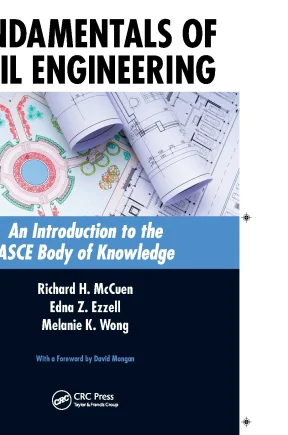
Cuốn sách Fundamentals of Civil Engineering: An Introduction to the ASCE Body of Knowledge do Richard H. McCuen, Edna Z. Ezzell và Melanie K. Wong biên soạn, xuất bản năm 2011 bởi CRC Press. Đây là tài liệu giới thiệu toàn diện về nền tảng tri thức nghề kỹ sư xây dựng theo chuẩn ASCE Body of Knowledge. Cuốn sách tập trung vào việc trang bị cho sinh viên kỹ sư xây dựng kiến thức nền tảng không chỉ về kỹ thuật mà còn về nhân văn, khoa học xã hội và đạo đức nghề nghiệp. ASCE Body of Knowledge xác định các năng lực cần thiết cho kỹ sư xây dựng trong thế kỷ 21. Nội dung sách bao gồm nhiều chương đề cập đến vai trò của nhân văn trong kỹ thuật, khoa học xã hội, đạo đức nghề nghiệp, phương pháp thực nghiệm và tư duy phản biện. Cuốn sách nhấn mạnh rằng kỹ sư xây dựng hiện đại cần phát triển toàn diện, không chỉ nắm vững kiến thức kỹ thuật mà còn phải hiểu biết sâu sắc về bối cảnh văn hóa, xã hội và môi trường. Đây là tài liệu tham khảo quan trọng cho chương trình đào tạo kỹ sư xây dựng.

1.1. Bối cảnh xuất bản và tác giả

Richard H. McCuen là giáo sư kỹ thuật dân dụng tại Đại học Maryland, có nhiều năm kinh nghiệm giảng dạy và nghiên cứu. Edna Z. Ezzell và Melanie K. Wong đồng biên soạn cuốn sách này dựa trên tiêu chuẩn của Hiệp hội Kỹ sư Dân dụng Hoa Kỳ (ASCE). Cuốn sách được CRC Press thuộc Taylor & Francis Group xuất bản năm 2011, phản ánh yêu cầu đào tạo kỹ sư xây dựng theo hướng toàn diện. ASCE đã xây dựng Body of Knowledge nhằm chuẩn hóa năng lực nghề nghiệp cho kỹ sư trong thế kỷ 21. Cuốn sách đóng vai trò cầu nối giữa chương trình đào tạo đại học và yêu cầu thực tiễn nghề nghiệp.

1.2. Cấu trúc nội dung chính của sách

Cuốn sách được tổ chức theo nhiều chương, mỗi chương tập trung vào một khía cạnh của ASCE Body of Knowledge. Các chương đầu giới thiệu triết lý về nền tảng tri thức và sự phát triển nghề nghiệp. Phần tiếp theo đề cập đến vai trò của nhân văn, bao gồm triết học, nghệ thuật và ngôn ngữ đối với kỹ sư. Các chương về khoa học xã hội phân tích mối quan hệ giữa kỹ thuật và xã hội. Nội dung cũng bao gồm đạo đức nghề nghiệp, phương pháp thực nghiệm và đánh giá tri thức mới. Cấu trúc này đảm bảo người đọc tiếp cận kiến thức một cách hệ thống và toàn diện.

II. Vai trò của nhân văn và khoa học xã hội trong đào tạo kỹ sư

Cuốn sách Fundamentals of Civil Engineering nhấn mạnh tầm quan trọng của nhân văn và khoa học xã hội trong đào tạo kỹ sư xây dựng. Phần về nhân văn thảo luận sâu về triết học, nghệ thuật, ngôn ngữ và văn học. Triết học giúp kỹ sư phát triển kỹ năng ra quyết định và tư duy đạo đức. Nghệ thuật và kiến trúc tạo cảm hứng cho thiết kế sáng tạo. Ngôn ngữ là công cụ giao tiếp chuyên nghiệp quan trọng. Phần khoa học xã hội đề cập đến tâm lý học, xã hội học, kinh tế học và khoa học chính trị. Kiến thức về khoa học xã hội giúp kỹ sư hiểu rõ tác động của công trình đến cộng đồng. Cuốn sách chỉ ra rằng kỹ sư xây dựng không chỉ xây dựng cầu đường mà còn ảnh hưởng đến đời sống xã hội. Việc hiểu biết về văn hóa, lịch sử và bối cảnh xã hội giúp kỹ sư đưa ra quyết định phù hợp hơn. Đây là lý do ASCE yêu cầu đào tạo toàn diện cho kỹ sư thế kỷ 21.

2.1. Nhân văn và phát triển tư duy sáng tạo

Phần nhân văn trong sách đề cập đến nhiều lĩnh vực như triết học, nghệ thuật, ngôn ngữ và văn học. Triết học hỗ trợ kỹ sư trong việc ra quyết định đạo đức và đánh giá rủi ro. Nghệ thuật và thiết kế kiến trúc giúp phát triển tư duy sáng tạo trong thiết kế công trình. Ngôn ngữ và kỹ năng viết chuyên nghiệp là yếu tố then chốt cho giao tiếp hiệu quả. Cuốn sách nhấn mạnh rằng sự tò mò và khả năng sáng tạo là động lực phát triển nghề nghiệp. Kỹ sư cần biết cách tạo ra và đánh giá tri thức mới trong cả lĩnh vực nhân văn và kỹ thuật.

2.2. Khoa học xã hội và trách nhiệm cộng đồng

Khoa học xã hội cung cấp cho kỹ sư hiểu biết về hành vi con người và cấu trúc xã hội. Tâm lý học giúp hiểu cách người sử dụng tương tác với công trình kỹ thuật. Xã hội học phân tích tác động của dự án cơ sở hạ tầng đến cộng đồng địa phương. Kinh tế học hỗ trợ đánh giá tính khả thi và hiệu quả kinh tế của dự án. Khoa học chính trị cung cấp bối cảnh về chính sách và quy định. Cuốn sách cho thấy kỹ sư cần cân nhắc yếu tố xã hội để tạo ra công trình phục vụ cộng đồng tốt hơn.

III. Phương pháp thực nghiệm và đánh giá tri thức mới trong kỹ thuật

Cuốn sách Fundamentals of Civil Engineering dành nhiều nội dung cho phương pháp thực nghiệm và đánh giá tri thức mới. Thực nghiệm bắt đầu phát triển mạnh từ thế kỷ 17 với đóng góp của Francis Bacon và René Descartes. Trước đó, khoa học chủ yếu dựa vào lý luận thuần túy. Phương pháp thực nghiệm có hệ thống đã tạo nền tảng cho cuộc cách mạng công nghiệp và các tiến bộ công nghệ hiện đại. Cuốn sách trình bày các bước thiết kế thực nghiệm, bao gồm xác định biến số, kiểm soát yếu tố môi trường và chọn kích thước mẫu phù hợp. Các phương pháp thống kê như hệ số tương quan và sai số trung bình được sử dụng để đánh giá kết quả. Kỹ sư cần hiểu cách áp dụng các phương pháp này để đảm bảo tính chính xác và độ tin cậy của dữ liệu. Việc đánh giá tri thức mới đòi hỏi tính logic, khách quan và nhất quán trong lập luận. Cuốn sách nhấn mạnh tầm quan trọng của tư duy phản biện trong nghiên cứu và thực hành kỹ thuật.

3.1. Thiết kế thực nghiệm và thu thập dữ liệu

Thiết kế thực nghiệm là quy trình có hệ thống đòi hỏi kỹ sư xác định rõ biến số thử nghiệm và biến số phản hồi. Kích thước mẫu phải đủ lớn để đảm bảo kết quả có ý nghĩa thống kê. Các yếu tố môi trường cần được kiểm soát chặt chẽ để loại bỏ ảnh hưởng bên ngoài. Dữ liệu nên được thu thập trong phạm vi rộng của biến thử nghiệm. Việc chọn phương pháp thống kê phù hợp rất quan trọng. Sử dụng sai phương pháp có thể dẫn đến kết luận sai lệch về ảnh hưởng của biến số. Cuốn sách cung cấp hướng dẫn chi tiết về quy trình thực nghiệm.

3.2. Đánh giá tính hợp lệ của tri thức mới

Tri thức mới phải được đánh giá dựa trên tính logic, hợp lý và khả năng chống lại thách thức. Kết luận phản ánh tri thức mới cần thể hiện sự nhất quán trong lập luận và phán đoán không thiên vị. Hệ số tương quan được sử dụng rộng rãi cho phân tích hồi quy tuyến tính. Đối với phân tích phi tuyến, sai số trung bình là chỉ số phù hợp hơn. Cuốn sách nhấn mạnh rằng đánh giá tri thức mới là kỹ năng quan trọng cho cả nghiên cứu nhân văn và kỹ thuật. Kỹ sư cần phát triển khả năng tư duy phản biện để phân biệt thông tin chính xác.

IV. Ứng dụng ASCE Body of Knowledge trong thực hành kỹ sư xây dựng

ASCE Body of Knowledge định nghĩa các năng lực mà kỹ sư xây dựng cần đạt được trong suốt sự nghiệp. Cuốn sách Fundamentals of Civil Engineering đóng vai trò giới thiệu nền tảng cho hệ thống năng lực này. Nội dung bao gồm kiến thức kỹ thuật, kỹ năng mềm, đạo đức nghề nghiệp và trách nhiệm xã hội. Kỹ sư xây dựng cần liên tục cập nhật kiến thức để thích ứng với thay đổi công nghệ và xã hội. Cuốn sách nhấn mạnh rằng sự phát triển nghề nghiệp đòi hỏi tò mò, học hỏi suốt đời và khả năng tạo ra tri thức mới. ASCE khuyến khích kỹ sư tham gia các khóa học nhân văn và khoa học xã hội để phát triển toàn diện. Đạo đức nghề nghiệp là yếu tố cốt lõi, giúp kỹ sư đưa ra quyết định đúng đắn khi đối mặt với tình huống phức tạp. Cuốn sách cũng đề cập đến tầm quan trọng của giao tiếp hiệu quả và làm việc nhóm. Áp dụng ASCE Body of Knowledge giúp đảm bảo chất lượng và an toàn công trình xây dựng.

4.1. Đạo đức nghề nghiệp và ra quyết định

Đạo đức nghề nghiệp là nền tảng của ASCE Body of Knowledge. Kỹ sư xây dựng phải đối mặt với nhiều tình huống đạo đức phức tạp trong thực hành nghề nghiệp. Cuốn sách trình bày các nguyên tắc đạo đức và cách áp dụng vào thực tế. Ra quyết định đạo đức đòi hỏi cân nhắc giữa lợi ích kinh tế, an toàn công cộng và bảo vệ môi trường. Kỹ sư cần hiểu rõ quy tắc đạo đức của ASCE và các tổ chức nghề nghiệp. Việc rèn luyện tư duy đạo đức từ khi còn là sinh viên giúp hình thành nhân cách nghề nghiệp vững chắc.

4.2. Phát triển nghề nghiệp suốt đời

ASCE Body of Knowledge nhấn mạnh rằng học tập không dừng lại sau khi tốt nghiệp đại học. Kỹ sư xây dựng cần liên tục cập nhật kiến thức và kỹ năng để duy trì năng lực nghề nghiệp. Cuốn sách khuyến khích sự tò mò và chủ động tìm kiếm tri thức mới. Kỹ năng giao tiếp, lãnh đạo và quản lý dự án cần được phát triển song song với kiến thức kỹ thuật. ASCE cung cấp các chương trình đào tạo liên tục và chứng chỉ chuyên môn. Kỹ sư nên tham gia các tổ chức nghề nghiệp để mở rộng mạng lưới và chia sẻ kinh nghiệm.
21/04/2026

Trích đoạn nội dung tài liệu

Wong With a Foreword by David Mongan FUNDAMENTALS OF CIVIL ENGINEERING An Introduction to the ASCE Body of Knowledge FUNDAMENTALS OF CIVIL ENGINEERING An Introduction to the ASCE Body of Knowledge Richard H. Wong With a Foreword by David Mongan Boca Raton London New York CRC Press is an imprint of the Taylor & Francis Group, an informa business CRC Press Taylor & Francis Group 6000 Broken Sound Parkway NW, Suite 300 Boca Raton, FL 33487-2742 © 2011 by Taylor and Francis Group, LLC CRC Press is an imprint of Taylor & Francis Group, an Informa business No claim to original U. Government works Printed in the United States of America on acid-free paper 10 9 8 7 6 5 4 3 2 1 International Standard Book Number: 978-1-4398-5148-7 (Paperback) This book contains information obtained from authentic and highly regarded sources. Reasonable efforts have been made to publish reliable data and information, but the author and publisher cannot assume responsibility for the validity of all materials or the consequences of their use. The authors and publishers have attempted to trace the copyright holders of all material reproduced in this publication and apologize to copyright holders if permission to publish in this form has not been obtained. If any copyright material has not been acknowledged please write and let us know so we may rectify in any future reprint. Except as permitted under U. Copyright Law, no part of this book may be reprinted, reproduced, transmitted, or utilized in any form by any electronic, mechanical, or other means, now known or hereafter invented, including photocopying, microfilming, and recording, or in any information stor- age or retrieval system, without written permission from the publishers. For permission to photocopy or use material electronically from this work, please access www.com (http://www.com/) or contact the Copyright Clearance Center, Inc. (CCC), 222 Rosewood Drive, Danvers, MA 01923, 978-750-8400. CCC is a not-for-profit organization that pro- vides licenses and registration for a variety of users. For organizations that have been granted a pho- tocopy license by the CCC, a separate system of payment has been arranged. Trademark Notice: Product or corporate names may be trademarks or registered trademarks, and are used only for identification and explanation without intent to infringe. Visit the Taylor & Francis Web site at http://www.com and the CRC Press Web site at http://www.com Contents Foreword. xv Chapter 1 Introduction.2 The Philosophy of a Body of Knowledge.3 Bodies of Knowledge and Career Growth.2 Values from the Humanities.3 Philosophy and Decision Making.4 Art and Civil Engineering Design.5 The Importance of Language to a Professional.6 Humanities and a Cultural Perspective.7 Humanities Relevant to Personal and Professional Development.8 Role of Curiosity in Advancement.9 The Creation and Evaluation of New Knowledge in the Humanities. 15 Chapter 3 Social Sciences.2 Definition: Social Sciences.3 Interpersonal Skills and the Social Sciences.4 Physical Geography and Design for Natural Disasters.5 Engineering and Economic Impact.6 Regional Economics, Land Use, and Transportation Planning.7 Analysis of Engineering Problems with Social Science Implications.3 Removal of Dams.8 The Creation of New Social Science Knowledge.9 Validating New Social Science Knowledge.2 Value Issues in Conducting Experiments.3 Elements of Experimentation.4 The Scientific Method.5 Conducting an Engineering Experiment: Procedure.1 State the Problem.2 State the Goal and Objectives.3 Design the Experiment(s).4 Prepare the Experiment.5 Collect the Data.6 Analyze the Experimental Data.7 Identify Implications of Experimental Analyses.8 Report on the Study.6 Application of the Experimental Procedure.2 Goal and Objectives.5 Analysis of Data.6 Implications of the Analysis.7 Factuality, Rationality, and Actuality.3 Why Sustainability Is Important.4 Sustainability and Human Values.5 Ethics of Sustainable Development.6 Sustainability and the Transfer of Technology.7 Creating New Knowledge.8 Evaluating Sustainable Development.1 What Resources Are Used?.2 What Is the Life Cycle of the Project?.3 What Are the Ecological Consequences?.4 Additional Evaluation Considerations.9 Knowledge, Skills, and Attitudes. 54 Chapter 6 Contemporary Issues and Historical Perspectives.2 Technology as a Value Source.1 Is Technology Responsible?.2 The Forces of Knowledge.3 History and Society: Determinants of a Profession’s Growth and Direction.1 The Birth of Modern Science.1 The Pre-Bacon Scientific Climate.2 Francis Bacon and the Scientific Method.2 The Steam Engine and Professional Values.3 Natural Resource Policy and the Public Interest.4 Archimedes and Bernoulli: Leaders in the Advancement of Knowledge.1 Mathematics and Advancements in Knowledge.2 Advances in the Methods of Science.5 Engineering Involvement in Contemporary Issues.1 Contemporary Issue: The Impacts of Terrorism.2 Contemporary Issue: Conflicts over Water Supply.3 Contemporary Issue: Recycling.4 Contemporary Issue: Ecological Change. 72 Chapter 7 Risk and Uncertainty.2 Values Relevant to Risk.4 Uncertainty of Knowledge.5 Uncertainty in Data and Measurement.6 Engineering Risk: Interpretation and Estimation.7 Principles of Probability and Statistics.8 Risk, Technology, and Public Policy: A Triad.1 Ethics and Risk.2 The Role of the Engineer: Technical Considerations.3 The Role of the Engineer: Human Value Considerations.4 The Role of Society.5 The Role of Engineering Education.9 Risk and Value Conflicts.2 Values Relevant to Communication.3 Characteristics of Effective Communication.4 Developing Good Communication Skills.5 Presenting Technical Material to a Nontechnical Audience.2 Phase II: Communication.3 Phase III: Follow-Up.6 General Structure of a Report.7 Guidelines for Oral Presentations.1 Formulating the Presentation.2 Developing the Presentation.3 Rehearsing the Presentation.4 Making the Presentation.5 Responding to Questions.8 Listening as a Communication Skill.9 Self-Evaluation in Communication. 98 Chapter 9 Public Policy.4 Actively Participating in Public Policy.1 Letters to the Editor.2 Interact with Political Representatives.4 Interaction with Public Agencies.5 Associate with Professional Societies.5 Analysis of a Sample Policy Statement.6 Ethical Issues Relevant to Public Policy.3 Values Relevant to Globalization.4 Criteria to Address Global Issues.5 The Global Engineering Workplace.1 Levels of Globalization.2 The Global Engineering Workplace.3 Globalization and the Job Market.6 Active Participation in Globalization.3 Principles of Leadership.4 Attitudes and Skills of Leaders.5 Values in Leadership.6 Ethical Issues of Leadership.7 Gaining Leadership Experience.8 Leadership in an Engineering Career.9 Considerations for Creating a New Organization.10 Evaluation of Leadership.2 Values Relevant to Teamwork.3 Gaining Experience at the Undergraduate Level.4 Team Formation and Evolution.5 Factors Important to Team Success.6 Time Management in Teamwork.2 To-Do Lists.7 Communication in Teamwork.8 Commitment to Change and Innovation in Teamwork.9 Motivation in Teamwork.10 Creativity in Teamwork.11 Evaluation of Team Performance.1 Appraisal of Team Members.2 Appraisal of Team Leader.2 Attitudes and Job Responsibilities.1 Developing an Attitude of Commitment.4 Attitude: High Expectations.1 Developing an Attitude of High Expectations.5 Attitude: Self-Confidence.1 Developing a Self-Confidence Plan.2 Developing an Attitude of Self-Confidence.3 Developing Self-Confidence in Others.1 Developing a Sense of Curiosity.2 The Creative Process.3 Developing a Creative Attitude.1 Self-Enhancement of Ethical Maturity.1 Developing an Attitude of Persistence.1 Developing the Ability to Persuade.1 Evaluating Your PO Attitude.2 Developing an Attitude of Optimism.12 Self-Evaluation of Attitude.1 Effect of the Messenger.2 Effect of the Message.3 The Message Receiver.4 Changing One’s Own Attitude.14 Creating an Attitude-Sensitive Organizational Structure. 165 Chapter 14 Lifelong Learning.2 Lifelong Learning: A Definition.3 Values Relevant to Lifelong Learning.4 Skills and Attitudes Important to Lifelong Learning.1 The Process of Self-Study.5 Self-Study Planning.6 Approaches to Lifelong Learning.7 Developing a Learning Plan.8 Evaluation of a Self-Study Activity. 177 Chapter 15 Professional and Ethical Responsibilities.4 Examples of Ethical Issues.2 Values and Value Systems.3 Characteristics of a Professional.4 Codes of Ethics: Objectives.5 Responsibilities Inherent to Codes of Ethics.7 Value Decision Making.9 Resolving Ethical Conflicts.10 Characteristics of Unethical Conduct.7 The Report Introduction.2 Guidelines for Oral Presentations.1 Formulating the Presentation.2 Developing the Presentation.3 Rehearsing the Presentation.4 Making the Presentation.5 Responding to Questions. 205 Appendix B: Creativity and Innovation.2 The Creative Process.3 Myths about Creativity.4 The Importance of Creativity. 215 Foreword Most definitions of a learned profession state that it must include at least three ele- ments: (1) an association or organization for the profession, (2) an ethical code of conduct, and (3) a definitive statement of the knowledge required to practice the profession. The civil engineering profession has had an organization, the American Society of Civil Engineers, since 1852 and a code of ethics since 1914. It is only with the publication of the Body of Knowledge (BOK), first in 2005 and the second edition in 2008, that the civil engineering profession defined the knowledge, skills, and attitudes needed to practice civil engineering at the professional level. Prior to then, the defining of required knowledge was left to ABET through its accredita- tion process. In 1995, the American Society of Civil Engineers (ASCE) convened a summit on civil engineering education. One of the outcomes was the agreement that the current undergraduate degree as defined by Accreditation Board for Engineering and Technology (ABET) was inadequate for the preparation of civil engineers to practice at the professional level. Subsequently in 2004, the National Academy of Engineering published Vision for the Engineer of 2020, which stated that “almost all discussions of educating the engineer of 2020 presumes additions to the curricu- lum—more on communications, more of the social sciences, more on business and economics, more cross-cultural studies …, and so forth.” ASCE, in 2007, published its own Vision for Civil Engineering in 2025 that set forth an aspirational vision of what a civil engineer in the future should be. In order to achieve this vision, the report detailed specific knowledge, skills, and attitudes needed by the civil engineer of the future. ASCE’s BOK presented the knowledge, skills, and attitudes that civil engineers need to know, while ASCE’s vision for the civil engineering profession defined why they need to possess these characteristics. This primer delves into how to obtain the necessary knowledge, skills, and attitudes. While not addressing the technical out- comes identified in the BOK, it focuses on the fourteen outcomes that are currently not fully explored in today’s traditional civil engineering curriculum. Its objective is to help civil engineers understand their role in society, society’s impact on them, and their own impact on society. The primer provides resources, discussions, and exercises to accomplish this. It is a very useful companion to both ASCE’s vision document and the BOK, and is not just intended for educators but also students and practitioners. The latter group could easily benefit by reading this book and devel- oping the needed skills and attitudes necessary to succeed in an ever-increasingly complex world. Mongan, PE, F ASCE ASCE President 2007–2008 xiii Preface The second edition of the ASCE Body of Knowledge (BOK) states: For purposes of the civil engineering BOK, outcomes are statements that describe what individuals are expected to know and be able to do by the time of entry into the practice of Civil Engineering at the professional level in the 21st century—that is, attain licensure. Outcomes define the knowledge, skills, and attitudes that individuals acquire through appropriate formal education and prelicensure experience.1 It is quite likely that most civil engineering programs as they are currently structured do not fully meet this goal. The technical side of the BOK is proba- bly addressed adequately, likely even more than adequately. However, all students who receive undergraduate degrees in civil engineering probably fail to adequately develop the full range of knowledge, attitudes, and skills suggested and implied by the BOK. Undergraduate civil engineering education would be greatly enhanced if the knowledge, skills, and attitudes (KSAs) stressed in the BOK were more for- mally addressed in the curriculum. This objective will be more easily accomplished if resource material is available. This primer was written as a resource for address- ing some of the KSAs that are not specifically introduced in many undergraduate civil engineering programs. This primer was developed principally as a reference for an undergraduate course where topics identified in the ASCE Body of Knowledge are presented. The material covered in this primer is limited to the nontechnical aspects of civil engineering. The material presented in the book for each BOK outcome is intended as an intro- duction rather than thorough coverage, as an entire three-credit-hour course could be devoted to the individual BOK outcomes like leadership and communication. In addition to civil engineering students, the primer could serve as a resource for those in other engineering disciplines, as many of the BOK outcomes are relevant to success in those fields. While the primer was conceived as a classroom resource, it would certainly be of value to those who have completed their formal education but have an interest in adding breadth to their technical knowledge.

Nội dung được bảo vệ bản quyền — Tải xuống đầy đủ