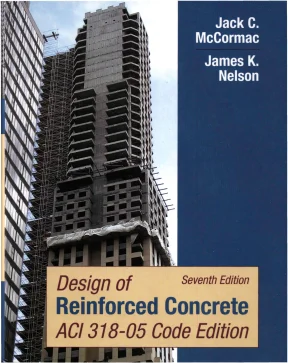
Design of Reinforced Concrete - 7th Edition by Jack C. McCormac & James K. Nelson (ACI 318-05)

Chuyên ngành

Kỹ thuật dân dụng

Người đăng

Ẩn danh

Thể loại

Sách giáo khoa

2006

737
0
0

Phí lưu trữ

135 Point

Tóm tắt

I. Tổng quan về Design of Reinforced Concrete McCormac Nelson

Design of Reinforced Concrete của Jack C. McCormac và James K. Nelson là giáo trình hàng đầu về thiết kế bê tông cốt thép. Ấn bản thứ bảy được cập nhật theo tiêu chuẩn ACI 318-05 của Viện Bê tông Mỹ. Cuốn sách cung cấp nền tảng vững chắc cho sinh viên kỹ thuật xây dựng. Nội dung bao gồm phân tích uốn, cắt, xoắn và thiết kế cột. Mỗi chương trình bày rõ ràng với ví dụ thực tế minh họa. Phương pháp biến đổi diện tích (transformed-area method) được trình bày chi tiết. Sách cũng giải thích ứng suất và biến dạng trong bê tông cốt thép. Đặc biệt, McCormac nhấn mạnh tầm quan trọng của cường độ kéo bê tông. Cuốn sách phù hợp cho khóa học ba tín chỉ giới thiệu và nâng cao. Đây là tài liệu tham khảo không thể thiếu cho kỹ sư kết cấu và sinh viên xây dựng.

1.1. Thông tin xuất bản và tác giả

Jack C. McCormac giảng dạy tại Đại học Clemson, chuyên gia thiết kế kết cấu bê tông. James K. Nelson công tác tại Đại học Western Michigan. Cuốn sách do nhà xuất bản John Wiley & Sons phát hành năm 2006. Ấn bản thứ bảy đánh dấu cập nhật quan trọng theo mã ACI 318-05. Sách được thiết kế cho khóa học giới thiệu ba tín chỉ nhưng đủ tài liệu cho khóa nâng cao. Nội dung trình bày logic, từ cơ bản đến nâng cao, giúp sinh viên tiếp cận dần các khái niệm phức tạp. Nhà xuất bản sử dụng giấy không axit đảm bảo độ bền lâu dài cho tài liệu học thuật.

1.2. Mục tiêu và đối tượng người đọc

Cuốn sách hướng đến sinh viên kỹ thuật xây dựng và kỹ sư kết cấu mới vào nghề. Mục tiêu chính là giới thiệu nguyên lý thiết kế bê tông cốt thép theo tiêu chuẩn ACI. Người đọc được trang bị kiến thức về phân tích uốn, cắt và thiết kế cột. Sách khuyến khích sinh viên tiếp tục nghiên cứu sâu hơn về lĩnh vực này. Các ví dụ thực tế giúp người học liên kết lý thuyết với ứng dụng thực tiễn. Phương pháp trình bày rõ ràng, dễ hiểu phù hợp cho người mới bắt đầu. Cuốn sách cũng hữu ích cho kỹ sư ôn tập kiến thức phục vụ kỳ thi cấp chứng chỉ nghề nghiệp.

II. Phân tích tính chất cơ học của bê tông cốt thép

Bê tông cốt thép có tính chất cơ học phức tạp cần hiểu rõ trước khi thiết kế. Cường độ nén bê tông là thông số quan trọng nhất trong tính toán. Cường độ kéo chỉ đạt khoảng 8-15% cường độ nén. Tỷ lệ này rất nhỏ do bê tông chứa nhiều vi nứt bên trong. Ứng suất nén làm khép các nứt cho phép truyền tải trọng. Ứng suất kéo không có tác dụng tương tự nên thường bị bỏ qua trong tính toán. Tuy nhiên, cường độ kéo ảnh hưởng trực tiếp đến rộng nứt và võng kết cấu. Hiện tượng rão (creep) xảy ra khi bê tông chịu tải trọng lâu dài. Rão đặc biệt rõ với cốt liệu đá vôi. Cốt thép trong vùng nén giúp giảm rão đáng kể vì thép ít biến dạng. Thành viên bê tông lớn có tỷ lệ thể tích trên diện tích bề mặt lớn sẽ rão ít hơn thành viên mỏng nhỏ.

2.1. Tính chất cường độ và biến dạng bê tông

Biểu đồ ứng suất-trạng thái bê tông không tuyến tính ở mức ứng suất cao. Khi ứng suất vượt quá một nửa cường độ nén, đường ứng suất bắt đầu cong rõ rệt. Modun đàn hồi bê tông thay đổi tùy theo cấp phối và điều kiện đóng rắn. Phương trình Hognestad thường được sử dụng để mô tả mối quan hệ phi tuyến này. Biến dạng dọc trục và biến dạng ngang liên hệ qua hệ số Poisson. Hiểu rõ đặc tính phi tuyến giúp kỹ sư tính toán chính xác hơn trong giai đoạn gần giới hạn chịu lực. Thiết kế an toàn đòi hỏi tính toán đúng cả trạng thái sử dụng và trạng thái giới hạn cuối cùng.

2.2. Vai trò của cốt thép trong kết cấu bê tông

Cốt thép bổ sung cường độ kéo mà bê tông thiếu hụt. Thép có đường cong ứng suất-trạng thái tuyến tính trong vùng đàn hồi. Khi thép đạt giới hạn chảy, biến dạng tăng nhanh mà ứng suất không tăng đáng kể. Đặc tính này tạo cơ sở cho thiết kế trạng thái giới hạn cuối cùng. Cốt thép chịu kéo đặt ở vùng dưới dầm giúp chống uốn hiệu quả. Cốt đai và cốt xiên chịu lực cắt và xoắn. Tỷ lệ cốt thép tối thiểu và tối đa được quy định rõ trong tiêu chuẩn ACI. Sự kết hợp giữa bê tông và thép tạo thành vật liệu composite ưu việt cho xây dựng.

III. Phương pháp phân tích và thiết kế dầm bê tông cốt thép

Phân tích dầm bê tông cốt thép trải qua nhiều giai đoạn rõ ràng. Giai đoạn bê tông chưa nứt xảy ra khi ứng suất nhỏ hơn mô men nứt. Phương pháp diện tích biến đổi tính ứng suất bê tông và thép ở giai đoạn này. Giai đoạn bê tông đã nứt xảy ra dưới tải trọng sử dụng bình thường. Mô men tại tải trọng sử dụng lớn hơn mô men nứt đáng kể. Vùng kéo của dầm bị nứt, cần ước tính rộng nứt và kiểm soát chúng. Giai đoạn giới hạn cuối cùng là khi tải trọng tăng đến mức phá hủy. Ứng suất nén bê tông vượt quá một nửa cường độ, phân bố ứng suất phi tuyến. Cốt thép trong vùng kéo thường đã đạt giới hạn chảy. Tiêu chuẩn ACI quy định hệ số giảm sức chịu tải (phi factors) cho các loại kết cấu. Thiết kế phải đảm bảo cả trạng thái sử dụng và trạng thái giới hạn cuối cùng đều an toàn.

3.1. Phương pháp diện tích biến đổi Transformed Area Method

Phương pháp diện tích biến đổi chuyển đổi diện tích cốt thép thành diện tích bê tông tương đương. Tỷ số modun đàn hồi n giữa thép và bê tông là hệ số chuyển đổi. Diện tích cốt thép nhân với n cho ra diện tích bê tông tương đương. Từ đó tính vị trí trục trung tính và mô men quán tính toàn phần tiết diện. Ứng suất được tính bằng công thức uốn cơ bản sigma = M*y/I. Phương pháp này áp dụng chính xác trong giai đoạn bê tông chưa nứt. Đối với giai đoạn đã nứt, chỉ xét diện tích bê tông chịu nén và cốt thép chịu kéo. Kết quả cho phép kiểm tra ứng suất dưới tải trọng sử dụng đảm bảo an toàn.

3.2. Thiết kế theo trạng thái giới hạn cuối cùng

Trạng thái giới hạn cuối cùng xét đến khả năng chịu tải tối đa của tiết diện. Giả định phẳng vẫn phẳng nghĩa là biến dạng tuyến tính theo chiều sâu. Biến dạng bê tông nén tối đa đạt 0.003 theo quy chuẩn ACI. Cốt thép phải đạt giới hạn chảy trước khi bê tông nén bị phá hủy. Đây là cơ chế phá hủy dẻo, có dấu hiệu cảnh báo trước. Hệ số giảm sức chịu tải phi áp dụng cho mô men uốn là 0.9. Phương trình cân bằng nội lực và ngoại lực xác định diện tích cốt thép cần thiết. Thiết kế phải kiểm tra cả điều kiện cân bằng và điều kiện biến dạng tương đối để đảm bảo phá hủy dẻo.

IV. Ứng dụng và tầm quan trọng của giáo trình McCormac Nelson

Giáo trình Design of Reinforced Concrete được sử dụng rộng rãi trong đào tạo kỹ sư. Hàng ngàn sinh viên trên toàn thế giới học tập từ cuốn sách này mỗi năm. Nội dung sách cung cấp kiến thức nền tảng vững chắc cho hành nghề thực tế. Kỹ sư kết cấu áp dụng các nguyên tắc từ sách để thiết kế nhà cao tầng, cầu đường. Phương pháp tính toán theo ACI 318-05 đảm bảo tính pháp lý tại Hoa Kỳ và nhiều quốc gia. Cuốn sách cũng là tài liệu ôn tập hữu ích cho các kỳ thi cấp chứng chỉ. Với văn phong rõ ràng và ví dụ phong phú, sách rút ngắn thời gian học tập. Ấn bản cập nhật đảm bảo người học tiếp cận tiêu chuẩn mới nhất. Sự kết hợp giữa lý thuyết và thực hành làm nên giá trị bền vững của cuốn sách. Đây là khoản đầu tư tri thức quan trọng cho mọi kỹ sư xây dựng tương lai.

4.1. Ứng dụng trong thiết kế công trình thực tế

Kiến thức từ giáo trình áp dụng trực tiếp vào thiết kế nhà dân dụng và công nghiệp. Dầm bê tông cốt thép chịu uốn là phần tử kết cấu phổ biến nhất. Kỹ sư sử dụng nguyên tắc trong sách để tính toán tiết diện dầm, sàn, cột. Thiết kế móng và tường chắn cũng dựa trên các nguyên lý tương tự. Tiêu chuẩn ACI 318-05 là cơ sở pháp lý cho thiết kế tại nhiều quốc gia. Phần mềm tính toán kết cấu hiện đại vẫn áp dụng cùng nguyên tắc cơ bản. Hiểu vững lý thuyết giúp kỹ sư kiểm tra kết quả phần mềm và đưa ra quyết định đúng đắn. Thực hành thiết kế đòi hỏi kiến thức sâu rộng mà giáo trình này cung cấp đầy đủ.

4.2. Giá trị lâu dài trong đào tạo kỹ sư xây dựng

Giáo trình đã qua nhiều lần tái bản chứng minh giá trị trường tồn. Nội dung được cập nhật liên tục theo phiên bản mới nhất của tiêu chuẩn ACI. Phương pháp giảng dạy từ cơ bản đến nâng cao phù hợp nhiều trình độ. Sinh viên có thể tự học hiệu quả nhờ ví dụ minh họa chi tiết trong sách. Các bài tập cuối chương giúp củng cố kiến thức đã học. Giáo trình cũng phục vụ tốt cho chương trình đào tạo sau đại học. Kỹ sư kinh nghiệm sử dụng sách để tra cứu nhanh các công thức và quy chuẩn. Giá trị của cuốn sách nằm ở sự kết hợp hoàn hảo giữa lý thuyết và ứng dụng thực tiễn trong ngành xây dựng.
21/04/2026

Trích đoạn nội dung tài liệu

Design of Reinforced Concrete CKaHl1pOBaJI 11 o6pa6aTbIBaJI !JyKUn A. Design of Reinforced Concrete Seventh Edition ACI 318-05 Code Edition Jack C. McCormac Clemson University James K. Nelson Western Michigan University John Wiley & Sons, Inc. Acquisitions Editor Jenny Welter Development Manager Jennifer Powers Production Editor Sandra Dumas Senior Designer Kevin Murphy Cover Design David Levy Cover Photo Edward Soudentas Photo Editor Lisa Gee Media Editor Thomas Kulesa Production Management Services GGS Book Services, Atlantic Highlands This book was typeset in 10/12 by GGS Book Services, Atlantic Highlands and printed and bound by Malloy Lithographers. The cover was printed by Lehigh Press Inc. The paper in this book was manufactured by a mill whose forest management programs include sustained yield harvesting of its timberlands. Sustained yield harvesting principles ensure that the number of trees cut each year does not exceed the amount of new growth. This book is printed on acid-free paper. § Copyright © 2006 by John Wiley & Sons, Inc. All rights reserved. No part of this publication may be reproduced, stored in a retrieval system or transmitted in any form or by any means, electronic, mechanical, photocopying recording, scanning or otherwise, except as permitted under Sections 107 or 108 of the 1976 United States Copyright Act, without either the prior written permission of the Publisher or authorization through payment of the appropriate per-copy fee to the Copyright Clearance Center, 222 Rosewood Drive, Danvers, MA 01923, (978) 750-8400, fax (978) 750-4470. Requests to the Publisher for permission should be addressed to the Permissions Department, John Wiley & Sons, Inc. 111 River Street, Hoboken, NJ 07030, (201) 748-6011, fax (201) 748-6008, E-mail: PERMREQ@WILEY. To order books or for customer service call1-800-CALL-WILEY(225-5945). Library of Congress Cataloging-in-Publication Data McCormac, Jack C. Design of reinforced concrete / Jack C. ISBN 0-471-76l32-X Includes bibliographical references and index. Reinforced concrete construction.1 '8341-dc22 2004048013 Printed in the United States of America. 10 9 8 7 6 5 4 3 2 Preface AUDIENCE This textbook presents an introduction to reinforced concrete design. We authors hope the material is written in such a manner as to interest students in the subject and to encourage them to continue its study in the years to come. The text was prepared with an introduc- tory three-credit course in mind, but sufficient material is included for an additional three- credit course. NEW TO THIS EDITION Updated Code With this the seventh edition of this text the contents have been updated to conform to the 2005 building code of the American Concrete Institute CACI 318-05). This edition of the code includes numerous changes in notations and section numbers. In addition a slight change in the expressions for strength reduction or ef> factors for flexural members whose tensile steel strains fall in the transition range between tension-controlled and compres- sion-controlled sections was made. INSTRUCTOR AND STUDENT RESOURCES The website for the book is located at www.com/college/mccormac and contains the following resources. For Instructors Solutions Manual. A password-protected Solutions Manual is available for download, which contains complete solutions for all homework problems in the text. Figures in PPT format. Also available are the figures from the text in PowerPoint for- mat, for easy creation of lecture slides. Visit the Instructor Companion Site portion of the book's website at www. com/college/mccormac to register for a password. These resources are available for in- structors who have adopted the book for their course. For Students and Instructors SABLE32 and SAP2000 Software. The first program, SABLE32, was originally pre- pared for solving structural analysis problems but has now been expanded to include the v vi Preface design of reinforced concrete members. The many uses of this program are illustrated throughout the text. The second program is a student version of a nationally used com- mercial program entitled SAP2000, which is introduced in Chapter 21. In this chapter, we switch from the design of individual building components (as described in the first 20 chapters) to the design of entire building systems. We hope this material will be particu- larly useful to students and faculty in their capstone classes. Visit the Student Companion Site portion of the book's website at www.comJ college/mccormac to download this software. ACKNOWLEDGMENTS We wish to thank the following persons who reviewed this edition: Jean-Guy Beliveau, University of Vermont Steve C. Cai, Louisiana State University Reginald DesRoches, Georgia Institute of Technology Apostolos Fafitis, Arizona State University • Michael D. Folse, University of New Orleans Michael Manoogian, Loyola Marymount University Osama A. Mohamed, University of Hartford Chris Pantelides, University of Utah Azadeh Parvin, University of Toledo Halil Sezen, Ohio State University Shan Somayaji, California Polytechnic State University Eric Steinberg, Ohio University , Mohamed A. Yousef, California State University, Fresno We also thank the reviewers and users of the previous editions of this book for their suggestions, corrections, and criticisms. We are always grateful to anyone who takes the time to contact us concerning any part of the book. Strength Analysis of Beams According 1.1 Concrete and Reinforced Concrete 1 to ACI Code 65 1.2 Advantages of Reinforced Concrete as a Structural Material 1 3.3 Disadvantages of Reinforced Concrete 3.2 Advantages of Strength Design 66 as a Structural Material 3 3.4 Derivation of Beam Expressions 68 1.5 Comparison of Reinforced Concrete and Structural 3.5 Strains in Flexural Members 71 Steel for Buildings and Bridges ~ 3.6 Balanced Sections, Tension-Controlled 1.6 Compatibility of Concrete and Steel 7 Sections, and Compression-Controlled 1.7 Design Codes 7 or Brittle Sections 72 1.8 SI Units and Shaded Areas 8 3.7 Strength Reduction or 4> Factors 72 1.9 Types of Portland Cement 8 3.8 Minimum Percentage of Steel 74 1.9 Balanced Steel Percentage 76 1.11 Properties of Reinforced Concrete 10 3.13 High-Strength Concretes 19 1.14 Fiber-Reinforced Concretes 21 4. Design of Rectangular Beams and One-Way 1.15 Reinforcing Steel 22 Slabs 81 1.16 Grades of Reinforcing Steel 24 1.17 Bar Sizes and Material Strengths 25 4.2 Design of Rectangular Beams 83 1.19 Identifying Marks on Reinforcing Bars 27 4.3 Beam Design Examples 88 1.20 Introduction to Loads 29 4.4 Miscellaneous Beam Considerations 93 1.5 Determining Steel Area When Beam Dimensions 1.22 Live Loads 30 Are Predetermined 95 1.24 Selection of Design Loads 34 4.7 One-Way Slabs 98 1.8 Cantilever Beams and Continuous 1.26 Impact of Computers on Reinforced Concrete Beams 101 Design 35 4.9 SI Example 102 Problems 36 4.10 Computer Example 104 Problems 105 2. Flexural Analysis of Beams 37 5. Analysis and Design of T Beams 2.1 Introduction 37 and Doubly Reinforced Beams 111 2.3 Elastic Stresses-Concrete Cracked 42 5.4 Ultimate or Nominal Flexural Moments 48 5.2 Analysis of T Beams 114 2.5 Example Problem Using SI Units 51 5.3 Another Method for Analyzing T Beams 117 •• Vll viii Contents 5.4 Design of T Beams 119 7.11 Cutting Off or Bending Bars 5.5 Design of T Beams for Negative (Continued) 205 Moments 124 7.12 Bar Splices in Flexural Members 208 5.8 Design of Doubly Reinforced Beams 131 7.10 Computer Examples 137 Problems 212 Problems 138 8. Shear and Diagonal Tension 219 6.2 Shear Stresses in Concrete Beams 219 6.2 Importance of Deflections .3 Shear Strength of Concrete 220 6.3 Control of Deflections 151 8.4 Calculation of Deflections 153 8.5 Shear Cracking of Reinforced Concrete 6.5 Effective Moments of Inertia 155 Beams 222 6.6 Long-Term Deflections 157 8.7 Simple-Beam Deflections 159 8.7 Behavior of Beams with Web 6.8 Continuous-Beam Deflections 161 Reinforcement 225 6.9 Types of Cracks 167 8.8 Design for Shear 227 6.10 Control of Flexural Cracks 168 • 8.9 ACI Code Requirements 229 6.11 ACI Code Provisions Concerning 8.10 Example Shear Design Problems 234 Cracks 172 8.11 Economical Spacing of Stirrups 244 6.12 Shear Friction and Corbels 245 6.13 Shear Strength of Members Subjected Problems 174 to Axial Forces 248 8.14 Shear Design Provisions for Deep Beams 250 7. Bond, Development Lengths, 8.15 Introductory Comments on Torsion 251 and Splices 180 8.1 Cutting Off or Bending Bars 180 Problems 255 7.3 Development Lengths for Tension Reinforcing 186 9. Introduction to Columns 260 7.4 Development Lengths for Bundled Bars 194 9.2 Types of Columns 261 7.6 Development Lengths for Welded Wire Fabric 9.3 Axial Load Capacity of Columns 263 in Tension 200 9.4 Failure of Tied and Spiral Columns 264 7.7 Development Lengths for Compression 9.5 Code Requirements for Cast-in-Place Bars 201 Columns 267 7.8 Critical Sections for Development 9.6 Safety Provisions for Columns 269 Length 203 9.9 Effect of Combined Shear and Moment 9.8 Comments on Economical Column on Development Lengths 203 Design 271 7.10 Effect of Shape of Moment Diagram 9.9 Design of Axially Loaded Columns 273 on Development Lengths : 204 9.10 SI Example 275 • Contents IX 9.6 Design of Square Isolated Footings 356 Problems 276 12.7 Footings Supporting Round or Regular Polygon-Shaped Footings 363 12.8 Load Transfer from Columns 10. Design of Short Columns Subject to Footings 363 to Axial Load and Bending 278 12.9 Rectangular Isolated Footings 367 12.1 Axial Load and Bending 278 12.11 Footing Design for Equal Settlements 376 10.2 The Plastic Centroid 280 12.12 Footings Subjected to Lateral Moments 378 10.3 Development of Interaction Diagrams 282 12.13 Transfer of Horizontal Forces 380 lOA Use of Interaction Diagrams 287 12.14 Plain Concrete Footings 381 10.5 Code Modifications of Column Interaction 12.15 SI Example 384 Diagrams 290 12.6 Design and Analysis of Eccentrically Loaded Problems 387 Columns Using Interaction Diagrams 292 10.7 Shear in Columns 300 10.9 Continued Discussion of Capacity Reduction Factor, ¢ 308 13.2 Types of Retaining Walls 392 Problems 311 13.4 Failures of Retaining Walls 397 13.5 Lateral Pressures on Retaining Walls 397 11.6 Footing Soil Pressures 403 13.7 Design of Semigravity Retaining Walls 404 11.8 Effect of Surcharge 407 )1.2 Nonsway and Sway Frames 317 13.9 Estimating the Sizes of Cantilever Retaining 11.3 Slenderness Effects 318 Walls 408 1104 Determining KFactors with Alignment 13.10 Design Procedure for Cantilever Retaining Charts 321 Walls 413 11.5 Determining KFactors with Equations 323 13.11 Cracks and Wall Joints 425 11.6 First-Order Analyses Using Special Member Problems 427 Properties 324 11.7 Slender Columns in Nonsway or Braced Frames 325 14. Continuous Reinforced Concrete 11.8 Magnification of Column Moments Structures 432 in Nonsway Frames 328 11.9 Magnification of Column Moments 14.1 Introduction 432 in Sway Frames 333 14.2 General Discussion of Analysis 11.10 Analysis of Sway-Frames 337 Methods 432 Problems 343 14.3 Qualitative Influence Lines 433 14.5 Limit Design under the ACI Code 444 14.6 Preliminary Design of Members 446 12.7 Approximate Analysis of Continuous Frames 12.1 Introduction 346 for Vertical Loads 447 12.2 Types of Footings 346 14.8 Approximate Analysis of Continuous Frames 12.3 Actual Soil Pressures 349 for Lateral Loads 458 1204 Allowable Soil Pressures 350 14.9 Computer Analysis of Building Frames 462 12.5 Design of Wall Footings 351 14.10 Lateral Bracing for Buildings 462 X Contents 14.11 Development Length Requirements 17.3 Properties of Slab Beams 542 for Continuous Members 462 17.4 Properties of Columns 545 Problems 469 17.3 The Torsional Moments That Have to Be 18.1 Introduction 553 Considered in Design 479 18.2 Non-Load-Bearing Walls 553 15.3 Load-Bearing Concrete Walls-Empirical Design 15.5 When Torsional Reinforcing is Required Method 554 by the ACI 482 18.4 Load-Bearing Concrete Walls-Rational 15.6 Torsional Moment Strength 483 Design 557 15.7 Design of Torsional Reinforcing 484 18.8 Additional ACI Requirements 486 18.6 ACI Provisions for Shear Walls 561 15.9 Example Problems Using U.7 Economy in Wall Construction 566 Units 486 Problems 568 15.10 SI Equations and Example Problem 490 15.11 Computer Example 493 Problems 494 19. Two-Way Slabs, Direct Design 19.2 Advantages and Disadvantages of Prestressed Method 499 Concrete 571 16.3 Pretensioning and Posttensioning 572 16.2 Analysis of Two-Way Slabs 502 19.4 Materials Used for Prestressed Concrete 573 16.3 Design of Two-Way Slabs By the ACI 19.5 Stress Calculations 575 Code 502 19.6 Shapes of Prestressed Sections 579 16.4 Column and Middle Strips 503 19.5 Shear Resistance of Slabs 504 19.8 Ultimate Strength of Prestressed 16.6 Depth Limitations and Stiffness Sections 585 Requirements 507 19.7 Limitations of Direct Design Method 513 19.10 Shear in Prestressed Sections 593 16.

Nội dung được bảo vệ bản quyền — Tải xuống đầy đủ