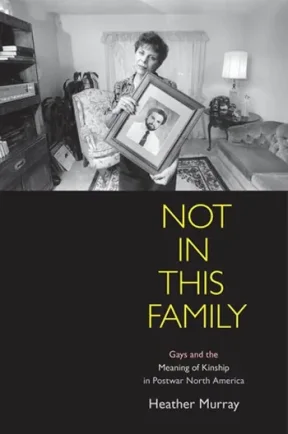
Not in This Family: Gays and the Meaning of Kinship in Postwar North America by Heather Murray

Chuyên ngành

Lịch sử

Người đăng

Ẩn danh

Thể loại

Sách học thuật

2010

308
0
0

Phí lưu trữ

75 Point

Tóm tắt

I. Tổng quan về gia đình và đồng tính hậu chiến Bắc Mỹ

Cuốn sách "Not in this Family" của Heather Murray nghiên cứu mối quan hệ giữa người đồng tính và gia đình trong xã hội Bắc Mỹ thời hậu chiến. Tác phẩm thuộc series Chính trị và Văn hóa hiện đại của Mỹ, phân tích sự thay đổi xã hội từ năm 1865 đến nay. Murray khám phá cách người đồng tính nam và nữ tìm kiếm ý nghĩa của từ "gia đình" trong bối cảnh bị xã hội kỳ thị. Cuốn sách đặt ra câu hỏi cốt lõi: liệu người đồng tính có thể thuộc về gia đình huyết thống hay cần xây dựng gia đình riêng? Trong những năm 1950, xã hội Mỹ đề cao mô hình gia đình hạt nhân với cha mẹ và con cái. Những người sống ngoài mô hình này, bao gồm người đồng tính và người không kết hôn, bị coi là ích kỷ và lệch lạc. Cuốn sách ghi lại hành trình từ bị từ chối đến được chấp nhận trong mối quan hệ gia đình qua nhiều thập kỷ biến động xã hội.

1.1. Bối cảnh lịch sử thời hậu chiến

Sau Thế chiến thứ hai, nước Mỹ bước vào thời kỳ thịnh vượng kinh tế nhưng đồng thời áp đặt các chuẩn mực xã hội nghiêm ngặt. Mô hình gia đình hạt nhân trở thành biểu tượng của lối sống lý tưởng. Các đạo luật ngăn cấm người không liên quan sống chung nhà đã củng cố quan niệm rằng gia đình truyền thống là chuẩn mực duy nhất. Người đồng tính bị đẩy ra ngoài lề xã hội, sống trong sợ hãi và bị coi là bệnh hoạn. Bối cảnh này tạo áp lực buộc họ phải che giấu bản thân hoặc tìm cách hòa nhập với xã hội dị tính.

1.2. Vai trò của truyền thông và văn hóa đại chúng

Truyền thông và văn hóa đại chúng thời kỳ này định hình mạnh mẽ nhận thức xã hội về gia đình và giới tính. Các tạp chí phụ nữ như Good Housekeeping xây dựng hình ảnh người cha đóng vai trò then chốt trong việc định hướng giới tính cho con cái, đẩy con ra khỏi ảnh hưởng quá mức của mẹ. Trong khi đó, các tạp chí đồng tính như ONE và Gay tạo không gian thảo luận về bản sắc và quyền lợi. Phim hoạt hình đồng tính những năm 1960 châm biếm hình ảnh người mẹ nội trợ, phản ánh sự căng thẳng giữa văn hóa gia đình truyền thống và đời sống đồng tính.

II. Phân tích xung đột giữa gia đình và bản sắc đồng tính

Xung đột giữa kỳ vọng gia đình và bản sắc đồng tính là chủ đề trung tâm của cuốn sách. Nhiều người đồng tính phải đối mặt với sự từ chối từ cha mẹ khi công khai xu hướng tính dục. Tuy nhiên, Murray chỉ ra rằng mối quan hệ này phức tạp hơn nhiều so với mô hình đơn giản "cha mẹ từ chối con." Elsa Gidlow, nhà thơ đồng tính nữ, đã sống cùng mẹ và bạn đời, cho thấy sự chấp nhận gia đình tồn tại ngay cả trong thời kỳ bị kỳ thị nặng nề. Gidlow cũng đặt câu hỏi ngược lại: liệu người đồng tính có đang từ chối cha mẹ khi thách thức giá trị của họ? Câu hỏi này phản ánh cuộc tranh luận nội bộ trong cộng đồng đồng tính giữa việc hòa nhập với xã hội hay nổi loạn chống lại các chuẩn mực. Một số nhà hoạt động như Barbara Stephens năm 1957 cho rằng sự xa lánh xã hội là thời thượng nhưng hời hợt, kêu gọi người đồng tính hòa nhập với gia đình và cộng đồng dị tính.

2.1. Mâu thuẫn giữa hòa nhập và nổi loạn

Trong cộng đồng đồng tính thời hậu chiến, tồn tại hai quan điểm đối lập về cách đối phó với xã hội. Nhóm thứ nhất, đại diện bởi tạp chí ONE ra đời năm 1953, cho rằng sự khác biệt và nổi loạn công khai là cần thiết cho phong trào quyền đồng tính. Nhóm thứ hai, như quan điểm của Leach và Stephens, nhấn mạnh giá trị của việc hòa nhập với xã hội dị tính. Những người có đặc quyền về gia đình và kinh tế mới có thể lựa chọn nổi loạn, trong khi đa số phải thích nghi để sinh tồn.

2.2. Vai trò giới trong định hình bản sắc đồng tính

Giới tính đóng vai trò quan trọng trong cách xã hội nhìn nhận đồng tính. Nỗi sợ bị nuốt chửng bởi thế giới nữ tính của mẹ để lại dấu ấn sâu sắc trong cả văn hóa dị tính lẫn đồng tính. Các đại diện văn hóa mô tả người mẹ nội trợ da trắng thuộc tầng lớp trung lưu như biểu tượng của sự giam hãm. Hình ảnh người cha được kỳ vọng kéo con ra khỏi thế giới nữ tính, hướng đến thế giới bên ngoài và dị tính. Điều này phản ánh cấu trúc quyền lực giới sâu xa trong xã hội thời kỳ đó.

III. Giải pháp và phương pháp xây dựng gia đình đồng tính

Cuốn sách khám phá nhiều cách người đồng tính xây dựng khái niệm gia đình riêng trong bối cảnh bị xã hội từ chối. Phương pháp đầu tiên là tạo ra "gia đình được chọn" - mạng lưới bạn bè thân thiết đóng vai trò hỗ trợ tinh thần thay thế gia đình huyết thống. Thứ hai, nhiều người đồng tính nỗ lực cải thiện mối quan hệ với cha mẹ ruột, chứng minh rằng sự chấp nhận gia đình là khả thi. Murray ghi lại các trường hợp cha mẹ dần hiểu và chấp nhận con cái, như gia đình Albertons trong Good Housekeeping, nơi cha tham gia tích cực vào việc "định hướng" con. Phương pháp thứ ba là tham gia các phong trào xã hội để thay đổi nhận thức cộng đồng. Phong trào giải phóng đồng tính những năm 1970 mở ra không gian công khai hơn cho người đồng tính. Các tổ chức cộng đồng, tạp chí và nhóm hỗ trợ giúp phá vỡ sự cô lập, tạo nền tảng cho sự thay đổi văn hóa lâu dài về cách xã hội nhìn nhận gia đình và đồng tính.

3.1. Gia đình được chọn và mạng lưới hỗ trợ

Khái niệm "gia đình được chọn" là giải pháp sáng tạo nhất mà cộng đồng đồng tính xây dựng. Khi bị gia đình huyết thống từ chối, người đồng tính tạo ra mạng lưới bạn bè, bạn đời và đồng nghiệp đóng vai trò hỗ trợ lẫn nhau. Mạng lưới này cung cấp sự an toàn tinh thần, chăm sóc khi ốm đau và tình yêu thương mà gia đình truyền thống không thể đáp ứng. Mô hình này thách thức định nghĩa hẹp về gia đình và mở rộng khái niệm về mối quan hệ họ hàng trong xã hội hiện đại.

3.2. Phong trào xã hội và thay đổi nhận thức

Phong trào giải phóng đồng tính đóng vai trò then chốt trong việc thay đổi nhận thức xã hội về gia đình và đồng tính. Từ thập niên 1970, các cuộc biểu tình, tổ chức cộng đồng và phương tiện truyền thông đồng tính tạo áp lực buộc xã hội phải nhìn nhận lại các chuẩn mực gia đình. Cuốn sách ghi nhận rằng mỗi thế hệ đều có cuộc chiến riêng, từ thời kỳ im lặng những năm 1950 đến phong trào công khai hóa. Sự thay đổi không diễn ra một cách tuyến tính mà qua nhiều cuộc đấu tranh liên tục.

IV. Kết luận và ý nghĩa ứng dụng trong xã hội hiện đại

Cuốn sách "Not in this Family" để lại nhiều bài học quý giá cho xã hội hiện đại. Thứ nhất, định nghĩa về gia đình không phải bất biến mà thay đổi theo thời gian và bối cảnh văn hóa. Thứ hai, mối quan hệ giữa đồng tính và gia đình không đơn giản là câu chuyện từ chối hay chấp nhận, mà là quá trình đàm phán phức tạp giữa các thế hệ. Murray cho thấy sự tiến bộ trong nhận thức xã hội về quyền đồng tính, từ thời kỳ bị coi là bệnh hoạn đến sự công nhận pháp lý hôn nhân đồng giới. Tuy nhiên, cuốn sách cũng cảnh báo rằng mỗi thế hệ phải đối mặt với thách thức riêng. Giá trị lớn nhất của tác phẩm nằm ở việc ghi lại tiếng nói trực tiếp của người đồng tính và gia đình họ, tạo nên bức tranh phong phú về trải nghiệm con người. Ứng dụng trong nghiên cứu hiện đại, cuốn sách cung cấp khung phân tích đa ngành kết hợp lịch sử, xã hội học và nghiên cứu giới, giúp hiểu sâu hơn về sự đa dạng gia đình trong thế kỷ 21.

4.1. Bài học cho nghiên cứu xã hội đương đại

Cuốn sách cung cấp phương pháp nghiên cứu kết hợp phân tích lịch sử, văn hóa đại chúng và trải nghiệm cá nhân. Cách tiếp cận đa chiều này giúp nhà nghiên cứu tránh được cái nhìn phiến diện về gia đình và đồng tính. Bài học quan trọng nhất là không nên áp đặt mô hình gia đình duy nhất lên mọi cá nhân. Sự đa dạng gia đình, từ gia đình hạt nhân đến gia đình được chọn, đều có giá trị và ý nghĩa riêng trong việc nuôi dưỡng con người.

4.2. Ứng dụng trong giáo dục và chính sách xã hội

Những phát hiện từ cuốn sách có thể ứng dụng trong nhiều lĩnh vực. Giáo dục giới tính toàn diện cần đề cập đến sự đa dạng gia đình. Chính sách xã hội nên công nhận và bảo vệ các mô hình gia đình khác nhau. Công tác xã hội với người đồng tính trẻ tuổi cần hiểu bối cảnh gia đình phức tạp mà họ đối mặt.
21/04/2026

Trích đoạn nội dung tài liệu

Free ebooks ==> www.com Free ebooks ==> www.com NOT IN THIS FAMILY www.com POLITICS AND CULTURE IN MODERN AMERICA Series Editors Glenda Gilmore, Michael Kazin, and Thomas J. Sugrue Volumes in the series narrate and analyze political and social change in the broadest dimensions from 1865 to the present, including ideas about the ways people have sought and wielded power in the public sphere and the language and institutions of politics at all levels—local, national, and transnational. The series is motivated by a desire to reverse the fragmentation of modern U. history and to encourage synthetic perspectives on social movements and the state, on gender, race, and labor, and on intellectual history and popular culture. NOT IN THIS FAMILY Gays and the Meaning of Kinship in Postwar North America Heather Murray U N I V E R S I T Y O F P E N N S Y LV A N I A P R E S S P H I L A D E L P H I A ∙ OX F O R D Free ebooks ==> www.com Copyright 䉷 2010 University of Pennsylvania Press All rights reserved. Except for brief quotations used for purposes of review or scholarly citation, none of this book may be reproduced in any form by any means without written permission from the publisher. Published by University of Pennsylvania Press Philadelphia, Pennsylvania 19104-4112 Printed in the United States of America on acid-free paper 10 9 8 7 6 5 4 3 2 1 Library of Congress Cataloging-in-Publication Data Murray, Heather A. Not in this family : gays and the meaning of kinship in postwar North America / Heather A. Includes bibliographical references and index. ISBN 978-0-8122-4268-3 (hardcover : alk. Gay men—United States—History—20th century. Gay men—Family relationships—United States—History—20th century.com CONTENTS Introduction vii 1. Daughters and Sons for the Rest of Their Lives 1 2. Better Blatant Than Latent 41 3. What’s Wrong with the Boys Nowadays? 78 4. Out of the Closets, Out of the Kitchens 108 5. ‘‘Every Generation Has Its War’’ 136 Epilogue: Mom, Dad, I’m Gay 179 Notes 197 Selected Bibliography 267 Index 281 This page intentionally left blank INTRODUCTION hroughout the 1970s and 1980s, poet Elsa Gidlow, then an T elderly woman, met a number of younger lesbians who considered her a lesbian icon. Gidlow had grown up in Quebec but had settled in San Francisco in the 1920s, and she extolled the gay community she came upon there throughout the early part of the century. ‘‘Before every half-informed person had learned to mouth the jargon of the sexologists and psychiatrists to homosexuals,’’ she insisted, ‘‘[individuals] respected one another’s privacies’’ in day to day life, no less so in their own families.1 Gidlow’s mother, in fact, had lived with her and her partner, something her lesbian visitors found intriguing, as many felt that their parents had rejected them to varying degrees. But Gidlow insisted that they see a para- dox in seeking their parents’ understanding. ‘‘Do we not,’’ she would ask, ‘‘in challenging our parents’ values, reject them?’’ She did not find it ‘‘fair to expect [a] continuance of unquestioning approval.’’2 Mocking a contemporary coming-out scene, she insisted that she never would have considered taking her mother aside and saying, ‘‘Have you understood that my love and friendship for the women I lived with included sex?’’ In her view, telling parents would only bring about heartache and confusion and even prurience. ‘‘We are not responsible for the fantasies of others,’’ she wrote. ‘‘All we can do is not contribute to them.’’3 Gidlow went further, decrying a sexual voyeurism in the society at large, a corollary of a repudiation of discretion that she discerned surrounding sexual mat- ters. ‘‘Who has ordained, and on what authority, that we must supply the world with script and justification of our intimate interactions?’’ she asked.4 Elsa Gidlow’s reflections offer an arresting assessment of both the reve- lation of the personal and the significance of sexuality within the family. Her call to privacy seems particularly out of sync with the relationships between gays and their parents in contemporary North America, when the coming-out moment seems taken for granted as a significant and necessary viii Introduction ritual. The polite reticence that she described seems to have long since shat- tered.5 How can this shift be explained, between the mid-twentieth century, when Gidlow saw a fundamental rupture, and our own times? How did gays and their parents conceive of family selves and gay selves, and how did this duality manifest itself culturally? How did it come to be that gays and their parents became particularly burdened with negotiating both condi- tional and unconditional love within postwar families? From the perspec- tive of many cultural observers, gays have been largely orphans, adrift from relationships with parents and kinship ties as heterosexual families have known them. And yet, between the immediate postwar period and the 1990s, the family of origin, as both a lived relationship and a symbol, has been a central animating force and preoccupation of both gay culture and politics and has shaped gay thought more broadly. Gays also have shaped the sensibilities of their families, provoking an analysis of the meanings of family intimacy and family activist politics. This is a study of the relationship between gays and their heterosexual parents in North America starting in 1945 and ending in the early 1990s. I acknowledge the depth and the subtlety of the family’s influence not only on the intimate expressions and collective memories of these individuals but also on culture and politics, the realms in which gays and their families observed each other, represented each other, and imagined each other. The relationship between gays and their parents illuminates larger themes of intergenerational tensions between baby boomers and their elders, evolving notions of intergenerational obligation and caring, demeanors of revelation and discretion, and, perhaps most important, feelings surrounding the very purpose of family life in the post–World War II period. Despite cultural ideas and images of gays ‘‘coming out’’ to their families, or being excommunicated, the family of origin surprisingly has not been widely acknowledged by historians as a shaping force of either gay or family consciousness. In her historical ethnography, anthropologist Kath Weston has explored the biological family as a contested concept for gays, arguing that gay kinship challenges procreation and biology; in her view, gay people have pioneered new meanings and practices of kinship, with the social on a higher plane than the biological. Here ‘‘chosen’’ families—of friends, partners, activist communities, and their own children—are considered to be the crucial, and sometimes the sole, source of emotional and political sustenance for gays.6 Other gay historians have assumed an existence of a Free ebooks ==> www.com Introduction ix chosen family as well, insofar as the gay historiography of the American postwar period has emphasized the formation of gay communities, gay activism, and the development of gay identities, especially in relationship with broader social and intellectual discourses.7 Yet the private, domestic lives of gays and contested visions of family life have been pronounced and unmistakable features of post–World War II gay life. World War II accelerated a broad recognition of gays as a distinct social group that shaped how parents would see their gay children and how gay children would conceive of themselves. This is not to say that gay commu- nities and identities did not exist prior to the war. Even though the category ‘‘homosexuality’’ did not exist until the late nineteenth century, some histo- rians feel that same-sex acts even during the colonial era constituted a gay sexual identity or that the acceptance and prestige of intense same-sex friendships within middle-class, homosocial worlds of the early nineteenth century were verifiable gay communities of sorts.8 As late nineteenth- and turn-of-the-century American scientists and sexologists increasingly scruti- nized and uncovered homosexuals as a distinct human species, visible and widespread gay communities and subcultures formed in urban enclaves such as New York City, and they even made their presence known in domestic venues such as house parties.9 World War II, however, was unique in that it brought young men and women into same-sex environments in the military and in defense produc- tion and transferred them in their formative years from rural to urban worlds where peer relationships took precedence over intergenerational family relationships. At the same time, as historian John D’Emilio has shown, expanding job markets and the growth of consumer capitalism gave gay men and women the chance to live as single adults and form their own relationships outside their parents’ homes.10 Psychology and psychiatry, so important to the war effort, had offered a reevaluation of gays during this period, in their suggestion that homosexuality was a mental state rather than a biological condition, as late nineteenth-century and early twentieth- century sexology would have deemed it. Ironically, these pathologizing por- traits of gays projected homosexuality further into the realm of the human imagination. Examples of homosexual life stories abound in the psychologi- cal works of this period, but also in the famous sexuality studies of Alfred Kinsey, as well as gay pulp fiction, and even McCarthy-era Senate investiga- tions into gays in government, all of which suggested the existence of a community of gays, albeit a shadowy and unsavory one. This recognition www.com x Introduction set the stage for gay secrecy and discretion in their public, and at times in their private, lives. But it also kindled gay organizing during these years. The most prominent strain of the homosexual rights movement—called the homophile movement—during the 1950s and early 1960s argued that gays were mentally sound, respectable, normal, and in fact quite close to heterosexuals. The tenor of gay activism and gay cultural formations was less integra- tionist and more unrepentant during the later 1960s and early 1970s. Shaped by the deepening rights consciousness of North American society, gays increasingly saw themselves as a minority deserving of these rights. Gay liberation developed a critique of heterosexuality, broadly conceived to include the nuclear family structure and the institutionalization of hetero- sexuality. In turn, a countercultural ethos suggested that traditional families curtailed self-fulfillment, and this was especially so for gays who saw them- selves as differing quite dramatically from ‘‘straight’’ society. The ritual of ‘‘coming out’’ to fellow gays and to heterosexual society during this period suggested that gays could unleash the inhibitions generated in having to keep their sexuality a secret. At the same time, during the 1970s, many lesbians were challenging the sexism within the gay liberation movement, finding the very category ‘‘gay’’ to be wanting, denying their unique experi- ence. Adapting the political framework of feminism, these lesbians offered their own critique of the limitations of love and personal relationships in a society dominated by heterosexuality and fashioned a perspective of lesbian feminism.11 The trauma and dislocations of AIDS in the 1980s prompted a signifi- cant reevaluation of obligations between gays and within gay communities, as gays organized in caring networks, pursued better health care, and sought possible cures for their dying friends and partners. In the midst of the AIDS crisis, the New Right political movements of the 1970s and 1980s and their attention to the traditional nuclear family, sexual morality, and traditionalism had put gays on the defensive. In the discourse of the New Right, and especially the Christian Right, gays were antithetical to the fam- ily—rejected by their parents and society at large. In the face of this, some gay activists felt a need to return to a strategy of respectability and increased attention to reformist rather than radical activism. This story of postwar gay community, identity formation, and gay activ- ism, however, neglects the fact that families were always integral to these developments. Parents had, in fact, taken the cue from their children’s own Introduction xi attempt to gain civil rights, and the initial parents’ movement of the early 1970s built on those efforts, organizing for the rights of their gay children.

Nội dung được bảo vệ bản quyền — Tải xuống đầy đủ