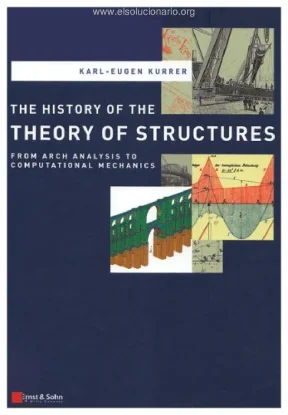
Lịch sử lý thuyết kết cấu của Karl-Eugen Kurrer - Từ phân tích vòm đến cơ học tính toán

Chuyên ngành

Cơ học kết cấu

Người đăng

Ẩn danh

Thể loại

Sách học thuật

2008

850
0
0

Phí lưu trữ

135 Point

Tóm tắt

I. Tổng quan về Lịch sử lý thuyết kết cấu Karl Eugen Kurrer

Cuốn sách 'The History of the Theory of Structures' của Karl-Eugen Kurrer là công trình nghiên cứu đồ sộ về sự phát triển của ngành lý thuyết kết cấu. Tác phẩm được xuất bản lần đầu năm 2008 bởi nhà xuất bản Ernst & Sohn tại Berlin, Đức. Cuốn sách chứa đựng 667 hình minh họa, tạo nên bức tranh toàn diện về sự tiến hóa của kỹ thuật phân tích kết cấu. Lý thuyết kết cấu là một trong những ngành khoa học ứng dụng thành công và hấp dẫn nhất. Thuật ngữ này không chỉ đề cập đến lý thuyết hay phương pháp tính toán. Nó bao gồm cả việc áp dụng vào các công trình chịu lực thực tế, đặc biệt trong kỹ thuật xây dựng dân dụng. Kurrer đã viết nên tác phẩm không phải là cuốn sách lịch sử thông thường. Ông không liệt kê các đóng góp của tiền nhân theo trình tự thời gian. Thay vào đó, tác giả tạo ra 'Lịch sử lý thuyết kết cấu của Kurrer' với những diễn giải và phân tích riêng biệt. Phương pháp tiếp cận này mang chiều sâu học thuật đặc biệt cho toàn bộ công trình nghiên cứu.

1.1. Bối cảnh xuất bản và thông tin ấn bản

Cuốn sách được xuất bản bởi nhà xuất bản Ernst & Sohn, đơn vị uy tín trong lĩnh vực kiến trúc và khoa học kỹ thuật tại Đức. Ấn bản tiếng Anh do Philip Thrift dịch từ Hannover. Thiết kế đồ họa do Sophie Bleifuß thực hiện, hình vẽ minh họa của Peter Palm. Cuốn sách được in tại Đức bởi betz-druck, Darmstadt. Mã ISBN là 978-3-433-01838-5. Tác phẩm được bảo vệ bản quyền đầy đủ, bao gồm quyền dịch sang các ngôn ngữ khác. Mọi hình thức sao chép đều cần có sự cho phép bằng văn bản từ nhà xuất bản. Hội nghị quốc tế đầu tiên về lịch sử lý thuyết kết cấu được tổ chức tại Madrid năm 2005.

1.2. Phạm vi và định nghĩa lý thuyết kết cấu

Lý thuyết kết cấu, hay 'Baustatik' trong tiếng Đức, là lĩnh vực rộng lớn bao gồm phân tích và tổng hợp các công trình chịu lực. Thuật ngữ 'structural analysis' trong tiếng Anh cũng chưa phản ánh đầy đủ bản chất ngành này. Nội dung cuốn sách không chỉ giới hạn ở phương pháp tính toán. Nó mở rộng sang quá trình sáng tạo và thiết kế các kết cấu chịu lực. Ngành này gắn liền với thực tiễn xây dựng dân dụng. Sự khó khăn trong việc định nghĩa ngắn gọn một lĩnh vực rộng lớn cho thấy tính phức tạp của chủ đề. Kurrer đã giải quyết thách thức này bằng cách tiếp cận đa chiều.

II. Phân tích nội dung và vấn đề chính của cuốn sách

Cuốn sách đi sâu vào quá trình phát triển lịch sử của lý thuyết kết cấu qua nhiều thời kỳ. Từ phân tích vòm cổ đại đến cơ học tính toán hiện đại, tác phẩm truy vết sự tiến hóa của các phương pháp tính toán. Một vấn đề cốt lõi được phân tích là sự chuyển đổi từ hệ thống composite sang hệ thống khung thép. Trong những năm 1850, ngành xây dựng chứng kiến thay đổi lớn về vật liệu kết cấu. Các hệ thống composite bao gồm gỗ, gang và sắt rèn dần được thay thế bằng hệ thống khung hoàn toàn bằng sắt rèn. Nhà ga Gare de l'Ouest ở Paris, do Eugène Flachat thiết kế năm 1853, đánh dấu bước ngoặt quan trọng. Công trình sử dụng hoàn toàn khung sắt rèn dạng tán rivet. Sự phát triển lý thuyết khung chịu lực gắn liền với quá trình chuyển đổi vật liệu. Các hệ thống khung được mô hình hóa như khung khớp nối. Mặc dù mối nối rivet không hoạt động như khớp, lý thuyết khung vẫn cho phép kiểm soát định lượng thiết kế kết cấu một cách hiệu quả.

2.1. Sự phát triển của khung Wiegmann Polonceau

Sự phát triển của khung Wiegmann-Polonceau vào năm 1864 và 1866 đánh dấu bước tiến quan trọng. Lý thuyết khung chịu lực phát triển trong sự hợp tác chặt chẽ với quá trình chuyển đổi từ hệ thống composite sang hệ thống khung sắt rèn. Quá trình này đã bắt đầu trong thực tế xây dựng từ những năm 1850. Việc loại bỏ các hệ thống composite khỏi thực tiễn xây dựng không diễn ra ngay lập tức. Sự thay đổi xảy ra dần dần, đòi hỏi các phương pháp tính toán mới phù hợp với vật liệu và kết cấu hiện đại hơn.

2.2. Thách thức trong tính toán hệ thống composite

Trước khi có lý thuyết khung hiện đại, các kỹ sư đối mặt với nhiều thách thức trong tính toán kết cấu. Các hệ thống composite phức tạp đòi hỏi phương pháp phân tích đa dạng cho từng loại vật liệu. Gỗ hoạt động theo nguyên lý uốn, gang chịu nén, sắt rèn chịu kéo. Sự kết hợp này tạo ra bài toán tính toán phức tạp. Việc phát triển lý thuyết khung sắt rèn đã đơn giản hóa đáng kể quá trình này. Các kỹ sư có thể áp dụng phương pháp thống nhất cho toàn bộ hệ thống kết cấu hiện đại.

III. Phương pháp tiếp cận và đóng góp của Kurrer

Phương pháp tiếp cận của Karl-Eugen Kurrer mang tính độc đáo cao trong lĩnh vực lịch sử khoa học. Ông không đơn thuần liệt kê các sự kiện theo trình tự thời gian. Thay vào đó, Kurrer kết hợp phân tích lịch sử-logic với diễn giải cá nhân sâu sắc. Cách tiếp cận này tạo nên bức tranh sống động về sự phát triển lý thuyết kết cấu. Tác giả sử dụng hình ảnh 'bảy cánh cổng tri thức' để minh họa hành trình khám phá lịch sử. Mỗi cánh cổng đại diện cho một khía cạnh khác nhau của ngành lý thuyết kết cấu. Người đọc được mời gọi đi qua từng cánh cổng để xây dựng hiểu biết toàn diện. Kurrer cảnh báo không nên bảo thủ với kiến thức đã có. Ông khuyên người đọc nên theo con đường tự do, mở rộng tầm nhìn. Cuốn sách áp dụng khái niệm 'tấm gương thứ bảy' trong phân tích lịch sử. Đây là phương pháp nhìn nhận sự phát triển khoa học từ nhiều góc độ khác nhau. Cách tiếp cận đa chiều giúp hiểu sâu hơn về bản chất tiến bộ kỹ thuật trong lịch sử nhân loại.

3.1. Phương pháp viết sử học khoa học kết hợp

Kurrer áp dụng phương pháp viết sử học khoa học kết hợp giữa lịch sử và logic. Ông không tách rời các sự kiện khỏi bối cảnh xã hội và kỹ thuật của thời đại. Mỗi phương pháp tính toán được phân tích trong mối liên hệ với điều kiện thực tế. Cách tiếp cận này giúp hiểu tại sao một phương pháp được phát triển vào thời điểm cụ thể. Kurrer cũng chú trọng mối quan hệ giữa lý thuyết và thực hành xây dựng. Phương pháp này tạo nên sự khác biệt so với các công trình lịch sử khoa học thông thường khác.

3.2. Hình ảnh bảy cánh cổng tri thức

Hình ảnh 'bảy cánh cổng' được Kurrer lấy cảm hứng từ tác phẩm của Franz Kafka. Mỗi cánh cổng tượng trưng cho một cách tiếp cận khác nhau đối với lịch sử lý thuyết kết cấu. Người đọc có thể mở bất kỳ cánh cổng nào để khám phá tri thức. Nếu muốn hiểu toàn diện, cần mở tất cả bảy cánh cổng. Kurrer trích dẫn nhà thơ Friedrich Hölderlin để nhấn mạnh con đường tự do trong nghiên cứu. Triết lý này khuyến khích sự cởi mở và tư duy phản biện trong học thuật.

IV. Kết luận và ứng dụng trong kỹ thuật hiện đại

Cuốn sách 'The History of the Theory of Structures' của Karl-Eugen Kurrer đã trở thành tài liệu tham khảo quan trọng trong lĩnh vực kỹ thuật kết cấu. Tác phẩm cung cấp nền tảng lịch sử vững chắc cho việc hiểu các phương pháp tính toán hiện đại. Kiến thức về quá khứ giúp kỹ sư và nhà nghiên cứu đánh giá đúng giá trị công cụ tính toán đương thời. Cuốn sách có giá trị đặc biệt trong đào tạo kỹ sư xây dựng. Sinh viên và nghiên cứu sinh tìm thấy bối cảnh lịch sử cho các phương pháp học tập. Sự hiểu biết về quá trình phát triển giúp áp dụng kiến thức sáng tạo hơn. Tác phẩm cũng là nguồn tài liệu quý giá cho nhà nghiên cứu lịch sử khoa học kỹ thuật. Ảnh hưởng vượt ra ngoài biên giới Đức. Ấn bản tiếng Anh đưa công trình đến với độc giả quốc tế. Hội nghị về lịch sử lý thuyết kết cấu tại Madrid năm 2005 chứng tỏ sự quan tâm toàn cầu. Tác phẩm tiếp tục truyền cảm hứng cho các thế hệ kỹ sư và nhà nghiên cứu trên toàn thế giới.

4.1. Giá trị học thuật và thực tiễn của tác phẩm

Giá trị học thuật nằm ở cách tiếp cận toàn diện và sâu sắc của tác phẩm. Cuốn sách không chỉ là tài liệu tham khảo lịch sử mà còn là công cụ học tập hiệu quả. Các kỹ sư hiện đại tìm thấy nguồn cảm hứng từ quá trình phát triển sáng tạo của ngành. Tác phẩm giúp hiểu tại sao một số phương pháp cổ điển vẫn còn giá trị ngày nay. Đồng thời, cuốn sách chỉ ra giới hạn của các phương pháp truyền thống. Điều này thúc đẩy sự phát triển không ngừng của cơ học tính toán hiện đại.

4.2. Ảnh hưởng đến đào tạo và nghiên cứu kỹ thuật

Trong đào tạo kỹ sư, cuốn sách đóng vai trò cầu nối giữa lý thuyết và lịch sử. Nhiều chương trình kỹ thuật hiện đại thiếu phần lịch sử phát triển ngành. Tác phẩm của Kurrer bổ sung kiến thức này một cách hệ thống và có tổ chức. Sinh viên hiểu được bối cảnh ra đời của các phương pháp tính toán kết cấu. Sự hiểu biết này giúp phát triển tư duy sáng tạo và khả năng đánh giá phương pháp. Cuốn sách khuyến khích tinh thần nghiên cứu và tìm tòi trong học thuật kỹ thuật.
21/04/2026

Trích đoạn nội dung tài liệu

org THE HISTORY OF THE THEORY OF STRUCTURES 001-019_Titelei_Korr3_INDD-5_bp.2008 13:44:32 Uhr KARL-EUGEN KURRER The History of the Theory of Structures From Arch Analysis to Computational Mechanics 001-019_Titelei_Korr3_INDD-5_bp.org Author: Dr.-Ing Karl-Eugen Kurrer Ernst & Sohn Verlag für Architektur und technische Wissenschaften GmbH & Co. KG Rotherstraße 21, D -10245 Berlin, Germany This book contains 667 illustrations. Bibliographic information published by the Deutsche Nationalbibliothek The Deutsche Nationalbibliothek lists this publication in the Deutsche Nationalbibliografie; detailed bibliographic data is available in the Internet at <http://dnb. Cover: Computer-generated drawing of an FEM model for the Göltzsch Viaduct by Dr. ISBN 978-3-433-01838-5 © 2008 Ernst & Sohn Verlag für Architektur und technische Wissenschaften GmbH & Co. KG, Berlin All rights reserved (including those of translation into other languages). No part of this book may be reproduced in any form – by photoprinting, microfilm, or any other means – nor transmitted or translated into a machine language without written permission from the publishers. Registered names, trademarks, etc. used in this book, even when not specifically marked as such, are not to be considered unprotected by law. English translation: Philip Thrift, Hannover Typodesign: Sophie Bleifuß, Berlin Typesetting: Uta-Beate Mutz, Leipzig Drawings: Peter Palm, Berlin Production: HillerMedien, Berlin Printing: betz-druck, Darmstadt Printed in Germany 001-019_Titelei_Korr3_INDD-5_bp.2008 13:44:32 Uhr FOREWORD The title of the book alone makes us curious: What is “theory of structures” anyway? Used cursorily, the term describes one of the most successful and most fascinating applied science disciplines. But actually, you can’t use this term cursorily; for this is not just about theory, not just about methods of calculation, but rather those fields plus their application to real load- bearing structures, and in the first place to the constructions in civil engin- eering. Languages sometimes find it difficult to define such a wide field rigorously and, above all, briefly; in the author’s country, the term Baustatik (literally “building statics”) has acquired a widely accepted meaning, even though that meaning is also too narrow. And even the English expression “structural analysis” does not tell the whole story pre- cisely because this is not just about analysis, but about synthesis, too, the overall picture in the creation of a loadbearing structure. Right at the start we learn that the first conference on the history of theory of structures took place in Madrid in 2005. This theme, its parts dealt with many times, is simply crying out for a comprehensive treat- ment. However, this book is not a history book in which the contributions of our predecessors to this theme are listed chronologically and described systematically. No, this is “Kurrer’s History of Theory of Structures” with his interpretations and classifications; luckily – because that makes it an exciting treatise, with highly subjective impressions, more thematic than chronological, and with a liking for definitions and scientific theory; in- deed, a description of the evolution of an important fundamental engineer- ing science discipline with its many facets in teaching, research and, first and foremost, practice. The history of theory of structures is in the first place the history of mechanics and mathematics, which in earlier centuries were most defi- nitely understood to be applied sciences. Kurrer calls this period up to 1825 the preparatory period – times in which structural design was still dominated very clearly by empirical methods. Nevertheless, it is worth noting that the foundations of many structural theories were laid in this 5 001-019_Titelei_Korr3_INDD-5_bp. It is generally accepted that the structural report for the retrofit- ting works to St. Peter’s Dome in Rome (1742/43) by the tre mattematici represents the first structural calculations as we understand them today. In other words, dealing with a constructional task by the application of scientific methods – accompanied, characteristically, by the eternal dis- pute between theory and practice (see section 11. These days, the centuries-old process of the theoretical abstraction of natural and techni- cal processes in almost all scientific disciplines is called “modelling and simulation” – as though it had first been introduced with the invention of the computer and the world of IT, whereas in truth it has long since been the driving force behind mankind’s ideas and actions. Mapping the loadbearing properties of building constructions in a theoretical model is a typical case. One classic example is the development of masonry and elastic arch theories (see chapter 4). It has become customary to add the term “computational” to these computer-oriented fields in the individual sciences, in this case “computational mechanics”. The year 1825 has been fittingly chosen as the starting point of the dis- cipline-formation period in theory of structures (see chapter 6). Theory of structures is not just the solving of an equilibrium task, not just a compu- tational process. Navier, whose importance as a mechanics theorist we still acknowledge today in the names of numerous theories (Navier stress dis- tribution, Navier-Lamé and Navier-Stokes equations, etc.), was very defi- nitely a practitioner. In his position as professor for applied mechanics at the École des Ponts et Chaussées, it was he who combined the subjects of applied mechanics and strength of materials in order to apply them to the practical tasks of building. For example, in his Résumé des Leçons of 1826 he describes the work of engineers thus: “… after the works have been de- signed and drawn, [the engineers] investigate them to see if all conditions have been satisfied and improve their design until this is the case. Econ- omy is one of the most important conditions here; stability and durability are no less important …” (see section 2. Theory of structures as an in- dependent scientific discipline had finally become established. Important structural theories and methods of calculation would be devised in the following years, linked with names like Clapeyron, Lamé, Saint-Venant, Rankine, Maxwell, Cremona, Castigliano, Mohr and Winkler, to name but a few. The graphical statics of Culmann and its gradual development into graphical analysis are milestones in the history of structural theory. Already at this juncture it is worth pointing out that the development did not always proceed smoothly: controversies concerning the content of theories, or competition between disciplines, or priority disputes raised their heads along the way. This exciting theme is explored in detail in Chapter 11 by way of 12 examples. In the following years, the evolution of methods in theory of struc- tures became strongly associated with specific structural systems and hence, quite naturally, with the building materials employed, such as iron (steel) and later reinforced concrete (see chapters 7, 8 and 9). Independent FOREWORD materials-specific systems and methods were devised. Expressed in simple 6 001-019_Titelei_Korr3_INDD-5_bp.org terms, structural steelwork, owing to its modularity and the fabrication methods, concentrated on assemblies of linear members, whereas rein- forced concrete preferred two-dimensional structures such as slabs, plates and shells. The space frames dealt with in chapter 8 represent a fulcrum to some extent. This materials-based split was also reflected in the teaching of struc- tural theory in the form of separate studies. It was not until many years later that the parts were brought together in a homogeneous theory of structures, albeit frequently “neutralised”, i. no longer related to the spe- cific properties of the particular building material – an approach that must be criticised in retrospect. Of course, the methods of structural analysis can encompass any material in principle, but in a specific case they must take account of the particular characteristics of the material. Kurrer places the transition from the discipline-formation period – with its great successes in the shape of graphical statics and the system- atic approach to methods of calculation in member analysis – to the con- solidation period around 1900. This latter period, which lasted until 1950, is characterised by refinements and extensions, e. a growing interest in shell structures, and the consideration of non-linear effects. Only after this does the “modern” age begin – designated the integration period in this instance and typified by the use of modern computers and powerful numerical methods. Theory of structures is integrated into the structural planning process of conceptual design – analysis – detailing – construc- tion – manufacturing. Have we reached the end of the evolutionary road? Does this development mean that theory of structures, as an independent engineering science, is losing its profile and its justification? The develop- ments of recent years indicate the opposite. The history of yesterday and today is also the history of tomorrow. In the world of data processing and information technology, theory of struc- tures has undergone rapid progress in conjunction with numerous para- digm changes. It is no longer the calculation process and method issues, but rather principles, modelling, realism, quality assurance and many other aspects that form the focal point. The remit includes dynamics alongside statics; in terms of the role they play, thin-walled structures like plates and shells are almost equal to trusses and frames, and taking ac- count of true material behaviour is obligatory these days. During its his- tory so far, theory of structures was always the trademark of structural engineering; it was never the discipline of “number crunchers”, even if this was and still is occasionally proclaimed as such upon launching relevant computing programs. Theory of structures continues to play an important mediating role between mechanics on the one side and the conceptual and detailed design subjects on the other side in teaching, research and practice. Statics and dynamics have in the meantime advanced to what is known internationally as “computational structural mechanics”, a modern application-related structural mechanics. The author takes stock of this important development in chapter 10. He mentions the considerable rationalisation and formalisation, the foun- 7 001-019_Titelei_Korr3_INDD-5_bp.2008 13:44:33 Uhr dations for the subsequent automation. It was no surprise when, as early as the 1930s, the structural engineer Konrad Zuse began to develop the first computer. However, the rapid development of numerical methods for structural calculations in later years could not be envisaged at that time. Argyris, one of the founding fathers of the modern finite element method, recognised this at an early stage in his visionary remark “the computer shapes the theory” (1965): besides theory and experimentation, there is a new pillar – numerical simulation (see section 10. By their very nature, computers and programs have revolutionised the work of the structural engineer. Have we not finally reached the stage where we are liberated from the craftsman-like, recipe-based business so that we can concentrate on the essentials? The role of “modern theory of structures” is also discussed here, also in the context of the relationship between the structural engineer and the architect (see chapter 12). A new “graphical statics” has appeared, not in the sense of the automation and visual presentation of Culmann’s graphical statics, but rather in the form of graphic displays and animated simulations of mechanical relationships and processes. This is a decisive step towards the evolution of construc- tions and to loadbearing structure synthesis, to a new type of structural doctrine. This potential as a living interpretation and design tool has not yet been fully exploited. It is also worth mentioning that the boundaries to the other con- struction engineering disciplines (mechanical engineering, automotive engineering, shipbuilding, the aerospace industry, biomechanics) are be- coming more and more blurred in the field of computational mechanics; the relevant conferences no longer make any distinctions. The concepts, methods and tools are likewise universal. And we are witnessing similar developments in teaching, too. This “history of theory of structures” could only have been written by an expert, an engineer who knows the discipline inside out. Engineering scientists getting to grips with their own history is a rare thing. But this is one such lucky instance. This fully revised English edition, which explores international developments in greater depth, follows on from the highly successful German edition. We should be very grateful to Dr. Kurrer, and also “his” publisher, Ernst & Sohn, for this treatise. Stuttgart, September 2007 Ekkehard Ramm Professor of Structural Mechanics, University of Stuttgart FOREWORD 8 001-019_Titelei_Korr3_INDD-5_bp.

Nội dung được bảo vệ bản quyền — Tải xuống đầy đủ