Kỹ thuật Động lực học: Tĩnh học, Ấn bản thứ 3 của Pytel & Kiusalaas - Chuyển đổi đơn vị

Trường đại học

The Pennsylvania State University

Chuyên ngành

Cơ học kỹ thuật

Người đăng

Ẩn danh

Thể loại

Sách giáo khoa

2010

609
0
0

Phí lưu trữ

135 Point

Tóm tắt

I. Tổng quan về giáo trình Pytel Kiusalaas Statics 3rd

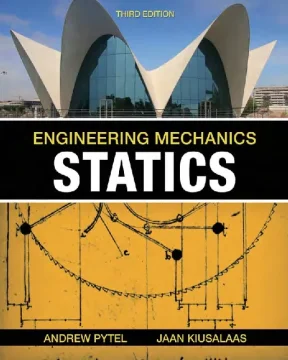
Giáo trình Engineering Mechanics: Statics, Third Edition của Andrew Pytel và Jaan Kiusalaas là tài liệu giảng dạy tĩnh học hàng đầu. Hai tác giả đều công tác tại Đại học Pennsylvania State. Nhà xuất bản Cengage Learning phát hành ấn bản thứ ba năm 2010. Nội dung sách bao gồm toàn bộ kiến thức cơ bản về tĩnh học kỹ thuật. Sách trình bày rõ ràng các nguyên lý cân bằng lực, moment, và phản lực. Hệ thống đơn vị được sử dụng song song giữa USCS và SI. Các phép chuyển đổi đơn vị được trình bày chi tiết trong bảng tham khảo. Giáo trình cung cấp nhiều bài toán mẫu có lời giải đầy đủ. Cách giải từng bước giúp sinh viên nắm vững phương pháp tư duy. Sách phù hợp cho sinh viên năm nhất và năm hai ngành kỹ thuật. Đây là tài liệu tham khảo không thể thiếu cho kỳ thi tĩnh học. Nội dung được xây dựng dựa trên nền tảng toán học vững chắc. Mỗi chương đều có bài tập thực hành đa dạng mức độ khó.

1.1. Thông tin về tác giả và nhà xuất bản

Andrew Pytel và Jaan Kiusalaas là hai giáo sư nổi tiếng tại khoa Kỹ thuật của Đại học Pennsylvania State. Cả hai có nhiều năm kinh nghiệm giảng dạy cơ học kỹ thuật. Họ đã hợp tác viết nhiều giáo trình được sử dụng rộng rãi. Nhà xuất bản Cengage Learning chịu trách nhiệm phát hành toàn cầu. Ấn bản thứ ba được cập nhật nội dung và cải thiện hình thức trình bày. Sách có mặt tại nhiều quốc gia bao gồm Australia, Brazil, Nhật Bản, Hàn Quốc. Ấn bản này được đánh giá cao về tính thực tiễn và sư phạm. Đội ngũ biên tập chuyên nghiệp đảm bảo chất lượng nội dung.

1.2. Cấu trúc và phạm vi nội dung sách

Giáo trình bao gồm nhiều chương học từ cơ bản đến nâng cao. Phần đầu giới thiệu hệ thống đơn vị và chuyển đổi đo lường. Các chương tiếp theo trình bày vectơ, lực, và moment. Nội dung mở rộng sang cân bằng vật thể và phân tích kết cấu. Sách bao gồm chủ đề về trọng tâm, quán tính, và ma sát. Mỗi chương có phần lý thuyết, ví dụ mẫu, và bài tập tự giải. Bảng chuyển đổi đơn vị được đặt ở trang bìa để tra cứu nhanh. Nội dung được thiết kế theo tiến trình học tập hợp lý.

II. Phân tích nội dung chính trong giáo trình tĩnh học

Nội dung giáo trình Pytel Kiusalaas Statics 3rd txtbk tập trung vào nhiều chủ đề cốt lõi. Hệ thống đơn vị là phần kiến thức nền tảng quan trọng nhất. Sách trình bày bảng chuyển đổi chi tiết giữa đơn vị USCS và SI. Các đại lượng bao gồm lực, áp suất, moment quán tính, và công suất. Phép toán vectơ chiếm vị trí trung tâm trong nội dung. Tích vô hướng và tích có hướng được giải thích rõ ràng. Bài toán về lực hấp dẫn được minh họa qua ví dụ cụ thể. Công thức chuyển đổi nhiệt độ cũng được đề cập đầy đủ. Phần phân tích vectơ bao gồm thành phần trực giao và góc giữa hai vectơ. Vectơ đơn vị pháp tuyến được tính bằng tích có hướng chia cho độ lớn. Tích ba vectơ vô hướng giúp tính thể tích khối parallelepiped. Mỗi chủ đề đều có hệ thống bài tập từ dễ đến khó. Cách trình bày logic giúp sinh viên xây dựng tư duy kỹ thuật.

2.1. Hệ thống đơn vị và phép chuyển đổi đo lường

Sách trình bày bảng chuyển đổi đơn vị chi tiết và chính xác. Các đại lượng được liệt kê đầy đủ bao gồm moment quán tính diện tích. Đơn vị inch lũy thừa tư được chuyển sang milimet lũy thừa tư. Moment quán tính khối lượng tính bằng slug-foot bình sang kilogram-mét bình. Công suất được quy đổi từ foot-pound mỗi giây sang watt. Áp suất và ứng suất chuyển từ psi sang pascal. Module tiết diện tính bằng inch lũy thừa ba tương đương với mm lũy thừa ba. Bảng chuyển đổi đánh dấu dấu sao cho hệ số chính xác tuyệt đối.

2.2. Phép toán vectơ và ứng dụng trong tĩnh học

Phần phép toán vectơ là nội dung quan trọng trong giáo trình. Tích vô hướng A·B được tính bằng tổng tích các thành phần tương ứng. Kết quả âm cho thấy góc giữa hai vectơ lớn hơn 90 độ. Thành phần trực giao của vectơ B theo hướng C được tính bằng tích vô hướng chia độ lớn C. Góc giữa hai vectơ tìm bằng công thức arccos. Tích có hướng A×B tạo vectơ vuông góc với cả A và B. Vectơ đơn vị pháp tuyến được xác định bằng cách chuẩn hóa tích có hướng. Tích ba vectơ vô hướng sử dụng định thức ma trận 3x3.

III. Phương pháp giải bài toán trong giáo trình Statics

Giáo trình Pytel Kiusalaas Statics 3rd txtbk cung cấp phương pháp giải bài toán hệ thống. Bước đầu tiên là xác định rõ yêu cầu của bài toán. Tiếp theo là lựa chọn hệ đơn vị phù hợp cho phép tính. Sử dụng bảng chuyển đổi đơn vị để đảm bảo tính nhất quán. Bài toán chuyển đổi đơn vị được giải bằng cách nhân hệ số tương ứng. Ví dụ chuyển đổi 240 dặm mỗi giờ sang feet mỗi giây rất trực quan. Bài toán vectơ yêu cầu phân tích thành phần theo các trục tọa độ. Tích vô hướng và tích có hướng được áp dụng tùy theo loại bài toán. Bài toán lực hấp dẫn sử dụng định luật vạn vật hấp dẫn của Newton. Công thức F = G·m₁·m₂/r² là công cụ tính lực hấp dẫn. Giá trị hằng số G bằng 6.67×10⁻¹¹ m³/(kg·s²). Mỗi bài toán mẫu đều có lời giải chi tiết từng bước. Cách trình bày giúp sinh viên hiểu rõ logic giải quyết vấn đề.

3.1. Kỹ thuật chuyển đổi đơn vị và tính toán đại lượng

Phương pháp chuyển đổi đơn vị đơn giản là nhân với hệ số quy đổi. Ví dụ chuyển đổi 5000 pound mỗi inch vuông sang đơn vị SI. Sử dụng hệ số 6894.76 pascal cho mỗi psi để tính toán. Kết quả thu được là giá trị áp suất tính bằng pascal. Bài toán tìm trọng lượng cần biết khối lượng riêng và kích thước. Hình trụ thép có bán kính 60mm và chiều dài 120mm. Khối lượng riêng thép là 7850 kg/m³. Trọng lượng tính bằng cách nhân khối lượng với gia tốc trọng trường.

3.2. Giải bài toán vectơ và lực hấp dẫn

Bài toán vectơ trong giáo trình được giải bằng phương pháp thành phần. Cho vectơ A = 8i + 4j - 2k lb và B = 2j + 6k ft. Tích vô hướng A·B = 8×0 + 4×2 + (-2)×6 = -4 lb·ft. Tích có hướng sử dụng định thức ma trận để tính toán. Kết quả A×B = 28i - 48j + 16k lb·ft. Bài toán lực hấp dẫn áp dụng cho người nặng 70 kg trên bề mặt trái đất. Khoảng cách từ tâm trái đất là 2 lần bán kính. Kết quả cho thấy lực hấp dẫn giảm khi khoảng cách tăng.

IV. Kết luận và ứng dụng của giáo trình Statics

Giáo trình Pytel Kiusalaas Statics 3rd txtbk là tài liệu học tập chất lượng cao. Nội dung bao quát toàn bộ kiến thức tĩnh học cơ bản và nâng cao. Phương pháp trình bày rõ ràng giúp sinh viên tiếp thu hiệu quả. Hệ thống bài tập phong phú củng cố kiến thức lý thuyết. Bảng chuyển đổi đơn vị là công cụ tham khảo hữu ích. Kiến thức vectơ được ứng dụng rộng rãi trong kỹ thuật. Phân tích lực và moment là nền tảng cho thiết kế kết cấu. Bài toán về trọng tâm giúp hiểu hành vi vật thể dưới tác dụng lực. Kiến thức về quán tính phục vụ tính toán chịu tải. Giáo trình chuẩn bị nền tảng vững chắc cho môn động học. Sinh viên kỹ thuật dân dụng, cơ khí, và hàng không đều cần nắm vững. Cuối cùng, cuốn sách là tài liệu tham khảo đáng tin cậy suốt quá trình học tập.

4.1. Giá trị giáo dục và sư phạm của cuốn sách

Cuốn sách được thiết kế theo nguyên tắc sư phạm hiện đại. Nội dung đi từ đơn giản đến phức tạp, từ cụ thể đến trừu tượng. Mỗi phần lý thuyết đi kèm ví dụ minh họa sinh động. Bài tập được phân loại theo mức độ khó khác nhau. Cách giải từng bước giúp sinh viên hình thành thói quen tư duy logic. Ngôn ngữ rõ ràng, không rườm rà, dễ hiểu cho người học. Phần chuyển đổi đơn vị giúp sinh viên làm quen với nhiều hệ đo lường. Giáo trình đáp ứng tiêu chuẩn giảng dạy kỹ thuật quốc tế.

4.2. Ứng dụng thực tế trong ngành kỹ thuật

Kiến thức tĩnh học từ giáo trình được ứng dụng rộng rãi. Ngành kỹ thuật dân dụng sử dụng để tính toán phản lực và momen. Thiết kế cầu, nhà cao tầng, và kết trúc chịu tải cần nền tảng tĩnh học. Ngành cơ khí áp dụng để phân tích lực trong máy móc. Tính toán áp suất và ứng suất phục vụ thiết kế bình chịu áp lực. Kiến thức vectơ dùng trong điều hướng và định vị GPS. Phân tích trọng tâm quan trọng cho thiết kế xe cộ và tàu thủy. Ngành hàng không ứng dụng để tính toán lực khí động học.
21/04/2026

Trích đoạn nội dung tài liệu

com LIBROS UNIVERISTARIOS Y SOLUCIONARIOS DE MUCHOS DE ESTOS LIBROS LOS SOLUCIONARIOS CONTIENEN TODOS LOS EJERCICIOS DEL LIBRO RESUELTOS Y EXPLICADOS DE FORMA CLARA VISITANOS PARA DESARGALOS GRATIS. CUSTOMARY UNITS AND SI UNITS (Continued) Times conversion factor U. Customary unit Equals SI unit Accurate Practical Moment of inertia (area) inch to fourth power in.4 416,231 416,000 millimeter to fourth power mm4 inch to fourth power in.416 10 6 meter to fourth power m4 Moment of inertia (mass) slug foot squared slug-ft2 1.36 kilogram meter squared kg·m2 Power foot-pound per second ft-lb/s 1.36 watt (J/s or N·m/s) W foot-pound per minute ft-lb/min 0.0226 watt W horsepower (550 ft-lb/s) hp 745.701 746 watt W Pressure; stress pound per square foot psf 47.9 pascal (N/m2) Pa pound per square inch psi 6894.76 6890 pascal Pa kip per square foot ksf 47.9 kilopascal kPa kip per square inch ksi 6.89 megapascal MPa Section modulus inch to third power in.1 16,400 millimeter to third power mm3 inch to third power in.4 10 6 meter to third power m3 Velocity (linear) foot per second ft/s 0.305 meter per second m/s inch per second in.0254 meter per second m/s mile per hour mph 0.447 meter per second m/s mile per hour mph 1.61 kilometer per hour km/h Volume cubic foot ft3 0.0283 cubic meter m3 cubic inch in.4 10 6 cubic meter m3 cubic inch in.4 cubic centimeter (cc) cm3 gallon (231 in.79 liter L gallon (231 in.00379 cubic meter m3 *An asterisk denotes an exact conversion factor Note: To convert from SI units to USCS units, divide by the conversion factor 5 Temperature Conversion Formulas T(°C) [T(°F) 32] T(K) 273.67 5 5 Engineering Mechanics STATICS Third Edition This page intentionally left blank Engineering Mechanics Statics Third Edition Andrew Pytel The Pennsylvania State University Jaan Kiusalaas The Pennsylvania State University Australia · Brazil · Japan · Korea · Mexico · Singapore · Spain · United Kingdom · United States Engineering Mechanics: © 2010, 1999 Cengage Learning Statics, Third Edition ALL RIGHTS RESERVED. No part of this work covered by the copyright Andrew Pytel and Jaan Kiusalaas herein may be reproduced, transmitted, stored or used in any form or by Director, Global Engineering Program: any means—graphic, electronic, or mechanical, including but not limited Chris Carson to photocopying, recording, scanning, digitizing, taping, Web distribution, Senior Developmental Editor: information networks, information storage and retrieval systems, or in Hilda Gowans any other manner—except as many be permitted by the license terms herein. Editorial Assistant: Jennifer Dinsmore Marketing Specialist: For product information and technology assistance, contact us at Lauren Betsos Cengage Learning Customer & Sales Support, 1-800-354-9706. Production Manager: For permission to use material from this text or product, submit all requests Patricia Matthews Boies online at www. Further permissions questions can be emailed to Content Project Manager: Darrell E. Frye permissionrequest@cengage. Production Service: RPK Editorial Services Library of Congress Control Number: 2009920813 Copyeditor: Pat Daly Student Edition: Proofreader: Martha McMaster ISBN-13: 978-0-495-24469-1 ISBN-10: 0-495-24469-4 Indexer: Ron Prottsman Compositor: Integra Cengage Learning 200 First Stamford Place, Suite 400 Senior Art Director: Stamford, CT 06902 Michelle Kunkler USA Internal Designer: Carmela Periera Cengage Learning is a leading provider of customized learning Cover Designer: Andrew Adams solutions with office locations around the globe, including Singapore, Cover Image: David H. Seymour/ the United Kingdom, Australia, Mexico, Brazil, and Japan. Locate your Shutterstock local office at: international. Photo Permissions Researcher: Cengage Learning products are represented in Canada by Kristiina Bowering Nelson Education Ltd. Image Permission Manager: For your course and learning solutions, visit www. Don Schlotman Purchase any of our products at your local college store or at our Senior First Print Buyer: preferred online store www. Doug Wilke Printed in Canada 1 2 3 4 5 6 7 13 12 11 10 09 To Jean, Leslie, Lori, John, Nicholas and To Judy, Nicholas, Jennifer, Timothy This page intentionally left blank Contents Preface xi Chapter 1 Introduction to Statics 1 1.3 Fundamental Properties of Vectors 10 1.4 Representation of Vectors Using Rectangular Components 18 1.5 Vector Multiplication 27 Chapter 2 Basic Operations with Force Systems 37 2.2 Equivalence of Vectors 37 2.4 Reduction of Concurrent Force Systems 39 2.5 Moment of a Force about a Point 49 2.6 Moment of a Force about an Axis 60 2.8 Changing the Line of Action of a Force 86 Chapter 3 Resultants of Force Systems 97 3.2 Reduction of a Force System to a Force and a Couple 97 3.3 Definition of Resultant 105 3.4 Resultants of Coplanar Force Systems 106 3.5 Resultants of Three-Dimensional Systems 116 3.6 Introduction to Distributed Normal Loads 128 Chapter 4 Coplanar Equilibrium Analysis 143 4.2 Definition of Equilibrium 144 Part A: Analysis of Single Bodies 144 4.3 Free-Body Diagram of a Body 144 4.4 Coplanar Equilibrium Equations 153 4.5 Writing and Solving Equilibrium Equations 155 4.6 Equilibrium Analysis for Single-Body Problems 166 vii viii Contents Part B: Analysis of Composite Bodies 179 4.7 Free-Body Diagrams Involving Internal Reactions 179 4.8 Equilibrium Analysis of Composite Bodies 190 4.9 Special Cases: Two-Force and Three-Force Bodies 200 Part C: Analysis of Plane Trusses 214 4.10 Description of a Truss 214 4.11 Method of Joints 215 4.12 Method of Sections 224 Chapter 5 Three-Dimensional Equilibrium 237 5.2 Definition of Equilibrium 238 5.3 Free-Body Diagrams 238 5.4 Independent Equilibrium Equations 249 5.6 Writing and Solving Equilibrium Equations 253 5.7 Equilibrium Analysis 263 Chapter 6 Beams and Cables 281 *6.1 Introduction 281 Part A: Beams 282 *6.2 Internal Force Systems 282 *6.3 Analysis of Internal Forces 291 *6.4 Area Method for Drawing V- and M-Diagrams 303 Part B: Cables 318 *6.5 Cables under Distributed Loads 318 *6.6 Cables under Concentrated Loads 330 Chapter 7 Dry Friction 341 7.2 Coulomb’s Theory of Dry Friction 342 7.3 Problem Classification and Analysis 345 7.5 Angle of Friction; Wedges and Screws 369 *7.6 Ropes and Flat Belts 379 *7.8 Rolling Resistance 391 Chapter 8 Centroids and Distributed Loads 401 8.2 Centroids of Plane Areas and Curves 401 8.3 Centroids of Curved Surfaces, Volumes, and Space Curves 419 8.4 Theorems of Pappus-Guldinus 438 8.5 Center of Gravity and Center of Mass 442 8.6 Distributed Normal Loads 450 * Indicates optional articles Contents ix Chapter 9 Moments and Products of Inertia of Areas 471 9.2 Moments of Inertia of Areas and Polar Moments of Inertia 472 9.3 Products of Inertia of Areas 492 9.4 Transformation Equations and Principal Moments of Inertia of Areas 500 *9.5 Mohr’s Circle for Moments and Products of Inertia 508 Chapter 10 Virtual Work and Potential Energy 523 *10.4 Method of Virtual Work 528 *10.5 Instant Center of Rotation 539 *10.6 Equilibrium and Stability of Conservative Systems 548 Appendix A Numerical Integration 559 A.3 Simpson’s Rule 560 Appendix B Finding Roots of Functions 563 B.3 Secant Method 564 Appendix C Densities of Common Materials 567 Answers to Even-Numbered Problems 569 Index 576 This page intentionally left blank Preface Statics and dynamics are basic subjects in the general field known as engi- neering mechanics. At the risk of oversimplifying, engineering mechanics is that branch of engineering that is concerned with the behavior of bodies under the action of forces. Statics and dynamics form the basis for many of the tradi- tional fields of engineering, such as automotive engineering, civil engineering, and mechanical engineering. In addition, these subjects often play fundamen- tal roles when the principles of mechanics are applied to such diverse fields as medicine and biology. Applying the principles of statics and dynamics to such a wide range of applications requires reasoning and practice rather than memorization. Although the principles of statics and dynamics are relatively few, they can only be truly mastered by studying and analyzing problems. Therefore, all modern textbooks, including ours, contain a large number of problems to be solved by the student. Learning the engineering approach to problem solving is one of the more valuable lessons to be learned from the study of statics and dynamics. We have made every effort to improve our presentation without compro- mising the following principles that formed the basis of the previous editions. • Each sample problem is carefully chosen to help students master the intricacies of engineering problem analysis. • The selection of homework problems is balanced between “textbook” problems that illustrate the principles of engineering mechanics in a straight-forward manner, and practical engineering problems that are applicable to engineering design. • The number of problems using U. Customary Units and SI Units are approximately equal. • The importance of correctly drawn free-body diagrams is emphasized throughout. • We continue to present equilibrium analysis in three separate articles, each followed by a set of problems. The first article teaches the method for drawing free-body diagrams. The second shows how to write and solve the equilibrium equations using a given free-body diagram. The third article combines the two techniques just learned to arrive at a logical plan for the complete analysis of an equilibrium problem. • Whenever applicable, the number of independent equations is compared to the number of unknown quantities before the governing equations are written. • Review Problems appear at the end of chapters to encourage students to synthesize the individual topics they have been learning. xi xii Preface We have included several optional topics, which are marked with an asterisk (*). Due to time constraints, topics so indicated can be omitted with- out jeopardizing the presentation of the subject. An asterisk is also used to indicate problems that require advanced reasoning. Articles, sample prob- lems, and problems associated with numerical methods are preceded by an icon representing a computer disk. In this third edition, we have made a number of significant improve- ments based upon the feedback received from students and faculty who have used the previous editions. In addition, we have incorporated many of the suggestions provided by the reviewers of the second edition. A number of articles have been reorganized, or rewritten, to make the topics easier for the student to understand. For example, our presentation of beam analysis in Chapter 6 has been completely rewritten and includes both revised sample problems and revised problems. Our discussion of beams now more clearly focuses upon the methods and terminology used in the engineer- ing analysis and design of beams. Also, the topic of rolling resistance has been added to Chapter 7. Furthermore, our discussion of virtual displacements in Chapter 10 has been made more concise and therefore will be easier for the students to understand. New to this edition, sections entitled Review of Equa- tions have been added at the end of each chapter as a convenience for students as they solve the problems. The total numbers of sample problems and problems remain about the same as in the previous edition; however, the introduction of two colors improves the overall readability of the text and artwork. Compared with the previous edition, approximately one-third of the problems is new, or has been modified. Ancillary Study Guide to Accompany Pytel and Kiusalaas Engineering Mechanics, Statics, Third Edition, J. The goals of this study guide are two-fold. First, self-tests are included to help the stu- dent focus on the salient features of the assigned reading. Second, the study guide uses “guided” problems that give the student an opportunity to work through representative problems, before attempting to solve the problems in the text. Acknowledgments We are grateful to the following reviewers for their valuable suggestions: K. Devries, University of Utah Kurt Gramoll, University of Oklahoma Scott L. Hendricks, Virginia Tech Laurence Jacobs, Georgia Institute of Technology Chad M. Landis, Rice University Jim G. LoCascio, California Polytechnic State University, San Luis Obispo Thomas H. Miller, Oregon State University Robert G. Oakberg, Montana State University Scott D. Schiff, Clemson University ANDREW PYTEL JAAN KIUSALAAS 1 Introduction to Statics The Flemish mathematician and engineer Simon Stevinus (1548–1620) was the first to 1.1 Introduction demonstrate resolution of forces, thereby establishing the a. What is engineering mechanics? foundation of modern statics. © Bettmann/CORBIS Statics and dynamics are among the first engineering topics encountered by most students.

Nội dung được bảo vệ bản quyền — Tải xuống đầy đủ