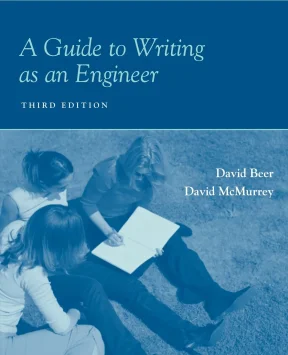
Sách "Hướng dẫn viết cho kỹ sư" phiên bản thứ ba của David Beer và David McMurrey

Chuyên ngành

Kỹ thuật

Người đăng

Ẩn danh

Thể loại

Sách

2009

290
0
0

Phí lưu trữ

55 Point

Tóm tắt

I. Tổng quan về cuốn sách A Guide to Writing as an Engineer

Cuốn sách A Guide to Writing as an Engineer do David Beer và David McMurrey biên soạn là tài liệu hướng dẫn kỹ năng viết dành riêng cho kỹ sư. Được xuất bản bởi nhà Wiley vào năm 2009, đây là ấn bản thứ ba của cuốn sách nổi tiếng này. David Beer công tác tại Khoa Kỹ thuật Điện và Máy tính, Đại học Texas tại Austin. David McMurrey giảng dạy tại Austin Community College. Cả hai tác giả đều có nhiều năm kinh nghiệm trong đào tạo kỹ thuật viết cho kỹ sư. Cuốn sách không chỉ hướng dẫn các khái niệm viết quan trọng mà còn đi sâu vào nội dung, tổ chức, định dạng và phong cách của nhiều loại văn bản kỹ thuật khác nhau. Đối tượng độc giả bao gồm kỹ sư chuyên nghiệp, sinh viên kỹ thuật và sinh viên các ngành kỹ thuật khác. Ấn bản thứ ba được cập nhật với các công cụ và xu hướng hiện đại trong giao tiếp kỹ thuật.

1.1. Giới thiệu về tác giả David Beer và David McMurrey

David Beer là giảng viên tại Khoa Kỹ thuật Điện và Máy tính thuộc Đại học Texas tại Austin. Ông có nhiều năm kinh nghiệm giảng dạy kỹ năng viết cho sinh viên kỹ thuật. David McMurrey công tác tại Austin Community College, chuyên về đào tạo kỹ thuật viết chuyên nghiệp. Sự kết hợp giữa kinh nghiệm giảng dạy đại học và cộng đồng giúp cuốn sách tiếp cận được nhiều đối tượng độc giả khác nhau. Hai tác giả đã hợp tác qua ba ấn bản, liên tục cập nhật nội dung phù hợp với nhu cầu thực tế của ngành kỹ thuật. Sự am hiểu sâu sắc về môi trường kỹ thuật giúp nội dung sách luôn sát với thực tiễn nghề nghiệp.

1.2. Mục tiêu và đối tượng của cuốn sách Wiley 2009

Cuốn sách hướng đến ba nhóm đối tượng chính. Nhóm thứ nhất là kỹ sư chuyên nghiệp cần cải thiện kỹ năng viết trong công việc hàng ngày. Nhóm thứ hai là sinh viên kỹ thuật đang học cách giao tiếp hiệu quả trong môi trường học thuật và nghề nghiệp. Nhóm thứ ba là sinh viên các ngành kỹ thuật liên quan cần nắm vững kỹ năng viết kỹ thuật. Mục tiêu cung cấp kiến thức toàn diện về các loại văn bản kỹ thuật phổ biến. Sách nhấn mạnh tính thực tiễn, giúp người đọc áp dụng ngay vào công việc. Nội dung bao trùm từ viết báo cáo đến thuyết trình miệng, từ tìm kiếm thông tin đến đạo đức nghề nghiệp.

II. Phân tích nội dung và vấn đề trong kỹ thuật viết

Cuốn sách A Guide to Writing as an Engineer phân tích nhiều vấn đề mà kỹ sư thường gặp phải khi viết văn bản kỹ thuật. Một trong những vấn đề lớn nhất là nhiễu trong giao tiếp kỹ thuật. Nhiễu xuất hiện dưới nhiều hình thức: lỗi chính tả, sử dụng thuật ngữ không phù hợp, viết câu quá dài và phức tạp. Chương 2 của sách专门讨论 cách loại bỏ nhiễu lẻ tẻ trong viết kỹ thuật. Vấn đề phổ biến khác là kỹ sư giỏi về kỹ thuật nhưng thiếu kỹ năng trình bày ý tưởng rõ ràng. Nhiều người viết không xác định được đối tượng đọc, dẫn đến văn bản quá chuyên sâu hoặc quá đơn giản. Định dạng và tổ chức văn bản cũng là thách thức lớn. Báo cáo kỹ thuật cần cấu trúc logic, tiêu đề rõ ràng và trình bày nhất quán. Sách cũng đề cập đến vấn đề đạo đức trong viết kỹ thuật, bao gồm trích dẫn nguồn và trình bày dữ liệu trung thực.

2.1. Vấn đề nhiễu trong giao tiếp kỹ thuật

Nhiễu là yếu tố làm giảm hiệu quả giao tiếp trong văn bản kỹ thuật. Chương 2 của sách trình bày chi tiết về nhiễu lẻ tẻ và cách loại bỏ. Lỗi chính tả là dạng nhiễu phổ biến nhất. Phần mềm kiểm tra chính tả không phát hiện được tất cả lỗi, ví dụ như nhầm lẫn giữa there và their. Một lỗi nhỏ trên bàn phím có thể biến yêu cầu gửi tài liệu thành đóng đinh tài liệu. Nhiễu gây khó chịu cho người đọc và làm giảm uy tín của người viết. Độc giả có thể nghi ngờ năng lực kỹ thuật của người viết cẩu thả trong chính tả. Việc loại bỏ nhiễu đòi hỏi sự cẩn thận và kỹ năng biên tập tốt.

2.2. Thách thức trong sử dụng thuật ngữ kỹ thuật

Thuật ngữ kỹ thuật là công cụ cần thiết nhưng cũng là nguồn gây nhiễu lớn. Sử dụng thuật ngữ mà độc giả không hiểu sẽ tạo ra rào cản giao tiếp. Cách duy nhất để tránh nhiễu khi dùng thuật ngữ kỹ thuật là hiểu rõ đối tượng đọc. Viết hoặc nói ở mức hiểu biết của người đọc rất quan trọng. Giải thích thuật ngữ khi cần thiết, sử dụng ví dụ và phép loại suy giúp truyền đạt hiệu quả. Thuật viết tắt cũng cần được giải thích đầy đủ lần đầu sử dụng. Ví dụ: CAD/CAM nên được viết đầy đủ Computer-Aided Design/Computer-Aided Manufacturing trước khi dùng viết tắt. Biết đối tượng đọc giúp cân bằng giữa tính chuyên môn và tính dễ hiểu.

III. Giải pháp và phương pháp viết kỹ thuật hiệu quả

Cuốn sách cung cấp nhiều giải pháp thiết thực để cải thiện kỹ năng viết kỹ thuật. Phương pháp đầu tiên là xác định rõ đối tượng đọc trước khi viết. Hiểu biết về trình độ và nhu cầu của người đọc giúp điều chỉnh nội dung phù hợp. Giải pháp thứ hai là tuân thủ nguyên tắc viết rõ ràng, ngắn gọn theo phong cách Hemingway. Câu ngắn, từ đơn giản giúp thông điệp dễ tiếp nhận hơn. Sách hướng dẫn cách tổ chức văn bản logic với tiêu đề, danh sách và bảng biểu. Định dạng chuyên nghiệp tạo ấn tượng tốt và giúp người đọc tìm thông tin nhanh chóng. Phương pháp biên tập và hiệu đính được trình bày chi tiết để loại bỏ lỗi. Sách cũng giới thiệu cách sử dụng công cụ trực tuyến để tìm kiếm và xác minh thông tin kỹ thuật. Các mẫu báo cáo và đề xuất cung cấp khuôn mẫu để áp dụng ngay vào thực tế.

3.1. Kỹ năng viết rõ ràng và loại bỏ lỗi chính tả

Viết rõ ràng đòi hỏi câu ngắn gọn, từ ngữ chính xác và cấu trúc logic. Sách nhấn mạnh tầm quan trọng của việc biên tập cẩn thận. Kiểm tra chính tả bằng phần mềm là bước đầu tiên nhưng chưa đủ. Người viết cần đọc lại văn bản nhiều lần để phát hiện lỗi ngữ pháp và logic. Sử dụng câu chủ động thay vì câu bị động giúp văn bản sinh động hơn. Tránh dùng quá nhiều từ phức tạp khi từ đơn giản có thể truyền đạt cùng ý nghĩa. Thực hành viết thường xuyên giúp cải thiện kỹ năng dần dần. Sách cung cấp nhiều bài tập thực hành để rèn luyện các kỹ năng này.

3.2. Tổ chức định dạng và cấu trúc văn bản kỹ thuật

Định dạng chuyên nghiệp là yếu tố quan trọng trong văn bản kỹ thuật. Sách hướng dẫn cách sử dụng tiêu đề phân cấp để tổ chức nội dung rõ ràng. Danh sách đánh số và đánh dấu giúp trình bày thông tin dễ theo dõi. Bảng biểu và hình ảnh minh họa tăng tính trực quan cho báo cáo kỹ thuật. Khoảng cách dòng, lề trang và font chữ cần được thiết lập thống nhất. Mỗi loại văn bản kỹ thuật có cấu trúc riêng cần tuân thủ. Báo cáo khác với đề xuất, thư kinh doanh khác với email chuyên nghiệp. Sách cung cấp mẫu và hướng dẫn chi tiết cho từng loại văn bản để áp dụng thực tế.

IV. Kết luận và ứng dụng thực tế của sách kỹ thuật viết

Cuốn sách A Guide to Writing as an Engineer là tài liệu không thể thiếu cho mọi kỹ sư muốn nâng cao kỹ năng giao tiếp. Ấn bản thứ ba năm 2009 cập nhật những xu hướng mới trong giao tiếp kỹ thuật hiện đại. Nội dung sách bao quát toàn diện, từ viết báo cáo đến thuyết trình, từ thư kinh doanh đến email chuyên nghiệp. Giá trị lớn nhất của sách là tính thực tiễn cao, cung cấp công cụ và mẫu áp dụng ngay. Chương về đạo đức và trích dẫn giúp kỹ sư làm việc chuyên nghiệp và có trách nhiệm. Sách cũng hướng dẫn tìm kiếm thông tin kỹ thuật trực tuyến hiệu quả. Đối với sinh viên kỹ thuật, đây là tài liệu học tập quý giá suốt quá trình học. Đối với kỹ sư chuyên nghiệp, sách giúp cải thiện hiệu quả giao tiếp trong công việc hàng ngày. Cuốn sách chứng minh rằng viết kỹ thuật là kỹ năng có thể học và rèn luyện được.

4.1. Ứng dụng trong đào tạo kỹ thuật và học thuật

Trong môi trường học thuật, cuốn sách được sử dụng rộng rãi làm giáo trình giảng dạy. Các trường đại học kỹ thuật áp dụng nội dung sách vào môn viết kỹ thuật. Sinh viên học cách viết báo cáo thí nghiệm, đồ án tốt nghiệp và luận văn. Bài tập thực hành trong sách giúp sinh viên rèn luyện kỹ năng viết hàng ngày. Giáo viên sử dụng sách làm tài liệu tham khảo để xây dựng giáo án. Nội dung cập nhật với công cụ trực tuyến phù hợp với thế hệ sinh viên mới. Sách cũng hữu ích cho nghiên cứu sinh cần viết bài báo khoa học. Tính toàn diện giúp sinh viên có nguồn tài liệu duy nhất cho mọi nhu cầu viết kỹ thuật.

4.2. Giá trị lâu dài cho kỹ sư chuyên nghiệp

Kỹ sư chuyên nghiệp sử dụng cuốn sách như cẩm nang tham khảo trong công việc. Viết báo cáo dự án, đề xuất kỹ thuật và thông số kỹ thuật là công việc hàng ngày. Sách cung cấp mẫu và hướng dẫn giúp tiết kiệm thời gian soạn thảo. Kỹ năng viết tốt giúp kỹ sư thăng tiến trong sự nghiệp. Giao tiếp hiệu quả với đồng nghiệp, quản lý và khách hàng rất quan trọng. Chương về email và thư kinh doanh đặc biệt hữu ích trong môi trường công sở. Sách cũng hướng dẫn thuyết trình kỹ thuật hiệu quả trước đồng nghiệp và ban lãnh đạo. Giá trị lâu dài nằm ở nguyên tắc viết có thể áp dụng suốt sự nghiệp kỹ thuật.
21/04/2026

Trích đoạn nội dung tài liệu

A GUIDE TO WRITING AS AN ENGINEER A GUIDE TO WRITING AS AN ENGINEER THIRD EDITION David Beer Department of Electrical and Computer Engineering University of Texas at Austin David McMurrey Austin Community College John Wiley & Sons, Inc. Publisher Don Fowley Acquisitions Editor Michael McDonald Marketing Manager Christopher Ruel Production Manager Dorothy Sinclair Production Editor Sandra Dumas Senior Designer Kevin Murphy Cover Designer David Levy Media Editor Lauren Sapira Editorial Assistant Rachael Leblond Production Management Services Laserwords Maine Cover Photo  IT Stock This book was set in 10/12 Times Roman by Laserwords Private Limited and printed and bound by Malloy. The cover was printed by Malloy. The paper in this book was manufactured by a mill whose forest management programs include sustained yield harvesting of its timberlands. Sustained yield harvesting principles ensure that the number of trees cut each year does not exceed the amount of new growth. This book is printed on acid-free paper. Copyright  2009, 2005 by John Wiley & Sons, Inc. All rights reserved. No part of this publication may be reproduced, stored in a retrieval system or transmitted in any form or by any means, electronic, mechanical, photocopying, recording, scanning or otherwise, except as permitted under Sections 107 or 108 of the 1976 United States Copyright Act, without either the prior written permission of the Publisher or authorization through payment of the appropriate per-copy fee to the Copyright Clearance Center, 222 Rosewood Drive, Danvers, MA 01923, (978) 750-8400, fax (978) 646-8600. Requests to the Publisher for permission should be addressed to the Permissions Department, John Wiley & Sons, Inc., 111 River Street, Hoboken, NJ 07030-5774, (201) 748-6011, fax (201) 748-6008. To order books or for customer service call 1-800-CALL-WILEY (225-5945). Beer, David; McMurrey, David A Guide to Writing As an Engineer—Third Edition. ISBN 978-0-470-41701-0 Printed in the United States of America. 10 9 8 7 6 5 4 3 2 1 Preface A Guide to Writing as an Engineer, Third Edition, like its two previous editions is intended for professional engineers, engineering students, and students in other technical disciplines. The book not only addresses important writing concepts that apply to professional engineering communication, but also deals with the content, organization, format, and style of various kinds of engineering writing such as reports, proposals, specifications, business letters, and email. The book also covers oral presentations and how to find engineering information, both in traditional ways and online. The final chapter is concerned with questions of ethics and technical writing, and concludes with a citation system for ensuring that all engineering written work and graphics are thoroughly documented when necessary. WHAT’S NEW IN THIS EDITION A comparison between the second and third editions of this book will reveal that many of the chapters have been extensively revised. Relevant chapters now include information on the latest Internet search tools, and the entire book is supplemented by a companion web site at www.com/college/beer which we will regularly update to reflect ongoing changes in URLs, references, and technical content in the text. The site will also provide additional information and resources that might be helpful to users of this book. Several chapters have been reorganized to provide a more logical and usable sequence of materials, and pertinent quotes from industrial and academic authorities have been updated and increased. Important statistical citations have been updated, as have references to other books and sources of information. Our intention is to place this text firmly in the twenty-first century. v vi Preface WHO SHOULD USE THIS BOOK The idea for this book originally grew from our combined forty years of experience in the industry and the engineering classroom, and also from our wish to write a text that is practical rather than theoretical and that devotes all its pages to the communication needs of working engineers and those planning to become engineers. Many engineers and engineering students complain that there is no helpful book on writing aimed specifically for them. Most technical writing texts focus, as their titles imply, on the entire field of technical writing. In other words, they aim to provide total information on everything a technical writer in any profession might be called on to do. Few engineers have the time to become skilled technical writers, yet all engineers need to know how to communicate effectively. They are required to write numerous short documents and also help put together a variety of much longer ones, but few need acquire the skills of an advanced copy editor, graphic artist, or publisher. For most, engineering is their focus, and although advancement to management might bring considerable increase in communication-related responsibilities and opportunities, these will, for the most part, still be focused on engineering and closely related disciplines. Thus our current purpose is the same as our original one: to write a book that stays close to the real concerns engineers and engineering students have in their everyday working lives. This aim is the reason we give short shrift to some topics a general technical writing book might spend several pages on, and also why we devote a chapter or two to what a traditional text might relegate to an appendix. These choices and priorities reflect what we have found to be important to the audience of this book—engineers and students of technical disciplines. The book is also written with the classroom in mind. It can serve as a text in a writing course for science and engineering majors, or indeed for any student who wants to become familiar with writing in the technology professions. Teachers will find the exercises at the end of each chapter good starting points for discussion and homework. Others who use the book may find these exercises well worth thinking about since they are designed to open up the material in the chapters to a larger context than that of individual experience. The text can be read from beginning to end, of course, but readers can also use the Table of Contents and Index to initially get them where they need to go. Thus the book can function not only as a textbook, but also as a reference and guide for writing and research, documenting research, ethical practice in engineering writing, and making effective oral presentations. WHAT’S IN THIS BOOK To keep our book focused squarely on the world of engineering, we have organized the chapters in the following way: Chapter 1, ‘‘Engineers and Writing,’’ describes the importance of writing in your professional engineering life and cites several authorities from industry who strongly emphasize this importance. By introducing the concept of reducing or eliminating Preface vii noise from the communication process, the chapter also provides a conceptual framework for understanding how we approach the subject matter of our book. Chapter 2, ‘‘Eliminating Sporadic Noise in Engineering Writing,’’ reviews specific writing problems that can cause communication problems in technical writing. The chapter deals primarily with all those small annoying glitches that can occur in your writing and trip up the busy reader, causing momentary annoyance, confusion, or misunderstanding. Chapter 3, ‘‘Guidelines for Writing Noise-Free Engineering Documents,’’ reviews several essential requirements for producing effective engineering documents. These topics focus on the attributes of complete documents that enable a reader to access your information with clarity and ease. Chapter 4, ‘‘Letters, Memoranda, Email, and Other Media for Engineers,’’ moves from the material covered in the preceding chapters to one of the most important applications of writing: professional correspondence. Here we cover format and style for office memoranda, business letters, and email. The chapter has also been updated to include a survey of alternatives to email and a discussion of new Internet media such as forums, blogs, and social-networking applications. Chapter 5, ‘‘Writing Common Engineering Documents,’’ provides content, format, and style recommendations for such common engineering documents as inspection and trip reports, laboratory reports, specifications, progress reports, proposals, instructions, and recommendation reports. Chapter 6, ‘‘Writing an Engineering Report,’’ gives a standard format for an engineering report, with special emphasis on content and style for components such as the transmittal letter, title page, table of contents, executive summary, graphics, documentation, and packaging. The chapter has been updated to include guidelines on generating PDFs and an overview of using wikis and other online applications to team-write engineering reports. Chapter 7, ‘‘Constructing Engineering Tables and Graphics,’’ focuses in detail on techniques for incorporating illustrations and tables into your technical documents, and discusses what kind of information might best be presented graphically. Chapter 8, ‘‘Accessing Engineering Information,’’ outlines strategies you can use to find information in traditional libraries as well as on their contemporary online counterparts. The special section on finding and using resources available only on the Internet has been thoroughly updated for this third edition. Chapter 9, ‘‘Engineering Your Speaking,’’ reviews strategies you can use to prepare and deliver technical presentations, either individually or as part of a team. We particularly emphasize how to avoid noise while giving an oral report, and we also look at the importance of ‘‘small talk’’ in the workplace. viii Preface Chapter 10, ‘‘Writing to Get an Engineering Job,’’ covers the content, organization, style, and format of application letters and resumes—some of the main tools you’ll use for getting engineering jobs whether you are a graduating senior or an experienced engineer wanting to move on. The chapter has been updated to provide more resume and application-letter strategies for engineers just beginning their careers. How engineers can use blogs and social-networking facilities (such as LinkedIn) to put their qualifications out on the Internet is also discussed. Chapter 11, ‘‘Ethics and Documentation in Engineering Writing,’’ looks at the ethical pitfalls an engineering writer may encounter and how these may be avoided. Two codes of ethics are provided to enable an engineer to substantiate his or her ethical position. The chapter also emphasizes the need to avoid plagiarism and to document all research fully and reliably. Examples of how to do this are provided and the chapter concludes with sample formats of references used in engineering research. ACKNOWLEDGMENTS Many talented people have played a part, directly or indirectly, in bringing this book to print. We appreciate the input of many students in the Department of Electrical and Computer Engineering at the University of Texas at Austin who are now successfully in industry or graduate school, and we are most grateful to a number of engineering friends at Advanced Micro Devices in Austin. Also deserving of our gratitude are those professors who assisted us in reviewing the manuscript of earlier editions of this text. Such people include: Professor W. Mack Grady, ECE Department, UT Austin; Thomas Ferrara, California State University, Chico; Jon A. Leydens, Colorado School of Mines; Jeanne Lindsell, San Jose State University; Scott Mason, University of Arkansas; Geraldine Milano, New Jersey Institute of Technology; Heather Sheardown, McMaster University; and Marie Zener, Arizona State University. We especially thank the reviewers of this third edition: Elizabeth Hildinger, University of Michigan at Ann Arbor; J. David Baldwin, Oklahoma State University; David Jackson, McMaster University; Michael Polis, Oakland University; and Jay Goldburg, of Marquette University. We also appreciate the help of Clay Spinuzzi of the University of Texas at Austin, Linda M. Clair of IBM Corporation Austin; Angelina Lemon of Freescale Semiconductor, Inc.; Susan Ardis, Head Librarian, Engineering Library, UT Austin; Teresa Ashley, reference librarian at Austin Community College; and Randy Schrecengost, an Austin-based professional engineer. And of course we sincerely thank our families for the encouragement they have always given us. David Beer David McMurrey Austin, Texas 2009 Contents 1. Engineers and Writing 1 Engineers Write a Lot 2 Engineers Write Many Kinds of Documents 4 A Successful Engineering Career Requires Strong Writing Skills 5 Engineers Can Learn to Write Well 6 Noise and the Communication Process 7 Controlling the Writing System 9 Exercises 11 Bibliography 11 2. Eliminating Sporadic Noise in Engineering Writing 13 Spelling and Spell Checkers 14 Punctuation 15 Sentence Sense 23 Technical Usage 35 Edit, Edit, Edit 42 Exercises 43 Bibliography 44 3.

Nội dung được bảo vệ bản quyền — Tải xuống đầy đủ