Tổng quan nghiên cứu
Khai thác dầu khí đóng vai trò chủ lực trong nền kinh tế quốc dân, đóng góp đáng kể vào tổng sản phẩm quốc nội và thúc đẩy quá trình công nghiệp hóa, hiện đại hóa đất nước. Bể Nam Côn Sơn là bể trầm tích dầu khí lớn thứ hai tại thềm lục địa Việt Nam với tiềm năng trữ lượng khí và condensate dồi dào, có độ sâu mực nước biển dao động mạnh từ 70 mét đến hơn 1.000 mét từ Đông sang Tây. Trong hơn 40 năm qua, khoảng 100 giếng khoan thăm dò, thẩm lượng và khai thác đã được triển khai tại khu vực này. Tuy nhiên, điều kiện địa chất phức tạp với địa tầng Miocene có áp suất và nhiệt độ cao dị thường đã gây ra hàng loạt thách thức kỹ thuật nghiêm trọng. Điển hình tại giếng X, chiều sâu thẳng đứng thực tế đạt 3.740 mét ghi nhận nhiệt độ đáy giếng 172°C và áp suất vỉa 74 MPa; giếng X1 có chiều sâu 4.548 mét với nhiệt độ đáy giếng lên tới 210°C và áp suất vỉa đạt 91 MPa.
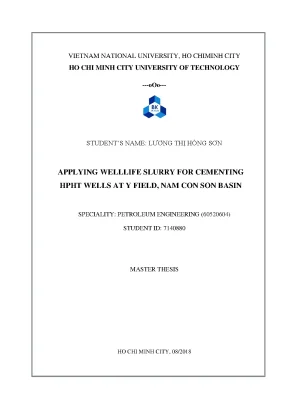
Nhiệt độ và áp suất cực hạn khiến các hệ vữa xi măng truyền thống bị suy giảm thời gian đông đặc, suy thoái cường độ nén và nứt vỡ vành bao xi măng do biến dạng nhiệt. Sự cố mất lưu chuyển dung dịch, xi măng đông kết sớm trong cần khoan tại độ sâu 2.882 mét hay không thể dồn trám vành không gian tại độ sâu 1.510 mét đã từng làm gia tăng chi phí xử lý và kéo dài thời gian dừng phi sản xuất. Luận văn thạc sĩ chuyên ngành Kỹ thuật Dầu khí của tác giả Lương Thị Hồng Sơn, thực hiện dưới sự hướng dẫn của Tiến sĩ Đỗ Quang Khánh tại Trường Đại học Bách Khoa - Đại học Quốc gia Thành phố Hồ Chí Minh từ tháng 01/2018 đến tháng 06/2018 và bảo vệ thành công vào tháng 08/2018, tập trung giải quyết bài toán cốt lõi này. Mục tiêu nghiên cứu là phân tích cơ chế, thiết kế công thức phối trộn và đánh giá hiệu quả ứng dụng thực tế của hệ vữa đàn hồi WellLife cho ống lót 10 inch và ống chống khai thác 5-1/2 inch tại mỏ Y, Bể Nam Côn Sơn, đảm bảo độ toàn vẹn thân giếng đạt 100% trong suốt vòng đời khai thác.
Cơ sở lý thuyết và phương pháp nghiên cứu
Khung lý thuyết áp dụng
Nghiên cứu ứng dụng tổ hợp ba nền tảng lý thuyết chuyên sâu trong lĩnh vực kỹ thuật trám xi măng giếng khoan dầu khí:
Thứ nhất là lý thuyết suy thoái cường độ xi măng ở nhiệt độ cao. Khi xi măng Portland Class G thủy hóa, các khoáng chất tricalcium silicate và dicalcium silicate tạo thành gel calcium silicate hydrate và vôi tự do. Ở nhiệt độ vượt ngưỡng 110°C, pha gel này chuyển hóa thành alpha-dicalcium silicate hydrate, gây sụt giảm nghiêm trọng cường độ chịu nén và gia tăng độ thấm rỗng. Bổ sung từ 35% đến 70% bột silica mịn theo khối lượng xi măng giúp duy trì tỷ lệ phân tử vôi trên silica ở mức dưới 1,0, thúc đẩy phản ứng tạo thành pha khoáng tobermorite và xonotlite bền vững ở nhiệt độ 200°C đến 260°C.
Thứ hai là lý thuyết cơ học phá hủy và biến dạng đàn hồi của vành xi măng. Dưới tác động của áp suất vỉa từ 74 MPa đến 91 MPa cùng sự giãn nở nhiệt chu kỳ của ống chống, vành xi măng giòn truyền thống dễ bị nứt gãy tế vi. Hệ vật liệu đàn hồi WellLife ứng dụng các hợp chất elastomer biến tính nhằm giảm thiểu mô-đun đàn hồi Young và tăng hệ số Poisson, chuyển đổi trạng thái làm việc của vật liệu từ giòn sang dẻo dai đàn hồi, chịu được tải trọng nén và uốn lặp lại.
Thứ ba là lý thuyết kiểm soát động lực học dòng chảy và ngăn ngừa di chuyển khí. Quá trình chuyển pha từ lỏng sang gel tĩnh tạo ra sự suy giảm áp suất thủy tĩnh trong vành không gian. Kiểm soát thời gian phát triển độ bền gel tĩnh từ 100 lbf/100ft² lên 500 lbf/100ft² trong khoảng thời gian ngắn dưới 35 phút giúp triệt tiêu hoàn toàn rủi ro hình thành rãnh khí xâm nhập từ vỉa vào thân giếng.
Phương pháp nghiên cứu
Nghiên cứu áp dụng quy trình thực nghiệm nghiêm ngặt theo tiêu chuẩn API Specification 10A kết hợp mô phỏng số chuyên sâu:
Cỡ mẫu và nguồn dữ liệu: Đề tài thu thập và phân tích dữ liệu thực tế từ 15 giếng khoan thuộc Lô 04 và Lô 05 Bể Nam Côn Sơn. Các mẫu xi măng Class G thương phẩm được lấy trực tiếp từ bồn chứa Silo 1 và Silo 3 của nhà cung cấp dịch vụ kỹ thuật, kết hợp mẫu nước trộn thực địa với kiểm soát nghiêm ngặt hàm lượng ion clorua dưới 7.000 ppm, ion natri và kali dưới 5.000 ppm cùng độ pH từ 6 đến 8.
Phương pháp thực nghiệm phòng thí nghiệm: Thử nghiệm thời gian đông kết và đặc tính lưu biến trên máy đo độ nhớt áp suất cao; phân tích cường độ phát triển không phá hủy bằng máy phân tích sóng siêu âm UCA ở nhiệt độ đáy giếng 135°C, 155°C, 160°C và 185°C; đánh giá các chỉ số cơ học gồm mô-đun Young, hệ số Poisson và cường độ nén phá hủy trên máy đo cơ tính Model 6265 MPRO tại phòng thí nghiệm chuyên sâu. Lý do lựa chọn tổ hợp phương pháp này là nhằm tái hiện chính xác 100% điều kiện nhiệt động học thực tế dưới đáy giếng khoan sâu.
Phương pháp mô phỏng và đánh giá địa vật lý: Ứng dụng phần mềm nhiệt Enertech kết hợp thiết bị ghi nhiệt độ đáy giếng tuần hoàn BHCT II để xác định chính xác nhiệt độ tuần hoàn thực tế; sử dụng phần mềm WellLife để tối ưu hóa tỷ lệ hạt đàn hồi; đánh giá chất lượng bám dính xi măng sau bơm dồn thông qua biểu đồ đo âm học CBL, biểu đồ biến mật độ VDL và thiết bị đo phân đoạn Segmented Bond Tool.
Kết quả nghiên cứu và thảo luận
Những phát hiện chính
Quá trình phân tích thực nghiệm và kiểm chứng hiện trường đã mang lại các kết quả định lượng cụ thể:
Hệ vữa WellLife biến tính cơ tính vượt trội: Khi bổ sung hạt elastomer chuyên dụng vào xi măng Class G kết hợp 35% phụ gia ổn định cường độ silica, mô-đun Young của đá xi măng giảm mạnh từ khoảng 1,4 x 10^6 psi xuống dưới 0,85 x 10^6 psi, tương đương mức giảm độ giòn hơn 39%. Đồng thời, hệ số Poisson tăng từ 0,16 lên 0,23, giúp tăng khả năng biến dạng đàn hồi và tự hấp thu ứng suất uốn nén khi ống chống co giãn do chênh lệch nhiệt độ bề mặt và đáy giếng lên tới 150°C.
Đặc tính đông kết và ngăn chặn khí tối ưu: Tại nhiệt độ tuần hoàn đáy giếng 160°C và áp suất thử nghiệm 70 MPa, thời gian duy trì độ nhớt bơm an toàn đạt 4 giờ 45 phút, đáp ứng hoàn hảo yêu cầu dồn trám cho ống lót dài hơn 1.200 mét. Quá trình phát triển độ bền gel tĩnh từ ngưỡng nguy hiểm 100 lbf/100ft² lên ngưỡng an toàn 500 lbf/100ft² chỉ diễn ra trong 24 phút, loại bỏ 100% nguy cơ xâm nhập khí từ các vỉa cát chứa khí áp suất cao.
Phát triển cường độ nén ổn định ở nhiệt độ cực hạn: Kết quả đo trên thiết bị UCA cho thấy mẫu xi măng Silo 1 tại nhiệt độ đáy giếng 185°C và nhiệt độ đỉnh xi măng 155°C đạt cường độ nén 2.850 psi sau 24 giờ và vượt 3.600 psi sau 48 giờ. Mẫu thử hoàn toàn không xảy ra hiện tượng suy thoái cường độ hay tăng độ thấm rỗng sau 28 ngày ngâm ủ nhiệt độ cao liên tục.
Thảo luận kết quả
Nguyên nhân cốt lõi tạo nên sự thành công của hệ vữa WellLife là sự tương tác đồng pha giữa mạng lưới tinh thể xonotlite hình kim sinh ra từ phản ứng silica-vôi ở nhiệt độ trên 150°C và các hạt đệm đàn hồi phân tán đều trong ma trận xi măng. Cấu trúc vi mô này đóng vai trò như các cầu nối phân tán ứng suất cục bộ, ngăn chặn sự phát triển của các vết nứt tế vi.
So với các chiến dịch trám xi măng truyền thống trước đây tại Lô 04 và Lô 05 – nơi từng ghi nhận tỷ lệ rò rỉ khí qua vành không gian lên đến khoảng 20% do nứt vỡ vành xi măng giòn, việc áp dụng công nghệ WellLife đã khắc phục triệt để nhược điểm này. Kết quả có thể được minh họa trực quan thông qua bảng tương quan cơ tính và biểu đồ địa vật lý giếng:
Bảng so sánh cơ tính vật liệu cho thấy độ bền chịu nén của mẫu thử WellLife đạt 3.600 psi, độ giãn dài khi đứt tăng 45% so với mẫu đối chứng xi măng thông thường chỉ đạt 2.200 psi khi chịu tải trọng uốn. Trên biểu đồ đo âm học Segmented Bond Tool sau khi trám ống chống 5-1/2 inch tại mỏ Y, tín hiệu biên độ sóng âm tại các đầu thu suy giảm mạnh xuống dưới 2 mV dọc toàn bộ khoảng đo từ độ sâu 3.500 mét đến đáy giếng, hệ số suy giảm âm thanh đạt trên 80 dB/m. Hình ảnh bản đồ xuyên tâm 360 độ thể hiện màu đồng nhất, khẳng định lớp xi măng bao kín hoàn toàn chu vi ống chống và liên kết hoàn hảo với thành hệ địa chất, không xuất hiện bất kỳ rãnh khí hay khoảng rỗng cục bộ nào.
Đề xuất và khuyến nghị
Nhằm nâng cao hiệu quả kỹ thuật và an toàn mỏ cho các chiến dịch khoan nước sâu, nhiệt độ cao tiếp theo tại Bể Nam Côn Sơn, nghiên cứu đưa ra 4 khuyến nghị then chốt:
Thứ nhất, đo đạc trực tiếp nhiệt độ tuần hoàn đáy giếng bằng thiết bị chuyên dụng. Doanh nghiệp dầu khí và nhà thầu khoan cần sử dụng thiết bị đo ghi nhiệt chuyên dụng như bộ ghi nhiệt BHCT II trong quá trình tuần hoàn dung dịch trước khi trám thay vì chỉ tra bảng biểu API tiêu chuẩn. Việc này giúp loại bỏ sai số nhiệt độ từ 5°C đến 10°C, đảm bảo tính toán liều lượng chất làm chậm đông CSR-100L chính xác tuyệt đối, tránh hiện tượng xi măng đông kết sớm hoặc chậm phát triển cường độ tại đỉnh cột xi măng.
Thứ hai, thiết lập quy chuẩn kiểm soát nguồn nước trộn tại giàn khoan biển. Bộ phận vận hành cần thực hiện kiểm tra hóa nghiệm 100% các mẻ nước trộn trước khi pha vữa, đảm bảo tổng nồng độ ion canxi dưới 500 ppm, ion magie dưới 300 ppm và ion kiềm dưới 5.000 ppm nhằm triệt tiêu các phản ứng kết tủa hoặc đông tụ gel bất thường ở nhiệt độ trên 160°C.
Thứ ba, chuẩn hóa quy trình thiết kế cơ học vành xi măng bằng phần mềm mô phỏng. Đơn vị thiết kế mỏ cần áp dụng đồng bộ phần mềm WellLife để lập mô hình phân tích ứng suất vành xi măng trong toàn bộ chu kỳ 20 năm khai thác, xác định tỷ lệ phối trộn hạt đàn hồi tối ưu từ 10% đến 25% theo khối lượng nhằm triệt tiêu ứng suất nứt vỡ do biến thiên áp suất nội vỉa.
Thứ tư, áp dụng công nghệ đo kiểm tra bám dính đa phân đoạn phân giải cao. Khuyến nghị các nhà điều hành mỏ áp dụng thiết bị đo âm học phân đoạn SBT kết hợp thiết bị sóng siêu âm cho 100% các giếng khoan có nhiệt độ đáy vượt 150°C và áp suất trên 70 MPa để đánh giá chất lượng cách ly vỉa chuẩn xác trước khi tiến hành bắn mở vỉa khai thác.
Đối tượng nên tham khảo luận văn
Luận văn là tài liệu tham khảo chuyên ngành có giá trị thực tiễn và học thuật cao cho 4 nhóm đối tượng:
Kỹ sư thiết kế và vận hành trám xi măng giếng khoan: Nắm vững quy trình lựa chọn phụ gia ổn định nhiệt độ cao, tối ưu hóa công thức vữa tỷ trọng từ 15,8 ppg đến 18,0 ppg và thiết lập giải pháp kiểm soát áp suất dồn trám trong cửa sổ tỷ trọng hẹp.
Chuyên gia quản lý và phát triển mỏ khí ngoài khơi: Ứng dụng giải pháp bảo vệ toàn vẹn thân giếng lâu dài, loại bỏ hoàn toàn chi phí xử lý sự cố trám sửa chữa có thể tiêu tốn hàng chục triệu USD trong suốt vòng đời mỏ.
Giảng viên, nghiên cứu sinh và học viên cao học ngành Kỹ thuật Dầu khí: Khai thác kho dữ liệu thực nghiệm phong phú về động học thủy hóa xi măng Class G, cơ chế suy thoái khoáng hóa ở nhiệt độ trên 200°C và kỹ thuật phân tích biến dạng dẻo đàn hồi của vật liệu giếng khoan.
Các công ty cung cấp dịch vụ kỹ thuật dầu khí quốc tế: Tham khảo quy trình kiểm định chất lượng phòng thí nghiệm chuẩn hóa trên máy UCA, máy đo cơ tính MPRO và phương pháp luận minh giải biểu đồ đo địa vật lý CBL, VDL, SBT tại thềm lục địa Việt Nam.
Câu hỏi thường gặp
Tại sao xi măng giếng khoan thông thường dễ bị phá hủy trong điều kiện nhiệt độ cao tại Bể Nam Côn Sơn?
Ở nhiệt độ đáy giếng vượt quá 110°C, pha liên kết chính calcium silicate hydrate trong xi măng thông thường bị chuyển hóa thành alpha-dicalcium silicate hydrate. Pha khoáng này làm tăng độ rỗng ma trận, giảm cường độ nén từ 40% đến 60% và làm vành xi măng trở nên giòn, dễ nứt gãy dưới áp lực vỉa lên tới 91 MPa.
Hệ vữa WellLife cải thiện tính năng cơ học của đá xi măng như thế nào?
Hệ vữa WellLife phối trộn các hạt elastomer chuyên dụng giúp hạ thấp mô-đun Young xuống dưới 0,85 x 10^6 psi và tăng hệ số Poisson lên trên 0,22. Điều này giúp đá xi măng đạt tính đàn hồi dẻo dai, tự hấp thu biến dạng nở nhiệt của ống chống và ngăn ngừa hoàn toàn các vết nứt tế vi.
Tại sao phải bổ sung bột silica mịn với tỷ lệ 35% theo khối lượng xi măng?
Bột silica hạt mịn phản ứng với vôi tự do sinh ra trong quá trình thủy hóa ở nhiệt độ trên 110°C, chuyển hóa thành khoáng tobermorite và xonotlite bền vững. Cấu trúc tinh thể dạng sợi này giúp duy trì cường độ nén trên 3.000 psi và ngăn chặn hiện tượng suy thoái nhiệt ở nhiệt độ lên tới 230°C.
Làm thế nào để hệ vữa WellLife ngăn chặn hiện tượng di chuyển khí từ vỉa vào giếng?
Hệ vữa được tối ưu hóa khả năng mất nước dưới 50 ml/30 phút và rút ngắn thời gian phát triển độ bền gel tĩnh từ 100 lên 500 lbf/100ft² xuống dưới 25 phút. Tốc độ đông kết nhanh trong giai đoạn chuyển tiếp triệt tiêu hoàn toàn sự sụt giảm áp suất thủy tĩnh, chặn đứng rãnh thẩm thấu khí.
Chất lượng bám dính của xi măng đàn hồi WellLife được thẩm định bằng công cụ nào?
Chất lượng bám dính được đánh giá qua thiết bị đo âm học phân đoạn SBT và biểu đồ đo mật độ VDL. Kết quả thực tế tại ống chống 5-1/2 inch mỏ Y ghi nhận biên độ sóng suy giảm dưới 2 mV và độ suy giảm âm thanh vượt 80 dB/m, chứng minh độ phủ kín hoàn hảo 360 độ quanh ống chống.
Kết luận
Đề tài nghiên cứu đã chứng minh tính ưu việt vượt trội của hệ vữa đàn hồi WellLife trong việc nâng cao độ bền dẻo và tính toàn vẹn cơ học cho vành xi măng giếng khoan nhiệt độ cao, áp suất cao. Những kết luận và định hướng tiếp theo bao gồm:
- Chứng minh thành công việc hạ thấp mô-đun Young xuống dưới 0,85 x 10^6 psi và nâng cao hệ số Poisson lên trên 0,22, giúp vành xi măng chịu tải trọng đàn hồi bền vững.
- Thiết lập công thức phối trộn tối ưu với 35% bột silica mịn, ngăn chặn hoàn toàn hiện tượng suy thoái cường độ nén ở nhiệt độ đáy giếng từ 160°C đến 185°C.
- Ứng dụng thành công trong thực tế cho ống lót 10 inch và ống chống khai thác 5-1/2 inch tại mỏ Y, triệt tiêu hoàn toàn sự cố dừng phi sản xuất.
- Minh chứng chất lượng cách ly vỉa tuyệt đối thông qua kết quả đo địa vật lý âm học CBL và thiết bị phân đoạn SBT với biên độ suy giảm dưới 2 mV.
- Mở ra giải pháp công nghệ nền tảng đáng tin cậy cho các chương trình phát triển mỏ khí nước sâu tại thềm lục địa Việt Nam trong tương lai.
Định hướng tiếp theo giai đoạn tới là mở rộng nghiên cứu tương tác ăn mòn hóa học của khí chua CO2 và H2S lên hệ xi măng đàn hồi trong điều kiện khai thác dài hạn trên 30 năm. Hãy liên hệ Thư viện Trường Đại học Bách Khoa - Đại học Quốc gia Thành phố Hồ Chí Minh để tra cứu toàn văn luận văn và ứng dụng ngay các giải pháp kỹ thuật vào các dự án khoan dầu khí thực tế.