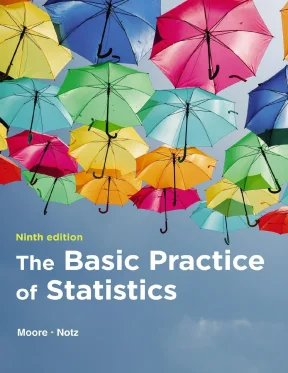
Giáo trình The Basic Practice of Statistics 9th Edition - David S. Moore

Chuyên ngành

Thống kê

Người đăng

Ẩn danh

Thể loại

Giáo trình

2021

1.9K
0
0

Phí lưu trữ

0 Point

Tóm tắt

I. Tổng quan về giáo trình The Basic Practice of Statistics 9e

The Basic Practice of Statistics 9e là giáo trình thống kê hàng đầu do David S. Moore và William I. Notz biên soạn, xuất bản năm 2021 bởi W. H. Freeman and Company. Đây là phiên bản thứ chín, liên tục cải tiến qua nhiều thập kỷ để phù hợp với nhu cầu giảng dạy thống kê đại học. Giáo trình tập trung vào tư duy thống kê thay vì chỉ truyền đạt công thức. Phương pháp giải quyết vấn đề bốn bước — State, Plan, Solve, Conclude — xuyên suốt toàn bộ nội dung. Cách tiếp cận này giúp sinh viên phát triển khả năng phân tích dữ liệu thực tế. Dữ liệu trong sách được lấy từ nghiên cứu khoa học, kinh tế, y tế và xã hội học. Mỗi ví dụ đều phản ánh bối cảnh thực tế, không dùng dữ liệu giả tạo. Phiên bản thứ chín tích hợp thêm nền tảng học trực tuyến Achieve của Macmillan, cung cấp công cụ hỗ trợ học tập trước, trong và sau giờ học. Giáo trình phù hợp với các khóa thống kê nhập môn ở bậc đại học, không yêu cầu kiến thức toán học nâng cao.

1.1. Tác giả và xuất xứ của giáo trình Moore Statistics

David S. Moore là giáo sư thống kê tại Đại học Purdue, người đặt nền móng cho phong trào cải cách giảng dạy thống kê tại Hoa Kỳ. William I. Notz đến từ Đại học Ohio State, đóng góp kinh nghiệm giảng dạy thực tiễn phong phú. Cả hai tác giả đều nhấn mạnh tầm quan trọng của dữ liệu thực và ngữ cảnh ứng dụng trong việc giảng dạy thống kê. Giáo trình ra đời lần đầu vào thập niên 1990 và trở thành tài liệu chuẩn mực tại hàng nghìn trường đại học trên thế giới. Phiên bản 9e được xuất bản năm 2021 với ISBN 978-1-319-38369-5 dạng ePub.

1.2. Phiên bản 9e cải tiến những điểm gì so với bản trước

Phiên bản 9e bổ sung tích hợp với nền tảng Achieve, hỗ trợ phân tích hiệu suất lớp học theo thời gian thực. Bộ dữ liệu được cập nhật đến năm 2019, bao gồm dữ liệu giá xăng, kinh tế toàn cầu và y tế công cộng. Các bài tập Apply Your Knowledge cuối mỗi phần được mở rộng, tập trung vào ứng dụng tư duy thống kê. Phương pháp trình bày trực quan hơn với biểu đồ và bảng số liệu cập nhật. Nội dung về đạo đức dữ liệu được đặt thành chương riêng (Chương 10), phản ánh xu hướng nghiên cứu khoa học hiện đại.

II. Phân tích cấu trúc nội dung của Basic Practice of Statistics 9e Moore

Giáo trình được chia thành năm phần chính, mỗi phần giải quyết một khía cạnh cốt lõi của thống kê ứng dụng. Phần I — Exploring Data — bao gồm các chương từ 1 đến 7, tập trung vào mô tả và trực quan hóa dữ liệu. Sinh viên học cách vẽ biểu đồ, tính toán các chỉ số mô tả và hiểu phân phối chuẩn. Phần II — Producing Data — hướng dẫn thiết kế lấy mẫu và thực nghiệm. Đây là nền tảng để thu thập dữ liệu đáng tin cậy. Phần III giới thiệu xác suất và phân phối lấy mẫu, chuẩn bị cho suy luận thống kê. Phần IV và V đi sâu vào kiểm định giả thuyết và ước lượng khoảng tin cậy cho cả biến định lượng lẫn định tính. Cấu trúc năm phần này tạo ra lộ trình học tập tuần tự, hợp lý. Mỗi phần kết thúc bằng chương ôn tập tổng hợp, giúp củng cố kiến thức trước khi chuyển sang giai đoạn tiếp theo. Toàn bộ 24 chương được thiết kế để hoàn thành trong một học kỳ.

2.1. Năm phần cốt lõi và mục tiêu học tập tương ứng

Phần I dạy đọc và mô tả dữ liệu qua biểu đồ, bảng tần suất và các đại lượng thống kê cơ bản. Phần II giải thích sự khác biệt giữa nghiên cứu quan sát và thực nghiệm có kiểm soát — một kỹ năng phán đoán nghiên cứu khoa học quan trọng. Phần III xây dựng nền tảng xác suất tối thiểu cần thiết để hiểu suy luận. Phần IV tập trung vào kiểm định trung bình và tỷ lệ quần thể. Phần V mở rộng sang phân tích mối quan hệ giữa các biến. Mỗi phần được tách biệt rõ ràng nhưng kết nối logic với nhau.

2.2. Phương pháp bốn bước State Plan Solve Conclude trong thực hành

Phương pháp bốn bước là xương sống của toàn bộ giáo trình. Bước State yêu cầu xác định câu hỏi nghiên cứu và bối cảnh dữ liệu. Bước Plan chọn phương pháp thống kê phù hợp. Bước Solve thực hiện tính toán và phân tích. Bước Conclude diễn giải kết quả bằng ngôn ngữ bối cảnh ban đầu, không chỉ báo cáo số liệu. Quy trình này được áp dụng nhất quán trong mọi ví dụ và bài tập. Sinh viên dần hình thành thói quen tư duy có hệ thống khi xử lý bài toán thực tế.

III. Phương pháp học hiệu quả với giáo trình Moore Statistics 9e

Học hiệu quả với The Basic Practice of Statistics 9e đòi hỏi chiến lược đọc chủ động và thực hành thường xuyên. Mỗi chương nên được đọc cùng với bút và giấy — ghi lại định nghĩa, vẽ lại biểu đồ, tự tính toán ví dụ. Phần Apply Your Knowledge sau mỗi phần không phải tùy chọn. Đây là kiểm tra nhanh giúp phát hiện ngay lỗ hổng kiến thức. Nên hoàn thành trước khi đọc tiếp. Các ví dụ four-step trong sách cần được phân tích từng bước, không đọc lướt. Đặc biệt, bước Conclude thường bị bỏ qua nhưng lại là kỹ năng quan trọng nhất trong thực tế. Dữ liệu thực trong sách nên được tra cứu thêm để hiểu ngữ cảnh. Ví dụ, dữ liệu giá xăng từ 1990 đến 2019 kể câu chuyện kinh tế và địa chính trị phong phú. Nền tảng Achieve cung cấp bài tập tương tác và phản hồi tức thì, nên sử dụng song song với sách in để tối ưu kết quả học tập.

3.1. Cách tiếp cận từng chương và bài tập cuối chương

Mỗi chương trong BPS 9e bắt đầu bằng một câu hỏi thực tế, tạo động lực học tập. Nên đọc câu hỏi đó trước khi vào nội dung chính. Trong khi đọc, dừng lại ở mỗi ví dụ và tự giải trước khi xem đáp án. Bài tập cuối chương chia thành nhiều mức độ — từ cơ bản đến ứng dụng và suy luận phê phán. Không nên chỉ làm bài tập lẻ số hoặc chẵn số. Nên làm ít nhất một bài từ mỗi nhóm kỹ năng. Các bài có ký hiệu (*) là nội dung nâng cao, dành cho lớp học chuyên sâu hơn.

3.2. Sử dụng nền tảng Achieve và tài nguyên kỹ thuật số kèm theo

Achieve là nền tảng học trực tuyến đi kèm với BPS 9e, cung cấp bài đọc tương tác, video hướng dẫn và bài kiểm tra thích ứng. Công cụ phân tích lớp học trong Achieve giúp giảng viên nhận diện sinh viên gặp khó khăn trước khi thi. Với sinh viên tự học, phần Learning Curve trong Achieve cung cấp lộ trình ôn tập cá nhân hóa dựa trên kết quả làm bài. StatBoards — các bảng tương tác giải thích khái niệm trực quan — đặc biệt hữu ích cho nội dung phân phối xác suất và kiểm định giả thuyết. Nên kết hợp Achieve ít nhất ba buổi mỗi tuần để duy trì tiến độ học.

IV. Ứng dụng thực tiễn và giá trị học thuật của BPS 9e Moore

The Basic Practice of Statistics 9e không chỉ là giáo trình dạy công thức — đây là sách dạy tư duy dữ liệu. Kỹ năng đọc hiểu nghiên cứu khoa học, phân biệt tương quan và nhân quả, nhận biết thiên lệch lấy mẫu đều được rèn luyện qua các ví dụ thực. Chương về đạo đức dữ liệu (Chương 10) là điểm nổi bật đặc biệt, dạy cách đánh giá tính hợp lệ của nghiên cứu. Sinh viên ngành y tế, xã hội học, kinh tế học, giáo dục và tâm lý học đều tìm thấy ví dụ liên quan trực tiếp đến lĩnh vực của mình. Giáo trình cũng chuẩn bị nền tảng vững chắc cho các khóa thống kê nâng cao. Người học tiếp tục với hồi quy đa biến, phân tích phương sai hay mô hình hóa thống kê sẽ nhận ra rằng BPS 9e đã cung cấp đủ tư duy cốt lõi. Trong bối cảnh kinh tế dữ liệu hiện nay, khả năng đặt câu hỏi đúng với dữ liệu và kết luận có cơ sở là kỹ năng thiết yếu. BPS 9e đặt nền móng cho kỹ năng đó.

4.1. Ứng dụng trong nghiên cứu khoa học và ra quyết định

Kiến thức từ BPS 9e có thể áp dụng ngay vào đọc báo cáo nghiên cứu. Hiểu được khoảng tin cậy và p-value giúp đánh giá mức độ tin cậy của kết luận khoa học. Kỹ năng nhận biết thiết kế thực nghiệm tốt xấu hỗ trợ phán đoán nghiên cứu y học và xã hội học. Phân tích hồi quy tuyến tính trong Chương 5 ứng dụng trực tiếp vào dự báo kinh tế, đánh giá chính sách và phân tích thị trường. Các chuyên gia phân tích dữ liệu, nhà nghiên cứu và nhà quản lý đều cần nền tảng tư duy thống kê mà BPS 9e xây dựng.

4.2. Vị trí của BPS 9e trong chương trình đào tạo đại học

BPS 9e được sử dụng rộng rãi tại các trường đại học Hoa Kỳ và nhiều quốc gia khác làm giáo trình thống kê nhập môn không chuyên. Môn học thường mang 3 tín chỉ và phục vụ sinh viên từ nhiều ngành khác nhau. Giáo trình phù hợp với lớp học có quy mô lớn do có hệ thống bài tập phong phú và tích hợp công nghệ. Sau khi hoàn thành khóa học dựa trên BPS 9e, sinh viên có đủ nền tảng để học các phần mềm thống kê như R, SPSS hoặc JMP ở cấp độ ứng dụng. Đây là bước đệm quan trọng trong hành trình nghiên cứu học thuật.
21/04/2026

Trích đoạn nội dung tài liệu

The Basic Practice of Statistics The Basic Practice of Statistics Ninth Edition David S. Moore Purdue University William I. Notz The Ohio State University Senior Vice President, STEM: Daryl Fox Program Director, Math, Statistics, Earth Sciences, and Environmental Science: Andrew Dunaway Program Manager: Sarah Seymour Executive Content Development Manager, STEM: Debbie Hardin Development Editor: David Dietz Executive Project Manager, Content, STEM: Katrina Mangold Director of Content, Math and Statistics: Daniel Lauve Executive Media Editor: Catriona Kaplan Associate Editor: Andy Newton Assistant Editor: Justin Jones Marketing Manager: Leah Christians Marketing Assistant: Morgan Psiuk Director of Content Management Enhancement: Tracey Kuehn Senior Managing Editor: Lisa Kinne Senior Content Project Manager: Edward Dionne Project Manager: Heidi Allgair, SPi Global Senior Workflow Project Manager: Paul Rohloff Production Supervisor: Robert Cherry Director of Design, Content Management: Diana Blume Design Services Manager: Natasha Wolfe Cover Design: Laura de Grasse Interior Design: Vicki Tomaselli Art Manager: Matthew McAdams Director of Digital Production: Keri deManigold Media Project Manager: Hanna Squire Executive Permissions Editor: Cecilia Varas Rights and Billing Editor: Alexis Gargin Composition: SPi Global Printing and Binding: LSC Communications ISBN 978-1-319-38369-5 (ePub) © 2021, 2018, 2015, 2012 by W. Freeman and Company All rights reserved. Printed in the United States of America 1 2 3 4 5 6 25 24 23 22 21 20 Macmillan Learning One New York Plaza Suite 4600 New York, NY 10004-1562 www.com BRIEF CONTENTS Chapter 0 Getting Started Part I Exploring Data EXPLORING DATA: Variables and Distributions Chapter 1 Picturing Distributions with Graphs Chapter 2 Describing Distributions with Numbers Chapter 3 The Normal Distributions EXPLORING DATA: Relationships Chapter 4 Scatterplots and Correlation Chapter 5 Regression Chapter 6 Two-Way Tables* Chapter 7 Exploring Data: Part I Review Part II Producing Data PRODUCING DATA Chapter 8 Producing Data: Sampling Chapter 9 Producing Data: Experiments Chapter 10 Data Ethics* Chapter 11 Producing Data: Part II Review Part III From Data Production to Inference PROBABILITY AND SAMPLING DISTRIBUTIONS Chapter 12 Introducing Probability Chapter 13 General Rules of Probability* Chapter 14 Binomial Distributions* Chapter 15 Sampling Distributions FOUNDATIONS OF INFERENCE Chapter 16 Confidence Intervals: The Basics Chapter 17 Tests of Significance: The Basics Chapter 18 Inference in Practice Chapter 19 From Data Production to Inference: Part III Review Part IV Inference about Variables QUANTITATIVE RESPONSE VARIABLE Chapter 20 Inference about a Population Mean Chapter 21 Comparing Two Means CATEGORICAL RESPONSE VARIABLE Chapter 22 Inference about a Population Proportion Chapter 23 Comparing Two Proportions Chapter 24 Inference about Variables: Part IV Review Part V Inference about Relationships INFERENCE ABOUT RELATIONSHIPS Chapter 25 Two Categorical Variables: The Chi-Square Test Chapter 26 Inference for Regression Chapter 27 One-Way Analysis of Variance: Comparing Several Means Part VI Optional Companion Chapters (Available Online) Chapter 28 Nonparametric Tests Chapter 29 Multiple Regression* Chapter 30 Two-Way Analysis of Variance Chapter 31 Statistical Process Control Chapter 32 Resampling: Permutation Tests and the Bootstrap *Starred material is optional and can be skipped without loss of continuity. Why Did You Do That? 2. About the Authors 5. Chapter 0 Getting Started 1.1 How the Data Were Obtained Matters 2.2 Always Look at the Data 3.3 Variation Is Everywhere 4.4 What Lies Ahead in This Book 6. Part I Exploring Data 1. Chapter 1 Picturing Distributions with Graphs 1.1 Individuals and Variables 2.2 Categorical Variables: Pie Charts and Bar Graphs 3.3 Quantitative Variables: Histograms 4.5 Quantitative Variables: Stemplots 6. Chapter 2 Describing Distributions with Numbers 1.1 Measuring Center: The Mean 2.2 Measuring Center: The Median 3.3 Comparing the Mean and the Median 4.4 Measuring Variability: The Quartiles 5.5 The Five-Number Summary and Boxplots 6.6 Spotting Suspected Outliers and Modified Boxplots* 7.7 Measuring Variability: The Standard Deviation 8.8 Choosing Measures of Center and Variability 9.9 Examples of Technology 10.10 Organizing a Statistical Problem 3. Chapter 3 The Normal Distributions 1.2 Describing Density Curves 3.5 The Standard Normal Distribution 6.6 Finding Normal Proportions 7.7 Using the Standard Normal Table 8.8 Finding a Value Given a Proportion 4. Chapter 4 Scatterplots and Correlation 1.1 Explanatory and Response Variables 2.2 Displaying Relationships: Scatterplots 3.4 Adding Categorical Variables to Scatterplots 5.5 Measuring Linear Association: Correlation 6.6 Facts about Correlation 5.2 The Least-Squares Regression Line 3.3 Examples of Technology 4.4 Facts about Least-Squares Regression 5.7 Cautions about Correlation and Regression 8.8 Association Does Not Imply Causation 9.9 Correlation, Prediction, and Big Data* 6. Chapter 6 Two-Way Tables* 1. Chapter 7 Exploring Data: Part I Review 1. Part I Skills Review 2. Online Data for Additional Analyses 7. Part II Producing Data 1. Chapter 8 Producing Data: Sampling 1.1 Population versus Sample 2.2 How to Sample Badly 3.3 Simple Random Samples 4.4 Trustworthiness of Inference from Samples 5.5 Other Sampling Designs 6.6 Cautions about Sample Surveys 7.7 The Impact of Technology 2. Chapter 9 Producing Data: Experiments 1.1 Observation Versus Experiment 2.2 Subjects, Factors, and Treatments 3.3 How to Experiment Badly 4.4 Randomized Comparative Experiments 5.5 The Logic of Randomized Comparative Experiments 6.6 Cautions About Experimentation 7.7 Matched Pairs and Other Block Designs 3. Chapter 10 Data Ethics* 1.1 Institutional Review Boards 2.5 Behavioral and Social Science Experiments 4. Chapter 11 Producing Data: Part II Review 1. Part II Skills Review 2. Part III From Data Production to Inference 1. Chapter 12 Introducing Probability 1.1 The Idea of Probability 2.2 The Search for Randomness* 3.5 Finite Probability Models 6.6 Continuous Probability Models 7. Chapter 13 General Rules of Probability* 1.1 The General Addition Rule 2.2 Independence and the Multiplication Rule 3.4 The General Multiplication Rule 5.5 Showing That Events Are Independent 6. Chapter 14 Binomial Distributions* 1.1 The Binomial Setting and Binomial Distributions 2.2 Binomial Distributions in Statistical Sampling 3.4 Examples of Technology 5.5 Binomial Mean and Standard Deviation 6.6 The Normal Approximation to Binomial Distributions 4. Chapter 15 Sampling Distributions 1.1 Parameters and Statistics 2.2 Statistical Estimation and the Law of Large Numbers 3.4 The Sampling Distribution of x¯ 5.5 The Central Limit Theorem 6.6 Sampling Distributions and Statistical Significance* 5. Chapter 16 Confidence Intervals: The Basics 1.1 The Reasoning of Statistical Estimation 2.2 Margin of Error and Confidence Level 3.3 Confidence Intervals for a Population Mean 4.4 How Confidence Intervals Behave 6. Chapter 17 Tests of Significance: The Basics 1.1 The Reasoning of Tests of Significance 2.3 P-Value and Statistical Significance 4.4 Tests for a Population Mean 5.5 Significance from a Table* 7. Chapter 18 Inference in Practice 1.1 Conditions for Inference in Practice 2.2 Cautions about Confidence Intervals 3.3 Cautions about Significance Tests 4.4 Planning Studies: Sample Size for Confidence Intervals 5.5 Planning Studies: The Power of a Statistical Test of Significance* 8. Chapter 19 From Data Production to Inference: Part III Review 1. Part III Skills Review 2. Part IV Inference about Variables 1. Chapter 20 Inference about a Population Mean 1.1 Conditions for Inference about a Mean 2.3 The One-Sample t Confidence Interval 4.4 The One-Sample t Test 5.5 Examples of Technology 6.6 Matched Pairs t Procedures 7.7 Robustness of t Procedures 2. Chapter 21 Comparing Two Means 1.1 Two-Sample Problems 2.2 Comparing Two Population Means 3.3 Two-Sample t Procedures 4.4 Examples of Technology 5.6 Details of the t Approximation* 7.7 Avoid the Pooled Two-Sample t Procedures* 8.8 Avoid Inference about Standard Deviations* 3. Chapter 22 Inference about a Population Proportion 1.1 The Sample Proportion p^ 2.2 Large-Sample Confidence Intervals for a Proportion 3.3 Choosing the Sample Size 4.4 Significance Tests for a Proportion 5.5 Plus Four Confidence Intervals for a Proportion* 4. Chapter 23 Comparing Two Proportions 1.1 Two-Sample Problems: Proportions 2.2 The Sampling Distribution of a Difference between Proportions 3.3 Large-Sample Confidence Intervals for Comparing Proportions 4.4 Examples of Technology 5.5 Significance Tests for Comparing Proportions 6.6 Plus Four Confidence Intervals for Comparing Proportions* 5. Chapter 24 Inference about Variables: Part IV Review 1. Part IV Skills Review 2. Part V Inference about Relationships 1. Chapter 25 Two Categorical Variables: The Chi-Square Test 1.1 Two-Way Tables 2.2 The Problem of Multiple Comparisons 3.3 Expected Counts in Two-Way Tables 4.4 The Chi-Square Statistic 5.5 Examples of Technology 6.6 The Chi-Square Distributions 7.7 Cell Counts Required for the Chi-Square Test 8.8 Uses of the Chi-Square Test: Independence and Homogeneity 9.9 The Chi-Square Test for Goodness of Fit* 2. Chapter 26 Inference for Regression 1.1 Conditions for Regression Inference 2.2 Estimating the Parameters 3.3 Examples of Technology 4.4 Testing the Hypothesis of No Linear Relationship 5.5 Testing Lack of Correlation 6.6 Confidence Intervals for the Regression Slope 7.7 Inference about Prediction 8.8 Checking the Conditions for Inference 3. Chapter 27 One-Way Analysis of Variance: Comparing Several Means 1.1 Comparing Several Means 2.2 The Analysis of Variance F Test 3.4 The Idea of Analysis of Variance 5.5 Conditions for ANOVA 6.6 F Distributions and Degrees of Freedom 7.7 Follow-up Analysis: Tukey Pairwise Multiple Comparisons 8.8 Some Details of ANOVA* 11. Notes and Data Sources 12. Tables TABLE A Standard Normal Cumulative Proportions TABLE B Random Digits TABLE C t Distribution Critical Values TABLE D Chi-Square Distribution Critical Values TABLE E Critical Values of the Correlation r 13. Answers to Selected Exercises 14. Part VI Optional Companion Chapters (Available Online) 1. Chapter 28 Nonparametric Tests 1.1 Comparing Two Samples: The Wilcoxon Rank Sum Test 2.2 The Normal Approximation for W 3.3 Examples of Technology 4.4 What Hypotheses Does Wilcoxon Test? 5.5 Dealing with Ties in Rank Tests 6.6 Matched Pairs: The Wilcoxon Signed Rank Test 7.7 The Normal Approximation for W+ 8.8 Dealing with Ties in the Signed Rank Test 9.9 Comparing Several Samples: The Kruskal–Wallis Test 10.10 Hypotheses and Conditions for the Kruskal–Wallis Test 11.11 The Kruskal–Wallis Test Statistic 2. Chapter 29 Multiple Regression* 1.1 Adding a Categorical Variable in Regression 2.3 Examples of Technology 4.4 Inference for Multiple Regression 5.6 A Model with Two Regression Lines 7.7 The General Multiple Linear Regression Model 8.8 Correlations between Explanatory Variables 9.9 A Case Study for Multiple Regression 10.10 Inference for Regression Parameters 11.11 Checking the Conditions for Inference 3. Chapter 30 Two-Way Analysis of Variance 1.1 Beyond One-Way ANOVA 2.2 Two-Way ANOVA: Conditions, Main Effects, and Interaction 3.3 Inference for Two-Way ANOVA 4.4 Some Details of Two-Way ANOVA* 4. Chapter 31 Statistical Process Control 1.3 The Idea of Statistical Process Control 4.4 x¯ Charts for Process Monitoring 5.5 s Charts for Process Monitoring 6.6 Using Control Charts 7.7 Setting Up Control Charts 8.8 Comments on Statistical Control 9.9 Don’t Confuse Control with Capability 10.10 Control Charts for Sample Proportions 11.11 Control Limits for p Charts 5. Chapter 32 Resampling: Permutation Tests and the Bootstrap 1.1 Randomization in Experiments as a Basis for Inference 2.2 Permutation Tests for Two Treatments with Software 3.3 Generating Bootstrap Samples 4.4 Bootstrap Standard Errors and Confidence Intervals *Starred material is optional and can be skipped without loss of continuity. WHY DID YOU DO THAT? The Authors Answer Questions about The Basic Practice of Statistics Welcome to the ninth edition of The Basic Practice of Statistics. As the title suggests, this text provides an introduction to the practice of statistics that aims to equip students to carry out common statistical procedures and to follow statistical reasoning in their fields of study and in their future employment. There is no single best way to organize our presentation of statistics to beginners. That said, our choices reflect thinking about both content and pedagogy. Here are comments on several frequently asked questions about the order and selection of material in The Basic Practice of Statistics. Why Did You Write The Basic Practice of Statistics? Several factors influenced the writing of The Basic Practice of Statistics. Easy-to-use statistical software with graphical tools made it possible for students to explore and analyze data on their own. Statistics educators recognized that actually doing statistics—exploring data, analyzing data, thinking about what the data are telling us, and assessing the validity of the conclusions we make from data— is an effective way to learn statistics. Teachers also recognized the importance of using real data from actual studies to reinforce the fact that statistics is invaluable for answering real-world questions.

Nội dung được bảo vệ bản quyền — Tải xuống đầy đủ