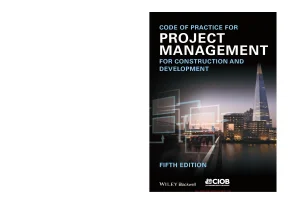
CIOB's Code of Practice for Project Management in Construction - 5th Edition

Tài liệu PDF Code of Practice for Project Management for Construction and Development phiên bản 5 là hướng dẫn quan trọng cho ngành xây dựng.

Người đăng

Ẩn danh

Thể loại

Quy tắc thực hành

2014

355
0
0

Phí lưu trữ

75 Point

Tóm tắt

I. Tổng quan về Code of Practice for Project Management for Construction and Development Fifth Edition

Code of Practice for Project Management for Construction and Development Fifth Edition là tài liệu hướng dẫn toàn diện về quản lý dự án xây dựng. Ấn bản đầu tiên ra đời năm 1992, đánh dấu bước ngoặt lớn trong ngành. Đến phiên bản thứ năm, tài liệu được biên soạn bởi lực lượng chuyên gia liên viện, do CIOB chủ trì phối hợp cùng RICS, RIBA, ICE, APM và CIC. Tài liệu tập trung vào ba yếu tố cốt lõi: thời gian, chất lượng và chi phí. Đồng thời, ấn bản mới tích hợp mô hình thông tin xây dựng (BIM) vào từng giai đoạn vòng đời dự án. Các chủ đề như tính bền vững, quốc tế hóa dự án xây dựng cũng được đề cập chi tiết. Tài liệu hữu ích cho khách hàng, chuyên gia quản lý dự án, sinh viên xây dựng và các ngành thương mại liên quan. PDF của ấn bản này được tìm kiếm rộng rãi nhờ tính ứng dụng cao trong thực tiễn quản lý dự án xây dựng hiện đại.

1.1. Lịch sử phát triển và các viện chuyên môn tham gia

Code of Practice for Project Management ra đời năm 1992 với tư cách là tài liệu tiên phong trong lĩnh vực quản lý dự án xây dựng. Qua hơn hai thập kỷ, tài liệu được cập nhật liên tục để phù hợp với thực tế ngành. Ấn bản thứ năm do CIOB - Viện Xây dựng Hoàng gia Anh - chủ trì biên soạn. Đội ngũ bao gồm đại diện từ RICS (Hội Thẩm định Hoàng gia), RIBA (Hội Kiến trúc sư Hoàng gia), ICE (Hội Kỹ sư Dân dụng), APM (Hiệp hội Quản lý Dự án) và CIC (Hội Công nghiệp Xây dựng). Sự hợp tác đa viện đảm bảo góc nhìn toàn diện và chuyên sâu cho tài liệu.

1.2. Đối tượng sử dụng và phạm vi áp dụng

Tài liệu phục vụ nhiều đối tượng khác nhau trong ngành xây dựng. Khách hàng và chủ đầu tư tìm thấy hướng dẫn về cách thức quản lý dự án hiệu quả. Chuyên gia quản lý dự án sử dụng tài liệu làm tham chiếu chuẩn trong công việc hàng ngày. Sinh viên ngành xây dựng coi đây là giáo trình quan trọng để nắm vững nguyên tắc quản lý. Phạm vi áp dụng rộng rãi từ dự án nhỏ đến dự án phức tạp quy mô lớn. Nhiều thông tin trong tài liệu cũng áp dụng được cho quản lý dự án trong các lĩnh vực thương mại khác ngoài xây dựng.

II. Phân tích cấu trúc giai đoạn dự án trong Code of Practice Fifth Edition

Code of Practice for Project Management for Construction and Development Fifth Edition chia dự án thành nhiều giai đoạn rõ ràng. Giai đoạn 1 là Khởi đầu (Inception), xác định nhu cầu dự án và lập tài liệu khởi tạo dự án (PID). Giai đoạn 2 là Tính khả thi (Feasibility), đánh giá tính khả thi qua nghiên cứu và lập phương án kinh doanh. Giai đoạn 3 là Chiến lược (Strategy), xây dựng kế hoạch thực thi dự án và chiến lược mua sắm. Giai đoạn 4 là Thiết kế và giao hàng (Design Delivery), tập trung vào đầu ra thiết kế và sắp xếp hợp đồng. Giai đoạn 5 là Giám sát hiệu suất (Performance Monitoring), kiểm soát tiến độ thi công và quản lý rủi ro. Mỗi giai đoạn đều có mục tiêu cấp cao, sản phẩm bàn giao và nguồn lực cụ thể. Cấu trúc này giúp đội ngũ dự án theo dõi tiến trình một cách hệ thống và có tổ chức.

2.1. Các giai đoạn đầu Từ khởi đầu đến chiến lược

Giai đoạn Khởi đầu tập trung xác định nhu cầu dự án. Tài liệu khởi tạo dự án (PID) được lập để định nghĩa mục tiêu, phạm vi và khung thời gian. Giai đoạn Tính khả thi tiến hành nghiên cứu để trả lời câu hỏi dự án có khả thi hay không. Phương án kinh doanh và nguồn vốn được xem xét kỹ lưỡng. Giai đoạn Chiến lược xây dựng kế hoạch thực thi dự án (PEP). Chiến lược mua sắm, cơ cấu tổ chức dự án và phân công trách nhiệm được thiết lập rõ ràng. Ba giai đoạn này tạo nền tảng vững chắc cho toàn bộ dự án.

2.2. Các giai đoạn sau Thiết kế thi công và giám sát

Giai đoạn Thiết kế và giao hàng xác định sản phẩm cần xây dựng và cách thức thực hiện. Đầu ra thiết kế bao gồm thiết kế kỹ thuật và thông tin sản xuất. Quản lý giá trị và tuân thủ quy định an toàn được ưu tiên. Giai đoạn Giám sát hiệu suất tập trung vào quản lý hiệu suất thi công xây dựng. Các chỉ số KPI được theo dõi để đảm bảo dự án đúng tiến độ và ngân sách. BIM đóng vai trò quan trọng trong việc tích hợp thông tin giữa các giai đoạn. Giai đoạn cuối cùng là Bàn giao và đánh giá sau dự án.

III. Giải pháp quản lý dự án xây dựng theo Code of Practice Fifth Edition

Code of Practice for Project Management for Construction and Development Fifth Edition đề xuất nhiều giải pháp quản lý hiệu quả. Quản lý rủi ro là yếu tố then chốt, bao gồm các chiến lược tránh, chuyển giao, giảm thiểu, chia sẻ và chấp nhận rủi ro. Dự phòng ngân sách được tính toán dựa trên phân tích rủi ro chi tiết. Tích hợp BIM vào từng giai đoạn dự án giúp cải thiện khả năng phối hợp giữa các bên liên quan. Quản lý tài nguyên được tối ưu hóa thông qua phân bổ nguồn lực hợp lý và lập lịch trình chi tiết. Nguyên tắc lập kế hoạch chiến lược, lập chương trình chi tiết và giám sát được áp dụng rộng rãi cho mọi dự án bất kể quy mô. Phương pháp quản lý giá trị đảm bảo tối ưu hóa chức năng công trình trong giới hạn ngân sách. Các sắp xếp hợp đồng và quy trình mua sắm được hướng dẫn cụ thể để giảm xung đột và tăng hiệu quả hợp tác.

3.1. Ứng dụng BIM và công nghệ trong quản lý dự án

Ấn bản thứ năm đặc biệt nhấn mạnh vai trò của Mô hình Thông tin Xây dựng (BIM). BIM được tích hợp vào từng giai đoạn vòng đời dự án, từ thiết kế đến thi công và vận hành. Công nghệ này cho phép các bên liên quan chia sẻ thông tin dự án một cách chính xác và thời gian thực. BIM giúp phát hiện xung đột thiết kế trước khi thi công, giảm lãng phí và thay đổi phát sinh. Quản lý thông tin dự án trở nên minh bạch và có hệ thống hơn. Sự chuyển đổi kỹ thuật số trong ngành xây dựng được phản ánh rõ nét qua các hướng dẫn trong tài liệu này.

3.2. Quản lý rủi ro và phân bổ nguồn lực

Quản lý rủi ro trong Code of Practice được trình bày dưới dạng quy trình có hệ thống. Phân tích rủi ro ban đầu giúp xác định các mối đe dọa tiềm ẩn và cơ hội. Năm chiến lược quản lý rủi ro được áp dụng: tránh, chuyển giao, giảm thiểu, chia sẻ và chấp nhận. Dự phòng ngân sách được tính toán dựa trên mức độ rủi ro đánh giá. Phân bổ nguồn lực đảm bảo nhân sự và vật liệu được sử dụng hiệu quả. Báo cáo kiểm soát dự án định kỳ giúp theo dõi biến động và điều chỉnh kịp thời. Cách tiếp cận này áp dụng cho dự án mọi quy mô và độ phức tạp.

IV. Kết luận và ứng dụng thực tiễn của Code of Practice Fifth Edition PDF

Code of Practice for Project Management for Construction and Development Fifth Edition là tài liệu tham chiếu không thể thiếu trong ngành xây dựng. Phiên bản PDF giúp tiếp cận dễ dàng và tra cứu nhanh chóng ở mọi nơi. Tài liệu phản ánh đầy đủ thách thức hiện tại của ngành, từ quốc tế hóa dự án đến yêu cầu bền vững. Nguyên tắc quản lý dự án trong tài liệu áp dụng hiệu quả cho dự án từ nhỏ đến phức tạp. Khách hàng sử dụng tài liệu để đánh giá năng lực nhà quản lý dự án. Chuyên gia xây dựng dùng làm chuẩn mực nghề nghiệp trong thực hành hàng ngày. Sinh viên xây dựng tìm thấy kiến thức nền tảng vững chắc cho sự nghiệp tương lai. Ấn bản thứ năm tiếp tục định hướng phát triển nghề quản lý dự án xây dựng toàn cầu. Việc tải và nghiên cứu bản PDF là bước đầu tiên để nắm vững các nguyên tắc quản lý dự án chuyên nghiệp.

4.1. Giá trị đối với từng nhóm đối tượng sử dụng

Khách hàng và chủ đầu tư hưởng lợi từ hướng dẫn rõ ràng về quy trình quản lý dự án. Tài liệu giúp họ hiểu rõ vai trò và trách nhiệm của từng bên. Chuyên gia quản lý dự án sử dụng tài liệu như công cụ tham chiếu chuẩn trong công việc. Các phương pháp và quy trình được trình bày có tính ứng dụng cao. Sinh viên xây dựng tiếp cận kiến thức hệ thống từ cơ bản đến nâng cao. Tài liệu cũng hữu ích cho chuyên gia trong lĩnh vực thương mại khác. Giá trị đa chiều này giải thích tại sao bản PDF được tìm kiếm rộng rãi trên toàn cầu.

4.2. Tầm ảnh hưởng và xu hướng phát triển ngành xây dựng

Code of Practice Fifth Edition phản ánh xu hướng quốc tế hóa dự án xây dựng ngày càng tăng. Các dự án xuyên quốc gia đòi hỏi tiêu chuẩn quản lý thống nhất và chuyên nghiệp. Yêu cầu bền vững trong xây dựng được tích hợp xuyên suốt tài liệu. Tính bền vững không chỉ là mục tiêu môi trường mà còn là yếu tố kinh tế dài hạn. CIOB với hơn 48.000 thành viên toàn cầu đóng vai trò quan trọng trong việc lan tỏa tiêu chuẩn. Tài liệu định hướng tương lai nghề quản lý dự án xây dựng theo hướng chuyên nghiệp hóa và số hóa. Xu hướng này sẽ tiếp tục phát triển trong các phiên bản tương lai.
21/04/2026

Trích đoạn nội dung tài liệu

PMS Pantone CMYK PMS 210mm 16mm 210mm CODE OF PRACTICE FOR CODE OF PRACTICE FOR PROJECT MANAGEMENT CODE OF PRACTICE FOR PROJECT MANAGEMENT FOR CONSTRUCTION AND DEVELOPMENT FIFTH EDITION The first edition of the Code of Practice for Project Management for Construction and PROJECT MANAGEMENT Development, published in 1992, was groundbreaking in many ways. Now in its fifth edition, prepared by a multi-institute task force coordinated by the CIOB and including representatives from RICS, RIBA, ICE, APM and CIC, it continues to be the authoritative guide and reference to the principles and practice of project management in construction and development. Good project management in construction relies on balancing the key constraints of time, quality and cost in the context of building functionality and the requirements FOR CONSTRUCTION AND for sustainability within the built environment. Thoroughly updated and restructured to reflect the challenges that the industry faces today, this edition continues to drive forward the practice of construction project management. The principles of strategic DEVELOPMENT planning, detailed programming and monitoring, resource allocation and effective risk management, widely used on projects of all sizes and complexity, are all fully covered. The integration of Building Information Modelling at each stage of the project life is a feature of this edition. In addition, the impact of trends and developments such as the internationalisation of construction projects and the drive for sustainability are discussed in context. Code of Practice will be of particular value to clients, project management professionals and students of construction, as well as to the wider construction and development industries. Much of the information will also be relevant to project management 297mm professionals operating in other commercial spheres. About the CIOB The Chartered Institute of Building is at the heart of a management career in construction. It is the world’s largest and most influential professional body for construction management and leadership, with a Royal Charter to promote the science and practice of building and construction for the benefit of society. With over 48,000 members worldwide, the CIOB is the international voice of the building professional. Also Available Guide to Good Practice in the Management of International Construction Contracts: A Time in Complex Projects Handbook Chartered Institute of Building William Godwin Paperback, 978-1-4443-3493-7 Paperback, 978-0-470-65572-6 The Design Manager’s Handbook John Eynon Paperback, 978-0-470-67402-4 FIFTH EDITION FIFTH EDITION www.com/go/construction www.com Code of Practice for Project Management for Construction and Development www.com Code of Practice for Project Management for Construction and Development Fifth Edition www.com This edition first published 2014 © 2014 by The Chartered Institute of Building Registered Office John Wiley & Sons, Ltd, The Atrium, Southern Gate, Chichester, West Sussex, PO19 8SQ, United Kingdom. Editorial Offices 9600 Garsington Road, Oxford, OX4 2DQ, United Kingdom. The Atrium, Southern Gate, Chichester, West Sussex, PO19 8SQ, United Kingdom. For details of our global editorial offices, for customer services and for information about how to apply for permission to reuse the copyright material in this book please see our website at www.com/wiley-blackwell. The right of the author to be identified as the author of this work has been asserted in accordance with the UK Copyright, Designs and Patents Act 1988. All rights reserved. No part of this publication may be reproduced, stored in a retrieval system, or transmitted, in any form or by any means, electronic, mechanical, photocopying, recording or otherwise, except as permitted by the UK Copyright, Designs and Patents Act 1988, without the prior permission of the publisher. Designations used by companies to distinguish their products are often claimed as trademarks. All brand names and product names used in this book are trade names, service marks, trademarks or registered trademarks of their respective owners. The publisher is not associated with any product or vendor mentioned in this book. Limit of Liability/Disclaimer of Warranty: While the publisher and author(s) have used their best efforts in preparing this book, they make no representations or warranties with respect to the accuracy or completeness of the contents of this book and specifically disclaim any implied warranties of merchantability or fitness for a particular purpose. It is sold on the understanding that the publisher is not engaged in rendering professional services and neither the publisher nor the author shall be liable for damages arising herefrom. If professional advice or other expert assistance is required, the services of a competent professional should be sought. Library of Congress Cataloging-in-Publication Data Code of practice for project management for construction and development.   pages cm Coordinated by CIOB. Includes bibliographical references and index. Chartered Institute of Building (Great Britain) TH438.068′4--dc23 2014017295 A catalogue record for this book is available from the British Library. Wiley also publishes its books in a variety of electronic formats. Some content that appears in print may not be available in electronic books. Cover photo courtesy of iStock Photo Cover design by Steve Flemming at Workhaus Set in 10/13pt Franklin Gothic by SPi Publisher Services, Pondicherry, India 1 2014 www.com Contents Forewordxi Acknowledgementsxiii Working group for the revision of the Code of Practice for Project Management – Fifth Edition xv List of tables xvii List of figures xix List of diagrams – Briefing Notes xxi Introduction1 Project management 1 Definitions1 Characteristics of construction projects 2 Characteristics of construction project management 3 Adding value 4 Scope of project management 4 Project lifecycle 4 chapter 1 Inception Stage checklist 11 11 Stage process and outcomes 11 The client 12 Client obligations and responsibilities 12 Client project objectives 12 Client engagement: Internal team 12 Project manager 13 Project manager’s objectives 13 Project manager’s duties 14 Project manager’s appointment 14 Project mandate 14 Environmental mandate 16 BIM mandate 17 BN 1.01 Leadership in project management 19 BN 1.02 Typical terms of engagement: Project manager21 BN 1.03 Typical project mandate outline 26 BN 1.04 Project handbook 27 BN 1.05 Government Soft Landings 45 v www.com Contents chapter 2 Feasibility  Stage checklist 47 47 Stage process and outcomes 47 Client’s objectives 48 Outline project brief 48 Feasibility studies 48 Energy in a building environment 51 Lifecycle costing and sustainability 52 Sustainability in the built environment 52 Towards sustainable development 53 Responsible sustainable development 54 Achieving sustainable development 55 Site selection and acquisition 56 Project brief 58 Design brief 58 Funding and investment appraisal 60 Development planning and control 60 Stakeholder identification 61 Business case 61 Approval to proceed 61 BIM brief 62 BN 2.01 Key sustainability issues 63 BN 2.02 Environmental sustainability assessment methods 67 BN 2.03 Guidance on environmental impact assessment 72 BN 2.04 Site investigation 79 BN 2.05 Business case development 82 chapter 3 Strategy85 Stage checklist 85 Stage process and outcomes 85 Client’s objectives 86 Project governance 86 Strategy outline and development 89 Project organisation and control 90 Project team structure 91 Selecting the project team 91 Project management procedures and systems 92 Information and communication technology 92 Project planning 94 Cost planning and controls 94 Cost control 96 Design management process (managing the design delivery) 97 Risk identification and management 98 Environmental management and controls 98 Environmental statements 98 Contractor’s environmental management systems 98 Stakeholder management 99 vi www.com Contents Quality management 99 Commissioning strategy 100 Selection and appointment of project team consultants 100 Collaborative arrangements 102 Framework arrangements 102 Private public partnership/private finance initiative (PPP/PFI) 102 Procurement strategy 103 Traditional 103 Design and build 104 Management contracting 104 Construction management 104 Hybrid procurement approaches 104 Innovative form of procurement 105 Characteristics of procurement options 106 Procuring the supply chain 106 Responsible sourcing 106 Tender procedure 106 Procurement under EU directives 108 e-Procurement108 Employer’s requirement document 108 Facility management strategy/considerations 109 Project execution plan 109 Checklist for the PEP 110 Essential contents 110 Approval to PEP 111 BIM strategy 111 BN 3.01 Health and safety in construction including CDM guidance 113 BN 3.02 Guidance on value management 121 BN 3.03 Project risk assessment 124 BN 3.04 Information and communication technology 131 BN 3.05 Building information modelling 144 BN 3.06 Project planning 153 BN 3.07 Characteristics of different procurement options 154 BN 3.08 Framework agreements 158 BN 3.09 Procedure for the selection and appointment of consultants 160 BN 3.10 Selection and appointment of contractors 163 BN 3.11 Guidance on EU procurement rules 177 BN 3.12 Project governance 180 BN 3.13 Change management 184 BN 3.14 Strategic collaborative working 187 BN 3.15 PPP/PFI arrangements 193 BN 3.16 Guidance on e-procurement 209 BN 3.17 Design management process 213 chapter 4 Pre-construction  Stage checklist 217 217 Stage process and outcomes 217 Design process 218 Managing the design delivery 218 vii www.com Contents Project coordination and progress meetings 219 Design team meetings 219 Managing design team activities 219 Statutory consents 221 Planning approval 221 Planning consultants 221 Legislation 222 Timing 222 Negotiations 222 Presentations 222 Refusal 222 Appeal 222 Enforcement powers 222 Other statutory consents 223 Building Regulations 223 Disability Discrimination Act (DDA) 224 Impact of utilities on project planning/scheduling 224 Technical design and production information 224 Value management 226 Contract award 226 Pre-start meeting 226 Agenda items at pre-start meeting 227 Introduction 227 Contract 227 Contractors’ matters 227 Resident engineer/clerk of works’ matters 228 Consultants’ matters 228 Quantity surveyor’s matters 228 Communications and procedures 229 Meetings 229 Contractual arrangements 229 Establish site 231 Control and monitoring systems 232 Contractor’s working schedule 233 Value engineering (related to construction methods) 233 Management of the supply chain 234 Risk management 235 Payments 235 Benchmarking 236 Change and variation control 236 Dispute resolution 238 BIM strategy 239 BN 4.01 Regular report to client 241 BN 4.02 Dispute resolution methods 243 BN 4.03 Implications of Housing Grants, Construction and Regeneration Act 1996, Amended 2011 247 BN 4.04 Typical meetings and their objectives 248 chapter 5 Construction251 Stage checklist 251 Stage process and outcomes 251 viii www.com Contents Project team duties and responsibilities 252 Client 252 Project manager 252 Design team 253 Quantity surveyor 253 Contractor 253 Construction manager 254 Management contractor 254 Subcontractors and suppliers 254 Other parties 255 Performance monitoring 255 Health, safety and welfare systems 256 Environmental statements 256 Contractor’s environmental management systems 257 Compliance with site waste management plan regulations 2008 257 Monitoring of the works 258 Reporting258 Public liaison and profile 259 Quality management systems 259 Commissioning and production of operation and maintenance manuals259 Commissioning 259 Operation and maintenance manuals 260 BIM strategy 260 BN 5.01 Performance management plan 261 chapter 6 Testing and commissioning Stage checklist 263 263 Stage processes and outcomes 263 Project manager’s duties and responsibilities 264 Commissioning generally 264 Procurement of commissioning services 264 Smaller projects 264 Larger projects 265 Role of the commissioning contractor 265 The testing and commissioning process and its programming 266 Differences between testing and commissioning 267 Testing 267 Commissioning 268 Performance testing 268 Main tasks to be undertaken 268 Pre-construction 268 Construction and post-construction 270 Seasonal commissioning 270 Commissioning documentation 273 O&M manual (building owner’s manual) 273 As-built documentation 274 Health and safety file 274 Occupier’s handbook 275 BIM strategy 275 ix www.com Contents BN 6.01 Contents of the health and safety file 277 BN 6.02 Contents of building owner’s manual 280 BN 6.03 Contents of occupier’s handbook 283 chapter 7 Completion, handover and operation Stage checklist 285 285 Stage process and outcomes 285 Planning and scheduling handover 286 Procedures286 Client commissioning and occupation 287 Operational commissioning 288 Main tasks 288 Client occupation 290 Structure for implementation 291 Scope and objectives 291 Methodology291 Organisation and control 291 Soft landings 296 BIM strategy 296 BN 7.01 Client commissioning checklist  297 BN 7.02 Introduction to facilities management 299 BN 7.03 Engineering services commissioning checklist  300 BN 7.04 Engineering services commissioning documents 302 BN 7.05 Handover checklists  303 BN 7.06 Practical completion checklist 306 chapter 8 Post-completion review and in use Stage checklist 307 307 Stage process and outcomes 307 Post-occupancy evaluation 308 Project audit 308 Cost and time study 309 Human resources aspects 309 Performance study 309 Project feedback 310 Close-out report 310 Benefits realisation 311 Occupation/in-use strategy 311 Client’s BIM strategy 311 BN 8.

Nội dung được bảo vệ bản quyền — Tải xuống đầy đủ