Kỹ thuật phản ứng hóa học: Phương pháp và ứng dụng bởi Lanny D. Schmidt

Trường đại học

Đại học Minnesota

Chuyên ngành

Kỹ thuật hóa học

Người đăng

Ẩn danh

Thể loại

Giáo trình

1998

553
0
0

Phí lưu trữ

135 Point

Tóm tắt

I. Tổng quan về cuốn sách The Engineering of Chemical Reactions

The Engineering of Chemical Reactions của Lanny D. Schmidt là giáo trình kỹ thuật hóa học nổi tiếng, xuất bản năm 1998 bởi Oxford University Press. Cuốn sách thuộc series Topics in Chemical Engineering, được biên soạn bởi các chuyên gia hàng đầu từ Cornell, Minnesota, Illinois và Princeton. Nội dung cung cấp nền tảng vững chắc về thiết kế và vận hành lò phản ứng hóa học. Phương pháp tiếp cận thực tiễn, nhấn mạnh các phép tính khả thi nhanh thay vì giải phương trình phức tạp. Cuốn sách hướng đến sinh viên đại học ngành kỹ thuật hóa học, cung cấp công cụ cần thiết để mô tả và tối ưu hóa quá trình phản ứng công nghiệp. Schmidt tập trung vào các giả định đơn giản hóa như khí lý tưởng, dung dịch lý tưởng để giữ nguyên tắc thiết kế lò phản ứng rõ ràng.

1.1. Bối cảnh xuất bản và đội ngũ biên soạn

Cuốn sách được xuất bản bởi Oxford University Press năm 1998, nằm trong series Topics in Chemical Engineering do Keith E. Gubbins từ Cornell University làm chủ biên. Đội ngũ biên tập viên liên kết bao gồm các giáo sư từ University of Delaware, University of Minnesota, University of Illinois, ETH và Princeton University. Series này bao gồm nhiều đầu sách quan trọng như Process Dynamics, Modeling, and Control; Analysis of Transport Phenomena; và Mathematical Methods in Chemical Engineering. Lanny D. Schmidt là giáo sư tại University of Minnesota, mang đến kinh nghiệm giảng dạy và nghiên cứu sâu rộng trong lĩnh vực kỹ thuật phản ứng hóa học.

1.2. Phạm vi và cấu trúc nội dung sách

Nội dung sách được chia thành nhiều phần, bắt đầu với phần Fundamentals (Nền tảng) bao gồm các chương Introduction và Reaction Rates, The Batch Reactor. Phần giới thiệu trình bày tổng quan về lò phản ứng hóa học, kỹ thuật phản ứng hóa học và các vấn đề cần biết khi thiết kế. Sách đề cập đến quy trình công nghiệp, phương pháp mô hình hóa và các nguồn tài liệu tham khảo. Cấu trúc nội dung đi từ cơ bản đến nâng cao, giúp sinh viên xây dựng kiến thức từng bước. Mỗi chương đều có phần tài liệu tham khảo chi tiết để người đọc tìm hiểu sâu hơn.

II. Phân tích phương pháp giảng dạy trong sách kỹ thuật phản ứng

Schmidt áp dụng phương pháp giảng dạy thực tiễn, tập trung vào các phép tính back-of-the-envelope để đánh giá nhanh hiệu suất lò phản ứng. Đây là cách kỹ sư hóa học thường sử dụng trong thực tế công việc. Sách nhấn mạnh rằng lò phản ứng hóa học quá phức tạp để giải chính xác các phương trình cân bằng khối lượng, năng lượng và động lượng, ngay cả trên siêu máy tính lớn nhất. Do đó, giả định đơn giản hóa là cần thiết: tất cả khí được coi là hỗn hợp lý tưởng của khí lý tưởng, chất lỏng là dung dịch lý tưởng với mật độ không đổi. Phương pháp này giúp sinh viên tập trung vào nguyên tắc thiết kế thay vì bị lạc trong chi tiết toán học. Tuy nhiên, sách vẫn cung cấp nhiều toán ứng dụng hơn hầu hết các khóa đại học khác, trừ môn Điều khiển Quá trình.

2.1. Cân bằng giữa tính toán và nguyên tắc thiết kế

Sách cố gắng giữ chi tiết toán học ở mức tối thiểu để không mất đi nguyên tắc thiết kế và vận hành lò phản ứng hóa học. Schmidt muốn người học thấy rõ hướng đi, hiểu rằng các mô hình toán học được phát triển là cần thiết để mô tả ứng dụng thực tế. Phương pháp này cho phép sinh viên giải quyết các bài toán với giải pháp số, đòi hỏi các giả định đơn giản hóa wherever possible. Cách tiếp cận này phản ánh thực tế công việc của kỹ sư hóa học, nơi các tính toán khả thi nhanh thường quan trọng hơn giải pháp chính xác nhưng tốn thời gian.

2.2. Vai trò của giả định đơn giản hóa trong mô hình hóa

Giả định đơn giản hóa đóng vai trò trung tâm trong phương pháp giảng dạy của Schmidt. Tất cả tính chất như nhiệt dung, độ dẫn nhiệt, độ nhớt, hệ số khuếch tán đều được giả định là hằng số cho một phép tính nhất định. Tất cả khí là hỗn hợp lý tưởng của khí lý tưởng, chất lỏng là dung dịch lý tưởng ở mật độ không đổi. Những giả định này cho phép tập trung vào các nguyên tắc cơ bản của thiết kế lò phản ứng. Phương pháp này giúp sinh viên phát triển kỹ năng đánh giá nhanh tính khả thi của quy trình, kỹ năng thiết yếu trong nghề kỹ sư hóa học thực hành.

III. Giải pháp và phương pháp tiếp cận trong sách Engineering of Chemical Reactions

Sách cung cấp giải pháp tiếp cận hệ thống đối với vấn đề tốc độ phản ứng và cân bằng hóa học. Đối với phản ứng đơn, có thể tìm một biến nồng độ duy nhất mô tả sự thay đổi của tất cả các chất. Đối với hệ phản ứng đồng thời, cần R biến độc lập để mô tả thay đổi nồng độ. Schmidt trình bày mối liên hệ giữa nhiệt động học và tốc độ phản ứng gần cân bằng, sử dụng khái niệm thế năng hóa học và năng lượng Gibbs tự do. Tại cân bằng hóa học ở nhiệt độ và áp suất không đổi, năng lượng Gibbs tự do của hệ đạt giá trị nhỏ nhất. Phương pháp này cho phép dự đoán thành phần phân tử tại cân bằng hóa học, là cơ sở để thiết kế lò phản ứng hiệu quả.

3.1. Xử lý hệ phản ứng đơn và đa phản ứng

Đối với phản ứng đơn, sách trình bày cách sử dụng biến nồng độ CA hoặc mức chuyển hóa X để mô tả sự thay đổi của tất cả các chất tham gia. Công thức Nj = Njo + ΣVij*ξi cho phép tính toán số mol của chất j qua mối liên hệ với mức phản ứng ξ. Đối với hệ đa phản ứng gồm R phản ứng đồng thời, cần thiết lập ký hiệu cẩn thận dựa trên tập R nồng độ hoặc mức chuyển hóa được chọn phù hợp. Phương pháp này giúp đơn giản hóa vấn đề phức tạp thành các phép tính có thể quản lý được, phản ánh cách tiếp cận thực tế của kỹ sư hóa học trong thiết kế quy trình công nghiệp.

3.2. Ứng dụng nhiệt động học vào phản ứng gần cân bằng

Sách trình bày chi tiết mối quan hệ giữa nhiệt động học và tốc độ phản ứng gần cân bằng. Biến đổi năng lượng tự do Gibbs ΔG liên quan đến thế năng hóa học μj của mỗi chất qua công thức ΔG = ΣVj*μj. Thế năng hóa học của chất j liên quan đến thế năng hóa học trạng thái chuẩn qua hoạt độ aj. Tại cân bằng hóa học ở nhiệt độ và áp suất không đổi, ΔG = 0 và năng lượng Gibbs tự do của hệ đạt cực tiểu. Cơ sở nhiệt động học này cho phép dự đoán hướng và giới hạn của phản ứng, là nền tảng thiết kế lò phản ứng hiệu quả trong thực tế công nghiệp.

IV. Kết luận và ứng dụng thực tế của giáo trình kỹ thuật phản ứng

The Engineering of Chemical Reactions là tài liệu học thuật giá trị cho sinh viên và kỹ sư hóa học. Cuốn sách cung cấp nền tảng vững chắc về thiết kế lò phản ứng, cân bằng hóa học và tốc độ phản ứng. Phương pháp tiếp cận thực tiễn, nhấn mạnh tính toán nhanh và giả định đơn giản hóa, phản ánh cách làm việc thực tế của kỹ sư hóa học trong ngành công nghiệp. Sách áp dụng cho nhiều lĩnh vực từ lọc hóa dầu đến sản xuất dược phẩm và vi điện tử. Các kỹ năng phát triển trong lĩnh vực dầu khí và hóa dầu đã giúp kỹ sư hóa học mở rộng sang quy trình mới như sản xuất thực phẩm, dược phẩm và chip nhớ. Đây là nguồn tài liệu không thể thiếu cho đào tạo kỹ sư hóa học hiện đại.

4.1. Ứng dụng trong các ngành công nghiệp đa dạng

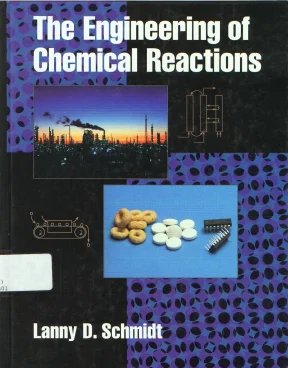
Kiến thức từ cuốn sách được áp dụng rộng rãi trong nhiều ngành công nghiệp. Hình ảnh bìa sách thể hiện nhà máy lọc dầu Exxon tại Baton Rouge, Louisiana - một trong những nhà máy lớn nhất thế giới, chuyển đổi hơn 400.000 thùng dầu thô mỗi ngày thành xăng và diesel. Nhà máy cũng sản xuất hóa dầu cho các sản phẩm polymer và nhựa. Ngoài ra, kỹ sư hóa học áp dụng nguyên tắc phản ứng trong sản xuất thực phẩm (Cheerios), dược phẩm (aspirin) và vi điện tử (chip nhớ). Sự đa dạng ứng dụng chứng minh giá trị thực tiễn của kiến thức kỹ thuật phản ứng hóa học.

4.2. Giá trị đào tạo và phát triển kỹ năng kỹ sư

Cuốn sách giúp sinh viên phát triển kỹ năng tính toán khả thi nhanh - kỹ năng quan trọng nhất mà kỹ sư hóa học sử dụng trong thực tế công việc. Phương pháp giảng dạy cân bằng giữa lý thuyết và thực hành, giữa tính toán chi tiết và hiểu biết nguyên tắc. Sinh viên học cách đưa ra giả định hợp lý để đơn giản hóa vấn đề phức tạp mà vẫn giữ được bản chất vật lý. Kỹ năng này rất quan trọng trong giai đoạn đánh giá tính khả thi ban đầu của dự án. Giáo trình trang bị cho sinh viên nền tảng để tiếp tục học hỏi và áp dụng trong nhiều lĩnh vực kỹ thuật hóa học khác nhau.
21/04/2026

Trích đoạn nội dung tài liệu

org TOPICS IN CHEMICAL ENGINEERING A Series of Textbooks and Monographs Series Editor Keith E. Gubbins, Cornell University Associate Editors Mark A. Barteau, University of Delaware Edward L. Cussler, University of Minnesota Douglas A. Lauffenburger, University of Illinois Manfred Morari, ETH W. Harmon Ray, University of Wisconsin William B. Russel, Princeton University Receptors: Models for Binding, Trafficking, and Signalling D. Linderman Process Dynamics, Modeling, and Control B. Ray Microstructures in Elastic Media N. Phan-Thien and S. Kim Optical Rheometry of Complex Fluids G. Fuller Nonlinear and Mixed Integer Optimization: Fundamentals and Applications C. Floudas Mathematical Methods in Chemical Engineering A. Morbidelli The Engineering of Chemical Reactions L. Schmidt Analysis of Transport Phenomena W. Deen THE ENGINEER,NG OF CHEAilCAL REAC’TIONS LANNY D. SCHMIDT University of Minnesota New York Oxford OXFORD UNIVERSITY PRESS 1998 www.org OXFORD UNIVERSITY PRESS Oxford New York Athens Auckland Bangkok Bogota Bombay Buenos Aires Calcutta Cape Town Dar es Salaam Delhi Florence Hong Kong Istanbul Karachi Kuala Lumpur Madras Madrid Melbourne Mexico City Nairobi Paris Singapore Taipei Tokyo Toronto Warsaw and associated companies in Berlin Ibadan Copyright 0 1998 by Oxford University Press, Inc. Published by Oxford University Press, Inc., 198 Madison Avenue, New York, New York, 10016 Oxford is a registered trademark of Oxford University Press All rights reserved. No part of this publication may be reproduced, stored in a retrieval system, or transmitted, in any form or by any means, electronic, mechanical, photocopying, recording, or otherwise, without the prior permission of Oxford University Press, Library of Congress Cataloging-in-Publication Data Schmidt, Lanny D., 1938- The engineering of chemical reactions / Lanny D.-(Topics in chemical engineering) Includes bibliographical references and index. Series: Topics in chemical engineering (Oxford University Press) TP157.S32 1 9 9 7 66o--dc2 1 97-39965 CIP Cover Photos: The upper-photo shows a view across the Mississippi River of the Exxon refinery in Baton Rouge, Louisiana. This is one of the largest refineries in the world, converting over 400,000 barrels per day of crude oil into gasoline and diesel fuel. This refinery also produces petrochemicals for products such as polymers and plastics. The lower photo shows three new types of products made by chemical engineers. These are foods (Cheerios), pharmaceuticals (aspirin), and microelectronics (memory chips). The skills which have been developed in petroleum and petrochemicals have enabled chemical engineers to expand into new processes such as these. 9816543 Printed in the United States of America on acid-free paper CONTENTS PREFACE xi PART I: FUNDAMENTALS 1 INTRODUCTION 3 Chemical Reactors 3 Chemical Reaction Engineering 4 What Do We Need To Know? 5 Industrial Processes 7 Modeling 10 Sources 72 References 14 2 REACTION RATES, THE BATCH REACTOR, AND THE REAL WORLD 21 Chemical Reactions 27 Multiple Reactions 25 Reaction Rates 26 Approximate Reactions 29 Rate Coefficients 30 Elementary Reactions 31 Stoichiometry 32 Reaction Rates Near Equilibrium 34 Reactor Mass Balances 37 The Batch Reactor 378 V www.org vi Contents Variable Density 47 Chemical Reactors 57 Thermodynamics and Reactors 53 Adiabatic Reactor Temperature 53 Chemical Equilibrium 57 Petroleum Refining 60 Polyester from Refinery Products and Natural Gas 68 “What Should I Do When I Don’t Have Reaction Rates?” 73 Reaction-Rate Data 74 ’ Summary 80 3 SINGLE REACTIONS IN CONTINUOUS ISOTHERMAL REACTORS 86 Continuous Reactors 86 The Continuous Stirred Tank Reactor 86 Conversion in a Constant-Density CSTR 89 The Plug-Flow Tubular Reactor 92 Conversion in a Constant-Density PFTR 94 Comparison between Batch, CSTR, and PFTR 97 The l/r Plot 99 Semibatch Reactors 700 Variable-Density Reactors 707 Space Velocity and Space Time 707 Chemical Reactors in Series 109 Autocatalytic Reactions 712 Reversible Reactions 715 Transients in Continuous Reactors 776 Some Important Single-Reaction Processes: Alkane Activation 719 Synthesis Gas Reactions 779 Staged Reactors 726 The Major Chemical Companies 127 Reactor Design for a Single Reaction 134 Notation 134 4 MULTIPLE REACTIONS IN CONTINUOUS REACTORS 146 The Petrochemical industry 146 Olefins 749 Mass Balances 151 Conversion, Selectivity, and Yield 752 Complex Reaction Networks 156 Series Reactions 757 Parallel Reactions 768 Multiple Reactions with Variable Density 776 Real Reaction Systems and Modeling 180 Approximate Rate Expressions for Multiple-Reaction Systems 187 Contents vii Simplified Reactions 182 Reaction Mechanisms 189 Collision Theory of Bimolecular Reactions 192 Activated Complex Theory 793 Designing Reactors for Multiple Reactions 795 5 NONISOTHERMAL REACTORS 207 Heat Generation and Removal 208 Energy Balance in a CSTR 271 Energy Balance in a PFTR 212 Equations To Be Solved 214 Heat Removal or Addition to Maintain a Reactor Isothermal 216 Adiabatic Reactors 218 Trajectories and Phase-Plane Plots 229 Trajectories of Wall-Cooled Reactors 231 Exothermic versus Endothermic Reactions 233 Other Tubular Reactor Configurations 234 The Temperature Profiles in a Packed Bed 238 6 MULTIPLE STEADY STATES AND TRANSIENTS 245 Heat Generation and Removal in a CSTR 245 Adiabatic CSTR 248 Stability of Steady States in a CSTR 250 Observation of Multiple Steady States 253 Transients in the CSTR with Multiple Steady States 256 Other Reactions in a CSTR 257 Variable Coolant Temperature in a CSTR 260 Designing Reactors for Energy Management 261 7 CATALYTIC REACTORS AND MASS TRANSFER 268 Catalytic Reactions 268 Catalytic Reactors 270 Surface and Enzyme Reaction Rates 273 Porous Catalysts 274 Transport and Reaction 276 Mass Transfer Coefficients 280 External Mass Transfer 283 Pore Diffusion 284 Temperature Dependence of Catalytic Reaction Rates 290 The Automotive Catalytic Converter 291 The Catalytic Wall Reactor 295 Langmuir-Hinshelwood Kinetics 298 A Summary of Surface Reaction Kinetics 310 Designing Catalytic Reactors 311 www. VIII Contents Electrochemical Reactors 312 Real Catalytic Reactors 314 Bioreactors 375 The Human Reactor 376 PART II: APPLICATIONS Designing a Chemical Reactor and Introduction To Applications 325 Stages of Design 327 8 NONIDEAL REACTORS, BIOREACTORS, AND ENVIRONMENTAL MODELING 330 The “Complete” Equations 330 Reactor Mass and Energy Balances 333 Residence Time Distribution 335 Laminar Flow Tubular Reactors 339 Dispersion in Tubular Reactors 347 Recycle Reactors 344 CSTRs in Series 347 Diagnosing Reactors 347 Modeling the Environment 349 Cell Cultures and Ecological Modeling 355 Summary 360 9 REACTIONS OF SOLIDS 367 Reactions Involving Solids 367 Chemical Vapor Deposition and Reactive Etching 368 Solids Reactors 371 Reaction Rates of Solids 372 Films, Spheres, and Cylinders 373 Macroscopic and Microscopic Solids 377 Dissolving and Growing Films 378 Dissolving and Growing Spheres 382 Diffusion through Solid Films 386 Transformation of Spheres 389 Electrical Analogy 391 Summary 393 10 CHAIN REACTIONS, COMBUSTION REACTORS, AND SAFETY 399 Chain Reactions 399 Characteristics of Chain Reactions 406 Autooxidation and Lab Safety 408 Chemical Synthesis by Autooxidation 417 Combustion 474 Contents iX Hydrogen Oxidation 414 Chain Branching Reactions 416 Alkane Oxidation 418 Thermal Ignition 420 Thermal and Chemical Autocatalysis 422 Premixed Flames 422 Diffusion Flames 424 Energy Generation 425 Combustion of Liquids and Solids 426 Solid and Liquid Explosives 437 Explosions and Detonations 433 Reactor Safety 434 Summary 436 11 POLYMERIZATION REACTIONS AND REACTORS 443 Ideal Addition Polymerization 445 Polyolefins 452 Free-Radical Polymerization 454 Catalytic Polymerization 457 Condensation Polymerization 460 Fisher Tropsch Polymerization 465 Polymerization Reactors 467 Forming Polymers 468 Integrated Polymer Processing 469 Crystallization 469 12 MULTIPHASE REACTORS 476 Types of Multiphase Reactors 476 Mass Transfer Reactors 478 Mass Balance Equations 478 lnterfacial Surface Area 481 Mass Transfer between Phases 481 Multiphase Reactor Equations 483 Equilibrium between Phases 484 Membrane Reactors 484 Falling Film Reactor 488 Bubble Column Reactors 493 Falling Film Catalytic Wall Reactor 499 Trickle Bed Reactor 501 Multiphase Reactors with Catalysts 502 Other Multiphase Reactors 503 Analysis of Multiphase Reactors 506 Reactor-Separation Integration 507 Catalytic Distillation 508 www.org X Contents Chromatographic Reactors 509 Iron Ore Refining 572 The Petroleum Refinery 513 Summary 515 Appendix A Integrating Differential Equations 527 Appendix B Notation 524 Appendix C Conversion Factors 528 Index 531 PREFACE I learned about chemical reactors at the knees of Rutherford Aris and Neal Amundson, when, as a surface chemist, I taught recitation sections and then lectures in the Reac- tion Engineering undergraduate course at Minnesota. The text was Aris’ Elementary Chemical Reaction Analysis, a book that was obviously elegant but at first did not seem at all elementary. It described porous pellet diffusion effects in chemical reactors and the intricacies of nonisothermal reactors in a very logical way, but to many students it seemed to be an exercise in applied mathematics with dimensionless variables rather than a description of chemical reactors. We later used Octave Levenspiel’s book Chemical Reaction Engineering, which was written with a delightful style and had many interesting figures and problems that made teaching from it easy. Levenspiel had chapters on reactions of solids and on complex reactors such as fluidized beds, topics to which all chemical engineering students should be introduced. However, the book had a notation in which all problems were worked in terms of the molar feed rate of one reactant F ~~ and the fractional conversion of this reactant X. The “fundamental equations” for the PFTR and CSTR given by Levenspiel were V = FAN 1 dX/rA (X) and V = FA,Xf r-A(X), respectively. Since the energy balance is conventionally written in terms of spatial variations of properties (as is the general species balance), there was no logical way to solve mass and energy balance equations simultaneously, as we must do to consider nonisothermal and nonideal reactors. This notation also prohibits the correct handling of multiple reaction systems because there is no obvious X or r,J with multiple reactions, and Levenspiel could only describe selectivity and yield qualitatively. In that notation, reactors other than the perfect plug flow and the perfectly stirred reactor could not be handled because it did not allow consideration of properties versus position in the reactor. However, Levenspiel’s books describe complex multiphase reactors much more thoroughly and readably than any of its successors, certainly more than will be attempted here.org xii Preface We next used the texts of Hill and then Fogler in our chemical reactors course. These books are adapted from Levenspiel, as they used the same notation and organization, although they reduced or omitted reactions of solids and complex reactors, and their notation required fairly qualitative consideration of nonisothermal reactors. It was our opinion that these texts actually made diffusion in porous pellets and heat effects seem more complicated than they need be because they were not sufficiently logically or mathematically based. These texts also had an unnecessary affinity for the variable density reactor such as A + 3 B with ideal gases where the solutions require dealing with high-order polynomials and partial fractions. In contrast, the assumption-of constant density (any liquid-phase reactor or gases with diluent) generates easily solved problems. At the same time, as a chemist I was disappointed at the lack of serious chemistry and kinetics in reaction engineering texts. All beat A + B to death without much mention that irreversible isomerization reactions are very uncommon and never very interesting. Levenspiel and its progeny do not handle the series reactions A + B + C or parallel reactions A --f B, A + C sufficiently to show students that these are really the prototypes of all multiple reaction systems. It is typical to introduce rates and kinetics in a reaction engineering course with a section on analysis of data in which log-log and Arrhenius plots are emphasized with the only purpose being the determination of rate expressions for single reactions from batch reactor data. It is typically assumed that any chemistry and most kinetics come from previous physical chemistry courses. Up until the 1950s there were many courses and texts in chemical engineering on “Industrial Chemistry” that were basically descriptions of the industrial processes of those times. These texts were nearly devoid of mathematics, but they summarized the reactions, process conditions, separation methods, and operating characteristics of chemical synthesis processes. These courses in the chemical engineering curriculum were all replaced in the 1950s by more analytical courses that organized chemical engineering through “principles” rather than descriptions because it was felt that students needed to be able to understand the principles of operation of chemical equipment rather than just memorize pictures of them.

Nội dung được bảo vệ bản quyền — Tải xuống đầy đủ