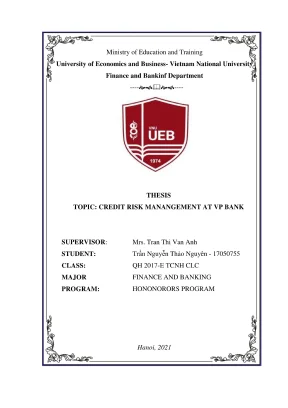
Tổng quan nghiên cứu
Trong hệ thống ngân hàng thương mại Việt Nam, hoạt động tín dụng đóng vai trò là mạch máu kinh tế và nguồn sinh lời chủ chốt, thường chiếm từ 60% đến 70% tổng thu nhập của toàn hệ thống. Tuy nhiên, đi đôi với tỷ trọng doanh thu vượt trội, hoạt động tín dụng luôn tiềm ẩn nhiều rủi ro mang tính hệ thống. Những biến động khó lường từ chu kỳ kinh tế và các cú sốc vĩ mô hậu đại dịch đã khiến áp lực nợ xấu tăng cao, đe dọa trực tiếp đến tính thanh khoản cũng như sự an toàn của các định chế tài chính.
Vấn đề cốt lõi đặt ra là làm thế nào để tối ưu hóa khả năng sinh lời nhưng vẫn kiểm soát tổn thất tín dụng trong giới hạn an toàn cho phép. Luận văn tập trung giải quyết bài toán này thông qua mục tiêu: hệ thống hóa cơ sở lý luận về quản trị rủi ro tín dụng tại ngân hàng thương mại; phân tích, đánh giá thực trạng công tác quản lý rủi ro tín dụng tại Ngân hàng Thương mại Cổ phần Việt Nam Thịnh Vượng (VPBank); từ đó chỉ ra những điểm nghẽn và đề xuất hệ thống giải pháp toàn diện nhằm nâng cao hiệu quả phòng ngừa rủi ro.
Phạm vi nghiên cứu của đề tài được giới hạn tại Ngân hàng TMCP Việt Nam Thịnh Vượng, sử dụng chuỗi dữ liệu tài chính trong giai đoạn 3 năm từ 2018 đến 2020, kết hợp số liệu đối chiếu từ năm 2015. Ý nghĩa của nghiên cứu được thể hiện rõ qua việc thiết lập các chuẩn mực an toàn với các chỉ số mục tiêu: duy trì tỷ lệ an toàn vốn (CAR) hợp nhất trên 11%, kiểm soát tỷ lệ nợ xấu (NPL) ngân hàng riêng lẻ dưới 2,0% và tạo nền tảng vững chắc để lợi nhuận trước thuế đạt trên 13.000 tỷ đồng.
Cơ sở lý thuyết và phương pháp nghiên cứu
Khung lý thuyết áp dụng
Nghiên cứu được xây dựng dựa trên sự kết hợp chặt chẽ giữa các lý thuyết tài chính hiện đại và quy chuẩn quản trị rủi ro quốc tế. Thứ nhất, luận văn kế thừa khung nguyên tắc quản trị rủi ro tín dụng của Ủy ban Giám sát Ngân hàng Basel (Basel II), nhấn mạnh vào việc duy trì tỷ lệ an toàn vốn (CAR) tối thiểu nhằm chống đỡ các tổn thất tài chính bất ngờ. Thứ hai, mô hình cấu trúc giá trị tài sản Merton (1974) và mô hình định lượng KMV được áp dụng để xác định xác suất vỡ nợ kỳ vọng (EDF) của khách hàng vay vốn. Thứ ba, mô hình chỉ số phá sản Altman Z-Score được sử dụng với ngưỡng điểm Z chuẩn 2,675 để phân loại các doanh nghiệp có nguy cơ mất khả năng thanh toán.
Các khái niệm nền tảng được định hình rõ ràng theo hệ thống pháp lý hiện hành tại Việt Nam: Rủi ro tín dụng được xác định theo Quyết định số 493/2005/QĐ-NHNN là khả năng xảy ra tổn thất do khách hàng không thực hiện hoặc không có khả năng thực hiện đúng nghĩa vụ đã cam kết; Tỷ lệ an toàn vốn (CAR) tuân thủ Thông tư 13/2010/TT-NHNN với tỷ lệ an toàn vốn tối thiểu là 9%; Hệ thống phân loại nợ 5 nhóm (từ nợ đủ tiêu chuẩn đến nợ có khả năng mất vốn); Khung phân tích tín dụng 7 nhân tố (gồm 5 yếu tố định tính: pháp lý, uy tín, lợi nhuận, mục đích, môi trường kinh doanh; và 2 yếu tố định lượng: tài sản bảo đảm, nguồn trả nợ); Mô hình quản trị rủi ro tập trung độc lập giữa kinh doanh và thẩm định rủi ro.
Phương pháp nghiên cứu
Dữ liệu nghiên cứu được thu thập từ nguồn dữ liệu thứ cấp chính thống, bao gồm các báo cáo tài chính đã được kiểm toán độc lập, báo cáo thường niên và báo cáo quản trị rủi ro nội bộ của VPBank từ năm 2018 đến năm 2020. Nghiên cứu cũng kết hợp chuỗi dữ liệu vĩ mô công bố bởi Ngân hàng Nhà nước Việt Nam và Tổng cục Thống kê.
Cỡ mẫu nghiên cứu bao quát toàn bộ danh mục dư nợ cho vay khách hàng hợp nhất của VPBank với quy mô vượt 320.000 tỷ đồng tại thời điểm cuối năm 2020, phục vụ hơn 5,6 triệu khách hàng hoạt động. Phương pháp chọn mẫu có chủ đích (purposive sampling) được áp dụng để trích xuất và phân tích chuyên sâu các nhóm nợ từ nhóm 1 đến nhóm 5, phân loại theo kỳ hạn ngắn hạn và trung - dài hạn. Lý do lựa chọn phương pháp này là nhằm phản ánh chính xác cấu trúc rủi ro thực tế trong từng phân khúc tín dụng.
Phương pháp phân tích chủ đạo bao gồm phương pháp thống kê mô tả, phân tích so sánh tỷ số tài chính (NPL, CAR, tỷ lệ nợ quá hạn/tổng dư nợ), đối chiếu ngang và dọc theo dòng thời gian từ 2018 đến 2020, cùng phương pháp kiểm định hệ số tương quan Matthews (MCC). Việc lựa chọn phương pháp phân tích tỷ số kết hợp định lượng - định tính giúp đo lường khách quan chất lượng tài sản và đánh giá toàn diện năng lực quản trị rủi ro của ngân hàng.
Kết quả nghiên cứu và thảo luận
Những phát hiện chính
Thứ nhất, VPBank duy trì tốc độ tăng trưởng quy mô kinh doanh vượt trội nhưng vẫn kiểm soát tốt an toàn tổng thể ở cấp độ ngân hàng mẹ. Tổng tài sản của ngân hàng đạt hơn 419.000 tỷ đồng vào năm 2020, tăng trưởng hơn 11% so với năm 2019. Tổng dư nợ cấp tín dụng hợp nhất đạt trên 320.000 tỷ đồng, tăng 19%, trong đó ngân hàng riêng lẻ tăng 21%. Lợi nhuận trước thuế hợp nhất năm 2020 đạt mức kỷ lục trên 13.000 tỷ đồng, tăng 26% so với năm 2019 và hoàn thành 127,5% kế hoạch năm.
Thứ hai, hệ số an toàn vốn và các chỉ số phòng vệ thanh khoản được duy trì ở mức cao. Tỷ lệ an toàn vốn (CAR) hợp nhất của VPBank năm 2020 đạt trên 11% theo chuẩn mực Basel II, cao hơn đáng kể so với mức trần quy định tối thiểu 9% của Ngân hàng Nhà nước. Tỷ lệ nguồn vốn ngắn hạn cho vay trung và dài hạn được kiểm soát chặt chẽ ở mức 28,0%, thấp hơn nhiều so với giới hạn tối đa cho phép là 40%, giúp ngân hàng chủ động nguồn vốn thanh khoản.
Thứ ba, sự biến động cơ cấu nợ quá hạn và nợ xấu cục bộ diễn biến phức tạp. Tại một số danh mục nghiên cứu chi tiết, tỷ lệ nợ quá hạn trên tổng dư nợ có sự biến động lớn: từ 14,84% năm 2018 giảm sâu xuống 0,03% năm 2019 nhờ xử lý nợ triệt để, nhưng đã tăng trở lại mức 20,01% vào năm 2020. Tỷ lệ nợ xấu (từ nhóm 3 đến nhóm 5) ghi nhận mức 6,17% năm 2018 và tăng lên 10,91% ở danh mục kiểm toán năm 2020, phản ánh tác động tiêu cực của dịch bệnh lên khả năng trả nợ của khách hàng.
Thứ tư, cơ cấu nợ quá hạn tập trung chủ yếu vào các khoản vay ngắn hạn và một số khách hàng doanh nghiệp lớn. Năm 2018, dư nợ quá hạn ngắn hạn chiếm tới 71,76% tổng nợ quá hạn (đạt 143 đơn vị tỷ trọng), cho thấy tính dễ bị tổn thương của dòng tiền lưu động doanh nghiệp trước các cú sốc lãi suất và thị trường.
Thảo luận kết quả
Các phát hiện nghiên cứu trên có thể được trực quan hóa rõ nét thông qua biểu đồ cột chồng thể hiện sự chuyển dịch cơ cấu 5 nhóm nợ giai đoạn 2018-2020, kết hợp bảng ma trận so sánh các chỉ số tài chính chủ chốt (NPL, CAR, chi phí trích lập dự phòng rủi ro) giữa VPBank và các ngân hàng thương mại cùng nhóm như BIDV và TPBank.
Nguyên nhân chính dẫn đến sự gia tăng nợ quá hạn và nợ xấu trong năm 2018 và 2020 đến từ cả yếu tố khách quan và chủ quan. Về mặt khách quan, sự giảm tốc của nền kinh tế toàn cầu, gián đoạn thương mại quốc tế và các biện pháp giãn cách xã hội đã làm tê liệt chuỗi cung ứng, khiến các doanh nghiệp ngành sản xuất, xuất khẩu và vận tải suy giảm nghiêm trọng doanh thu. Về mặt chủ quan, quy trình thẩm định tín dụng truyền thống tại một số đơn vị vẫn tập trung nặng vào giá trị tài sản thế chấp mà chưa đánh giá sâu sát dòng tiền thực tế và năng lực quản trị của bên vay.
Kết quả này hoàn toàn nhất quán với nghiên cứu của Berger và DeYoung (1997), khẳng định rằng việc cắt giảm chi phí giám sát hoặc nới lỏng thẩm định ban đầu có thể tối ưu hóa chi phí ngắn hạn nhưng sẽ phải trả giá bằng tỷ lệ nợ xấu gia tăng trong dài hạn.
Đề xuất và khuyến nghị
Nhằm hoàn thiện công tác quản trị rủi ro tín dụng tại VPBank, luận văn đưa ra 4 nhóm giải pháp mang tính hành động cao:
-
Nâng cấp và tự động hóa hệ thống chấm điểm tín dụng nội bộ: Triển khai ứng dụng tích hợp mô hình KMV và chỉ số Z-Score trên nền tảng Big Data và Trí tuệ nhân tạo (AI) để phân tích hành vi khách hàng và cảnh báo sớm rủi ro vỡ nợ; đặt mục tiêu giảm tỷ lệ nợ quá hạn phát sinh mới xuống dưới 1,5%; thời gian hoàn thiện trong vòng 12 tháng; chủ thể thực hiện là Khối Quản trị Rủi ro và Khối Công nghệ Thông tin VPBank.
-
Tái cấu trúc và chuẩn hóa quy trình thẩm định 7 nhân tố tín dụng: Chuyển đổi căn bản từ tư duy cấp tín dụng dựa trên tài sản bảo đảm sang thẩm định toàn diện dòng tiền kinh doanh và đạo đức khách hàng; quy định tỷ trọng đánh giá định tính chiếm tối thiểu 50% trong báo cáo thẩm định; lộ trình áp dụng trong 6 tháng; chủ thể thực hiện là Khối Khách hàng Doanh nghiệp, Khối Khách hàng Cá nhân phối hợp cùng Hội đồng Tín dụng.
-
Nâng cao năng lực chuyên môn và đạo đức nghề nghiệp của đội ngũ nhân sự: Tổ chức các chương trình đào tạo chuyên sâu và sát hạch định kỳ chuẩn quốc tế về phân tích tài chính và quản trị rủi ro theo chuẩn Basel II/III cho 100% cán bộ tín dụng; mục tiêu giảm thiểu 90% lỗi sai sót tác nghiệp chủ quan; thời gian thực hiện liên tục trong 18 tháng; chủ thể chịu trách nhiệm là Trung tâm Đào tạo và Khối Quản trị Nguồn Nhân lực.
-
Kiến nghị đối với Ngân hàng Nhà nước và Chính phủ: Hoàn thiện khung pháp lý về xử lý nợ xấu và thanh lý tài sản bảo đảm theo cơ chế thị trường; nâng cấp cơ sở dữ liệu Trung tâm Thông tin Tín dụng Quốc gia (CIC) với độ trễ cập nhật thông tin dưới 24 giờ; thời gian kiến nghị triển khai trong giai đoạn 2022-2025; chủ thể thực hiện là Ngân hàng Nhà nước Việt Nam và các bộ ngành liên quan.
Đối tượng nên tham khảo luận văn
Nội dung và kết quả nghiên cứu của luận văn mang lại giá trị ứng dụng thiết thực cho 4 nhóm đối tượng chính:
-
Ban điều hành và cán bộ quản trị rủi ro tại các ngân hàng thương mại: Cung cấp bức tranh thực tế về mô hình quản trị rủi ro tập trung, bài học kinh nghiệm trong việc duy trì tỷ lệ an toàn vốn CAR trên 11% và các giải pháp tái cơ cấu nợ xấu trong thời kỳ biến động kinh tế.
-
Chuyên viên quan hệ khách hàng và thẩm định tín dụng: Cung cấp cẩm nang thực hành chi tiết về quy trình 5 bước cấp tín dụng và bộ tiêu chí 7 nhân tố (5 định tính, 2 định lượng) giúp nhận diện rủi ro từ sớm, tránh biến ngân hàng thành tổ chức cho vay cầm đồ thuần túy.
-
Cơ quan quản lý nhà nước và Ngân hàng Nhà nước Việt Nam: Cung cấp thêm cứ liệu thực chứng về tác động của các chính sách an toàn vĩ mô (Thông tư 13, Quyết định 493) lên hoạt động thực tế của khối ngân hàng thương mại cổ phần tư nhân quy mô lớn.
-
Giảng viên, học viên cao học và sinh viên chuyên ngành Tài chính - Ngân hàng: Sử dụng làm tài liệu tham khảo học thuật giá trị với phương pháp tiếp cận kết hợp giữa các mô hình định lượng (Merton, KMV, Z-Score) và phân tích định tính thực tiễn tại doanh nghiệp.
Câu hỏi thường gặp
Tỷ lệ an toàn vốn (CAR) của VPBank trong giai đoạn nghiên cứu đạt bao nhiêu và có ý nghĩa gì?
Năm 2020, tỷ lệ CAR hợp nhất của VPBank đạt trên 11% theo chuẩn mực Basel II, vượt xa mức quy định tối thiểu 9% theo Thông tư 13/2010/TT-NHNN. Con số này chứng minh ngân hàng sở hữu tấm đệm vốn tự có vững chắc, đủ năng lực hấp thu các cú sốc tài chính và bảo đảm an toàn cho tiền gửi của khách hàng.
Khung phân tích 7 nhân tố tín dụng tại ngân hàng bao gồm những thành tố nào?
Khung phân tích bao gồm 5 nhân tố định tính xác định thiện chí trả nợ (tính pháp lý, uy tín, khả năng sinh lời, mục đích vay vốn, môi trường kinh doanh) và 2 nhân tố định lượng quyết định năng lực trả nợ (tài sản bảo đảm, dòng tiền trả nợ). Ngân hàng sẽ kiên quyết từ chối cấp tín dụng nếu thiếu bất kỳ yếu tố định tính nào.
Đâu là nguyên nhân cốt lõi khiến nợ quá hạn và nợ xấu gia tăng cục bộ trong năm 2018 và 2020?
Nguyên nhân chủ yếu do sự suy thoái kinh tế và ảnh hưởng của đại dịch làm đứt gãy chuỗi sản xuất kinh doanh của khách hàng doanh nghiệp, cùng với việc nợ quá hạn ngắn hạn chiếm tỷ trọng lớn (71,76% năm 2018) và việc thẩm định ban đầu tại một số chi nhánh quá phụ thuộc vào tài sản thế chấp.
Luận văn đã ứng dụng những mô hình định lượng nào để dự báo rủi ro vỡ nợ doanh nghiệp?
Nghiên cứu ứng dụng mô hình cấu trúc Merton (1974), mô hình tính xác suất vỡ nợ kỳ vọng KMV (EDF) và mô hình dự báo phá sản Altman Z-Score với ngưỡng giới hạn 2,675. Đồng thời, nghiên cứu sử dụng hệ số tương quan Matthews (MCC) để đánh giá độ chính xác của các mô hình phân loại rủi ro.
Nghiên cứu đưa ra giải pháp công nghệ then chốt nào nhằm tối ưu hóa quản trị rủi ro?
Đó là giải pháp tự động hóa quy trình chấm điểm tín dụng nội bộ thông qua việc tích hợp các thuật toán AI và Big Data trên nền tảng cơ sở dữ liệu khách hàng lớn, giúp xây dựng hệ thống cảnh báo sớm rủi ro với mục tiêu kéo giảm tỷ lệ nợ quá hạn xuống dưới 1,5% trong 12 tháng.
Kết luận
- Hệ thống hóa sâu sắc lý luận quản trị rủi ro tín dụng ngân hàng theo chuẩn mực quốc tế Basel II và khung pháp lý Việt Nam.
- Đánh giá toàn diện thực trạng quản trị rủi ro tại VPBank giai đoạn 2018-2020 với các chỉ số nổi bật như CAR đạt trên 11% và lợi nhuận trước thuế vượt 13.000 tỷ đồng.
- Bóc tách chính xác các nguyên nhân làm gia tăng nợ xấu cục bộ, đặc biệt là sự mất cân đối ở các khoản vay ngắn hạn chiếm 71,76% nợ quá hạn năm 2018.
- Ứng dụng thành công các mô hình định lượng KMV và Altman Z-Score trong việc nhận diện và đo lường xác suất vỡ nợ của khách hàng.
- Đề xuất hệ thống 4 nhóm giải pháp đồng bộ kết hợp giữa nâng cấp công nghệ số, chuẩn hóa thẩm định 7 nhân tố và hoàn thiện thể chế chính sách.
Đóng góp lớn nhất của luận văn là đã cung cấp một khung phân tích thực chứng sâu sắc, kết hợp nhuần nhuyễn giữa lý thuyết định lượng hiện đại và thực tiễn hoạt động ngân hàng thương mại tại Việt Nam. Về lộ trình tiếp theo, ngân hàng cần tập trung triển khai thí điểm hệ thống chấm điểm tự động trong vòng 6 tháng và hoàn thiện toàn bộ đề án nâng cao chất lượng nguồn nhân lực tín dụng trong 18 tháng tới.
Các chuyên gia tài chính, nhà quản trị ngân hàng và học viên quan tâm có thể tiếp tục khai thác toàn văn nghiên cứu để áp dụng các mô hình đo lường rủi ro vào thực tiễn quản trị tại đơn vị.