Microelectronic Circuits, 7th Edition - Adel S. Sedra, Kenneth C. Smith

Trường đại học

Oxford University Press

Chuyên ngành

Vi mạch điện tử

Người đăng

Ẩn danh

Thể loại

Sách giáo khoa

2015

1.8K
0
0

Phí lưu trữ

0 Point

Tóm tắt

I. Tổng quan về giáo trình Microelectronic Circuits Sedra Smith 7th

Giáo trình Microelectronic Circuits của Adel S. Sedra và Kenneth C. Smith là một trong những tài liệu giảng dạy hàng đầu về mạch vi điện tử trên toàn cầu. Ấn bản thứ 7 được Oxford University Press xuất bản năm 2014, cập nhật những tiến bộ mới nhất trong lĩnh vực thiết kế mạch tích hợp. Cuốn sách bao gồm ba phần chính: mạch bán dẫn rời rạc, mạch tích hợp analog và mạch tích hợp số. Nội dung trình bày logic, từ lý thuyết cơ bản về linh kiện bán dẫn đến ứng dụng thực tiễn trong thiết kế mạch. Giáo trình này được sử dụng rộng rãi tại các trường đại học danh tiếng trên thế giới, bao gồm University of Waterloo và University of Toronto nơi hai tác giả công tác. Với hơn 1000 trang nội dung chi tiết, cuốn sách cung cấp kiến thức toàn diện cho sinh viên kỹ thuật điện tử và các kỹ sư muốn nâng cao chuyên môn trong lĩnh vực vi điện tử.

1.1. Cấu trúc nội dung giáo trình Sedra Smith

Giáo trình Microelectronic Circuits 7th edition được chia thành ba phần chính rõ ràng. Phần I trình bày các mạch bán dẫn rời rạc, bao gồm lý thuyết về transistor MOS và BJT cùng các cấu hình khuếch đại cơ bản. Phần II tập trung vào mạch tích hợp analog với sáu chương chuyên sâu về thiết kế IC. Phần III giới thiệu mạch tích hợp số, bao gồm logic CMOS và mạch nhớ. Mỗi chương đều có bài tập thực hành và ví dụ minh họa cụ thể, giúp người đọc nắm vững lý thuyết và ứng dụng thực tế trong thiết kế mạch điện tử.

1.2. Đối tượng và tầm quan trọng của giáo trình

Giáo trình này phục vụ chủ yếu cho sinh viên đại học và sau đại học ngành kỹ thuật điện tử và vi điện tử. Ngoài ra, các kỹ sư thiết kế mạch tích hợp cũng sử dụng tài liệu này để tham khảo và cập nhật kiến thức chuyên môn. Tầm quan trọng của cuốn sách nằm ở cách trình bày hệ thống, từ cơ bản đến nâng cao, giúp người học xây dựng nền tảng vững chắn. Nội dung được biên soạn bởi hai chuyên gia hàng đầu trong lĩnh vực vi điện tử, đảm bảo tính chính xác và giá trị học thuật cao của kiến thức truyền đạt.

II. Phân tích nội dung chính Microelectronic Circuits Sedra 7th

Ấn bản thứ 7 của Microelectronic Circuits có nhiều cải tiến đáng kể so với các phiên bản trước. Nội dung được cập nhật để phản ánh sự phát triển nhanh chóng của công nghệ bán dẫn hiện đại. Các chủ đề về MOSFET được mở rộng, phản ánh vai trò ngày càng quan trọng của transistor này trong thiết kế IC. Phương pháp trình bày song song giữa mạch MOS và bipolar cho phép người đọc so sánh ưu nhược điểm của từng loại transistor. Giáo trình cũng giới thiệu các công cụ mô phỏng SPICE, giúp sinh viên thực hành thiết kế mạch trên máy tính. Bài tập cuối chương được thiết kế đa dạng, từ cơ bản đến nâng cao, phục vụ nhu cầu học tập khác nhau. Cách tiếp cận tích hợp lý thuyết và thực hành giúp người học hiểu sâu bản chất của mạch vi điện tử.

2.1. Phương pháp giảng dạy song song MOS và Bipolar

Một đặc điểm nổi bật của giáo trình Sedra Smith 7th là phương pháp trình bày song song mạch MOS và mạch bipolar. Cách tiếp cận này giúp người học hiểu rõ sự khác biệt giữa hai loại transistor phổ biến nhất trong thiết kế mạch. Nội dung về MOSFET được trình bày trước vì đây là công nghệ chiếm ưu thế trong thiết kế IC hiện đại. Các mạch BJT được thảo luận với cùng mức độ chi tiết nhưng đôi khi ngắn gọn hơn. Phương pháp này cho phép sinh viên rút ra kết luận về lĩnh vực ứng dụng phù hợp của từng loại thiết bị bán dẫn.

2.2. Tích hợp công cụ mô phỏng SPICE trong giáo trình

Giáo trình Microelectronic Circuits 7th edition tích hợp hướng dẫn sử dụng phần mềm SPICE cho mô phỏng mạch điện tử. Công cụ này cho phép sinh viên kiểm tra thiết kế mạch trước khi chế tạo thực tế trên board mạch. Các bài tập mô phỏng SPICE được biên soạn song song với nội dung lý thuyết, tạo điều kiện cho việc học tập thực hành hiệu quả. Người đọc có thể tìm hiểu thêm về SPICE thông qua tài liệu phụ trợ của Roberts và Sedra. Việc sử dụng SPICE giúp rút ngắn thời gian thiết kế và giảm thiểu sai sót trong quá trình phát triển sản phẩm điện tử.

III. Giải pháp học tập hiệu quả với giáo trình Sedra Smith

Để học tập hiệu quả với giáo trình Microelectronic Circuits, cần có phương pháp tiếp cận hệ thống và khoa học. Bắt đầu với việc nắm vững các khái niệm cơ bản về tín hiệu và khuếch đại ở chương đầu tiên. Tiếp theo, xây dựng nền tảng vững chắc về lý thuyết bán dẫn trước khi chuyển sang các mạch phức tạp hơn. Việc kết hợp đọc lý thuyết với thực hành mô phỏng SPICE sẽ giúp củng cố kiến thức một cách hiệu quả nhất. Mỗi chương đều có ví dụ minh họa chi tiết, nên người học cần nghiên cứu kỹ các ví dụ này trước khi làm bài tập. Ngoài ra, việc tham khảo thêm các tài liệu trong Oxford Series in Electrical and Computer Engineering cũng hỗ trợ tốt cho quá trình học tập mạch vi điện tử.

3.1. Lộ trình học tập từ cơ bản đến nâng cao

Lộ trình học tập giáo trình Sedra Smith nên bắt đầu từ chương 1 với nội dung về tín hiệu và khuếch đại cơ bản. Tiếp theo, chương 2 và 3 cung cấp kiến thức về lý thuyết bán dẫn và đặc tuyến dòng điện áp của linh kiện. Chương 4 và 5 tập trung vào transistor MOS và BJT cùng các cấu hình khuếch đại đơn tầng. Từ chương 6 trở đi, nội dung chuyển sang các mạch phức tạp hơn như khuếch đại đa tầng và mạch phản hồi. Phần II và III dành cho người học đã nắm vững phần cơ bản, muốn tìm hiểu sâu về thiết kế IC analog và số.

3.2. Kết hợp thực hành mô phỏng và thí nghiệm

Việc thực hành mô phỏng SPICE đóng vai trò quan trọng trong quá trình học giáo trình Microelectronic Circuits hiệu quả. Sinh viên nên mô phỏng từng mạch ngay sau khi học lý thuyết để hiểu rõ nguyên lý hoạt động thực tế. Các thí nghiệm thực tế với board mạch thử nghiệm cũng giúp củng cố kiến thức về đặc tính thực của linh kiện bán dẫn. Giáo trình cung cấp các thông số kỹ thuật chi tiết, thuận lợi cho việc thiết kế và kiểm tra mạch điện tử. Việc kết hợp giữa lý thuyết, mô phỏng và thực hành sẽ mang lại hiệu quả học tập tối ưu nhất cho người đọc.

IV. Kết luận và ứng dụng giáo trình Microelectronic Circuits

Giáo trình Microelectronic Circuits của Sedra và Smith đã khẳng định vị trí là tài liệu giảng dạy chuẩn mực trong lĩnh vực vi điện tử suốt nhiều thập kỷ qua. Ấn bản thứ 7 tiếp tục duy trì truyền thống xuất sắc đó với nội dung cập nhật và phương pháp trình bày hiện đại hơn. Kiến thức từ giáo trình này được ứng dụng rộng rãi trong nhiều ngành công nghiệp, từ thiết kế vi xử lý đến hệ thống truyền thông kỹ thuật số. Các kỹ sư tốt nghiệp với nền tảng từ cuốn sách này có khả năng tham gia vào các dự án thiết kế IC phức tạp. Giáo trình cũng là nguồn tham khảo quý giá cho nghiên cứu sinh và giảng viên trong lĩnh vực điện tử và vi điện tử tại các trường đại học hàng đầu thế giới.

4.1. Ứng dụng trong công nghiệp bán dẫn hiện đại

Kiến thức từ giáo trình Microelectronic Circuits được ứng dụng trực tiếp trong ngành công nghiệp bán dẫn toàn cầu. Các nguyên lý thiết kế mạch khuếch đại, bộ lọc và nguồn điện đều dựa trên nền tảng lý thuyết được trình bày trong cuốn sách. Công ty sản xuất chip lớn như Intel, Samsung và TSMC đều sử dụng các kỹ thuật thiết kế IC được giới thiệu trong giáo trình này. Sự hiểu biết sâu sắc về đặc tính transistor MOS và BJT giúp kỹ sư tối ưu hóa hiệu suất và tiêu thụ năng lượng của mạch tích hợp hiệu quả.

4.2. Giá trị học thuật và ảnh hưởng của giáo trình

Giáo trình Sedra Smith đã ảnh hưởng sâu sắc đến cách giảng dạy mạch vi điện tử tại các trường đại học trên toàn thế giới. Hàng triệu sinh viên đã sử dụng cuốn sách này làm tài liệu chính trong khóa học về mạch điện tử cơ bản và nâng cao. Các ấn bản liên tục được cập nhật để phản ánh tiến bộ công nghệ mới nhất, đảm bảo nội dung luôn phù hợp với thực tiễn. Giáo trình được dịch ra nhiều ngôn ngữ và được áp dụng trong chương trình đào tạo tại nhiều quốc gia khác nhau. Giá trị học thuật của cuốn sách được cộng đồng khoa học quốc tế công nhận rộng rãi.
21/04/2026

Trích đoạn nội dung tài liệu

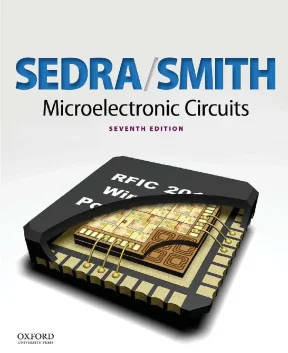
org Microelectronic Circuits Sedra_FM_BM.indd 1 9/30/2014 9:36:10 PM THE OXFORD SERIES IN ELECTRICAL AND COMPUTER ENGINEERING Adel S. Sedra, Series Editor Allen and Holberg, CMOS Analog Circuit Design, 3rd edition Bobrow, Elementary Linear Circuit Analysis, 2nd edition Bobrow, Fundamentals of Electrical Engineering, 2nd edition Campbell, Fabrication Engineering at the Micro- and Nanoscale, 4th edition Chen, Digital Signal Processing Chen, Linear System Theory and Design, 4th edition Chen, Signals and Systems, 3rd edition Comer, Digital Logic and State Machine Design, 3rd edition Comer, Microprocessor-Based System Design Cooper and McGillem, Probabilistic Methods of Signal and System Analysis, 3rd edition Dimitrijev, Principles of Semiconductor Device, 2nd edition Dimitrijev, Understanding Semiconductor Devices Fortney, Principles of Electronics: Analog & Digital Franco, Electric Circuits Fundamentals Ghausi, Electronic Devices and Circuits: Discrete and Integrated Guru and Hiziroğlu, Electric Machinery and Transformers, 3rd edition Houts, Signal Analysis in Linear Systems Jones, Introduction to Optical Fiber Communication Systems Krein, Elements of Power Electronics Kuo, Digital Control Systems, 2nd edition Lathi, Linear Systems and Signals, 2nd edition Lathi and Ding, Modern Digital and Analog Communication Systems, 4th edition Lathi, Signal Processing and Linear Systems Martin, Digital Integrated Circuit Design Miner, Lines and Electromagnetic Fields for Engineers Parhami, Computer Architecture Parhami, Computer Arithmetic, 2nd edition Roberts and Sedra, SPICE, 2nd edition Roberts, Taenzler, and Burns, An Introduction to Mixed-Signal IC Test and Measurement, 2nd edition Roulston, An Introduction to the Physics of Semiconductor Devices Sadiku, Elements of Electromagnetics, 6th edition Santina, Stubberud, and Hostetter, Digital Control System Design, 2nd edition Sarma, Introduction to Electrical Engineering Schaumann, Xiao, and Van Valkenburg, Design of Analog Filters, 3rd edition Schwarz and Oldham, Electrical Engineering: An Introduction, 2nd edition Sedra and Smith, Microelectronic Circuits, 7th edition Stefani, Shahian, Savant, and Hostetter, Design of Feedback Control Systems, 4th edition Tsividis/McAndrew, Operation and Modeling of the MOS Transistor, 3rd edition Van Valkenburg, Analog Filter Design Warner and Grung, Semiconductor Device Electronics Wolovich, Automatic Control Systems Yariv and Yeh, Photonics: Optical Electronics in Modern Communications, 6th edition Żak, Systems and Control Sedra_FM_BM.indd 2 9/30/2014 9:36:22 PM www.org SEVENTH EDITION Microelectronic Circuits Adel S. Sedra University of Waterloo Kenneth C. Smith University of Toronto New York Oxford OXFORD UNIVERSITY PRESS Sedra_FM_BM.indd 3 9/30/2014 9:36:34 PM Oxford University Press is a department of the University of Oxford. It furthers the ­University’s objective of excellence in research, scholarship, and education by ­publishing worldwide. Oxford New York Auckland Cape Town Dar es Salaam Hong Kong Karachi Kuala Lumpur Madrid Melbourne Mexico City Nairobi New Delhi Shanghai Taipei Toronto With offices in Argentina Austria Brazil Chile Czech Republic France Greece Guatemala Hungary Italy Japan Poland Portugal Singapore South Korea Switzerland Thailand Turkey Ukraine Vietnam Copyright © 2015, 2010, 2004, 1998 by Oxford University Press; 1991, 1987 Holt, Rinehart, and Winston, Inc.; 1982 CBS College Publishing For titles covered by Section 112 of the US Higher Education Opportunity Act, please visit www.com/us/he for the latest information about pricing and alternate formats. Published in the United States of America by Oxford University Press 198 Madison Avenue, New York, NY 10016 http://www.com Oxford is a registered trade mark of Oxford University Press. All rights reserved. No part of this publication may be reproduced, stored in a retrieval system, or transmitted, in any form or by any means, electronic, mechanical, photocopying, recording, or otherwise, without the prior permission of Oxford University Press. Library of Congress Cataloging-in-Publication Data Sedra, Adel S. Microelectronic circuits / Adel S. Sedra, University of Waterloo, Kenneth C. Smith, University of Toronto. — (The Oxford series in electrical and computer engineering) Includes bibliographical references and index.3815—dc232014033965 Multisim and National Instruments are trademarks of National Instruments. The Sedra/Smith, Microelectronic Circuits, Seventh Edition book is a product of Oxford University Press, not National Instruments Corporation or any of its affiliated companies, and Oxford University Press is solely responsi- ble for the Sedra/Smith book and its content. Neither Oxford University Press, the Sedra/Smith book, nor any of the books and other goods and services offered by Oxford University Press are official publications of National Instruments Corporation or any of its affiliated companies, and they are not affiliated with, endorsed by, or sponsored by National Instruments Corporation or any of its affiliated companies. OrCad and PSpice are trademarks of Cadence Design Systems, Inc. The Sedra/Smith, Microelectronic Circuits, Seventh Edition book is a product of Oxford University Press, not Cadence Design Systems, Inc., or any of its affiliated companies, and Oxford University Press is solely responsible for the Sedra/Smith book and its content. Neither Oxford University Press, the Sedra/Smith book, nor any of the books and other goods and services offered by Oxford University Press are official publications of Cadence Design Systems, Inc. or any of its affiliated companies, and they are not affiliated with, endorsed by, or sponsored by Cadence Design Systems, Inc. or any of its affiliated companies. Cover Photo: This 3D IC system demonstrates the concept of wireless power delivery and communication through multiple layers of CMOS chips. The communication circuits were demonstrated in an IBM 45 nm SOI CMOS process. This technology is designed to serve a multi-Gb/s interconnect between cores spread across several IC layers for high-performance processors. (Photo Credit: The picture is courtesy of Professor David Wentzloff, Director of the Wireless Integrated Circuits Group at the University of Michigan, and was edited by Muhammad Faisal, Founder of Movellus Circuits Incorporated.) Printing number: 9 8 7 6 5 4 3 2 1 Printed in the United States of America on acid-free paper Sedra_FM_BM.indd 4 9/30/2014 9:36:34 PM www.org BRIEF TABLE OF CONTENTS Tables xvi “Expand-Your-Perspective” Notes xvii Preface xix PART I DEVICES AND BASIC CIRCUITS 2 1 Signals and Amplifiers 4 2 Operational Amplifiers 58 3 Semiconductors 134 4 Diodes 174 5 MOS Field-Effect Transistors (MOSFETs) 246 6 Bipolar Junction Transistors (BJTs) 304 7 Transistor Amplifiers 366 PART II INTEGRATED-CIRCUIT AMPLIFIERS 506 8 Building Blocks of Integrated-Circuit Amplifiers 508 9 Differential and Multistage Amplifiers 594 10 Frequency Response 696 11 Feedback 806 12 Output Stages and Power Amplifiers 920 13 Operational Amplifier Circuits 994 PART III DIGITAL INTEGRATED CIRCUITS 1086 14 CMOS Digital Logic Circuits 1088 15 Advanced Topics in Digital Integrated-Circuit Design 1166 16 Memory Circuits 1236 PART IV FILTERS AND OSCILLATORS 1288 17 Filters and Tuned Amplifiers 1290 18 Signal Generators and Waveform-Shaping Circuits 1378 Appendices A–L Index IN-1 v Sedra_FM_BM.indd 5 9/30/2014 9:36:37 PM CONTENTS Tables xvi 2 Operational Amplifiers 58 “Expand-Your-Perspective” Introduction 59 Notes xvii 2.1 The Ideal Op Amp 60 Preface xix 2.1 The Op-Amp Terminals 60 2.2 Function and Characteristics of the Ideal Op Amp 61 PART IDEVICES AND BASIC 2.3 Differential and Common-Mode CIRCUITS 2 Signals 63 2.2 The Inverting Configuration 64 1 Signals and Amplifiers 4 2.1 The Closed-Loop Gain 65 Introduction 5 2.2 Effect of the Finite Open-Loop 1.2 Frequency Spectrum of Signals 9 2.3 Input and Output Resistances 68 1.3 Analog and Digital Signals 12 2.4 An Important Application—The 1.4 Amplifiers 15 Weighted Summer 71 1.3 The Noninverting Configuration 73 1.2 Amplifier Circuit Symbol 16 2.1 The Closed-Loop Gain 73 1.2 Effect of Finite Open-Loop 1.4 Power Gain and Current Gain 17 Gain 75 1.5 Expressing Gain in Decibels 18 2.3 Input and Output Resistance 75 1.6 The Amplifier Power Supplies 18 2.4 The Voltage Follower 75 1.1 A Single-Op-Amp Difference 1.5 Circuit Models for Amplifiers 23 Amplifier 78 1.2 A Superior Circuit—The 1.2 Cascaded Amplifiers 25 Instrumentation Amplifier 82 1.3 Other Amplifier Types 28 2.5 Integrators and Differentiators 87 1.4 Relationships between the Four 2.1 The Inverting Configuration with Amplifier Models 28 General Impedances 87 1.5 Determining Ri and Ro 29 2.2 The Inverting Integrator 89 1.3 The Op-Amp Differentiator 94 1.6 Frequency Response of Amplifiers 33 2.1 Measuring the Amplifier 2.1 Offset Voltage 96 Frequency Response 33 2.2 Input Bias and Offset Currents 100 1.3 Effect of VOS and IOS on the Operation 1.3 Evaluating the Frequency of the Inverting Integrator 103 Response of Amplifiers 34 2.7 Effect of Finite Open-Loop Gain and 1.4 Single-Time-Constant Networks 35 Bandwidth on Circuit Performance 105 1.5 Classification of Amplifiers Based on 2.1 Frequency Dependence of the Frequency Response 41 Open-Loop Gain 105 Summary 44 2.2 Frequency Response of Closed-Loop Problems 45 Amplifiers 107 vi Sedra_FM_BM.indd 6 9/30/2014 9:36:41 PM www.org Contents vii 2.8 Large-Signal Operation of Op Amps 110 4.1 The Exponential Model 190 2.1 Output Voltage Saturation 110 4.2 Graphical Analysis Using the 2.2 Output Current Limits 110 Exponential Model 191 2.3 Iterative Analysis Using the 2.4 Full-Power Bandwidth 114 Exponential Model 191 Summary 115 4.4 The Need for Rapid Analysis 192 Problems 116 4.5 The Constant-Voltage-Drop Model 193 4.6 The Ideal-Diode Model 194 3 Semiconductors 134 4.7 The Small-Signal Model 195 Introduction 135 4.8 Use of the Diode Forward Drop in 3.1 Intrinsic Semiconductors 136 Voltage Regulation 200 3.4 Operation in the Reverse Breakdown 3.3 Current Flow in Semiconductors 142 Region—Zener Diodes 202 3.1 Specifying and Modeling the Zener 3.2 Diffusion Current 145 Diode 203 3.3 Relationship between D and μ 148 4.2 Use of the Zener as a Shunt 3.4 The pn Junction 148 Regulator 204 3.2 Operation with Open-Circuit 4.4 A Final Remark 207 Terminals 149 4.5 The pn Junction with an Applied 4.1 The Half-Wave Rectifier 208 Voltage 155 4.2 The Full-Wave Rectifier 210 3.1 Qualitative Description of Junction 4.3 The Bridge Rectifier 212 Operation 155 4.4 The Rectifier with a 3.2 The Current–Voltage Relationship of Filter Capacitor—The Peak the Junction 158 Rectifier 213 3.5 Precision Half-Wave Rectifier—The 3.6 Capacitive Effects in the pn Junction 164 Superdiode 219 3.1 Depletion or Junction 4.6 Limiting and Clamping Circuits 221 Capacitance 164 4.2 The Clamped Capacitor or DC Summary 168 Restorer 224 Problems 171 4.3 The Voltage Doubler 226 4.7 Special Diode Types 227 4.1 The Schottky-Barrier Diode 4 Diodes 174 (SBD) 227 4.1 The Ideal Diode 176 4.4 Light-Emitting Diodes (LEDs) 228 4.1 Current–Voltage Characteristic 176 Summary 229 4.2 A Simple Application: The Problems 230 Rectifier 177 4.3 Another Application: Diode Logic Gates 180 5 MOS Field-Effect Transistors 4.2 Terminal Characteristics of Junction (MOSFETs) 246 Diodes 184 Introduction 247 4.1 The Forward-Bias Region 184 5.1 Device Structure and Physical 4.2 The Reverse-Bias Region 189 Operation 248 4.3 The Breakdown Region 190 5.3 Modeling the Diode Forward 5.2 Operation with Zero Gate Characteristic 190 Voltage 250 Sedra_FM_BM.indd 7 9/30/2014 9:36:41 PM viii Contents 5.3 Creating a Channel for Current 6.3 D  ependence of iC on the Collector Flow 250 Voltage—The Early Effect 326 5.4 Applying a Small v DS 252 6.4 A  n Alternative Form of the Common- 5.5 Operation as v DS Is Increased 256 Emitter Characteristics 329 5.6 Operation for v DS ≥ VOV: 6.3 BJT Circuits at DC 333 Channel Pinch-Off and Current 6.4 Transistor Breakdown and Temperature Saturation 258 Effects 351 5.7 The p-Channel MOSFET 261 6.8 Complementary MOS or 6.2 Dependence of β on IC and CMOS 263 Temperature 353 5.9 Operating the MOS Transistor in the Summary 354 Subthreshold Region 264 Problems 355 5.2 Current–Voltage Characteristics 264 5.2 The iD –v DS Characteristics 265 7 Transistor Amplifiers 366 5.3 The iD –v GS Characteristic 267 Introduction 367 5.4 Finite Output Resistance in 7.1 Basic Principles 368 Saturation 271 7.1 The Basis for Amplifier 5.5 Characteristics of the p-Channel Operation 368 MOSFET 274 7.2 Obtaining a Voltage Amplifier 369 5.3 MOSFET Circuits at DC 276 7.3 The Voltage-Transfer Characteristic 5.4 The Body Effect and Other Topics 288 (VTC) 370 5.1 The Role of the Substrate—The Body 7.4 Obtaining Linear Amplification by Effect 288 Biasing the Transistor 371 5.5 The Small-Signal Voltage Gain 374 5.3 Breakdown and Input 7.6 Determining the VTC by Graphical Protection 289 Analysis 380 5.7 Deciding on a Location for the Bias 5.5 The Depletion-Type MOSFET 290 Point Q 381 Summary 291 7.2 Small-Signal Operation and Problems 292 Models 383 7.1 The MOSFET Case 383 7.2 The BJT Case 399 6 Bipolar Junction Transistors 7.1 The Three Basic Configurations 423 Introduction 305 7.1 Device Structure and Physical 7.3 The Common-Source (CS) Operation 306 and Common-Emitter (CE) 6.

Nội dung được bảo vệ bản quyền — Tải xuống đầy đủ