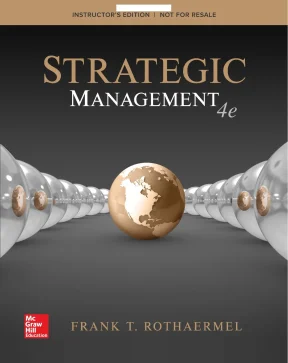
Giáo trình Strategic Management 4e - Frank T. Rothaermel, Georgia Tech

Trường đại học

Georgia Institute of Technology

Người đăng

Ẩn danh

Thể loại

Giáo trình

2019

593
0
0

Phí lưu trữ

135 Point

Tóm tắt

I. Tổng quan giáo trình Strategic Management 4e Rothaermel

Giáo trình Strategic Management 4e Rothaermel là tác phẩm kinh điển về quản trị chiến lược. Frank T. Rothaermel biên soạn dựa trên kinh nghiệm giảng dạy tại Georgia Institute of Technology. McGraw-Hill Education xuất bản lần thứ tư năm 2018. Giáo trình cung cấp nền tảng vững chắc về phân tích chiến lược. Nội dung bao gồm ba phần chính: phân tích, xây dựng và thực thi chiến lược. Mỗi chương đi kèm ví dụ thực tiễn từ các tập đoàn toàn cầu. Sinh viên và nhà quản lý đều có thể áp dụng kiến thức này. Phương pháp AFI Framework là trung tâm xuyên suốt giáo trình. Tác giả nhấn mạnh vai trò của lợi thế cạnh tranh bền vững. Giáo trình được sử dụng rộng rãi tại nhiều trường đại học hàng đầu thế giới.

1.1. Thông tin xuất bản và tác giả

Frank T. Rothaermel là giáo sư tại Georgia Institute of Technology. Ông chuyên nghiên cứu về chiến lược cạnh tranh và đổi mới sáng tạo. McGraw-Hill Education chịu trách nhiệm xuất bản và phát hành. Giáo trình có cả phiên bản bìa cứng và bìa mềm. ISBN phiên bản sinh viên là 978-1-259-92762-1. Ấn bản thứ tư cập nhật nhiều case study mới. Nội dung phản ánh xu hướng quản trị chiến lược hiện đại. Tài liệu học tập đi kèm bao gồm bài tập và câu hỏi ôn tập.

1.2. Đối tượng và phạm vi sử dụng

Giáo trình phục vụ sinh viên ngành quản trị kinh doanh và MBA. Chương trình đại học và sau đại học đều sử dụng tài liệu này. Nhà quản lý cấp cao cũng tìm thấy giá trị từ nội dung. Doanh nhân khởi nghiệp học được cách xây dựng chiến lược cạnh tranh. Giảng viên sử dụng giáo trình làm tài liệu tham khảo chính. Phạm vi bao gồm chiến lược doanh nghiệp và chiến lược kinh doanh. Nội dung mở rộng ra chiến lược toàn cầu và liên minh chiến lược. Các bài tập tình huống giúp người học rèn luyện tư duy phân tích.

II. Phân tích cấu trúc và nội dung cốt lõi của giáo trình

Giáo trình Strategic Management 4e Rothaermel được tổ chức thành ba phần lớn. Phần một tập trung vào phân tích chiến lược bên ngoài và bên trong. Phần hai trình bày các phương án xây dựng chiến lược cạnh tranh. Phần ba đề cập đến thực thi và tổ chức doanh nghiệp. Chương đầu tiên định nghĩa chiến lược và lợi thế cạnh tranh. Các chương tiếp theo phân tích cấu trúc ngành và lực lượng cạnh tranh. Mô hình năm lực lượng Porter được trình bày chi tiết. Phân tích nội bộ nhấn mạnh nguồn lực, năng lực và năng lực cốt lõi. Chiến lược kinh doanh bao gồm khác biệt hóa và dẫn đầu chi phí. Chiến lược doanh nghiệp đề cập đến đa dạng hóa và tích hợp dọc. Giáo trình cũng bao gồm chiến lược toàn cầu và liên minh chiến lược.

2.1. Khung phân tích AFI Framework

AFI Framework là xương sống của toàn bộ giáo trình. A代表 Analysis - phân tích môi trường bên ngoài và nội bộ doanh nghiệp. F代表 Formulation - xây dựng các phương án chiến lược khả thi. I代表 Implementation - thực thi chiến lược vào thực tiễn tổ chức. Ba giai đoạn này liên kết chặt chẽ với nhau. Phân tích cung cấp cơ sở dữ liệu cho việc xây dựng chiến lược. Xây dựng chiến lược định hướng cho quá trình thực thi. Thực thi hiệu quả tạo ra phản hồi để cải thiện phân tích. Chu trình liên tục này giúp doanh nghiệp thích ứng với môi trường thay đổi.

2.2. Các chủ đề chiến lược chính

Giáo trình bao gồm nhiều chủ đề chiến lược đa dạng. Chiến lược kinh doanh tập trung vào lợi thế cạnh tranh cấp đơn vị. Chiến lược doanh nghiệp đề cập đến phạm vi và đa dạng hóa ngành. Chiến lược toàn cầu xem xét cạnh tranh xuyên biên giới quốc gia. Đổi mới sáng tạo và tinh thần khởi nghiệp là chủ đề riêng biệt. Quản trị công ty và đạo đức kinh doanh được nhấn mạnh. Thiết kế tổ chức bao gồm cấu trúc, văn hóa và kiểm soát. Mỗi chủ đề đều đi kèm lý thuyết và ứng dụng thực tiễn. Ví dụ từ các công ty như Apple, Amazon và Tesla minh họa rõ ràng.

III. Phương pháp tiếp cận và học tập hiệu quả từ giáo trình

Học tập giáo trình Strategic Management 4e Rothaermel đòi hỏi phương pháp có hệ thống. Người học nên bắt đầu từ các khái niệm nền tảng trước. Đọc kỹ từng chương theo trình tự được tác giả sắp xếp. Ghi chú các mô hình và khung phân tích quan trọng. Giải quyết bài tập tình huống cuối mỗi chương. Thảo luận nhóm giúp mở rộng góc nhìn chiến lược. Liên hệ lý thuyết với tình hình thực tế của doanh nghiệp. Sử dụng bảng tóm tắt và mục tiêu học tập đầu chương. Làm bài kiểm tra trực tuyến trên nền tảng McGraw-Hill. Ôn tập thường xuyên để nắm vững kiến thức cốt lõi. Áp dụng ngay vào công việc hoặc dự án kinh doanh thực tế.

3.1. Chiến lược đọc và ghi nhớ hiệu quả

Đọc lướt toàn bộ chương trước khi đọc chi tiết. Xác định mục tiêu học tập được liệt kê đầu mỗi chương. Tập trung vào các thuật ngữ in đậm và định nghĩa quan trọng. Ghi chú bằng sơ đồ tư duy để kết nối các khái niệm. Tóm tắt mỗi phần bằng ngôn ngữ của chính mình. Đánh dấu các ví dụ thực tiễn để minh họa lý thuyết. Ôn lại ghi chú trong vòng 24 giờ sau khi đọc. Sử dụng kỹ thuật lặp lại cách quãng để ghi nhớ lâu dài. Thảo luận với bạn học để kiểm tra mức độ hiểu biết.

3.2. Ứng dụng mô hình và công cụ phân tích

Mô hình năm lực lượng Porter là công cụ phân tích ngành quan trọng. Phân tích SWOT kết hợp yếu tố bên trong và bên ngoài. Ma trận BCG hỗ trợ phân tích danh mục sản phẩm. Giá trị chuỗi giá trị giúp xác định hoạt động tạo giá trị. Ma trận Ansoff mở rộng chiến lược tăng trưởng. Thực hành áp dụng các mô hình này vào doanh nghiệp cụ thể. So sánh kết quả phân tích với báo cáo ngành thực tế. Xây dựng đề xuất chiến lược dựa trên kết quả phân tích. Trình bày và bảo vệ quan điểm trước nhóm để rèn luyện kỹ năng.

IV. Kết luận và ứng dụng thực tiễn của giáo trình

Giáo trình Strategic Management 4e Rothaermel là tài liệu không thể thiếu. Nội dung toàn diện từ phân tích đến thực thi chiến lược. Phương pháp AFI Framework cung cấp tư duy hệ thống rõ ràng. Người học trang bị kỹ năng phân tích môi trường kinh doanh. Khả năng xây dựng chiến lược cạnh tranh được phát triển toàn diện. Giáo trình cập nhật xu hướng quản trị chiến lược hiện đại. Ví dụ thực tiễn từ các tập đoàn hàng đầu thế giới. Kiến thức áp dụng được cho mọi loại hình doanh nghiệp. Từ startup đến tập đoàn đa quốc gia đều có giá trị. Đầu tư thời gian nghiên cứu giáo trình này mang lại lợi ích lâu dài.

4.1. Giá trị cho nhà quản lý và doanh nhân

Nhà quản lý sử dụng giáo trình để ra quyết định chiến lược. Tư duy phân tích giúp đánh giá môi trường cạnh tranh chính xác. Doanh nhân xây dựng kế hoạch kinh doanh dựa trên nền tảng vững chắc. Giáo trình cung cấp công cụ đánh giá lợi thế cạnh tranh. Hiểu biết về chiến lược giúp tránh sai lầm kinh doanh phổ biến. Nhà đầu tư áp dụng để đánh giá tiềm năng doanh nghiệp. Tư vấn viên sử dụng như tài liệu tham khảo chuyên môn. Giá trị thực tiễn vượt xa phạm vi học thuật thông thường.

4.2. Hướng phát triển và cập nhật kiến thức

Chiến lược quản trị liên tục phát triển theo thời đại. Công nghệ số tạo ra thách thức và cơ hội mới cho doanh nghiệp. Giáo trình nên được bổ sung thêm các case study công nghệ. Học viên cần theo dõi xu hướng quản trị chiến lược mới. Đọc thêm các tạp chí chuyên ngành như Strategic Management Journal. Tham gia hội thảo và khóa học nâng cao về chiến lược. Kết hợp kiến thức từ giáo trình với kinh nghiệm thực tiễn. Liên tục cập nhật để duy trì lợi thế cạnh tranh trong quản trị.
21/04/2026

Trích đoạn nội dung tài liệu

com FOURTH EDITION Strategic Management www.com FOURTH EDITION Strategic Management Frank T. Rothaermel Georgia Institute of Technology www.com STRATEGIC MANAGEMENT, FOURTH EDITION Published by McGraw-Hill Education, 2 Penn Plaza, New York, NY 10121. Copyright © 2019 by McGraw- Hill Education. All rights reserved. Printed in the United States of America. Previous editions © 2017, 2015, and 2013. No part of this publication may be reproduced or distributed in any form or by any means, or stored in a database or retrieval system, without the prior written consent of McGraw-Hill Education, including, but not limited to, in any network or other electronic storage or transmission, or broadcast for distance learning. Some ancillaries, including electronic and print components, may not be available to customers outside the United States. This book is printed on acid-free paper. 1 2 3 4 5 6 7 8 9 LWI 21 20 19 18 Bound: ISBN 978-1-259-92762-1 (student edition) MHID 1-259-92762-8 (student edition) ISBN 978-1-260-14192-4 (instructor edition) MHID 1-260-14192-6 (instructor edition) Looseleaf: ISBN 978-1-260-14186-3 MHID 1-260-14186-1 Product Developers: Lai T. Moy Executive Marketing Manager: Debbie Clare Content Project Managers: Mary E. Powers (Core), Keri Johnson (Assessment) Buyer: Susan K. Culbertson Design: Matt Diamond Content Licensing Specialists: Brianna Kirschbaum Cover Image: (leadership concept on white background): ©ISerg/iStock/Getty Images RF; (globe): ©sankai/iStock/Getty Images RF Compositor: SPi Global All credits appearing on page or at the end of the book are considered to be an extension of the copyright page. Library of Congress Cataloging-in-Publication Data Names: Rothaermel, Frank T. Title: Strategic management: concepts / Frank T. Rothaermel, Georgia Institute of Technology. Description: Fourth Edition. | Dubuque: McGraw-Hill Education, 2018. | Revised edition of the author’s Strategic management, [2017] Identifiers: LCCN 2017049706 | ISBN 9781259927621 (paperback) Subjects: LCSH: Strategic planning. | BISAC: BUSINESS & ECONOMICS / Management. Classification: LCC HD30.4/012—dc23 LC record available at https://lccn.gov/2017049706 The Internet addresses listed in the text were accurate at the time of publication. The inclusion of a website does not indicate an endorsement by the authors or McGraw-Hill Education, and McGraw-Hill Education does not guarantee the accuracy of the information presented at these sites.com/highered www.com DEDICATION To my eternal family for their love, support, and sacrifice: Kelleyn, Harris, Winston, Roman, Adelaide, Avery, and Ivy.com CONTENTS IN BRIEF PART ONE / ANALYSIS 2 CHAPTER 1 What Is Strategy? 4 CHAPTER 2 Strategic Leadership: Managing the Strategy Process 30 CHAPTER 3 E xternal Analysis: Industry Structure, Competitive Forces, and Strategic Groups 64 CHAPTER 4 I nternal Analysis: Resources, Capabilities, and Core Competencies 106 CHAPTER 5 C ompetitive Advantage, Firm Performance, and Business Models 144 PART TWO / FORMULATION 180 CHAPTER 6 B usiness Strategy: Differentiation, Cost Leadership, and Blue Oceans 182 CHAPTER 7 B usiness Strategy: Innovation, Entrepreneurship, and Platforms 218 CHAPTER 8 C orporate Strategy: Vertical Integration and Diversification 264 CHAPTER 9 C orporate Strategy: Strategic Alliances, Mergers, and Acquisitions 308 CHAPTER 10 G lobal Strategy: Competing Around the World 338 PART THREE / IMPLEMENTATION 376 CHAPTER 11 O rganizational Design: Structure, Culture, and Control 378 CHAPTER 12 Corporate Governance and Business Ethics 418 PART FOUR / MINICASES 447 HOW TO CONDUCT A CASE ANALYSIS 528 PART FIVE / FULL-LENGTH CASES Available through McGraw-Hill Create www.com/Rothaermel vi Final PDF to printer www.com MINICASES & FULL-LENGTH CASES MINICASES / FULL-LENGTH CASES / 1 Michael Phelps: The Role of Strategy in Olympics and All available through McGraw-Hill Create, Business 448 www.com/Rothaermel 2 PepsiCo’s Indra Nooyi: Performance with Purpose 450 Uber Technologies* 3 Yahoo: From Internet Darling to Fire Sale 453 Starbucks Corporation* 4 How the Strategy Process Killed Innovation at Netflix, Inc.* Microsoft 456 Walmart* 5 Apple: The iPhone Turns 10, so What’s Next? 459 The Walt Disney Company* 6 Nike’s Core Competency: The Risky Business of Tesla, Inc. >> Creating Heroes 463 Apple Inc. >> 7 Dynamic Capabilities at IBM 466 Amazon. >> 8 Starbucks after Schultz: How to Sustain a Competitive Advantage? 470 Best Buy Co. >> 9 Business Model Innovation: How Dollar Shave Club Facebook, Inc. >> Disrupted Gillette 474 McDonald’s Corporation >> 10 Competing on Business Models: Google vs. Alphabet’s Google >> Microsoft 476 Delta Air Lines, Inc. >> 11 Can Amazon Trim the Fat at Whole Foods? 481 UPS in India >> 12 LEGO’s Turnaround: Brick by Brick 484 The Movie Exhibition Industry >>+ 13 Cirque du Soleil: Searching for a New Blue Ocean 488 Space X* + 14 Wikipedia: Disrupting the Encyclopedia Business 491 Kickstarter: Using Crowdfunding to Launch 15 Disney: Building Billion-Dollar Franchises 494 a New Board Game + 16 Hollywood Goes Global 498 Better World Books and the Triple Bottom Line 17 Samsung Electronics: Burned by Success? 503 General Electric after GE Capital 18 Does GM’s Future Lie in China? 509 IBM at the Crossroads 19 Flipkart vs. Amazon in India: Who’s Winning? 512 Merck & Co. 20 Alibaba—China’s Ecommerce Giant: Challenging Grok: Action Intelligence for Fast Data Amazon? 516 Make or Break at RIM: Launching BlackBerry 10 21 HP’s Boardroom Drama and Divorce 520 22 UBS: A Pattern of Ethics Scandals 524 * NEW TO THE FOURTH EDITION >> REVISED AND UPDATED FOR THE FOURTH EDITION + THIRD-PARTY CASE vii rot27628_fm_i-xxxi vii 12/22/17 07:05 PM www.com CHAPTERCASES & STRATEGY HIGHLIGHTS CHAPTERCASES / STRATEGY HIGHLIGHTS / 1 Tesla’s Secret Strategy 5 1.1 Teach for America: How Wendy Kopp Inspires 2 Sheryl Sandberg: Leaning in at Facebook 31 Future Leaders 12 3 Airbnb: Disrupting the Hotel Industry 65 1.2 Merck: Reconfirming Its Core Values 18 4 Dr. Dre’s Core Competency: Coolness Factor 107 2.1 Starbucks CEO: “It’s Not What We Do” 44 5 The Quest for Competitive Advantage: Apple vs.2 BP “Grossly Negligent” in Gulf of Mexico Microsoft 145 Disaster 55 6 JetBlue Airways: Finding a New Blue Ocean? 183 3.1 BlackBerry’s Bust 71 7 Netflix: Disrupting the TV Industry 219 3.2 The Five Forces in the Airline Industry 75 8 Amazon.com: To Infinity and Beyond 265 4.1 Applying VRIO: The Rise and Fall of Groupon 119 9 Little Lyft Gets Big Alliance Partners 309 4.2 When Will P&G Play to Win Again? 125 10 Sweden’s IKEA: The World’s Most Profitable 5.1 Interface: The World’s First Sustainable Retailer 339 Company 165 11 Zappos: Of Happiness and Holacracy 379 5.2 Threadless: Leveraging Crowdsourcing to Design 12 Uber: Most Ethically Challenged Tech Cool T-Shirts 166 Company? 419 6. Shetty: “The Henry Ford of Heart Surgery” 200 6.2 How JCPenney Sailed Deeper into the Red Ocean 208 7.1 Standards Battle: Which Automotive Technology Will Win? 230 7.2 GE’s Innovation Mantra: Disrupt Yourself! 248 8.1 Is Coke Becoming a Monster? 276 8.2 The Tata Group: Integration at the Corporate Level 289 9.1 How Tesla Used Alliances Strategically 315 9.2 Kraft’s Specialty: Hostile Takeovers 326 10.1 The Gulf Airlines Are Landing in the United States 347 10.2 Walmart Retreats from Germany, and Lidl Invades the United States 351 11. Gore & Associates: Informality and Innovation 386 11. Apple: Whatever Happened to Sony? 400 12.1 GE’s Board of Directors 430 12.2 Why the Mild Response to Goldman Sachs and Securities Fraud? 435 viii www.com CONTENTS PART ONE / ANALYSIS 2 CHAPTER 3 EXTERNAL ANALYSIS: INDUSTRY STRUCTURE, CHAPTER 1 COMPETITIVE FORCES, AND STRATEGIC GROUPS 64 WHAT IS STRATEGY? 4 CHAPTERCASE 3 CHAPTERCASE 1 Airbnb: Disrupting the Hotel Industry 65 Tesla’s Secret Strategy 5 3.1 The PESTEL Framework 67 Political Factors 68 1.1 What Strategy Is: Gaining and Sustaining Economic Factors 68 Competitive Advantage 6 Sociocultural Factors 70 What Is Competitive Advantage? 8 Technological Factors 70 1.2 Vision, Mission, and Values 11 Ecological Factors 70 Vision 11 Legal Factors 72 Mission 13 3.2 Industry Structure and Firm Strategy: The Five Values 17 Forces Model 73 1.3 The AFI Strategy Framework 19 Industry vs. Firm Effects In Determining Firm 1.4 Implications for Strategic Leaders 20 Performance 73 Competition In the Five Forces Model 74 CHAPTERCASE 1 / Consider This. 21 The Threat of Entry 76 The Power of Suppliers 79 The Power of Buyers 80 CHAPTER 2 The Threat of Substitutes 82 STRATEGIC LEADERSHIP: MANAGING THE STRATEGY Rivalry Among Existing Competitors 83 PROCESS 30 A Sixth Force: The Strategic Role of Complements 88 3.3 Changes over Time: Entry Choices and Industry CHAPTERCASE 2 Dynamics 90 Sheryl Sandberg: Leaning in at Facebook 31 Entry Choices 90 Industry Dynamics 92 2.4 Performance Differences within the Same Industry: What Do Strategic Leaders Do? 33 Strategic Groups 93 How Do You Become a Strategic Leader? 33 The Strategic Group Model 93 The Strategy Process Across Levels: Corporate, Business, Mobility Barriers 95 and Functional Managers 36 3.5 Implications for Strategic Leaders 96 2.2 The Strategic Management Process 38 CHAPTERCASE 3 / Consider This. 97 Top-Down Strategic Planning 38 Scenario Planning 39 Strategy as Planned Emergence: Top-Down and Bottom-Up 41 CHAPTER 4 2.3 Stakeholders and Competitive Advantage 47 INTERNAL ANALYSIS: RESOURCES, CAPABILITIES, Stakeholder Strategy 48 AND CORE COMPETENCIES 106 Stakeholder Impact Analysis 50 2.4 Implications for Strategic Leaders 55 CHAPTERCASE 4 CHAPTERCASE 2 / Consider This. Dre’s Core Competency: Coolness Factor 107 ix www.1 Business-Level Strategy: How to Compete 4.2 The Resource-Based View 113 for Advantage 185 Two Critical Assumptions 114 Strategic Position 186 The Vrio Framework 115 Generic Business Strategies 186 Isolating Mechanisms: How to Sustain A Competitive 6.2 Differentiation Strategy: Understanding Value Advantage 120 Drivers 188 4.3 The Dynamic Capabilities Perspective 124 Product Features 191 4.4 The Value Chain and Strategic Activity Customer Service 191 Complements 191 Systems 128 The Value Chain 128 6.3 Cost-Leadership Strategy: Understanding Cost Strategic Activity Systems 130 Drivers 192 4.5 Implications for Strategic Leaders 133 Cost of Input Factors 194 Using Swot Analysis to Generate Insights From ­E xternal Economies of Scale 194 and Internal Analysis 134 Learning Curve 196 Experience Curve 199 CHAPTERCASE 4 / Consider This.4 Business-Level Strategy and the Five Forces: Benefits and Risks 201 CHAPTER 5 Differentiation Strategy: Benefits and Risks 201 COMPETITIVE ADVANTAGE, FIRM PERFORMANCE, Cost-Leadership Strategy: Benefits and Risks 203 AND BUSINESS MODELS 144 6.5 Blue Ocean Strategy: Combining Differentiation and Cost Leadership 204 CHAPTERCASE 5 Value Innovation 205 Blue Ocean Strategy Gone Bad: “Stuck In the Middle” 207 The Quest for Competitive Advantage: Apple vs.6 Implications for Strategic Leaders 210 CHAPTERCASE 6 / Consider This.1 Competitive Advantage and Firm Performance 146 Accounting Profitability 146 CHAPTER 7 Shareholder Value Creation 153 Economic Value Creation 155 BUSINESS STRATEGY: INNOVATION, The Balanced Scorecard 161 ENTREPRENEURSHIP, AND PLATFORMS 218 The Triple Bottom Line 164 5.2 Business Models: Putting Strategy into Action 165 CHAPTERCASE 7 The Why, What, Who, and How of Business Models Netflix: Disrupting the TV Industry 219 Framework 167 Popular Business Models 168 7.1 Competition Driven by Innovation 221 Dynamic Nature of Business Models 170 The Innovation Process 222 5.3 Implications for Strategic Leaders 171 7.2 Strategic and Social Entrepreneurship 225 CHAPTERCASE 5 / Consider This.3 Innovation and the Industry Life Cycle 227 Introduction Stage 228 Growth Stage 230 Shakeout Stage 233 PART TWO / FORMULATION 180 Maturity Stage 234 Decline Stage 234 Crossing the Chasm 235 CHAPTER 6 7.4 Types of Innovation 242 BUSINESS STRATEGY: DIFFERENTIATION, COST Incremental vs. Radical Innovation 243 LEADERSHIP, AND BLUE OCEANS 182 Architectural vs.5 Platform Strategy 249 CHAPTERCASE 6 The Platform vs. Pipeline Business Models 249 JetBlue Airways: Finding a New Blue Ocean? 183 The Platform Ecosystem 250 www.com CONTENTS xi 7.6 Implications for Strategic Leaders 254 9.4 Implications for Strategic Leaders 329 CHAPTERCASE 7 / Consider This. 254 CHAPTERCASE 9 / Consider This. 330 CHAPTER 8 CHAPTER 10 CORPORATE STRATEGY: VERTICAL INTEGRATION GLOBAL STRATEGY: COMPETING AROUND AND DIVERSIFICATION 264 THE WORLD 338 CHAPTERCASE 8 CHAPTERCASE 10 Amazon.com: To Infinity and Beyond 265 Sweden’s IKEA: The World’s Most Profitable Retailer 339 8.1 What Is Corporate Strategy? 268 10.1 What Is Globalization? 342 Why Firms Need to Grow 268 Stages of Globalization 343 Three Dimensions of Corporate Strategy 269 State of Globalization 344 8.2 The Boundaries of the Firm 271 10.2 Going Global: Why? 346 Firms vs. Markets: Make or Buy? 272 Advantages of Going Global 346 Alternatives on the Make-or-Buy Continuum 274 Disadvantages of Going Global 350 8.3 Vertical Integration along the Industry Value 10.

Nội dung được bảo vệ bản quyền — Tải xuống đầy đủ