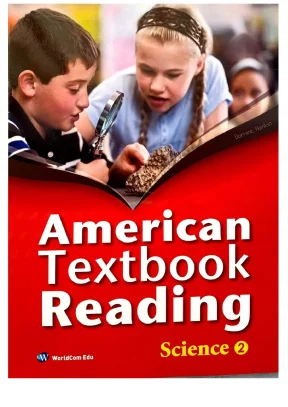
Giáo trình American Textbook Reading Science 2 - Dominic Hanlon

Khám phá sách giáo khoa khoa học của Mỹ dành cho lớp 2. Tìm hiểu nội dung, phương pháp giảng dạy và lợi ích khi áp dụng chương trình này cho trẻ em.

Chuyên ngành

Khoa học tự nhiên

Người đăng

Ẩn danh

Thể loại

Sách giáo trình

2013

138
0
0

Phí lưu trữ

35 Point

Tóm tắt

I. Tổng quan về giáo trình khoa học Mỹ cấp 2

Giáo trình khoa học Mỹ cấp 2 (American Textbook Reading Science 2) là tài liệu học thuật chuẩn hóa dành cho học sinh trung học cơ sở. Nội dung tập trung vào các khái niệm khoa học cơ bản như sinh học, vật lý, khí tượng học và sinh thái học. Sách sử dụng ngôn ngữ đơn giản, hình ảnh minh họa sinh động và bài tập thực hành để nâng cao khả năng đọc hiểu khoa học. Tài liệu này được biên soạn theo tiêu chuẩn giáo dục Mỹ, giúp học sinh phát triển tư duy phản biện và kỹ năng nghiên cứu. Mỗi chương trình bày kiến thức theo trình tự logic, từ khái niệm cơ bản đến ứng dụng thực tế. Sách cũng tích hợp các hoạt động tương tác nhằm khuyến khích học sinh khám phá khoa học một cách chủ động.

1.1. Cấu trúc nội dung bài học

Mỗi bài học trong giáo trình bắt đầu bằng phần giới thiệu khái niệm chính thông qua hình ảnh trực quan. Tiếp theo là phần từ vựng quan trọng kèm định nghĩa, sau đó là phần mở rộng kiến thức (Up Close) để cung cấp thông tin chi tiết hơn. Cuối bài là các bài tập ôn tập (Review 1 và Review 2) giúp củng cố kiến thức. Phần cuối chương thường bao gồm các hoạt động thực hành như đo lường thời tiết hoặc quan sát động vật. Cấu trúc này đảm bảo học sinh vừa nắm vững lý thuyết vừa phát triển kỹ năng thực hành.

1.2. Phương pháp giảng dạy khoa học

Giáo trình áp dụng phương pháp giảng dạy khoa học tích cực, trong đó học sinh đóng vai trò trung tâm. Giáo viên hướng dẫn học sinh quan sát, đặt câu hỏi và tiến hành thí nghiệm đơn giản. Các khái niệm trừu tượng được chuyển hóa thành hoạt động thực tế như đo nhiệt độ bằng nhiệt kế hoặc quan sát sự thay đổi của thời tiết. Phương pháp này giúp học sinh ghi nhớ lâu hơn và phát triển tư duy khoa học. Sách cũng khuyến khích học sinh làm việc nhóm để thảo luận và giải quyết vấn đề.

II. Phân tích các chủ đề khoa học chính trong sách

Giáo trình bao gồm bốn chủ đề khoa học chính: sinh học, vật lý, khí tượng học và sinh thái học. Sinh học tập trung vào sự khác biệt giữa sinh vật sống và không sống, vòng đời của con người, và vai trò của thực vật đối với động vật. Vật lý giới thiệu các khái niệm cơ bản như nhiệt độ, đo lường và các dụng cụ khoa học. Khí tượng học dạy học sinh cách đo thời tiết, nhận biết các loại mây và hiểu về lượng mưa. Sinh thái học khám phá mối quan hệ giữa sinh vật và môi trường sống. Mỗi chủ đề đều được trình bày với các ví dụ thực tế và bài tập ứng dụng.

2.1. Sinh học Sinh vật sống và không sống

Chương sinh học giải thích đặc điểm của sinh vật sống như khả năng phát triển, trao đổi chất và sinh sản. Học sinh học về sự khác biệt giữa sinh vật sống (ví dụ: cây cối, động vật) và không sống (ví dụ: đá, quần áo). Bài tập bao gồm phân loại vật thể, vẽ sơ đồ vòng đời con người và giải thích vai trò của oxy đối với động vật. Giáo trình sử dụng hình ảnh minh họa rõ ràng để giúp học sinh phân biệt các khái niệm phức tạp. Nội dung cũng nhấn mạnh tầm quan trọng của việc bảo vệ môi trường sống của sinh vật.

2.2. Khí tượng học Đo lường thời tiết

Chương khí tượng học dạy học sinh cách đo nhiệt độ bằng nhiệt kế, đo lượng mưa bằng dụng cụ đo mưa, và xác định hướng gió bằng chong chóng gió. Học sinh tìm hiểu về các hiện tượng thời tiết như mưa, tuyết, gió và cách chúng ảnh hưởng đến cuộc sống. Bài tập bao gồm đọc biểu đồ thời tiết, dự đoán thời tiết dựa trên dữ liệu và giải thích vai trò của nhà khí tượng học. Giáo trình cũng giới thiệu các khái niệm như nhiệt độ, độ ẩm và áp suất không khí.

III. Phương pháp học tập hiệu quả với giáo trình khoa học

Để học tập hiệu quả với giáo trình khoa học Mỹ cấp 2, học sinh nên kết hợp đọc sách với thực hành thí nghiệm đơn giản. Giáo trình khuyến khích học sinh ghi chép lại các quan sát và kết luận sau mỗi thí nghiệm. Việc sử dụng sơ đồ tư duy để hệ thống hóa kiến thức cũng rất hữu ích. Học sinh nên tham gia các hoạt động nhóm để trao đổi ý kiến và giải quyết vấn đề. Giáo viên có thể tổ chức các buổi thảo luận hoặc dự án nghiên cứu nhỏ để tăng cường tương tác. Ngoài ra, việc xem xét các ví dụ thực tế trong sách giúp học sinh hiểu rõ hơn về ứng dụng của khoa học trong đời sống.

3.1. Sử dụng hình ảnh và sơ đồ hỗ trợ học tập

Giáo trình cung cấp nhiều hình ảnh minh họa và sơ đồ tư duy để hỗ trợ quá trình học tập. Học sinh nên chú ý đến các hình ảnh này vì chúng thường chứa đựng thông tin quan trọng. Việc vẽ lại sơ đồ hoặc tạo bảng so sánh giữa các khái niệm giúp củng cố kiến thức. Giáo viên có thể khuyến khích học sinh sử dụng bút màu để đánh dấu các khái niệm quan trọng trong sách. Ngoài ra, việc tạo ra các sơ đồ tư duy bằng tay hoặc trên máy tính cũng là một phương pháp học tập hiệu quả.

3.2. Thực hành thí nghiệm khoa học tại nhà

Nhiều thí nghiệm trong giáo trình có thể thực hiện tại nhà với các vật dụng đơn giản như cốc nước, nhiệt kế hoặc dụng cụ đo mưa tự chế. Học sinh nên ghi chép lại quá trình thí nghiệm, bao gồm quan sát, dự đoán và kết luận. Việc này giúp phát triển kỹ năng khoa học cơ bản như quan sát, đo lường và phân tích dữ liệu. Giáo viên có thể khuyến khích học sinh chia sẻ kết quả thí nghiệm trong lớp để tăng cường học tập hợp tác. Thực hành thí nghiệm cũng giúp học sinh hiểu rõ hơn về các khái niệm khoa học.

IV. Ứng dụng kiến thức khoa học vào thực tế

Giáo trình khoa học Mỹ cấp 2 không chỉ cung cấp kiến thức lý thuyết mà còn khuyến khích học sinh áp dụng vào thực tế. Học sinh có thể sử dụng kiến thức về sinh học để chăm sóc cây cối hoặc động vật nuôi. Kiến thức về khí tượng học giúp học sinh dự đoán thời tiết và lựa chọn trang phục phù hợp. Ngoài ra, học sinh có thể tham gia các dự án bảo vệ môi trường, như trồng cây hoặc thu gom rác thải. Giáo trình cũng khuyến khích học sinh tìm hiểu về các vấn đề toàn cầu như biến đổi khí hậu và ô nhiễm môi trường. Việc áp dụng kiến thức khoa học vào cuộc sống giúp học sinh trở thành những công dân có trách nhiệm.

4.1. Giáo dục môi trường thông qua khoa học

Giáo trình nhấn mạnh tầm quan trọng của việc bảo vệ môi trường thông qua các hoạt động thực hành. Học sinh học về vai trò của thực vật trong việc sản xuất oxy và cung cấp thức ăn cho động vật. Giáo trình cũng giới thiệu các khái niệm như chuỗi thức ăn, cân bằng sinh thái và tác động của con người đến môi trường. Học sinh có thể tham gia các dự án như trồng cây, thu gom rác thải hoặc tiết kiệm năng lượng. Những hoạt động này giúp học sinh hiểu rõ hơn về trách nhiệm của mình đối với môi trường.

4.2. Phát triển kỹ năng nghiên cứu khoa học

Giáo trình khuyến khích học sinh phát triển kỹ năng nghiên cứu khoa học thông qua các dự án nhỏ. Học sinh có thể tự đặt câu hỏi, thu thập dữ liệu và đưa ra kết luận dựa trên bằng chứng. Giáo viên có thể hướng dẫn học sinh sử dụng các phương pháp nghiên cứu như quan sát, thí nghiệm và phân tích dữ liệu. Những kỹ năng này không chỉ hữu ích trong lĩnh vực khoa học mà còn trong nhiều lĩnh vực khác của cuộc sống. Giáo trình cũng giới thiệu các nguồn tài liệu khoa học uy tín để học sinh tham khảo.
Tóm tắt và mô tả trên trang này được tạo với sự hỗ trợ của AI. Nếu bạn thấy nội dung không chính xác hoặc có vấn đề, vui lòng Báo lỗi nội dung.

30/05/2026

Trích đoạn nội dung tài liệu

call 5 od American Textbook lan Science @ ân om 1 - American Textbook Read i ng Science @ Dominic Hanlon © 2013 published by WorldCom Edu Publishing Inc. All rights reserved. No part of this book may be reproduced, stored in a retrieval system, or transmitted in any form or by any means, electronic, mechanical, photocopying, recording, or otherwise, without prior permission in writing from the publisher. ISBN :978-89-6198-347-1 Desk Copy Request / Information To place your desk copy request or for more information, please contact the following office: Tel:(02)3273-4300 — Fax:(02)3273-4303 Homepage : www.kr American Textbook Reading Science @ rr ——.

Í tesson 01) What Animals Need to ChOW > ort emsclling. CEEEED Living Things vs Nonliving Things =. The Human Life Cycle SPR, dente `. xe Measuring the Weather.- Gr Clouds and Rain.

- 60 - 36 42 - 468 54 Science Book @ C Part 3 UTR CD Heat .-5552252==mr— GO FICE enemas BG [ Lesson 14 ) NHOIDI FDZ ske6ax8 )4Ê6Ã :ssgravrescensaemndamoiurasuaavesTldEimmed TỔ ŒWNNWkNiưes-——————-—- Visual Summary t- The visual summary uses images ` with key vocabulary and other related words to introduce the Main concept of the lesson. The visual summary is also an aid for Word association, reinforcing the meanin ‘Arnest is 2 place where birds live, oxygen ‘Oxygen is 2 gas thauis necessary for people anc animals to live Onygen has ne color. breathe Greathe means to take in oxygen, hanh ‘Hatch mesns to come out of an sọ: ‘store Store means to keep something for laure use ~~ Key Vocabulary These are new words for students to learn in the lesson. The meaning of each word is below it.

* 1 of the words within context. i How do animals use plants? 5 Ví Beato = In 2 ‘Avienals tive) Animois use plants) Animals hide | in plants, | to make homes. in pants Up Close -~” This expands the key vocabulary and the lesson’s main idea. This gives students a greater level of understanding.

4) Science Book Y Exercise §-----; This exercise will test students’ 1 ' {. - s, ! r---f Review 1 understanding of the written Ị | Here there are pictures of definition of the key vocabulary. ị Ị objects or situations. Students ị ' : : ' can use a visual guide to help Ị ' them remember a word.

| ị ' | { I | ' 1 t ' — CP —«=m= | bu si >> Match each word with the right picture. Match each word with its đefinition. oxygen — 1, a place where birds live 2 nest —_ 2. a place where an animal can be safe hatch 3.

shelter od breathe ] \ 4 breathe = __ 3. to keep something for future use oxygen 5. ä g&i that is necessary for animals to live store 6. to come eutof an egg.

shelter ee CD Ị Choose the things that animals are getting In the pictures. ae r3 Ị 1 = ‘ = Circle T for true, F for false. i 8 h : i Ị b : ge 1, Annest helps to protect young birds. To store means to come out of an egg.

Oxygen has many different colors. T/t t Ị a vate 2 ongen a sheter Ị | b. food ' » of | ' Ị ' Ị i ' 3 Ị t---] Review 2 ' Here there are new pictures that relate to the key vocabulary. ' J Different pictures help students learn a new word and remember it.

True or False I----- This exercise make the students think carefully about a statement. “+2 Cai van4 assweneest štÃ14 0:25 -22--. (34883E3131<z l3ãi4? Z3 á: aaa a ae eS EE EE ET ee RT EEE TESS: ----------------------------5 eae ee ---| Reading The passage is the main part of the lesson. It contains all the key vocabulary and other words students have been learning in this lesson.

Students have been preparing for the passage in the previous pages. This makes it easier for students to comprehend the passage. These questions test students] comprehension of the passage. They also test students’ ability to remember what is written in the Passage, ca.

Jem Read the passage. Complete the chart. @® What Animals Need to Grow “Animals need many things to live. Firs, animals need Oxygen to breathe.

‘Oxygen has ne calor and is made by plants. Second, animals need food to get energy. Some animals eat plants, Some animals eat other animals. And ‘ho there are animals that eat both plants and animals.

Third, animals need to drink water to stay alive. Last, animats Ip need Shelters. Shelters help to protect animals from danger and keep them safe, For example, birds lave in RE. They StOré theie eggs in the nests and the eggs Hatch in the nests.

f animaks do not have oxygen, food, water, and shelter, they could become extinct. ae GB READING SKILL Main Idea and Details ED — Choose the correct answer, ---------- 1. Where does a bird live? a hatch b. How can a shelter help an animal? & keep it sale 1b, give it food & makelt extinct 3.

Some animals only eat other animals, and 2. some animals onty eat oxygen b. some animals onty eat plants << some anienals enly drink water 4. What do bieds need to stop them from becoming extinct? &.

They need eggs, young, and nests, by They need other animals to eat them, They need water, oxygen, food, and shelter, ITTMUB ~-—. Write the correct answer, 1. Where do birds store and protect their young? 2. Name one animal that has become extinct.

—-Ï Reading Skill Each passage follows a reading skill such as Main Idea, Sequence, Compare and Contrast, Classify, etc, The chart helps students identify and understand the key concepts or key parts of the passage. This aids comprehension. Critical Thinking |--~ These questions make students use critical thinking, which is an important part of the learning process. This section will help students develop their reading skills.

r---4 Vocabulary 1 a word using a picture as a guide. 01 What Animals Need to Grow > 1. Fill in the blanks using the words from the box. Choose the word that best completes the sentence.

Fish take from the water hatch tb shelter < oxygen 4 nest 2. The birds are carrying twigs to build thelr _, a breathes b eatinets «nests d. Dinosaurs are animals, a need bb shelter © breathe 4. extinct These exercises test students’ ability to remember the meaning of 4.

The baby alligator ‘out of the eggs. & hatches: 1b oxygen & protects d. People need food, clothing and hatch 1b. shelter extinct dc net 6.

Animals need to keep their young safe, and their young. extinct b breathe = oxygen & protect ` + Listen and fill in the blanks to complete the passage. ‘Animals need many things te live, First, animals need @ we __. Oxygen has no color and is made by plants.

Second, animals need food te get energy. Some animals eat plants. ‘Some animals eat other animals. And alsa there are animals that eat both plants and animals.

Third, animals need to drink water to stay alive. Lost, animals need @ ° ___. Shel†ers help te. aninols [rom denger œn keep them safe.

For ‘example, birds lve in ® „ They® their e998 in the nests ond the eggs ® —_ in the nests. Tf cenimels đa net have oxygen, foed, water, and shelter, they could become @. ng ---fl Vocabulary 2 These exercises make students use the key vocabulary words in a context that is different to that in the passage. This increases students’ understanding and use of words.

Listen & Write F Students can practice their listening skills. A native speaker of English speaks the passage, and this allows students to hear the proper pronunciation of words. Part1 -: Life Science £ Lesson 01 | What Animals Need to Grow Lesson 02 | Living Things vs Nonliving Things Lesson 03 | Adaptations for Survival Lesson 04 | The Human Life Cycle More Vocabulary protect Protect means to cover and make something safe extinct "“~- `. nes \f an animal | É # ‹ {Ss extinct, Anest is a place where birds live.

sno temmer th \ existence. oxygen Oxygen is a gas that is necessary for people and animals to live. Oxygen has no color. breathe Breathe means to take in oxygen.

hatch Hatch means to come out of an egg. store Store means to keep something for future use. Visual Summary What Animals Need to Live How do animals use plants? Animals live Animals use plants} Animals hide Animals eat in plants. to make homes.

a Match each word with the right picture. food nh Match each word with its definition. a place where birds live 2. a place where an animal can be safe 3.

to keep something for future use 4. a gas that is necessary for animals to live 5. to come out of an egg 6. to take in oxygen True or False | Circle T for true, F for false.

Anest helps to protect young birds. To store means to come out of an egg. Oxygen has many different colors. hatch breathe oxygen store nest shelter T/F T/F T/F 13 TK 2502 "3E 8012-25 1mm lú.ãSZ420<8323524-=Exi 14 Reading Read the passage.

Complete the chart. Í What Animals Need to Grow Animals need many things to live. First, animals need oxygen to breathe. Oxygen has no color and is made by plants.

Second, animals need food to get energy. Some animals eat plants. Some animals eat other animals. And also there are animals that eat both plants and animals.

Third, animals need to drink water to stay alive. Last, animals need Shelters. Shelters help to protect animals from danger and keep them safe. For example, birds live in nests.

They Store their eggs in the nests and the eggs hatch in the nests. If animals do not have oxygen, food, water, and shelter, they could become extinct. ` READING SKILL Main Idea and Details (Cae as) @ Bọ DG | =a | T vật 2 nạ by Animals = ae get it by || This isa place as this to get drinking. where animals no color.

can be safe. Comprehension Choose the correct answer. Where does a bird live? a. How can a shelter help an animal? a.

keep it safe b. give it food c. make it extinct 3. Some animals only eat other animals, and a.

some animals only eat oxygen b. some animals only eat plants c. some animals only drink water 4. What do birds need to stop them from becoming extinct? a.

They need eggs, young, and nests. They need other animals to eat them. They need water, oxygen, food, and shelter. Critical Thinking Write the correct answer.

Where do birds store and protect their young? 2. Name one animal that has become extinct. 15 16 | Key Vocabulary living things Living things need water, air, and food to live. Animals and plants are living things.

nonliving things Nonliving things do not need water, air, and food. Rocks and water are nonliving things. environment An environment is the place where a living thing lives. survive Survive means to continue living.

A living thing needs water, air and food to survive. grow Grow means to get bigger. If you have food and water, you will grow. rock A rock is a small and hard nonliving thing.

More ÝOCabulay, nature Ỳ Nature is the «© Ko world of. + living and nonliving things. safe If something is safe, there (Ái is no danger, alive Being alive iQ means living, ' not dead.

Nội dung được bảo vệ bản quyền — Tải xuống đầy đủ