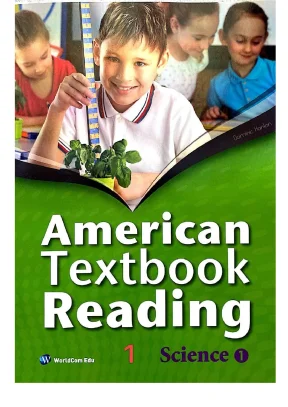
Sách American Textbook Reading Science 1 - Dominic Hanlon, WorldCom Edu

Khám phá sách giáo khoa khoa học Mỹ lớp 1 dành cho học sinh tiểu học. Nội dung phong phú về khoa học tự nhiên và xã hội phù hợp độ tuổi.

Chuyên ngành

Khoa học tự nhiên

Người đăng

Ẩn danh

Thể loại

Sách giáo trình

2013

136
0
0

Phí lưu trữ

35 Point

Tóm tắt

I. Tổng quan về sách giáo khoa khoa học Mỹ lớp 1

Sách giáo khoa khoa học Mỹ lớp 1 (American Textbook Reading Science 1) là tài liệu học thuật tiêu chuẩn dành cho học sinh tiểu học. Nội dung sách tập trung vào các khái niệm khoa học cơ bản như cấu tạo thực vật, vòng đời sinh vật, phân loại động vật và thuộc tính vật chất. Sách được biên soạn bởi Dominic Hanlon theo chương trình giáo dục quốc gia Mỹ, kết hợp hình ảnh minh họa sinh động và bài tập thực hành. Điểm nổi bật của sách là cách tiếp cận trực quan, giúp học sinh dễ dàng ghi nhớ kiến thức thông qua các hoạt động quan sát, phân loại và thực nghiệm. Sách cũng bao gồm phần từ vựng trọng điểm, định nghĩa ngắn gọn và bài tập vận dụng kiến thức vào thực tế.

1.1. Cấu trúc bài học trong sách

Mỗi bài học trong sách được chia thành 4 phần chính: phần giới thiệu bằng hình ảnh (Visual Summary), phần từ vựng trọng điểm (Key Vocabulary), phần bài tập vận dụng (Exercise) và phần kỹ năng đọc hiểu (Reading Skill). Phần giới thiệu sử dụng hình ảnh kèm theo từ vựng để giúp học sinh liên kết trực quan với khái niệm khoa học. Phần từ vựng cung cấp định nghĩa ngắn gọn kèm ví dụ minh họa, trong khi phần bài tập kiểm tra khả năng ghi nhớ thông qua việc ghép nối từ vựng với hình ảnh hoặc định nghĩa.

1.2. Phương pháp giảng dạy khoa học trong sách

Sách áp dụng phương pháp giảng dạy dựa trên quan sát và thực nghiệm, khuyến khích học sinh khám phá khoa học thông qua trải nghiệm thực tế. Các hoạt động trong sách bao gồm phân loại động vật theo môi trường sống, quan sát thuộc tính vật chất (cứng/mềm, nổi/chìm) và nhận diện năm giác quan của con người. Sách cũng tích hợp kỹ năng tư duy phản biện thông qua các câu hỏi mở và bài tập so sánh đối chiếu.

II. Phân tích nội dung khoa học trong American Textbook Reading Science 1

Nội dung sách tập trung vào 4 chủ đề chính: thực vật, động vật, vật chất và trái đất. Chủ đề thực vật giới thiệu cấu tạo (rễ, thân, lá, hoa, quả) và nhu cầu sinh trưởng (không khí, nước, ánh sáng). Chủ đề động vật phân loại theo môi trường sống (rừng, sa mạc, đại dương) và đặc điểm cơ thể (lông, da, mang, phổi). Chủ đề vật chất khám phá các trạng thái (rắn, lỏng, khí) và thuộc tính (nặng/nhẹ, cứng/mềm). Chủ đề trái đất giới thiệu sự thay đổi của bề mặt Trái đất, tài nguyên thiên nhiên và cách bảo vệ môi trường. Mỗi chủ đề đều đi kèm bài tập vận dụng giúp củng cố kiến thức.

2.1. Chủ đề thực vật và vòng đời sinh trưởng

Chủ đề thực vật giải thích chức năng của từng bộ phận (rễ hấp thụ nước, thân vận chuyển chất dinh dưỡng, lá quang hợp). Sách cũng giới thiệu vòng đời của thực vật từ hạt nảy mầm, phát triển đến ra hoa kết trái. Các hình ảnh minh họa chi tiết giúp học sinh hình dung rõ ràng quá trình sinh trưởng. Bài tập trong phần này yêu cầu học sinh ghép nối từ vựng với hình ảnh hoặc trả lời câu hỏi về nhu cầu sinh trưởng của thực vật.

2.2. Chủ đề động vật và môi trường sống

Sách phân loại động vật theo môi trường sống (đất, nước, không khí) và đặc điểm cơ thể (lông, da, mang, phổi). Mỗi nhóm động vật đều có ví dụ cụ thể như chim (sử dụng mỏ để ăn), cá (hô hấp bằng mang) và động vật có vú (có lông). Bài tập yêu cầu học sinh phân loại động vật theo môi trường sống hoặc đặc điểm cơ thể, đồng thời giải thích cách chúng thích nghi với môi trường.

III. Giải pháp học tập hiệu quả với American Textbook Reading Science 1

Để học tập hiệu quả với sách giáo khoa này, học sinh nên kết hợp đọc hiểu với thực hành thông qua các hoạt động trong sách. Phương pháp học chủ động bao gồm việc quan sát hình ảnh, ghi nhớ từ vựng trọng điểm và tham gia các bài tập vận dụng. Giáo viên có thể sử dụng sách làm tài liệu giảng dạy chính, kết hợp với các thí nghiệm đơn giản để minh họa khái niệm khoa học. Phụ huynh nên khuyến khích con em thực hành các bài tập tại nhà và thảo luận về những điều quan sát được trong sách.

3.1. Kỹ năng đọc hiểu khoa học

Sách cung cấp các kỹ năng đọc hiểu như xác định ý chính, chi tiết hỗ trợ và tư duy phản biện thông qua các câu hỏi mở. Học sinh được hướng dẫn cách phân tích thông tin trong bài đọc, so sánh đối chiếu các khái niệm và rút ra kết luận. Các bài tập đọc hiểu bao gồm việc chọn câu trả lời đúng, viết câu trả lời ngắn và thảo luận nhóm.

3.2. Phương pháp ghi nhớ từ vựng khoa học

Từ vựng khoa học trong sách được trình bày kèm theo định nghĩa ngắn gọn và hình ảnh minh họa. Học sinh nên sử dụng phương pháp liên tưởng hình ảnh để ghi nhớ từ vựng, đồng thời thực hành thông qua các bài tập ghép nối. Giáo viên có thể tổ chức các trò chơi học tập như đoán từ vựng hoặc viết câu sử dụng từ vựng mới để tăng cường ghi nhớ.

IV. Ứng dụng kiến thức khoa học vào thực tế

Kiến thức trong sách giáo khoa khoa học lớp 1 không chỉ giới hạn trong phạm vi lý thuyết mà còn khuyến khích học sinh áp dụng vào cuộc sống hàng ngày. Học sinh có thể quan sát các hiện tượng khoa học xung quanh mình như sự phát triển của cây cối, hành vi của động vật hoặc thuộc tính của các vật thể. Sách cũng cung cấp các hoạt động thực hành đơn giản như trồng cây, phân loại rác thải hoặc quan sát các vật thể trong môi trường xung quanh.

4.1. Hoạt động thực hành khoa học

Sách khuyến khích học sinh tham gia các hoạt động thực hành như trồng hạt giống, quan sát sự thay đổi của vật thể trong các trạng thái khác nhau (rắn, lỏng, khí) hoặc phân loại động vật theo môi trường sống. Các hoạt động này giúp học sinh hiểu rõ hơn về khái niệm khoa học thông qua trải nghiệm trực tiếp.

4.2. Bảo vệ môi trường và tài nguyên thiên nhiên

Sách giới thiệu khái niệm tài nguyên thiên nhiên và tầm quan trọng của việc bảo vệ môi trường. Học sinh được hướng dẫn cách tiết kiệm tài nguyên như nước, đất và không khí thông qua các hoạt động đơn giản như tắt vòi nước khi không sử dụng hoặc phân loại rác thải. Sách cũng nhấn mạnh vai trò của con người trong việc bảo vệ môi trường sống của các loài động thực vật.
Tóm tắt và mô tả trên trang này được tạo với sự hỗ trợ của AI. Nếu bạn thấy nội dung không chính xác hoặc có vấn đề, vui lòng Báo lỗi nội dung.

30/05/2026

Trích đoạn nội dung tài liệu

American Textbook Reading OMY WortdCom Edu American Textbook Readi NG Science @ Dominic Hanlon © 2013 published by WorldCom Edu Publishing Inc. All rights reserved. No part of this book may be reproduced, stored in a retrieval system, or transmitted in any form or by any means, electronic, mechanical, photocopying, recording, or otherwise, without prior permission in writing from the publisher. ISBN :978-89-6198-346-4 Desk Copy Request / Information To place your desk Copy request or for more information, please contact the following office: Tel:(02)3273-4300 Fax: (02)3273-4303 Homepage : www.co,kr reas -_ ®22uanne yal d62j3uuV nome tame SSSR TAS ST ý S315 4v 62284 238 (2) @ậệfẢậẠMKGST.

TT) Ca Parts Of Plants ------------------------===---———- CEE Life Cycle ofa Plant - Cap What Plants Need to Grow -----------------------. Types of Animals Gap Body Parts of Animals ------------------------ Where Animal Live -------------------------------------. 10 16 22 28 - 34 40 Earth Science Land and Water.- How Does Earth Change? ©.<<< C= Rocks and Soil -. em Saving Natural Resources smn EifE] eg tu» 54 60 - 66 72 Science Book oO es Ate Yat atte ŒMD Matter and Senses nnn [ Lesson 13) Observing WBHLẨEE baneanenneeinnannoaioannsairtiudtirhonfttoingni Solid, Liquid, Gas .2 5562 CGD Matter and Its Changes.

m: KL Sa an “i 80 86 92 98 XÃ7š34:£5214x384144 4 3443437821282. 4: TT Tre an esmesessasecasasnsees31X1543258%01c t3 r---] Title i t i i ' i t i t i i i ị ị ị t i t t t Ị I ' ị i i ¡ t t t i ¡ i ị i I i ị ' i ị i 1 i 1 t ' { { { Ị ' i t ị t x ' 1 ' ' 1 1 ' ' ' 1 1 ' ' ' ' 1 ! ! 1 1 ' ' L This is what the lesson is about. Visual Summary I The visual summary uses images with key vocabulary and other related words to introduce the main concept of the lesson. The visual summary is also an aid for word association, reinforcing the meaning of the words within context, Wratten ‘Aplant isa living thing that ‘grows in the ground, It needs air, ‘water, and suntight root The roots of a plant take in water and hold the plant in the soil.

stem Astem carries food and water through the plant. Its the body Of the plant. It holds up the plant. leaf A leat takes in fight and ait.

Leaves help the plant get food, flower Plants have flowers. Flowers make fruit. lowers are very beautiful. fruit Fruit isthe part of the plant with seeds.

Apples and lemons are ‘common types of fut. dl Key Vocabulary These are new words for students to learn in the lesson. The meaning of each word is below it. This expands the key vocabulary and the lesson‘s main idea.

This gives students a greater level of understanding. Lage] SN) BS) Science Book @ ý | a statement. Exercise }-----7 : This exercise will test students’ | c1 Review 1 understanding of the written Ị Here there are pictures of definition of the key vocabulary. \ Ị objects or situations.

Students i | can use a visual guide to help ' ' them remember a word. se >> Match each word with the right picture, Match each word with Its definllon. Fook — 1%, the part that takes in light and aie for the plant 2. the part that takes in water for the plant ee 4.

the part of the plant with seeds ine s›Énh __ “A. the part that carries food and water fo the plant = the part thet makes fruit and ts very beautiful 8 6. alliving thing that grows in the ground rr 7 a= ica caches eae eenrensiel os \ ì ! Circle T for true, F for false. + ' Ỉ 1, Aster carries water to the plant.

Abranch is along and sharp leat, T/ i Ị 3, The body of a tree ls called the stem. : ' 1 Review 2 ị Here there are new pictures that | i relate to the key vocabulary. ! ‡ Different pictures help students True or False I----~ ; | learn a new word and remember it. This exercise make the t | students think carefully about ' ~-1 Reading The passage is the main part of the lesson.

It contains all passage. Comprehension Ị TTT~~TeTTT=e=~=======~=~~~~~~~~~~~~~~~~~~~=~~~al Each passage follows a reading skill such as Main Idea, Sequence, Compare and Contrast, Classify, etc. The chart helps students identify and understand the key concepts or key parts of the Passage. This aids comprehension.

¬ the key vocabulary and other These questions test students’ ị words students have been comprehension of the ị learning in this lesson. They also test | Students have been preparing students’ ability to remember | for the passage in the previous what is written in the passage, pages. This makes it easier for } ' students to comprehend the | | | | | | — i) —$ $—$—$—$— _—_$_$__ | > Read the passage. Complete the chart.

Œ) Choose the correct answer, “#É=======---=-=---__. The roots of a plant are found in the: » Parts of Plants = oir b. soil © eaves Maser pec —4 2. Thestem of plant caries of a plant take in water and hold the plant & water and food 'b.

air and light ©. soil and ground in the ground, The stem carries food and water through the plant and holds up the 3. The tlowers of a plant make fruit plant, The leaves of a plant tate in air and ‘& that hold up the plant light for the plant. The Mowers of plants 'b.

thất holđ lemons or apples make {Flt Flowers are very beautiful e. that people can eat People can eat the fruit. The fruit holds seeds. Oranges, apples, lemons, and 4.

The leaves take in air and light, and bananas are delicious fruit, Trees are very big plants. Trees heve & the stem holds up the plant branches. Branches are the arms of ¢ tree and have leaves. b, the heaves turn into seeds: xiMsieeicoylge rdgidc Be READING SKILL Main Idea and Details, HN cung x ‘Write the correct answer.

| 1, Name four different parts of a plant. What are the arms of a tree called? { | \ 16 t I Ị \ Ị | Ỉ Critical Thinking |---~ These questions make students use critical thinking, which is an important part of the learning process. This section will help students develop their reading skills. Workbook r—-† Vocabulary 1 These exercises test students’ ability to remember the meaning of a word using a picture as a guide.

01 Parts of Plants a A 4 eterna 2 flowers. roots ebarches a fut ey D> 1. Fill in the blanks using the words from the box. The color of a changes 95 the seasons turn.

leat m < Remer stem GA holds up a plant. flower cm sem 1. flower TT © <---—-—-——-—- " + Listen and fill in the blanks to complete the passage. Ị t ' B i ‘There are many different parts of ®.

The parts help t = a ke ta a eal aplant tegrow. The® __of a plant take in water and ! hold the plant in the ground, The @ carries food and 1 1 er through the plant nd h lam. Choose the word that best completes the sentence. wes „ wide up the 9 ° ' 1 of aplant take in airand light for the plant.

Anappleis of the plants, Ị Ị wie ail x 4 em plonts make @ __. Flowers are very beautiful. People con | Ị ‘eat the fruit, The fruit holds seeds. Orcages, apples, lemons and Ị 1 2.

These ‘are ceaching tế my window. t del it, ị ene srt mae eae banenes are delicious fruit, Trees are very big plants. Trees have Ị ! - ° „ Branches ore the arms of a tree and have leaves, Ệ { 3. A rose is a beoutitul ! ' 4 tem bs oot c tower 1 1 ' 1 ' t ® : Ị t 1 t 1 t ' ' 1 t 1 t 1 { | | ‘---4] Vocabulary 2 These exercises make students - Listen & Write I use the key vocabulary words Students can practice their in a context that is different to listening skills.

A native that in the passage. This speaker of English speaks the increases students’ passage, and this allows understanding and use of. students to hear the proper words. pronunciation of words.

Se SHEE Ae art 1 Lite) SGICNGEe. Lesson 01 || Parts o 10 A plant is a living thing that grows in the ground. It needs air, water, and sunlight. A branch is an arm-like part of a tree.

root The roots of a plant take in water and hold the plant in the soil. 7 stem A stem carries food and water through the plant. It is the body of the plant. It holds up the plant.

leaf A leaf takes in light and air. Leaves help the plant get food. flower Plants have flowers. Flowers make fruit.

Flowers are very beautiful. fruit Fruit is the part of the plant with seeds. Apples and lemons are common types of fruit. See ieee ia mes Use of Plant Parts | ‘ FE—======n WY mY Plant parts = 1 flower yy Things ft , re made from FB “sp, plant parts _ toothpaste perfume ° A ae etd Sài oe Match each word with the right , » ^ mè root stem leaf flower plant fruit picture.

leaves Match each word with its definition. the part that takes in light and air for the plant 2. the part that takes in water for the plant 3. the part of the plant with seeds 4.

the part that carries food and water to the plant 5. the part that makes fruit and is very beautiful 6. a living thing that grows in the ground True or False Circle T for true, F for false. Astem carries water to the plant.

Abranch is a long and sharp leaf. The body of a tree is called the stem. root stem flower plant leaf fruit T/F T/F T/F m i. ae reel) a ase | m: 13 FEIT SIRI TITS LS IVES STS =—.a awh we eeTE MEET ET ES SENET X15A212913454À25522-.

Reading Read the passage. Complete the chart. | F vyyg of Plants | There are many different parts of plants. | The parts help a plant to grow.

The roots | of a plant take in water and hold the plant in the ground. The stem carries food and | water through the plant and holds up the | plant. The leaves of a plant take in air and | light for the plant. The flowers of plants | make fruit.

Flowers are very beautiful. People can eat the fruit. The fruit holds seeds. Oranges, apples, lemons, and bananas are delicious fruit.

Trees are very big plants. Trees have branches. Branches are the arms of a tree and have leaves. ` READING SKILL Main Idea and Details ( The parts of a plant help it live and grow.

| The roots take in || The The leaves take in | | The Qe 7= E4 CO. :” osg @ and hold the carries food and || and light for the || make fruit. plant in the water and holds || plant. The fruit holds @_ —.

e Comprehension Choose the correct answer. The roots of a plant are found in the a. The stem of a plant carries a. water and food b.

air and light c. soil and ground 3. The flowers of a plant make fruit a. that hold up the plant b.

that hold lemons or apples c. that people can eat 4.

Nội dung được bảo vệ bản quyền — Tải xuống đầy đủ