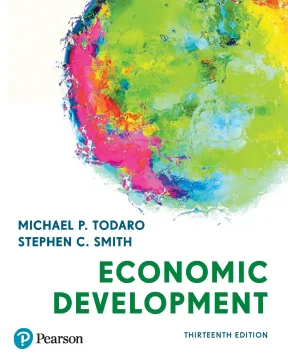
Tổng quan về giáo trình
Giáo trình Economic Development (Ấn bản thứ 13, năm 2020) của Michael P. Todaro (Đại học New York) và Stephen C. Smith (Đại học George Washington), do Pearson Education Limited xuất bản (ISBN: 978-1-292-29115-4), là tài liệu học thuật phục vụ học phần Kinh tế học phát triển (Development Economics) và Nghiên cứu phát triển (Development Studies) ở bậc đại học và sau đại học. Tài liệu được thiết kế cho các khóa học một học kỳ (15 tuần tương ứng với 15 chương) hoặc chuỗi chương trình chuyên sâu kéo dài hai học kỳ.
Về mục tiêu học tập (learning outcomes), giáo trình cung cấp hệ thống cơ sở lý thuyết và công cụ phân tích thực chứng nhằm giúp người học:
- Phân tích nguyên nhân sâu xa dẫn đến sự chênh lệch mức sống và mức độ phát triển kinh tế giữa các quốc gia.
- Đánh giá vai trò của thị trường, nhà nước và các tổ chức xã hội dân sự trong quá trình chuyển dịch cơ cấu kinh tế.
- Đo lường và phân tích các chỉ tiêu kinh tế - xã hội như nghèo đói, bất bình đẳng, vốn con người, di cư và suy thoái môi trường.
- Đánh giá tác động của các chính sách phát triển kinh tế vĩ mô và vi mô thông qua bằng chứng thực nghiệm.
Về cấu trúc và cách tiếp cận, cuốn sách áp dụng phương pháp định hướng vấn đề (problem-oriented) và định hướng chính sách (policy-oriented). Tác giả kết hợp phân tích kinh tế học chuẩn tắc với kinh tế học thể chế, kinh tế học hành vi và kinh tế chính trị học. Nội dung phân tích trải rộng trên các khu vực đang phát triển gồm Châu Phi cận Sahara, Châu Á, Châu Mỹ Latinh, Trung Đông và các nền kinh tế chuyển đổi ở Đông Âu.
Điểm đặc sắc của giáo trình nằm ở việc kết hợp chặt chẽ giữa mô hình hóa lý thuyết và dữ liệu thực nghiệm thực tế, thể hiện qua hệ thống 15 nghiên cứu trường hợp điển hình ở cuối mỗi chương (end-of-chapter case studies), các hộp phát hiện nghiên cứu (Findings boxes) và hộp phân tích chính sách (Policy boxes).
Nội dung kiến thức cốt lõi
Các chương/chủ đề chính
Giáo trình gồm 15 chương được tổ chức theo tiến trình logic từ khái niệm cơ bản, lý thuyết vĩ mô, vấn đề cơ cấu nội bộ đến các mối quan hệ kinh tế quốc tế:
- Chương 1 & 2: Giới thiệu phát triển kinh tế và Phát triển kinh tế so sánh (Comparative Economic Development): Định nghĩa bản chất của sự phát triển vượt ra ngoài mức thu nhập đơn thuần, tích hợp cách tiếp cận năng lực (Capability Approach) của Amartya Sen và 17 Mục tiêu Phát triển Bền vững (SDGs). Phân loại các nền kinh tế theo tiêu chí thu nhập của Ngân hàng Thế giới (LICs, LMCs, UMCs, HICs) và Chỉ số Phát triển Con người (HDI) của UNDP. Đánh giá hiện tượng Đại phân kỳ (The Great Divergence) và các lý thuyết về sự hội tụ kinh tế.
- Chương 3: Các lý thuyết cổ điển về tăng trưởng và phát triển kinh tế (Classic Theories of Economic Growth and Development): Trình bày bốn trường phái chính: mô hình các giai đoạn tăng trưởng tuyến tính của W.W. Rostow và mô hình Harrod-Domar; mô hình chuyển dịch cơ cấu hai khu vực của W. Arthur Lewis; các lý thuyết phụ thuộc quốc tế (mô hình phụ thuộc tân thực dân, mô hình mô thức sai lầm); và trường phái phản cách mạng tân cổ điển (thị trường tự do, lựa chọn công cộng, mô hình Solow và lý thuyết tăng trưởng nội sinh).
- Chương 4: Các mô hình đương đại về phát triển và kém phát triển (Contemporary Models of Development and Underdevelopment): Phân tích các thất bại phối hợp (Coordination Failures), trạng thái đa cân bằng (Multiple Equilibria), mô hình Cú hích lớn (The Big Push), lý thuyết vòng đệm O-Ring của Michael Kremer và khung chẩn đoán tăng trưởng của Hausmann-Rodrik-Velasco (HRV Growth Diagnostics).
- Chương 5: Đói nghèo, bất bình đẳng và phát triển (Poverty, Inequality, and Development): Các công cụ đo lường bất bình đẳng gồm đường cong Lorenz, hệ số Gini, Chỉ số Phúc lợi Ahluwalia-Chenery (ACWI), giả thuyết chữ U ngược của Simon Kuznets; đo lường nghèo đói tuyệt đối và Chỉ số Nghèo đa chiều (Multidimensional Poverty Index - MPI).
- Chương 7 & 8: Đô thị hóa, di cư và vốn con người (Urbanisation, Migration, and Human Capital): Phân tích mô hình di cư nông thôn - đô thị Harris-Todaro, khu vực kinh tế phi chính thức; lý thuyết vốn con người trong y tế và giáo dục, mô hình cân bằng xấu về lao động trẻ em và phân tích chi phí - lợi ích xã hội đối với giáo dục.
- Chương 11 & 12: Hoạch định chính sách phát triển và Chiến lược thương mại quốc tế (Policymaking and International Trade Strategy): Đánh giá quá trình chuyển đổi từ Đồng thuận Washington sang Đồng thuận mới, vai trò của các tổ chức phi chính phủ (NGOs); giả thuyết Prebisch-Singer, so sánh chiến lược công nghiệp hóa thay thế nhập khẩu (Import Substitution - IS) và thúc đẩy xuất khẩu (Export Promotion - EP).
- Chương 13, 14 & 15: Cán cân thanh toán, nợ, nguồn tài chính đối ngoại và chính sách tài khóa: Khủng hoảng nợ thập niên 1980, cơ chế tái chu chuyển USD dầu mỏ (Petrodollar recycling), chính sách ổn định của IMF, khủng hoảng tài chính toàn cầu 2008; vai trò của đầu tư trực tiếp nước ngoài (FDI), kiều hối, viện trợ phát triển (ODA), xung đột bạo lực và cải cách hệ thống tài chính vi mô (Microfinance).
   [Chương 1-2: Khái niệm & Đo lường (GNI, PPP, HDI, MPI, SDGs)]
   [Chương 3-4: Lý thuyết tăng trưởng cổ điển & Mô hình đương đại]
        (Harrod-Domar, Lewis, Solow, Big Push, O-Ring, HRV)
   [Chương 5-10: Vấn đề cơ cấu & Nguồn lực phát triển nội bộ]
        (Nghèo đói, Dân số, Di cư Harris-Todaro, Giáo dục, Y tế, Nông nghiệp, Môi trường)
   [Chương 11-15: Thể chế, Chính sách công & Kinh tế đối ngoại]
        (Đồng thuận Washington, Thương mại quốc tế, Nợ/Khủng hoảng, FDI, ODA, Tài chính vi mô)
Kiến thức nền tảng được xây dựng
Giáo trình xây dựng hệ thống kiến thức dựa trên ba trục lý thuyết chính:
- Lý thuyết tăng trưởng và chuyển dịch cơ cấu: Nền tảng từ mô hình Harrod-Domar, mô hình tân cổ điển Solow, lý thuyết tăng trưởng nội sinh đến mô hình kinh tế nhị nguyên của Lewis.
- Kinh tế học thể chế và thất bại thị trường: Phân tích sự thiếu hụt thông tin, chi phí giao dịch, quyền tài sản, thất bại phối hợp và vai trò của thể chế trong việc duy trì tăng trưởng dài hạn.
- Kinh tế học phúc lợi và vốn con người: Ứng dụng khung lý thuyết năng lực của Amartya Sen, lý thuyết hàm sản xuất vốn con người của Gary Becker và các mô hình lựa chọn vi mô của hộ gia đình về sinh sản, giáo dục và rủi ro nông nghiệp.
Kỹ năng phát triển
- Kỹ năng kỹ thuật (Technical skills): Tính toán và xử lý các chỉ số thống kê kinh tế phát triển (hệ số Gini, tỷ lệ nghèo, chỉ số khoảng cách nghèo, HDI, MPI); giải toán cân bằng tĩnh và động trong mô hình Solow và mô hình di cư Harris-Todaro.
- Kỹ năng phân tích (Analytical skills): Sử dụng cây quyết định chẩn đoán tăng trưởng HRV để xác định điểm nghẽn ràng buộc nghiêm trọng nhất của một nền kinh tế; phân tích đánh giá tác động chi phí - lợi ích xã hội (Social Cost-Benefit Analysis) của các dự án công.
- Năng lực thực tiễn (Practical competencies): Đọc hiểu và thẩm định các báo cáo chính sách vĩ mô từ Ngân hàng Thế giới, IMF, UNDP; đánh giá các chương trình can thiệp xã hội thực tế (như chương trình trợ cấp tiền mặt có điều kiện Progresa/Oportunidades tại Mexico).
Phương pháp giảng dạy và học tập
Tiếp cận sư phạm (Pedagogical approach)
Giáo trình sử dụng phương pháp giảng dạy tích hợp:
- Trình bày trực giác kinh tế trước thông qua hiện tượng và số liệu thực tế.
- Minh họa bằng các mô hình đồ thị hình học (geometric models) trong nội dung chính.
- Tách biệt các chứng minh toán học và mô hình kinh tế lượng phức tạp vào các phần Phụ lục (Appendices) ở cuối chương (như Phụ lục 3.2 về mô hình Solow, Phụ lục 5.1 về mô hình khuyến khích giá, Phụ lục 7.1 về công thức toán học của mô hình Harris-Todaro). Cách thiết kế này cho phép giảng viên linh hoạt điều chỉnh độ sâu kỹ thuật tùy theo đối tượng sinh viên.
Hệ thống nghiên cứu trường hợp và hộp thông tin
- 15 Case Studies chuyên sâu: Cuối mỗi chương đều có một bài nghiên cứu trường hợp điển hình. Trong đó có 11 nghiên cứu so sánh quốc gia (Pakistan - Bangladesh, Ghana - Côte d'Ivoire, Hàn Quốc - Argentina, Burundi - Rwanda, Ấn Độ - Botswana, Haiti - Cộng hòa Dominica, Hàn Quốc - Đài Loan, Costa Rica - Guatemala - Honduras, Botswana - Mauritius) và các bài phân tích chuyên sâu về Trung Quốc, Ấn Độ, Brazil và Mexico.
- Hộp phát hiện nghiên cứu (Findings boxes): Giới thiệu trực tiếp các phương pháp nghiên cứu thực nghiệm hiện đại trong kinh tế học phát triển như:
- Thử nghiệm ngẫu nhiên có đối chứng (RCTs) trong giám sát y tế cộng đồng (Hộp 4.2) và điều trị giun sán học đường (Hộp 8.4 của Miguel & Kremer).
- Phương pháp biến công cụ (Instrumental Variables) kiểm định bất bình đẳng (Hộp 2.3 của William Easterly).
- Thiết kế hồi quy gián đoạn (Regression Discontinuity Design - RDD) phân tích tác động lịch sử của chế độ lao động cưỡng bức Mita tại Peru (Hộp 2.2 của Melissa Dell).
- Phương pháp chuỗi thời gian phân tích giả thuyết Prebisch-Singer (Hộp 12.1).
- Hộp chính sách phát triển (Policy boxes): Đánh giá cơ chế hoạt động của các tổ chức tài chính quốc tế (IMF, World Bank), các can thiệp nhân khẩu học, y tế và ứng phó biến đổi khí hậu.
Đánh giá và hướng dẫn tự học
- Cuối sách trang bị bảng thuật ngữ chuyên ngành chi tiết (Glossary, trang 850), chỉ mục tác giả (Name Index, trang 862) và chỉ mục chủ đề (Subject Index, trang 868).
- Mỗi thuật ngữ cốt lõi đều được in đậm trong văn bản và giải thích định nghĩa ngay tại lề trang sách (margin definitions).
Điểm nổi bật và cập nhật của ấn bản thứ 13
Ấn bản thứ 13 bổ sung và cập nhật các nội dung học thuật sau:
- Khung Mục tiêu Phát triển Bền vững (SDGs): Bổ sung phân tích toàn diện về 17 mục tiêu SDGs đến năm 2030, đồng thời tổng kết tiến trình và hạn chế của các Mục tiêu Phát triển Thiên niên kỷ (MDGs) giai đoạn 2000–2015 (Mục 1.7).
- Số liệu và biểu đồ mức sống phân tầng: Đưa vào mô hình 4 tầng mức sống hộ gia đình (Four Strata) lấy cảm hứng từ nghiên cứu của Hans Rosling (Mục 1.2 và Hộp 1.2).
- Cập nhật dữ liệu Đại phân kỳ và Tái hội tụ: Bổ sung chuỗi số liệu 250 năm về khoảng cách sản lượng bình quân đầu người toàn cầu và phân tích các bằng chứng thực nghiệm mới về sự hội tụ tăng trưởng (Mục 2.5).
- Tích hợp Kinh tế học hành vi (Behavioural Economics): Bổ sung các ứng dụng của kinh tế học hành vi và nghiên cứu thực nghiệm trong việc giải thích bẫy nghèo đói, hành vi sức khỏe và thiết kế chính sách y tế (Mục 5.8, Mục 8.7 và Hộp 8.9).
- Mở rộng khung Chẩn đoán tăng trưởng bao trùm: Bổ sung trường hợp ứng dụng thực tế của mô hình Chẩn đoán tăng trưởng bao trùm (Inclusive Growth Diagnostics) tại Bangladesh (Hộp 4.4).
- Mở rộng các Case Studies so sánh mới: Bổ sung nghiên cứu so sánh nhân khẩu học và thể chế giữa Burundi và Rwanda (Chương 6); so sánh dịch vụ khuyến nông cho phụ nữ giữa Kenya và Uganda (Chương 9); và phân tích mô hình quản trị vượt bẫy thu nhập trung bình của Botswana và Mauritius (Chương 15).
Đối tượng sử dụng giáo trình
- Sinh viên đại học: Sinh viên năm thứ ba và năm thứ tư thuộc các khối ngành Kinh tế học, Kinh tế phát triển, Kinh tế quốc tế, Quan hệ quốc tế, Quản lý công và Xã hội học.
- Học viên cao học: Học viên các chương trình Thạc sĩ Chính sách công (MPP), Thạc sĩ Phát triển quốc tế (MID) hoặc Thạc sĩ Kinh tế học ứng dụng cần tài liệu tổng quan hệ thống hóa các lý thuyết và trường hợp nghiên cứu thực tiễn.
- Yêu cầu kiến thức tiên quyết (Prerequisites): Người học cần hoàn thành các học phần nguyên lý kinh tế học cơ bản (Kinh tế vi mô nhập môn và Kinh tế vĩ mô nhập môn). Giáo trình không đòi hỏi kiến thức tiên quyết về kinh tế lượng nâng cao, do các phương pháp định lượng đều được diễn giải dưới dạng trực quan.
- Giảng viên và nhà nghiên cứu: Giáo trình cung cấp cấu trúc bài giảng linh hoạt, cho phép lựa chọn giảng dạy theo định hướng thể chế/định tính hoặc định hướng mô hình/định lượng.
Câu hỏi thường gặp
1. Giáo trình này phù hợp với đối tượng người học nào?
Giáo trình phù hợp với sinh viên đại học chuyên ngành kinh tế và các ngành khoa học xã hội liên quan, học viên cao học chính sách công, cũng như các chuyên viên phân tích tại các cơ quan hoạch định chính sách và tổ chức phát triển quốc tế.
2. Cần kiến thức nền tảng nào trước khi học giáo trình này?
Người học cần nắm vững kiến thức kinh tế vi mô và vĩ mô ở mức độ nguyên lý cơ bản. Các công cụ toán học và thống kê chuyên sâu được giới thiệu có hệ thống trong các phụ lục kỹ thuật riêng biệt.
3. Điểm khác biệt của giáo trình Todaro & Smith so với các giáo trình kinh tế học khác là gì?
Giáo trình tập trung đặc thù vào các cấu trúc thể chế phi hoàn hảo của các nước đang phát triển (thay vì giả định thị trường hoàn hảo như kinh tế học vi mô chuẩn tắc), đồng thời tích hợp 15 nghiên cứu trường hợp so sánh quốc gia đa chiều và hệ thống phương pháp thực nghiệm hiện đại (RCTs, RDD, IV).
4. Phương pháp tự học giáo trình như thế nào để đạt hiệu quả?
Người học nên tiếp cận theo trình tự: đọc các câu hỏi lớn ở đầu chương, nắm bắt khái niệm cốt lõi qua hệ thống thuật ngữ in đậm ở lề trang, nghiên cứu các mô hình đồ thị, và đối chiếu lý thuyết với nghiên cứu trường hợp thực tế ở cuối chương.
5. Giáo trình có các tài liệu bổ trợ nào đi kèm?
Giáo trình đi kèm hệ thống slide bài giảng PowerPoint chuẩn hóa cho từng chương và Sổ tay hướng dẫn dành cho giảng viên (Instructor’s Manual) do Chris Marme (Augustana College) biên soạn, được cung cấp qua cổng thông tin tài nguyên trực tuyến của Nhà xuất bản Pearson.
Kết luận
Giáo trình Economic Development (13th Edition) của Michael P. Todaro và Stephen C. Smith cung cấp một khung khổ học thuật toàn diện về lý thuyết, công cụ đo lường và thực tiễn chính sách trong lĩnh vực kinh tế học phát triển. Lộ trình học tập của giáo trình dẫn dắt người học từ các khái niệm đo lường mức sống căn bản, các mô hình tăng trưởng cổ điển và đương đại, đến việc phân tích chuyên sâu các khía cạnh cơ cấu nội bộ và kinh tế quốc tế. Tài liệu là nguồn tham khảo học thuật chuẩn tắc, kết nối giữa lý thuyết kinh tế học thuần túy và thực tiễn phát triển tại các quốc gia trên thế giới.