Bối cảnh và vấn đề nghiên cứu
Trong bối cảnh giáo dục hiện đại, sự phát triển của công nghệ thông tin đã thúc đẩy mạnh mẽ các hình thức học tập trực tuyến, đặc biệt là các khóa học trực tuyến mở đại chúng (Massive Open Online Courses - MOOCs). Tại khu vực châu Á, nhiều trường đại học đã tích hợp các khóa học MOOC giảng dạy bằng tiếng Anh (E-MOOCs) nhằm tạo điều kiện cho sinh viên tiếp cận tri thức toàn cầu trong bối cảnh tiếng Anh là ngôn ngữ thứ hai (ESL). Đối với sinh viên khối ngành kỹ thuật, việc cập nhật kiến thức khoa học và công nghệ liên ngành thông qua các nền tảng quốc tế là yêu cầu cấp thiết. Tuy nhiên, hiệu quả học tập và tỷ lệ duy trì khóa học trực tuyến phụ thuộc lớn vào niềm tin vào năng lực bản thân (self-efficacy) của người học.
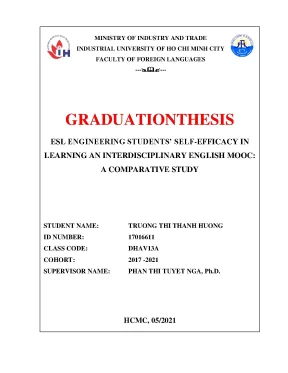
Khóa luận tốt nghiệp của tác giả Trương Thị Thanh Hương (mã số sinh viên: 17016611, lớp DHAV13A, khóa 2017–2021, Khoa Ngoại ngữ, Trường Đại học Công nghiệp TP.HCM) thực hiện nghiên cứu so sánh mức độ tự tin của sinh viên kỹ thuật khi tham gia khóa học MOOC tiếng Anh liên ngành. Đề tài được hướng dẫn bởi TS. Phan Thị Tuyết Nga và có sự phối hợp thu thập dữ liệu từ nhóm nghiên cứu của GS. Chen tại Đại học Quốc lập Nghi Lan (National Ilan University - NIU), Đài Loan.
Mục tiêu nghiên cứu của khóa luận được xác định cụ thể gồm:
- Đánh giá và so sánh mức độ tự tin (self-efficacy) của sinh viên kỹ thuật thuộc diện ESL giữa Trường Đại học Công nghiệp TP.HCM (IUH) và Đại học Quốc lập Nghi Lan (NIU) khi tham gia khóa học MOOC tiếng Anh liên ngành.
- Kiểm tra và xác định các yếu tố ảnh hưởng, dự đoán mức độ tự tin của sinh viên kỹ thuật trong môi trường học MOOC tại hai bối cảnh đào tạo nêu trên.
Để đạt được các mục tiêu này, hai câu hỏi nghiên cứu chính được đặt ra:
- Mức độ tự tin được nhận thức của sinh viên kỹ thuật tại IUH và NIU khi tham gia MOOC là bao nhiêu? (What are the perceived self-efficacy levels of engineering students in joining MOOCs at IUH and NIU universities?)
- Những yếu tố nào dự đoán mức độ tự tin của sinh viên kỹ thuật khi tham gia MOOC ở hai bối cảnh này? (What predicts engineering students’ self-efficacy in joining a MOOC in the two contexts?)
Phạm vi nghiên cứu tập trung vào sinh viên chuyên ngành kỹ thuật tại hai trường đại học IUH (Việt Nam) và NIU (Đài Loan). Tổng cộng có khoảng 250 sinh viên được mời tham gia khảo sát và 220 bảng trả lời hợp lệ đã được thu thập (100 sinh viên IUH và 120 sinh viên NIU), cùng 30 sinh viên tham gia phỏng vấn nhóm chuyên sâu. Dữ liệu được thu thập vào học kỳ II năm học 2020–2021 (thời điểm nộp báo cáo: 15/05/2021).
Cơ sở lý thuyết và phương pháp
Cơ sở lý thuyết và khung đo lường
Khóa luận xây dựng nền tảng lý luận dựa trên thuyết nhận thức xã hội của Albert Bandura (1986, 1994, 1998, 2008), trong đó "perceived self-efficacy" được định nghĩa là sự đánh giá của cá nhân về năng lực tổ chức và thực hiện các hành động cần thiết nhằm đạt được kết quả mong muốn. Theo Bandura, niềm tin này được hình thành từ 4 nguồn chính: trải nghiệm làm chủ bản thân (mastery experiences), trải nghiệm gián tiếp (vicarious experience), thuyết phục xã hội (social persuasion) và trạng thái tâm sinh lý (psycho-physiological states).
Để đo lường thực nghiệm, tác giả kế thừa và hiệu chỉnh công cụ từ Bảng câu hỏi đo lường sự tự tin trong học tập trực tuyến (Self-efficacy Questionnaire for Online Learning - SeQoL; Shen et al., 2013), kết hợp các khía cạnh nghiên cứu của Zimmerman & Kulikowich (2016) và Yavuzalp & Bahcivan (2020). Thang đo gồm 30 biến quan sát thuộc 3 nhóm yếu tố:
- Tự tin vào năng lực sử dụng công nghệ (Self-efficacy to use technology): 10 mục.
- Tự tin vào năng lực quản lý thời gian (Self-efficacy to manage time): 5 mục.
- Tự tin vào năng lực học tập trong môi trường MOOC tiếng Anh liên ngành (Self-efficacy to learn in the interdisciplinary English MOOC environment): 15 mục.
Thang đo sử dụng định dạng Likert 11 mức độ từ 0 đến 10 (0: Hoàn toàn không thể thực hiện - Can not do at all; 5: Thực hiện được ở mức độ vừa phải - Moderately certain can do; 10: Hoàn toàn có thể thực hiện - Highly certain can do). Độ tin cậy nhất quán nội tại được kiểm định qua hệ số Cronbach's Alpha bằng phần mềm SPSS 26.0:
| Nhóm yếu tố đo lường |
Số lượng biến quan sát (N of Items) |
Hệ số Cronbach's Alpha |
| Sử dụng công nghệ |
10 |
0,938 |
| Quản lý thời gian |
5 |
0,939 |
| Học tập trong môi trường MOOC tiếng Anh liên ngành |
15 |
0,969 |
Tất cả các hệ số Cronbach's Alpha đều lớn hơn 0,9, chứng minh độ tin cậy rất cao của bộ công cụ đo lường theo tiêu chuẩn của Nunnally & Bernstein (1994).
Phương pháp và nguồn dữ liệu
Nghiên cứu sử dụng phương pháp kết hợp (mixed methods):
- Nghiên cứu định lượng: Sử dụng bảng hỏi khảo sát song ngữ (tiếng Anh kết hợp tiếng Việt cho sinh viên IUH và tiếng Anh kết hợp tiếng Hoa/Đài Loan cho sinh viên NIU) phân phát qua Google Forms. Mẫu khảo sát gồm 220 sinh viên kỹ thuật (độ tuổi từ 18 đến dưới 30, phần lớn là sinh viên đại học chính quy, 12 học viên sau đại học, 3 sinh viên đến từ Hồng Kông). Dữ liệu được xử lý bằng SPSS v26.0 và Microsoft Excel để tính toán phần trăm, giá trị trung bình (Mean) và độ lệch chuẩn (SD).
- Nghiên cứu định lượng về trình độ ngoại ngữ: Hơn 50% sinh viên được khảo sát tự đánh giá trình độ tiếng Anh ở mức Cơ bản (Beginner - tương đương A1/2.5 IELTS/250 TOEIC) và Sơ cấp (Elementary - tương đương A2/3.0 IELTS/350 TOEIC).
- Nghiên cứu định tính: Tiến hành phỏng vấn nhóm tập trung (focus group interviews) với 30 sinh viên (mỗi nhóm 7–8 người, thời lượng khoảng 90 phút/buổi; nhóm sinh viên NIU phỏng vấn trực tuyến do khoảng cách địa lý). Nội dung phỏng vấn được ghi âm, chuyển biên và phân tích nội dung định tính (qualitative content analysis) theo hướng dẫn của Hsieh & Shannon (2005) và Zhang & Wildemuth (2016).
Nội dung chính theo từng chương
Chương I: Tổng quan đề tài (Introduction)
Chương I trình bày lý do chọn đề tài dựa trên sự bùng nổ của MOOCs trong giáo dục đại học toàn cầu từ năm 2012 và các dự án mở rộng MOOC tại các nước châu Á (tiêu biểu như dự án MOOC của Bộ Giáo dục Đài Loan năm 2013 với 15 trường đại học và 100 khóa học mục tiêu, nền tảng glr.cn tại Trung Quốc, NUS và NTU tại Singapore). Tác giả làm rõ mối quan hệ giữa niềm tin năng lực bản thân và tỷ lệ duy trì khóa học trực tuyến, từ đó xác lập mục tiêu, câu hỏi nghiên cứu và phạm vi đối tượng khảo sát tại IUH và NIU.
Chương II: Tổng quan tài liệu (Literature Review)
Chương II hệ thống hóa các định nghĩa và lý thuyết nền tảng về:
- Niềm tin vào năng lực bản thân (Bandura, 1986; Hodges, 2016; Yavuzalp & Bahcivan, 2020).
- Bản chất và đặc trưng của MOOCs (Gaebel, 2013; Chen, 2013) như tính mở, không giới hạn người học, miễn phí và không yêu cầu điều kiện đầu vào khắt khe.
- Phương pháp nghiên cứu so sánh (Comparative Study) trong khoa học xã hội (Bukhari, 2011; Azarian, 2011).
- Tổng thuật các nghiên cứu thực nghiệm tiền nhiệm: thang đo OLVSES của Artino & McCoach (2008), SeQoL của Shen et al. (2013), nghiên cứu về MOOC đồ họa kỹ thuật của Kang et al. (2015), thang đo OLSES của Zimmerman & Kulikowich (2016), và các rào cản ngôn ngữ của Liangxiang (2017). Tác giả chỉ ra khoảng trống nghiên cứu về sự tự tin của sinh viên kỹ thuật trong các khóa học E-MOOCs tại các nước ESL châu Á.
Chương III: Thiết kế nghiên cứu (Research Design)
Chương III miêu tả chi tiết bối cảnh nghiên cứu tại IUH (Việt Nam) và NIU (Đài Loan) - hai trường đại học đào tạo mạnh về khối ngành kỹ thuật, công nghệ và đang đẩy mạnh hội nhập quốc tế. Tác giả trình bày phương pháp luận kết hợp định tính - định lượng, quy trình thiết kế thang đo 30 mục trên thang điểm 0–10, phương thức kiểm định độ tin cậy Cronbach's Alpha, quy trình phỏng vấn nhóm và các bước xử lý số liệu qua SPSS 26.0.
Chương IV: Kết quả nghiên cứu và thảo luận (Findings and Discussion)
Chương IV trình bày chi tiết số liệu thống kê mô tả và đối sánh giữa hai trường theo 3 nhóm yếu tố, kết hợp phân tích các phát biểu định tính trích xuất từ phỏng vấn:
| Yếu tố khảo sát |
Điểm trung bình IUH (Mean) |
Điểm trung bình NIU (Mean) |
Đánh giá chung |
| Tổng điểm trung bình toàn bộ thang đo |
5,68 (n=100) |
5,86 (n=120) |
Mức độ tự tin chung ở mức trung bình khá; sinh viên NIU nhỉnh hơn một chút so với IUH. |
| 1. Sử dụng công nghệ (10 mục) |
5,09 – 6,30 |
5,25 – 7,00 |
Tự tin tốt. Điểm cao nhất là khả năng học công nghệ mới hiệu quả (~7,00). Điểm thấp nhất là tạo chủ đề mới (IUH: 5,09) và trả lời tin nhắn diễn đàn (NIU: 5,25). |
| 2. Quản lý thời gian (5 mục) |
6,00 – 6,34 |
6,07 – 6,40 |
Mức độ tự tin đồng đều (~6,07 điểm ở biến tự quản lý thời gian). Sinh viên có kế hoạch sắp xếp việc học và làm thêm; lý do bỏ học chủ yếu là sức khỏe và gia đình. |
| 3. Môi trường MOOC tiếng Anh liên ngành (15 mục) |
4,00 – 6,00 |
4,14 – 6,83 |
Dao động lớn. Điểm thấp nhất ở cả hai trường là thuyết trình bằng lời nói (Do oral presentations, 4,00 – 4,14). |
Phần thảo luận chỉ ra:
- Về công nghệ: Trái với nhận định của Shen et al. (2013), số lượng khóa học trực tuyến tham gia trước đây không phải là yếu tố quyết định, do trải nghiệm học trực tuyến trong đại dịch Covid-19 đã giúp sinh viên cả hai trường làm quen với các nền tảng LMS và công cụ số.
- Về quản lý thời gian: Khác với Zimmerman & Kulikowich (2016) và Aldowah et al. (2019), sinh viên không coi sự xao lãng hay thời lượng khóa học là rào cản chính dẫn đến bỏ học.
- Về môi trường tiếng Anh: Kết quả củng cố nghiên cứu của Liangxiang (2017) rằng hạn chế về kỹ năng ngôn ngữ học thuật (vốn từ vựng, nghe hiểu video bài giảng, phát âm và thuyết trình tiếng Anh) là rào cản lớn nhất làm suy giảm sự tự tin của sinh viên.
Chương V: Kết luận (Conclusion)
Chương V tổng kết 3 kết luận chính của nghiên cứu, chỉ ra các hạn chế trong quá trình thu thập dữ liệu do ảnh hưởng của đại dịch Covid-19 và việc đối tượng tự đánh giá, đồng thời đề xuất các hàm ý sư phạm nhằm nâng cao năng lực tiếng Anh ban đầu cho sinh viên kỹ thuật trước khi tham gia các khóa học MOOC liên ngành.
Kết quả và đóng góp
Kết quả chính
- Mức độ tự tin chung: Sinh viên kỹ thuật tại cả IUH (Mean = 5,68) và NIU (Mean = 5,86) đều có mức độ tự tin trên mức trung bình (thang điểm 0–10), trong đó sinh viên NIU có điểm số nhỉnh hơn ở hầu hết các mục khảo sát.
- Khía cạnh công nghệ và quản lý thời gian: Cả sinh viên IUH và NIU đều thể hiện sự tự tin khá tốt trong việc tiếp cận công nghệ (điểm từ 5,09 đến 7,00) và điều chỉnh thời gian biểu cá nhân (điểm từ 6,00 đến 6,40). Trải nghiệm học trực tuyến phòng chống dịch Covid-19 đóng vai trò là nguồn trải nghiệm thực tế (mastery experience) giúp sinh viên không gặp trở ngại về thao tác kỹ thuật.
- Rào cản ngôn ngữ chuyên ngành: Sự tự tin bị suy giảm rõ rệt ở các hoạt động đòi hỏi kỹ năng tiếng Anh chuyên sâu, đặc biệt là hoạt động thuyết trình bằng lời nói (điểm trung bình chỉ đạt 4,00 ở IUH và 4,14 ở NIU - mức dưới trung bình). Hơn 50% sinh viên có trình độ tiếng Anh ở mức Beginner và Elementary, dẫn đến tâm lý lo lắng khi nghe video bài giảng không có phụ đề/từ khóa, khi viết bài thảo luận hoặc tương tác học tập độc lập không có giảng viên hỗ trợ trực tiếp.
Giải pháp và kiến nghị
- Đối với cơ sở đào tạo và giảng viên: Cần chú trọng nâng cao trình độ tiếng Anh nền tảng cho sinh viên kỹ thuật ngay từ những năm đầu đại học; áp dụng các phương pháp giảng dạy hiện đại và công nghệ tiên tiến để tạo động lực học tiếng Anh.
- Đối với thiết kế khóa học E-MOOCs: Cần cung cấp tài liệu hỗ trợ đi kèm bài giảng video như danh mục từ khóa (keywords), bản ghi lời thoại (transcripts) hoặc phụ đề để hỗ trợ người học ESL tiếp thu kiến thức liên ngành hiệu quả hơn.
Đóng góp học thuật
- Cung cấp dữ liệu thực nghiệm so sánh xuyên quốc gia (cross-national) giữa Việt Nam (IUH) và Đài Loan (NIU) về năng lực tự nhận thức của sinh viên kỹ thuật trong việc học MOOC.
- Kiểm định và khẳng định độ tin cậy của thang đo 30 mục phái sinh từ SeQoL trong bối cảnh người học kỹ thuật khối ESL tại châu Á.
Hạn chế và hướng nghiên cứu tiếp
Khóa luận tự chỉ ra một số hạn chế:
- Kết quả thống kê từ bảng hỏi có thể chưa phản ánh hoàn toàn chính xác năng lực thực tế do người tham gia phỏng vấn có xu hướng đánh giá cao hơn hoặc thấp hơn năng lực thật của mình (overestimate/underestimate).
- Nghiên cứu được thực hiện trong thời điểm dịch bệnh Covid-19 bùng phát, việc thu thập dữ liệu bị giới hạn về thời gian và hình thức tương tác.
Hướng nghiên cứu tiếp theo được tác giả đề xuất:
- Mở rộng thời gian theo dõi và thu thập dữ liệu lặp lại sau khi sinh viên đã chính thức hoàn thành khóa học MOOC để đánh giá sự biến chuyển thực tế về mức độ tự tin.
- Nghiên cứu sâu hơn về nhu cầu và năng lực người học, đồng thời tìm kiếm các giải pháp sư phạm và công nghệ hỗ trợ sinh viên học tập tốt hơn trong các khóa học E-MOOCs.
- Mở rộng khảo sát về năng lực tự tin của chính đội ngũ giảng viên (teacher efficacy) trong bối cảnh giảng dạy trực tuyến tại Việt Nam và Đài Loan.
Giá trị tham khảo
Khóa luận là nguồn tài liệu hữu ích cho:
- Sinh viên và nhà nghiên cứu ngành Ngôn ngữ Anh, Sư phạm Tiếng Anh (TESOL/ESL): Tham khảo cách thiết kế nghiên cứu kết hợp (mixed methods), quy trình xây dựng và kiểm định thang đo định lượng trên SPSS (Cronbach's Alpha, Mean, SD) kết hợp phỏng vấn định tính.
- Giảng viên và nhà phát triển chương trình E-learning/MOOC: Tham khảo các số liệu thực tế về rào cản của sinh viên kỹ thuật khi học các môn chuyên ngành bằng tiếng Anh, từ đó tối ưu hóa giao diện, bổ sung phụ đề/từ khóa và thiết kế các nhiệm vụ học tập trực tuyến phù hợp.
Câu hỏi thường gặp
1. Bộ công cụ đo lường trong khóa luận gồm bao nhiêu biến quan sát và chia thành mấy nhóm yếu tố?
Thang đo gồm 30 biến quan sát được thiết kế trên thang điểm Likert 11 mức độ (0–10), chia thành 3 nhóm yếu tố: Tự tin sử dụng công nghệ (10 biến quan sát), Tự tin quản lý thời gian (5 biến quan sát) và Tự tin học tập trong môi trường MOOC tiếng Anh liên ngành (15 biến quan sát).
2. Mẫu khảo sát định lượng và định tính của đề tài gồm bao nhiêu sinh viên?
Khảo sát định lượng thu được 220 phản hồi hợp lệ (gồm 100 sinh viên IUH và 120 sinh viên NIU) từ khoảng 250 sinh viên được mời. Khảo sát định tính thực hiện phỏng vấn nhóm sâu với 30 sinh viên từ hai trường.
3. Hoạt động nào trong khóa học MOOC bị sinh viên đánh giá có mức độ tự tin thấp nhất?
Hoạt động thuyết trình bằng lời nói (Do oral presentations) nhận mức điểm tự tin thấp nhất ở cả hai trường: 4,00 điểm tại IUH và 4,14 điểm tại NIU (dưới mức trung bình 5,00), nguyên nhân do hạn chế về vốn từ vựng, phát âm và kỹ năng diễn đạt tiếng Anh học thuật.
4. Điểm trung bình về mức độ tự tin chung giữa sinh viên IUH và NIU có sự chênh lệch như thế nào?
Mức độ tự tin chung của sinh viên hai trường không có sự khác biệt quá lớn: điểm trung bình tổng thể của sinh viên IUH là 5,68/10 và sinh viên NIU là 5,86/10.
Kết luận
Khóa luận tốt nghiệp của tác giả Trương Thị Thanh Hương đã hoàn thành việc đo lường và đối sánh mức độ tự tin của sinh viên kỹ thuật tại IUH và NIU khi tiếp cận khóa học MOOC tiếng Anh liên ngành. Nghiên cứu chỉ ra rằng công nghệ và quản lý thời gian không phải là trở ngại lớn đối với người học, trong khi rào cản năng lực tiếng Anh (đặc biệt là kỹ năng thuyết trình và nghe hiểu chuyên ngành) là nhân tố cốt lõi làm giảm sự tự tin của sinh viên. Công trình cung cấp cơ sở thực chứng giá trị cho việc cải tiến phương pháp giảng dạy tiếng Anh chuyên ngành và thiết kế các khóa học MOOC trực tuyến hiệu quả trong bối cảnh giáo dục đại học ESL tại châu Á.