Khóa Luận: Quản Lý Dịch Vụ Logistics tại Vnlogs Import & Export JSC

Khóa luận tốt nghiệp ngoại ngữ chuyên ngành Logistics Service Management tại VNLogs Import Export ISC. Tài liệu tham khảo hữu ích cho sinh viên.

Trường đại học

Banking Academy Of Viet Nam

Chuyên ngành

Logistics

Người đăng

Ẩn danh

Thể loại

thesis

2020

63
5
0

Phí lưu trữ

30 Point

Mục lục chi tiết

DECLARATION

ACKNOWLEDGEMENT

ABSTRACTS

TABLE OF CONTENTS

LIST OF ABBREVIATIONS

LIST OF TABLES

LIST OF FIGURES

1. CHAPTER 1: INTRODUCTION

1.1. Background of the Study

1.2. Objectives of the Study

1.3. Significance of the Study

1.4. Scope and Limitation of the Study

1.5. Definition of Terms

2. CHAPTER 2: LITERATURE REVIEW

2.1. Theoretical and Conceptual Framework

2.2. Theoretical and Conceptual Framework

3. CHAPTER 3: RESEARCH METHODOLOGY

3.1. Locale of the Study

3.2. Data Gathering Procedure

4. CHAPTER 4: THE CURRENT SITUATION OF LOGISTICS SERVICE MANAGEMENT AT VNLOGS FROM 2017-2019

4.1. Overview of Logistics Service and Logistics Service Management

4.2. Classification of logistics service

4.3. Logistics Service Management

4.4. The Current Situation of Logistics Management at Vnlogs from 2017-2019

4.5. The International and Inland Transportation Services

4.6. Size and Proportion of Revenue from Logistics Services

4.7. The International Markets of Vnlogs

4.8. The Using of Transportation Modes

4.9. The Customs Service

4.10. Types of Customs Service

4.11. Revenue from Each Type of Customs Service

4.12. The Logistics Information Systems

4.13. Information from Each Party Involved in Logistics System

4.14. Information from Each Department within Vnlogs

4.15. Information about Each Step within the Logistics Chain

4.16. The Discussions on Vnlogs’s Management of Logistics Service

4.17. The International and Inland Transportation Services

4.18. The Unstable Growth of Services’ Revenue Proportion

4.19. The Unevenness and Downward Trend in the International Markets

4.20. The Disproportion in Using Transportation Modes

4.21. The Customs Services

4.22. The Unevenness in Income Proportion of Each Customs Service

4.23. The Downward Trend in Income Proportion of Some Customs Services

4.24. The Logistics Information Systems

4.25. Unqualified Information Technology Facilities

4.26. Incomprehensive Information Management Strategy

5. CHAPTER 5: SUMMARY OF FINDINGS, CONCLUSION AND RECOMMENDATION

5.1. Summary of Findings

5.2. Recommendation for the Ministry of Industry and Trade

5.3. Recommendation for the Ministry of Transportation

5.4. Recommendation for Vnlogs

5.5. Approaching and Enlarging International Markets

5.6. Utilizing Transportation Modes Smartly and Flexibly

5.7. Upgrading and Enhancing the Technological Facilities

Tóm tắt

I. Tổng Quan Khóa Luận Quản Lý Dịch Vụ Xuất Nhập Khẩu Logistics

Trong bối cảnh hội nhập kinh tế quốc tế diễn ra sâu rộng, hoạt động thương mại không còn giới hạn trong phạm vi một quốc gia hay khu vực. Hàng ngày, khối lượng hàng hóa khổng lồ được giao dịch trên thị trường toàn cầu, tạo nên các chuỗi cung ứng rộng lớn. Logistics đóng vai trò quan trọng và không thể thiếu trong các chuỗi này, mang lại nhiều lợi ích kinh tế cho các quốc gia. Tại Việt Nam, ngành này được coi là một lĩnh vực kinh doanh còn non trẻ so với các ngành khác, mới chỉ chính thức được thành lập khoảng 27 năm kể từ khi thành lập Hiệp hội Logistics Việt Nam (VLA) năm 1993. Đó là lý do tại sao nhiều doanh nghiệp hoạt động trong lĩnh vực này chưa có nhiều kinh nghiệm và vị thế vững chắc trên thị trường logistics toàn cầu. Bên cạnh sự thiếu hụt về kiến thức và kinh nghiệm, sự cạnh tranh gay gắt đang gây ra nhiều thách thức cho các công ty logistics. Kể từ năm 2014, khi Việt Nam cam kết chấp nhận 100% hoạt động của doanh nghiệp có vốn đầu tư nước ngoài tại Việt Nam, đã có một sự hội nhập mạnh mẽ của các tập đoàn logistics nước ngoài. Để cải thiện và nâng cao vị thế cạnh tranh của doanh nghiệp trong môi trường logistics, họ cần đưa ra các giải pháp và định hướng cụ thể. Bên cạnh đầu tư vào cơ sở hạ tầng, khoa học, công nghệ và đào tạo đội ngũ nhân viên chất lượng cao, việc xây dựng một chiến lược quản lý logistics hiệu quả là rất quan trọng. Khóa luận này sẽ đi sâu vào phân tích và đánh giá các khía cạnh khác nhau của quản lý dịch vụ xuất nhập khẩu logistics tại một doanh nghiệp cụ thể, từ đó đưa ra các giải pháp cải thiện.

1.1. Tầm Quan Trọng của Quản Lý Dịch Vụ Logistics Hiện Đại

Quản lý logistics hiệu quả không chỉ đơn thuần là vận chuyển hàng hóa từ điểm A đến điểm B. Nó bao gồm một loạt các hoạt động phức tạp, từ lập kế hoạch, thực hiện, kiểm soát và tối ưu hóa dòng chảy hàng hóa, dịch vụ và thông tin liên quan. Trong bối cảnh chuỗi cung ứng toàn cầu ngày càng phức tạp, việc quản lý logistics hiệu quả trở thành yếu tố then chốt để doanh nghiệp duy trì khả năng cạnh tranh, giảm chi phí và đáp ứng nhu cầu ngày càng cao của khách hàng. Các yếu tố như thời gian giao hàng, chi phí vận chuyển, tính chính xácđộ tin cậy của dịch vụ logistics đều ảnh hưởng trực tiếp đến sự hài lòng của khách hàng và lợi nhuận của doanh nghiệp.

1.2. Giới Thiệu về Nghiên Cứu Quản Lý Dịch Vụ Xuất Nhập Khẩu

Khóa luận này tập trung vào việc nghiên cứu và đánh giá thực trạng quản lý dịch vụ xuất nhập khẩu tại một doanh nghiệp logistics cụ thể. Mục tiêu chính là xác định các điểm mạnh, điểm yếu, cơ hội và thách thức mà doanh nghiệp đang đối mặt, từ đó đề xuất các giải pháp cải thiện và nâng cao hiệu quả hoạt động. Phạm vi nghiên cứu bao gồm các hoạt động như vận chuyển quốc tế, vận chuyển nội địa, thủ tục hải quan và hệ thống thông tin logistics. Dữ liệu sử dụng trong nghiên cứu bao gồm dữ liệu thứ cấp từ báo cáo tài chính, chính sách khách hàng và các tài liệu nội bộ khác của doanh nghiệp.

II. Vấn Đề Thách Thức Quản Lý Logistics Xuất Nhập Khẩu Hiện Nay

Mặc dù có vai trò quan trọng, quản lý dịch vụ xuất nhập khẩu logistics vẫn đối mặt với nhiều thách thức, đặc biệt là trong bối cảnh thị trường toàn cầu biến động. Sự cạnh tranh gay gắt, sự thay đổi liên tục của các quy định pháp luật và các yếu tố rủi ro như thiên tai, dịch bệnh đều gây ảnh hưởng lớn đến hoạt động logistics. Hơn nữa, việc quản lý thông tin, đảm bảo tính minh bạch và an toàn của chuỗi cung ứng cũng là những vấn đề nan giải mà các doanh nghiệp logistics cần phải giải quyết. Theo báo cáo của VLA, khoảng 15% các công ty ghi nhận doanh thu giảm 50% so với năm 2019, và hơn 50% doanh nghiệp chịu mức giảm từ 10% - 30% về số lượng dịch vụ logistics trong nước và quốc tế. Điều này cho thấy mức độ ảnh hưởng của các yếu tố bên ngoài đến ngành logistics.

2.1. Tác Động của Cạnh Tranh và Biến Động Thị Trường đến Logistics

Sự cạnh tranh gay gắt giữa các doanh nghiệp logistics, cả trong nước và quốc tế, tạo áp lực lớn lên giá cả và chất lượng dịch vụ. Các doanh nghiệp cần phải liên tục đổi mới, cải tiến quy trình và áp dụng công nghệ mới để có thể cạnh tranh hiệu quả. Bên cạnh đó, các biến động của thị trường toàn cầu, như chiến tranh thương mại, biến động tỷ giásự thay đổi chính sách của các quốc gia, cũng gây ảnh hưởng lớn đến hoạt động logistics, đòi hỏi các doanh nghiệp phải có khả năng thích ứng nhanh chóng.

2.2. Rủi Ro và Thách Thức trong Chuỗi Cung Ứng Xuất Nhập Khẩu

Chuỗi cung ứng xuất nhập khẩu thường xuyên đối mặt với các rủi ro như thiên tai, dịch bệnh, tai nạn giao thôngsự cố an ninh. Các rủi ro này có thể gây gián đoạn chuỗi cung ứng, làm tăng chi phí và ảnh hưởng đến uy tín của doanh nghiệp. Để giảm thiểu rủi ro, các doanh nghiệp cần phải xây dựng các kế hoạch ứng phó khẩn cấp, đảm bảo tính linh hoạt và khả năng phục hồi của chuỗi cung ứng.

III. Phương Pháp Giải Pháp Quản Lý Dịch Vụ Logistics Hiệu Quả Nhất

Để vượt qua các thách thức và nâng cao hiệu quả hoạt động, các doanh nghiệp logistics cần áp dụng các phương pháp quản lý hiện đại và hiệu quả. Điều này bao gồm việc tối ưu hóa quy trình vận chuyển, áp dụng công nghệ thông tin, xây dựng mối quan hệ đối tác chiến lược và nâng cao chất lượng dịch vụ khách hàng. Việc áp dụng các tiêu chuẩn quốc tế trong quản lý logistics cũng là một yếu tố quan trọng để đảm bảo tính chuyên nghiệp và uy tín của doanh nghiệp. Bên cạnh đó, việc đào tạo và phát triển đội ngũ nhân viên có trình độ chuyên môn cao cũng là yếu tố then chốt để nâng cao năng lực cạnh tranh của doanh nghiệp.

3.1. Tối Ưu Hóa Quy Trình Vận Chuyển và Lưu Kho Hiệu Quả

Quy trình vận chuyển và lưu kho cần được tối ưu hóa để giảm thiểu thời gian và chi phí. Điều này bao gồm việc lựa chọn phương thức vận chuyển phù hợp, tối ưu hóa tuyến đường, sử dụng hệ thống quản lý kho thông minh và áp dụng các kỹ thuật quản lý tồn kho hiện đại. Việc áp dụng các giải pháp vận chuyển đa phương thức cũng có thể giúp giảm chi phí và tăng tính linh hoạt của chuỗi cung ứng.

3.2. Ứng Dụng Công Nghệ Thông Tin Trong Quản Lý Logistics

Công nghệ thông tin đóng vai trò quan trọng trong việc nâng cao hiệu quả quản lý logistics. Các hệ thống như phần mềm quản lý vận tải (TMS), phần mềm quản lý kho (WMS)hệ thống theo dõi hàng hóa giúp doanh nghiệp quản lý thông tin một cách chính xác và hiệu quả, từ đó đưa ra các quyết định kịp thời và chính xác. Việc ứng dụng các công nghệ mới như Internet of Things (IoT)Blockchain cũng có thể giúp tăng tính minh bạch và an toàn của chuỗi cung ứng.

IV. Bí Quyết Xây Dựng Quan Hệ Đối Tác Chiến Lược Logistics Toàn Cầu

Xây dựng mối quan hệ đối tác chiến lược với các nhà cung cấp dịch vụ logistics, các hãng vận tải và các đối tác khác trong chuỗi cung ứng là một yếu tố quan trọng để đảm bảo sự ổn định và hiệu quả của hoạt động logistics. Các mối quan hệ đối tác này giúp doanh nghiệp tiếp cận với các nguồn lực, kiến thức và kinh nghiệm cần thiết để nâng cao năng lực cạnh tranh. Bên cạnh đó, việc chia sẻ thông tin và hợp tác trong việc giải quyết các vấn đề phát sinh cũng giúp tăng cường sự tin tưởng và gắn kết giữa các bên.

4.1. Lợi Ích của Hợp Tác và Chia Sẻ Thông Tin Trong Logistics

Hợp tác và chia sẻ thông tin giữa các đối tác trong chuỗi cung ứng giúp tăng cường tính minh bạch, giảm thiểu rủi ro và nâng cao hiệu quả hoạt động. Việc chia sẻ thông tin về nhu cầu của khách hàng, tình trạng hàng hóa và các vấn đề phát sinh giúp các bên đưa ra các quyết định kịp thời và chính xác, từ đó giảm thiểu chi phí và tăng cường sự hài lòng của khách hàng.

4.2. Tiêu Chí Lựa Chọn Đối Tác Logistics Uy Tín và Chuyên Nghiệp

Việc lựa chọn đối tác logistics uy tín và chuyên nghiệp là một yếu tố quan trọng để đảm bảo chất lượng dịch vụ và giảm thiểu rủi ro. Các tiêu chí lựa chọn đối tác bao gồm kinh nghiệm, uy tín, năng lực chuyên môn, mạng lưới hoạt độngkhả năng cung cấp dịch vụ linh hoạt. Việc đánh giá kỹ lưỡng các đối tác tiềm năng giúp doanh nghiệp lựa chọn được đối tác phù hợp và xây dựng mối quan hệ hợp tác lâu dài.

V. Thực Tiễn Phân Tích Quản Lý Logistics Tại VNLOGS 2017 2019

Khóa luận đi sâu phân tích tình hình quản lý dịch vụ logistics tại Công ty CP Xuất Nhập Khẩu VNLOGS giai đoạn 2017-2019, tập trung vào các mảng vận tải quốc tế, vận tải nội địa, thủ tục hải quan và hệ thống thông tin. Phân tích này giúp đánh giá hiệu quả quản lý hiện tại, xác định điểm yếu và đề xuất giải pháp cải thiện. Dữ liệu được sử dụng bao gồm báo cáo tài chính, chính sách khách hàng và các tài liệu nội bộ khác của VNLOGS, cho phép đánh giá khách quan và toàn diện.

5.1. Đánh Giá Doanh Thu và Cơ Cấu Dịch Vụ Logistics VNLOGS

Doanh thu của VNLOGS tăng trưởng ổn định giai đoạn 2017-2019, với vận tải quốc tế đóng góp lớn nhất. Tuy nhiên, tỷ trọng doanh thu của vận tải quốc tế có xu hướng giảm nhẹ, trong khi tư vấn khách hàng tăng lên. Điều này cho thấy sự thay đổi trong cơ cấu dịch vụ và VNLOGS cần có chiến lược phù hợp. Cần xem xét các yếu tố ảnh hưởng đến sự thay đổi tỷ trọng này để đưa ra các quyết định kinh doanh chính xác.

5.2. Phân Tích Thị Trường Quốc Tế và Phương Thức Vận Tải VNLOGS

Thị trường châu Á chiếm tỷ trọng lớn nhất trong cơ cấu thị trường quốc tế của VNLOGS, tuy nhiên thị trường châu Mỹ lại có xu hướng giảm. VNLOGS cần tìm kiếm cơ hội mở rộng thị trường sang các khu vực khác. Về phương thức vận tải, đường biển chiếm ưu thế, tiếp theo là đường hàng không. VNLOGS cần cân nhắc sử dụng linh hoạt các phương thức vận tải để tối ưu chi phí và thời gian vận chuyển.

VI. Kết Luận Tương Lai Quản Lý Dịch Vụ Logistics Xuất Nhập Khẩu

Quản lý dịch vụ logistics xuất nhập khẩu đóng vai trò then chốt trong sự thành công của doanh nghiệp. Bằng việc áp dụng các phương pháp quản lý hiện đại, xây dựng mối quan hệ đối tác chiến lược và tận dụng công nghệ thông tin, doanh nghiệp có thể nâng cao hiệu quả hoạt động, giảm chi phí và đáp ứng nhu cầu ngày càng cao của khách hàng. Nghiên cứu này cung cấp cái nhìn tổng quan về thực trạng quản lý logistics và đề xuất các giải pháp cải thiện, góp phần thúc đẩy sự phát triển của ngành logistics Việt Nam. Tương lai của ngành logistics sẽ chứng kiến sự phát triển mạnh mẽ của công nghệ, đòi hỏi các doanh nghiệp phải liên tục đổi mới và thích ứng.

6.1. Tóm Tắt Các Giải Pháp Cải Thiện Quản Lý Logistics Đề Xuất

Các giải pháp cải thiện quản lý logistics bao gồm tối ưu hóa quy trình vận chuyển, ứng dụng công nghệ thông tin, xây dựng mối quan hệ đối tác chiến lược và nâng cao chất lượng dịch vụ khách hàng. VNLOGS cần tập trung vào các giải pháp này để nâng cao năng lực cạnh tranh. Đặc biệt, việc đào tạo nhân viên và áp dụng các tiêu chuẩn quốc tế là yếu tố quan trọng.

6.2. Triển Vọng và Xu Hướng Phát Triển của Ngành Logistics Việt Nam

Ngành logistics Việt Nam có nhiều tiềm năng phát triển, đặc biệt là trong bối cảnh hội nhập kinh tế quốc tế ngày càng sâu rộng. Tuy nhiên, ngành cũng đối mặt với nhiều thách thức, đòi hỏi sự nỗ lực của cả doanh nghiệp và nhà nước. Việc đầu tư vào cơ sở hạ tầng, đào tạo nguồn nhân lực và cải cách thủ tục hành chính là những yếu tố quan trọng để thúc đẩy sự phát triển của ngành logistics.

24/09/2025

Trích đoạn nội dung tài liệu

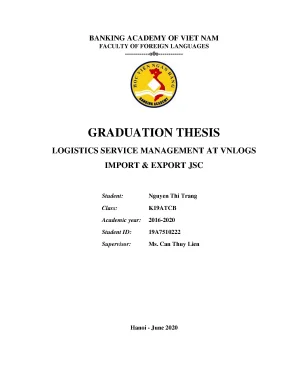
BANKING ACADEMY OF VIET NAM FACULTY OF FOREIGN LANGUAGES ------------o0o------------ GRADUATION THESIS LOGISTICS SERVICE MANAGEMENT AT VNLOGS IMPORT & EXPORT JSC Student: Nguyen Thi Trang Class: K19ATCB Academic year: 2016-2020 Student ID: 19A7510222 Supervisor: Ms. Can Thuy Lien Hanoi - June 2020 DECLARATION I hereby declare that the graduation thesis entitled “Logistics Service Management at Vnlogs Import & Export JSC” submitted to the Banking Academy of Vietnam is a work carried by me under the guidance of MSc. Can Thuy Lien. I further affirm that this work has not been submitted in any other institutes for any purpose.

Hanoi, 06 June, 2020 Signature Trang Nguyen Thi Trang i ACKNOWLEDGEMENT First and foremost, I would like to express my gratitude to my supervisor - MSc. Can Thuy Lien for the thorough guidance, encouragement, and suggestion during the progress I conduct this research. She also helped me in detecting, correcting my mistakes, and directing me to accomplish this thesis properly. I also express my further gratefulness to all of the lecturers of Banking Academy in general and the Faculty of Foreign Languages in particular for the dedicated instructions and supports throughout four past years.

Next, I would like to thank my parents and friends who have supported me a lot in completing this report irrespective of their busy business. They not only supported me in terms of physicality but also mentality by giving me useful advice, sincere encouragements, and much of love. Last but not least, I want to send my thankfulness to Vnlogs Company, especially Mr. Toan for the great contribution in helping me fulfil this research.

ii ABSTRACTS Logistics Service Management at Vnlogs Import & Export JSC Author: Nguyen Thi Trang Keywords: Logistics service management Advisor: Ms. Can Thuy Lien Named as "Logistics Service Management at Vnlogs Import & Export JSC", this graduation thesis explores the actuality of management on logistics service at Vnlogs Import and Export Joint Stock Company, with the ultimate goal of minimizing costs and time on performing services for customers, thus enhancing this company's competitiveness. This research focuses on finding and highlighting serious deficiencies in Vnlogs management for the including sections: international and inland transportation services, customs services, and logistics information systems. The database utilized for this research is the secondary data source provided by Vnlogs, such as customer policies, annual accounting reports, etc.

This source of data is synthesized, selected, and then presented in forms of chart and table to show apparent and precise findings for the readers. Also, the achievements of the company over the years as well as the existing management deficiencies are uncovered and then discussed attentively in the discussion section. It is revealed that one of the weaknesses is the ineffective management strategy which prevented the company from expanding its market size. Therefore, the paper suggests appropriate and practical recommendations to help the company and other stakeholders resolve outstanding issues in the future, further developing both Vnlogs and the domestic logistics sector.

iii TABLE OF CONTENTS DECLARATION. iii TABLE OF CONTENTS .iv LIST OF ABBREVIATIONS.vii LIST OF TABLES .ix LIST OF FIGURES .ix CHAPTER 1 - INTRODUCTION. Background of the Study. Objectives of the Study.

Significance of the Study. Scope and Limitation of the Study. Definition of Terms. 5 CHAPTER 2 - LITERATURE REVIEW.

Theoretical and Conceptual Framework. Theoretical and Conceptual Framework. 11 CHAPTER 3 - RESEARCH METHODOLOGY. Locale of the Study.

Data Gathering Procedure. 14 CHAPTER 4 - THE CURRENT SITUATION OF LOGISTICS SERVICE MANAGEMENT AT VNLOGS FROM 2017-2019. Overview of Logistics Service and Logistics Service Management. Classification of logistics service.

Logistics Service Management. The Current Situation of Logistics Management at Vnlogs from 2017-2019. The International and Inland Transportation Services. Size and Proportion of Revenue from Logistics Services.

The International Markets of Vnlogs. The Using of Transportation Modes. The Customs Service. Types of Customs Service.

Revenue from Each Type of Customs Service. The Logistics Information Systems. Information from Each Party Involved in Logistics System. Information from Each Department within Vnlogs.

Information about Each Step within the Logistics Chain. The Discussions on Vnlogs’s Management of Logistics Service. The International and Inland Transportation Services. The Unstable Growth of Services’ Revenue Proportion.

The Unevenness and Downward Trend in the International Markets. The Disproportion in Using Transportation Modes. The Customs Services. The Unevenness in Income Proportion of Each Customs Service.

The Downward Trend in Income Proportion of Some Customs Services. The Logistics Information Systems. Unqualified Information Technology Facilities. Incomprehensive Information Management Strategy.

43 CHAPTER 5 - SUMMARY OF FINDINGS, CONCLUSION AND RECOMMENDATION. Summary of Findings. Recommendation for the Ministry of Industry and Trade. Recommendation for the Ministry of Transportation.

Recommendation for Vnlogs. Approaching and Enlarging International Markets. Utilizing Transportation Modes Smartly and Flexibly. Upgrading and Enhancing the Technological Facilities.

1 vi LIST OF ABBREVIATIONS Abbreviations Full form A/N Arrival Notice B/L Bill of Lading B2B Business to Business BOT Build – Operate – Transfer C/O Certificate of Origin COVID-19 Corona Virus Disease 2019 CPTPP Progressive Agreement for Trans-Pacific Partnership CSCMP The Council of Supply Chain Management Professionals D/O Delivery Order ERP Enterprise Resource Planning EVFTA EU-Vietnam Free Trade Agreement FCL Full Container Load FTA Free Trade Agreement GSC Global Supply Chain LCL Less than Container Load LIS Logistics Information Systems LIS Logistics Information Systems vii OMS Order Management System SMEs Small and Medium Enterprises TMS Transport Management System TPP Trans-Pacific Partnership Agreement VLA Vietnam Logistics Association VNACCS/VCIS Vietnam Automated Cargo And Port Consolidated System/ Vietnam Customs Intelligence Information System WMS Warehouse Management System WTO World Trade Organisation viii LIST OF TABLES Table 4. 1 - Size and Structure of Vnlogs’ Revenue Breakdown by Service (2017-2019). 2 - Using Inland Transportation Modes at Vnlogs (2017-2019). 3 - Structure of Income from Customs Services of Vnlogs (2017 – 2019).

28 LIST OF FIGURES Figure 4. 1 - Market Structure Breakdown by Region of Vnlogs (2017-2019). 2 - Using International Transportation Modes at Vnlogs (2017-2019). 3 - The Logistics Information Systems.

30 ix CHAPTER 1 - INTRODUCTION 1. Introduction In the context that international economic integration is taking place extensively all over the world, trading activities are no longer limited in the boundaries of a country or a region. Every day, enormous flows of goods and physical products get traded on the global market, creating the vast global supply chains. It is a fact that logistics plays a significant and indispensable role in these chains, bringing about several economic benefits to the countries.

In Vietnam, this industry is considered a young and new business in comparison to other sectors since it has just been established officially in Vietnam for about 27 years from the establishment of the Vietnam Logistics Association (the forerunner of Vietnam Logistics Association - VLA) in 1993. That is the reason why many enterprises operating in this sector do not have much experience and a steady position in the global logistics market. Besides the shortage of regular knowledge and experiences, the high competition is causing several challenges to logistics companies. Since 2014 when Vietnam committed to accept 100% foreign-invested enterprises’ operation in the country, there has been an exclusive integration of foreign logistics groups to the locale.

In addition to the domination of international logistics companies, the increase in the number of new logistics enterprises with different competitive advantages has made the competition more and more intense. To improve and enhance the competitive position of enterprises in the logistics environment, they need to take out specific solutions and directions for themselves. Besides investing in infrastructure, science, technology, and training high- quality staff, it is very crucial to build up an effective logistics management strategy. Vnlogs is a logistics company that is making every effort in managing its logistics service with the goals to gain as much profit as possible.

The company has conducted numerous projects to increase the logistics service management such as applying technological and scientific advances in tracking and monitoring logistics activities, or verifying and developing new services. However, the actual effects generated by those solutions did 1 not reach the company’s expectations. This results from that there are availably weaknesses and shortcomings in Vnlogs’ logistics managing activities. Therefore, "Logistics Service Management at Vnlogs Import and Export Joint Stock Company” is chosen to support the company in managing its logistics service efficiently, thus improving its competitive capacity.

Background of the Study On November 7th, 2006 in Geneva (Switzerland), Vietnam officially became the 150th member of the World Trade Organization (WTO) after fifteen negotiations throughout eleven persistent years. This is an extraordinary step when Vietnam had just completely liberated the South and reunited two parts of the country for about 31 years. Becoming a member of WTO, which is one of three major international economic organizations, was a significant event marking Vietnam’s role and position in the world market. This occasion has paved the way for Vietnam to expand the market, attract investment, and take advantage of the technological revolution to enter the Global Supply Chains.

This somehow lend Vietnam a hand to approach and develop a brand new but extremely significant industry that is the Logistics Sector. Even though being a “baby in the woods” in this industry, Vietnam has been performing its crucial role and position to the global logistics business. Since the global economic integration is taking place dynamically all over the world, a variety of free trade agreements (FTAs) have been signed recently, typically the EU- Vietnam Free Trade Agreement (EVFTA) and the Comprehensive and Progressive Agreement for Trans-Pacific Partnership (CPTPP). Therefore, a large number of great opportunities were brought about to Vietnamese enterprises operating in the logistics industry.

Vietnam's logistics businesses will hold the chance to infiltrate into the global financial services market. Besides, CPTPP also increases the possibility to attract foreign investors and cooperate with developed countries to raise funds and modernize trade foundation, especially the logistics infrastructure. Along with that, the Vietnamese 2 commercial and logistics businesses can also obtain more opportunities to enlarge markets, particularly the EU market. However, opportunities always accompany with challenges.

Most of Vietnamese logistics companies have a small and medium scale, which is the greatest weakness compared with foreign businesses when entering a strict markets such as the US and EU. Recently, under the spreading of Coronavirus disease (COVID-19), an infectious disease caused by a newly discovered coronavirus, the whole world has been suffering a terrible loss. There is not only the loss of lives but also all other aspects like the economy, transportation, tourism, education, trade, etc. Logistics is not an exception since according to a new report of VLA, around 15% of companies have a 50% reduction in revenue compared to 2019, and more than 50% of businesses bear the decrease from 10% - 30% in the number of domestic and international logistics services over the same period last year.

Besides, there are many other macro factors impacts the logistics industry such as the tensions of the US-China trade war. Up to now, Vnlogs has been operating in the logistics field for about 5 years, so the company has experienced some ups and downs throughout that time. However, in the present situation that involves both opportunities and challenges, the company has to face with the high competition level, the unpredictable trade environment along with the interwoven impact of new generation FTAs and trade barriers. Therefore, it is essential to regularly improve its business strategies, particularly in logistics service administration.

This study expects to support the company in dealing with those problems in this critical phase, and help to set up a fitting, comprehensive and practical development strategy to handle those problems, therefore, enhance its position in the global logistics market.

Nội dung được bảo vệ bản quyền — Tải xuống đầy đủ