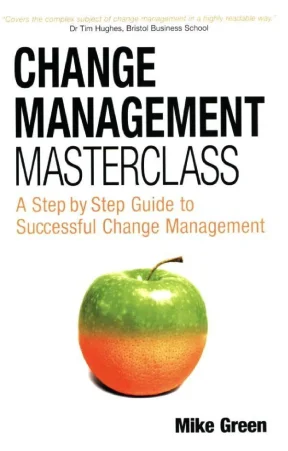
Tổng quan và Phân tích Giáo trình: Change Management Masterclass (Mike Green)
Tổng quan về giáo trình
Change Management Masterclass: A Step by Step Guide to Successful Change Management (ISBN-10: 0 7494 4507 6, ISBN-13: 978 0 7494 4507 2) do Mike Green biên soạn, được xuất bản lần đầu năm 2007 bởi Nhà xuất bản Kogan Page (London và Philadelphia). Trong hệ thống đào tạo đại học và sau đại học, tài liệu này thuộc khối kiến thức chuyên ngành của các chương trình Quản trị Kinh doanh (MBA), Quản trị Nhân sự (HRM), Quản trị Chiến lược và Phát triển Tổ chức (Organizational Development).
Mục tiêu học thuật của giáo trình tập trung vào việc trang bị cho người học:
- Khả năng nhận diện và giải thích các nguyên nhân thúc đẩy sự thay đổi từ môi trường bên trong lẫn bên ngoài tổ chức.
- Phương pháp xây dựng và vận hành khung quy trình quản trị thay đổi tuần tự gồm sáu giai đoạn: Định hướng (Orientation), Tổ chức (Organization), Huy động (Mobilization), Thực thi (Implementation), Chuyển tiếp (Transition), và Tích hợp (Integration).
- Năng lực phân tích và xử lý mối tương tác phức hợp giữa ba yếu tố cốt lõi: Tư duy tiếp cận (Mindset), Văn hóa tổ chức (Culture), và Năng lực lãnh đạo (Leadership).
Cấu trúc giáo trình gồm ba phần với mười chương chuyên đề, kết hợp tám nghiên cứu tình huống thực tế (case studies). Điểm đặc thù của tài liệu là việc tích hợp các mô hình lý thuyết kinh điển của ngành khoa học hành vi và quản trị hệ thống với dữ liệu thực nghiệm từ cả khu vực công lẫn khu vực tư nhân.
Nội dung kiến thức cốt lõi
Các chương/chủ đề chính
Nội dung giáo trình được tổ chức theo cấu trúc logic đi từ nhận thức lý thuyết, phân tích thực nghiệm đến phương pháp can thiệp cụ thể:
-
Phần I: Tiếp cận và Định hướng Thay đổi (Chương 1 – 2):
- Chương 1 (Approaching Change): Phân tích các mô hình tư duy, ẩn dụ tổ chức, các loại hình thay đổi, cấp độ văn hóa, ảnh hưởng của tính cách cá nhân và hiện tượng tư duy tập thể (groupthink).
- Chương 2 (Orientation): Trình bày các động lực thay đổi, công cụ phân tích VMOST (Tầm nhìn, Sứ mệnh, Mục tiêu, Chiến lược, Chiến thuật), phân tích môi trường PESTLE và công thức thay đổi (change formula).
-
Phần II: Các nghiên cứu tình huống tổ chức (Chương 3):
- Cung cấp dữ liệu thực địa từ tám tổ chức với quy mô và lĩnh vực đa dạng: Aster Group (nhà ở xã hội), The Institute of Public Health in Ireland (y tế công cộng), Biogen Idec (dược phẩm), The British Council (tổ chức văn hóa - giáo dục), Chính quyền hạt Aarhus - Đan Mạch (hành chính công), một doanh nghiệp sản xuất đồ gia dụng, một trường tiểu học, và một công ty dịch vụ tài chính.
-
Phần III: Quy trình triển khai và tích hợp (Chương 4 – 10):
- Chương 4 (Organization): Phân tích công cụ Kính vạn hoa thay đổi (Change Kaleidoscope), khung 7S của McKinsey, mạng lưới văn hóa (Cultural Web), đòn bẩy thay đổi của Tichy và phương pháp luận quản lý dự án.
- Chương 5 (Mobilization): Quản lý động lực, phương trình thay đổi (change equation), xử lý lực cản và tương tác với các bên liên quan (stakeholders).
- Chương 6 (Implementation): Kỹ thuật vận hành các thay đổi dự án và hiện thực hóa kế hoạch trên phương diện tác nghiệp.
- Chương 7 (Transition): Quản lý sự chuyển đổi tâm lý của cá nhân, quá trình thích ứng của đội nhóm và các khía cạnh ngầm trong tổ chức (shadow side of organizations).
- Chương 8 (Leading Change): Đặc điểm, nhiệm vụ, vai trò và phong cách lãnh đạo trong tiến trình thay đổi.
- Chương 9 (Integration): Cơ chế neo giữ sự thay đổi vào hệ thống và phát triển mô hình tổ chức học tập (learning organization).
- Chương 10 (Conclusion): Tổng kết các bài học thực tiễn tốt nhất (best practice) rút ra từ các nghiên cứu tình huống.
Kiến thức nền tảng được xây dựng
Giáo trình tổng hợp và đối chiếu các lý thuyết nền tảng trong nghiên cứu tổ chức:
- Mô hình động lực học hệ thống: Tiếp thu lý thuyết ba giai đoạn của Kurt Lewin (1951) gồm Phá băng (Unfreezing), Thực hiện thay đổi (Effecting change), và Đóng băng tái lập (Refreezing), đặt trong bối cảnh hệ thống cân bằng động (dynamic equilibrium).
- Hệ thống bốn ẩn dụ tổ chức của Gareth Morgan (1986):
- Tổ chức như cỗ máy (Machines): Vận hành theo thiết kế duy lý, phân công lao động cụ thể và quản lý theo mục tiêu.
- Tổ chức như hệ thống chính trị (Political systems): Vận hành dựa trên sự phân bổ nguồn lực khan hiếm, liên minh quyền lực và đàm phán lợi ích.
- Tổ chức như sinh vật sống (Organisms): Hệ thống mở (open systems theo Ludwig von Bertalanffy) tương tác và thích nghi liên tục với môi trường bên ngoài.
- Tổ chức như sự biến dịch và chuyển hóa (Flux and transformation): Hệ thống phi tuyến tính, tự tổ chức và trật tự nảy sinh từ sự hỗn loạn.
- Năm trường phái thay đổi theo màu sắc của Léon de Caluwé và Hans Vermaak (2004):
- Xanh dương (Blue): Thay đổi thông qua thiết kế và quản lý dự án duy lý.
- Vàng (Yellow): Thay đổi thông qua giải quyết xung đột và thỏa hiệp lợi ích chính trị.
- Đỏ (Red): Thay đổi thông qua con người, động lực và truyền thông gắn kết.
- Trắng (White): Thay đổi thông qua sự tự xuất hiện (emergence) và gỡ bỏ rào cản hệ thống.
- Xanh lá (Green): Thay đổi thông qua học tập cá nhân, nhóm và học tập kép (double-loop learning theo Chris Argyris).
- Phân loại cấp độ và tính chất thay đổi:
- Ma trận 4 loại hình của Julia Balogun và Veronica Hope Hailey (2004): Thích ứng (Adaptation), Tái cấu trúc (Reconstruction), Tiến hóa (Evolution), và Cách mạng (Revolution).
- 4 cấp độ can thiệp của Doug Stace và Dexter Dunphy (2002): Tinh chỉnh (Fine tuning), Điều chỉnh gia tăng (Incremental adjustment), Chuyển đổi mô-đun (Modular transformation), và Chuyển đổi toàn diện (Corporate transformation).
- Lý thuyết văn hóa và hành vi:
- Ba cấp độ văn hóa của Edgar Schein (1999): Cấu trúc hữu hình (Artefacts), Giá trị tuyên bố (Espoused values), và Giả định căn bản ngầm hiểu (Basic underlying assumptions).
- Bốn loại hình văn hóa của Roger Harrison / Charles Handy (Quyền lực, Vai trò, Nhiệm vụ, Con người) và mô hình ma trận của Rob Goffee & Gareth Jones (2000) dựa trên mức độ Hòa đồng (Sociability) và Đoàn kết (Solidarity).
- Ứng dụng chỉ số phân loại tính cách Myers-Briggs (MBTI) với bốn nhóm hành vi trong bối cảnh thay đổi: Thoughtful realists, Thoughtful innovators, Action-oriented realists, và Action-oriented innovators.
- Tám triệu chứng của hiện tượng Tư duy tập thể (Groupthink) theo phân tích của Irving Janis (1972).
Kỹ năng phát triển
- Kỹ năng phân tích (Analytical Skills): Phân tích các yếu tố vĩ mô qua khung PESTLE (Chính trị, Kinh tế, Xã hội, Công nghệ, Pháp lý, Môi trường); phân tích cấu trúc ngành và ma trận lựa chọn thị trường/sản phẩm; lập bản đồ lợi ích các bên liên quan (stakeholder mapping).
- Kỹ năng kỹ thuật và chẩn đoán (Technical Skills): Ứng dụng các công cụ chẩn đoán tổ chức chuyên sâu như Mô hình 7S của McKinsey, Mạng lưới văn hóa (Cultural Web), Đòn bẩy Tichy và Khung Kính vạn hoa thay đổi (Change Kaleidoscope).
- Năng lực can thiệp thực tế (Practical Competencies): Thiết lập phương trình thay đổi, xây dựng chiến lược truyền thông và giảm thiểu lực cản; điều phối tiến trình chuyển tiếp tâm lý cá nhân và đội nhóm; áp dụng phương pháp học tập tổ chức để duy trì sự thay đổi bền vững.
Phương pháp giảng dạy và học tập
Giáo trình được thiết kế theo phương pháp sư phạm tiếp cận đa chiều, tích hợp giữa truyền tải khung khái niệm chuẩn hóa và giải quyết vấn đề thực tế:
- Phương pháp giảng dạy dựa trên tình huống (Case-Based Learning): Tám nghiên cứu tình huống ở Chương 3 đóng vai trò là cơ sở dữ liệu thực nghiệm xuyên suốt Phần III. Giảng viên có thể sử dụng các tình huống này để yêu cầu người học áp dụng trực tiếp các khung lý thuyết từ Chương 4 đến Chương 9 (như phân tích lực cản tại Aster Group hay quản lý chuyển tiếp tại The British Council).
- Bài tập và công cụ chẩn đoán thực hành: Giáo trình cung cấp các bảng câu hỏi kiểm tra tính cách MBTI áp dụng cho đội ngũ quản lý, danh mục kiểm tra 8 triệu chứng Groupthink của Janis, và bảng phân tích ma trận PESTLE theo đặc thù từng ngành nghề (dịch vụ tài chính, dược phẩm, nhà ở xã hội).
- Phương pháp đánh giá học tập: Đánh giá thông qua năng lực xây dựng kế hoạch chuyển đổi hoàn chỉnh cho một tổ chức giả định hoặc phân tích nguyên nhân thất bại của các dự án thực tế dựa trên số liệu thống kê.
- Hướng dẫn tự học và nghiên cứu: Người học được hướng dẫn tiếp cận tài liệu theo mô hình chu trình khép kín: khảo sát nguyên nhân (Orientation) $\rightarrow$ thiết kế cấu trúc (Organization) $\rightarrow$ tạo lập động lực (Mobilization) $\rightarrow$ thực thi kỹ thuật (Implementation) $\rightarrow$ quản trị con người (Transition) $\rightarrow$ chuẩn hóa hệ thống (Integration).
Điểm nổi bật và cập nhật
- Tích hợp lý thuyết phức hợp và sự tự xuất hiện (Complexity & Emergent Theory): Giáo trình không giới hạn ở mô hình tuyến tính truyền thống mà kết hợp các nghiên cứu hiện đại của Malcolm Higgs & Deborah Rowland (2005) về sự vượt trội của phương pháp tiếp cận tự xuất hiện (emergent approach) so với phương pháp áp đặt từ trên xuống (top-down directed approach) trong các dự án quy mô lớn; cùng phân loại ba dạng phức hợp (động lực học, phát sinh, xã hội) của Adam Kahane (2004).
- Sử dụng dữ liệu nghiên cứu thực nghiệm định lượng: Trích dẫn khảo sát của Gartner chứng minh tỷ lệ 66% dự án chuyển đổi quy mô lớn thất bại trong việc đạt mục tiêu về ngân sách hoặc thời gian, đồng thời chỉ rõ sự khác biệt về trạng thái tâm lý (lo âu, thất vọng, kiệt sức) giữa các dự án thành công và thất bại. Bổ sung báo cáo nghiên cứu của Worrall & Cooper (2006) khảo sát trên 90% nhà quản lý bị ảnh hưởng bởi quá trình cắt giảm chi phí và chuyển dịch văn hóa, dẫn đến suy giảm động lực (51%) và tinh thần làm việc (61%).
- Cân bằng giữa khía cạnh kỹ thuật và khía cạnh cảm xúc: Cung cấp mô hình lãnh đạo chuyển đổi tích hợp ba trục: Kết quả đầu ra (Outputs & Outcomes), Quyền lực và Lợi ích (Stakeholders & Interests), Cảm xúc và Văn hóa (Emotions & Culture).
Đối tượng sử dụng giáo trình
- Bậc đào tạo đại học và sau đại học:
- Học viên cao học ngành Quản trị Kinh doanh (MBA), Quản trị Nhân lực, Quản lý Công.
- Sinh viên năm thứ ba và năm cuối khối ngành Kinh tế, Quản trị, Khoa học Xã hội và Hành vi.
- Yêu cầu kiến thức tiên quyết (Prerequisites): Người học cần có kiến thức nền tảng về Quản trị học đại cương (Principles of Management), Hành vi tổ chức (Organizational Behavior), và Quản trị chiến lược (Strategic Management).
- Ứng dụng cho giảng viên: Sử dụng làm giáo trình chính hoặc tài liệu tham khảo chuyên đề cho các học phần Quản trị sự thay đổi (Change Management), Lãnh đạo tổ chức (Organizational Leadership), và Tư vấn quản trị (Management Consulting).
- Tham khảo thực hành: Các chuyên viên phát triển tổ chức (OD), giám đốc nhân sự (HRD) và nhà quản lý dự án chuyển đổi số / tái cấu trúc doanh nghiệp.
Câu hỏi thường gặp
1. Giáo trình này phù hợp với đối tượng học tập nào?
Tài liệu được biên soạn cho sinh viên năm cuối, học viên MBA, nghiên cứu sinh chuyên ngành quản trị và các nhà quản lý doanh nghiệp cần nắm vững khung lý thuyết và phương pháp triển khai thay đổi tổ chức một cách có hệ thống.
2. Người học cần chuẩn bị kiến thức nền tảng gì trước khi tiếp cận giáo trình?
Người học cần nắm được các nguyên lý cơ bản về cấu trúc tổ chức, lý thuyết quản trị đại cương, các khái niệm chiến lược kinh doanh cơ bản (VMOST, PESTLE) và các chỉ số hành vi tổ chức căn bản.
3. Giáo trình này có điểm gì khác biệt so với các tài liệu quản trị thay đổi khác?
Tài liệu phân định rõ sự khác biệt giữa hai tiến trình song song: quản trị nhiệm vụ kỹ thuật (task processes) và quản trị chuyển đổi tâm lý con người (people/emotional processes). Đồng thời, sách đối chiếu có hệ thống các trường phái lý thuyết (Lewin, Morgan, de Caluwé, Schein, Janis) và kiểm chứng trực tiếp qua tám tình huống tổ chức đa dạng.
4. Phương pháp tự học giáo trình này như thế nào để đạt hiệu quả cao nhất?
Người học nên tiếp cận Phần I để nắm vững hệ thống khái niệm và các mô hình chẩn đoán; sau đó đọc Phần II để nhận diện bối cảnh thực tế của 8 tổ chức; cuối cùng nghiên cứu Phần III để áp dụng các công cụ can thiệp chuyên sâu vào từng trường hợp cụ thể.
5. Giáo trình cung cấp những công cụ và khung phân tích thực hành nào?
Sách cung cấp các mô hình chẩn đoán gồm: Khung 4 ẩn dụ tổ chức (Morgan), Mô hình 5 cách tiếp cận màu sắc (de Caluwé & Vermaak), Khung phân tích văn hóa 3 cấp độ (Schein), Mô hình 7S (McKinsey), Mạng lưới văn hóa (Cultural Web), Kính vạn hoa thay đổi (Change Kaleidoscope), Chỉ số phân loại tính cách MBTI và Bảng chẩn đoán triệu chứng Tư duy tập thể (Groupthink).
Kết luận
Giáo trình Change Management Masterclass của Mike Green hệ thống hóa toàn diện các chiều kích học thuật và thực tiễn của tiến trình thay đổi tổ chức. Thông qua việc kết hợp giữa các lý thuyết cấu trúc, tâm lý học hành vi và phương pháp quản trị dự án, tài liệu cung cấp một lộ trình học tập logic gồm sáu giai đoạn từ Định hướng đến Tích hợp.
Tài liệu học thuật liên quan trong giáo trình:
- Argyris, C. (1990) Overcoming Organizational Defenses.
- Balogun, J. and Hope Hailey, V. (2004) Exploring Strategic Change.
- de Caluwé, L. and Vermaak, H. (2004) Change Paradigms.
- Janis, I. (1972) Victims of Groupthink.
- Lewin, K. (1951) Field Theory in Social Science.
- Morgan, G. (1986) Images of Organization.
- Schein, E. (1999) The Corporate Culture Survival Guide.
- Stace, D. and Dunphy, D. (2002) Beyond the Boundaries: Leading Strategy Change in the Collaborative Enterprise.