Tổng quan về giáo trình
Giáo trình thuộc lĩnh vực Ngôn ngữ học thực hành và Nghiên cứu văn hóa Ethiopia (Amharic Language and Cultural Studies), được thiết kế cho chương trình đào tạo chuyên ngữ bậc đại học, các khóa học nghiên cứu khu vực học (African Studies), cũng như chương trình huấn luyện tiền công tác thực địa (Pre-Service Training - PST). Tài liệu định vị ở giai đoạn trung cấp (Intermediate Level), tiếp nối các khối kiến thức cơ bản về ngữ âm và cấu trúc câu sơ cấp để phát triển năng lực giao tiếp thực tế và phân tích ngôn ngữ học ứng dụng.
Mục tiêu học tập (Learning Outcomes) của giáo trình tập trung vào việc trang bị cho người học khả năng:
- Sử dụng chính xác các cấu trúc ngữ pháp phức hợp trong tiếng Amharic, bao gồm thể cầu khiến (Jussive), thể tiếp diễn (Continuous), thì hiện tại/quá khứ hoàn thành (Present/Past Perfect), cấu trúc Gerundive và hệ thống bổ ngữ trực tiếp/gián tiếp gắn trong động từ.
- Thực hiện các giao thức giao tiếp tình huống đa dạng: thiết lập và từ chối lịch hẹn, giao dịch mua bán, xử lý tình huống quấy rối, thuật lại tiến trình sự kiện và trao đổi thông tin y tế tại cơ sở khám chữa bệnh.
- Thấu hiểu và thích ứng với các chuẩn mực văn hóa bản địa như lịch Julian Ethiopia, phong tục trang phục truyền thống, hệ thống thương mại khách quen (
Dämbäña), và các quy ước phi ngôn ngữ.
Cấu trúc giáo trình vận hành theo mô hình tích hợp kỹ năng thực hành ngôn ngữ và tri thức văn hóa xã hội. Mỗi bài học (Unit) được tổ chức nhất quán gồm: Mục tiêu học tập (Learning Objectives), Hội thoại mẫu (Dialogs), Bảng từ vựng chuyên đề (Vocabulary), Điểm ngữ pháp trọng tâm (Grammar Points) kèm bảng biến hình hình thái học, Ghi chú văn hóa (Cultural Notes), Bài tập củng cố (Practice), Hoạt động ứng dụng thực tế (Application), và Luyện đọc văn tự Ge'ez (Script Reading). Điểm đặc sắc của giáo trình là sự song hành giữa văn tự Ge'ez truyền thống và hệ thống phiên âm ký tự Latinh chuẩn xác, giúp người học vừa nắm vững cấu trúc hình thái học Semit, vừa rèn luyện phản xạ phát âm chuẩn xác trong ngữ cảnh giao tiếp bản địa.
Nội dung kiến thức cốt lõi
Các chương/chủ đề chính
Nội dung trích xuất từ giáo trình bao gồm 6 đơn vị bài học chuyên đề (từ Unit 10 đến Unit 15):
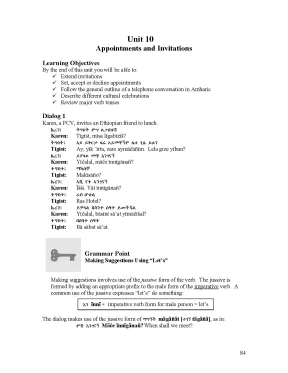
Unit 10: Appointments and Invitations (Thiết lập lịch hẹn và Lời mời)
- Unit 10: Appointments and Invitations: Cung cấp kiến thức về cách mở lời mời, đồng ý hoặc từ chối lịch hẹn thông qua các hội thoại giữa các nhân vật (Karen và Tigist, Gebre và Ryan, Solomon và Mark). Trọng tâm ngữ pháp là thể Jussive tạo lời đề nghị "Let's" với tiền tố
ïnnï- (ví dụ: ïnnïbïla - cùng ăn, ïnnït'ät'a - cùng uống, ïnnïhid - cùng đi) và thể cầu khiến "May I / Shall I / Let me" với tiền tố lï- (như Lïgabïzïš? - Tôi có thể mời bạn không?). Bài học phân tích động từ mämäčät [tämäčä] (thích hợp/thuận tiện) với bảng chia khẳng định/phủ định trên các ngôi, cấu trúc thì hoàn thành (Present/Past Perfect) kết hợp Gerundive với trợ động từ -al hoặc näbär, cùng các quy ước giao tiếp qua điện thoại (Man lïbäl?, Sïlku täyïzoal).
- Unit 11: Dealing with Harassment: Xây dựng năng lực phản hồi trước các hành vi quấy rối lời nói và phi ngôn ngữ. Nội dung cung cấp mẫu câu từ chối dứt khoát (
Ay! Alfälïgïm, Guadäña alläñ, Balätïdar näñ, Zor bäl!), phân tích ngữ pháp thức mệnh lệnh phủ định (Negative Imperatives) với tiền tố atï- (như atïnka / atïnki - đừng chạm vào), và giải thích các quy tắc an toàn cá nhân cùng ý nghĩa ngôn ngữ cử chỉ tại Ethiopia.
- Unit 12: Telling a Story: Phát triển kỹ năng tự sự thông qua việc chia động từ bất quy tắc
mähon [honä] (thì quá khứ: näbärku, alnäbärkum), các văn bản đọc về nhân vật nổi tiếng (Michael Jackson, Pelé), mệnh đề thời gian với tiền tố sï- (như siadïg - khi lớn lên, sïmäläs - khi quay lại), thì quá khứ/hiện tại tiếp diễn với tiền tố ïyä- (ïyätat'äbku näw, ïyätäč'awätu näbär), cấu trúc Gerundive đơn diễn tả hành động liên tiếp (Suuk' hedo ïskripto gäza), và quy tắc gắn tiếp vị ngữ tân ngữ trực tiếp xác định (-w, -t, -un, -n) trên động từ quá khứ và thì chưa hoàn thành phức hợp (Compound Imperfect).
- Unit 13: Shopping II: Mở rộng vốn từ vựng trang phục (
šämiz, surri, k'ämis), phụ kiện, màu sắc (aränguade, sämayawi, k'äy), và tính từ miêu tả kích cỡ, chất liệu. Phân tích ngữ pháp động từ hóa tính từ so sánh (yïtälïk'al, yïräzïmal, yansal, yat'ïral), cấu trúc bổ ngữ gián tiếp chèn trong động từ (Infix lï- + đại từ nhân xưng, như ïgäzalïšalähu, yïsäralaččïhual), văn hóa thương mại Dämbäña (hệ thống khách quen) và phân loại trang phục truyền thống (yabäša k'ämis, nät'älla, gabbi, č'ïč'ira, dulla).
- Unit 14: Months, Seasons, and the Weather: Khái quát hệ thống lịch Julian Ethiopia (12 tháng 30 ngày và tháng thứ 13
P'agume có 5-6 ngày, lệch 7-8 năm so với lịch Gregorian), 4 mùa (S'ädäy, Bälg, Bäga, Kïrämt), các ngày lễ quốc gia (Addis Amät, Mäsk'äl, Gänna, T'imkät, Fasika, Gïnbot haaya), từ vựng và động từ miêu tả thời tiết (yïmok'al, yïbärdal, yïzänbal), cùng trạng từ chỉ chu kỳ thời gian với tiền tố bäyä- (bäyäk'änu, bäyäsamïntu).
- Unit 15: Personal Health and Wellbeing: Cung cấp thuật ngữ giải phẫu cơ thể người, bệnh lý phổ biến (
wäba - sốt rét, täsïbo - thương hàn, samba näkärsa - lao phổi, č'äguara - đau dạ dày), triệu chứng (tïkusat, ras mïtat, täk'ïmat'), cấu trúc diễn đạt cảm giác đau ốm khách quan (yamäñal - tôi bị đau/ốm, yïwägañal - đau nhói), và các mẫu câu tương tác giữa bác sĩ (Hakim) và bệnh nhân (Takami) tại trạm y tế (t'ena t'abiya).
Logic phát triển của giáo trình đi từ các giao thức tương tác xã hội trực tiếp, mở rộng sang năng lực xây dựng cấu trúc văn bản tự sự phức tạp, tiếp tục đi sâu vào các khía cạnh định lượng/thương mại, hệ thống thời gian - tự nhiên, và kết thúc bằng việc giải quyết các tình huống khẩn cấp liên quan đến sức khỏe thể chất.
Kiến thức nền tảng được xây dựng
- Lý thuyết hình thái học động từ Semit (Semitic Verbal Morphology): Giáo trình xây dựng nền tảng phân tích cấu trúc gốc động từ (verb root/stem), các phụ tố phái sinh (derivational affixes), và hiện tượng biến đổi ngữ âm vòm họng hóa (Palatalization) xảy ra ở ngôi thứ nhất số ít và ngôi thứ hai giống cái (ví dụ:
hed chuyển thành heje, sämt chuyển thành sämïčč-).
- Nguyên lý cấu trúc Gerundive và Thì phức hợp: Thiết lập nguyên tắc liên kết mệnh đề thông qua dạng thức Gerundive để biểu thị các hành động diễn ra liên tiếp trong quá khứ hoặc tương lai mà không cần dùng liên từ nối đơn thuần.
- Hệ thống đại từ và bổ ngữ gắn kết (Pronominal Affixation): Xác lập cơ chế tích hợp dấu hiệu chủ ngữ, tân ngữ trực tiếp (Direct Object Marker) và tân ngữ gián tiếp (Indirect Object Marker) trực tiếp vào trong hình thái động từ.
- Khung tri thức văn hóa xã hội Ethiopia: Cung cấp mô hình phân tích cấu trúc xã hội truyền thống thông qua hệ thống lịch pháp Julian, các nghi lễ vòng đời (
lïdät - sinh nhật, krïstïna - rửa tội, särg - đám cưới, k'äbïr - tang lễ), và các quy tắc ứng xử cộng đồng.
Kỹ năng phát triển
- Kỹ năng ngôn ngữ kỹ thuật (Technical Skills): Đọc và viết lưu loát hệ thống ký tự Ge'ez; phân tích cú pháp và biến hình chính xác các bảng chia động từ theo 10 ngôi đại từ nhân xưng; kiểm soát chính xác sự hòa kết giữa giống ngữ pháp (đực/cái) và số ngữ pháp (ít/nhiều).
- Kỹ năng phân tích ngữ cảnh (Analytical Skills): Nhận diện sắc thái biểu cảm và mức độ trang trọng (formal vs. informal) trong giao tiếp; phân tích các yếu tố tiền giả định trong cấu trúc từ chối lịch sự hoặc phản hồi y tế.
- Năng lực thực hành chuyên môn (Practical Competencies): Khả năng vận hành các cuộc hội thoại chức năng trong đời sống (hỏi đường, mua sắm, trả giá, gọi điện thoại); năng lực sơ cứu ngôn ngữ khi làm việc tại cơ sở y tế địa phương; khả năng tự bảo vệ và thiết lập ranh giới an toàn cá nhân trong môi trường đa văn hóa.
Phương pháp giảng dạy và học tập
Giáo trình áp dụng phương pháp Giảng dạy Ngôn ngữ Giao tiếp (Communicative Language Teaching - CLT) kết hợp chặt chẽ với phương pháp Phân tích Ngữ pháp - Cấu trúc (Grammar-Translation & Structural Approach). Cách tiếp cận này bảo đảm người học vừa nắm chắc quy luật biến hình từ vựng - ngữ pháp trừu tượng, vừa có thể vận dụng ngay vào các tình huống thực địa cụ thể.
Mô hình bài học:
[Mục tiêu bài học] ➔ [Hội thoại mẫu & Từ vựng] ➔ [Bảng ngữ pháp & Biến hình] ➔ [Ghi chú văn hóa] ➔ [Bài tập tình huống / Đóng vai]
- Bài tập và tình huống thực hành (Practical Exercises & Case Studies):
- Bài tập biến đổi cấu trúc: Chuyển đổi câu mệnh lệnh khẳng định sang thể Jussive hoặc thể mệnh lệnh phủ định (
atï-); chuyển đổi câu từ thì hiện tại sang hiện tại hoàn thành hoặc quá khứ hoàn thành.
- Bài tập điền khuyết và chia động từ: Hoàn thiện bảng biến hình thời gian (
madäg), điền dạng đúng của động từ trong ngoặc theo ngữ cảnh thời gian xác định.
- Bài tập dịch thuật hai chiều (Amharic - English): Dịch các câu biểu thị tân ngữ xác định, các biểu thức chỉ thời gian và trạng thái sức khỏe.
- Bài tập miêu tả quy trình: Phân tích tranh chuỗi hành động và sử dụng liên từ chỉ thứ tự thời gian (
Bämäjämäriya -> Käziya -> Kät'ïlo -> Bämäč'äräšam) để miêu tả quy trình pha cà phê truyền thống.
- Phương pháp đánh giá (Assessment Methods):
- Đánh giá định hình (Formative Assessment) qua các bài tập tình huống đóng vai (Role-play Skits): Xây dựng kịch bản từ chối lời mời của cấp trên, gọi điện thoại đặt lịch họp hội thảo môi trường, hoặc xử lý tình huống bị quấy rối trên đường phố.
- Đánh giá kỹ năng phát âm và đọc hiểu văn tự Ge'ez (Script Reading and Pronouncing) ở cuối mỗi bài học.
- Tương tác trực tiếp với Người điều phối Ngôn ngữ và Văn hóa (Language and Cultural Facilitator - LCF) để kiểm tra độ chuẩn xác ngữ âm và tính phù hợp văn hóa.
- Hướng dẫn tự học (Self-study Guidelines):
- Học viên cần học thuộc các bảng tiếp vĩ ngữ chỉ ngôi và tân ngữ trước khi thực hành ghép câu.
- Thường xuyên che cột từ vựng để tự kiểm tra khả năng ghi nhớ từ ngữ chỉ ngày tháng, màu sắc, bệnh lý.
- Thực hành đọc to các đoạn hội thoại mẫu nhiều lần nhằm tạo phản xạ ngữ điệu tự nhiên.
Điểm nổi bật và cập nhật
- Tính thực tế và tính bản địa hóa cao: Giáo trình phản ánh chân thực đời sống xã hội Ethiopia đương đại. Không chỉ cung cấp các đoạn hội thoại mẫu mang tính học thuật, tài liệu đưa vào các thành tố văn hóa đặc thù như hệ thống quan hệ khách quen
Dämbäña, phong tục uống cà phê/trà (šay/bunna), văn hóa hẹn hò truyền thống (yäkänfär wädajïnät), vai trò của người trung gian hôn nhân (šïmagïle), và các quy tắc kiêng kỵ xã hội.
- Tích hợp các chủ đề an toàn và xã hội đặc thù: Điểm khác biệt lớn của tài liệu là việc dành trọn vẹn Unit 11 để hướng dẫn người học đối phó với quấy rối tình dục và nhận diện ngôn ngữ cơ thể mang tính đe dọa hoặc bất kính (như cắn môi dưới kèm gật đầu, chỉ ngón tay, cho tay vào túi quần khi nói chuyện với người lớn tuổi).
- Hệ thống hóa kiến thức ngôn ngữ học Semit: Bảng biểu ngữ pháp được trình bày khoa học, phân tích rõ ràng cấu tạo hình thái của động từ từ dạng nguyên mẫu (Infinitive), dạng mệnh lệnh (Imperative), căn tố Gerundive đến các dạng thức kết hợp với trợ động từ và trung tố bổ ngữ.
- Ứng dụng liên ngành: Nội dung kết nối trực tiếp với công tác phát triển cộng đồng, y tế công cộng (Unit 15 với hệ thống phân loại bệnh truyền nhiễm như sốt rét, thương hàn, lao, HIV/AIDS) và bảo tồn văn hóa (Unit 13 với bảng phân loại trang phục truyền thống của các sắc tộc Amhara, Tigray, Oromo, Harar, Somali, Afar, Hamer).
Đối tượng sử dụng giáo trình
| Nhóm đối tượng |
Yêu cầu / Mục đích sử dụng |
Điều kiện tiên quyết (Prerequisites) |
| Sinh viên đại học & cao học |
Sinh viên chuyên ngành Ngôn ngữ học, Nghiên cứu Châu Phi, Quan hệ Quốc tế, Nhân học. Dùng làm tài liệu học tập chính quy cho các học phần tiếng Amharic trung cấp. |
Hoàn thành khối kiến thức sơ cấp (Unit 1 đến Unit 9); nhận diện được bảng chữ cái Ge'ez cơ bản và cấu trúc câu đơn giản. |
| Chuyên gia thực địa & Tình nguyện viên |
Tình nguyện viên Peace Corps, nhân viên các tổ chức phi chính phủ (NGO), cán bộ ngoại giao chuẩn bị công tác dài hạn tại Ethiopia. |
Cần tài liệu thực hành giao tiếp thực tế và cẩm nang ứng xử văn hóa, an toàn cá nhân. |
| Giảng viên chuyên ngữ |
Giảng viên sử dụng để thiết kế bài giảng, xây dựng bài tập tình huống giao tiếp và kiểm tra đánh giá năng lực ngôn ngữ theo khung chuẩn giao tiếp. |
Nắm vững ngữ pháp đối chiếu Amharic - Anh/Việt và phương pháp sư phạm tương tác. |
| Người tự học và nghiên cứu |
Người học tự do có nhu cầu nghiên cứu ngôn ngữ Semit hoặc văn hóa Đông Phi. |
Tự học dựa trên hệ thống phiên âm Latinh đối chiếu song song với chữ viết Ge'ez và bảng quy tắc ngữ pháp. |
Câu hỏi thường gặp
1. Giáo trình này phù hợp với trình độ nào?
Giáo trình được biên soạn cho trình độ trung cấp (Intermediate Level), tương ứng với người học đã vượt qua giai đoạn làm quen căn bản và cần phát triển toàn diện kỹ năng diễn đạt ngữ pháp phức hợp cũng như năng lực giao tiếp xã hội chuyên sâu.
2. Cần chuẩn bị kiến thức nền tảng nào trước khi học các bài học này?
Người học cần nắm vững hệ thống chữ viết Ge'ez (Fidel), các quy tắc phát âm cơ bản, đại từ nhân xưng độc lập, và cấu trúc câu đơn giản ở thì hiện tại/quá khứ cơ bản đã được giảng dạy trong các Unit từ 1 đến 9.
3. Điểm khác biệt căn bản giữa giáo trình này và các tài liệu học tiếng Amharic thông thường là gì?
Tài liệu không dạy ngôn ngữ tách rời khỏi ngữ cảnh thực tế mà lồng ghép trực tiếp các yếu tố an toàn thực địa, giao tiếp y tế khẩn cấp, các ghi chú văn hóa chiều sâu (như hệ thống lịch pháp 13 tháng, văn hóa tặng quà, cấu trúc thương mại truyền thống), đồng thời cung cấp các bài tập ứng dụng tình huống cụ thể thay vì chỉ dừng lại ở bài tập ngữ pháp cơ học.
4. Làm thế nào để ghi nhớ và sử dụng chính xác các tiếp vĩ ngữ và trung tố tân ngữ?
Người học nên dựa vào các bảng tổng hợp hình thái học trong giáo trình (như bảng chia động từ mägzat, mähed), học theo từng nhóm ngôi có quy tắc tương đồng, chú ý các trường hợp biến âm vòm họng hóa (palatalization) ở ngôi thứ nhất và ngôi thứ hai giống cái, sau đó thực hành đặt câu theo mẫu hội thoại có sẵn.
5. Giáo trình có cung cấp tài liệu bổ trợ nào không?
Giáo trình có hệ thống Phụ lục Ngữ pháp (Grammar Appendix) đi kèm để giải thích chi tiết cấu tạo thể Gerundive và biến hình tân ngữ nâng cao, danh mục từ vựng mở rộng (Supplementary Vocabulary), các hình ảnh trực quan mô tả quy trình thực tế và hệ thống bài đọc chính tả chữ Ge'ez ở cuối mỗi bài.
Kết luận
Giáo trình cung cấp một hệ thống học liệu hoàn chỉnh, chuẩn xác và mang tính ứng dụng cao về tiếng Amharic và văn hóa Ethiopia. Thông qua 6 bài học chuyên đề từ Unit 10 đến Unit 15, người học được dẫn dắt qua một lộ trình học tập khoa học: làm chủ các hiện tượng ngữ pháp Semit đặc trưng (Jussive, Gerundive, Infix Object Markers), mở rộng vốn từ vựng chức năng đa lĩnh vực (thương mại, thời gian, y tế cộng đồng), và nâng cao khả năng thích ứng văn hóa thực địa. Lộ trình học tập đề xuất là hoàn thành tuần tự từng bài học, kết hợp chặt chẽ giữa việc thực hành chia động từ trên bảng ngữ pháp, luyện đọc văn tự Ge'ez và tham gia các hoạt động đóng vai tình huống giao tiếp thực tế.