Vật liệu kỹ thuật: Giới thiệu về Tính chất và Ứng dụng - Michael F. Ashby & David R. Jones

Trường đại học

University of Cambridge

Chuyên ngành

Vật liệu kỹ thuật

Người đăng

Ẩn danh

Thể loại

Sách giáo khoa

1996

323
0
0

Phí lưu trữ

75 Point

Tóm tắt

I. Tổng quan về cuốn sách Engineering Materials 2nd Edition

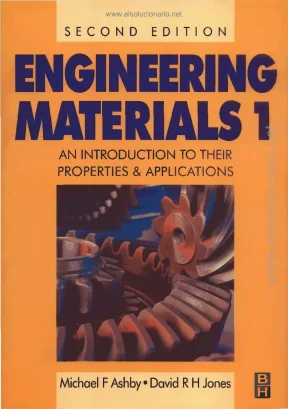
Engineering Materials 1: An Introduction to their Properties and Applications là giáo trình nổi tiếng do Michael F. Ashby và David R. Jones biên soạn. Cả hai tác giả công tác tại Khoa Kỹ thuật, Đại học Cambridge, Vương quốc Anh. Ấn bản đầu tiên xuất bản năm 1980, bản thứ hai ra mắt năm 1996 và được tái bản nhiều lần đến năm 2002. Cuốn sách do nhà xuất bản Butterworth-Heinemann, thuộc tập đoàn Elsevier Science, phát hành. Đây là tài liệu giảng dạy chuẩn mực cho sinh viên kỹ thuật trên toàn thế giới. Nội dung giới thiệu toàn diện về tính chất và ứng dụng của các loại vật liệu kỹ thuật. Sách trình bày mối quan hệ giữa cấu trúc nguyên tử, tính chất cơ học, nhiệt, điện và ứng dụng thực tế. Phương pháp tiếp cận của Ashby nhấn mạnh việc chọn vật liệu phù hợp cho từng yêu cầu thiết kế cụ thể. Cuốn sách thuộc hệ thống giáo trình Engineering Materials gồm ba tập, cung cấp kiến thức từ cơ bản đến nâng cao về khoa học vật liệu.

1.1. Giới thiệu về tác giả và lịch sử xuất bản

Michael F. Ashby là giáo sư danh tiếng tại Đại học Cambridge, nổi tiếng với phương pháp chọn vật liệu trong thiết kế cơ khí. David R. Jones đồng tác giả, mang đến chuyên sâu về tính chất vật liệu kỹ thuật. Ấn bản đầu tiên năm 1980 được đón nhận rộng rãi trong giới học thuật. Bản thứ hai năm 1996 cập nhật nội dung, bổ sung ví dụ thực tiễn và dữ liệu mới. Sách được tái bản liên tục cho thấy giá trị bền vững qua thời gian. Nhà xuất bản Butterworth-Heinemann thuộc Elsevier phát hành trên toàn cầu.

1.2. Cấu trúc và phạm vi nội dung sách

Cuốn sách được tổ chức theo logic từ cơ bản đến ứng dụng. Phần đầu giới thiệu tổng quan về kỹ thuật vật liệu và tính chất cơ bản. Các chương tiếp theo phân tích chi tiết về liên kết nguyên tử, cấu trúc tinh thể và khuyết tật. Nội dung bao gồm tính chất cơ học, nhiệt, điện từ và ăn mòn. Sách đi kèm minh họa phong phú, biểu đồ Ashby và bài tập thực hành. Phạm vi涵盖 kim loại, polymer, gốm và composite, phục vụ đa ngành kỹ thuật.

II. Phân tích nội dung về tính chất vật liệu kỹ thuật

Nội dung cốt lõi của cuốn sách tập trung vào mối quan hệ giữa cấu trúc vi mô và tính chất macro. Liên kết nguyên tử đóng vai trò quyết định tính chất cơ bản của vật liệu. Sách trình bày ba loại liên kết chính: liên kết ion, cộng hóa trị và kim loại. Liên kết cộng hóa trị có tính định hướng cao, như trong cấu trúc kim cương. Liên kết kim loại không có tính định hướng, cho phép ion kim loại sắp xếp mật độ cao. Cuốn sách cũng phân tích ảnh hưởng của giá thành và tính sẵn có đến lựa chọn vật liệu. Chi phí vật liệu chiếm khoảng hai mươi phần trăm tổng nhập khẩu của một quốc gia phát triển. Sắt và thép chiếm phần lớn chi phí này, tiếp theo là gỗ và kim loại màu. Hiểu biết về chuỗi cung ứng và biến động giá giúp kỹ sư đưa ra quyết định sáng suốt.

2.1. Liên kết nguyên tử và cấu trúc vật liệu

Liên kết nguyên tử là yếu tố nền tảng quyết định tính chất vật liệu. Liên kết ion hình thành do tương tác tĩnh điện giữa ion dương và âm. Liên kết cộng hóa trị xảy ra khi electron chia sẻ giữa các nguyên tử, tạo orbital phân tử. Trong kim cương, electron chiếm vùng chỉ về đỉnh tứ diện, tạo liên kết định hướng mạnh mẽ. Liên kết kim loại tạo biển electron tự do di chuyển, giải thích tính dẫn điện cao. Mỗi loại liên kết ảnh hưởng đến cách nguyên tử sắp xếp trong tinh thể và tính chất cơ học.

2.2. Giá thành và tính sẵn có của vật liệu

Giá vật liệu phụ thuộc vào chi phí khai thác, vận chuyển và chế biến nguyên liệu thô. Lạm phát và tăng chi phí năng lượng đẩy giá vật liệu lên theo thời gian. Quặng càng nghèo hàm lượng kim loại, càng cần nhiều máy móc và năng lượng để xử lý. Ví dụ, đồng ngày càng khó chiết xuất từ quặng nghèo hơn. Trong dài hạn, cần xác định vật liệu nào dồi dào và vật liệu nào có nguy cơ khan hiếm. Phụ thuộc vào vật liệu nhập khẩu là rủi ro chiến lược cho nền kinh tế quốc gia.

III. Phương pháp chọn vật liệu trong thiết kế kỹ thuật

Phương pháp chọn vật liệu là trọng tâm triết lý giảng dạy của Ashby. Cuốn sách giới thiệu cách tiếp cận hệ thống dựa trên yêu cầu thiết kế cụ thể. Kỹ sư cần xác định tính chất then chốt: độ bền, độ cứng, nhiệt độ làm việc, khả năng chống ăn mòn. Biểu đồ Ashby là công cụ trực quan so sánh tính chất giữa các nhóm vật liệu. Công cụ này cho phép lọc nhanh ứng viên phù hợp trước khi phân tích chi tiết. Sách nhấn mạnh không có vật liệu hoàn hảo, chỉ có vật liệu phù hợp nhất cho từng ứng dụng. Quy trình chọn vật liệu bao gồm liệt kê ràng buộc, tìm ứng viên và đánh giá thương mại. Yếu tố kinh tế, môi trường và khả năng gia công cũng được xem xét toàn diện. Cách tiếp cận này trang bị cho sinh viên kỹ năng ra quyết định thực tiễn trong nghề nghiệp.

3.1. Tiêu chí lựa chọn vật liệu phù hợp

Tiêu chí chọn vật liệu bao gồm tính chất cơ học, nhiệt, điện và hóa học. Độ bền kéo, độ cứng Young, nhiệt độ nóng chảy là thông số quan trọng hàng đầu. Khả năng chống ăn mòn và chống mài mòn quyết định tuổi thọ sản phẩm. Tính sẵn có và giá thành ảnh hưởng trực tiếp đến tính khả thi kinh tế. Khả năng gia công, hàn và tạo hình cũng là yếu tố cần cân nhắc. Môi trường làm việc khắc nghiệt đòi hỏi vật liệu chịu nhiệt hoặc chống hóa chất đặc biệt.

3.2. Ứng dụng thực tế của phương pháp Ashby

Phương pháp Ashby được áp dụng rộng rãi trong thiết kế công nghiệp và nghiên cứu. Ngành hàng không vũ trụ sử dụng hợp kim nhôm và titan nhờ tỷ số bền trọng lượng cao. Ngành xây dựng ưu tiên bê tông và thép vì chi phí thấp và tính sẵn có. Ngành điện tử chọn đồng và silicon dựa trên tính dẫn điện và bán dẫn. Biểu đồ Ashby giúp so sánh nhanh vật liệu composite với kim loại truyền thống. Phương pháp này cũng hỗ trợ thiết kế bền vững bằng cách đánh giá tác động môi trường.

IV. Kết luận và giá trị của cuốn sách Engineering Materials

Engineering Materials 1 là tài liệu không thể thiếu cho sinh viên và kỹ sư vật liệu. Cuốn sách cung cấp nền tảng lý thuyết vững chắc kết hợp với ứng dụng thực tiễn. Phương pháp tiếp cận từ nguyên tử đến sản phẩm giúp hiểu toàn diện về vật liệu. Hệ thống giáo trình ba tập tạo lộ trình học tập từ cơ bản đến chuyên sâu. Ấn bản thứ hai cập nhật dữ liệu mới, phù hợp với tiêu chuẩn kỹ thuật hiện đại. Cuốn sách được dịch và sử dụng tại nhiều quốc gia trên thế giới. Giá trị của sách nằm ở khả năng trang bị tư duy chọn vật liệu cho kỹ sư. Ngoài Engineering Materials 1, Ashby còn viết Materials Selection in Mechanical Design nổi tiếng. Các tác phẩm liên quan như Engineering Materials 2, 3 mở rộng kiến thức về vật liệu nâng cao. Cuốn sách vẫn là tài liệu tham khảo chuẩn mực sau nhiều thập kỷ xuất bản.

4.1. Ý nghĩa học thuật và thực tiễn của cuốn sách

Cuốn sách đóng góp quan trọng vào nền giáo dục kỹ thuật vật liệu toàn cầu. Phương pháp Ashby trở thành tiêu chuẩn trong giảng dạy và thực hành chọn vật liệu. Nội dung cân bằng giữa lý thuyết nguyên tử và ứng dụng công nghiệp thực tế. Sinh viên tốt nghiệp có khả năng áp dụng kiến thức vào thiết kế sản phẩm ngay. Cuốn sách cũng phục vụ kỹ sư lâu năm cần cập nhật kiến thức vật liệu mới. Giá trị học thuật được kiểm chứng qua hàng triệu bản in và trích dẫn học thuật.

4.2. Hệ thống tài liệu tham khảo liên quan

Engineering Materials 1 nằm trong hệ thống giáo trình phong phú của Ashby và Jones. Engineering Materials 2 tập trung vào tính chất cơ học và thất bại vật liệu nâng cao. Engineering Materials 3 mở rộng về vật liệu polymer, composite và vật liệu chức năng. Ashby viết riêng Materials Selection in Mechanical Design về phương pháp chọn vật liệu. Các cuốn liên quan như Introduction to Dislocations của Hull và Bacon bổ sung kiến thức khuyết tật. Corrosion của Shreir chuyên sâu về ăn mòn và bảo vệ kim loại trong môi trường khắc nghiệt.
21/04/2026

Trích đoạn nội dung tài liệu

net SECOND EDITION 'A' www.net AN INTRODUCTION TO THEIF; PROPERTIES & APPLICATIONS Michael F Ashby. David R H Jones www.net Engineering Materials 1 A n lntroduction to their Properties and Applications www.net Other titles of interest Ashby Materials Selection in Mechanical Design Ashby and Jones Engineering Materials 2 Brydson Plastics Materials, 6th Edition Charles and Crane Selection and Use of Engineering Materials, 2nd Edition Crawford Plastics Engineering, 2nd Edition Hull and Bacon Introduction to Dislocations, 3rd Edition Jones Engineering Materials 3 Neale Tribology Handbook, 2nd Edition Shreir et al. Corrosion, 3rd Edition Smallman and Bishop Metals and Materials Smith The Language of Rubber www.net Engineering Materials 1 An Introduction to their Properties and Applications Second Edition www.net by Michael F. Ashby and David R. Jones Department of Engineering, University of Cambridge, UK U T T E R W O R T H E I N E M A N N OXFORD AMSTERDAM BOSTON LONDON NEW YORK PARIS SAN DIEGO SAN FRANCISCO SINGAPORE SYDNEY TOKYO www.net Butterworth-Heinemann An imprint of Elsevier Science Linacre House, Jordan Hill, Oxford OX2 8DP 225 Wildwood Avenue, Wobum, MA 01801-2041 First published 1980 Second edition 1996 Reprinted 1997, 1998 (twice), 2000,2001,2002 0 1980, 1996, Michael F. Ashby and David R. All rights reserved. The right of Author name to be identified as the author of this work has been asserted in accordance with the Copyright, Designs and Patents Act 1988 www.net No part of this publication may be reproduced in any material form (including photocopying or storing in any medium by electronic means and whether or not transiently or incidentall to some other use of this publication) without the written permission of the copyright holder except in accordance with the provisions of the Copyright, Designs and Patents Act 1988 or under the terms of a licence issued by the Copyright Licensing Agency Ltd, 90 Tottenham Court Road, London, England WIT 4LP. Applications for the copyright holder’s written permission to reproduce any part of this publication should be addressed to the publishers British Library Cataloguingin Publication Data Ashby, Michael E Engineering materials. an introduction to their properties and applications.1’1 ISBN 0 7506 3081 7 Library of Congress Cataloguing in Publication Data Ashby, Michael E Engineering materials. an introduction to their properties and applicationsby Michael F. Ashby and David R.ed of Engineering materials. Includes bibliographical references and index. Engineering materials III.1’1-dc20 CIP For information on all Butterworth-Heinemann publications visit our website at www.com Typeset by Genesis Typesetting, Rochester, Kent Printed and bound in Great Britain by MFG Books Ltd, Bodmin, Comwall www.net General introduction 1. Engineering Materials and their Properties 3 examples of structures and devices showing how we select the right material for the job www. Price and availability 2. The Price and Availability of Materials 15 what governs the prices of engineering materials, how long will supplies last, and how can we make the most of the resources that we have? B. The elastic moduli 3. The Elastic Moduli 27 stress and strain; Hooke’s Law; measuring Young’s modulus; data for design 4. Bonding Between Atoms 36 the types of bonds that hold materials together; why some bonds are stiff and others floppy 5. Packing of Atoms in Solids 45 how atoms are packed in crystals - crystal structures, plane (Miller) indices, direction indices; how atoms are packed in polymers, ceramics and glasses 6 . The Physical Basis of Young’s Modulus 58 how the modulus is governed by bond stiffness and atomic packing; the glass transition temperature in rubbers; designing stiff materials - man-made composites 7. Case Studies of Modulus-limited Design 66 the mirror for a big telescope; a stiff beam of minimum weight; a stiff beam of minimum cost www.net vi Contents C. Yield strength, tensile strength, hardness and ductility 8. The Yield Strength, Tensile Strength, Hardness and Ductility 77 definitions, stress-strain curves (true and nominal), testing methods, data 9. Dislocations and Yielding in Crystals 93 the ideal strength; dislocations (screw and edge) and how they move to give plastic flow 10. Strengthening Methods and Plasticity of Polycrystals 104 solid solution hardening; precipitate and dispersion strengthening; work-hardening; yield in polycrystals 11. Continuum Aspects of Plastic Flow 111 www.net the shear yield strength; plastic instability; the formability of metals and polymers 12. Case Studies in Yield-limited Design 119 materials for springs; a pressure vessel of minimum weight; a pressure vessel of minimum cost; how metals are rolled into sheet D. Fast fracture, toughness and fatigue 13. Fast Fracture and Toughness 131 where the energy comes from for catastrophic crack growth; the condition for fast fracture; data for toughness and fracture toughness 14. Micromechanisms of Fast Fracture 140 ductile tearing, cleavage; composites, alloys - and why structures are more likely to fail in the winter 15. Fatigue Failure 146 fatigue testing, Basquin’s Law, Coffin-Manson Law; crack growth rates for pre-cracked materials; mechanisms of fatigue 16. Case Studies in Fast Fracture and Fatigue Failure 155 fast fracture of an ammonia tank; how to stop a pressure vessel blowing up; is cracked cast iron safe? E. Creep deformation and fracture 17. Creep and Creep Fracture 169 high-temperature behaviour of materials; creep testing and creep curves; consequences of creep; creep damage and creep fracture www.net Contents vii 18. Kinetic Theory of Diffusion 179 Arrhenius's Law; Fick's first law derived from statistical mechanics of thermally activated atoms; how diffusion takes place in solids 19. Mechanisms of Creep, and Creep-resistant Materials 187 metals and ceramics - dislocation creep, diffusion creep; creep in polymers; designing creep-resistant materials 20. The Turbine Blade - A Case Study in Creep-limited Design 197 requirements of a turbine-blade material; nickel-based super-alloys, blade cooling; a new generation of materials? - metal-matrix composites, ceramics, cost effectiveness www. Oxidation and corrosion 21. Oxidation of Materials 211 the driving force for oxidation; rates of oxidation, mechanisms of oxidation; data 22. Case Studies in Dry Oxidation 219 making stainless alloys; protecting turbine blades 23. Wet Corrosion of Materials 225 voltages as driving forces; rates of corrosion; why selective attack is especially dangerous 24. Case Studies in Wet Corrosion 232 how to protect an underground pipeline; materials for a light-weight factory roof; how to make motor-car exhausts last longer G. Friction, abrasion and wear 25. Friction and Wear 241 surfaces in contact; how the laws of friction are explained by the asperity-contact model; coefficients of friction; lubrication; the adhesive and abrasive wear of materials 26. Case Studies in Friction and Wear 250 the design of a journal bearing; materials for skis and sledge runners; 'non-skid' tyres www.net viii Contents Final case study 27. Materials and Energy in Car Design 261 the selection and economics of materials for automobiles Appendix 1 Examples 273 Appendix 2 Aids and Demonstrations 290 Appendix 3 Symbols and Formulae 297 Index 303 www.net General introduction To the student Innovation in engineering often means the clever use of a new material - new to a particular application, but not necessarily (although sometimes) new in the sense of ‘recently developed’. Plastic paper clips and ceramic turbine-blades both represent attempts to do better with polymers and ceramics what had previously been done well with metals. And engineering disasters are frequently caused by the misuse of www. When the plastic tea-spoon buckles as you stir your tea, and when a fleet of aircraft is grounded because cracks have appeared in the tailplane, it is because the engineer who designed them used the wrong materials or did not understand the properties of those used. So it is vital that the professional engineer should know how to select materials which best fit the demands of the design - economic and aesthetic demands, as well as demands of strength and durability. The designer must understand the properties of materials, and their limitations. This book gives a broad introduction to these properties and limitations. It cannot make you a materials expert, but it can teach you how to make a sensible choice of material, how to avoid the mistakes that have led to embarrassment or tragedy in the past, and where to turn for further, more detailed, help. You will notice from the Contents list that the chapters are arranged in groups, each group describing a particular class of properties: the elastic modulus; the fracture toughness; resistance to corrosion; and so forth. Each such group of chapters starts by defining the property, describing how it is measured, and giving a table of data that we use to solve problems involving the selection and use of materials. We then move on to the basic science that underlies each property, and show how we can use this fundamental knowledge to design materials with better properties. Each group ends with a chapter of case studies in which the basic understanding and the data for each property are applied to practical engineering problems involving materials. Each chapter has a list of books for further reuding, ranked so that the more elementary come first. At the end of the book you will find sets of examples; each example is meant to consolidate or develop a particular point covered in the text. Try to do the examples that derive from a particular chapter whilesthis is still fresh in your mind. In this way you will gain confidence that you are on top of the subject. No engineer attempts to learn or remember tables or lists of data for material properties. But you should try to remember the broad orders-of-magnitude of these quantities. All grocers know that ’a kg of apples is about 10 apples’ - they still weigh them, but their knowledge prevents them making silly mistakes which might cost them money. In the same way, an engineer should know that ’most elastic moduli lie between 1 and lo3GN m-2; and are around 102GNmW2 for metals’ - in any real design you need an accurate value, which you can get from suppliers’ specifications; but an order-of- www.net 2 Engineering Materials 1 magnitude knowledge prevents you getting the units wrong, or making other silly, and possibly expensive, mistakes. To help you in this, we have added at the end of the book a list of the important definitions and formulae that you should know, or should be able to derive, and a summary of the orders-of-magnitude of materials properties. To the lecturer This book is a course in Engineering Materials for engineering students with no previous background in the subject. It is designed to link up with the teaching of Design, Mechanics and Structures, and to meet the needs of engineering students in the 1990s for a first materials course, emphasising applications. The text is deliberately concise. Each chapter is designed to cover the content of one 50-minute lecture, twenty-seven in all, and allows time for demonstrations and illustrative slides. A list of the slides, and a description of the demonstrations that we have found appropriate to each lecture, are given in Appendix 2. The text contains sets www.net of worked case studies (Chapters 7, 12, 16, 20, 22, 24, 26 and 27) which apply the material of the preceding block of lectures. There are examples for the student at the end of the book; worked solutions are available separately from the publisher. We have made every effort to keep the mathematical analysis as simple as possible while still retaining the essential physical understanding, and still arriving at results which, although approximate, are useful. But we have avoided mere description: most of the case studies and examples involve analysis, and the use of data, to arrive at numerical solutions to real or postulated problems. This level of analysis, and these data, are of the type that would be used in a preliminary study for the selection of a material or the analysis of a design (or design-failure). It is worth emphasising to students that the next step would be a detailed analysis, using more precise mechanics (from the texts given as 'further reading') and data from the supplier of the material or from in-house testing. Materials data are notoriously variable.

Nội dung được bảo vệ bản quyền — Tải xuống đầy đủ