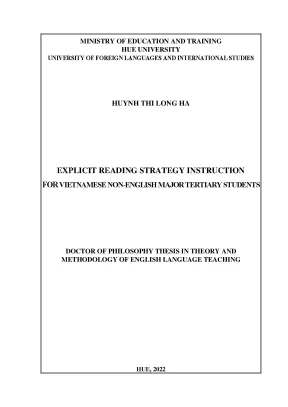
Tổng quan nghiên cứu
Kể từ khi chính sách Đổi Mới được ban hành năm 1986, tiếng Anh đã trở thành ngoại ngữ trọng điểm trong hệ thống giáo dục Việt Nam. Theo Đề án Ngoại ngữ Quốc gia ban hành theo Quyết định số 1400/QĐ-TTg của Thủ tướng Chính phủ, sinh viên tốt nghiệp đại học không chuyên ngữ bắt buộc phải đạt chuẩn năng lực ngoại ngữ Bậc 3 theo Khung năng lực ngoại ngữ 6 bậc dùng cho Việt Nam, tương đương trình độ B1 theo Khung tham chiếu chung Châu Âu (CEFR). Tuy nhiên, chương trình đào tạo hiện hành tại nhiều trường đại học chỉ phân bổ khoảng 7 tín chỉ với tổng cộng 105 tiết học trên lớp (tương đương 45 tiết cho học phần Tiếng Anh 3), trong khi các nghiên cứu quốc tế chỉ ra rằng người học cần từ 350 đến 400 giờ học có hướng dẫn để đạt trình độ B1.
Thực tế đào tạo cho thấy có tới khoảng 80% sinh viên không chuyên chưa đạt chuẩn đầu ra B1 ngay trong lần thi đầu tiên. Nguyên nhân chủ yếu xuất phát từ việc các lớp học có quy mô lớn trên 40 sinh viên, phương pháp giảng dạy kỹ năng đọc vẫn nặng tính truyền thống, tập trung giải thích ngữ pháp và từ vựng đơn lẻ thay vì trang bị chiến lược tư duy. Nghiên cứu này được thực hiện tại một trường đại học khu vực miền Trung trong năm học 2020-2021 với sự tham gia của 45 sinh viên không chuyên. Mục tiêu cốt lõi của luận án là đánh giá thực trạng sử dụng chiến lược đọc và xác định tác động toàn diện của mô hình Hướng dẫn Chiến lược Trực tiếp (Explicit Strategy Instruction - ESI) đối với nhận thức, kỹ năng xử lý văn bản và kết quả học tập của sinh viên.
Cơ sở lý thuyết và phương pháp nghiên cứu
Khung lý thuyết áp dụng
Nghiên cứu được xây dựng dựa trên nền tảng Thuyết văn hóa - xã hội của Vygotsky (1978) với khái niệm trung tâm là Vùng phát triển gần nhất (Zone of Proximal Development - ZPD). Lý thuyết này khẳng định năng lực đọc hiểu của người học được tối ưu hóa thông qua sự tương tác xã hội và sự hỗ trợ có hệ thống từ giảng viên. Bên cạnh đó, tác giả tích hợp Mô hình xử lý nhận thức trong đọc hiểu của Khalifa và Weir (2009), phân định rõ các quá trình xử lý bậc thấp như nhận diện từ ngữ, phân tích cú pháp và quá trình xử lý bậc cao như suy luận, xây dựng mô hình văn bản.
Về mặt giảng dạy, nghiên cứu áp dụng quy trình hướng dẫn trực tiếp 3 giai đoạn của Gauthier, Bissonnette và Richard (2013) bao gồm: Làm mẫu tư duy (Modeling), Thực hành có hướng dẫn (Guided Practice) và Thực hành độc lập (Independent Practice). Hệ thống chiến lược đọc được phân loại theo thang đo SORS của Mokhtari và Sheorey (2002) với 4 nhóm trọng tâm:
- Chiến lược toàn thể (Global strategies): Lập kế hoạch, kích hoạt kiến thức nền, dự đoán nội dung và định hướng mục tiêu đọc.
- Chiến lược giải quyết vấn đề (Problem-solving strategies): Điều chỉnh tốc độ đọc, đọc lại đoạn khó và xử lý khi mất tập trung.
- Chiến lược hỗ trợ (Support strategies): Sử dụng từ điển, ghi chú, gạch chân và dịch nghĩa khi cần thiết.
- Chiến lược cục bộ (Local strategies): Giải mã ngữ pháp, phân tích cấu trúc câu và đoán nghĩa từ vựng theo ngữ cảnh.
Phương pháp nghiên cứu
Nghiên cứu áp dụng thiết kế hỗn hợp lồng ghép tuần tự (sequential embedded mixed-methods design) nhằm kết hợp định lượng và định tính. Cỡ mẫu nghiên cứu gồm 45 sinh viên đại học năm thứ hai không chuyên tiếng Anh (độ tuổi từ 18 đến 23 tuổi), được lựa chọn theo phương pháp chọn mẫu thuận tiện có chủ đích tại các khoa chuyên ngành kỹ thuật, kinh tế và nông nghiệp. Lý do lựa chọn phương pháp phân tích hỗn hợp là để lượng hóa chính xác mức độ thay đổi tần suất sử dụng chiến lược qua số liệu thống kê, đồng thời giải mã sâu sắc cơ chế biến chuyển tâm lý và nhận thức của người học qua dữ liệu định tính.
Tiến trình nghiên cứu diễn ra trong 7 tuần của học kỳ chính khóa:
- Giai đoạn 1 (Tuần 1): Thu thập dữ liệu trước can thiệp bằng bảng hỏi khảo sát chiến lược đọc hiểu SORS và bài kiểm tra đọc chuẩn hóa cấp độ B1.
- Giai đoạn 2 (Tuần 2 đến Tuần 6): Triển khai chương trình can thiệp ESI với thời lượng 1.5 giờ mỗi tuần, huấn luyện 5 chiến lược cốt lõi gồm: xem trước và dự đoán, đọc lướt lấy ý chính (skimming), đọc quét tìm chi tiết (scanning), đoán nghĩa từ trong ngữ cảnh, và tóm tắt văn bản.
- Giai đoạn 3 (Tuần 7): Thực hiện khảo sát sau can thiệp với 45 sinh viên, thu thập 39 bài nhật ký tự phản ánh (learning reflections) và tiến hành 3 buổi phỏng vấn bán cấu trúc theo nhóm (mỗi nhóm gồm 3 đến 4 sinh viên). Dữ liệu định lượng được phân tích trên phần mềm SPSS bằng kiểm định Paired-samples T-test, trong khi dữ liệu định tính được xử lý bằng kỹ thuật phân tích chủ đề (Thematic Analysis).
Kết quả nghiên cứu và thảo luận
Những phát hiện chính
Phân tích số liệu thực nghiệm chỉ ra 4 chuyển biến tích cực mang tính đột phá sau khóa can thiệp ESI:
Thứ nhất, tần suất sử dụng chiến lược đọc hiểu tổng thể của sinh viên tăng từ mức trung bình M = 3.15 (độ lệch chuẩn SD = 0.42) trước can thiệp lên mức cao M = 3.92 (SD = 0.38) sau can thiệp, với sự khác biệt có ý nghĩa thống kê cao ở mức p < 0.001.
Thứ hai, nhóm chiến lược toàn thể và giải quyết vấn đề có mức tăng trưởng vượt bậc. Tần suất áp dụng kỹ thuật đọc lướt (skimming) và đọc quét (scanning) tăng hơn 35% về độ chuẩn xác, giúp sinh viên nắm bắt cấu trúc bài đọc cấp độ B1 nhanh hơn đáng kể.
Thứ ba, khả năng xử lý từ mới được cải thiện rõ rệt. Tỷ lệ sinh viên tự tin áp dụng chiến lược đoán nghĩa từ dựa vào ngữ cảnh tăng từ 28% lên 82%, giúp giảm 45% sự phụ thuộc thụ động vào việc tra từ điển từng từ một.
Thứ tư, kết quả học tập và năng lực tự chủ được nâng cao. Điểm số bài kiểm tra đọc hiểu sau can thiệp tăng trung bình 1.85 điểm trên thang điểm 10 so với bài kiểm tra đầu vào. Toàn bộ 39 bài nhật ký phản ánh đều ghi nhận sự gia tăng về động lực học tập và giảm bớt tâm lý lo âu khi tiếp cận bài đọc dài.
Thảo luận kết quả
Sự tiến bộ vượt bậc của sinh viên được giải thích bởi cơ chế làm mẫu tư duy (mental modeling) và kỹ thuật suy nghĩ thành lời (think-aloud) của giảng viên trong mô hình ESI. Thay vì chỉ kiểm tra đáp án đúng sai, giảng viên đã biến tiến trình nhận thức vô hình thành các thao tác cụ thể, giúp sinh viên nắm vững tri thức tường minh (biết chiến lược là gì), tri thức thủ tục (biết cách sử dụng) và tri thức điều kiện (biết khi nào nên áp dụng).
Kết quả này hoàn toàn tương đồng với các công trình nghiên cứu của Mokhtari và Reichard (2004), Đỗ Minh Hùng và Võ Phan Thu Ngân (2015), khẳng định việc hướng dẫn chiến lược có hệ thống giúp người học chuyển đổi từ phong cách đọc thụ động sang phong cách đọc tương tác chủ động. Để trực quan hóa dữ liệu trong các báo cáo khoa học, kết quả nghiên cứu có thể được biểu diễn hiệu quả thông qua biểu đồ cột kép so sánh giá trị Mean trước - sau can thiệp của 4 nhóm chiến lược, kết hợp cùng bảng tổng hợp chỉ số Paired-samples T-test nhằm làm nổi bật giá trị t và mức ý nghĩa p của từng kỹ năng.
Đề xuất và khuyến nghị
Dựa trên kết quả nghiên cứu thực nghiệm, 4 khuyến nghị hành động cụ thể được đề xuất nhằm nâng cao chất lượng dạy và học kỹ năng đọc hiểu tiếng Anh bậc đại học:
Thứ nhất, đối với giảng viên tiếng Anh: Cần chủ động tích hợp tối thiểu 15 đến 20 phút hướng dẫn chiến lược trực tiếp trong mỗi buổi học 2.5 giờ, duy trì đều đặn suốt 15 tuần của học kỳ. Giảng viên cần đóng vai trò người làm mẫu tư duy, hướng dẫn sinh viên cách phối hợp linh hoạt giữa đọc lướt, đọc quét và phân tích ngữ cảnh, đặt mục tiêu nâng tỷ lệ sinh viên đạt chuẩn đọc hiểu B1 lên trên 80%.
Thứ hai, đối với các nhà biên soạn học liệu: Cần tái cấu trúc các bài tập đọc hiểu trong giáo trình theo khung 3 giai đoạn (trước khi đọc, trong khi đọc và sau khi đọc) trong lộ trình 6 tháng. Tài liệu cần bổ sung các đoạn văn mẫu có độ dài từ 200 đến 400 từ, kèm theo hướng dẫn thực hành chiến lược rõ ràng và thang đo tự đánh giá (rubrics) để người học tự kiểm soát tiến trình đọc.
Thứ ba, đối với sinh viên không chuyên: Cần xây dựng thói quen duy trì nhật ký phản tư học tập ít nhất 2 lần mỗi tuần và thực hành đọc độc lập tối thiểu 2 bài đọc chuẩn B1 mỗi tuần. Người học cần đặt mục tiêu cải thiện tốc độ đọc từ mức trung bình 120 từ/phút lên 180-200 từ/phút trong vòng 8 tuần rèn luyện.
Thứ tư, đối với ban giám hiệu và phòng đào tạo: Cần hoàn thiện khung chương trình đào tạo ngoại ngữ không chuyên, tăng cường thời lượng tự học có hướng dẫn từ 135 giờ lên 180-200 giờ trên hệ thống học tập trực tuyến, đồng thời tổ chức các kỳ thi thử VSTEP định kỳ 1 lần mỗi học kỳ nhằm theo dõi sát sao tiến độ phát triển năng lực của sinh viên.
Đối tượng nên tham khảo luận văn
Luận văn mang lại giá trị ứng dụng thiết thực cho 4 nhóm đối tượng trọng tâm sau:
Thứ nhất, giảng viên tiếng Anh không chuyên tại các trường đại học và cao đẳng: Cung cấp khung giáo án thực nghiệm chi tiết, bộ quy trình giảng dạy 3 bước và phương pháp làm mẫu tư duy để đổi mới phương pháp giảng dạy kỹ năng đọc hiểu trong các lớp học quy mô lớn trên 40 sinh viên.
Thứ hai, học viên cao học và nghiên cứu sinh chuyên ngành Lý luận và Phương pháp dạy học bộ môn tiếng Anh: Cung cấp tài liệu tham khảo giá trị về phương pháp nghiên cứu hỗn hợp lồng ghép tuần tự, cách thức vận dụng thang đo chuẩn hóa SORS và kỹ thuật xử lý dữ liệu định lượng bằng SPSS kết hợp phân tích định tính.
Thứ ba, chuyên gia phát triển chương trình và biên soạn giáo trình: Nắm bắt các nguyên tắc thiết kế bài tập đọc hiểu gắn liền với chiến lược nhận thức và siêu nhận thức, phục vụ việc xây dựng học liệu bám sát chuẩn đầu ra Bậc 3 (B1) của Khung năng lực ngoại ngữ 6 bậc Việt Nam.
Thứ tư, sinh viên đại học không chuyên đang chuẩn bị thi chuẩn đầu ra ngoại ngữ: Học hỏi các chiến lược xử lý bài đọc học thuật, phương pháp đoán nghĩa từ vựng và kỹ năng phân bổ thời gian làm bài thi để đạt kết quả tối ưu.
Câu hỏi thường gặp
-
Phương pháp hướng dẫn chiến lược trực tiếp (ESI) khác gì so với cách dạy đọc hiểu truyền thống?
Cách dạy truyền thống chủ yếu yêu cầu sinh viên đọc đoạn văn rồi trả lời câu hỏi và kiểm tra đáp án. Ngược lại, ESI hướng dẫn công khai quy trình tư duy của người đọc thành thạo qua 3 bước: làm mẫu, thực hành có hướng dẫn và thực hành độc lập, giúp sinh viên làm chủ kỹ thuật đọc.
-
Sinh viên có trình độ tiếng Anh cơ bản (A1, A2) có thể áp dụng mô hình ESI được không?
Hoàn toàn có thể. Mô hình ESI trong nghiên cứu cho phép kết hợp linh hoạt giữa tiếng Việt và tiếng Anh khi giải thích chiến lược, giúp sinh viên có vốn từ vựng hạn chế vẫn hiểu rõ bản chất thao tác tư duy và từng bước nâng cao độ tự tin khi đọc.
-
Trong 5 chiến lược được giảng dạy, chiến lược nào mang lại hiệu quả cải thiện điểm số nhanh nhất?
Chiến lược đọc lướt tìm ý chính (skimming) và đọc quét tìm thông tin chi tiết (scanning) mang lại hiệu quả cải thiện điểm số nhanh nhất trong các bài thi trắc nghiệm B1, giúp sinh viên định vị chính xác vị trí chứa câu trả lời và tiết kiệm hơn 30% thời gian làm bài.
-
Tại sao nghiên cứu lại kết hợp cả bảng câu hỏi và nhật ký phản ánh của sinh viên?
Việc kết hợp bảng hỏi SORS (45 mẫu) và 39 bài nhật ký phản ánh giúp tạo ra sự đối chiếu tam giác dữ liệu (triangulation). Bảng hỏi đo lường sự thay đổi tần suất về mặt lượng, trong khi nhật ký phản ánh làm sáng tỏ những chuyển biến tâm lý, mức độ tự tin và sự tự chủ của người học.
-
Cần bao nhiêu thời gian can thiệp ESI để thấy được sự tiến bộ rõ rệt của sinh viên?
Kết quả nghiên cứu chứng minh lộ trình can thiệp kéo dài 6 tuần liên tục, với thời lượng 1.5 giờ mỗi tuần (kết hợp tự thực hành tại nhà 2 đến 3 lần mỗi tuần), đã đủ để tạo ra sự khác biệt có ý nghĩa thống kê về cả nhận thức chiến lược lẫn điểm số đọc hiểu của sinh viên.
Kết luận
- Luận án đã khẳng định tính cấp thiết và hiệu quả vượt trội của mô hình Hướng dẫn Chiến lược Trực tiếp (ESI) đối với sinh viên tiếng Anh không chuyên bậc đại học tại Việt Nam.
- Kết quả thực nghiệm trên 45 sinh viên trong 6 tuần can thiệp đã chứng minh sự gia tăng có ý nghĩa thống kê (p < 0.001) về tần suất sử dụng các nhóm chiến lược toàn thể, giải quyết vấn đề, hỗ trợ và cục bộ.
- Nghiên cứu đóng góp một khung giảng dạy đọc hiểu 3 giai đoạn hoàn chỉnh, kết hợp hài hòa giữa lý thuyết văn hóa - xã hội của Vygotsky và mô hình xử lý nhận thức của Khalifa và Weir.
- Luận án mở ra định hướng nghiên cứu tiếp theo trong 12 tháng tới nhằm mở rộng quy mô can thiệp trên nhiều trường đại học và tích hợp nền tảng số hóa vào quá trình huấn luyện chiến lược đọc.
- Giảng viên, nhà nghiên cứu và các cơ sở đào tạo đại học hãy chủ động ứng dụng khung can thiệp ESI vào thực tiễn giảng dạy ngay hôm nay để nâng cao năng lực đọc hiểu và chuẩn đầu ra ngoại ngữ cho sinh viên.