Bối cảnh và vấn đề nghiên cứu
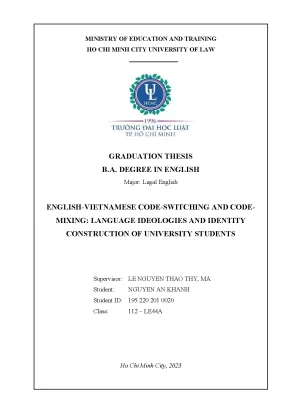
Khóa luận tốt nghiệp cử nhân ngành Ngôn ngữ Anh (chuyên ngành Tiếng Anh Pháp lý) của tác giả Nguyễn An Khánh, dưới sự hướng dẫn của ThS. Lê Nguyễn Thảo Thy tại Trường Đại học Luật Thành phố Hồ Chí Minh (2023), tập trung nghiên cứu hiện tượng chuyển mã (code-switching) và trộn mã (code-mixing) giữa tiếng Anh và tiếng Việt dưới góc độ ý thức hệ ngôn ngữ (language ideologies) và sự kiến tạo bản sắc (identity construction) của sinh viên đại học.
Bối cảnh thực tiễn của nghiên cứu xuất phát từ thực trạng tiếp xúc ngôn ngữ và bối cảnh đa ngữ ngày càng phát triển tại Việt Nam. Ngôn ngữ đóng vai trò cốt lõi trong việc định hình bản thân và bản sắc của người nói song ngữ (Romaine, 1995; Clyne, 2003). Hành vi đan xen ngôn ngữ không chỉ là công cụ giao tiếp đơn thuần mà còn phản ánh thái độ, giá trị xã hội và cách người nói định vị bản thân trong thời kỳ toàn cầu hóa (Hall & Nilep, 2013). Mặc dù các nghiên cứu quốc tế và một số nghiên cứu tại Việt Nam đã tiếp cận hiện tượng chuyển mã (như Pham, 2020; Nguyen, 2018; Nguyen & Le, 2020), các công trình nghiên cứu chuyên sâu về mối liên hệ giữa trộn mã/chuyển mã với việc kiến tạo ý thức hệ và bản sắc ngôn ngữ ở bậc đại học tại Việt Nam vẫn còn hạn chế.
Đề tài xác định 2 câu hỏi nghiên cứu cụ thể:
- Sinh viên đại học song ngữ Anh - Việt điều hướng (navigate) các ý thức hệ ngôn ngữ khác nhau như thế nào?
- Sinh viên đại học kiến tạo bản sắc của họ thông qua việc sử dụng chuyển mã và trộn mã giữa tiếng Anh và tiếng Việt theo những cách thức nào?
Đối tượng nghiên cứu là sinh viên đại học tại Việt Nam có năng lực song ngữ Anh - Việt, sử dụng đồng thời cả hai ngôn ngữ trong sinh hoạt hàng ngày và học tập học thuật. Phạm vi không gian nghiên cứu được thực hiện tại môi trường các trường đại học tại Thành phố Hồ Chí Minh vào năm 2023.
Cơ sở lý thuyết và phương pháp
Khóa luận xây dựng nền tảng lý luận và phương pháp nghiên cứu định tính với các cấu phần cụ thể:
-
Khung lý thuyết và khái niệm:
- Trộn mã (Code-mixing) và Chuyển mã (Code-switching): Dựa trên các định nghĩa của Myers-Scotton (2006) và Gardner-Chloros (2009). Trộn mã là việc lồng ghép từ/cụm từ của một ngôn ngữ vào một câu hoặc phát ngôn của ngôn ngữ khác; chuyển mã là hành vi chuyển đổi qua lại giữa hai hay nhiều ngôn ngữ trong một cuộc hội thoại.
- Ý thức hệ ngôn ngữ (Language Ideology): Tiếp cận theo quan điểm của Norton & Toohey (2011), De Costa (2011), Warriner (2015) và Park (2017, 2021) về niềm tin, thái độ và giá trị định hình quan điểm của con người về vai trò của ngôn ngữ trong xã hội.
- Bản sắc ngôn ngữ (Language Identity): Dựa trên khung lý thuyết của Norton (2013) và Pavlenko (2018), nhìn nhận bản sắc là sự đa chiều, linh hoạt và được kiến tạo qua tương tác xã hội.
- Thuyết Thích ứng Giao tiếp (Communication Accommodation Theory - CAT): Đề xuất bởi Howard Giles (Giles, Coupland, & Coupland, 2010), giải thích cách các cá nhân điều chỉnh phong cách giao tiếp để tìm kiếm sự chấp thuận, giảm khoảng cách xã hội hoặc nhấn mạnh sự khác biệt.
-
Phương pháp nghiên cứu: Nghiên cứu sử dụng phương pháp điều tra tường thuật (Narrative Inquiry) (theo Barkhuizen, Benson, & Chik, 2014; Clandinin & Connelly, 2000; Creswell & Creswell, 2018) nhằm khai thác các trải nghiệm chủ quan và câu chuyện thực tế của người tham gia.
-
Kỹ thuật chọn mẫu: Chọn mẫu có chủ đích (Purposeful sampling) để lựa chọn sinh viên song ngữ đáp ứng tiêu chí nghiên cứu. Danh tính người tham gia được bảo vệ thông qua việc sử dụng tên giả (pseudonyms).
-
Công cụ và quy trình thu thập dữ liệu:
- Khung tường thuật (Narrative Frame - Phụ lục A): Gửi qua email cho người tham gia và dành thời gian 3 ngày để hoàn thành nhằm thu thập câu chuyện ban đầu.
- Phỏng vấn bán cấu trúc (Semi-structured Interviews - Phụ lục B): Gồm 2 bộ câu hỏi (mỗi bộ 5 câu hỏi), tập trung lần lượt vào việc điều hướng ý thức hệ ngôn ngữ và quá trình kiến tạo bản sắc.
-
Phương pháp phân tích dữ liệu: Sử dụng kỹ thuật Phân tích chủ đề (Thematic Analysis) theo 6 bước của Braun & Clarke (2006) để mã hóa dữ liệu, tìm kiếm và tinh chỉnh các chủ đề nổi bật.
Nội dung chính theo từng chương
Bố cục khóa luận gồm 6 chương:
Chương 1: Giới thiệu (Introduction)
Trình bày lý do chọn đề tài, nêu bật tính cấp thiết của việc nghiên cứu chuyển mã, trộn mã, bản sắc và ý thức hệ ngôn ngữ tại Việt Nam. Xác định mục tiêu nghiên cứu, 2 câu hỏi nghiên cứu trọng tâm, phạm vi đối tượng, ý nghĩa thực tiễn của đề tài đối với giảng viên, nhà hoạch định chính sách, nhà nghiên cứu và cấu trúc tổng thể của 6 chương trong khóa luận.
Chương 2: Tổng quan tài liệu (Literature Review)
Tổng hợp các công trình nghiên cứu và khái niệm nền tảng:
- Phân biệt hiện tượng trộn mã và chuyển mã, các chức năng giao tiếp và ứng dụng trong cộng đồng người song ngữ châu Á và Việt Nam.
- Khái niệm ý thức hệ ngôn ngữ và tác động đến việc học tập, chính sách ngôn ngữ.
- Bản sắc ngôn ngữ, tính linh hoạt của bản sắc trong bối cảnh toàn cầu hóa.
- Khung lý thuyết Thích ứng Giao tiếp (CAT) và sự giao thoa giữa CAT, ý thức hệ và bản sắc ngôn ngữ.
- Xác định khoảng trống nghiên cứu (research gap) về ý thức hệ ngôn ngữ và bản sắc của sinh viên đại học Việt Nam.
Chương 3: Phương pháp nghiên cứu (Methodology)
Mô tả chi tiết phương pháp luận định tính:
- Thiết kế nghiên cứu bằng phương pháp điều tra tường thuật (Narrative inquiry).
- Mô tả quy trình chọn mẫu có chủ đích và thông tin tổng quan của các cá nhân tham gia nghiên cứu (sử dụng tên giả):
| Tên giả (Pseudonym) |
Giới tính |
Tuổi |
Chuyên ngành |
Công việc bán thời gian |
| Ngan, D. |
Nữ |
19 |
Quan hệ Quốc tế (ĐHKHXH&NV - ĐHQG-HCM) |
Không |
| Hung, Tr. |
Nam |
22 |
Marketing |
Digital Executive |
| Dung, B. |
Nam / Nữ |
20 |
Kế toán (ĐH Kinh tế TP.HCM) / Thiết kế Đồ họa |
Họa sĩ (Painter) |
| Ngo, Ng. |
Nữ |
21 |
Quản lý & Sản xuất Truyền thông (ĐH Hoa Sen) |
Freelancer |
- Trình bày công cụ thu thập (Khung tường thuật, phỏng vấn bán cấu trúc), quy trình thu thập dữ liệu qua email/phỏng vấn và các bước phân tích chủ đề theo Braun & Clarke (2006).
Chương 4: Kết quả nghiên cứu (Results)
Trình bày báo cáo chi tiết từ khung tường thuật và phỏng vấn của từng người tham gia cùng các điểm tương đồng:
- Ngan, D.: Sinh viên năm hai ngành Quan hệ Quốc tế. Yêu cầu đầu vào chương trình đạt chuẩn IELTS 6.5. Sử dụng tiếng Anh chủ yếu cho thuật ngữ chuyên ngành và tiếng lóng (slang) với bạn bè; gia đình có chút băn khoăn về việc dịch thuật khi giao tiếp song ngữ. Áp dụng chiến lược đọc bài báo học thuật theo trình tự: tóm tắt (abstract) $\rightarrow$ phương pháp $\rightarrow$ khung lý thuyết $\rightarrow$ kết luận.
- Hung, Tr.: Sinh viên chuyên ngành Marketing kiêm Digital Executive. Khóa học theo chuẩn Úc với hơn 90% thời lượng sử dụng tiếng Anh. Anh chuyển sang tiếng Việt khi giải thích vấn đề phức tạp hoặc chèn tiếng Việt khi nói tiếng Anh để thể hiện sự tôn trọng với người lớn tuổi.
- Dung, B.: Sinh viên ngành Kế toán tại ĐH Kinh tế TP.HCM (UEH). Sử dụng tiếng Anh chuyên ngành đối với các khái niệm kế toán tài chính như FIFO, LIFO, ACCA, CFA. Trong giao tiếp thường nhật với bạn bè, thường kết hợp tiếng lóng, meme, âm thanh xu hướng trên TikTok (như "side eye", "smerk"). Từng gặp phản ứng mỉa mai từ người phỏng vấn tuyển dụng khi nói pha trộn ngôn ngữ.
- Bao, L.: Sinh viên năm hai ngành Thiết kế Đồ họa tại ĐH Văn Lang. Sử dụng từ điển trực tuyến để hỗ trợ ngôn ngữ; trộn tiếng Anh và các ngôn ngữ khác (tiếng Hàn, Pháp, Nhật, Thái từ phim ảnh) để thể hiện sự hài hước, cá tính; nhận thấy thế hệ người lớn tuổi thường cảm thấy khó chịu trước việc nói xen tiếng Anh.
- Ngo, Ng.: Sinh viên năm ba ngành Quản lý & Sản xuất Truyền thông tại ĐH Hoa Sen. Học các môn như Digital Marketing, Project Management hoàn toàn bằng tiếng Anh. Trộn mã tiếng Anh giúp cô thể hiện cảm xúc một cách tự nhiên, tránh cảm giác "sến súa" (cheesy) vì xã hội Việt Nam ít có thói quen dùng các từ ngữ khẳng định tình cảm (words of affirmation) hàng ngày. Từng bị nhìn với ánh mắt kỳ lạ hoặc bị hiểu nhầm không phải người Việt khi nói hoàn toàn bằng tiếng Anh.
- Điểm chung giữa các đối tượng: Đều nhận thấy chuyển mã/trộn mã giúp tăng hiệu quả giao tiếp, thể hiện chuyên môn và xây dựng kết nối xã hội, đồng thời nhận thức rõ sự khác biệt trong phản ứng giữa các nhóm thế hệ.
Chương 5: Thảo luận (Discussion)
Thảo luận các phát hiện dựa trên Thuyết Thích ứng Giao tiếp (CAT), làm rõ cách sinh viên vận dụng các chiến lược hội tụ (convergence) hoặc phân kỳ (divergence) ngôn ngữ tùy thuộc vào đối tượng giao tiếp (bạn bè, thầy cô, đồng nghiệp, người lớn tuổi) và bối cảnh (học thuật, công sở, đời thường).
Chương 6: Kết luận (Conclusion)
Tổng kết câu trả lời cho các câu hỏi nghiên cứu, đưa ra các hàm ý đối với việc giảng dạy tiếng Anh, nêu rõ các hạn chế của đề tài và đề xuất định hướng nghiên cứu tiếp theo.
Kết quả và đóng góp
Hạn chế và hướng nghiên cứu tiếp
- Hạn chế: Nghiên cứu áp dụng phương pháp định tính với quy mô mẫu nhỏ (chọn mẫu có chủ đích), tập trung vào một số sinh viên tại các trường đại học ở TP.HCM nên chưa đại diện cho toàn bộ cộng đồng người học song ngữ.
- Hướng nghiên cứu tiếp theo:
- Thực hiện các nghiên cứu so sánh (comparative studies) giữa các nhóm sinh viên thuộc các vùng miền hoặc khối ngành khác nhau.
- Áp dụng phương pháp nghiên cứu hỗn hợp (mixed-methods approach) kết hợp khảo sát định lượng diện rộng và phỏng vấn sâu.
- Nghiên cứu hiện tượng chuyển mã/trộn mã dưới các góc độ văn hóa xã hội sâu rộng hơn.
- Mở rộng nghiên cứu hành vi chuyển mã trong bối cảnh giao tiếp qua trung gian công nghệ (technology-mediated communication), chẳng hạn như trên mạng xã hội và nền tảng số.
Giá trị tham khảo
Khóa luận là nguồn tài liệu hữu ích cho:
- Sinh viên và học viên chuyên ngành Ngôn ngữ Anh, Ngôn ngữ học Ứng dụng, Xã hội học Ngôn ngữ (Sociolinguistics) muốn tham khảo cách thiết kế nghiên cứu theo phương pháp điều tra tường thuật (Narrative Inquiry).
- Người nghiên cứu muốn vận dụng Thuyết Thích ứng Giao tiếp (CAT) kết hợp với các lý thuyết về ý thức hệ (Language Ideology) và bản sắc ngôn ngữ (Language Identity).
- Phần Đề cương phỏng vấn và Khung tường thuật (Phụ lục A, B) là biểu mẫu tham khảo tốt cho việc thiết kế công cụ thu thập dữ liệu định tính.
Câu hỏi thường gặp
1. Khóa luận này nghiên cứu trên nhóm đối tượng cụ thể nào?
Nghiên cứu tập trung vào các sinh viên đại học song ngữ Anh - Việt tại Thành phố Hồ Chí Minh, thuộc các trường như ĐH Khoa học Xã hội và Nhân văn (ĐHQG-HCM), ĐH Kinh tế TP.HCM (UEH), ĐH Văn Lang, ĐH Hoa Sen, với các chuyên ngành đa dạng (Quan hệ Quốc tế, Marketing, Kế toán, Thiết kế Đồ họa, Quản lý Truyền thông).
2. Phương pháp thu thập dữ liệu chính của khóa luận là gì?
Tác giả sử dụng phương pháp điều tra tường thuật (Narrative inquiry) kết hợp hai công cụ: Khung tường thuật (Narrative frame) gửi qua email (cho người tham gia 3 ngày hoàn thành) và các buổi phỏng vấn bán cấu trúc chuyên sâu (Semi-structured post-interviews).
3. Khung lý thuyết chính được sử dụng để phân tích dữ liệu là gì?
Khung lý thuyết nòng cốt bao gồm Thuyết Thích ứng Giao tiếp (Communication Accommodation Theory - CAT của Howard Giles), kết hợp với các lý thuyết về Ý thức hệ ngôn ngữ (Norton & Toohey, De Costa, Warriner, Park) và Bản sắc ngôn ngữ (Norton, Pavlenko).
4. Vì sao các sinh viên trong nghiên cứu lại sử dụng trộn mã Anh - Việt trong giao tiếp?
Các lý do chính được văn bản nêu gồm: thiếu thuật ngữ tiếng Việt tương đương chính xác trong ngành học (FIFO, LIFO, ACCA, Digital Marketing...); thói quen cập nhật xu hướng mạng xã hội/tiếng lóng (meme, TikTok trends); thể hiện sự thoải mái và tự nhiên trong bộc lộ cảm xúc mà tiếng Việt truyền thống có thể tạo cảm giác "sến" (cheesy); và nâng cao hiệu quả giao tiếp với đối tác/đồng nghiệp.
5. Người tham gia nghiên cứu đã gặp phải những phản ứng tiêu cực nào khi sử dụng tiếng Anh hoặc trộn mã?
Một số sinh viên gặp phải định kiến cho rằng họ đang phô trương kỹ năng (showing off); gặp ánh mắt kỳ lạ hoặc nghi ngờ về độ thuần thục tiếng Việt khi nói hoàn toàn bằng tiếng Anh; bị người lớn tuổi bực bội, khó hiểu do khoảng cách thế hệ; hoặc bị người phỏng vấn tuyển dụng mỉa mai khi trả lời bằng ngôn ngữ pha trộn.
Kết luận
Khóa luận tốt nghiệp của tác giả Nguyễn An Khánh đã làm sáng tỏ mối quan hệ biện chứng giữa hành vi chuyển mã/trộn mã tiếng Anh - Việt với việc định hình ý thức hệ và bản sắc của sinh viên đại học. Thông qua phương pháp điều tra tường thuật và khung lý thuyết Thích ứng Giao tiếp (CAT), nghiên cứu chỉ ra rằng việc đan xen ngôn ngữ là một chiến lược giao tiếp thích ứng linh hoạt, phản ánh năng lực hòa nhập văn hóa và định vị bản thân trong thời đại toàn cầu hóa. Đây là công trình tham khảo giá trị cho các nghiên cứu thuộc lĩnh vực xã hội học ngôn ngữ và phương pháp giảng dạy tiếng Anh tại Việt Nam.