Bối cảnh và vấn đề nghiên cứu
Trong bối cảnh hội nhập quốc tế và sự phát triển mạnh mẽ của khoa học - công nghệ, tiếng Anh đóng vai trò phương tiện giao tiếp quốc tế quan trọng trong thương mại, giáo dục, giải trí và đời sống xã hội. Tại Việt Nam, tiếng Anh là môn học bắt buộc trong hệ thống giáo dục phổ thông và đại học. Tuy nhiên, việc nắm vững ngữ pháp tiếng Anh vẫn là một thách thức lớn đối với người học, đặc biệt là sinh viên chuyên ngành Ngôn ngữ Anh.
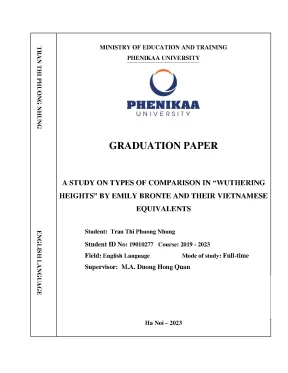
Trong hệ thống ngữ pháp tiếng Anh, cấu trúc so sánh (Comparison) là một chủ điểm ngữ pháp phức tạp và thường xuyên gây nhầm lẫn cho người học Việt Nam. Sự khác biệt về mặt loại hình ngôn ngữ giữa tiếng Anh (ngôn ngữ hòa kết/biến hình) và tiếng Việt (ngôn ngữ đơn lập) dẫn đến những lỗi sai phổ biến khi người học sử dụng các cấp độ so sánh, chẳng hạn như nhầm lẫn giữa so sánh hơn và so sánh bậc nhất khi đối chiếu hai đối tượng. Nhằm cung cấp cái nhìn hệ thống về cấu trúc so sánh và cách chuyển dịch tương đương giữa hai ngôn ngữ, khóa luận tốt nghiệp "A Study on Types of Comparison in 'Wuthering Heights' by Emily Bronte and Their Vietnamese Equivalents" (Nghiên cứu về các dạng thức so sánh trong tác phẩm "Đồi gió hú" của Emily Brontë và tương đương trong tiếng Việt) đã được thực hiện bởi sinh viên Trần Thị Phương Nhung, dưới sự hướng dẫn của ThS. Dương Hồng Quân tại Khoa Tiếng Anh, Trường Đại học Phenikaa (2023).
Mục tiêu nghiên cứu
- Mục tiêu tổng quát (Aims): Cung cấp cho người học tiếng Anh kiến thức nền tảng về cấu trúc so sánh trong tiếng Anh và tiếng Việt thông qua tác phẩm văn học "Wuthering Heights", từ đó giúp người học hiểu sâu hơn về cấu trúc so sánh và vận dụng hiệu quả vào kỹ năng nói và viết.
- Mục tiêu cụ thể (Objectives):
- Xác định các dạng thức so sánh xuất hiện trong tác phẩm văn học "Wuthering Heights" của Emily Brontë.
- Trình bày và phân loại các dạng thức so sánh trong nguyên tác tiếng Anh và bản dịch tiếng Việt "Đồi gió hú" của dịch giả Mạnh Chương.
- Phân tích, khám phá những điểm tương đồng và khác biệt giữa các cấp độ so sánh trong hai ngôn ngữ qua các ngữ liệu đối chiếu.
Câu hỏi nghiên cứu
Khóa luận tập trung giải quyết câu hỏi nghiên cứu:
- Những điểm tương đồng và khác biệt giữa các dạng thức so sánh trong tiếng Anh và tiếng Việt được thể hiện như thế nào qua nguyên tác "Wuthering Heights" của Emily Brontë và bản dịch tiếng Việt của Mạnh Chương?
Đối tượng và phạm vi nghiên cứu
- Đối tượng nghiên cứu: Các cấu trúc và dạng thức so sánh (so sánh bằng, so sánh hơn/kém, so sánh bậc nhất và các dạng thức so sánh đặc biệt).
- Phạm vi ngữ liệu: Khảo sát toàn bộ 170 câu văn chứa cấu trúc so sánh được trích xuất từ nguyên tác tiểu thuyết "Wuthering Heights" của nữ văn sĩ Emily Brontë và bản dịch tương ứng "Đồi gió hú" của dịch giả Mạnh Chương.
Cơ sở lý thuyết và phương pháp
Khung lý thuyết và khái niệm
Khóa luận xây dựng nền tảng lý luận dựa trên các tài liệu ngữ pháp chuẩn tắc tiếng Anh (Nayanshi, 2023; Suhendri, 2019; Longman English Grammar Practice, 1990; Basic English Grammar, 2015; English Grammar All-In-One for Dummies, 2023; English Grammar for ESL Learners, 2005):
- Khái niệm so sánh: Là phương thức diễn đạt mức độ khác biệt hoặc tương đồng về phẩm chất, đặc tính, thuộc tính giữa hai hoặc nhiều sự vật, hiện tượng hoặc con người.
- Hệ thống ba cấp độ so sánh chính:
- Positive Degree (Cấp độ nguyên cấp / So sánh bằng): Biểu thị phẩm chất vốn có hoặc sự tương đương, sử dụng các cấu trúc như
as...as, the same (as), similar to, like, alike, different from. Trong tiếng Việt tương đương với các từ chỉ quan hệ: như, bằng, giống như, tương tự, khác.
- Comparative Degree (Cấp độ so sánh hơn/kém): Dùng để so sánh hai thực thể về một phẩm chất cụ thể, tạo lập bằng việc thêm hậu tố
-er (tính từ ngắn), sử dụng more (tính từ dài) hoặc less (so sánh kém), kèm liên từ than. Tương đương tiếng Việt: hơn, kém, không bằng.
- Superlative Degree (Cấp độ so sánh bậc nhất): Dùng để chỉ mức độ cao nhất hoặc thấp nhất của một phẩm chất trong nhóm từ ba đối tượng trở lên, tạo lập bằng hậu tố
-est, từ chỉ mức độ the most hoặc the least. Tương đương tiếng Việt: nhất, ít nhất.
- Các dạng so sánh đặc biệt: So sánh bội số (
multiple numbers + as...as), so sánh lũy tiến kép (the + comparative..., the + comparative...), so sánh tăng tiến (more and more + adj/adv hoặc adj/adv-er and adj/adv-er), cùng các quy tắc về tính từ bất quy tắc (irregular adjectives) và tính từ tuyệt đối không dùng trong cấu trúc so sánh (absolute adjectives như dead, unique, blind, fatal, universal, vertical, wrong).
- Tổng quan nghiên cứu trước: Khóa luận tổng thuật ba công trình nghiên cứu liên quan đến lỗi sai và phương pháp giảng dạy cấu trúc so sánh: nghiên cứu phân tích lỗi phân biệt so sánh hơn và so sánh nhất của Yunita Mirnanda; nghiên cứu thực nghiệm ứng dụng hình ảnh trong giảng dạy so sánh của Lukman, Ilham, Hariyati (với giá trị thực nghiệm $t = 2{,}5 > t_{table} = 2$ ở mức ý nghĩa $0{,}05$); nghiên cứu phân loại 365 lỗi ngữ pháp về so sánh của Oktya Putri Bungsu, Afrianto Daud và Masyhur (trong đó lỗi cấu tạo sai misformation chiếm 60,27%, lỗi lược bỏ omission chiếm 26,58%, nguyên nhân chủ yếu do chuyển di nội ngôn ngữ intralingual transfer chiếm 61,39%).
Phương pháp nghiên cứu
Tác giả kết hợp các phương pháp nghiên cứu định tính và định lượng:
- Phương pháp miêu tả (Descriptive method): Hệ thống hóa và miêu tả đặc điểm cấu trúc, ngữ nghĩa của các dạng thức so sánh trong tiếng Anh và tiếng Việt.
- Phương pháp phân tích đối chiếu (Contrastive and Comparative Analysis): Đặt song song các câu nguyên tác và bản dịch tiếng Việt để tìm ra các điểm tương đồng, khác biệt về mặt cú pháp và ngữ nghĩa.
- Phương pháp thống kê định lượng (Quantitative approach): Thống kê số lượng, tần suất xuất hiện và tỷ lệ phần trăm của từng dạng thức so sánh trong tổng thể mẫu khảo sát.
Nguồn dữ liệu
- Văn bản gốc: Tiểu thuyết "Wuthering Heights" của Emily Brontë (ấn bản tham chiếu năm 2013).
- Văn bản dịch: Bản dịch tiếng Việt "Đồi gió hú" của dịch giả Mạnh Chương (ấn bản tham chiếu năm 2018).
Nội dung chính theo từng chương
Chương 1: Literature Review (Tổng quan tài liệu)
Chương 1 trình bày hệ thống lý thuyết về cấu trúc so sánh trong tiếng Anh và tiếng Việt, bao gồm định nghĩa, cấu trúc và cách hình thành của ba cấp độ so sánh chính:
+-------------------------------------------------------------------------+
|                  HỆ THỐNG CẤP ĐỘ SO SÁNH TRONG TIẾNG ANH                 |
+-------------------------------------------------------------------------+
|  1. Positive Degree    | as...as, the same (as), similar to, like,       |
|                        | alike, different from                          |
+------------------------+------------------------------------------------+
|  2. Comparative Degree | more + adj + than, adj-er + than, less + than  |
|                        | Bất quy tắc: good -> better, bad -> worse...   |
+------------------------+------------------------------------------------+
|  3. Superlative Degree | the most + adj, the + adj-est, the least + adj |
|                        | Bất quy tắc: good -> best, bad -> worst...     |
+------------------------+------------------------------------------------+
|  4. Special Forms      | The comparative..., the comparative...         |
|                        | More and more / -er and -er                    |
|                        | Multiple numbers + as...as                     |
+-------------------------------------------------------------------------+
Bên cạnh các cấu trúc thông thường, chương này phân tích bảng tính từ bất quy tắc (Bảng 1.2, 1.3, 1.4) như good/better/best, bad/worse/worst, far/farther/farthest (khoảng cách), far/further/furthest (mức độ), old/older/oldest, old/elder/eldest. Đồng thời, tác giả chỉ ra nhóm tính từ có thể dùng linh hoạt cả hai dạng -er/-est và more/most (Bảng 1.5) gồm clever, gentle, friendly, quiet, simple, và nhóm tính từ tuyệt đối không chia so sánh (dead, unique, fatal, blind, wrong).
Phần cuối chương cung cấp tóm tắt nội dung tác phẩm "Wuthering Heights" xoay quanh hai gia tộc Earnshaw và Linton với nhân vật trung tâm Heathcliff và Catherine qua lời kể của Lockwood và bà quản gia Nelly Dean, cùng phần điểm luận các công trình nghiên cứu đi trước.
Chương 2: Types of Comparison in Original Work and Analysis on the Translation to Explore the Similarities and Differences (Các dạng thức so sánh trong nguyên tác và phân tích bản dịch nhằm tìm hiểu điểm tương đồng và khác biệt)
Chương 2 là phần trọng tâm thực nghiệm của khóa luận, thực hiện phân loại, thống kê và phân tích đối chiếu 170 câu văn chứa cấu trúc so sánh được trích xuất từ tác phẩm:
| Dạng thức so sánh |
Tỷ lệ phần trăm (%) |
Cấu trúc nhận diện tiêu biểu |
| So sánh bằng (Positive degree) |
40% |
as...as, the same (as), like, alike, similar (to), different (from) |
| So sánh hơn/kém (Comparative degree) |
32% |
more...than, -er than, less...than, irregular comparatives |
| So sánh bậc nhất (Superlative degree) |
22% |
the most, -est, the least, irregular superlatives |
| Dạng thức đặc biệt (Special forms) |
6% |
-er and -er, more and more, the + comparative..., the + comparative... |
| Tổng cộng |
100% |
170 câu văn khảo sát |
Tác giả phân tích chi tiết các trường hợp dịch thuật điển hình của Mạnh Chương qua từng nhóm cấu trúc:
- Phân tích so sánh bằng:
- Cấu trúc
as...as: Câu "She is as faithful as a turtle-dove" được dịch thành "Cô ấy trung thành như một con chim bồ câu". Người dịch chuyển tải chuẩn xác ý nghĩa trung thành bằng từ "như", tuy nhiên có sự khác biệt nhỏ về mặt thuật ngữ khi turtle-dove (chim bồ câu gáy/cu gáy) được dịch chung thành chim bồ câu.
- Cấu trúc
like: Câu "The wildly blowing snow was like nothing Dean had ever experienced before" dịch thành "Tuyết rơi như cuồng phong như chưa từng có ở bất cứ đâu Dean từng thấy". Tác giả nhận xét bản dịch diễn đạt thoát ý nhưng lặp cấu trúc so sánh, và đề xuất phương án chính xác hơn: "Cơn bão tuyết dữ dội đến mức Dean như thể chưa bao giờ từng thấy/trải qua trước đây".
- Cấu trúc
the same: Câu "It was a pretty little car, not the same model as Fitzgerald's car... but almost the same color" được dịch tương đương chính xác thành "không phải cùng mẫu với chiếc xe của Fitzgerald... nhưng màu sắc gần giống nhau".
- Cấu trúc
alike: Thành ngữ "You two are alike as two peas in a pod" dịch thành "Cả hai anh em giống nhau như hai hạt đậu trong vỏ", truyền tải thành công ý nghĩa tương đồng tuyệt đối.
- Phân tích so sánh hơn/kém:
- Cấu trúc
more...than: "He was more greedy of Joe's notice than of my company" dịch chuẩn xác thành "Anh ta thèm sự chú ý của Joe hơn là được ở cùng với tôi".
- Cấu trúc
-er than: "He was taller than Heathcliff..." chuyển ngữ thành "Anh ta cao hơn Heathcliff...".
- Cấu trúc
less...than: "The moors were less hospitable than the barren deserts of Africa" được dịch chuyển đổi thể thức từ phủ định/so sánh kém sang khẳng định/so sánh hơn: "Cánh đồng Châu Âu lạnh lẽo và khắc nghiệt hơn cả những vùng sa mạc hoang vu ở Châu Phi", giúp câu văn tiếng Việt tự nhiên mà vẫn giữ nguyên bản chất so sánh đối lập.
- Bảng ngữ liệu đối chiếu: Khóa luận lập bảng tổng hợp đối chiếu chi tiết các câu so sánh bằng (Bảng 2.1), so sánh hơn/kém (Bảng 2.2), so sánh bậc nhất (Bảng 2.3) và các dạng đặc biệt (Bảng 2.4).
Chương 3: Results and Discussion (Kết quả và thảo luận)
Chương 3 tổng kết các kết quả định lượng và định tính từ việc khảo sát 170 câu văn:
- Khẳng định so sánh bằng (
Positive degree) chiếm vị thế vượt trội trong tác phẩm văn học của Emily Brontë nhằm khắc họa chi tiết diện mạo, cảm xúc và tính cách nhân vật thông qua các hình ảnh ví von, ẩn dụ tương đồng (as...as, like).
- Cấu trúc so sánh hơn và so sánh bậc nhất được sử dụng đa dạng, phản ánh sự xung đột tâm lý, tính cách dữ dội và mối quan hệ phức tạp giữa các tuyến nhân vật trong bối cảnh Đồi Gió Hú.
- Bản dịch của Mạnh Chương phần lớn giữ nguyên được giá trị ngữ nghĩa và cấu trúc so sánh tương đương trong tiếng Việt, có sự linh hoạt trong việc chuyển đổi giữa so sánh kém và so sánh hơn để phù hợp với ngữ cảm tiếng Việt.
- Phần cuối chương đưa ra các đề xuất cụ thể ứng dụng vào việc dạy và học tiếng Anh.
Kết quả và đóng góp
Kết quả chính
- Thống kê phân bố tần suất cấu trúc: Trong tổng số 170 câu văn khảo sát từ tiểu thuyết "Wuthering Heights":
- Cấu trúc so sánh bằng chiếm tỷ lệ cao nhất: 40% (trong đó cấu trúc
as...as và like xuất hiện với tần suất áp đảo so với the same, alike, similar to).
- Cấu trúc so sánh hơn chiếm: 32% (dạng
more...than và -er than chiếm ưu thế tuyệt đối so với dạng less...than).
- Cấu trúc so sánh bậc nhất chiếm: 22% (dạng
the most và -est chiếm ưu thế so với the least).
- Cấu trúc so sánh đặc biệt chiếm: 6% (gồm cấu trúc so sánh kép
the + comparative..., the + comparative... và so sánh tăng tiến more and more / -er and -er).
- Đặc điểm dịch thuật đối chiếu: Bản dịch tiếng Việt của Mạnh Chương đạt mức độ tương đương ngữ nghĩa cao. Các cấu trúc tiếng Anh biến hình (
-er, -est) được chuyển dịch tương đương sang các hư từ và trợ từ chỉ mức độ trong tiếng Việt như hơn, nhất, như, giống như, bằng, càng... càng....
Đóng góp của nghiên cứu
- Đóng góp lý luận: Làm sáng tỏ các dạng thức cấu trúc so sánh trong tiếng Anh và sự tương đương ngữ pháp - ngữ nghĩa trong tiếng Việt thông qua ngữ liệu văn học thực tế.
- Đóng góp thực tiễn: Cung cấp nguồn tài liệu tham khảo cụ thể cho sinh viên và người dịch thuật khi xử lý các cấu trúc so sánh văn học từ tiếng Anh sang tiếng Việt; hỗ trợ người học nhận biết và tránh các lỗi sai phổ biến trong việc sử dụng cấu trúc so sánh.
Khuyến nghị sư phạm
- Đối với người học tiếng Anh: Cần phân biệt rõ ngữ cảnh sử dụng tính từ ngắn/dài, nắm vững các trường hợp biến đổi bất quy tắc và tính từ tuyệt đối; chú ý ngữ cảnh so sánh giữa hai đối tượng (so sánh hơn) và từ ba đối tượng trở lên (so sánh nhất).
- Đối với giáo viên tiếng Anh: Cần lồng ghép các bài tập đối chiếu ngữ pháp Anh - Việt, sử dụng ngữ liệu văn học và phương tiện trực quan để giúp người học hiểu bản chất cấu trúc thay vì chỉ học vẹt công thức.
Hạn chế và hướng nghiên cứu tiếp
- Hạn chế: Do giới hạn về thời gian và dung lượng của một khóa luận tốt nghiệp bậc đại học, nghiên cứu chỉ tập trung phân tích 170 mẫu câu trong phạm vi một tác phẩm tiểu thuyết duy nhất ("Wuthering Heights") và khảo sát một phiên bản dịch tiếng Việt của dịch giả Mạnh Chương. Các khía cạnh ngữ dụng học (pragmatics) và cú pháp học chuyên sâu chưa được phân tích toàn diện cho từng trường hợp.
- Hướng nghiên cứu tiếp:
- Mở rộng khảo sát đặc điểm cú pháp và ngữ dụng của cấu trúc so sánh trên các thể loại văn bản khác (báo chí, văn bản khoa học, giao tiếp hàng ngày).
- Nghiên cứu đối chiếu so sánh đa bản dịch (khảo sát cùng một tác phẩm qua nhiều bản dịch tiếng Việt khác nhau).
- Đi sâu phân tích các nhóm tính từ bất quy tắc và hiện tượng chuyển dịch nghĩa ẩn dụ của cấu trúc so sánh trong văn học.
Giá trị tham khảo
Khóa luận là tài liệu tham khảo hữu ích cho:
- Sinh viên chuyên ngành Ngôn ngữ Anh, Sư phạm Tiếng Anh: Tham khảo hệ thống lý thuyết so sánh đầy đủ (Bảng 1.1 đến 1.5) và các quy tắc biến đổi tính từ ngắn/dài, tính từ hai hình thức và tính từ tuyệt đối.
- Người nghiên cứu dịch thuật và dịch giả văn học: Tham khảo Bảng đối chiếu 2.1 đến 2.4 với các ngữ liệu dịch thực tế, phương pháp xử lý thành ngữ so sánh (
as two peas in a pod) và kỹ thuật chuyển dịch cấu trúc so sánh kém (less...than) sang tiếng Việt.
- Người học tiếng Anh tổng quát: Nhận diện các lỗi sai thường gặp khi viết câu so sánh để nâng cao độ chính xác ngữ pháp trong kỹ năng viết học thuật.
Câu hỏi thường gặp
1. Tác phẩm văn học nào được lựa chọn làm ngữ liệu nghiên cứu và bản dịch tiếng Việt do ai thực hiện?
Ngữ liệu nghiên cứu được trích xuất từ tiểu thuyết kinh điển "Wuthering Heights" (Đồi gió hú) của nữ nhà văn Anh Emily Brontë và bản dịch tiếng Việt tương ứng mang tên "Đồi Gió Hú" của dịch giả Mạnh Chương.
2. Tỷ lệ phân bố của các dạng so sánh trong 170 câu văn được khảo sát như thế nào?
Trong 170 câu văn được thống kê:
- So sánh bằng (Positive degree) chiếm 40%.
- So sánh hơn/kém (Comparative degree) chiếm 32%.
- So sánh bậc nhất (Superlative degree) chiếm 22%.
- Các dạng so sánh đặc biệt (Special forms) chiếm 6%.
3. Dạng cấu trúc so sánh nào xuất hiện với tần suất cao nhất trong tác phẩm?
Cấu trúc so sánh bằng (Positive degree), đặc biệt là mẫu câu sử dụng liên từ as...as và từ so sánh like, xuất hiện phổ biến nhất trong tác phẩm nhằm phục vụ việc miêu tả diện mạo, tính cách và thế giới nội tâm của các nhân vật.
4. Tác giả đã trích dẫn những nghiên cứu tiền nhiệm nào về lỗi sai của người học khi dùng cấu trúc so sánh?
Khóa luận tổng thuật ba nghiên cứu: nghiên cứu của Yunita Mirnanda (về lỗi nhầm lẫn giữa so sánh hơn và so sánh nhất); nghiên cứu của Lukman, Ilham, Hariyati (về tác động của hình ảnh trực quan trong dạy so sánh, giá trị kiểm định $t = 2{,}5$); và nghiên cứu của Oktya Putri Bungsu cùng cộng sự (phân tích 365 lỗi viết câu so sánh, chỉ ra lỗi cấu tạo sai chiếm 60,27% và nguyên nhân chuyển di nội ngôn ngữ chiếm 61,39%).
5. Dịch giả Mạnh Chương đã xử lý cấu trúc so sánh kém "less...than" như thế nào trong ví dụ tiêu biểu của khóa luận?
Trong câu "The moors were less hospitable than the barren deserts of Africa", thay vì dịch nguyên văn dạng phủ định/so sánh kém, dịch giả đã chuyển đổi linh hoạt sang câu khẳng định dùng so sánh hơn trong tiếng Việt: "Cánh đồng Châu Âu lạnh lẽo và khắc nghiệt hơn cả những vùng sa mạc hoang vu ở Châu Phi", giúp câu văn tự nhiên và giữ trọn sắc thái đối lập của nguyên tác.
Kết luận
Khóa luận tốt nghiệp của sinh viên Trần Thị Phương Nhung đã hệ thống hóa toàn diện cơ sở lý thuyết về các cấp độ so sánh trong tiếng Anh và tiếng Việt, đồng thời tiến hành phân loại và phân tích định lượng 170 mẫu câu so sánh trích từ tiểu thuyết "Wuthering Heights" của Emily Brontë và bản dịch của Mạnh Chương. Kết quả nghiên cứu chỉ ra rằng so sánh bằng chiếm tỷ lệ lớn nhất (40%), theo sau là so sánh hơn (32%), so sánh bậc nhất (22%) và các dạng đặc biệt (6%), với mức độ tương đương dịch thuật cao sang tiếng Việt. Công trình là tài liệu tham khảo giá trị cho sinh viên ngành ngôn ngữ, giáo viên tiếng Anh và người làm công tác dịch thuật trong việc nắm bắt bản chất ngữ pháp đối chiếu Anh - Việt.