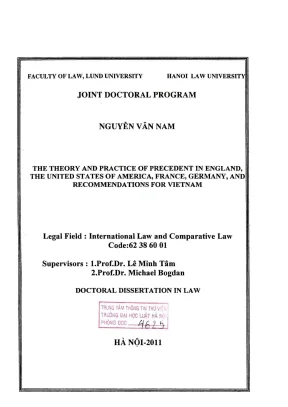
Tổng quan luận án
Luận án tiến sĩ luật học với đề tài "The Theory and Practice of Precedent in England, the United States of America, France, Germany, and Recommendations for Vietnam" (Lý thuyết và thực tiễn án lệ tại Anh, Hợp chủng quốc Hoa Kỳ, Pháp, Đức và các kiến nghị cho Việt Nam) được nghiên cứu sinh Nguyễn Văn Nam thực hiện trong khuôn khổ Chương trình đào tạo Tiến sĩ liên kết giữa Khoa Luật - Đại học Lund (Thụy Điển) và Trường Đại học Luật Hà Nội (chuyên ngành Luật Quốc tế và Luật So sánh, mã số 62 38 60 01), dưới sự hướng dẫn của GS. TS. Lê Minh Tâm và GS. Michael Bogdan.
Tính cấp thiết và khoảng trống nghiên cứu
Sau khi Việt Nam thực hiện chính sách Đổi mới (1986) và gia nhập Tổ chức Thương mại Thế giới (WTO), yêu cầu về tính minh bạch của hệ thống tư pháp ngày càng trở nên cấp thiết. Năm 2004, Tòa án nhân dân tối cao Việt Nam lần đầu tiên xuất bản hai tập quyết định giám đốc thẩm với sự hỗ trợ của Cơ quan Phát triển Quốc tế Hoa Kỳ (USAID) thông qua Dự án Star-Vietnam. Tiếp đó, Nghị quyết số 49-NQ/TW ngày 02/06/2005 của Bộ Chính trị về Chiến lược cải cách tư pháp đến năm 2020 đã chính thức đặt ra nhiệm vụ cho Tòa án nhân dân tối cao trong việc tổng kết kinh nghiệm xét xử, hướng dẫn áp dụng thống nhất pháp luật và phát triển án lệ nhằm khắc phục các khiếm khuyết của luật thành văn.
Tuy nhiên, theo Hiến pháp năm 1992 và các quy định pháp luật thời điểm nghiên cứu, án lệ chưa từng được công nhận chính thức là nguồn luật tại Việt Nam. Thẩm phán và giới luật gia Việt Nam thiếu hiểu biết mang tính hệ thống về khái niệm, chức năng và phương pháp vận dụng án lệ. Tồn tại sự nhầm lẫn giữa án lệ với các nghị quyết mang tính quy phạm trừu tượng của Hội đồng Thẩm phán hoặc thông tư của Chánh án Tòa án nhân dân tối cao. Hệ thống văn bản quy phạm pháp luật được ban hành ồ ạt trong thời kỳ Đổi mới (như Bộ luật Hình sự 1999, Bộ luật Dân sự 2005, Luật Thương mại 2005, Luật Doanh nghiệp 2005) chứa đựng nhiều quy định khái quát, mơ hồ, gây khó khăn cho việc áp dụng nếu thiếu giải thích tư pháp thông qua các vụ việc cụ thể. Luận án được triển khai nhằm giải quyết khoảng trống lý luận và thực tiễn về cơ chế tiếp nhận án lệ trong điều kiện cụ thể của Việt Nam.
Mục tiêu nghiên cứu
Luận án xác định 3 mục tiêu cụ thể:
- Nghiên cứu, phân tích và so sánh lý thuyết cùng thực tiễn áp dụng án lệ trong cả hai truyền thống pháp luật lớn trên thế giới: hệ thống Thông luật (Anh, Mỹ) và hệ thống Dân luật (Pháp, Đức).
- Tìm kiếm, đề xuất các giải pháp mang tính chọn lọc và khả thi nhằm tiếp nhận các yếu tố thích hợp của học thuyết án lệ nước ngoài vào hệ thống pháp luật Việt Nam.
- Đánh giá vai trò của án lệ đối với việc nâng cao chất lượng đào tạo luật tại Việt Nam dưới góc độ luật so sánh.
Đối tượng và phạm vi nghiên cứu
- Đối tượng nghiên cứu: Học thuyết pháp lý về án lệ, cơ chế hình thành, giải thích, áp dụng, thay đổi án lệ, cũng như cấu trúc tổ chức tòa án và cơ chế xuất bản báo cáo án lệ (law reports) tại 4 quốc gia (Anh, Mỹ, Pháp, Đức) và thực tiễn xét xử tại Việt Nam.
- Phạm vi không gian: Giới hạn ở cấp độ pháp luật quốc gia của 4 nước điển hình thuộc hệ thống Thông luật và Dân luật, không nghiên cứu án lệ của các cơ quan tài phán khu vực và quốc tế như Tòa án Công lý Liên minh Châu Âu (ECJ) hay Tòa án Nhân quyền Châu Âu (ECHR).
- Phạm vi thời gian: Luận án được thực hiện trong giai đoạn 5 năm (2006–2011), khảo cứu các dữ liệu lịch sử và thực tiễn tư pháp hiện đại tính đến tháng 03/2011.
Tổng quan tài liệu và vị trí của luận án
Trong quá trình xây dựng cơ sở lập luận, tác giả đã hệ thống hóa và phân tích các công trình nghiên cứu lý thuyết và thực tiễn về án lệ tiêu biểu trên thế giới:
- Các công trình nghiên cứu lý thuyết pháp lý và án lệ tổng quát: Tác phẩm A Theory of Precedent: From Analytical Positivism to Post-Analytical Philosophy of Law (2000) của Raimo Siltala; công trình nghiên cứu so sánh quy mô lớn Interpreting Precedents: A Comparative Study (1997) do D. Neil MacCormick và Robert S. Summers chủ biên; nghiên cứu Interpreting Statutes: A Comparative Study (1991) của Robert Alexy và Ralph Dreier; các phân tích về ứng dụng luật của triết gia pháp lý Jerzy Wróblewski trong The Judicial Application of Law (1992); luận điểm của Gerald J. Postema trong Roots of Our Notion of Precedent (1987).
- Các nghiên cứu về hệ thống Thông luật: Công trình kinh điển Precedent in English Law (1961) của Rupert Cross và phiên bản tái bản lần thứ 4 của Cross & Harris (1991); các tài liệu của Peter Birks (English Private Law, 2000), Ian McLeod (Legal Method, 1996), Gary Slapper và David Kelley (The English Legal System, 2006), Alisdair A. Gillespie (The English Legal System, 2007), Richard Ward và Amanda Akhtar (Walker and Walker’s English Legal System, 2008), E. Allan Farnsworth (An Introduction to the Legal System of the United States, 1996), Stanislaw Pomorski (American Common Law and the Principle of Nullum Crimen Sine Lege, 1975).
- Các nghiên cứu về hệ thống Dân luật: Công trình của Eva Steiner (French Legal Method, 2002), Nigel Foster (German Legal System and Law, 1996), Michel Troper và Christophe Grzegorczyk (Precedent in France, 1997), Hein Kötz và Konrad Zweigert (Introduction to Comparative Law, 1998), G. Sauveplanne (Codified and Judge Made Law, 1982), Ewoud Hondius (Precedent and the Law, 2007).
- Phương pháp luận luật so sánh: Giáo trình Comparative Law (1994) của Michael Bogdan, Comparative Law in a Changing World (1999) của Peter de Cruz, và nghiên cứu của Esin Örücü (Developing Comparative Law, 2007).
Khoảng trống nghiên cứu luận án lựa chọn giải quyết
Mặc dù án lệ là đề tài thu hút sự quan tâm của giới nghiên cứu quốc tế, nhưng tại Việt Nam thời điểm 2006–2011, các tài liệu trong nước chỉ đề cập đến án lệ một cách sơ lược hoặc mang định kiến rằng án lệ hoàn toàn xa lạ với hệ thống pháp luật xã hội chủ nghĩa và chỉ tồn tại ở các nước Thông luật. Luận án là công trình so sánh luật học chuyên sâu, tiếp cận đồng thời cả 4 hệ thống pháp luật tiêu biểu thuộc hai truyền thống lớn nhằm làm sáng tỏ giá trị của án lệ trong việc lấp lỗ hổng pháp luật và giải thích luật, từ đó đề xuất lộ trình tiếp nhận mang tính hệ thống cho Việt Nam.
Cơ sở lý thuyết và phương pháp nghiên cứu
Cơ sở lý thuyết, khái niệm và khung phân tích
Luận án vận dụng các lý thuyết triết học pháp luật và trường phái lý luận tư pháp để xây dựng khung phân tích:
- Khái niệm án lệ: Định nghĩa án lệ là bản án hoặc quyết định đã được tuyên của một cơ quan tư pháp, cung cấp một quy tắc hoặc thẩm quyền pháp lý để giải quyết vụ việc tương tự phát sinh sau đó, dựa trên nguyên tắc Aristotle: những vụ việc giống nhau phải được xét xử như nhau (like cases should be treated alike).
- Mô hình tư tưởng ra phán quyết tư pháp của Jerzy Wróblewski:
- Tư tưởng phán quyết bị ràng buộc (Bound judicial decision-making): Quan niệm luật thực định thành văn là nguồn duy nhất, khép kín và hoàn chỉnh; thẩm phán chỉ áp dụng luật bằng phương pháp diễn dịch tam đoạn luận logic mà không có quyền sáng tạo luật (tiêu biểu như Điều 5 Bộ luật Dân sự Pháp 1804).
- Tư tưởng phán quyết tự do (Free judicial decision-making): Bắt nguồn từ sự phản kháng đối với chủ nghĩa hình thức pháp lý và được cổ vũ bởi Chủ nghĩa hiện thực pháp lý Mỹ (Legal Realism), nhấn mạnh thẩm phán không bị ràng buộc cứng nhắc bởi quy tắc lập pháp mà linh hoạt giải quyết tranh chấp thực tế.
- Tư tưởng phán quyết hợp pháp và hợp lý (Legal and rational judicial decision-making): Trạng thái cân bằng giữa tính hợp pháp (tuân thủ luật thực định) và tính hợp lý (lập luận có căn cứ nội tại và ngoại tại, loại bỏ sự độc đoán của thẩm phán).
- Lý thuyết thực chứng pháp lý (Legal Positivism): Quan điểm của Thomas Hobbes (luật là mệnh lệnh của chủ quyền, thẩm phán đóng vai trò ủy quyền để tuyên bố luật), Jeremy Bentham (quy tắc luật được rút ra bằng phương pháp trừu tượng hóa), H.L.A. Hart (quy tắc sơ cấp và thứ cấp, quy tắc nhận diện - rule of recognition, kết cấu mở - open texture của ngôn ngữ pháp lý), Hans Kelsen (quyền tự do nhất định của thẩm phán trong áp dụng chuẩn mực).
- Học thuyết phân định Ratio Decidendi và Obiter Dictum:
- Phương pháp của Eugene Wambaugh: Đảo ngược mệnh đề pháp lý để kiểm tra tính quyết định đối với kết quả phán quyết.
- Phương pháp của Arthur L. Goodhart: Xác định các sự kiện trọng yếu (material facts) mà thẩm phán dựa vào để đưa ra phán quyết.
- Bốn yếu tố cấu thành án lệ của Peter Birks: (1) Phán quyết về một vấn đề pháp lý (point of law); (2) Do thẩm phán đưa ra một cách rõ ràng hoặc hàm ý; (3) Liên quan trực tiếp đến tranh biện của các bên đương sự; (4) Cần thiết cho việc lập luận đưa ra phán quyết.
Phương pháp nghiên cứu
Luận án kết hợp 3 phương pháp nghiên cứu chính:
- Phương pháp phân tích quy phạm / học thuyết pháp lý (Legal dogmatic method): Khảo cứu các học thuyết pháp lý, giải thích các quy phạm pháp luật thực định và phân tích các vụ án mẫu (cases) điển hình như Donoghue v. Stevenson (1932), Whitehouse v. Jordan, Lawrence v. Texas, Louca v. A German Judicial Authority [2009] UKSC 4, Tuyên bố Thực tiễn (Practice Statement) năm 1966 của Thượng viện Anh.
- Phương pháp mô tả (Descriptive method): Mô tả chi tiết cơ cấu tổ chức phân tầng của hệ thống tòa án, thẩm quyền tư pháp và phương thức biên tập, xuất bản báo cáo án lệ tại Anh, Mỹ, Pháp, Đức và Việt Nam.
- Phương pháp so sánh luật học (Comparative method): So sánh đối chiếu giữa hệ thống Thông luật và Dân luật; so sánh nội bộ giữa Anh và Mỹ (mức độ linh hoạt của stare decisis); so sánh giữa Pháp và Đức (vai trò của án lệ Hiến pháp và Tòa án Tối cao); từ đó tìm kiếm các điểm tương thích để áp dụng vào Việt Nam.
Nguồn tư liệu và dữ liệu
- Văn bản pháp luật nước ngoài: Hiến pháp Hoa Kỳ, Đạo luật Cải cách Hiến pháp Anh 2005 (Constitutional Reform Act 2005), Đạo luật Tòa án Tối cao Anh 1981, Bộ luật Dân sự Pháp 1804, Bộ luật Dân sự Đức (BGB 1900), Luật Tòa án Hiến pháp Liên bang Đức (BVerfGG), Luật Tổ chức Tòa án Đức (GVG).
- Tuyển tập án lệ và báo cáo pháp lý: Law Reports, Weekly Law Reports (WLR), All England Law Reports (All ER), United States Reports, BVerfGE, BGHZ, BGHSt, Neue Juristische Wochenschrift (NJW).
- Tài liệu tư pháp Việt Nam: Nghị quyết 49-NQ/TW của Bộ Chính trị, các văn bản quy phạm pháp luật Việt Nam, hai tập Quyết định giám đốc thẩm của TANDTC xuất bản năm 2004.
- Tư liệu thực địa: Tài liệu thu thập trong thời gian nghiên cứu tại Viện Max Planck về Luật Tư pháp Quốc tế và So sánh (Hamburg, Đức - 2008), Trường Luật Suffolk (Boston, Hoa Kỳ), và Viện Khoa học Xét xử thuộc Tòa án nhân dân tối cao Việt Nam.
Nội dung chính theo từng chương
Luận án gồm 13 chương, được phân bổ trong phần Mở đầu và 4 phần nội dung chính:
Chương 1: Giới thiệu chung (Introduction)
Chương 1 thiết lập bối cảnh nghiên cứu xuất phát từ sự kiện TANDTC công bố các quyết định giám đốc thẩm năm 2004 và Nghị quyết 49-NQ/TW năm 2005. Chương này xác định mục tiêu, phạm vi giới hạn, phương pháp luận nghiên cứu và tổng quan tài liệu.
Phần I: Lý thuyết về án lệ (Theory of Precedent)
Chương 2: Khái niệm chung về án lệ (A General Concept of Precedent)
- Làm rõ định nghĩa án lệ và nguồn gốc triết học từ nguyên tắc đối xử bình đẳng của Aristotle.
- Phân tích sự dịch chuyển từ thời kỳ cổ đại (Corpus Juris Civilis của Justinian) qua phong trào pháp điển hóa thế kỷ XIX (loại bỏ vai trò lập pháp của thẩm phán) tới xu hướng hiện đại của Dân luật (công nhận thực tế quyền lực của án lệ).
- Trình bày 3 mô hình tư tưởng phán quyết tư pháp của Jerzy Wróblewski (Bị ràng buộc, Tự do, Hợp pháp và Hợp lý).
- Phân biệt phương pháp tư duy quy nạp (inductive method) của Thông luật với phương pháp diễn dịch (deductive method) của Dân luật.
Chương 3: Lý thuyết án lệ trong hệ thống Thông luật (Theory of Precedent in the Common Law System)
- Khái quát sự hình thành Thông luật từ tập quán chung của vương quốc (jus commune Anh).
- Trình bày quan điểm truyền thống của Sir John Davies, Sir Edward Coke ("Lý lẽ là sinh mệnh của luật pháp") và Sir William Blackstone (Commentaries on the Laws of England - phán quyết của tòa án là chứng cứ xác thực của Thông luật).
- Phân tích góc nhìn thực chứng pháp lý của Thomas Hobbes, Jeremy Bentham và H.L.A. Hart.
- Phân tích Chủ nghĩa hiện thực pháp lý Mỹ (Oliver Wendell Holmes Jr.) với quan điểm coi trọng yếu tố thực tế và tâm lý trong phán quyết tư pháp.
Chương 4: Lý thuyết án lệ trong hệ thống Dân luật (Theory of Precedent in the Civil Law System)
- Khảo sát ảnh hưởng của Trường phái Pháp luật Lịch sử tại Đức (Savigny).
- Đánh giá lý thuyết thực chứng pháp lý tại châu Âu lục địa.
- Phân tích học thuyết án lệ tại Pháp thông qua công trình của Eva Steiner và Michel Troper: địa vị pháp lý phi chính thức (jurisprudence), các yếu tố tạo nên giá trị quy phạm, mối quan hệ giữa luật thành văn và án lệ (án lệ giải thích - precedent of interpretation và án lệ giải pháp - precedent of solution).
Phần II: Án lệ trong hệ thống Thông luật (Precedent in the Common Law Systems)
Chương 5: Án lệ trong hệ thống pháp luật Anh (Precedent in the English Legal System)
- Lịch sử hình thành Thông luật và sự bổ khuyết của Luật Công bình (Equity) thông qua Tòa Đại chưởng ấn (Court of Chancery) trước khi hợp nhất theo Đạo luật Tư pháp 1873–1875.
- Cơ cấu tổ chức Tòa án Anh: Tòa án Tối cao Vương quốc Anh (thành lập ngày 01/10/2009 thay thế Ủy ban Phúc thẩm Thượng viện), Tòa Phúc thẩm (Court of Appeal - Phân ban Dân sự và Hình sự), Tòa Cấp cao (High Court), Tòa Vương miện (Crown Court), Tòa Hạt (County Court) và Tòa Sơ thẩm (Magistrates' Courts).
- Nguyên tắc stare decisis (tuân thủ phán quyết trước): bắt buộc theo chiều dọc (tòa cấp dưới tuân thủ tòa cấp trên) và theo chiều ngang (tòa án bị ràng buộc bởi phán quyết trước của chính mình).
- Phân tích kỹ thuật pháp lý: Bốn yếu tố của Peter Birks xác định án lệ; phân biệt Ratio decidendi và Obiter dictum bằng phương pháp của Wambaugh và Goodhart; quyền bác bỏ án lệ (overruling) và Tuyên bố Thực tiễn 1966 (Practice Statement 1966) cho phép Thượng viện không bị ràng buộc tuyệt đối bởi các phán quyết của chính mình.
- Hệ thống báo cáo án lệ và vai trò của án lệ trong đào tạo luật tại Anh.
Chương 6: Án lệ trong hệ thống pháp luật Mỹ (Precedent in the American Legal System)
- Đặc điểm phân quyền kép: Hệ thống tòa án liên bang (Tòa án Tối cao Hoa Kỳ, Tòa Phúc thẩm Khu vực, Tòa Sơ thẩm Liên bang) và hệ thống tòa án của 50 bang độc lập.
- Thái độ thực tế và linh hoạt đối với stare decisis: Tòa án Tối cao Hoa Kỳ và các tòa phúc thẩm bang không bị ràng buộc tuyệt đối bởi phán quyết quá khứ của chính mình.
- Án lệ trong các vấn đề Hiến pháp: Tòa án sẵn sàng hủy bỏ tiền lệ khi điều kiện kinh tế - xã hội thay đổi (vụ việc Lawrence v. Texas).
- Án lệ giải thích luật thành văn và vai trò của phương pháp giảng dạy án lệ (case method) tại các trường luật Mỹ.
Phần III: Án lệ trong hệ thống Dân luật (Precedent in the Civil Law System)
Chương 7: Án lệ trong hệ thống pháp luật Pháp (Precedent in the French Legal System)
- Cấu trúc hệ thống tài phán kép tại Pháp: Hệ thống tòa án tư pháp (đứng đầu là Tòa Phá án - Cour de cassation) và hệ thống tòa án hành chính (đứng đầu là Hội đồng Nhà nước - Conseil d'État).
- Vị trí pháp lý: Về mặt hình thức, Điều 5 Bộ luật Dân sự 1804 cấm thẩm phán đặt ra quy tắc chung. Về mặt thực tế (de facto), các phán quyết nhất quán của Tòa Phá án tạo thành dòng án lệ định hình luật dân sự.
- Luật Hành chính Pháp: Được phát triển chủ yếu từ hệ thống án lệ của Hội đồng Nhà nước (Conseil d'État).
- Xuất bản bản án và đào tạo pháp lý tại Pháp.
Chương 8: Án lệ trong hệ thống pháp luật Đức (Precedent in the German Legal System)
- Cấu trúc tư pháp liên bang gồm Tòa án Hiến pháp Liên bang (Bundesverfassungsgericht - BVerfG) và 5 tòa án liên bang tối cao chuyên trách: Tòa án Tư pháp Liên bang (BGH), Tòa án Hành chính Liên bang (BVerwG), Tòa án Lao động Liên bang (BAG), Tòa án Tài chính Liên bang (BFH), Tòa án Xã hội Liên bang (BSG).
- Giá trị ràng buộc chính thức của phán quyết Tòa án Hiến pháp Liên bang theo Luật BVerfGG (có giá trị như luật thực định và ràng buộc mọi cơ quan công quyền).
- Vai trò của án lệ Tòa án Tư pháp Liên bang (BGH) trong luật dân sự, lao động và cơ chế giải thích lấp lỗ hổng luật thành văn.
Bảng tổng hợp so sánh đặc điểm án lệ tại 4 quốc gia
| Tiêu chí |
Vương quốc Anh (Common Law) |
Hoa Kỳ (Common Law) |
Pháp (Civil Law) |
Đức (Civil Law) |
| Vị trí của án lệ |
Nguồn luật chính thức, tiên cấp |
Nguồn luật chính thức, tiên cấp |
Nguồn luật thứ cấp (de facto) |
Nguồn luật thứ cấp; Án lệ Hiến pháp có giá trị ràng buộc luật định |
| Mức độ ràng buộc (Stare Decisis) |
Nghiêm ngặt (Thượng viện nới lỏng từ Practice Statement 1966) |
Linh hoạt, mềm dẻo hơn (đặc biệt trong án lệ giải thích Hiến pháp) |
Không ràng buộc về mặt pháp lý hình thức (non-binding de jure) |
Ràng buộc chính thức đối với BVerfG; ràng buộc thực tế đối với các Tòa Tối cao |
| Tòa án tạo án lệ chủ yếu |
UKSC (trước 2009 là House of Lords), Court of Appeal, High Court |
Supreme Court of the United States, Federal Circuit Courts, State Supreme Courts |
Cour de cassation, Conseil d'État |
Bundesverfassungsgericht (BVerfG), Bundesgerichtshof (BGH) |
| Kỹ thuật trích xuất án lệ |
Tách bạch Ratio decidendi và Obiter dictum |
Tách bạch Holding (Ratio) và Dicta; chấp nhận ý kiến bất đồng (dissenting opinion) |
Dòng án lệ liên tục (jurisprudence constante), phong cách bản án ngắn gọn |
Án lệ giải thích lấp lỗ hổng (gap-filling), công bố ý kiến bất đồng tại BVerfG |
| Đào tạo luật |
Kết hợp giáo trình và phân tích án lệ |
Phương pháp nghiên cứu tình huống (Case method) chiếm ưu thế |
Giảng dạy thiên về lý thuyết và phân tích điều luật thành văn |
Phân tích quy phạm kết hợp giải quyết tình huống thực tế và án lệ |
Phần IV: Án lệ trong hệ thống pháp luật Việt Nam và các khuyến nghị (Precedent in Vietnamese Legal System and Recommendations for Vietnam)
Chương 9: Án lệ trong bối cảnh hệ thống pháp luật Việt Nam (Precedent in the Context of Vietnamese Legal System)
- Khảo sát thực trạng lý luận pháp luật tại Việt Nam: quan niệm pháp luật thuần túy dựa trên các văn bản quy phạm do cơ quan lập pháp/hành pháp ban hành; sự vắng bóng của khái niệm chuẩn tắc về án lệ.
- Phân tích quan niệm pháp luật dưới góc độ văn hóa pháp lý và luật so sánh: đề xuất mở rộng quan niệm pháp luật vượt ra khỏi khuôn khổ câu chữ của điều luật thành văn để bao hàm cả thực tiễn áp dụng và giải thích của tòa án.
Chương 10: Tiếp nhận án lệ vào hệ thống pháp luật Việt Nam (Adoption of Precedent into the Vietnamese Legal System)
- Phân tích các điểm khác biệt và xu hướng hội tụ (convergence) giữa Thông luật và Dân luật trong cơ chế án lệ.
- Khái niệm tiếp nhận pháp luật (legal reception) và yêu cầu lựa chọn mô hình án lệ thích ứng với nền tảng văn hóa - chính trị của Việt Nam.
- Phân tích cuộc tranh luận giữa quan điểm hoài nghi (e ngại thẩm phán lạm quyền làm suy giảm nguyên tắc pháp chế XHCN) và quan điểm lạc quan ủng hộ áp dụng án lệ.
Chương 11: Vai trò của án lệ đối với phát triển giáo dục pháp lý tại Việt Nam (The Role of Precedent for Developing Legal Education in Vietnam)
- Nhận diện những thách thức lớn trong đào tạo luật tại Việt Nam: phương pháp giảng dạy thụ động, nặng về truyền thụ câu chữ điều luật, thiếu rèn luyện tư duy lập luận pháp lý và kỹ năng tranh tụng.
- Đề xuất giải pháp: Đưa các bản án, quyết định của tòa án vào chương trình đào tạo; đổi mới phương pháp giảng dạy dựa trên nghiên cứu tình huống thực tế.
Chương 12: Vai trò của Tòa án nhân dân tối cao Việt Nam trong việc phát triển án lệ (The Role of Vietnam's Supreme People's Court in Developing Precedent)
- Đánh giá vị trí, chức năng giám đốc thẩm, tái thẩm của TANDTC trong việc hướng dẫn áp dụng thống nhất pháp luật.
- Phân tích thực trạng công bố bản án, quyết định giám đốc thẩm của TANDTC và đề xuất cải tiến hệ thống báo cáo án lệ.
- Kỹ thuật xác định và lựa chọn các quyết định có giá trị án lệ trong số các phán quyết được công bố; xây dựng giá trị thuyết phục (persuasive force) cho các quyết định mẫu của TANDTC.
Chương 13: Các khuyến nghị áp dụng phương pháp tiếp cận dựa trên án lệ tại Việt Nam (Recommendations for Adopting a Precedent-based Approach in the Vietnamese Legal System)
- Đề xuất tổng thể các giải pháp lập pháp, tư pháp và hành chính nhằm chính thức hóa án lệ trong hệ thống pháp luật Việt Nam.
Kết quả và những đóng góp mới
Đóng góp về mặt lý luận
- Làm rõ tính đa dạng của học thuyết án lệ: Luận án chứng minh không tồn tại một mô hình án lệ đồng nhất trong hệ thống Thông luật (nước Anh áp dụng stare decisis chặt chẽ hơn Hoa Kỳ) cũng như Dân luật (Đức công nhận hiệu lực ràng buộc luật định của án lệ Hiến pháp, trong khi Pháp áp dụng án lệ de facto trong luật dân sự và hành chính).
- Khắc phục nhận thức phiến diện về nguồn luật: Luận án chỉ ra rằng cả hệ thống Thông luật và Dân luật đều vận hành dựa trên sự kết hợp giữa luật thành văn và án lệ. Án lệ không mâu thuẫn với luật thành văn mà đóng vai trò giải thích, làm rõ các quy định trừu tượng và lấp lỗ hổng pháp luật.
- Phân định rõ ràng giữa quy phạm án lệ và văn bản hướng dẫn hành chính - tư pháp: Luận án làm rõ sự khác biệt bản chất giữa quy tắc án lệ được hình thành cụ thể từ việc xét xử vụ việc thực tế với các quy tắc trừu tượng trong nghị quyết của Hội đồng Thẩm phán hay thông tư của Chánh án TANDTC.
Kiến nghị và giải pháp đề xuất cho Việt Nam
- Tiếp nhận mô hình án lệ giải thích pháp luật: Việt Nam nên lựa chọn mô hình án lệ giải thích luật thành văn (phù hợp với truyền thống Dân luật) thay vì trao quyền sáng tạo luật tự do hoàn toàn như Thông luật cổ điển, đảm bảo tính tối cao của Hiến pháp và luật do Quốc hội ban hành.
- Xác lập thẩm quyền phát triển án lệ cho Tòa án nhân dân tối cao: Lựa chọn các quyết định giám đốc thẩm tiêu biểu của Hội đồng Thẩm phán TANDTC có chứa đựng lập luận pháp lý rõ ràng (ratio decidendi) để công bố thành án lệ hướng dẫn các tòa án cấp dưới.
- Cải tiến kỹ thuật viết bản án: Bản án của tòa án các cấp, đặc biệt là TANDTC, cần được cấu trúc rõ ràng giữa việc mô tả sự kiện, lập luận áp dụng pháp luật và phán quyết, loại bỏ cách lập luận chung chung nhằm giúp các thẩm phán, luật sư dễ dàng trích xuất án lệ.
- Chuẩn hóa hệ thống Báo cáo Án lệ (Law Reports): Thiết lập cơ chế tuyển chọn, phân loại, biên tập và xuất bản định kỳ, có hệ thống các phán quyết có giá trị hướng dẫn của TANDTC với mục lục tra cứu thuận tiện.
- Cải cách đào tạo luật: Đưa phương pháp phân tích bản án và tình huống vào chương trình giảng dạy tại các cơ sở đào tạo luật nhằm phát triển năng lực tư duy phản biện và lập luận pháp lý cho người học.
Hạn chế và hướng nghiên cứu tiếp
Hạn chế
- Luận án tập trung nghiên cứu lý thuyết chung và cơ cấu tổ chức tư pháp ở cấp độ thiết chế quốc gia, không đi sâu vào phân tích nội dung thực định của các án lệ chuyên ngành cụ thể (như hợp đồng, bồi thường thiệt hại ngoài hợp đồng hay hình sự) tại 4 quốc gia.
- Không khảo sát án lệ của các cơ quan tài phán khu vực và quốc tế (ECJ, ECHR, ICJ).
- Do hạn chế về ngôn ngữ, việc tiếp cận các nguồn tài liệu gốc tiếng Đức và tiếng Pháp chủ yếu được thực hiện gián tiếp thông qua các ấn phẩm và công trình dịch thuật bằng tiếng Anh.
Hướng nghiên cứu tiếp
- Nghiên cứu chi tiết kỹ thuật trích xuất ratio decidendi và phân biệt sự kiện trong các lĩnh vực pháp luật thực định cụ thể tại Việt Nam.
- Khảo sát kinh nghiệm áp dụng án lệ của các tòa án quốc tế trong giải quyết tranh chấp thương mại và đầu tư quốc tế nhằm phục vụ quá trình hội nhập kinh tế của Việt Nam.
Giá trị tham khảo
- Đối với cơ quan lập pháp và Tòa án nhân dân tối cao: Cung cấp cơ sở khoa học và bài học so sánh quốc tế phục vụ việc thể chế hóa án lệ trong các văn bản pháp luật (như Luật Tổ chức Tòa án nhân dân, các Bộ luật tố tụng) và xây dựng quy trình lựa chọn, công bố án lệ.
- Đối với thẩm phán, kiểm sát viên và luật sư: Cung cấp phương pháp luận và kỹ thuật nhận diện, trích xuất lập luận pháp lý (ratio decidendi) và áp dụng án lệ vào giải quyết các vụ việc thực tế.
- Đối với nghiên cứu sinh, giảng viên và sinh viên luật: Cung cấp nguồn tài liệu học thuật về luật so sánh và lý luận nhà nước và pháp luật, hỗ trợ đổi mới phương pháp giảng dạy luật theo hướng kết hợp lý thuyết với nghiên cứu án lệ.
Câu hỏi thường gặp
1. Bốn yếu tố cấu thành một án lệ theo quy chuẩn Thông luật được phân tích trong luận án là gì?
Dựa trên quan điểm của Peter Birks (English Private Law, 2000), luận án xác định 4 yếu tố cấu thành một án lệ:
- Phán quyết về một vấn đề pháp lý (point of law) chứ không đơn thuần là phán quyết về vấn đề sự kiện (point of fact).
- Do thẩm phán đưa ra một cách rõ ràng hoặc hàm ý trong bản án.
- Liên quan trực tiếp và bắt nguồn từ các lập luận, tranh biện của các bên đương sự trong vụ án.
- Là căn cứ lập luận cần thiết và trực tiếp dẫn đến phán quyết cuối cùng của vụ án.
2. Ý nghĩa của Tuyên bố Thực tiễn (Practice Statement) năm 1966 tại Anh là gì?
Tuyên bố Thực tiễn năm 1966 (Practice Statement [1966] 3 All ER 77) do Thượng viện Anh (House of Lords) ban hành là một bước ngoặt trong lịch sử Thông luật Anh. Tuyên bố này cho phép Thượng viện Anh linh hoạt từ bỏ việc tuân thủ tuyệt đối các phán quyết trước đây của chính mình khi xét thấy việc tiếp tục tuân thủ sẽ dẫn đến sự bất công hoặc kìm hãm sự phát triển của pháp luật, từ đó nới lỏng sự cứng nhắc của nguyên tắc stare decisis.
3. Sự khác biệt căn bản giữa nguyên tắc án lệ tại Tòa án Tối cao Hoa Kỳ và Thượng viện Anh (trước 2009) là gì?
Thượng viện Anh truyền thống duy trì nguyên tắc stare decisis rất nghiêm ngặt (chỉ bắt đầu nới lỏng từ năm 1966), trong khi Tòa án Tối cao Hoa Kỳ tiếp cận nguyên tắc án lệ linh hoạt và mềm dẻo hơn ngay từ đầu, đặc biệt là trong các phán quyết giải thích Hiến pháp Hoa Kỳ (sẵn sàng hủy bỏ tiền lệ cũ để đáp ứng các biến chuyển xã hội, như trong vụ Lawrence v. Texas).
4. Tại sao luận án khẳng định việc coi Nghị quyết và Thông tư của TANDTC là án lệ là một nhận thức sai lầm?
Luận án chỉ ra rằng Nghị quyết của Hội đồng Thẩm phán và Thông tư của Chánh án TANDTC là các văn bản quy phạm pháp luật dưới luật, chứa đựng các quy tắc xử sự mang tính khái quát, trừu tượng được ban hành theo quy trình lập quy hành chính. Ngược lại, án lệ chuẩn tắc phải là quy tắc pháp lý được hình thành một cách cụ thể thông qua quá trình xét xử và giải quyết một vụ án thực tế có tranh chấp giữa các bên đương sự.
5. Phương pháp phân biệt giữa Ratio decidendi và Obiter dictum được luận án đề cập gồm những phương pháp nào?
Luận án trình bày hai phương pháp kinh điển trong khoa học Thông luật:
- Phương pháp của Eugene Wambaugh: Đặt mệnh đề pháp lý vào vị trí đại tiền đề của tam đoạn luận; nếu việc thay đổi nội dung của mệnh đề đó dẫn đến thay đổi kết quả phán quyết thì đó là Ratio decidendi, ngược lại nếu kết quả không đổi thì đó chỉ là Obiter dictum.
- Phương pháp của Arthur L. Goodhart: Xác định Ratio decidendi thông qua việc tìm ra các sự kiện trọng yếu (material facts) của vụ án mà thẩm phán đã căn cứ vào đó để đưa ra phán quyết pháp lý.
Kết luận
Luận án của nghiên cứu sinh Nguyễn Văn Nam là công trình nghiên cứu so sánh về lý thuyết và thực tiễn án lệ tại Anh, Mỹ, Pháp, Đức và khả năng áp dụng tại Việt Nam. Bằng việc phân tích sâu sắc các học thuyết pháp lý, cơ cấu hệ thống tòa án và kỹ thuật phân tích án lệ quốc tế, tác giả đã chứng minh tính tất yếu và giá trị của án lệ trong việc hoàn thiện hệ thống pháp luật. Công trình đã đề xuất luận cứ khoa học để Việt Nam từng bước tiếp nhận mô hình án lệ giải thích pháp luật do Tòa án nhân dân tối cao phát triển, góp phần thực hiện các mục tiêu cải cách tư pháp và nâng cao chất lượng đào tạo luật trong bối cảnh hội nhập quốc tế.