URICA & Stages of Change in Counseling: Dissertation by Tamara Shank Harden, 2017

Phân tích luận văn cuối cùng về Shank Harden, đã được chỉnh sửa và định dạng hoàn chỉnh sau buổi bảo vệ. Tài liệu nghiên cứu chuyên sâu, phiên bản cuối cùng.

Trường đại học

Đại học Toledo

Chuyên ngành

Giáo dục tư vấn

Người đăng

Ẩn danh

Thể loại

Luận án tiến sĩ

2017

130
0
0

Phí lưu trữ

35 Point

Tóm tắt

I. Tổng quan về URICA và các giai đoạn thay đổi trong tư vấn tâm lý

URICA (University of Rhode Island Change Assessment) là công cụ đánh giá được phát triển dựa trên Mô hình Thay đổi Hành vi Liên lý thuyết (TTM) của Prochaska và DiClemente. Công cụ này đo lường mức độ sẵn sàng thay đổi của khách hàng qua năm giai đoạn: tiền cân nhắc, cân nhắc, chuẩn bị, hành động và duy trì. Theo nghiên cứu của Harden (2017), khoảng một phần tư dân số Mỹ bị ảnh hưởng bởi bệnh tâm thần mỗi năm. Trong số những người tham gia tư vấn, một phần ba đến một nửa không đạt được mục tiêu điều trị và khoảng 50% rời khỏi tư vấn sớm. Việc đánh giá giai đoạn thay đổi giúp nhà tư vấn hiểu rõ vị trí của khách hàng trên hành trình thay đổi. Từ đó, chiến lược can thiệp được điều chỉnh phù hợp. Nghiên cứu cho thấy giai đoạn thay đổi tại thời điểm bắt đầu điều trị dự báo tốc độ tiến triển và khả năng thành công của khách hàng. URICA cung cấp dữ liệu định lượng giúp nhà lâm sàng đưa ra quyết định điều trị sáng suốt hơn.

1.1. Nguồn gốc và cơ sở lý thuyết của URICA

URICA được xây dựng dựa trên Mô hình Thay đổi Hành vi Liên lý thuyết (TTM) của Prochaska và DiClemente. TTM mô tả quá trình thay đổi hành vi qua năm giai đoạn liên tiếp. Giai đoạn đầu tiên là tiền cân nhắc, nơi cá nhân chưa nhận thức về vấn đề. Giai đoạn cân nhắc là lúc cá nhân bắt đầu nhận biết nhu cầu thay đổi. Giai đoạn chuẩn bị đánh dấu sự sẵn sàng hành động. Giai đoạn hành động là thời điểm thay đổi thực tế xảy ra. Giai đoạn cuối cùng là duy trì, nơi hành vi mới được củng cố bền vững. URICA đo lường vị trí của cá nhân trên chuỗi giai đoạn này thông qua các câu hỏi tự đánh giá.

1.2. Vai trò của URICA trong thực hành tư vấn tâm lý

URICA đóng vai trò quan trọng trong việc cá nhân hóa quá trình tư vấn. Công cụ này cho phép nhà tư vấn xác định giai đoạn thay đổi hiện tại của khách hàng. Thông tin từ URICA giúp điều chỉnh kỹ thuật can thiệp phù hợp với mức độ sẵn sàng của từng cá nhân. Khách hàng ở giai đoạn tiền cân nhắc cần chiến lược khác với người ở giai đoạn hành động. Việc sử dụng URICA cũng giúp dự báo nguy cơ bỏ trị sớm. Nghiên cứu chỉ ra rằng khách hàng chưa sẵn sàng thay đổi có khả năng rời khỏi tư vấn cao hơn. Do đó, URICA là công cụ hỗ trợ ra quyết định lâm sàng hiệu quả.

II. Phân tích vấn đề Thách thức trong đánh giá thay đổi hành vi tâm lý

Đánh giá thay đổi hành vi trong tư vấn tâm lý đối mặt nhiều thách thức phức tạp. Thứ nhất, quá trình thay đổi không tuyến tính. Khách hàng thường di chuyển qua lại giữa các giai đoạn thay đổi. Điều này tạo khó khăn cho việc đo lường chính xác tiến trình. Thứ hai, khoảng 10% khách hàng tạo ra 60-70% chi phí dịch vụ tâm thần do tình trạng bỏ trị sớm và tái nhập viện. Theo Ogrodniczuk, Joyce và Piper (2005), khách hàng bỏ trị sớm thường trải qua sự gia tăng đau khổ cảm xúc. Họ có khả năng tìm kiếm dịch vụ tâm thần lần nữa cao gấp đôi. Điều này tạo gánh nặng cho hệ thống y tế. Thứ ba, nhiều công cụ đánh giá truyền thống không đo lường được động lực thay đổi nội tại. Thiếu công cụ đánh giá phù hợp dẫn đến can thiệp không hiệu quả. Nhà tư vấn cần giải pháp đánh giá toàn diện hơn để giải quyết những vấn đề này.

2.1. Tỷ lệ bỏ trị sớm và hậu quả của nó

Bỏ trị sớm là vấn đề nghiêm trọng trong lĩnh vực tư vấn tâm lý. Theo Duncan, Miller và Hubble (2007), khoảng 50% khách hàng rời khỏi tư vấn trước khi đạt mục tiêu. Hậu quả của bỏ trị sớm rất đáng kể. Khách hàng không đạt được mục tiêu trải qua sự gia tăng đau khổ cảm xúc. Họ có khả năng tìm kiếm dịch vụ tâm thần lần nữa cao gấp đôi. Tình trạng này tạo ra gánh nặng tài chính lớn cho hệ thống y tế. Nghiên cứu chỉ ra 10% khách hàng chiếm tới 60-70% tổng chi phí dịch vụ tâm thần. Nguyên nhân bỏ trị sớm bao gồm thiếu động lực, kỳ vọng không phù hợp và thiếu liên minh trị liệu. Việc nhận diện sớm nguy cơ bỏ trị giúp can thiệp kịp thời.

2.2. Hạn chế của các phương pháp đánh giá truyền thống

Các phương pháp đánh giá truyền thống trong tư vấn tâm lý có nhiều hạn chế. Nhiều công cụ không đo lường được động lực thay đổi nội tại của khách hàng. Chúng thường tập trung vào triệu chứng bề mặt thay vì quá trình thay đổi. Điều này dẫn đến can thiệp không phù hợp với giai đoạn của khách hàng. Phương pháp đánh giá dựa trên quan sát chủ quan dễ bị sai lệch. Nhà tư vấn có thể đánh giá quá cao hoặc quá thấp mức độ sẵn sàng của khách hàng. Thiếu dữ liệu định lượng khiến việc theo dõi tiến trình trở nên khó khăn. Hệ quả là hiệu quả điều trị bị giảm sút đáng kể.

III. Giải pháp Ứng dụng Feedback Informed Treatment và URICA

Feedback Informed Treatment (FIT) kết hợp với URICA tạo thành giải pháp hiệu quả cho đánh giá thay đổi trong tư vấn tâm lý. FIT cung cấp phản hồi tức thì về liên minh trị liệu và tiến trình điều trị. Nghiên cứu của Reese, Norworthy và Rowlands (2009) chứng minh cải thiện trị liệu có ý nghĩa thống kê khi sử dụng phản hồi tức thì. Khi kết hợp FIT với URICA, nhà tư vấn có thể theo dõi sự di chuyển qua các giai đoạn thay đổi. Nghiên cứu của Harden (2017) so sánh nhóm khách hàng sử dụng FIT với nhóm không sử dụng. Kết quả cho thấy FIT có tiềm năng đẩy nhanh quá trình thay đổi giai đoạn. Khách hàng được đánh giá URICA tại thời điểm bắt đầu và sau một khoảng thời gian nhất định. Việc đo lường định kỳ giúp nhà tư vấn điều chỉnh chiến lược kịp thời. Phương pháp này cũng giúp giảm tỷ lệ bỏ trị sớm. FIT và URICA cùng nhau tạo nền tảng cho thực hành tư vấn dựa trên bằng chứng.

3.1. Cơ chế hoạt động của Feedback Informed Treatment

Feedback Informed Treatment hoạt động dựa trên nguyên tắc thu thập phản hồi liên tục từ khách hàng. Khách hàng hoàn thành các bảng đánh giá ngắn gọn sau mỗi buổi tư vấn. Các bảng đánh giá đo lường hai yếu tố chính: liên minh trị liệu và tiến trình điều trị. Dữ liệu được phân tích và phản hồi cho nhà tư vấn ngay lập tức. Nhà tư vấn sử dụng thông tin này để điều chỉnh phương pháp can thiệp. Nếu liên minh trị liệu yếu, nhà tư vấn ưu tiên cải thiện mối quan hệ. Nếu tiến trình chậm, chiến lược can thiệp được thay đổi. Cơ chế lặp đi lặp lại này tạo chu trình cải thiện liên tục cho cả nhà tư vấn và khách hàng.

3.2. Quy trình áp dụng URICA trong đánh giá lâm sàng

Quy trình áp dụng URICA bắt đầu bằng việc khách hàng hoàn thành bảng câu hỏi tại buổi tư vấn đầu tiên. URICA bao gồm 32 câu hỏi đánh giá bốn giai đoạn thay đổi: tiền cân nhắc, cân nhắc, hành động và duy trì. Khách hàng đánh giá mức độ đồng ý với mỗi phát biểu trên thang điểm Likert. Điểm số được tính toán để xác định giai đoạn thay đổi hiện tại. Nhà tư vấn phân tích kết quả để hiểu mức độ sẵn sàng của khách hàng. Dựa trên kết quả, chiến lược can thiệp được cá nhân hóa. Việc đánh giá lại URICA định kỳ theo dõi sự tiến triển. Quy trình này giúp nhà tư vấn đưa ra quyết định lâm sàng dựa trên dữ liệu khách quan.

IV. Kết luận và ứng dụng thực tiễn của URICA trong tư vấn

URICA và Mô hình Thay đổi Hành vi Liên lý thuyết cung cấp框架 lý thuyết vững chắc cho thực hành tư vấn tâm lý. Nghiên cứu chứng minh rằng đánh giá giai đoạn thay đổi tại thời điểm bắt đầu trị liệu dự báo kết quả điều trị. Khách hàng ở giai đoạn tiền cân nhắc cần tiếp cận khác với người ở giai đoạn hành động. Việc sử dụng FIT kết hợp với URICA giúp tăng cường hiệu quả điều trị. Phản hồi tức thì về liên minh trị liệu và tiến trình giúp nhà tư vấn điều chỉnh kịp thời. Điều này có tiềm năng giảm tỷ lệ bỏ trị sớm và chi phí dịch vụ tâm thần.Ứng dụng thực tiễn bao gồm đào tạo nhà tư vấn sử dụng URICA và FIT. Các trung tâm tư vấn cộng đồng nên tích hợp công cụ này vào quy trình đánh giá. Tương lai nghiên cứu cần mở rộng mẫu và đa dạng hóa bối cảnh áp dụng. URICA đại diện cho bước tiến quan trọng trong tư vấn tâm lý dựa trên bằng chứng.

4.1. Ý nghĩa đối với đào tạo nhà tư vấn tâm lý

URICA có ý nghĩa quan trọng đối với đào tạo nhà tư vấn tâm lý. Chương trình đào tạo nên tích hợp kiến thức về Mô hình Thay đổi Hành vi Liên lý thuyết. Sinh viên cần học cách sử dụng URICA để đánh giá giai đoạn thay đổi. Việc hiểu mối liên hệ giữa giai đoạn thay đổi và kết quả trị liệu là thiết yếu. Đào tạo cũng cần bao gồm kỹ năng diễn giải kết quả URICA. Nhà tư vấn mới vào nghề thường thiếu công cụ đánh giá khách quan. URICA cung cấp框架 cấu trúc cho việc ra quyết định lâm sàng. Chương trình đào tạo nên bao gồm thực hành sử dụng FIT kết hợp với URICA.

4.2. Hướng nghiên cứu tương lai và mở rộng ứng dụng

Hướng nghiên cứu tương lai cần mở rộng quy mô và đa dạng hóa mẫu nghiên cứu. Nghiên cứu hiện tại chủ yếu tập trung vào trung tâm tư vấn cộng đồng. Cần nghiên cứu thêm trên các bối cảnh khác như bệnh viện, trường học và doanh nghiệp. Việc khám phá mối liên hệ giữa URICA và các yếu tố nhân khẩu học cũng cần thiết. Nghiên cứu longitudinal dài hạn sẽ cung cấp dữ liệu quý giá.Ứng dụng công nghệ vào đánh giá URICA có tiềm năng lớn. Ứng dụng di động có thể thu thập dữ liệu thường xuyên hơn. Tích hợp URICA với hệ thống hồ sơ điện tử giúp quản lý dữ liệu hiệu quả.
30/05/2026
Shank harden dissertation formatted after defensecpr complete final edited version

Trích đoạn nội dung tài liệu

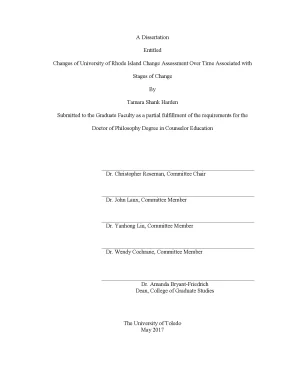
A Dissertation Entitled Changes of University of Rhode Island Change Assessment Over Time Associated with Stages of Change By Tamara Shank Harden Submitted to the Graduate Faculty as a partial fulfillment of the requirements for the Doctor of Philosophy Degree in Counselor Education ______________________________________________________ Dr. Christopher Roseman, Committee Chair ______________________________________________________ Dr. John Laux, Committee Member ______________________________________________________ Dr. Yanhong Liu, Committee Member ______________________________________________________ Dr. Wendy Cochrane, Committee Member ______________________________________________________ Dr. Amanda Bryant-Friedrich Dean, College of Graduate Studies The University of Toledo May 2017 Copyright 2017, Tamara Shank Harden This document is copyrighted material. Under copyright law, no parts of this document may be reproduced without the expressed permission of the author. An Abstract of Changes of University of Rhode Island Change Assessment Over Time Associated with Stages of Change By Tamara Shank Harden Submitted to the Graduate Faculty as a partial fulfillment of the requirements for the Doctor of Philosophy in Counselor Education The University of Toledo May 2017 Approximately one-quarter of the American population are affected by their own mental illness each year (National Alliance on Mental Illness [NAMI], 2013). Of those who take part in counseling, one-third to one-half do not see treatment gains and approximately 50% leave counseling prematurely (Duncan, Miller & Hubble, 2007). Research examining immediate feedback on the therapeutic alliance and therapeutic progress has shown statistically significant therapeutic improvements (Reese, Norworthy, & Rowlands, 2009). In addition, the client’s stage of change has been shown through research to correlate with progress in counseling (Ogrodniczuk, Joyce, & Piper, 2005). Clients who have not met their goals and leave counseling prematurely have described a reduction in therapeutic improvement and more emotional distress and are two times as likely seek out mental health services again, often becoming “chronic” clients (Ogrodniczuk, Joyce, and Piper (2005). Premature termination, along with other factors, leads to 10% of clients being the source of 60-70% of expenses (Miller, n. The purpose of this research was to determine whether completing Feedback Informed Treatment (FIT) moved clients through the Stages of Change more quickly, discouraging iii premature termination and lowering mental health expenses. Participants were mental health clients 18 and over assigned to four counselors for counseling at a community counseling center. Half of the participants were given FIT and half were not. The intent was for the URICA scores of the two groups to be compared to determine if FIT moves people through the Stages of Change more quickly. URICA scores were measured at the beginning of counseling and at 30 days and 60 days when possible. Six participants consented to the research so descriptive statistics are presented. This study showed it would be worthwhile to rerun the study with a larger sample. iv This dissertation is dedicated to Bob, mom, Molly, and Abby. Although I lost all of you during this process, your love, encouragement, support, and companionship made this project possible. Acknowledgements This signifies the end of many years of dedication. I did not accomplish alone. I would like to acknowledge several of the people who believed in me and offered support. Martin Ritchie was my first advisor and staunch believer in my capabilities, even through times of great loss, ensuring I kept momentum toward the ultimate goal. John Laux provided support and feedback, ensuring my comprehensive exams were completed, and also served on my dissertation committee. Christopher Roseman, chairperson of my dissertation committee, encouraged and guided me through some tough deadlines. I would like to thank the other members of my dissertation committee: Dr. Yanhong Liu and Dr. Wendy Cochrane for their feedback and encouragement. Sue Martin, department secretary, has been a source of smiles, encouragement, support, and information. Her help has been invaluable. Graduating from the Counselor Education program at the University of Toledo is a great source of pride. This project would not have been possible without the team of professionals at Behavioral Connections of Wood County. Clancy, I don’t have words to thank you for your support and all the assistance you have provided. Tiffany and Julie you have become my friends and I am forever grateful to you. Bob- we made it. You knew it would happen all along. Mom- I hope you can see and are proud. Molly and Abby your constant companionship and love kept me going. I wish you were all here to see the culmination. Scott, what can I say? You put up with me, fed me, edited, and were always here. Dad, Tonya, and Bob, I did do it. Karen, your support means everything. Shawn and Patty, thanks for listening. vi Table of Contents Abstract iii Acknowledgements vi Table of Contents vii List of Tables xii I. Chapter One: Introduction 1 A. Background of the Problem 1 C. Statement of the Problem 4 D. Purpose of the Study 5 E. Significance of the Study 7 G. Definition of Terms 9 I. Organization of Chapters 10 J. Chapter 2: Literature Review 12 A. Prevalence of Mental Health Issues in the United States 12 a. Effect of Caring for the Mentally Ill on the American Economy and How We Can Manage It 13 b. “The Age of Accountability. Ethical Responsibilities of Mental Health Professionals 16 vii D. History of Outcomes 18 E. Importance of Outcomes 19 F. Reluctance of Counselors to Use Outcomes 20 G. Patient-Focused Research 27 H. Use of Feedback/Outcomes 28 a. Evidence- Based Practice 29 b. Practice-Based Evidence 30 I. Overview and History of FIT 31 J. Measures of Client Functioning and Effect on Outcomes 34 K. Therapeutic Alliance as it Relates to the Outcome of Counseling 34 L. Measures of Feedback on Client Functioning 36 a. Behavior and Symptom Identification Scale (BASIS-24) 37 b. Clinical Outcomes in Routine Evaluation (CORE-OM) 38 c. Patient Reported Outcomes Management Information System (PROMIS) 40 e. Symptom Checklist-Revised (SCL-90-R) 42 f. Brief Symptom Inventory (BSI) 43 g. Outcome Rating Scale (ORS) 43 M. Measures of the Therapeutic Alliance 45 a. California Counseling Alliance Scale (CALPAS) 45 b. Helping Alliance Questionnaire (HAQ) 46 viii c. Working Alliance Inventory (WAI) 47 d. Session Rating Scale (SRS) 48 N. Stages of Change 49 a. Measures of Stages of Change 52 a. Stages of Change Readiness and Treatment Eagerness Scale (SOCRATES) 53 b. Readiness to Change Questionnaire 53 c. Scale for the Multiperspective Assessment of General Change Mechanisms in Counseling (SACiP) 54 d. University of Rhode Island Change Assessment (URICA) 54 P. Chapter 3: Overview of Study 58 A. Overview of the Method 58 C. Description of Participants 60 E. Feedback Informed Treatment (FIT) 63 i. Outcome Rating Scale (ORS) 64 ii. Session Rating Scale (SRS) 66 iii. University of Rhode Island Change Assessment ix (URICA) 68 H. Statement of Limitations 71 M. Explanation of Descriptive Statistics 75 C. Descriptive Statistics for Study Sample 76 D. Summary of Results 80 V. Implications for Counselors 87 D. Threats to Internal Validity 92 b. Threats to External Validity 93 E. Recommendations for Further Research 94 References 97 Appendices A. Informed Consent to Participate in Research 116 xi List of Tables Table 1 Demographic Information for Sample………………………….62 Table 2 Demographics for Initial URICA Readiness for Change Scores……….77 Table 3 Demographics for 30-day URICA Readiness for Change scores………….79 Table 4 Demographics for 60-day URICA Readiness for Change scores………….79 xii Chapter One Introduction General Introduction Chapter One will explain the problem addressed in this study. Chapter One will introduce the topic of Feedback Informed Treatment (FIT) and provide an argument that feedback is a necessary component of counseling. Chapter One will then address the purpose of the study, hypotheses, significance of the study, research design, and important terms. Chapter One will end with the organization of the dissertation and a summary. FIT is a therapeutic approach that involves the use of two forms during the counseling session (Tartakovsky, n. The Session Rating Scale (SRS) is used at the beginning of the session to assess the client’s functioning during the time between the current session and the last counseling session. It assesses overall functioning, social and interpersonal functioning, and general personal wellbeing. This information allows the counselor to discuss any progress or setbacks the client has experienced. The SRS is given at the end of the session and it assesses the therapeutic relationship, whether goals and topics were relevant to the client, whether the counselor’s approach was appropriate, and whether the overall session was a fit for the client. Background of the Problem Approximately one-fifth of the American population, or 43.8 million people, are affected by their own mental illness each year (National Alliance on Mental Illness [NAMI], 2013). According to Mojtabai and Jorm (2015) the United States experienced a large upsurge in the consumption of mental health services in the 1990s, however, they 1 report the pervasiveness of mental disorders did not wane in spite of the increased use of mental health services. Mojtabai and Jorm (2015) further state these perplexing trends raise questions about the efficacy of mental health treatments. In addition, the use of psychiatric medications grew significantly in the 1990s and continues to grow. The Substance Abuse and Mental Health Services Administration (SAMHSA, 2013) found that an average of approximately 24.6 million people who have a mental illness in the United States receive treatment every year, Mental health treatment costs Americans $113 billion per year ($4593 per person per year), with $3.7 billion allocated to outpatient counseling (Kliff, 2012). A typical level of reimbursement is 50% resulting in a large financial burden being placed on the client themselves (Harvard University, 2004). According to Szabo (2013) the recession, starting in 2009 and lasting until 2012, saw states reducing money for mental health services by $5 billion. According to the U. Department of Health and Human Services (n.) as of 2014 most individual and group health insurance plans are required to at least cover mental health. Even after mental health parity was passed into law through The Mental Health Parity and Addiction Equity Act of 2008 (MHPAEA) behavioral health care providers still regulate how many sessions a person may have for a particular problem or limit overall expenses (U. Department of Labor, 2010). Of those that take part in outpatient counseling, one-third to one-half do not see treatment gains and approximately 50% leave counseling prematurely (Duncan, Miller & Hubble, 2007; Duncan, 2012; Hatchett, 2011). Leaving counseling early, or premature termination, has been defined in several ways over the years (Renk & Dinger, 2002). For the purposes of this study, premature termination will be defined as leaving counseling 2 before the counselor and client agree goals have been met. Clients who have not met their goals and leave counseling prematurely have a tendency to seek out mental health services again. According to Ogrodniczuk, Joyce, and Piper (2005), clients who terminate counseling prematurely describe a reduction in therapeutic improvement and more emotional distress than they presented with, they also access mental health services two times as much as those who do not terminate prematurely. Ogrodniczuk et al. (2005) report those who terminate counseling early often become repeat or “chronic” clients, thus placing an additional burden on the mental health system. Premature termination, along with other factors, leads to 10% of clients being the source of 60-70% of expenses (Miller, n. In addition, when clients terminate counseling prematurely it is demoralizing and often causes further deterioration in their mental health (Duncan et al., 2007; Ogrodniczuk et al. Westmacott, Hunsley, Best, Rumstein-McCean, and Schindler (2010) found that counselors were not aware of any difficulty in the therapeutic relationship and the fact that the clients were not progressing as clinicians hoped the clients were. As a result, counselors were likely to underestimate the likelihood of premature termination and the reasons for early termination (Westmacott et al. In addition, Miller, Duncan, Sorrrell, and Brown (2005) claim clients prematurely terminate counseling before discussing any issues with the counselor. Barrett et al.

Nội dung được bảo vệ bản quyền — Tải xuống đầy đủ