Sổ Tay Hướng Dẫn Giải Chi Tiết Hóa Hữu Cơ (McGraw-Hill Create)

Chuyên ngành

Hóa học hữu cơ

Người đăng

Ẩn danh

2011

827
0
0

Phí lưu trữ

135 Point

Tóm tắt

I. Tổng quan về Study Guide Solution Manual trong hóa học hữu cơ

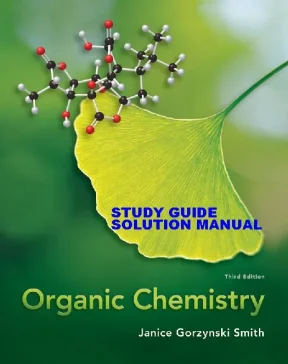
Study guide solution manual là tài liệu học thuật đi kèm giáo trình chính thức. Tài liệu này cung cấp lời giải chi tiết cho từng bài tập trong sách giáo khoa. McGraw-Hill phát hành phiên bản dành cho Organic Chemistry của Smith, ấn bản thứ ba vào năm 2011. Cấu trúc tài liệu bao gồm 29 chương, trải dài từ cấu trúc và liên kết hóa học đến polymer tổng hợp. Mỗi chương cung cấp phương pháp giải từng bước, giúp sinh viên nắm vững tư duy hóa học. Tài liệu không chỉ đơn thuần liệt kê đáp án. Ngược lại, tài liệu trình bày logic giải bài qua từng bước phân tích cụ thể. Phương pháp này giúp sinh viên xây dựng kỹ năng tư duy độc lập. Các chủ đề trọng tâm gồm phản ứng thế nucleophilic, phản ứng loại, quang phổ NMR và phổ hồng ngoại. Tài liệu cũng bao gồm hóa học carbonyl, acid amin và protein. Đây là nguồn tài nguyên thiết yếu cho sinh viên đại học ngành hóa học.

1.1. Cấu trúc và nội dung của study guide solution manual

Study guide solution manual được tổ chức song song với giáo trình chính. Mỗi chương trong tài liệu tương ứng với một chương trong sách Organic Chemistry của Smith. Chương 1 bắt đầu với cấu trúc và liên kết phân tử. Chương 2 đề cập acid và base hữu cơ. Các chương tiếp theo đi sâu vào phản ứng hữu cơ cụ thể. Tài liệu trình bày cấu trúc Lewis, cơ chế phản ứng và bài tập đồng phân hóa học một cách hệ thống. Mỗi lời giải đều có hướng dẫn từng bước rõ ràng.

1.2. Vai trò của solution manual trong học tập hóa học hữu cơ

Solution manual đóng vai trò công cụ kiểm tra và củng cố kiến thức. Sinh viên sử dụng tài liệu để đối chiếu phương pháp giải sau khi tự làm bài. Tài liệu giúp nhận diện lỗi sai trong tư duy hóa học. Ngoài ra, tài liệu cung cấp nhiều chiến lược giải bài thay thế. Đây là cầu nối giữa lý thuyết và kỹ năng thực hành giải bài thi. Việc sử dụng đúng cách solution manual rút ngắn thời gian ôn tập và nâng cao hiệu quả học tập đáng kể.

II. Phân tích các chủ đề trọng tâm trong study guide solution manual

Tài liệu study guide solution manual của Smith tập trung vào những chủ đề cốt lõi của hóa học hữu cơ. Phần cấu trúc Lewis và liên kết hóa học chiếm vị trí nền tảng. Sinh viên học cách đếm electron hóa trị và vẽ cấu trúc phân tử chính xác. Phần acid-base hữu cơ giải thích cơ chế cho-nhận proton theo Brønsted-Lowry và Lewis. Phản ứng thế nucleophilic (SN1, SN2) và phản ứng loại (E1, E2) được phân tích sâu qua cơ chế mũi tên cong. Phổ học bao gồm khối phổ, phổ hồng ngoại và NMR. Ba kỹ thuật này hỗ trợ xác định cấu trúc hợp chất hữu cơ. Hóa học carbonyl chiếm lượng lớn nội dung từ chương 20 đến 24. Phần cuối tài liệu đề cập đến acid amin, protein và polymer tổng hợp. Mỗi chủ đề đều có bài tập minh họa kèm lời giải chi tiết và phân tích lỗi sai thường gặp.

2.1. Cơ chế phản ứng hữu cơ trong solution manual

Cơ chế phản ứng là phần khó nhất của hóa học hữu cơ. Solution manual giải thích từng bước di chuyển electron qua ký hiệu mũi tên cong. Phản ứng thế nucleophilic SN2 xảy ra theo cơ chế một bước, đảo cấu hình. SN1 trải qua carbocation trung gian với hai bước riêng biệt. Phản ứng loại E2 đòi hỏi trans-periplanar geometry nghiêm ngặt. Tài liệu cung cấp sơ đồ năng lượng phản ứng và phân tích yếu tố ảnh hưởng đến cơ chế một cách toàn diện.

2.2. Đồng phân và stereochemistry trong tài liệu hướng dẫn

Đồng phân hóa học là khái niệm xuất hiện xuyên suốt study guide. Tài liệu phân biệt rõ đồng phân cấu trúc và đồng phân lập thể. Ví dụ minh họa gồm ba đồng phân của C2H4O và chín đồng phân của C3H6O. Stereochemistry giải thích cấu hình R/S, enantiomer và diastereomer. Tài liệu hướng dẫn cách vẽ cấu trúc Fischer và Newman projection. Phần này liên kết chặt chẽ với tính chất quang học và phản ứng hóa học lập thể chọn lọc.

III. Phương pháp sử dụng study guide solution manual hiệu quả

Sử dụng solution manual đúng cách tạo ra sự khác biệt lớn trong kết quả học tập. Nguyên tắc cơ bản là luôn tự giải bài trước khi xem đáp án. Quá trình vật lộn với bài toán kích hoạt tư duy phân tích. Sau đó, đối chiếu với lời giải trong tài liệu để phát hiện sai lầm. Ghi chép lại lỗi tư duy thường gặp vào vở riêng. Không nên sao chép lời giải mà không hiểu logic bên trong. Phương pháp active recall yêu cầu đọc câu hỏi, đóng sách và tái hiện quy trình giải. Sau đó mở tài liệu kiểm tra. Lặp lại những bài làm sai sau 24 giờ và 72 giờ theo nguyên tắc spaced repetition. Với phổ học NMR và IR, luyện tập nhận dạng peak đặc trưng từ bảng dữ liệu thực tế. Phần cơ chế phản ứng cần vẽ lại nhiều lần tay không nhìn tài liệu. Đây là phương pháp xây dựng trí nhớ cơ học hiệu quả nhất.

3.1. Kế hoạch học tập có cấu trúc với solution manual

Một kế hoạch học tập rõ ràng tối đa hóa giá trị của solution manual. Dành 30 phút đầu tự giải bài tập trong giáo trình. Tiếp theo 15 phút đối chiếu với lời giải trong tài liệu. Ghi lại điểm khác biệt và phân tích nguyên nhân sai. Ôn tập lại chương trước khi học chương mới. Kết hợp solution manual với flashcard cho các phản ứng quan trọng. Lịch học tuần tự từ cơ bản đến nâng cao giúp xây dựng nền tảng vững chắc và tránh nhảy cóc kiến thức.

3.2. Kết hợp phổ học và bài tập tổng hợp từ tài liệu

Phổ học đòi hỏi kỹ năng nhận dạng pattern qua luyện tập lặp lại. Solution manual cung cấp phổ NMR và IR mẫu kèm phân tích từng peak. Luyện tập giải phổ từ chương 13 và 14 song song với các chương phản ứng. Bài tập tổng hợp hữu cơ ở chương 25 yêu cầu kết hợp nhiều phản ứng. Tài liệu hướng dẫn lập sơ đồ retrosynthesis từ sản phẩm về nguyên liệu đầu. Kỹ năng này cần thời gian luyện tập dài hạn và kiên trì.

IV. Kết luận và ứng dụng thực tế của study guide solution manual

Study guide solution manual của Smith là tài liệu học thuật có giá trị lâu dài. Tài liệu không chỉ phục vụ sinh viên đang học mà còn là tài liệu tham khảo cho nghiên cứu sau đại học. Hiểu sâu hóa học hữu cơ mở ra nhiều hướng nghiên cứu trong dược học, vật liệu và sinh hóa. Các khái niệm về cấu trúc Lewis, acid-base Lewis và cơ chế phản ứng carbonyl xuất hiện trong nghiên cứu tổng hợp hữu cơ hiện đại. Kiến thức về stereochemistry trực tiếp ứng dụng trong phát triển thuốc bất đối xứng. Phần polymer tổng hợp liên kết với công nghệ vật liệu tiên tiến. Nắm vững nội dung trong solution manual cung cấp nền tảng để đọc hiểu tài liệu nghiên cứu khoa học. Sinh viên xuất sắc trong hóa học hữu cơ thường có kỹ năng giải bài tập theo cơ chế, không phải học thuộc lòng. Solution manual của McGraw-Hill xây dựng chính xác kỹ năng tư duy này qua hàng trăm bài tập có lời giải mẫu chất lượng cao.

4.1. Ứng dụng kiến thức hóa hữu cơ trong nghiên cứu khoa học

Kiến thức từ study guide solution manual xây dựng nền tảng cho nghiên cứu chuyên sâu. Hóa học carbonyl ứng dụng trong tổng hợp dược chất và phát triển thuốc mới. Stereochemistry quan trọng trong thiết kế phân tử sinh học hoạt tính. Hiểu rõ cơ chế phản ứng acid-base Lewis giải thích vai trò của enzyme trong cơ thể. Acid amin và protein ở chương 27 liên kết với nghiên cứu sinh hóa phân tử hiện đại. Nền tảng hóa hữu cơ vững chắc là tiền đề không thể thiếu cho nghiên cứu sau đại học.

4.2. Đánh giá chất lượng và tầm quan trọng của tài liệu McGraw Hill

McGraw-Hill là nhà xuất bản giáo dục hàng đầu thế giới với tiêu chuẩn chất lượng nghiêm ngặt. Study guide solution manual đi kèm Organic Chemistry của Smith được nhiều trường đại học Mỹ và quốc tế áp dụng. Tài liệu được biên soạn bởi chính tác giả giáo trình, đảm bảo tính nhất quán về thuật ngữ và phương pháp. Lời giải phản ánh đúng triết lý giảng dạy của giáo trình. Đây là điểm khác biệt quan trọng so với tài liệu giải bài của bên thứ ba. Phiên bản năm 2011 vẫn còn giá trị tham khảo cho các khái niệm cơ bản không thay đổi.
21/04/2026

Trích đoạn nội dung tài liệu

STUDY GUIDE SOLUTION MANUAL http://create.com Copyright 2011 by The McGraw-Hill Companies, Inc. All rights reserved. Printed in the United States of America. Except as permitted under the United States Copyright Act of 1976, no part of this publication may be reproduced or distributed in any form or by any means, or stored in a database or retrieval system, without prior written permission of the publisher. This McGraw-Hill Create text may include materials submitted to McGraw-Hill for publication by the instructor of this course. The instructor is solely responsible for the editorial content of such materials. Instructors retain copyright of these additional materials. ISBN-10: 1121180612 ISBN-13: 9781121180611 Contents 1. Structure and Bonding 1 2. Acids and Bases 33 3. Introduction to Organic Molecules and Functional Groups 57 4. Understanding Organic Reactions 139 7. Alkyl Halides and Nucleophilic Substitution 159 8. Alkyl Halides and Elimination Reactions 193 9. Alcohols, Ethers, and Epoxides 223 10. Oxidation and Reduction 309 13. Mass Spectrometry and Infrared Spectroscopy 337 14. Nuclear Magnetic Resonance Spectroscopy 351 15. Conjugation, Resonance, and Dienes 397 17. Benzene and Aromatic Compounds 421 18. Electrophilic and Aromatic Substitution 443 19. Carboxylic Acids and the Acidity of the O-H Bond 479 20. Introduction to Carbonyl Chemistry 501 21. Aldehydes and Ketones — Nucleophilic Addition 535 22. Carboxylic Acids and Their Derivatives — Nucleophilic Acyl Substitution 567 23. Substitution Reactions of Carbonyl Compounds at the a Carbon 603 24. Carbonyl Condensation Reactions 631 25. Carbon-Carbon Bonding-Forming Reactions in Organic Synthesis 693 27. Amino Acids and Proteins 751 29. Synthetic Polymers 801 iii Credits 1. Structure and Bonding: Chapter 1 from Study Guide/Solutions Manual to accompany Organic Chemistry, Third Edition by Smith 1 2. Acids and Bases: Chapter 2 from Study Guide/Solutions Manual to accompany Organic Chemistry, Third Edition by Smith 33 3. Introduction to Organic Molecules and Functional Groups: Chapter 3 from Study Guide/Solutions Manual to accompany Organic Chemistry, Third Edition by Smith 57 4. Alkanes: Chapter 4 from Study Guide/Solutions Manual to accompany Organic Chemistry, Third Edition by Smith 75 5. Stereochemistry: Chapter 5 from Study Guide/Solutions Manual to accompany Organic Chemistry, Third Edition by Smith 111 6. Understanding Organic Reactions: Chapter 6 from Study Guide/Solutions Manual to accompany Organic Chemistry, Third Edition by Smith 139 7. Alkyl Halides and Nucleophilic Substitution: Chapter 7 from Study Guide/Solutions Manual to accompany Organic Chemistry, Third Edition by Smith 159 8. Alkyl Halides and Elimination Reactions: Chapter 8 from Study Guide/Solutions Manual to accompany Organic Chemistry, Third Edition by Smith 193 9. Alcohols, Ethers, and Epoxides: Chapter 9 from Study Guide/Solutions Manual to accompany Organic Chemistry, Third Edition by Smith 223 10. Alkenes: Chapter 10 from Study Guide/Solutions Manual to accompany Organic Chemistry, Third Edition by Smith 257 11. Alkynes: Chapter 11 from Study Guide/Solutions Manual to accompany Organic Chemistry, Third Edition by Smith 287 12. Oxidation and Reduction: Chapter 12 from Study Guide/Solutions Manual to accompany Organic Chemistry, Third Edition by Smith 309 13. Mass Spectrometry and Infrared Spectroscopy: Chapter 13 from Study Guide/Solutions Manual to accompany Organic Chemistry, Third Edition by Smith 337 14. Nuclear Magnetic Resonance Spectroscopy: Chapter 14 from Study Guide/Solutions Manual to accompany Organic Chemistry, Third Edition by Smith 351 15. Radical Reactions: Chapter 15 from Study Guide/Solutions Manual to accompany Organic Chemistry, Third Edition by Smith 373 16. Conjugation, Resonance, and Dienes: Chapter 16 from Study Guide/Solutions Manual to accompany Organic Chemistry, Third Edition by Smith 397 17. Benzene and Aromatic Compounds: Chapter 17 from Study Guide/Solutions Manual to accompany Organic Chemistry, Third Edition by Smith 421 18. Electrophilic and Aromatic Substitution: Chapter 18 from Study Guide/Solutions Manual to accompany Organic Chemistry, Third Edition by Smith 443 19. Carboxylic Acids and the Acidity of the O-H Bond: Chapter 19 from Study Guide/Solutions Manual to accompany Organic Chemistry, Third Edition by Smith 479 iv 20. Introduction to Carbonyl Chemistry: Chapter 20 from Study Guide/Solutions Manual to accompany Organic Chemistry, Third Edition by Smith 501 21. Aldehydes and Ketones — Nucleophilic Addition: Chapter 21 from Study Guide/Solutions Manual to accompany Organic Chemistry, Third Edition by Smith 535 22. Carboxylic Acids and Their Derivatives — Nucleophilic Acyl Substitution: Chapter 22 from Study Guide/Solutions Manual to accompany Organic Chemistry, Third Edition by Smith 567 23. Substitution Reactions of Carbonyl Compounds at the a Carbon: Chapter 23 from Study Guide/Solutions Manual to accompany Organic Chemistry, Third Edition by Smith 603 24. Carbonyl Condensation Reactions: Chapter 24 from Study Guide/Solutions Manual to accompany Organic Chemistry, Third Edition by Smith 631 25. Amines: Chapter 25 from Study Guide/Solutions Manual to accompany Organic Chemistry, Third Edition by Smith 659 26. Carbon-Carbon Bonding-Forming Reactions in Organic Synthesis: Chapter 26 from Study Guide/Solutions Manual to accompany Organic Chemistry, Third Edition by Smith 693 27. Carbohydrates: Chapter 27 from Study Guide/Solutions Manual to accompany Organic Chemistry, Third Edition by Smith 715 28. Amino Acids and Proteins: Chapter 28 from Study Guide/Solutions Manual to accompany Organic Chemistry, Third Edition by Smith 751 29. Lipids: Chapter 29 from Study Guide/Solutions Manual to accompany Organic Chemistry, Third Edition by Smith 785 30. Synthetic Polymers: Chapter 30 from Study Guide/Solutions Manual to accompany Organic Chemistry, Third Edition by Smith 801 v 1 Smith: Study Guide/ 1. Structure and Bonding Text © The McGraw−Hill Study Guide/Solutions Manual to accompany Organic Chemistry, Third Edition Solutions Manual to Companies, 2011 accompany Organic Chemistry, Third Edition Structure and Bonding 1–1 C Chhaapptteerr 11:: SSttrruuccttuurree aanndd B Boonnddiinngg   IIm mppoorrttaanntt ffaaccttss • The general rule of bonding: Atoms strive to attain a complete outer shell of valence electrons (Section 1. Second-row elements “want” 8 electrons. nonbonded electron pair H C N O X X = F, Cl, Br, I Usual number of bonds in neutral atoms 1 4 3 2 1 Number of nonbonded 0 0 1 2 3 electron pairs The sum (# of bonds + # of lone pairs) = 4 for all elements except H. • Formal charge (FC) is the difference between the number of valence electrons of an atom and the number of electrons it “owns” (Section 1. See Sample Problem 1.4 for a stepwise example. formal charge = number of – number of electrons Definition: valence electrons an atom "owns" Examples: C C C • C shares 8 electrons. • Each C shares 6 electrons. • Each C "owns" 3 electrons. • C has 2 unshared electrons. • FC = 0 • FC = +1 • C "owns" 5 electrons. • FC = 1 • Curved arrow notation shows the movement of an electron pair. The tail of the arrow always begins at an electron pair, either in a bond or a lone pair. The head points to where the electron pair “moves” (Section 1. O O Move an electron pair to O. H C N H H C N H A B Use this electron pair to form a double bond. • Electrostatic potential plots are color-coded maps of electron density, indicating electron rich and electron deficient regions (Section 1. 2 Smith: Study Guide/ 1. Structure and Bonding Text Study Guide/Solutions Manual to accompany: Organic Chemistry, 3rd Edition Solutions Manual to © The McGraw−Hill Companies, 2011 accompany Organic Chemistry, Third Edition Chapter 1–2   TThhee iim mppoorrttaannccee ooff LLeew wiiss ssttrruuccttuurreess ((SSeeccttiioonnss 11.44)) A properly drawn Lewis structure shows the number of bonds and lone pairs present around each atom in a molecule. In a valid Lewis structure, each H has two electrons, and each second-row element has no more than eight. This is the first step needed to determine many properties of a molecule.6) Lewis structure Hybridization [sp, sp2, or sp3] (Section 1.8) Types of bonds [single, double, or triple] (Sections 1.55)) The basic principles: • Resonance occurs when a compound cannot be represented by a single Lewis structure. • Two resonance structures differ only in the position of nonbonded electrons and  bonds. • The resonance hybrid is the only accurate representation for a resonance-stabilized compound. A hybrid is more stable than any single resonance structure because electron density is delocalized.  O O O CH3CH2 C CH3CH2 C CH3CH2 C delocalized charges O O  O delocalized  bonds resonance structures hybrid The difference between resonance structures and isomers: • Two isomers differ in the arrangement of both atoms and electrons. • Resonance structures differ only in the arrangement of electrons. O O O CH3 C CH3CH2 C CH3CH2 C O CH3 O H O H isomers resonance structures  GGeeoom meettrryy aanndd hhyybbrriiddiizzaattiioonn The number of groups around an atom determines both its geometry (Section 1.6) and hybridization (Section 1. Number of Geometry Bond angle (o) Hybridization Examples groups 2 linear 180 sp BeH2, HCCH 3 trigonal planar 120 sp2 BF3, CH2=CH2 4 tetrahedral 109.5 sp3 CH4, NH3, H2O 3 Smith: Study Guide/ 1. Structure and Bonding Text © The McGraw−Hill Study Guide/Solutions Manual to accompany Organic Chemistry, Third Edition Solutions Manual to Companies, 2011 accompany Organic Chemistry, Third Edition Structure and Bonding 1–3  DDrraaw wiinngg oorrggaanniicc m moolleeccuulleess ((SSeeccttiioonn 11.77)) • Shorthand methods are used to abbreviate the structure of organic molecules. CH3 H CH3 = CH3 C C C CH3 = (CH3)2CHCH2C(CH3)3 H H CH3 skeletal structure isooctane condensed structure • A carbon bonded to four atoms is tetrahedral in shape. The best way to represent a tetrahedron is to draw two bonds in the plane, one in front, and one behind. Four equivalent drawings for CH4 H H HH H H C C C C H H H H H H H H HH Each drawing has two solid lines, one wedge, and one dashed line.  BBoonndd lleennggtthh • Bond length decreases across a row and increases down a column of the periodic table (Section 1. C H > N H > O H H F < H Cl < H Br Increasing bond length Increasing bond length • Bond length decreases as the number of electrons between two nuclei increases (Section 1. CH3 CH3 < CH2 CH2 < H C C H Increasing bond length • Bond length increases as the percent s-character decreases (Section 1. Csp H Csp2 H Csp3 H Increasing bond length • Bond length and bond strength are inversely related. Shorter bonds are stronger bonds (Section 1. longest C–C bond shortest C–C bond weakest bond C C C C C C strongest bond Increasing bond strength 4 Smith: Study Guide/ 1. Structure and Bonding Text Study Guide/Solutions Manual to accompany: Organic Chemistry, 3rd Edition Solutions Manual to © The McGraw−Hill Companies, 2011 accompany Organic Chemistry, Third Edition Chapter 1–4 • Sigma () bonds are generally stronger than  bonds (Section 1. C C C C C C 1 strong m bond 1 stronger m bond 1 stronger m bond 1 weaker / bond 2 weaker / bonds   EElleeccttrroonneeggaattiivviittyy aanndd ppoollaarriittyy ((SSeeccttiioonnss 11.1122)) • Electronegativity increases across a row and decreases down a column of the periodic table. • A polar bond results when two atoms of different electronegativity are bonded together. Whenever C or H is bonded to N, O, or any halogen, the bond is polar. • A polar molecule has either one polar bond, or two or more bond dipoles that reinforce.  D Drraaw wiinngg LLeew wiiss ssttrruuccttuurreess:: A A sshhoorrttccuutt Chapter 1 devotes a great deal of time to drawing valid Lewis structures. For molecules with many bonds, it may take quite awhile to find acceptable Lewis structures by using trial-and-error to place electrons. Fortunately, a shortcut can be used to figure out how many bonds are present in a molecule. Shortcut on drawing Lewis structures—Determining the number of bonds: [1] Count up the number of valence electrons. [2] Calculate how many electrons are needed if there were no bonds between atoms and every atom has a filled shell of valence electrons; i., hydrogen gets two electrons, and second-row elements get eight. This difference tells how many electrons must be shared to give every H two electrons and every second-row element eight.

Nội dung được bảo vệ bản quyền — Tải xuống đầy đủ