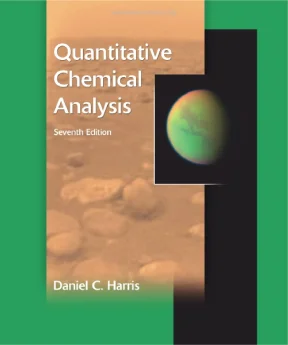
Giáo trình Quantitative Chemical Analysis (Ấn bản lần thứ 7) – Daniel C. Harris
Tổng quan về giáo trình
Quantitative Chemical Analysis (Ấn bản lần thứ 7, 2007) do tác giả Daniel C. Harris (thuộc Phòng thí nghiệm Michelson, China Lake, California) biên soạn và được xuất bản bởi W. H. Freeman and Company (New York, ISBN: 0-7167-7041-5). Trong chương trình đào tạo bậc đại học và sau đại học, giáo trình đóng vai trò là tài liệu giảng dạy nòng cốt cho học phần Hóa học Phân tích (Analytical Chemistry), phục vụ sinh viên chuyên ngành Hóa học, Khoa học Đời sống (Life Sciences) và Khoa học Môi trường (Environmental Science). Nội dung giáo trình được phát triển từ các khóa học Hóa học Phân tích do tác giả trực tiếp giảng dạy tại Đại học California ở Davis (dành cho sinh viên không chuyên) và trường Franklin and Marshall College ở Lancaster, Pennsylvania (dành cho sinh viên năm thứ ba chuyên ngành Hóa học).
Mục tiêu đào tạo của giáo trình hướng đến việc cung cấp kiến thức nền tảng vững chắc về các nguyên lý hóa lý chi phối quá trình đo lường định lượng, đồng thời rèn luyện phương pháp luận khoa học để giải quyết các bài toán phân tích trong thực tế. Sinh viên hoàn thành chương trình học có khả năng thiết kế quy trình phân tích hoàn chỉnh: từ khâu lấy mẫu đại diện, chuẩn bị mẫu, loại trừ cấu tử cản trở, đến việc lựa chọn công cụ đo lường thích hợp (phương pháp thể tích, khối lượng, điện hóa, quang phổ hoặc sắc ký) và xử lý thống kê số liệu thực nghiệm.
Giáo trình gồm 29 chương (từ Chương 0 đến Chương 28), được thiết kế theo tiến trình sư phạm tuyến tính kết hợp đa tầng: mở đầu bằng quy trình phân tích tổng quan, các công cụ đo lường và lý thuyết sai số, tiếp nối bằng hệ thống cân bằng hóa học cổ điển, sau đó mở rộng sang các phương pháp phân tích công cụ hiện đại và kỹ thuật tách chiết. Điểm đặc sắc trong cấu trúc của giáo trình là việc tích hợp ứng dụng bảng tính điện tử (Microsoft Excel) xuyên suốt mọi nội dung tính toán cân bằng phức tạp và xử lý dữ liệu, song song với việc minh họa các khái niệm học thuật bằng các nghiên cứu thực nghiệm liên ngành như phân tích theobromine/caffeine trong thực phẩm, phát triển cảm biến sinh học arsenic và đo đạc niên đại địa chất.
Nội dung kiến thức cốt lõi
Các chương/chủ đề chính
Cấu trúc nội dung của giáo trình được triển khai qua các nhóm chương chuyên đề trọng tâm:
- Quy trình phân tích và Xử lý dữ liệu (Chương 0 – 5): Giới thiệu bức tranh tổng thể về công việc của nhà hóa học phân tích (The Analytical Process), các đơn vị đo lường SI, cách biểu diễn nồng độ và các thao tác kỹ thuật cơ bản tại phòng thí nghiệm (Tools of the Trade). Tiếp đó, sách tập trung vào lý thuyết sai số (Experimental Error), các phân bố thống kê chuẩn Gaussian, kiểm định giả thuyết thống kê ($t$-test, $F$-test, $Q$-test), phương pháp bình phương tối thiểu (Method of Least Squares) và phương pháp kiểm soát chất lượng (Quality Assurance and Calibration Methods) bao gồm phương pháp thêm chuẩn (standard addition) và chất chuẩn nội (internal standards).
- Cân bằng Hóa học và Các phương pháp Chuẩn độ (Chương 6 – 13): Xây dựng nền tảng nhiệt động lực học của hằng số cân bằng, tích số tan ($K_{sp}$), cân bằng acid-base đơn chức và đa chức, dung dịch đệm, hoạt độ (activity) và xử lý có hệ thống các cân bằng hóa học (Systematic Treatment of Equilibrium). Nhóm chương này phân tích chi tiết kỹ thuật chuẩn độ acid-base, chuẩn độ kết tủa, chuẩn độ tạo phức với EDTA và mở rộng sang các bài toán cân bằng nâng cao (Advanced Topics in Equilibrium) xử lý bằng công cụ Solver trên bảng tính.
- Các phương pháp Phân tích Điện hóa (Chương 14 – 17): Trình bày nguyên lý tế bào Galvanic, phương trình Nernst, thế điện cực chuẩn, giản đồ Latimer, kỹ thuật đo thế (Potentiometry) với điện cực chọn lọc ion (ISE) và điện cực thủy tinh đo pH. Nhóm chương tiếp tục làm rõ chuẩn độ oxy hóa - khử, kỹ thuật điện phân, chuẩn độ điện lượng (Coulometry), phương pháp đo dòng (Amperometry), phương pháp von-ampe (Voltammetry) và kỹ thuật chuẩn độ Karl Fischer xác định hàm lượng vết của nước.
- Các phương pháp Phân tích Quang phổ (Chương 18 – 22): Khảo sát bản chất tương tác giữa bức xạ điện từ và vật chất, định luật Beer-Lambert, cấu tạo máy quang phổ (nguồn sáng, bộ tán sắc đơn sắc, đầu dò), quang phổ phát xạ và hấp thụ nguyên tử (AAS, ICP-MS), quang phổ huỳnh quang, phát quang sinh học và kỹ thuật khối phổ (Mass Spectrometry) với các kỹ thuật ion hóa hiện đại như MALDI hay ESI.
- Kỹ thuật Tách và Sắc ký (Chương 23 – 26): Cung cấp lý thuyết tách chất, sự giãn dải (band spreading), phương trình van Deemter, sắc ký khí (GC), sắc ký lỏng hiệu năng cao (HPLC) pha đảo, sắc ký trao đổi ion, sắc ký loại trừ kích thước, sắc ký ái lực và kỹ thuật điện di mao quản (Capillary Electrophoresis).
- Phân tích Khối lượng, Đốt cháy và Xử lý mẫu (Chương 27 – 28): Hệ thống hóa kỹ thuật kết tủa, tro hóa và tính toán hệ số cân trong phân tích khối lượng (Gravimetric Analysis), phân tích nguyên tố bằng phương pháp đốt cháy, cùng các chiến lược lấy mẫu thống kê và hòa tan/chiết tách mẫu phức tạp.
Kiến thức nền tảng được xây dựng
- Lý thuyết nhiệt động học và cân bằng ion: Xây dựng mô hình tính toán cân bằng hóa học dựa trên phương trình cân bằng khối lượng (mass balance), cân bằng điện tích (charge balance) kết hợp ảnh hưởng của lực ion (ionic strength) thông qua hệ số hoạt độ (sử dụng phương trình Davies và phương trình Debye-Hückel mở rộng).
- Lý thuyết sai số và thẩm định phép đo: Khung lý thuyết phân tích sai số ngẫu nhiên (random error), sai số hệ thống (systematic error), sự lan truyền độ không đảm bảo đo (propagation of uncertainty), cùng các tiêu chuẩn kiểm soát chất lượng dữ liệu phòng kiểm nghiệm (biểu đồ kiểm soát, phân bố Horwitz về độ chụm liên phòng thí nghiệm).
- Nguyên lý chuyển giao điện tích và quang phổ: Thiết lập mối liên hệ giữa thế khử, năng lượng tự do Gibbs và hằng số cân bằng; cơ chế vận hành của lớp điện kép; nguyên lý hấp thụ, phát xạ, dập tắt huỳnh quang (fluorescence quenching) và truyền năng lượng cộng hưởng huỳnh quang (FRET).
Kỹ năng phát triển
- Kỹ thuật thực nghiệm chính xác: Kỹ năng hiệu chuẩn dụng cụ thủy tinh đo thể tích (bình định mức, buret, pipet định mức Class A theo tiêu chuẩn ASTM); kỹ năng cân phân tích điện tử kèm hiệu chỉnh lực đẩy Archimedes của không khí theo công thức:
$$m = m' \cdot \frac{1 - \frac{d_a}{d_w}}{1 - \frac{d_a}{d}}$$
(trong đó $m'$ là khối lượng đọc trên cân, $d_a$ là khối lượng riêng không khí, $d_w$ là khối lượng riêng của quả cân chuẩn, $d$ là khối lượng riêng của vật mẫu). Thao tác lọc kết tủa bằng phễu lọc thủy tinh xốp (Gooch crucible) và giấy lọc không tro.
- Kỹ năng xử lý dữ liệu và mô hình hóa: Kỹ năng sử dụng phần mềm bảng tính Microsoft Excel để thiết lập bảng hồi quy tuyến tính (hàm
LINEST), phân tích phương sai, vẽ đường chuẩn nồng độ, và thuật toán giải phương trình phi tuyến tính bằng công cụ GOAL SEEK và SOLVER.
- Kỹ năng phân tích phân tích chuyên sâu: Khả năng nhận diện và loại trừ các yếu tố cản trở (interference) thông qua kỹ thuật che (masking), tối ưu hóa điều kiện tách pha trong sắc ký lỏng và sắc ký khí, và đọc kết quả phân tích phổ (phổ UV-Vis, FTIR, phổ khối lượng MS).
Phương pháp giảng dạy và học tập
Cách tiếp cận sư phạm (Pedagogical Approach)
Giáo trình áp dụng triệt để phương pháp tiếp cận dựa trên việc giải quyết vấn đề thực tế (Problem-Solving Context). Mỗi chương đều bắt đầu bằng một đề dẫn mở đầu (Chapter Opener) lấy từ các vấn đề khoa học hoặc đời sống để đặt ra câu hỏi đo lường cụ thể:
- Phân tích theobromine và caffeine trong thanh chocolate bằng phương pháp HPLC (Chương 0).
- Hiện tượng suy giảm tầng ozone tại Nam Cực để dẫn nhập vào quang phổ học (Chương 18).
- Kỹ thuật đo phổ suy giảm sóng khoang (Cavity Ring-Down Spectroscopy) để chẩn đoán vi khuẩn gây loét dạ dày (Chương 20).
- Phân tích dư lượng thuốc trừ sâu hoặc ô nhiễm arsenic trong nguồn nước ngầm tại Bangladesh (Chương 0).
Hệ thống bài tập và thực hành
- Ví dụ mẫu có lời giải (Worked Examples): Được tích hợp liên tục sau mỗi luận điểm lý thuyết, đóng vai trò hướng dẫn từng bước áp dụng công thức, cách tính toán số chữ số có nghĩa và chuyển đổi đơn vị.
- Bài tập cơ bản (Exercises): Đặt tại phần cuối mỗi chương, đại diện cho bộ bài tập tối thiểu bắt buộc sinh viên phải tự giải để củng cố các khái niệm then chốt. Hướng dẫn giải chi tiết cho toàn bộ các bài tập này được in ở phần phụ lục sau cuốn sách.
- Hệ thống câu hỏi mở rộng (Problems): Bao quát toàn bộ nội dung chi tiết của chương, chia nhỏ theo từng đề mục lý thuyết, bao gồm cả các bài toán yêu cầu xây dựng bảng tính Excel. Đáp số tóm tắt của các bài tập dạng số được cung cấp ở mục Answers to Problems.
- Danh mục thí nghiệm thực hành (Experiments): Giáo trình liên kết trực tiếp với trang web tài nguyên cung cấp hướng dẫn chi tiết cho 32 bài thí nghiệm chuẩn mực, bao gồm:
- Hiệu chuẩn dụng cụ thủy tinh (Bài 1).
- Định lượng canxi và magie trong nước tự nhiên bằng chuẩn độ EDTA (Bài 11).
- Chuẩn độ đo iod xác định hàm lượng Vitamin C (Bài 13).
- Phân tích thành phần DNA và thuốc giảm đau bằng sắc ký lỏng hiệu năng cao HPLC (Bài 30, 31).
- Phân tích acid amin và thành phần anion trong nước uống bằng điện di mao quản (Bài 29, 32).
Hướng dẫn tự học và kiểm tra đánh giá
- Tự học dựa trên mục tra cứu từ khóa (Terms to Understand) ở cuối mỗi chương và bảng giải nghĩa thuật ngữ (Glossary) gồm hàng trăm khái niệm được định nghĩa ngắn gọn.
- Đánh giá năng lực người học thông qua khả năng thiết lập bảng tính, tính toán cân bằng hóa học đa cấu tử và biện luận kết quả phân tích số liệu thống kê.
Điểm nổi bật và cập nhật
So với các ấn bản tiền nhiệm, ấn bản lần thứ 7 (Seventh Edition) của tác giả Daniel C. Harris có những điều chỉnh cấu trúc và cập nhật nội dung chuyên môn cụ thể:
| Hạng mục cập nhật |
Chi tiết chuyên môn trong Ấn bản 7 |
Mục tiêu học thuật |
| Tái cấu trúc Chương Đảm bảo chất lượng |
Chuyển nội dung Quality Assurance từ phần cuối sách lên Chương 5. |
Gắn kết trực tiếp quy trình kiểm soát chất lượng với lý thuyết thống kê sai số và phương pháp xây dựng đường chuẩn. |
| Tinh giản lý thuyết hệ số hoạt độ |
Hợp nhất hai chương cũ về hệ số hoạt độ và xử lý hệ thống cân bằng vào Chương 8. |
Tối ưu hóa lộ trình tiếp thu kiến thức cân bằng ion cơ bản trước khi bước vào các dạng chuẩn độ. |
| Bổ sung Chương Cân bằng nâng cao |
Xây dựng mới hoàn toàn Chương 13 (Advanced Topics in Equilibrium). |
Khai thác thuật toán giải phương trình đa biến bằng công cụ Excel Solver, xử lý hệ acid-base phức tạp và độ tan phụ thuộc pH. |
| Hiện đại hóa kỹ thuật phân tích |
Bổ sung cột sắc ký silica nguyên khối (Monolithic columns), sắc ký chất lỏng siêu tới hạn (SFC), kỹ thuật quét dồn mẫu (sweeping) trong điện di mao quản. |
Cập nhật xu hướng công nghệ tách chiết và vật liệu phân tích mới. |
| Tích hợp cảm biến sinh học & công nghệ mới |
Đưa vào các nghiên cứu về cảm biến FRET, cảm biến cộng hưởng plasmon bề mặt (SPR), quang phổ huỳnh quang nguyên tử hơi lạnh phân tích thủy ngân. |
Giới thiệu các công cụ phân tích hiện đại ứng dụng trong y sinh học và môi trường. |
| Tư liệu lịch sử khoa học thực chứng |
Trích dẫn thí nghiệm phân tích khối lượng từ luận án tiến sĩ năm 1903 của Marie Curie và nghiên cứu đo tuổi địa chất năm 1910 của Arthur Holmes (Chương 27). |
Minh họa tính chính xác và giá trị ứng dụng bền vững của phương pháp phân tích khối lượng cổ điển. |
Đối tượng sử dụng giáo trình
Giáo trình được biên soạn phục vụ các nhóm đối tượng và mục đích học thuật cụ thể:
- Sinh viên đại học: Phù hợp nhất cho sinh viên năm thứ hai hoặc năm thứ ba đang theo học các ngành Cử nhân Hóa học, Kỹ thuật Hóa học, Hóa Dược, Công nghệ Thực phẩm, Khoa học Môi trường, Nông nghiệp, và Y sinh học. Giáo trình đóng vai trò là tài liệu học tập chính thức cho học phần Hóa học Phân tích đại cương và nâng cao.
- Học viên cao học và nghiên cứu sinh: Khai thác các chương chuyên sâu như Chương 13 (Cân bằng nâng cao), Chương 21 (Quang phổ nguyên tử/ICP-MS), Chương 22 (Khối phổ phân giải cao), Chương 25 (Phát triển phương pháp HPLC) phục vụ việc nghiên cứu phát triển quy trình phân tích và xử lý dữ liệu thực nghiệm.
- Yêu cầu kiến thức tiên quyết (Prerequisites): Người học cần hoàn thành học phần Hóa học Đại cương (General Chemistry), nắm vững đại số cơ bản (phép tính logarit, hàm mũ, phương trình bậc hai) và các kỹ năng cơ bản về thao tác máy tính văn phòng (phần mềm Microsoft Excel).
- Giảng viên và chuyên viên phân tích: Giảng viên có thể sử dụng hệ thống bài tập, câu hỏi thảo luận, các thí nghiệm mẫu (Chemical Demonstrations như đài phun nước HCl, chuẩn độ Fajans) và bộ slide PowerPoint hình ảnh chuẩn hóa để thiết kế bài giảng. Chuyên viên phòng thí nghiệm có thể sử dụng sách như một tài liệu tra cứu quy chuẩn về hằng số phân ly acid ($K_a$), tích số tan ($K_{sp}$), thế khử chuẩn ($E^\circ$), hằng số tạo phức chelate và dung sai dụng cụ đo.
Câu hỏi thường gặp
1. Giáo trình này phù hợp nhất với những ngành học nào?
Giáo trình được thiết kế chuẩn mực cho sinh viên theo học ngành Hóa học thuần túy, đồng thời được tối ưu hóa cho các ngành khoa học liên ngành ứng dụng phương pháp đo lường như Hóa sinh, Khoa học Môi trường, Khoa học Dược phẩm, Công nghệ Sinh học và Khoa học Thực phẩm.
2. Người học cần chuẩn bị kiến thức nền tảng nào trước khi học?
Người học cần có kiến thức cơ bản về Hóa học Đại cương (khái niệm mol, phản ứng hóa học, nhiệt động học cơ bản) và toán học phổ thông (đặc biệt là đại số và đồ thị). Không yêu cầu kỹ năng lập trình, nhưng người học cần biết sử dụng các thao tác bảng tính cơ bản trên Microsoft Excel.
3. Điểm khác biệt cốt lõi giữa giáo trình này và các tài liệu hóa học phân tích truyền thống là gì?
Điểm khác biệt lớn nằm ở việc hiện đại hóa công cụ tính toán: loại bỏ các phép tính gần đúng thủ công rườm rà để chuyển sang ứng dụng bảng tính điện tử (Excel Goal Seek và Solver) trong giải quyết cân bằng hóa học; đồng thời đưa nội dung Đảm bảo chất lượng (Quality Assurance) vào giai đoạn sớm của chương trình thay vì xem như một phụ lục kỹ thuật.
4. Phương pháp tự học giáo trình như thế nào để đạt hiệu quả cao?
Người học nên đọc phần dẫn nhập ứng dụng thực tế ở đầu chương, theo dõi từng bước trong các ví dụ mẫu (Worked Examples), sau đó hoàn thành toàn bộ phần bài tập bắt buộc (Exercises) và đối chiếu với đáp án chi tiết ở cuối sách. Sau khi nắm vững, người học tiếp tục thực hành trên Excel đối với các bài toán xây dựng đường chuẩn và mô phỏng đường cong chuẩn độ.
5. Giáo trình có những tài liệu bổ trợ nào đi kèm?
Giáo trình đi kèm sách giải bài tập chi tiết (Solutions Manual for Quantitative Chemical Analysis), hệ thống ấn bản điện tử (eBook) có tính năng liên kết thuật ngữ trực tiếp, cùng cổng thông tin trực tuyến cung cấp dữ liệu bảng tính mẫu, các ứng dụng đồ thị động dạng Java applet và tài liệu hướng dẫn chi tiết cho 32 bài thí nghiệm thực hành.
Kết luận
Giáo trình Quantitative Chemical Analysis (Seventh Edition) của Daniel C. Harris hệ thống hóa toàn diện các nguyên lý hóa học phân tích từ nền tảng cân bằng ion, kỹ thuật chuẩn độ thể tích cổ điển đến các phương pháp phân tích công cụ hiện đại và xử lý thống kê dữ liệu thực nghiệm.
Lộ trình học tập được thiết kế mạch lạc: đi từ việc làm chủ công cụ đo lường và kiểm soát sai số (Chương 0–5), thiết lập bản chất cân bằng hóa học và chuẩn độ (Chương 6–13), làm chủ các phương pháp đo đạc điện hóa – quang phổ (Chương 14–22), đến việc vận dụng thành thạo các kỹ thuật phân tách sắc ký và chuẩn bị mẫu thực tế (Chương 23–28). Với hệ thống phụ lục tra cứu chuẩn xác (từ Phụ lục A đến K), danh mục thuật ngữ học thuật và liên kết thực hành phong phú, giáo trình cung cấp cấu trúc học liệu hoàn chỉnh phục vụ công tác giảng dạy, học tập và nghiên cứu chuyên sâu trong lĩnh vực khoa học phân tích.