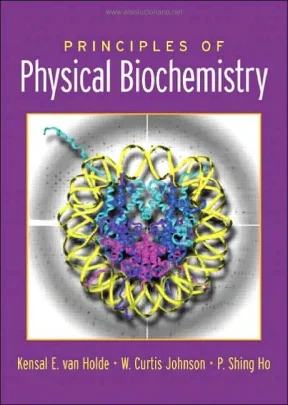
Principles of Physical Biochemistry - 2nd Edition by Van Holde, Johnson & Ho

Trường đại học

Oregon State University

Chuyên ngành

Hóa sinh vật lý

Người đăng

Ẩn danh

Thể loại

Sách giáo khoa

2006

752
0
0

Phí lưu trữ

135 Point

Tóm tắt

I. Tổng quan về Principles of Physical Biochemistry 2nd Edition

Principles of Physical Biochemistry xuất bản lần thứ hai năm 2006 là tài liệu tham khảo hàng đầu trong lĩnh vực hóa sinh vật lý. Ba tác giả Kensal E. van Holde, W. Curtis Johnson và P. Shing Ho đều là giáo sư tại Đại học Oregon State. Cuốn sách được Pearson Prentice Hall xuất bản và là phiên bản cập nhật toàn diện so với lần đầu năm 1998. Nội dung bao phủ các nguyên lý vật lý nền tảng ứng dụng vào nghiên cứu phân tử sinh học. Sách gồm các chương từ cấu trúc đại phân tử sinh học đến nhiệt động lực học, quang phổ học và kỹ thuật phân tích hiện đại. Đây là tài liệu thiết yếu cho sinh viên sau đại học ngành hóa sinh, sinh học phân tử và biophysics. Phiên bản thứ hai bổ sung các ứng dụng thực tiễn và cập nhật kiến thức mới nhất về cấu trúc protein và axit nucleic. Sách sử dụng phương pháp tiếp cận từ nguyên lý vật lý cơ bản đến ứng dụng sinh học phức tạp. Mỗi chương đều có bài tập và tài liệu tham khảo chọn lọc.

1.1. Tác giả và bối cảnh ra đời của cuốn sách

Ba tác giả đều là giáo sư danh dự tại Khoa Hóa sinh và Vật lý sinh học, Đại học Oregon State. Kensal E. van Holde là chuyên gia hàng đầu về cấu trúc chromatin. W. Curtis Johnson nổi tiếng với nghiên cứu phổ dichroism tròn. P. Shing Ho chuyên về cấu trúc axit nucleic và sinh học cấu trúc. Phiên bản thứ hai được viết lại đáng kể so với lần đầu, phản ánh tiến bộ nhanh chóng của hóa sinh vật lý trong tám năm. Sách được sử dụng rộng rãi tại các trường đại học hàng đầu thế giới.

1.2. Cấu trúc và phạm vi nội dung tổng thể

Sách bắt đầu với chương về đại phân tử sinh học, đặt nền tảng cho toàn bộ nội dung tiếp theo. Nhiệt động lực học sinh hóa được trình bày trong chương hai với các khái niệm từ Luật thứ nhất đến entropy và năng lượng tự do. Các chương tiếp theo đề cập quang phổ học, kỹ thuật tán xạ, cộng hưởng từ hạt nhân và phương pháp nhiễu xạ tia X. Mỗi chủ đề được trình bày từ lý thuyết cơ sở đến ứng dụng thực tế trong nghiên cứu sinh học phân tử hiện đại.

II. Phân tích cấu trúc đại phân tử trong Principles of Physical Biochemistry

Chương một của sách đặt nền tảng cho toàn bộ tác phẩm với phân tích chi tiết về cấu trúc đại phân tử sinh học. Protein và axit nucleic được xem xét từ cấu hình, cấu dạng đến tương tác phân tử. Sách phân tích cặn kẽ môi trường tế bào và sự tương tác của phân tử với nước. Khái niệm hydrophilic và hydrophobic được giải thích thông qua cấu trúc clathrate của nước quanh ion và hydrocarbon. Phân tích đối xứng phân tử chiếm vị trí quan trọng, bao gồm đối xứng xoắn ốc và nhóm điểm. Cấu trúc protein được phân tích từ chuỗi axit amin duy nhất đến cấu trúc bậc hai và bậc ba. Liên kết peptide và ảnh hưởng của nó lên cấu dạng protein được trình bày kỹ lưỡng. Sách cũng phân tích góc xoắn trong chuỗi polynucleotide và cấu trúc xoắn kép của axit nucleic. Các cấu trúc bậc cao hơn trong polynucleotide, bao gồm DNA bốn mạch và RNA có cấu trúc phức tạp, cũng được đề cập.

2.1. Tương tác phân tử và môi trường nước trong tế bào

Khi phân tử đặt vào nước, dung môi tạo lớp vỏ bao quanh tương tự mặt phân cách không khí-nước. Nước tạo cấu trúc clathrate dạng lồng quanh ion. Hợp chất hydrophilic tương tác mạnh với nước nhờ lực tĩnh điện và liên kết hydrogen. Muối như NaCl có độ hòa tan cao vì phân ly thành ion mang điện. Ngược lại, hydrocarbon như methane tạo lồng nước có cấu trúc cứng nhắc, ít entropy, dẫn đến tính kỵ nước. Hiểu tương tác này là nền tảng để phân tích nếp gấp protein và lắp ráp màng sinh học.

2.2. Đối xứng xoắn ốc và cấu trúc helix trong đại phân tử

Đối xứng xoắn ốc dùng toán tử quay và toán tử tịnh tiến để mô tả cấu trúc helix. Từ đơn vị monomer tại vị trí i với tọa độ (x, y, z), vị trí tiếp theo được xác định qua phép biến đổi đối xứng vít. Pitch P là khoảng dịch chuyển dọc trục helix trong một vòng đầy đủ. Góc xoắn θ xác định độ xoay giữa các đơn vị kế tiếp. Mô hình cầu thang xoắn ốc minh họa trực quan cho khái niệm này. Thông số rise h và twist θ mô tả đầy đủ đặc trưng hình học của helix trong đại phân tử sinh học.

III. Phương pháp nghiên cứu vật lý sinh học được trình bày trong sách

Principles of Physical Biochemistry 2nd edition trình bày hệ thống các phương pháp vật lý ứng dụng trong nghiên cứu sinh hóa. Nhiệt động lực học sinh hóa được xây dựng từ Luật thứ nhất qua entropy đến năng lượng tự do Gibbs và cân bằng. Quang phổ học bao gồm quang phổ hấp thụ, phát huỳnh quang và dichroism tròn. Kỹ thuật cộng hưởng từ hạt nhân NMR cho phép xác định cấu trúc protein trong dung dịch. Nhiễu xạ tia X là công cụ chính xác định cấu trúc ba chiều của protein tinh thể. Kỹ thuật tán xạ neutron và tán xạ ánh sáng cho thông tin về kích thước và hình dạng phân tử. Siêu ly tâm phân tích xác định khối lượng phân tử và hệ số lắng. Điện di và sắc ký được trình bày trong bối cảnh phân tích đại phân tử sinh học. Mỗi phương pháp đều đi kèm cơ sở lý thuyết, quy trình thực nghiệm và ví dụ ứng dụng cụ thể.

3.1. Nhiệt động lực học và cân bằng sinh hóa

Luật thứ nhất nhiệt động lực học định nghĩa nhiệt, công và năng lượng nội. Luật thứ hai giới thiệu entropy và năng lượng tự do Gibbs. Sách trình bày cách tính ΔG cho các phản ứng sinh hóa và liên hệ với hằng số cân bằng K. Giải thích phân tử của các đại lượng nhiệt động lực học giúp hiểu sâu cơ chế phản ứng enzyme và gấp cuộn protein. Các ứng dụng bao gồm phân tích ổn định nhiệt của protein và tương tác ligand-protein.

3.2. Quang phổ học và kỹ thuật phân tích cấu trúc hiện đại

Quang phổ UV-Vis dùng xác định nồng độ và theo dõi phản ứng sinh hóa. Phổ dichroism tròn CD đặc biệt hữu ích phân tích cấu trúc bậc hai của protein. NMR trong dung dịch xác định cấu trúc protein và động lực học phân tử ở độ phân giải nguyên tử. Nhiễu xạ tia X tinh thể học cung cấp hình ảnh ba chiều với độ phân giải cao nhất. Kính hiển vi điện tử cryo-EM ngày càng quan trọng cho phức hợp phân tử lớn. Mỗi kỹ thuật có ưu điểm và giới hạn riêng, thường được dùng phối hợp.

IV. Kết luận và ứng dụng Principles of Physical Biochemistry trong nghiên cứu

Principles of Physical Biochemistry 2nd edition là tài liệu không thể thiếu cho nhà nghiên cứu hóa sinh và sinh học phân tử. Sách cung cấp nền tảng lý thuyết vững chắc kết hợp với ứng dụng thực tiễn trong nghiên cứu hiện đại. Sinh viên tiến sĩ sử dụng sách để hiểu cơ sở vật lý của các kỹ thuật thực nghiệm thường dùng. Nhà nghiên cứu tham khảo để giải thích dữ liệu thực nghiệm từ quang phổ học, tán xạ và nhiễu xạ. Sách đặc biệt có giá trị trong nghiên cứu cấu trúc protein liên quan đến thiết kế thuốc. Hiểu nguyên lý vật lý sinh học giúp phát triển kỹ thuật mới trong chẩn đoán và trị liệu y học. Các chương về nhiệt động lực học được ứng dụng trực tiếp trong nghiên cứu gấp cuộn protein và bệnh liên quan amyloid. Phần đối xứng phân tử hỗ trợ thiết kế phân tử và kỹ thuật protein. Giá trị của sách vượt qua lớp học, trở thành tài liệu tra cứu suốt sự nghiệp nghiên cứu.

4.1. Ứng dụng trong nghiên cứu cấu trúc protein và thiết kế thuốc

Hiểu cấu trúc protein ở mức độ nguyên tử là nền tảng thiết kế thuốc hợp lý. Principles of Physical Biochemistry cung cấp kiến thức về lực tương tác phân tử, nhiệt động lực học liên kết và phương pháp xác định cấu trúc. Nghiên cứu viên dược phẩm dùng các nguyên lý này để dự đoán tương tác thuốc-protein. Kỹ thuật ITC đo nhiệt động lực học liên kết ligand trực tiếp. Hiểu đặc tính hydrophobic và hydrophilic hướng dẫn tối ưu hóa phân tử thuốc.

4.2. Vai trò trong giáo dục sinh học phân tử và hóa sinh hiện đại

Sách được dùng làm giáo trình chính tại hàng trăm chương trình tiến sĩ sinh hóa trên thế giới. Cách tiếp cận từ nguyên lý vật lý cơ bản giúp sinh viên xây dựng tư duy phân tích độc lập. Bài tập cuối chương rèn luyện khả năng giải quyết vấn đề định lượng. Tài liệu tham khảo được chọn lọc kỹ dẫn người học đến các công trình quan trọng trong lĩnh vực. Sự kết hợp giữa lý thuyết và ứng dụng làm cho sách phù hợp cả giảng dạy lẫn tự học chuyên sâu.
21/04/2026

Trích đoạn nội dung tài liệu

net Principles of Physical Biochemistry www.net Principles of Physical Biochemistry Second Edition Kensal E. van Holde Professor Emeritus of Biochemistry and Biophysics Department of Biochemistry and Biophysics Oregon State University W. Curtis Johnson Professor Emeritus of Biochemistry and Biophysics Department of Biochemistry and Biophysics Oregon State University P. Shing Ho Professor and Chair, Biochemistry and Biophysics Department of Biochemistry and Biophysics Oregon State University PEARSON Prentice Hall Upper Saddle River, New Jersey 07458 www.net Library of Congress Cataloging-in-Publication Data Van Holde, K. (Kensal Edward) Principles of physical biochemistry / Kensal E. Includes bibliographical references and index. Ho, Pui Shing III.P49V36 2006 572--dc22 2005042993 Executive Editor: Gary Carlson Marketing Manager: Andrew Gilfillan Art Editors: Eric Day and Connie Long Production Supervision/Composition: Progressive Publishing Alternatives/Laserwords Art Studio: Laserwords Art Director: Jayne Conte Cover Designer: Bruice Kenselaar Manufacturing Buyer: Alan Fischer Editorial Assistant: Jennifer Hart © 2006, 1998 by Pearson Education, Inc. Pearson Prentice Hall Pearson Education, Inc. Upper Saddle River, NJ 07458 All rights reserved. No part of this book may be reproduced, in any form or by any means, without permission in writing from the publisher. Pearson Prentice HaU™ is a trademark of Pearson Education, Inc. Printed in the United States of America 10 9 8 7 6 5 4 3 2 1 ISBN 0-13-046427-9 Pearson Education Ltd., London Pearson Education Australia Pty., Sydney Pearson Education Singapore, Pte. Pearson Education North Asia Ltd., Hong Kong Pearson Education Canada, Inc., Toronto Pearson Educacfon de Mexico, S. Pearson Education-Japan, Tokyo Pearson Education Malaysia, Pte.net Contents Preface xiii Chapter 1 Biological Macromolecules 1 1.2 Configuration and Conformation 5 1.2 ~olecular Interactions in ~acromolecular Structures 8 1.3 The Environment in the Cell 10 1.2 The Interaction of ~olecules with Water 15 1.3 Nonaqueous Environment of Biological ~olecules 16 1.4 Symmetry Relationships of ~olecules 19 1.3 ~ultiple Symmetry Relationships and Point Groups 25 1.5 The Structure of Proteins 27 1.2 The Unique Protein Sequence 31 Application 1.3 Secondary Structures of Proteins 34 Application 1.2: Engineering a New Fold 35 1.5 Effect of the Peptide Bond on Protein Conformations 40 1.6 The Structure of Globular Proteins 42 1.6 The Structure of Nucleic Acids 52 1.1 Torsion Angles in the Polynucleotide Chain 54 1.2 The Helical Structures of Polynucleic Acids 55 1.3 Higher-Order Structures in Polynucleotides 61 Application 1.3: Embracing RNA Differences 64 Exercises 68 References 70 v www.net vi Contents Chapter 2 Thermodynamics and Biochemistry 72 2.1 Heat, Work, and Energy-First Law of Thermodynamics 73 2.2 Molecular Interpretation of Thermodynamic Quantities 76 2.3 Entropy, Free Energy, and Equilibrium-Second Law of Thermodynamics 80 2.4 The Standard State 91 2.1 The van't Hoff Relationship 93 2.1: Competition Is a Good Thing 102 Exercises 104 References 105 Chapter 3 Molecular Thermodynamics 107 3.1 Complexities in Modeling Macromolecular Structure 107 3.6 Dipole-Dipole Interactions 117 3.7 van der Waals Interactions 118 3.3 Stabilizing Interactions in Macromolecules 124 3.3 Side Chain Interactions 131 3.5 Nucleic Acid Structure 133 3.4 Simulating Macromolecular Structure 145 3.4 Hydration and the Hydrophobic Effect 153 3.5 Free Energy Methods 159 Exercises 161 References 163 www.net Contents VII Chapter 4 Statistical Thermodynamics 166 4.1 Statistical Weights and the Partition Function 167 4.2 Models for Structural Transitions in Biopolymers 169 4.2 Structural Transitions in Polypeptides and Proteins 175 4.1 Coil-Helix Transitions 175 4.2 Statistical Methods for Predicting Protein Secondary Structures 181 4.3 Structural Transitions in Polynucleic Acids and DNA 184 4.1 Melting and Annealing of Polynucleotide Duplexes 184 4.2 Helical Transitions in Double-Stranded DNA 189 4.3 Supercoil-Dependent DNA Transitions 190 4.4 Predicting Helical Structures in Genomic DNA 197 4.2 Average Linear Dimension of a Biopolymer 201 Application 4.1: LINUS: A Hierarchic Procedure to Predict the Fold of a Protein 202 4.3 Simple Exact Models for Compact Structures 204 Application 4.2: Folding Funnels: Focusing Down to the Essentials 208 Exercises 209 References 211 Chapter 5 Methods for the Separation and Characterization of Macromolecules 213 5.1 Description of Diffusion 215 5.2 The Diffusion Coefficient and the Frictional Coefficient 220 5.3 Diffusion Within Cells 221 Application 5.1: Measuring Diffusion of Small DNA Molecules in Cells 222 5.1 Moving Boundary Sedimentation 225 5.4 Sedimentation Equilibrium in a Density Gradient 246 5.4 Electrophoresis and Isoelectric Focusing 248 5.1 Electrophoresis: General Principles 249 5.2 Electrophoresis of Nucleic Acids 253 Application 5.2: Locating Bends in DNA by Gel Electrophoresis 257 5.3 SDS-Gel Electrophoresis of Proteins 259 5.4 Methods for Detecting and Analyzing Components on Gels 264 www.net viii Contents 5.6 Isoelectric Focusing 266 Exercises 270 References 274 Chapter 6 X-Ray Diffraction 276 6.1 Structures at Atomic Resolution 277 6.1 What Is a Crystal? 279 6.3 Conditions for Macromolecular Crystallization 286 Application 6.1: Crystals in Space! 289 6.3 Theory of X-Ray Diffraction 290 6.2 von Laue Conditions for Diffraction 294 6.3 Reciprocal Space and Diffraction Patterns 299 6.4 Determining the Crystal Morphology 304 6.5 Solving Macromolecular Structures by X-Ray Diffraction 308 6.1 The Structure Factor 309 6.2 The Phase Problem 317 Application 6.2: The Crystal Structure of an Old and Distinguished Enzyme 327 6.3 Resolution in X-Ray Diffraction 334 6.1 The Fiber Unit Cell 338 6.2 Fiber Diffraction of Continuous Helices 340 6.3 Fiber Diffraction of Discontinuous Helices 343 Exercises 347 References 349 Chapter 7 Scattering from Solutions of Macromolecules 351 7.2 Scattering from a Number of Small Particles: Rayleigh Scattering 355 7.3 Scattering from Particles That Are Not Small Compared to Wavelength of Radiation 358 7.2 Dynamic Light Scattering: Measurements of Diffusion 363 7.3 Small-Angle X-Ray Scattering 365 7.4 Small-Angle Neutron Scattering 370 Application 7.1: Using a Combination of Physical Methods to Determine the Conformation of the Nucleosome 372 7.net Contents IX Exercises 376 References 379 Chapter 8 Quantum Mechanics and Spectroscopy 380 8.1 Light and Transitions 381 8.2 Postulate Approach to Quantum Mechanics 382 8.1 The Quantum Mechanics of Simple Systems 386 8.2 Approximating Solutions to Quantum Chemistry Problems 392 8.3 The Hydrogen Molecule as the Model for a Bond 400 8.5 Transition Dipole Directions 415 Exercises 418 References 419 Chapter 9 Absorption Spectroscopy 421 9.1 Energy of Electronic Absorption Bands 422 9.5 Applications of Electronic Absorption Spectroscopy 447 9.1 Energy of Vibrational Absorption Bands 450 9.3 Instrumentation for Vibrational Spectroscopy 453 9.4 Applications to Biological Molecules 453 Application 9.1: Analyzing IR Spectra of Proteins for Secondary Structure 456 9.3 Raman Scattering 457 Application 9.2: Using Resonance Raman Spectroscopy to Determine the Mode of Oxygen Binding to Oxygen-Transport Proteins 461 Exercises 463 References 464 Chapter 10 Linear and Circular Dichroism 465 10.1 Linear Dichroism of Biological Polymers 466 Application 10.1 Measuring the Base Inclinations in dAdT Polynucleotides 471 10.2 Circular Dichroism of Biological Molecules 471 10.1 Electronic CD of Nucleic Acids 476 Application 10.2: The First Observation of Z-form DNA Was by Use of CD 478 www.2 Electronic CD of Proteins 481 10.3 Singular Value Decomposition and Analyzing the CD of Proteins for Secondary Structure 485 10.4 Vibrational CD 496 Exercises 498 References 499 Chapter 11 Emission Spectroscopy 501 11.8 Fluorescence Resonance Energy Transfer 516 11.9 Linear Polarization of Fluorescence 517 Application 11.1: Visualizing c-AMP with Fluorescence 517 11.10 Fluorescence Applied to Protein 524 Application 11.2: Investigation of the Polymerization of G-Actin 528 11.11 Fluorescence Applied to Nucleic Acids 530 Application 11.3: The Helical Geometry of Double-Stranded DNA in Solution 532 Exercises 533 References 534 Chapter 12 Nuclear Magnetic Resonance Spectroscopy 535 12.3 Spin-Spin Interaction 540 12.4 Relaxation and the Nuclear Overhauser Effect 542 12.5 Measuring the Spectrum 544 12.6 One-Dimensional NMR of Macromolecules 549 Application 12.1: Investigating Base Stacking with NMR 553 12.7 Two-Dimensional Fourier Transform NMR 555 12.8 Two-Dimensional FT NMR Applied to Macromolecules 560 Exercises 575 References 577 Chapter 13 Macromolecules in Solution: Thermodynamics and Equilibria 579 13.1 Some Fundamentals of Solution Thermodynamics 580 13.1 Partial Molar Quantities: The Chemical Potential 580 www.net Contents xi 13.2 The Chemical Potential and Concentration: Ideal and Nonideal Solutions 584 13.2 Applications of the Chemical Potential to Physical Equilibria 589 13.3 Steady-State Electrophoresis 598 Exercises 600 References 603 Chapter 14 Chemical Equilibria Involving Macromolecules 605 14.1 Thermodynamics of Chemical Reactions in Solution: A Review 605 14.2 Interactions Between Macromolecules 610 14.3 Binding of Small Ligands by Macromolecules 615 14.1 General Principles and Methods 615 14.2 Multiple Equilibria 622 Application 14.1: Thermodynamic Analysis of the Binding of Oxygen by Hemoglobin 641 14.3 Ion Binding to Macromolecules 644 14.4 Binding to Nucleic Acids 648 14.2 Special Aspects of Nonspecific Binding 648 14.3 Electrostatic Effects on Binding to Nucleic Acids 651 Exercises 654 References 658 Chapter 15 Mass Spectrometry of Macromolecules 660 15.1 General Principles: The Problem 661 15.2 Resolving Molecular Weights by Mass Spectrometry 664 15.3 Determining Molecular Weights of Biomolecules 670 15.4 Identification of Biomolecules by Molecular Weights 673 15.5 Sequencing by Mass Spectrometry 676 15.6 Probing Three-Dimensional Structure by Mass Spectrometry 684 Application 15.1: Finding Disorder in Order 686 Application 15.2: When a Crystal Structure Is Not Enough 687 Exercises 690 References 691 Chapter 16 Single-Molecule Methods 693 16.1 Why Study Single Molecules? 693 Application 16.1: RNA Folding and Unfolding Observed at the Single-Molecule Level 694 16.2 Observation of Single Macromolecules by Fluorescence 695 www.net xii Contents 16.3 Atomic Force Microscopy 699 Application 16.2: Single-Molecule Studies of Active Transcription by RNA Polymerase 701 16.5 Magnetic Beads 707 Exercises 708 References 709 Answers to Odd-Numbered Problems A-1 Index 1-1 www.net Preface What criteria justify revision of a successful text? It seemed to us, as authors, that there were several factors dictating the production of a second edition of "Principles of Physical Biochemistry". Foremost is the fact that the field has changed-new methods have become of major importance in the study of biopolymers; examples are mass spectrometry of macromolecules and single-molecule studies. These must be included if we are to educate today's students properly. Some older techniques see little use today, and warrant more limited treatment or even elimination. Sec- ond, we have realized that some reorganization of the text would increase its useful- ness and readability. Finally, it is almost always possible to say things more clearly, and we have benefited much from the comments of teachers, students and reviewers over the last several years. We thank them all, with special thanks to the reviewers, 1. Ellis Bell, University of Richmond; Michael Bruist, University of the Sciences- Philadelphia; Lukas Buehler, University of California-San Diego; Dale Edmond- son, Emory University; Adrian H. Elcock, University of Iowa; David Gross, University of Massachusetts; Marion Hackert, University of Texas at Austin; Diane W. Husic, East Stroudsburg University; Themis Lazaridis, City University of New York; Jed Macosko, Wake Forest University; Dr. Kenneth Murphy, University of Iowa; Glenn Sauer, Fairfield University; Gary Siuzdak, Scripps Research University; Ann Smith, University of Missouri K.; Catherine Southern, College of the Holy Cross; John M. Toedt, Eastern Connecticut State University; Pearl Tsang, University of Cincinnati; Steven B. Vik, Southern Methodist University; Kylie Walters, Univer- sity of Minnesota; David Worcester, University of Missouri. We realize that there are some important areas of biophysical chemistry we still do not cover-electron spin resonance is one, chemical kinetics another. We re- gret not treating these, but have held to the principle that we only discuss areas in which we authors have had hands-on experience. Biochemistry and molecular biology are today in a major transition state, largely driven by new techniques that allow dissection of macromolecular structures with precision and ease, and are beginning to allow the study of these molecules within living cells. We hope that the text will continue to be of use to students and researchers in the exciting years to come. Shing Ho xiii www.net CHAPTER Biological Macromolecules 1.1 GENERAL PRINCIPLES In physical biochemistry, we are interested in studying the physical properties of bi- ological macromolecules, including proteins, RNA and DNA, and other biological polymers (or biopolymers). These physical properties provide a description of their structures at various levels, from the atomic level to large multisubunit assemblies. To measure these properties, the physical biochemist will study the interaction of molecules with different kinds of radiation, and their behavior in electric, magnetic, or centrifugal fields. This text emphasizes the basic principles that underlie these methodologies.

Nội dung được bảo vệ bản quyền — Tải xuống đầy đủ