Hóa lý 3rd Edition Castellan: Bảng Hằng số Vật lý, Khối lượng Nguyên tử, Chuyển đổi

Trường đại học

University of Maryland

Chuyên ngành

Vật lý hóa học

Người đăng

Ẩn danh

Thể loại

Giáo trình

1983

1K
0
0

Phí lưu trữ

0 Point

Tóm tắt

I. Tổng quan về Physical Chemistry 3rd Castellan

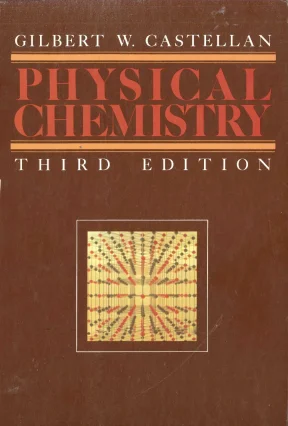
Physical Chemistry Third Edition của Gilbert W. Castellan là giáo trình hóa lý kinh điển được xuất bản bởi Addison-Wesley Publishing Company. Cuốn sách trình bày đầy đủ các nguyên tắc cơ bản của hóa học vật lý, từ khái niệm nguyên tử, phân tử đến các định luật nhiệt động lực học. Tài liệu bao gồm bảng khối lượng nguyên tử chuẩn năm 1979, các hằng số cơ bản và hệ thống chuyển đổi đơn vị quốc tế. Castellan xây dựng nội dung theo hướng logic, từ các khái niệm cơ bản như chất, hợp chất, nguyên tố đến các vấn đề phức tạp hơn về nhiệt động học và động học hóa học. Cuốn sách phục vụ sinh viên đại học và nhà nghiên cứu cần nền tảng vững chắc về hóa lý. Với văn phong rõ ràng, hệ thống bảng biểu chi tiết và ví dụ thực tiễn, giáo trình này trở thành tài liệu tham khảo không thể thiếu trong lĩnh vực hóa học vật lý hiện đại.

1.1. Giới thiệu về tác giả và nhà xuất bản

Gilbert W. Castellan là giáo sư hóa học tại Đại học Maryland, nổi tiếng với các công trình giảng dạy và nghiên cứu hóa lý. Cuốn Physical Chemistry được Addison-Wesley Publishing Company phát hành, có trụ sở tại Reading, Massachusetts. Đây là ấn bản thứ ba trong series giáo trình hóa lý uy tín. Sách được biên soạn kỹ lưỡng với sự hỗ trợ của đội ngũ biên tập chuyên nghiệp, đảm bảo tính chính xác khoa học cao. Tài liệu trở thành chuẩn mực trong giảng dạy hóa lý tại nhiều trường đại học trên thế giới.

1.2. Cấu trúc nội dung và phạm vi kiến thức

Giáo trình bao gồm nhiều phần kiến thức cốt lõi của hóa lý. Phần đầu giới thiệu các khái niệm cơ bản về chất, nguyên tố, hợp chất và hỗn hợp. Tiếp theo là các bảng dữ liệu tham chiếu quan trọng như khối lượng nguyên tử chuẩn, hằng số cơ bản và hệ thống đơn vị SI. Cuốn sách cũng trình bày các yếu tố chuyển đổi toán học cần thiết. Nội dung được sắp xếp từ đơn giản đến phức tạp, giúp người học xây dựng nền tảng vững chắc trước khi tiếp cận các chủ đề nâng cao về nhiệt động học và cơ học lượng tử.

II. Phân tích khái niệm chất và hợp chất trong hóa lý

Castellan phân loại chất thành hai loại chính: nguyên tố và hợp chất. Nguyên tố là chất không thể phân hủy thành các chất đơn giản hơn bằng phương pháp hóa học thông thường, tức là phương pháp sử dụng năng lượng khoảng 1000 kJ/mol hoặc ít hơn. Ví dụ, thủy ngân nguyên tố không thể phân hủy thành các chất có khối lượng nhỏ hơn. Ngược lại, hợp chất có thể phân hủy hóa học thành các chất đơn giản hơn. Methane có thể phân hủy thành carbon và hydro theo phương trình CH4 → C + 2H2. Tất cả vật liệu tự nhiên đều có thể phân hủy thành 89 nguyên tố cơ bản. Ngoài ra, ít nhất 18 nguyên tố khác đã được tổng hợp trong phòng thí nghiệm. Sự phân biệt giữa nguyên tố và hợp chất là nền tảng quan trọng để hiểu bản chất vật chất và các phản ứng hóa học trong tự nhiên.

2.1. Đặc điểm của nguyên tố và hợp chất

Nguyên tố là chất đơn giản nhất, không thể phân hủy bằng phương pháp hóa học thường. Theo Castellan, phương pháp hóa học thường涉及 năng lượng dưới 1000 kJ/mol. Phản ứng ion hóa natri Na → Na+ + e- được xem là phản ứng hóa học với năng lượng khoảng 500 kJ/mol. Hợp chất ngược lại, chứa nhiều nguyên tố liên kết hóa học với nhau. Methane CH4 gồm carbon và hydro, có thể tách riêng bằng phản ứng nhiệt phân. Hiểu rõ sự khác biệt này giúp dự đoán tính chất và hành vi hóa học của các chất.

2.2. Khái niệm về hỗn hợp và thành phần

Hỗn hợp là vật liệu chứa nhiều chất khác nhau, chiếm phần lớn vật liệu tự nhiên. Ví dụ điển hình bao gồm dung dịch muối trong nước, đất hoặc mảnh gỗ. Khác với chất nguyên chất, tính chất vật lý và hóa học của hỗn hợp thay đổi tùy theo thành phần và cách điều chế. Castellan nhấn mạnh rằng việc xác định thành phần hỗn hợp cần sử dụng các biến cường độ. Có nhiều phương pháp biểu diễn thành phần, trong đó nồng độ thể tích được sử dụng phổ biến cho hệ lỏng và rắn vì thể tích ít thay đổi theo nhiệt độ và áp suất.

III. Phương pháp tính toán và hệ thống hằng số hóa lý

Castellan trình bày đầy đủ các hằng số cơ bản cần thiết trong tính toán hóa lý. Hằng số khí R có giá trị 8,314 J K⁻¹ mol⁻¹, nhiệt độ không độ Celsius T₀ = 273,15 K, áp suất chuẩn p₀ = 1,013 × 10⁵ Pa. Thể tích mol chuẩn của khí lý tưởng là 22,41 × 10⁻³ m³ mol⁻¹. Hằng số Avogadro Nₐ = 6,022 × 10²³ mol⁻¹ và hằng số Boltzmann k = 1,381 × 10⁻²³ J K⁻¹ là nền tảng cho lý thuyết phân tử. Các đại lượng khác như điện tích nguyên tố e = 1,602 × 10⁻¹⁹ C, hằng số Faraday F = Nₐe, tốc độ ánh sáng c = 2,998 × 10⁸ m s⁻¹ và hằng số Planck h = 6,626 × 10⁻³⁴ J s đều được liệt kê chi tiết. Hệ thống đơn vị SI với các tiền tố từ atto (10⁻¹⁸) đến exa (10¹⁸) đảm bảo tính nhất quán trong tính toán khoa học.

3.1. Bảng khối lượng nguyên tử chuẩn

Bảng khối lượng nguyên tử chuẩn năm 1979 được Castellan trình bày chi tiết, dựa trên thang Aᵣ(¹²C) = 12. Giá trị đáng tin cậy đến ±1 ở chữ số cuối hoặc ±3 khi có dấu sao. Ví dụ: natri Na có khối lượng 22,9665, canxi Ca = 40,0983, sắt Fe = 55,847. Đối với nguyên tố phóng xạ, giá trị trong ngoặc đơn biểu thị khối số của đồng vị có thời gian bán hủy dài nhất. Bảng này là công cụ tham chiếu thiết yếu cho mọi phép tính hóa học định lượng và phân tích thành phần.

3.2. Hệ thống chuyển đổi đơn vị và tiền tố SI

Castellan cung cấp hệ thống chuyển đổi đơn vị toàn diện. Một số chuyển đổi quan trọng: 1 L = 10⁻³ m³ = 1 dm³, 1 Å = 10⁻¹⁰ m = 0,1 nm = 100 pm, 1 eV = 96,48456 kJ/mol. Hệ thống tiền tố SI từ femto (10⁻¹⁵) đến peta (10¹⁵) giúp biểu diễn các đại lượng từ nguyên tử đến thiên văn. Các công thức toán học cơ bản như chuỗi Taylor ln(1+x) = x - x²/2 + x³/3 - ... cũng được giới thiệu. Hệ thống này đảm bảo tính nhất quán và chính xác trong mọi phép tính hóa lý.

IV. Kết luận và ứng dụng của Physical Chemistry Castellan

Physical Chemistry 3rd Castellan là tài liệu hóa lý toàn diện, cung cấp nền tảng vững chắc cho sinh viên và nhà nghiên cứu. Giáo trình kết hợp lý thuyết sâu sắc với dữ liệu thực nghiệm chính xác, từ bảng khối lượng nguyên tử đến các hằng số vật lý cơ bản. Nội dung được trình bày logic, từ khái niệm chất, nguyên tố, hợp chất đến các phương pháp tính toán phức tạp. Ứng dụng của kiến thức hóa lý trải rộng trong nhiều lĩnh vực: nghiên cứu vật liệu mới, phát triển dược phẩm, phân tích môi trường và công nghệ năng lượng. Cuốn sách không chỉ cung cấp kiến thức mà còn rèn luyện tư duy khoa học, khả năng phân tích và giải quyết vấn đề. Với giá trị bền vững theo thời gian, giáo trình này tiếp tục là nguồn tài liệu tham khảo uy tín trong đào tạo hóa học tại các cơ sở giáo dục trên toàn thế giới.

4.1. Ứng dụng trong nghiên cứu và công nghiệp

Kiến thức từ giáo trình Castellan được ứng dụng rộng rãi trong nhiều lĩnh vực thực tiễn. Trong nghiên cứu vật liệu, các hằng số hóa lý giúp dự đoán tính chất của hợp chất mới. Ngành dược phẩm sử dụng nguyên tắc nhiệt động lực học để tối ưu hóa quá trình tổng hợp thuốc. Công nghệ năng lượng áp dụng kiến thức về khí lý tưởng và dung dịch để phát triển pin nhiên liệu. Phân tích môi trường dựa vào hóa lý để xác định nồng độ chất ô nhiễm. Các phép tính hóa học định lượng từ bảng nguyên tử là công cụ không thể thiếu trong phòng thí nghiệm và nhà máy sản xuất.

4.2. Tầm quan trọng trong đào tạo hóa học hiện đại

Physical Chemistry Castellan đóng vai trò quan trọng trong hệ thống giáo dục hóa học. Giáo trình cung cấp nền tảng lý thuyết vững chắc, giúp sinh viên hiểu sâu bản chất vật chất ở cấp độ phân tử. Phương pháp tiếp cận từ cơ bản đến nâng cao phù hợp với quá trình học tập tích lũy kiến thức. Các ví dụ thực tiễn và bài tập tính toán rèn luyện kỹ năng giải quyết vấn đề. Kiến thức hóa lý cũng là cầu nối giữa hóa học vô cơ, hữu cơ và sinh hóa, tạo nên bức tranh toàn diện về khoa học tự nhiên cho người học.
21/04/2026

Trích đoạn nội dung tài liệu

org STANDARD ATOMIC MASSES 1979 (Scaled to the relative atomic mass , A ,.(I2C) = 12) Atomic Atomic Atomic Atomic Name Symbol number mass Name Symbol number mass Actinium Ac 89 227.24* Americium Am 95 (243) Neon Ne 10 20 .9064 Astatine At 85 (210) Nitrogen N 7 14 .33 Nobelium No 102 (259) Berkelium Bk 97 (247) Osmium Os 76 190.41 Plutonium Pu 94 (244) Caesium Cs 55 132 .9054 Polonium Po 84 (209) Calcium Ca 20 40 .0983 Californium Cf 98 (25 I) Praseodymium Pr 59 140.011 Promethium Pm 61 (145) Cerium Ce 58 140.996 Radon Rn 86 (222) Cobalt Co 27 58 .9055 Curium Cm 96 (247) Rubidium Rb 37 85.07* Einsteinium Es 99 (252) Samarium Sm 62 150.96* Fermium Fm 100 (257) Silicon Si 14 28.868 Francium Fr 87 (223) Sodium Na II 22 .9665 Technetium Tc 43 (98) Hafnium Hf 72 178.9059 Mendelevium Md 101 (258) Zinc Zn 30 65.22 Source: Pure and Applied Chemistry , 51, 405 (1979 ). Value s are considered reliable to ± I in the last digit or ± 3 when followed by an asterisk(*). Values in parentheses are used for radioactive elements whose atomic weight s cannot be quoted precisel y without knowledge of the origin of the elements; the value given is the atomic mass number of the isotope of th at element of longest known half-life. FUNDAMENTAL CONSTANTS (approximate values; best values are in Appendix IV) Quantity Symbol Value Gas constant R 8.314 J K- 1 mol-I Zero of the Celsius scale To 273.15 K Standard atmosphere Po 1.013 x 10⁵ Pa Standard molar volume Vo = RTolpo 22.41 x 10- 3 m3 mol-I of ideal gas A vogadro constant 6.022 x 10²³ mol I ! Boltzmann constant Standard acceleration of 1.807 m s -2 gravity Elementary charge e 1. 10 19 C , Faraday constant Speed of light in vacuum F = NAe c 9.998 x lOR m s I Planck constant Il 6.055 X 10- 34 J s Rest mass of electron In 9.110 X 10- 31 kg Permittivity of vacuum en 8. 10- 12 C2 N- 1 m 2 41T'eo LIB X 10- 10 C 2 N- I m -2 1/41T'eo 8.988 x 10⁹ N m 2 C- 2 Bohr radius ao = 41T'eoIi2/me2 5.292 x 10 II m Hartree energy Eh = el l41T'e oao 4.360 x: 10 I~ J "- CONVERSION FACTORS 1 L = 10- 3 m' (exactly) = 1 dm 3 1 A = 10 10 m = 0.1 nm = 100 pm I atm = 1.055 kJ I 1 erg = 1 dyne cm = 10- 7 J (exactly) 1 eV = 96.48456 kJ/mol I hp = 746 W www.org MATHEMATICAL DATA 1T = 3. (x" < 1) 51 PREFIXES Submultiple Prefix Symbol Multiple Prefix Symbol 10- [ deci d 10 deca da 10- 2 centi c 10" hecto h 10- 3 milli m 10 3 kilo k 10- 6 mIcro 106 11. mega M 10- 9 nano 1} 109 giga G 10- [2 pico P 10 12 tera T 10 15 femto f 10 15 peta P 10 - IR atto a 10 18 exa E Physical Chemistry Third Edition Gilbert W. Castellan University of Maryland "' . Addison-Wesley Publishing Company Reading, Massachusetts Menlo Park, California • London • Amsterdam • Don Mills, Ontario • Sydney www.org To Joan and our family Sponsoring Editor: Robert L. Rogers Production Editor: Margaret Pinette Copy Editor: Jerrold A. Moore Text Designer: Debbie Syrotchen Design Coordinator: Herb Caswell Illustrators: YAP International Communications, Ltd. Cover Designer: Richard Hannus, Hannus Design Associates Cover Photograph: The Image Bank, U. Schiller Art Coordinator: Joseph K. Vetere Production Manager: Herbert Nolan The text of this book was composed in Monophoto Times Roman by Composition House Limited. Reprinted with corrections, November 1983 Copyright © 1 983 , 1 97 1 , 1 964 by Addison-Wesley Publishing Company, Inc . All rights reserved. No part of this publication may be reproduced, stored in a retrieval system, or transmitted, in any form or by any means, electronic , mechanical, photocopying, recording, or otherwise, without the prior written permission of the publisher. Printed in the United States of America. Published simultaneously in Canada. Library of Congress Catalog Card No. ISBN 0-201-10386-9 BCDEFGHIJ -MA-89876543 www.org m Foreword to the Student On most campuses the course in physical chemistry has a reputation for difficulty. It is not, nor should it be, the easiest course available; but to keep the matter in perspective it must be said that the IQ of a genius is not necessary for understanding the subject. The greatest stumbling block that can be erected in the path of learning physical chemistry is the notion that memorizing equations is a sensible way to proceed. Memory should be reserved for the fundamentals and important definitions. Equations are meant to be understood, not to be memorized. In physics and chemistry an equation is not a jumbled mass of symbols, but is a statement of a relation between the final equation from a derivation. If it expresses pressure as a function of temperature, physical quantities. As you study keep a pencil and scratch paper handy. Play with turn it around and express the temperature as a function of pressure. Sketch the functions so that you can "see" the variation. How does the sketch look if one of the parameters is changed? Read physical meaning into the various terms and the algebraic signs which appear in the equation. If a simplifying assumption has been made in the derivation, go back and see what would happen if that assumption were omitted. Apply the derivation to a different special case. Invent problems of your own involving this equation and solve them. Juggle the equation back and forth until you understand its meaning. In the first parts of the book much space is devoted to the meaning of equations; I hope that I have not been too long-winded about it, but it is important to be able to interpret the mathematical statement in terms of its physical content. being applied; memorize them and above all understand them. Take the time to By all means try to keep a good grasp on the fundamental principles that are understand the methods that are used to attack a problem. In Appendix I there is a brief recapitulation of some of the most important mathematical ideas and methods that are used. If any of these things are unfamiliar to you, take the time to review them in a mathematics text. Once the relations vi Foreword between variables have been established, the algebra and calculus are simply mechanical devices, but they should be respected as precision tools. If problems baffle you, learn the technique of problem solving. The principles contained in G. Polya's book, How to Solve It, have helped many of my students.* It is available as a paperback and is well worth studying. Work as many problems as possible. Numerical answers to all problems can be found in Appendix VII. Make up your own problems as often as possible. Watching your teacher perform will not make you into an actor; problem solving will. To aid in this, get a good "scientific" calculator (the serious student will want a programmable one with continuous memory) and learn how to use it to the limit of its capability. Reading the instructions will save you hundreds of hours! Finally, don't be put off by the reputation for difficulty. Many students have enjoyed learning physical chemistry. Polya, How to Solve It. Anchor Book No. New York: Doubleday & Co .org Preface An introductory course in physical chemistry must expose the fundamental principles that are applicable to all kinds of physicochemical systems. Beyond the exposition of fundamentals, the first course in physical chemistry takes as many directions as there are teachers. I have tried to cover the fundamentals and some applications in depth. The primary aim has been to write a book that the student can, with effort, read and understand; to provide the beginner with a reliable and understandable guide for study in the teacher's absence. I hope that this book is readable enough so that teachers may leave the side issues and the more elementary aspects for assigned reading while they use the lectures to illuminate the more difficult points. Chapters 1, 5, and 6, and most of Chapter 19 contain some general background material and are intended exclusively for reading. Except where it would needlessly overburden the student, the subject is presented in a mathematically rigorous way. In spite of this, no mathematics beyond the elementary calculus is required. The justification for a rigorous treatment is pedagogical; it makes the subject simpler. The beginner may find it difficult at first to follow a lengthy derivation, but can follow it if it is rigorous and logical. Some "simplified" derivations are not difficult to follow, but impossible. CHANGES IN THIS EDITION There are several important differences between this edition and the earlier one. I am grateful to Professor James T. Hynes, University of Colorado, who kindly supplied the groups of questions at the end of each chapter. These are an important addition to the book. The questions range in difficulty; some are relatively simple while others challenge the student to take up a line of reasoning from the chapter and apply it beyond the topics that are discussed explicitly. Many new problems have been added; the total is over 750, about twice the number in the second edition. Answers to all the problems are given in Appendix VII. More worked examples are included; these are now set apart from the text, while before they were sometimes hidden in the viii Preface textual material. A separate solutions manual is in preparation in which representative problems are worked out in detail. Certain sections of the text are marked with a star. The star indicates that the material is either 0) an additional illustration of or a side issue related to the topic under discussion, or (2) a more advanced topic. In the treatment of thermodynamics, some errors have been corrected, some passages clarified, and a few new topics introduced. The emphasis on the laws of thermodynamics as generalizations from experience is maintained. The chapter on electrochemical cells has been revised and a discussion of electrochemical power sources has been added. The chapter on surface phenomena now includes sections on the BET isotherm and on the properties of very small particles. The chapters on the quantum mechanics of simple systems have been retained with only minor revisions, while the chapter on the covalent bond has been extended to include a description of molecular energy levels. The basic ideas of group theory are introduced here and illustrated by constructing symmetry-adapted molecular orbitals for simple molecules. There is a new chapter on atomic spectroscopy; the chapter on molecular spectroscopy has been expanded and reorganized. The treatment of statistical thermodynamics has been extended to include the calculation of equilibrium constants for simple chemical reactions. At the end of the book, new sections on photophysical kinetics, electrochemical kinetics, and a brief chapter on polymers have been added. TERMINOLOGY AND UNITS With only a few exceptions I have followed the recommendations of the International Union of Pure and Applied Chemistry (IUPAC) for symbols and terminology. I have retained the traditional name, "advancement of the reaction" for the parameter �, rather than''extent of reaction," which is recommended by IUPAC. The connotation in English of the words "advancement" and "advance" when applied to chemical reactions allow a variety of expression that "extent" and its derivatives do not. For thermodynamic work I have retained the sign convention used in the earlier edition. I attempted (unsuccessfully, I thought) to write a clear discussion of the Carnot cycle and its consequences using the alternate sign convention.

Nội dung được bảo vệ bản quyền — Tải xuống đầy đủ