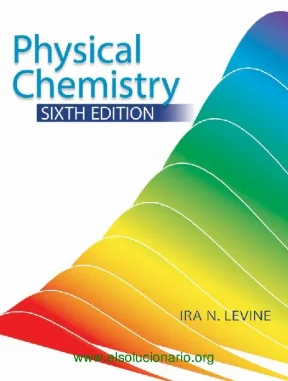
Physical Chemistry Sixth Edition by Ira N. Levine - McGraw-Hill Science Engineering Math 2008

Chuyên ngành

Hóa học vật lý

Người đăng

Ẩn danh

Thể loại

Sách giáo khoa

2008

1K
0
0

Phí lưu trữ

0 Point

Tóm tắt

I. Tổng quan về giáo trình Hóa lý Levine ấn bản thứ 6

Physical Chemistry ấn bản thứ sáu của Ira N. Levine là tài liệu chuẩn mực trong lĩnh vực hóa lý học. Xuất bản năm 2009 bởi McGraw-Hill, cuốn sách thuộc bộ Science Engineering Math. ISBN 978-0-07-253862-5 xác định đây là phiên bản được sử dụng rộng rãi tại các trường đại học kỹ thuật và khoa học trên toàn thế giới. Levine là giáo sư tại Brooklyn College, City University of New York. Ông xây dựng nội dung theo hướng chặt chẽ về mặt toán học nhưng vẫn giữ được tính tiếp cận cho sinh viên đại học. Cuốn sách bao gồm nhiệt động lực học, cơ học lượng tử, động lực học thống kê và nhiều lĩnh vực khác. Mỗi chương được tổ chức logic, bắt đầu từ nguyên lý cơ bản rồi mở rộng sang ứng dụng thực tiễn. Đây là lần tái bản thứ sáu, phát triển từ các phiên bản năm 1978, 1983, 1988, 1995 và 2002. Mỗi lần tái bản đều cập nhật dữ liệu thực nghiệm mới và điều chỉnh cách trình bày theo phản hồi từ giảng viên và sinh viên.

1.1. Thông tin xuất bản và phạm vi nội dung

Physical Chemistry 6th Edition được McGraw-Hill xuất bản năm 2009, mang mã ISBN 978-0-07-253862-5. Sách dày hàng nghìn trang, bao phủ toàn bộ chương trình hóa lý học đại học và sau đại học. Nội dung chia thành các phần lớn: nhiệt động lực học cổ điển, cơ học lượng tử, phổ học phân tử, nhiệt động lực học thống kê, và động hóa học. Đây là lựa chọn giáo trình phổ biến tại các trường kỹ thuật và khoa học tự nhiên ở Bắc Mỹ, châu Âu và châu Á.

1.2. Tác giả Ira N. Levine và đóng góp học thuật

Ira N. Levine là giáo sư tại Khoa Hóa học, Brooklyn College, City University of New York. Ông nổi tiếng với khả năng trình bày toán học chặt chẽ mà vẫn giữ được sự rõ ràng cho người đọc. Levine không chỉ viết Physical Chemistry mà còn là tác giả của Quantum Chemistry, một tài liệu tham khảo quan trọng khác. Phong cách viết của ông đặt trọng tâm vào sự hiểu biết sâu về nguyên lý thay vì ghi nhớ công thức.

II. Phân tích cấu trúc và nội dung các chương trọng tâm

Sách được chia thành các chương theo logic tuyến tính từ nhiệt động lực học sang cơ học lượng tử. Chương 1 giới thiệu nhiệt động lực học và phương trình trạng thái. Chương 2 và 3 trình bày Định luật 1 và Định luật 2 nhiệt động lực học. Định luật 1 tập trung vào nội năng và nhiệt, bao gồm thí nghiệm Joule và Joule-Thomson. Định luật 2 giải thích entropy, tính thuận nghịch và quy mô nhiệt động lực học. Chương 4 phân tích cân bằng vật chất, năng lượng Gibbs và Helmholtz. Các chương tiếp theo đi sâu vào cơ học lượng tử, phổ học, nhiệt động lực học thống kê và động hóa học. Cuốn sách sử dụng ký hiệu toán học chuẩn quốc tế và trình bày các phép tích phân đường, hàm trạng thái một cách hệ thống. Mỗi chương kết thúc bằng phần tóm tắt và bài tập thực hành, giúp người học củng cố kiến thức.

2.1. Nhiệt động lực học cổ điển và các định luật cơ bản

Ba định luật nhiệt động lực học được Levine trình bày một cách hệ thống và nghiêm ngặt. Định luật 1 thiết lập khái niệm nội năng và bảo toàn năng lượng. Định luật 2 giới thiệu entropy như một hàm trạng thái, phân biệt rõ giữa quá trình thuận nghịch và bất thuận nghịch. Phần tính toán entropy cho hệ khí lý tưởng, hỗn hợp và phản ứng hóa học được trình bày chi tiết. Sự kết nối giữa entropy và mũi tên thời gian cũng được đề cập.

2.2. Khí lý tưởng và phương trình trạng thái

Levine trình bày luật Boyle (1662) như nền tảng của khí lý tưởng: PV = k ở nhiệt độ cố định. Đồ thị PV theo P cho 28g N₂ ở hai nhiệt độ minh họa độ lệch ở áp suất cao. Khí thực tuân theo luật Boyle gần đúng ở áp suất thấp. Phương trình trạng thái cho hỗn hợp khí được xây dựng từ phần mol xi = ni/ntot, với tổng phần mol bằng 1. Đây là nền tảng cho các tính toán nhiệt động lực học phức tạp hơn.

III. Phương pháp học và tiếp cận giáo trình Levine hiệu quả

Nghiên cứu Physical Chemistry của Levine đòi hỏi nền tảng toán học vững chắc. Giải tích, đại số tuyến tính và phương trình vi phân là các công cụ thiết yếu. Levine bản thân đề cao vai trò của rèn luyện có chủ đích. Sách trích dẫn nghiên cứu của Ericsson về mối liên hệ giữa số giờ luyện tập và mức độ thành thạo. Các nghiên cứu về chuyên gia trong cờ vua, thể thao và y học đều cho thấy tương quan mạnh giữa chuyên môn và thực hành. Với hóa lý, điều này có nghĩa là giải bài tập đều đặn quan trọng hơn đọc lý thuyết thụ động. Nên đọc phần tóm tắt cuối chương trước, rồi đọc nội dung chi tiết. Sau đó giải bài tập từ dễ đến khó. Tham chiếu chéo giữa các chương giúp xây dựng cái nhìn tổng thể. Nhóm học tập thảo luận bài tập khó cũng là phương pháp được khuyến nghị.

3.1. Lộ trình học theo chương và thứ tự ưu tiên

Sinh viên nên học các chương nhiệt động lực học (1-4) trước khi chuyển sang cơ học lượng tử. Cân bằng pha, dung dịch và điện hóa có thể học song song sau khi nắm nhiệt động lực học. Phần cơ học lượng tử yêu cầu hiểu phương trình Schrödinger và toán tử. Nhiệt động lực học thống kê kết nối hai phần trên. Động hóa học là ứng dụng thực tiễn cuối cùng. Thứ tự này phản ánh đúng cấu trúc tư duy mà Levine xây dựng trong sách.

3.2. Sử dụng bài tập và tài nguyên hỗ trợ

Mỗi chương trong sách Levine có hàng chục bài tập từ cơ bản đến nâng cao. Ưu tiên giải các bài tập có đánh dấu sao vì chúng kiểm tra khái niệm then chốt. Sách hướng dẫn bài giải (Solutions Manual) là tài liệu hỗ trợ quan trọng. Ngoài ra, các nền tảng trực tuyến như McGraw-Hill Connect cung cấp bài kiểm tra tự đánh giá. Tài liệu bổ sung từ thư viện trường, đặc biệt các bài báo trích dẫn trong sách, giúp hiểu sâu hơn về cơ sở thực nghiệm.

IV. Ứng dụng thực tiễn và vị trí của giáo trình trong đào tạo

Physical Chemistry 6th Edition của Levine được sử dụng rộng rãi trong chương trình đào tạo cử nhân và thạc sĩ hóa học, hóa dược, vật liệu và kỹ thuật hóa học. Kiến thức nhiệt động lực học từ sách này là nền tảng cho thiết kế phản ứng công nghiệp, tối ưu hóa quá trình và phát triển vật liệu mới. Cơ học lượng tử trong sách cung cấp cơ sở hiểu phổ hồng ngoại, NMR và phổ khối dùng trong phân tích dược phẩm và hóa chất công nghiệp. Nhiệt động lực học thống kê kết nối lý thuyết phân tử với đại lượng đo lường được trong phòng thí nghiệm. Các nhà nghiên cứu trong lĩnh vực năng lượng, pin nhiên liệu và xúc tác đều cần nền tảng từ giáo trình này. Nhiều chương trình tiến sĩ sử dụng sách Levine làm tài liệu ôn tập thi đầu vào. Cuốn sách duy trì tính chuẩn mực học thuật cao trong khi vẫn phù hợp với mục tiêu giảng dạy thực tế.

4.1. Vai trò trong chương trình đại học và sau đại học

Nhiều trường đại học hàng đầu ở Mỹ, châu Âu và Đông Nam Á chọn Levine làm giáo trình chính cho môn hóa lý. Tại Việt Nam, sách được sử dụng tại các trường kỹ thuật và khoa học tự nhiên. Ở bậc sau đại học, nội dung về cơ học lượng tử và nhiệt động lực học thống kê được khai thác sâu hơn. Chương trình nghiên cứu sinh thường yêu cầu nắm vững nội dung tương đương Levine trước khi bắt đầu nghiên cứu chuyên sâu.

4.2. So sánh với các giáo trình hóa lý cùng cấp độ

So với Atkins Physical Chemistry, Levine nghiêm ngặt hơn về toán học và ít hình ảnh minh họa hơn. So với Engel và Reid, Levine đi sâu hơn vào nền tảng lý thuyết. Đây khiến Levine phù hợp hơn cho sinh viên muốn theo hướng nghiên cứu lý thuyết hoặc tính toán. Với sinh viên cần ứng dụng kỹ thuật nhanh, Atkins có thể là lựa chọn bổ sung tốt. Sử dụng cả hai giáo trình song song mang lại sự hiểu biết toàn diện nhất.
21/04/2026

Trích đoạn nội dung tài liệu

org lev38627_fm.qxd 4/9/08 12:32 PM Page i PHYSICAL CHEMISTRY lev38627_fm.qxd 4/9/08 12:32 PM Page ii lev38627_fm.qxd 4/9/08 12:32 PM Page iii PHYSICAL CHEMISTRY Sixth Edition Ira N. Levine Chemistry Department Brooklyn College City University of New York Brooklyn, New York www.org lev38627_fm.qxd 4/9/08 12:32 PM Page iv PHYSICAL CHEMISTRY, SIXTH EDITION Published by McGraw-Hill, a business unit of The McGraw-Hill Companies, Inc., 1221 Avenue of the Americas, New York, NY 10020. Copyright © 2009 by The McGraw-Hill Companies, Inc. All rights reserved. Previous editions © 2002, 1995, 1988, 1983, and 1978. No part of this publication may be reproduced or distributed in any form or by any means, or stored in a database or retrieval system, without the prior written consent of The McGraw-Hill Companies, Inc., including, but not limited to, in any network or other electronic storage or transmission, or broadcast for distance learning. Some ancillaries, including electronic and print components, may not be available to customers outside the United States. This book is printed on recycled, acid-free paper containing 10% postconsumer waste. 1 2 3 4 5 6 7 8 9 0 QPD/QPD 0 9 8 ISBN 978–0–07–253862–5 MHID 0–07–253862–7 Publisher: Thomas Timp Senior Sponsoring Editor: Tamara L. Hodge Director of Development: Kristine Tibbetts Senior Developmental Editor: Shirley R. Oberbroeckling Marketing Manager: Todd L. Turner Project Coordinator: Melissa M. Leick Senior Production Supervisor: Sherry L. Kane Senior Designer: David W. Hash Cover Designer: Ron E. Bissell, Creative Measures Design Inc. Supplement Producer: Melissa M. Leick Compositor: ICC Macmillan Inc.5/12 Times Printer: Quebecor World Dubuque, IA Library of Congress Cataloging-in-Publication Data Levine, Ira N. Physical chemistry / Ira N. ISBN 978–0–07–253862–5 --- ISBN 0–07–253862–7 (hard copy : alk. Chemistry, Physical and theoretical.com lev38627_fm.qxd 4/9/08 12:32 PM Page v To the memory of my mother and my father lev38627_fm.qxd 4/9/08 12:32 PM Page vi Table of Contents Preface xiv Chapter 1 THERMODYNAMICS 1 1.7 Equations of State 22 1.10 Summary 32 Chapter 2 THE FIRST LAW OF THERMODYNAMICS 37 2.4 The First Law of Thermodynamics 47 2.7 The Joule and Joule–Thomson Experiments 55 2.8 Perfect Gases and the First Law 58 2.9 Calculation of First-Law Quantities 62 2.10 State Functions and Line Integrals 65 2.11 The Molecular Nature of Internal Energy 67 2.13 Summary 73 Chapter 3 THE SECOND LAW OF THERMODYNAMICS 78 3.1 The Second Law of Thermodynamics 78 3.4 Calculation of Entropy Changes 87 3.5 Entropy, Reversibility, and Irreversibility 93 3.6 The Thermodynamic Temperature Scale 96 3.7 What Is Entropy? 97 3.8 Entropy, Time, and Cosmology 103 3.9 Summary 104 vi www.org lev38627_fm.qxd 4/9/08 12:32 PM Page vii vii Chapter 4 MATERIAL EQUILIBRIUM 109 Table of Contents 4.2 Entropy and Equilibrium 110 4.3 The Gibbs and Helmholtz Energies 112 4.4 Thermodynamic Relations for a System in Equilibrium 115 4.5 Calculation of Changes in State Functions 123 4.6 Chemical Potentials and Material Equilibrium 125 4.9 Entropy and Life 134 4.10 Summary 135 Chapter 5 STANDARD THERMODYNAMIC FUNCTIONS OF REACTION 140 5.1 Standard States of Pure Substances 140 5.2 Standard Enthalpy of Reaction 141 5.3 Standard Enthalpy of Formation 142 5.4 Determination of Standard Enthalpies of Formation and Reaction 143 5.5 Temperature Dependence of Reaction Heats 151 5.6 Use of a Spreadsheet to Obtain a Polynomial Fit 153 5.7 Conventional Entropies and the Third Law 155 5.8 Standard Gibbs Energy of Reaction 161 5.10 Estimation of Thermodynamic Properties 165 5.11 The Unattainability of Absolute Zero 168 5.12 Summary 169 Chapter 6 REACTION EQUILIBRIUM IN IDEAL GAS MIXTURES 174 6.1 Chemical Potentials in an Ideal Gas Mixture 175 6.2 Ideal-Gas Reaction Equilibrium 177 6.3 Temperature Dependence of the Equilibrium Constant 182 6.4 Ideal-Gas Equilibrium Calculations 186 6.6 Shifts in Ideal-Gas Reaction Equilibria 194 6.7 Summary 198 Chapter 7 ONE-COMPONENT PHASE EQUILIBRIUM AND SURFACES 205 7.1 The Phase Rule 205 7.2 One-Component Phase Equilibrium 210 7.3 The Clapeyron Equation 214 7.4 Solid–Solid Phase Transitions 221 lev38627_fm.qxd 4/9/08 12:32 PM Page viii viii Table of Contents 7.5 Higher-Order Phase Transitions 225 7.6 Surfaces and Nanoparticles 227 7.7 The Interphase Region 227 7.10 Summary 237 Chapter 8 REAL GASES 244 8.2 Real-Gas Equations of State 245 8.4 Critical Data and Equations of State 249 8.5 Calculation of Liquid–Vapor Equilibria 252 8.6 The Critical State 254 8.7 The Law of Corresponding States 255 8.8 Differences Between Real-Gas and Ideal-Gas Thermodynamic Properties 256 8.10 Summary 259 Chapter 9 SOLUTIONS 263 9.2 Partial Molar Quantities 264 9.4 Determination of Partial Molar Quantities 272 9.6 Thermodynamic Properties of Ideal Solutions 278 9.7 Ideally Dilute Solutions 282 9.8 Thermodynamic Properties of Ideally Dilute Solutions 283 9.9 Summary 287 Chapter 10 NONIDEAL SOLUTIONS 294 10.1 Activities and Activity Coefficients 294 10.3 Determination of Activities and Activity Coefficients 298 10.4 Activity Coefficients on the Molality and Molar Concentration Scales 305 10.5 Solutions of Electrolytes 306 10.6 Determination of Electrolyte Activity Coefficients 310 10.7 The Debye–Hückel Theory of Electrolyte Solutions 311 10.9 Standard-State Thermodynamic Properties of Solution Components 318 10.10 Nonideal Gas Mixtures 321 10.11 Summary 324 lev38627_fm.qxd 4/9/08 12:32 PM Page ix ix Chapter 11 REACTION EQUILIBRIUM IN NONIDEAL SYSTEMS 330 Table of Contents 11.1 The Equilibrium Constant 330 11.2 Reaction Equilibrium in Nonelectrolyte Solutions 331 11.3 Reaction Equilibrium in Electrolyte Solutions 332 11.4 Reaction Equilibria Involving Pure Solids or Pure Liquids 337 11.5 Reaction Equilibrium in Nonideal Gas Mixtures 340 11.6 Computer Programs for Equilibrium Calculations 340 11.7 Temperature and Pressure Dependences of the Equilibrium Constant 341 11.8 Summary of Standard States 343 11.9 Gibbs Energy Change for a Reaction 343 11.11 Summary 347 Chapter 12 MULTICOMPONENT PHASE EQUILIBRIUM 351 12.2 Vapor-Pressure Lowering 351 12.3 Freezing-Point Depression and Boiling-Point Elevation 352 12.5 Two-Component Phase Diagrams 361 12.6 Two-Component Liquid–Vapor Equilibrium 362 12.7 Two-Component Liquid–Liquid Equilibrium 370 12.8 Two-Component Solid–Liquid Equilibrium 373 12.9 Structure of Phase Diagrams 381 12.11 Computer Calculation of Phase Diagrams 383 12.12 Three-Component Systems 385 12.13 Summary 387 Chapter 13 ELECTROCHEMICAL SYSTEMS 395 13.3 Thermodynamics of Electrochemical Systems 401 13.5 Types of Reversible Electrodes 409 13.6 Thermodynamics of Galvanic Cells 412 13.7 Standard Electrode Potentials 417 13.8 Liquid-Junction Potentials 421 13.9 Applications of EMF Measurements 422 13.11 Ion-Selective Membrane Electrodes 427 13.13 The Electrical Double Layer 430 13.14 Dipole Moments and Polarization 431 13.org lev38627_fm.qxd 4/9/08 12:32 PM Page x x Table of Contents Chapter 14 KINETIC THEORY OF GASES 442 14.1 Kinetic–Molecular Theory of Gases 442 14.2 Pressure of an Ideal Gas 443 14.4 Distribution of Molecular Speeds in an Ideal Gas 448 14.5 Applications of the Maxwell Distribution 457 14.6 Collisions with a Wall and Effusion 460 14.7 Molecular Collisions and Mean Free Path 462 14.8 The Barometric Formula 465 14.9 The Boltzmann Distribution Law 467 14.10 Heat Capacities of Ideal Polyatomic Gases 467 14.11 Summary 469 Chapter 15 TRANSPORT PROCESSES 474 15.4 Diffusion and Sedimentation 487 15.6 Electrical Conductivity of Electrolyte Solutions 496 15.7 Summary 509 Chapter 16 REACTION KINETICS 515 16.2 Measurement of Reaction Rates 519 16.3 Integration of Rate Laws 520 16.4 Finding the Rate Law 526 16.5 Rate Laws and Equilibrium Constants for Elementary Reactions 530 16.7 Computer Integration of Rate Equations 539 16.8 Temperature Dependence of Rate Constants 541 16.9 Relation Between Rate Constants and Equilibrium Constants for Composite Reactions 546 16.10 The Rate Law in Nonideal Systems 547 16.13 Chain Reactions and Free-Radical Polymerizations 551 16.15 Reactions in Liquid Solutions 560 16.18 Adsorption of Gases on Solids 570 16.20 Summary 579 lev38627_fm.qxd 4/9/08 12:32 PM Page xi xi Chapter 17 QUANTUM MECHANICS 590 Table of Contents 17.1 Blackbody Radiation and Energy Quantization 591 17.2 The Photoelectric Effect and Photons 593 17.3 The Bohr Theory of the Hydrogen Atom 594 17.4 The de Broglie Hypothesis 595 17.5 The Uncertainty Principle 597 17.7 The Time-Independent Schrödinger Equation 604 17.8 The Particle in a One-Dimensional Box 606 17.9 The Particle in a Three-Dimensional Box 610 17.12 The One-Dimensional Harmonic Oscillator 619 17.13 Two-Particle Problems 621 17.14 The Two-Particle Rigid Rotor 622 17.17 Summary 630 Chapter 18 ATOMIC STRUCTURE 637 18.3 The Hydrogen Atom 638 18.6 The Helium Atom and the Spin–Statistics Theorem 650 18.7 Total Orbital and Spin Angular Momenta 656 18.8 Many-Electron Atoms and the Periodic Table 658 18.9 Hartree–Fock and Configuration-Interaction Wave Functions 663 18.10 Summary 666 Chapter 19 MOLECULAR ELECTRONIC STRUCTURE 672 19.2 The Born–Oppenheimer Approximation 676 19.3 The Hydrogen Molecule Ion 681 19.4 The Simple MO Method for Diatomic Molecules 686 19.5 SCF and Hartree–Fock Wave Functions 692 19.6 The MO Treatment of Polyatomic Molecules 693 19.7 The Valence-Bond Method 702 19.8 Calculation of Molecular Properties 704 19.9 Accurate Calculation of Molecular Electronic Wave Functions and Properties 708 19.10 Density-Functional Theory (DFT) 711 19.12 Performing Quantum Chemistry Calculations 720 19.13 The Molecular-Mechanics (MM) Method 723 lev38627_fm.qxd 4/9/08 12:32 PM Page xii xii Table of Contents 19.15 Summary 727 Chapter 20 SPECTROSCOPY AND PHOTOCHEMISTRY 734 20.3 Rotation and Vibration of Diatomic Molecules 743 20.4 Rotational and Vibrational Spectra of Diatomic Molecules 750 20.6 Rotation of Polyatomic Molecules 758 20.8 Vibration of Polyatomic Molecules 763 20.12 Nuclear-Magnetic-Resonance Spectroscopy 779 20.13 Electron-Spin-Resonance Spectroscopy 793 20.14 Optical Rotatory Dispersion and Circular Dichroism 794 20.17 Summary 811 Chapter 21 STATISTICAL MECHANICS 820 21.2 The Canonical Ensemble 821 21.3 Canonical Partition Function for a System of Noninteracting Particles 830 21.4 Canonical Partition Function of a Pure Ideal Gas 834 21.5 The Boltzmann Distribution Law for Noninteracting Molecules 836 21.6 Statistical Thermodynamics of Ideal Diatomic and Monatomic Gases 840 21.7 Statistical Thermodynamics of Ideal Polyatomic Gases 851 21.8 Ideal-Gas Thermodynamic Properties and Equilibrium Constants 854 21.9 Entropy and the Third Law of Thermodynamics 858 21.11 Statistical Mechanics of Fluids 866 21.12 Summary 870 Chapter 22 THEORIES OF REACTION RATES 877 22.1 Hard-Sphere Collision Theory of Gas-Phase Reactions 877 22.2 Potential-Energy Surfaces 880 22.3 Molecular Reaction Dynamics 887 www.org lev38627_fm.qxd 4/9/08 12:32 PM Page xiii xiii 22.4 Transition-State Theory for Ideal-Gas Reactions 892 Table of Contents 22.5 Thermodynamic Formulation of TST for Gas-Phase Reactions 902 22.8 Reactions in Solution 906 22.9 Summary 911 Chapter 23 SOLIDS AND LIQUIDS 913 23.1 Solids and Liquids 913 23.3 Chemical Bonding in Solids 914 23.4 Cohesive Energies of Solids 916 23.5 Theoretical Calculation of Cohesive Energies 918 23.6 Interatomic Distances in Crystals 921 23.8 Examples of Crystal Structures 928 23.9 Determination of Crystal Structures 931 23.10 Determination of Surface Structures 937 23.11 Band Theory of Solids 939 23.12 Statistical Mechanics of Crystals 941 23.13 Defects in Solids 946 23.15 Summary 951 Bibliography 955 Appendix 959 Answers to Selected Problems 961 Index 967 lev38627_fm.qxd 4/9/08 12:32 PM Page xiv Preface This textbook is for the standard undergraduate course in physical chemistry. In writing this book, I have kept in mind the goals of clarity, accuracy, and depth. To make the presentation easy to follow, the book gives careful definitions and expla- nations of concepts, full details of most derivations, and reviews of relevant topics in mathematics and physics. I have avoided a superficial treatment, which would leave students with little real understanding of physical chemistry. Instead, I have aimed at a treatment that is as accurate, as fundamental, and as up-to-date as can readily be pre- sented at the undergraduate level. LEARNING AIDS Physical chemistry is a challenging course for many students. To help students, this book has many learning aids: • Each chapter has a summary of the key points. The summaries list the specific kinds of calculations that students are expected to learn how to do.9 SUMMARY We assumed the truth of the Kelvin–Planck statement of the second law of ther- modynamics, which asserts the impossibility of the complete conversion of heat to work in a cyclic process. From the second law, we proved that dqrev /T is the differ- ential of a state function, which we called the entropy S. The entropy change in a process from state 1 to state 2 is ⌬S ⫽ 兰21 dqrev /T, where the integral must be eval- uated using a reversible path from 1 to 2. Methods for calculating ⌬S were dis- cussed in Sec.

Nội dung được bảo vệ bản quyền — Tải xuống đầy đủ