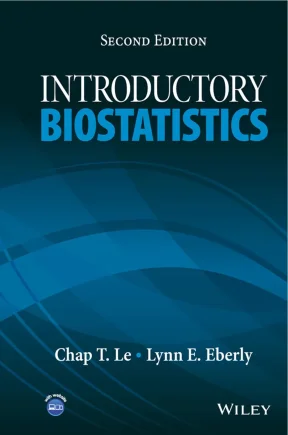
Tổng quan về giáo trình
Introductory Biostatistics (Tái bản lần thứ hai, năm 2016) là giáo trình học thuật do John Wiley & Sons, Inc. xuất bản (ISBN: 978-0-470-90540-1; ePub: 978-1-118-59607-4). Tác phẩm được biên soạn bởi hai tác giả thuộc Đại học Minnesota (Hoa Kỳ): Giáo sư Chap T. Le (Giám đốc Bộ phận Thống kê sinh học và Tin sinh học thuộc Trung tâm Ung thư Masonic) và Phó Giáo sư Lynn E. Eberly (Khoa Y tế Công cộng). Giáo trình giữ vị trí môn học cơ sở bắt buộc và nâng cao trong chương trình đào tạo của các chuyên ngành: Y tế công cộng, Y khoa, Nha khoa, Điều dưỡng và các ngành khoa học y sinh bậc đại học và sau đại học.
Mục tiêu học tập của giáo trình tập trung vào việc hình thành tư duy thống kê trong nghiên cứu y sinh (statistics as a way of thinking), coi đây là phương pháp khoa học nhằm xử lý các yếu tố bất định và thông tin không hoàn chỉnh từ mẫu nghiên cứu. Người học được trang bị khả năng:
- Thu thập, tổ chức và tóm tắt dữ liệu lâm sàng, dịch tễ học.
- Vận dụng các mô hình xác suất và suy luận thống kê để kiểm định giả thuyết khoa học.
- Thực hiện phân tích định lượng từ các cấu trúc dữ liệu đơn biến đến đa biến, dữ liệu đếm, dữ liệu sống còn và dữ liệu đo lường lặp lại.
- Lập kế hoạch thiết kế nghiên cứu y học và tính toán cỡ mẫu tương ứng.
Cấu trúc giáo trình gồm 14 chương với cách tiếp cận dựa trên vấn đề thực tế (problem-based approach). Khác với các tài liệu thống kê tổng quát thường mở đầu bằng biến liên tục, giáo trình lựa chọn khởi đầu từ phương pháp mô tả cho dữ liệu định tính (dạng dữ liệu phổ biến trong các quyết định y tế). Điểm đặc sắc của công trình là toàn bộ ví dụ minh họa và bài tập đều trích xuất từ các nghiên cứu y sinh thực tế mà các tác giả trực tiếp tham gia hợp tác, kết hợp chặt chẽ giữa lý thuyết thống kê với việc ứng dụng công cụ tính toán điện toán (Excel, SAS và R).
Nội dung kiến thức cốt lõi
Các chương/chủ đề chính
Cấu trúc 14 chương của giáo trình tuân theo tiến trình logic chặt chẽ từ thống kê mô tả, lý thuyết nền tảng đến suy luận thống kê và các mô hình nâng cao:
- Chương 1: Descriptive Methods for Categorical Data: Trình bày phương pháp mô tả dữ liệu định tính, bao gồm tỷ lệ ($p = x/n$), tỷ suất bệnh tật và tử vong (crude rates, specific rates, adjusted rates), tỷ số chênh (Odds Ratio - OR), nguy cơ tương đối (Relative Risk - RR), tỷ số chênh tổng quát cho bảng sắp thứ tự $2 \times k$, phương pháp hiệu chỉnh yếu tố gây nhiễu Mantel–Haenszel và tỷ số tử vong chuẩn hóa (Standardized Mortality Ratio - SMR).
- Chương 2: Descriptive Methods for Continuous Data: Cung cấp các kỹ thuật biểu diễn dữ liệu liên tục dạng bảng và đồ thị (biểu đồ phân tán, histogram, đa giác tần số, biểu đồ nhánh và lá), các đại lượng đo lường vị trí trung tâm, độ phân tán và hệ số tương quan (Pearson, tương quan phi tham số).
- Chương 3, 4 & 5: Probability and Probability Models, Estimation of Parameters, Statistical Tests of Significance: Xây dựng cầu nối từ mô tả sang suy luận; trình bày mô hình phân phối chuẩn, phân phối rời rạc, nguyên lý đánh giá xét nghiệm sàng lọc (độ nhạy, độ đặc hiệu), ước lượng khoảng tin cậy cho trung bình, tỷ lệ, OR và hệ số tương quan; phân tích bản chất kiểm định giả thuyết thống kê, sai lầm loại I ($\alpha$), sai lầm loại II ($\beta$) và giá trị $p$.
- Chương 6 & 7: Comparison of Population Proportions & Population Means: Trình bày các kỹ thuật kiểm định cho dữ liệu nhị phân (kiểm định một mẫu, dữ liệu ghép cặp bắt cặp, so sánh hai tỷ lệ, kiểm định chính xác Fisher, phương pháp Mantel–Haenszel) và dữ liệu liên tục (kiểm định $t$, kiểm định phi tham số Wilcoxon rank-sum, Wilcoxon signed-rank, phân tích phương sai một yếu tố - One-Way ANOVA).
- Chương 8 & 9: Analysis of Variance & Regression Analysis: Phân tích phương sai đa yếu tố (Two-way, Three-way, các thiết kế khối cố định, ngẫu nhiên và chẩn đoán mô hình); phân tích hồi quy tuyến tính đơn biến và đa biến, giải thích ý nghĩa tham số hồi quy và ứng dụng trong y sinh.
- Chương 10, 11 & 12: Logistic Regression, Methods for Count Data & Methods for Repeatedly Measured Responses: Xây dựng mô hình hồi quy logistic đơn/đa biến, đường cong đặc tính hoạt động của bộ thu (ROC curve), hiện tượng phân tán vượt mức (overdispersion); mô hình hồi quy Poisson cho dữ liệu đếm; các phương pháp xử lý dữ liệu đo lường lặp lại và phụ thuộc thông qua mô hình hỗn hợp tuyến tính (Linear Mixed Model - LMM) và phương trình ước lượng tổng quát (Generalized Estimating Equations - GEE).
- Chương 13 & 14: Analysis of Survival Data and Data from Matched Studies & Study Designs: Phân tích dữ liệu thời gian sống còn (đường cong Kaplan–Meier, kiểm định so sánh phân phối sống còn, mô hình rủi ro tỷ lệ Cox, biến phụ thuộc thời gian), hồi quy logistic có điều kiện cho nghiên cứu bệnh - chứng ghép cặp; phân loại thử nghiệm lâm sàng (Phase I, Phase II theo thiết kế hai giai đoạn của Simon, Phase III) và các thuật toán xác định cỡ mẫu cho nghiên cứu bệnh - chứng, đoàn hệ.
Tiến trình phát triển nội dung (Progression Logic):
[Thống kê mô tả: Biến phân loại & liên tục (Ch. 1-2)]
       ↓
[Nền tảng xác suất, Ước lượng tham số & Kiểm định (Ch. 3-5)]
       ↓
[So sánh tỷ lệ, Trung bình & Phân tích phương sai ANOVA (Ch. 6-8)]
       ↓
[Mô hình hồi quy: Tuyến tính, Logistic, Poisson (Ch. 9-11)]
       ↓
[Phương pháp nâng cao: Đo lường lặp lại LMM/GEE & Phân tích sống còn (Ch. 12-13)]
       ↓
[Thiết kế nghiên cứu y học & Xác định cỡ mẫu (Ch. 14)]
Kiến thức nền tảng được xây dựng
- Lý thuyết suy luận thống kê tương đồng thủ tục xét xử y khoa: Giáo trình xây dựng nền tảng tư duy đối diện với sự không chắc chắn (uncertainty) thông qua mô hình tương tự như hệ thống xét xử của bồi thẩm đoàn (trial by jury): từ việc đặt giả thuyết vô hiệu ($H_0$), thu thập chứng cứ (dữ liệu mẫu), đến việc ra quyết định bác bỏ hay không bác bỏ giả thuyết dựa trên các chuẩn mực sai số định lượng.
- Hệ thống chỉ số dịch tễ học và chuẩn hóa số liệu: Cung cấp nguyên lý phân biệt giữa tỷ lệ (proportions) và tỷ suất (rates), các khái niệm về độ hiện mắc (prevalence), độ mới mắc (incidence), các phương pháp chuẩn hóa tỷ suất tử vong trực tiếp (direct standardization) dựa trên quần thể chuẩn (như quần thể chuẩn 1 triệu dân của Hoa Kỳ năm 1970) để loại bỏ ảnh hưởng của các biến gây nhiễu tuổi tác/chủng tộc.
- Cơ chế kiểm soát biến gây nhiễu và biến điều biến hiệu ứng: Phân tích bản chất của yếu tố gây nhiễu (confounder) và yếu tố làm biến đổi hiệu ứng (effect modifier/interaction) thông qua phân tầng dữ liệu trong bảng tiếp liên $2 \times 2$.
Kỹ năng phát triển
- Kỹ năng kỹ thuật (Technical skills): Tính toán chính xác các tham số thống kê mô tả và suy luận; viết và thực thi các câu lệnh phân tích dữ liệu trên phần mềm SAS, R và bảng tính Microsoft Excel; thao tác với các tập dữ liệu y tế quy mô lớn.
- Kỹ năng phân tích (Analytical skills): Đánh giá giá trị chẩn đoán của các xét nghiệm sàng lọc y khoa thông qua độ nhạy (sensitivity), độ đặc hiệu (specificity), tỷ lệ âm tính giả, dương tính giả; diễn giải chính xác hệ số nguy cơ tương đối (RR), tỷ số chênh (OR), tỷ số rủi ro (Hazard Ratio); chẩn đoán tính phù hợp của các mô hình hồi quy (tuyến tính, logistic, Poisson, Cox).
- Năng lực thực hành ứng dụng (Practical competencies): Thiết kế các thử nghiệm lâm sàng ung thư Phase I (xác định liều độc tính), Phase II (theo thiết kế hai giai đoạn Simon), Phase III (so sánh tỷ lệ, trung bình hoặc thời gian sống còn); tính toán quy mô cỡ mẫu tối thiểu cho các thiết kế nghiên cứu bệnh - chứng (matched/unmatched) và nghiên cứu đoàn hệ.
Phương pháp giảng dạy và học tập
Giáo trình Introductory Biostatistics áp dụng phương pháp sư phạm tiếp cận theo vấn đề (problem-based learning). Nội dung được cấu trúc theo mô hình phân tầng sư phạm: 5 chương đầu được trình bày với văn phong sư phạm tiệm tiến nhằm giảm bớt tính trừu tượng toán học và khơi gợi sự quan tâm của học viên khối ngành sức khỏe; từ chương 6 đến chương 14, tốc độ truyền tải nội dung học thuật được đẩy nhanh để cung cấp đầy đủ các công cụ phân tích phục vụ cho các khóa học chuyên sâu.
Mô hình tổ chức phân tầng sư phạm của giáo trình:
Hệ thống bài tập và nghiên cứu tình huống (case studies) trong giáo trình được trích xuất từ các dữ liệu y tế thực tế:
- Nghiên cứu dịch tễ học bệnh ung thư phổi liên quan đến ngành đóng tàu trong Thế chiến II tại vùng duyên hải Georgia (phân tích biến gây nhiễu hút thuốc lá).
- Nghiên cứu theo dõi tỷ lệ tử vong và sống còn của 929 bệnh nhân mắc bệnh thận giai đoạn cuối (end-stage renal disease - ESRD) chạy thận nhân tạo tại Minneapolis (1976–1982).
- Đánh giá xét nghiệm tế bào học sàng lọc ung thư cổ tử cung trên 24.103 phụ nữ để minh họa bài toán phân loại và độ nhạy/độ đặc hiệu.
- Nghiên cứu dịch tễ học về sinh non (<37 tuần thai) tại Bệnh viện Yale–New Haven năm 1977 nhằm minh họa tỷ số chênh tổng quát cho bảng $2 \times k$.
- Nghiên cứu bệnh - chứng về viêm tụy cấp liên quan đến thuốc lá tại Massachusetts và Rhode Island.
Hệ thống đánh giá và tài liệu tự học:
- Mục "Brief Notes on the Fundamentals" xuất hiện định kỳ nhằm củng cố các nguyên lý toán học và cơ sở lý thuyết cho học viên có nhu cầu đào sâu.
- Mục "Notes on Computations" ở cuối mỗi chương cung cấp hướng dẫn lập trình cụ thể trên Microsoft Excel, SAS và R.
- Cuối các chương đều có hệ thống bài tập phong phú (Exercises); phần cuối sách cung cấp đáp án chi tiết cho các bài tập được chọn lọc (Answers to Selected Exercises từ trang 541 đến 584) phục vụ việc tự kiểm tra và đánh giá năng lực của người học.
Điểm nổi bật và cập nhật
So với ấn bản đầu tiên, ấn bản thứ hai (Second Edition) của Introductory Biostatistics được bổ sung và cập nhật nhiều cấu trúc học thuật quan trọng:
- Mở rộng tác giả và cập nhật chuyên môn: Bổ sung PGS. Lynn E. Eberly (Khoa Y tế Công cộng, Đại học Minnesota) làm đồng tác giả, đóng góp sâu vào các chương phương pháp nâng cao.
- Mở rộng phân tích phương sai (ANOVA): Bổ sung các quy trình kiểm định so sánh bội (multiple testing procedures) trong phân tích ANOVA một yếu tố; mở rộng thêm hoàn toàn một chương mới (Chương 8) chuyên sâu về phân tích ANOVA hai yếu tố, ba yếu tố và các cấp cao hơn, bao gồm cả mô hình hiệu ứng cố định (fixed effects), hiệu ứng ngẫu nhiên (random effects) và hiệu ứng hỗn hợp (mixed effects), thiết kế khối ngẫu nhiên và chẩn đoán mô hình.
- Tái cấu trúc và mở rộng phân tích hồi quy: Viết lại toàn diện Chương 9 về hồi quy tuyến tính từ đơn biến đến đa biến với cách tiếp cận ANOVA, kiểm định giả thuyết nhiều biến và mở rộng các ứng dụng y sinh học.
- Bổ sung chương mới về dữ liệu đo lường lặp lại: Đưa vào Chương 12 nhằm cung cấp phương pháp phân tích vượt ra ngoài các quan sát độc lập thông thường, giảng dạy chi tiết mô hình hỗn hợp tuyến tính (LMM) và phương trình ước lượng tổng quát (GEE) áp dụng cho hồi quy logistic và hồi quy Poisson.
- Tích hợp ngôn ngữ lập trình R: Bên cạnh các hướng dẫn bằng phần mềm SAS và Excel từ ấn bản trước, ấn bản này giải quyết xuyên suốt các ví dụ bằng mã lệnh R, phản ánh đúng xu hướng thực hành tính toán thống kê hiện đại.
- Cung cấp cổng dữ liệu trực tuyến: Các tập dữ liệu nghiên cứu lâm sàng quy mô lớn không thể in trực tiếp trên sách được lưu trữ và cung cấp công khai thông qua website đồng hành (Companion Website:
www.wiley.com/go/Le/Biostatistics).
Đối tượng sử dụng giáo trình
Giáo trình được biên soạn phục vụ các nhóm độc giả học thuật xác định:
- Sinh viên đại học và học viên cao học:
- Học viên các chương trình Thạc sĩ, Tiến sĩ ngành Y tế công cộng (MPH, PhD in Public Health), Y học lâm sàng, Dịch tễ học, Tin sinh học.
- Sinh viên đại học các ngành Điều dưỡng, Nha khoa, Dược học, Y đa khoa và Công nghệ sinh học cần hoàn thành học phần Thống kê y sinh bắt buộc.
- Yêu cầu kiến thức tiên quyết (Prerequisites):
- Đối với khóa học cơ sở (Chương 1 đến giữa Chương 9): Yêu cầu kiến thức đại số cơ bản (elementary algebra).
- Đối với các chương nâng cao (Chương 8, Chương 10 đến 14): Yêu cầu người học có nền tảng toán học ở mức tiền giải tích (precalculus) hoặc đại số nâng cao để tiếp thu trọn vẹn các công thức và thuật toán ước lượng.
- Giảng viên và cơ sở đào tạo:
- Sử dụng làm tài liệu giảng dạy chính cho khóa học ngắn hạn 1 học kỳ (giảng dạy từ Chương 1 đến Chương 9, chọn lọc thêm Chương 14).
- Sử dụng làm giáo trình giảng dạy cho chuỗi học phần toàn diện 2 học kỳ (giảng dạy toàn bộ 14 chương).
- Nhà nghiên cứu và tự học:
- Các bác sĩ, điều tra viên lâm sàng, chuyên viên dịch tễ học và nhà khoa học y sinh sử dụng giáo trình làm tài liệu tra cứu quy chuẩn về các kỹ thuật phân tích số liệu y học, lập trình SAS/R và các phương pháp thiết kế thử nghiệm lâm sàng.
Câu hỏi thường gặp
1. Giáo trình này phù hợp với ai?
Giáo trình được thiết kế cho sinh viên đại học, học viên sau đại học khối ngành khoa học sức khỏe (Y tế công cộng, Y học, Nha khoa, Điều dưỡng, Khoa học y sinh) và các nhà nghiên cứu lâm sàng cần trang bị phương pháp luận thống kê ứng dụng trong y học.
2. Cần kiến thức nền nào để học?
Học viên chỉ cần nắm vững kiến thức đại số cơ bản ở bậc trung học để tiếp cận nửa đầu giáo trình. Đối với các chương chuyên sâu (mô hình hỗn hợp LMM, phương trình GEE, mô hình hồi quy Cox), học viên cần có kiến thức đại số nâng cao hoặc tiền giải tích (precalculus).
3. Điểm khác biệt với giáo trình khác?
Khác với sách thống kê toán lý thuyết, giáo trình mở đầu bằng phương pháp mô tả dữ liệu định tính thay vì dữ liệu liên tục; 100% dữ liệu ví dụ và bài tập đều là dữ liệu nghiên cứu y sinh thực tế; tích hợp đồng thời ba công cụ tính toán gồm Microsoft Excel, SAS và R; và dành riêng chương cuối (Chương 14) hướng dẫn chi tiết về thiết kế thử nghiệm lâm sàng từ Phase I đến Phase III.
4. Làm sao để tự học hiệu quả?
Người học nên tuân thủ lộ trình phân tầng của tác giả: đọc kỹ phần lý thuyết mô tả, theo dõi các ví dụ giải mẫu bằng số liệu thực, đối chiếu với các mục "Brief Notes on the Fundamentals" để nắm chắc bản chất toán học, thực hành lại các đoạn mã lệnh máy tính (R/SAS/Excel) ở mục "Notes on Computations", và tự giải các bài tập cuối chương rồi kiểm tra với phần "Answers to Selected Exercises".
5. Có tài liệu bổ trợ nào kèm theo?
Giáo trình đi kèm website đồng hành chính thức của nhà xuất bản Wiley (www.wiley.com/go/Le/Biostatistics), cung cấp toàn bộ các bộ dữ liệu điện tử quy mô lớn dùng trong các ví dụ và bài tập thực hành.
Kết luận
Introductory Biostatistics (Second Edition) của Chap T. Le và Lynn E. Eberly cung cấp hệ thống phương pháp luận thống kê y sinh học hoàn chỉnh, liên kết chặt chẽ giữa nền tảng lý thuyết xác suất, suy luận dịch tễ học và kỹ năng tính toán thực hành.
Lộ trình học tập đề xuất được phân định rõ ràng theo cấu trúc phân tầng: lộ trình 1 học kỳ tập trung làm chủ kỹ thuật mô tả dữ liệu, ước lượng khoảng, kiểm định giả thuyết cơ bản và hồi quy tuyến tính đơn biến (Chương 1 đến Chương 9); lộ trình nâng cao 2 học kỳ tiếp tục hoàn thiện các mô hình đa biến, dữ liệu đo lường lặp lại, phân tích sống còn và thiết kế nghiên cứu lâm sàng (Chương 8, 10–14). Toàn bộ quá trình học tập được hỗ trợ bởi hệ thống bài giải mẫu cuối sách và kho dữ liệu thực nghiệm lưu trữ trực tuyến tại website đồng hành của nhà xuất bản Wiley.