Giáo trình Hóa vô cơ (5th Edition) - Gary L. Miessler, Paul J. Fischer, Donald A. Tarr

Chuyên ngành

Hóa học vô cơ

Người đăng

Ẩn danh

Thể loại

Sách giáo khoa

2014

702
0
0

Phí lưu trữ

135 Point

Tóm tắt

I. Tổng quan về giáo trình Inorganic Chemistry Miessler 5th Edition

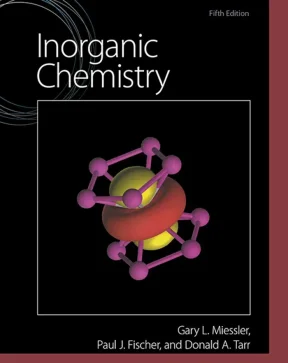
Inorganic Chemistry 5th Edition là giáo trình hóa vô cơ hàng đầu do ba tác giả Gary L. Miessler, Paul J. Fischer và Donald A. Tarr biên soạn. Cuốn sách được xuất bản bởi Pearson Education vào năm 2014, đánh dấu lần tái bản thứ năm sau các ấn bản năm 1991, 1999, 2004 và 2011. Đây là tài liệu giảng dạy được sử dụng rộng rãi tại nhiều trường đại học trên toàn thế giới, đặc biệt tại các cơ sở giáo dục ở Bắc Mỹ. Giáo trình bao gồm nhiều chủ đề cốt lõi của hóa vô cơ hiện đại, từ cấu trúc nguyên tử, liên kết hóa học đến hóa học phối trí và hóa học cơ kim. Các tác giả đến từ những trường đại học danh tiếng gồm Olaf College và Macalester College. Cuốn sách được thiết kế với mục tiêu cung cấp kiến thức toàn diện cho sinh viên đại học và nghiên cứu sinh. Nội dung kết hợp giữa lý thuyết cơ bản và ứng dụng thực tiễn.Ấn bản thứ năm được cập nhật với những tiến bộ mới nhất trong lĩnh vực hóa vô cơ. Hình ảnh bìa sách mô tả orbital dz2 của nguyên tử sắt trong ferrocene Fe(C5H5)2, thể hiện sự kết hợp giữa lý thuyết và cấu trúc thực tế.

1.1. Đội ngũ tác giả và hành trình học thuật

Gary L. Miessler là giáo sư hóa học tại Olaf College, nơi ông đã dành nhiều năm giảng dạy và nghiên cứu hóa vô cơ. Paul J. Fischer công tác tại Macalester College, mang đến góc nhìn chuyên sâu về hóa học lý thuyết. Donald A. Tarr cũng thuộc Olaf College, đóng góp kiến thức về hóa học vật liệu và phổ học. Ba tác giả kết hợp kinh nghiệm giảng dạy phong phú để tạo nên giáo trình cân bằng giữa lý thuyết và thực hành. Sự hợp tác giữa hai cơ sở giáo dục uy tín đảm bảo nội dung đa chiều và cập nhật. Mỗi tác giả đều có công trình nghiên cứu được công bố rộng rãi trên các tạp chí khoa học quốc tế.

1.2. Nhà xuất bản và tiêu chuẩn biên tập

Pearson Education là nhà xuất bản chịu trách nhiệm phát hành giáo trình này. Công ty có trụ sở chính tại Upper Saddle River, New Jersey, với mạng lưới phân phối toàn cầu. Quy trình biên tập chuyên nghiệp bao gồm nhiều khâu kiểm duyệt nội dung nghiêm ngặt. Đội ngũ biên tập viên bao gồm Adam Jaworski担任 Editor in Chief và Jeanne Zalesky担任 Executive Editor. Việc minh họa được thực hiện bởi Imagineering Inc, đảm bảo hình ảnh khoa học chính xác. Thiết kế bìa và nội thất do Gary Hespenheide đảm nhận. Giáo trình được bảo vệ bản quyền đầy đủ theo luật pháp Hoa Kỳ.

II. Phân tích nội dung cấu trúc nguyên tử trong giáo trình

Chương về cấu trúc nguyên tử là phần nền tảng quan trọng nhất trong giáo trình Inorganic Chemistry 5th Edition. Nội dung bắt đầu từ mô hình nguyên tử Bohr, giải thích các mức năng lượng của nguyên tử hydro bằng công thức Rydberg. Giáo trình trình bày rõ ràng dãy quang phổ Lyman trong vùng tử ngoại, dãy Balmer trong vùng khả kiến và dãy Paschen trong vùng hồng ngoại. Phương trình de Broglie được giới thiệu để giải thích bản chất sóng của electron, với công thức λ = h/mu liên kết bước sóng với hằng số Planck, khối lượng và vận tốc hạt. Nguyên lý bất định của Heisenberg được đề cập như giới hạn cơ bản trong việc mô tả chuyển động electron. Giáo trình giải thích cách các nguyên tố nặng hơn hydro yêu cầu phương pháp xấp xỉ như lý thuyết orbital phân tử. Các khái niệm về điện tích hạt nhân hiệu dụng và che chắn electron được trình bày chi tiết. Quy tắc Slater được sử dụng để tính toán mức độ che chắn giữa các electron. Nội dung này xây dựng nền tảng vững chắc cho việc hiểu cấu hình electron và tính chất nguyên tố.

2.1. Mô hình Bohr và quang phổ nguyên tử hydro

Mô hình Bohr giải thích nguyên tử hydro dựa trên các mức năng lượng lượng tử hóa. Năng lượng của mỗi mức được tính bằng công thức En = -RH/n², trong đó RH là hằng số Rydberg và n là số lượng tử chính. Các electron chuyển tiếp giữa các mức tạo ra các vạch quang phổ đặc trưng. Dãy Lyman tương ứng chuyển tiếp về mức n = 1 trong vùng tử ngoại. Dãy Balmer xuất hiện trong vùng khả kiến khi electron rơi về mức n = 2. Dãy Paschen nằm trong vùng hồng ngoại với chuyển tiếp về mức n = 3. Mô hình này áp dụng được cho các hệ một electron như He+, Li²⁺ và Be³⁺ bằng cách nhân RH với Z².

2.2. Bản chất sóng của electron và nguyên lý bất định

Phương trình de Broglie cho thấy mọi hạt chuyển động đều có tính chất sóng. Đối với electron, bước sóng đủ lớn để quan sát được do khối lượng rất nhỏ. Electron quay quanh hạt nhân có thể được mô tả như sóng dừng theo lý thuyết Bohr. Tuy nhiên, nguyên lý bất định Heisenberg đặt ra giới hạn cơ bản. Không thể đồng thời xác định chính xác vị trí và động lượng của electron. Điều này dẫn đến mô hình orbital nguyên tử dựa trên xác suất thay vì quỹ đạo xác định. Phương trình Schrödinger cung cấp mô tả toán học cho phân bố xác suất này. Các hàm sóng orbital nguyên tử cho biết vùng không gian có xác suất tìm thấy electron cao nhất.

III. Giải pháp cấu hình electron và quy tắc điền electron

Giáo trình Inorganic Chemistry 5th Edition trình bày hệ thống rõ ràng để xác định cấu hình electron của nguyên tố. Quy tắc Aufbau mô tả cách electron điền vào các orbital từ thấp đến cao năng lượng. Thứ tự điền electron theo sơ đồ năng lượng là 1s, 2s, 2p, 3s, 3p, 4s, 3d, 4p và tiếp tục. Nguyên lý loại trừ Pauli quy định mỗi orbital chỉ chứa tối đa hai electron có spin ngược chiều. Quy tắc Hund nêu rõ khi điền vào các orbital cùng mức, electron phân bố đều trước khi ghép cặp. Giáo trình giải thích hiện tượng bất thường ở crôm với cấu hình [Ar] 3d⁵4s¹ thay vì [Ar] 3d⁴4s². Tương tự, đồng có cấu hình [Ar] 3d¹⁰4s¹ do ổn định của orbital bán đầy và đầy. Điện tích hạt nhân hiệu dụng Z_eff tăng dần khi đi qua một chu kỳ. Mức năng lượng 3d cuối cùng ổn định electron hơn 4s khi Z đủ lớn. Sự giao nhau giữa mức 3d và 4s giải thích nhiều cấu hình electron bất thường trong bảng tuần hoàn.

3.1. Quy tắc Slater và tính toán che chắn electron

Quy tắc Slater cung cấp phương pháp ước tính điện tích hạt nhân hiệu dụng mà electron trải nghiệm. Mỗi electron bị che chắn bởi các electron khác tùy thuộc vào khoảng cách tương đối. Electron ở orbital có bán kính xác suất lớn hơn không đóng góp vào hệ số che chắn S. Giá trị Z_eff được tính bằng Z thực trừ đi hệ số che chắn tổng. Quy tắc này giải thích tại sao electron 1s có năng lượng thấp nhất và liên kết mạnh nhất. Đối với nguyên tố nặng, sự khác biệt giữa các orbital con trở nên đáng kể. Hiểu quy tắc Slater giúp dự đoán xu hướng hóa học của nguyên tố trong bảng tuần hoàn.

3.2. Sơ đồ năng lượng orbital và cấu hình bất thường

Sơ đồ năng lượng orbital cho thấy thứ tự điền electron từ dưới lên theo mức năng lượng tăng dần. Mỗi mức có sức chứa tối đa dựa trên số orbital và nguyên lý Pauli. Ví dụ, titan có hai electron 4s và hai electron 3d. Sắt có hai electron 4s, năm electron 3d với spin -½ và một electron 3d với spin +½. Vanadium điền ba electron vào mức 3d,-½ sau khi lấp đầy 4s. Đường giao nhau giữa 3d,-½ và 4s,+½ xuất hiện giữa vanadium và crôm. Các cấu hình bất thường như crôm và đồng phản ánh sự ổn định của orbital bán đầy hoặc đầy. Giáo trình cung cấp bảng cấu hình electron đầy đủ cho tất cả nguyên tố.

IV. Kết luận và ứng dụng thực tiễn của giáo trình hóa vô cơ

Giáo trình Inorganic Chemistry 5th Edition của Miessler, Fischer và Tarr là tài liệu không thể thiếu cho việc học hóa vô cơ hiện đại. Nội dung sách xây dựng nền tảng vững chắc từ cấu trúc nguyên tử đến hóa học phối trí và cơ kim. Phương pháp tiếp cận kết hợp lý thuyết lượng tử với dữ liệu thực nghiệm tạo nên cách học toàn diện. Giáo trình sử dụng dữ liệu tinh thể từ Cambridge Crystallographic Data Centre để minh họa cấu trúc phân tử. Phần mềm Mercury CSD 2.0 hỗ trợ trực quan hóa cấu trúc tinh thể và phân tử. Diamond được sử dụng để mô hình hóa cấu trúc tinh thể và phân tử.Ứng dụng thực tế bao gồm lĩnh vực vật liệu, dược phẩm, xúc tác và công nghệ nano. Kiến thức hóa vô cơ nền tảng phục vụ nghiên cứu về pin nhiên liệu, chất bán dẫn và vật liệu siêu dẫn. Giáo trình chuẩn bị cho sinh viên khả năng phân tích và giải quyết vấn đề phức tạp trong hóa học.Ấn bản thứ năm cập nhật những tiến bộ mới nhất, đảm bảo tính thời đại cho người học.

4.1. Ứng dụng trong nghiên cứu và công nghiệp

Kiến thức từ giáo trình được áp dụng rộng rãi trong nhiều lĩnh vực công nghiệp và nghiên cứu. Ngành công nghiệp chất xúc tác sử dụng nguyên lý hóa học cơ kim để thiết kế xúc tác hiệu quả. Công nghệ pin nhiên liệu dựa trên hiểu biết về phản ứng oxy hóa khử của kim loại chuyển tiếp. Ngành dược phẩm ứng dụng hóa học phối trí trong thiết kế thuốc và hệ thống phân phối thuốc. Vật liệu nano vô cơ được phát triển dựa trên kiến thức về tính chất nguyên tố và liên kết. Công nghệ bán dẫn yêu cầu hiểu biết sâu về cấu trúc electron và tính chất quang học. Nghiên cứu về vật liệu siêu dẫn sử dụng nguyên tắc hóa học trạng thái rắn từ giáo trình.

4.2. Giá trị giáo dục và phương pháp học tập hiệu quả

Giáo trình cung cấp hệ thống bài tập đa dạng từ cơ bản đến nâng cao. Mỗi chương kết thúc với phần tóm tắt và bài kiểm tra hiểu biết. Phương pháp học hiệu quả bao gồm đọc trước bài giảng và ghi chú các khái niệm chính. Việc vẽ sơ đồ orbital và cấu hình electron giúp ghi nhớ kiến thức lâu dài. Thảo luận nhóm về các vấn đề hóa học phức tạp tăng cường hiểu biết sâu. Sử dụng phần mềm mô hình hóa phân tử hỗ trợ trực quan hóa cấu trúc ba chiều. Giáo trình khuyến khích sinh viên liên hệ lý thuyết với hiện tượng thực tế trong cuộc sống. Thời gian học tập hiệu quả nhất là phân bổ đều đặn thay vì học dồn trước kỳ thi.
21/04/2026

Trích đoạn nội dung tài liệu

org F I F TH EDITION Inorganic Chemistry Gary L. Olaf College Paul J. Fischer Macalester College Donald A. Olaf College Boston Columbus Indianapolis New York San Francisco Upper Saddle River Amsterdam Cape Town Dubai London Madrid Milan Munich Paris Montréal Toronto Delhi Mexico City São Paulo Sydney Hong Kong Seoul Singapore Taipei Tokyo Editor in Chief: Adam Jaworski Production Management/Composition: GEX Publishing Services Executive Editor: Jeanne Zalesky Illustrations: Imagineering, Inc. Senior Marketing Manager: Jonathan Cottrell Design Manager: Mark Ong Project Editor: Jessica Moro Interior and Cover Design: Gary Hespenheide Assistant Editor: Coleen Morrison Photo Permissions Manager: Maya Melenchuk Editorial Assistant: Lisa Tarabokjia Text Permissions Manager: Joseph Croscup Marketing Assistant: Nicola Houston Text Permissions Research: Electronic Publishing Services, Inc. Associate Media Producer: Erin Fleming Operations Specialist: Jeffrey Sargent Managing Editor, Chemistry and Geosciences: Gina M. Cheselka Cover Image Credit: Image of the dz 2 orbital of the iron atom Production Project Manager: Edward Thomas within ferrocene, Fe(C5H5)2. Courtesy of Gary Miessler. Credits and acknowledgments borrowed from other sources and reproduced, with permission, in this textbook appear on the appropriate page within the text. Crystal structures that appear in this text were generated from data obtained from The Cambridge Crystallographic Data Centre. Visualization of the structures was created using Mercury CSD 2. The Cambridge Structural Database: a quarter of a million crystal structures and rising F. Allen, Acta Cryst. These data can be obtained free of charge from The Cambridge Crystallographic Data Centre via www.uk/data_request/cif Mercury CSD 2.0 - New Features for the Visualization and Investigation of Crystal Structures C. van de Streek and P.1107/S0021889807067908> Diamond - Crystal and Molecular Structure Visualization Crystal Impact - Dr. Brandenburg GbR, Kreuzherrenstr. 102, 53227 Bonn, Germany www. Copyright © 2014, 2011, 2004, 1999, 1991 by Pearson Education, Inc. All rights reserved. Manufactured in the United States of America. This publication is protected by Copyright, and permission should be obtained from the publisher prior to any prohibited reproduction, storage in a retrieval system, or transmission in any form or by any means: electronic, mechanical, photocopying, recording, or likewise. To obtain permission(s) to use material from this work, please submit a written request to Pearson Education, Inc., Permissions Department, 1 Lake Street, Department 1G, Upper Saddle River, NJ 07458. Many of the designations used by manufacturers and sellers to distinguish their products are claimed as trademarks. Where those designations appear in this book, and the publisher was aware of a trademark claim, the designations have been printed in initial caps or all caps. Library of Congress Cataloging-in-Publication Data Miessler, Gary L. — Fifth edition / Gary L. Olaf College, Paul J. Fischer, Macalester College. pages cm Includes index. Chemistry, Inorganic—Textbooks.M54 2014 546—dc23 2012037305 1 2 3 4 5 6 7 8 9 10—DOW—16 15 14 13 12 ISBN-10: 0-321-81105-4 www.com ISBN-13: 978-0-321-81105-9 www.org Brief Contents Chapter 1 Introduction to Inorganic Chemistry 1 Chapter 2 Atomic Structure 9 Chapter 3 Simple Bonding Theory 45 Chapter 4 Symmetry and Group Theory 75 Chapter 5 Molecular Orbitals 117 Chapter 6 Acid–Base and Donor–Acceptor Chemistry 169 Chapter 7 The Crystalline Solid State 215 Chapter 8 Chemistry of the Main Group Elements 249 Chapter 9 Coordination Chemistry I: Structures and Isomers 313 Chapter 10 Coordination Chemistry II: Bonding 357 Chapter 11 Coordination Chemistry III: Electronic Spectra 403 Chapter 12 Coordination Chemistry IV: Reactions and Mechanisms 437 Chapter 13 Organometallic Chemistry 475 Chapter 14 Organometallic Reactions and Catalysis 541 Chapter 15 Parallels between Main Group and Organometallic Chemistry 579 Appendix A Answers to Exercises 619 Appendix B Useful Data App. B can be found online at www.com/advchemistry Appendix C Character Tables 658 iii Contents Preface xi Acknowledgments xiii Chapter 1 Introduction to Inorganic Chemistry 1 1.1 What Is Inorganic Chemistry? 1 1.2 Contrasts with Organic Chemistry 1 1.3 The History of Inorganic Chemistry 4 1.4 Perspective 7 General References 8 Chapter 2 Atomic Structure 9 2.1 Historical Development of Atomic Theory 9 2.1 The Periodic Table 10 2.2 Discovery of Subatomic Particles and the Bohr Atom 11 2.2 The Schrödinger Equation 14 2.1 The Particle in a Box 16 2.2 Quantum Numbers and Atomic Wave Functions 18 2.3 The Aufbau Principle 26 2.3 Periodic Properties of Atoms 36 2.3 Covalent and Ionic Radii 38 General References 41 • Problems 41 Chapter 3 Simple Bonding Theory 45 3.1 Lewis Electron-Dot Diagrams 45 3.2 Higher Electron Counts 46 3.4 Multiple Bonds in Be and B Compounds 49 3.2 Valence Shell Electron-Pair Repulsion 51 3.1 Lone-Pair Repulsion 53 3.3 Electronegativity and Atomic Size Effects 57 3.4 Ligand Close Packing 63 3.4 Hydrogen Bonding 67 General References 70 • Problems 71 Chapter 4 Symmetry and Group Theory 75 4.1 Symmetry Elements and Operations 75 4.1 Groups of Low and High Symmetry 82 4.3 Properties and Representations of Groups 90 4.2 Representations of Point Groups 92 4.3 Character Tables 95 iv www.4 Examples and Applications of Symmetry 100 4.2 Molecular Vibrations 101 General References 111 • Problems 111 Chapter 5 Molecular Orbitals 117 5.1 Formation of Molecular Orbitals from Atomic Orbitals 117 5.1 Molecular Orbitals from s Orbitals 118 5.2 Molecular Orbitals from p Orbitals 120 5.3 Molecular Orbitals from d Orbitals 121 5.4 Nonbonding Orbitals and Other Factors 122 5.2 Homonuclear Diatomic Molecules 122 5.3 Diatomic Molecules of the First and Second Periods 126 5.3 Heteronuclear Diatomic Molecules 133 5.2 Ionic Compounds and Molecular Orbitals 138 5.4 Molecular Orbitals for Larger Molecules 140 5.5 CO2 Revisited with Projection Operators 155 5.7 Hybrid Orbitals 161 General References 165 • Problems 165 Chapter 6 Acid–Base and Donor–Acceptor Chemistry 169 6.1 Acid–Base Models as Organizing Concepts 169 6.1 History of Acid–Base Models 169 6.3 Brønsted–Lowry Concept 171 6.1 Nonaqueous Solvents and Acid–Base Strength 172 6.2 Brønsted–Lowry Superacids 173 6.3 Thermodynamic Measurements in Solution 175 6.4 Brønsted–Lowry Gas Phase Acidity and Basicity 176 6.5 Brønsted–Lowry Superbases 178 6.6 Trends in Brønsted–Lowry Basicity 179 6.7 Brønsted–Lowry Acid Strength of Binary Hydrogen Compounds 182 6.8 Brønsted–Lowry Strength of Oxyacids 183 6.9 Brønsted–Lowry Acidity of Aqueous Cations 183 6.4 Lewis Acid–Base Concept and Frontier Orbitals 184 6.1 Frontier Orbitals and Acid–Base Reactions 185 6.2 Spectroscopic Support for Frontier Orbital Interactions 188 6.3 Quantification of Lewis Basicity 189 6.4 The BF3 Affinity Scale for Lewis Basicity 191 6.6 Inductive Effects on Lewis Acidity and Basicity 193 6.7 Steric Effects on Lewis Acidity and Basicity 194 6.8 Frustrated Lewis Pairs 196 6.2 Receptor–Guest Interactions 200 vi | Contents 6.6 Hard and Soft Acids and Bases 201 6.1 Theory of Hard and Soft Acids and Bases 203 6.2 HSAB Quantitative Measures 205 General References 211 • Problems 211 Chapter 7 The Crystalline Solid State 215 7.1 Formulas and Structures 215 7.2 Structures of Binary Compounds 221 7.3 More Complex Compounds 224 7.2 Thermodynamics of Ionic Crystal Formation 226 7.1 Lattice Energy and the Madelung Constant 226 7.2 Solubility, Ion Size, and HSAB 227 7.3 Molecular Orbitals and Band Structure 229 7.1 Diodes, the Photovoltaic Effect, and Light-Emitting Diodes 233 7.1 Low-Temperature Superconducting Alloys 237 7.2 The Theory of Superconductivity (Cooper Pairs) 237 7.3 High-Temperature Superconductors: YBa2Cu3O7 and Related Compounds 238 7.5 Bonding in Ionic Crystals 239 7.6 Imperfections in Solids 240 7.7 Silicates 241 General References 246 • Problems 247 Chapter 8 Chemistry of the Main Group Elements 249 8.1 General Trends in Main Group Chemistry 249 8.3 Group 1: The Alkali Metals 259 8.4 Group 2: The Alkaline Earths 262 8.2 Other Chemistry of the Group 13 Elements 269 8.9 Group 17: The Halogens 296 8.1 The Elements 296 www.org Contents | vii 8.10 Group 18: The Noble Gases 300 8.2 Chemistry of Group 18 Elements 302 General References 309 • Problems 309 Chapter 9 Coordination Chemistry I: Structures and Isomers 313 9.5 Combinations of Chelate Rings 327 9.6 Ligand Ring Conformation 329 9.8 Separation and Identification of Isomers 334 9.4 Coordination Numbers and Structures 336 9.1 Coordination Numbers 1, 2, and 3 337 9.7 Larger Coordination Numbers 346 9.5 Coordination Frameworks 347 General References 353 • Problems 353 Chapter 10 Coordination Chemistry II: Bonding 357 10.1 Evidence for Electronic Structures 357 10.4 Coordination Numbers and Molecular Shapes 363 10.1 Crystal Field Theory 364 10.3 Ligand Field Theory 365 10.1 Molecular Orbitals for Octahedral Complexes 365 10.2 Orbital Splitting and Electron Spin 372 10.3 Ligand Field Stabilization Energy 374 10.4 Square-Planar Complexes 377 10.1 Sigma-Donor Interactions 383 10.2 Pi-Acceptor Interactions 385 10.3 Pi-Donor Interactions 387 10.4 The Spectrochemical Series 388 10.5 Magnitudes of es, ep, and ⌬ 389 10.5 The Jahn–Teller Effect 393 10.6 Four- and Six-Coordinate Preferences 394 10.7 Other Shapes 397 General References 398 • Problems 399 viii | Contents Chapter 11 Coordination Chemistry III: Electronic Spectra 403 11.1 Absorption of Light 403 11.1 Beer–Lambert Absorption Law 404 11.2 Quantum Numbers of Multielectron Atoms 405 11.1 Spin-Orbit Coupling 411 11.3 Electronic Spectra of Coordination Compounds 412 11.3 Tanabe–Sugano Diagrams 417 11.4 Jahn–Teller Distortions and Spectra 422 11.5 Applications of Tanabe–Sugano Diagrams: Determining ⌬ o from Spectra 425 11.7 Charge-Transfer Spectra 430 11.8 Charge-Transfer and Energy Applications 431 General References 434 • Problems 434 Chapter 12 Coordination Chemistry IV: Reactions and Mechanisms 437 12.1 Inert and Labile Compounds 439 12.2 Mechanisms of Substitution 441 12.3 Kinetic Consequences of Reaction Pathways 441 12.4 Experimental Evidence in Octahedral Substitution 445 12.2 Linear Free-Energy Relationships 447 12.4 The Conjugate Base Mechanism 450 12.5 The Kinetic Chelate Effect 452 12.5 Stereochemistry of Reactions 452 12.1 Substitution in trans Complexes 453 12.2 Substitution in cis Complexes 455 12.3 Isomerization of Chelate Rings 456 12.6 Substitution Reactions of Square-Planar Complexes 457 12.1 Kinetics and Stereochemistry of Square-Planar Substitutions 457 12.2 Evidence for Associative Reactions 458 12.7 The trans Effect 460 12.1 Explanations of the trans Effect 461 12.8 Oxidation–Reduction Reactions 462 12.1 Inner-Sphere and Outer-Sphere Reactions 463 12.2 Conditions for High and Low Oxidation Numbers 467 12.9 Reactions of Coordinated Ligands 468 12.1 Hydrolysis of Esters, Amides, and Peptides 468 12.3 Electrophilic Substitution 470 General References 471 • Problems 472 Chapter 13 Organometallic Chemistry 475 13.2 Organic Ligands and Nomenclature 479 www.org Contents | ix 13.3 The 18-Electron Rule 480 13.3 Square-Planar Complexes 485 13.4 Ligands in Organometallic Chemistry 486 13.2 Ligands Similar to CO 493 13.3 Hydride and Dihydrogen Complexes 495 13.4 Ligands Having Extended Pi Systems 496 13.5 Bonding between Metal Atoms and Organic Pi Systems 500 13.1 Linear Pi Systems 500 13.2 Cyclic Pi Systems 502 13.6 Complexes Containing M i C, M “ C, and M ‚ C Bonds 513 13.1 Alkyl and Related Complexes 513 13.4 Carbide and Cumulene Complexes 518 13.5 Carbon Wires: Polyyne and Polyene Bridges 519 13.7 Covalent Bond Classification Method 520 13.8 Spectral Analysis and Characterization of Organometallic Complexes 524 13.3 Examples of Characterization 529 General References 534 • Problems 534 Chapter 14 Organometallic Reactions and Catalysis 541 14.1 Reactions Involving Gain or Loss of Ligands 541 14.1 Ligand Dissociation and Substitution 541 14.2 Oxidative Addition and C i H Bond Activation 545 14.3 Reductive Elimination and Pd-Catalyzed Cross-Coupling 547 14.4 Sigma Bond Metathesis 549 14.5 Application of Pincer Ligands 549 14.2 Reactions Involving Modification of Ligands 550 14.3 Examples of 1,2 Insertions 553 14.3 Monsanto Acetic Acid Process 561 14.5 Hydrogenation by Wilkinson’s Catalyst 563 14.1 Ziegler–Natta Polymerizations 570 14.2 Water Gas Reaction 571 General References 574 • Problems 574 Chapter 15 Parallels between Main Group and Organometallic Chemistry 579 15.1 Main Group Parallels with Binary Carbonyl Complexes 579 15.2 The Isolobal Analogy 581 15.1 Extensions of the Analogy 584 15.2 Examples of Applications of the Analogy 588 x | Contents 15.3 Metal–Metal Bonds 590 15.1 Multiple Metal–Metal Bonds 591 15.3 Metallaboranes and Metallacarboranes 604 15.5 Carbon-Centered Clusters 611 15.6 Additional Comments on Clusters 612 General References 614 • Problems 614 Appendix AA Answers to Exercises 619 Appendix B Useful Data App. B can be found online at www.com/advchemistry Appendix B.1 Ionic Radii Appendix B.2 Ionization Energy Appendix B.3 Electron Affinity Appendix B.5 Absolute Hardness Parameters Appendix B.6 CA, E A, CB, and EB Values Appendix B.7 Latimer Diagrams for Selected Elements Appendix B.

Nội dung được bảo vệ bản quyền — Tải xuống đầy đủ