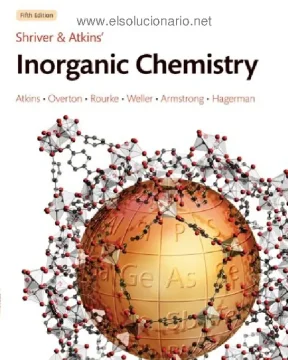
Shriver & Atkins' Inorganic Chemistry 5th Edition - Tính chất và bảng tuần hoàn nguyên tố

Chuyên ngành

Hóa học vô cơ

Người đăng

Ẩn danh

Thể loại

Giáo trình

2010

852
0
0

Phí lưu trữ

135 Point

Tóm tắt

I. Tổng quan về giáo trình Inorganic Chemistry Shriver Atkins

Shriver & Atkins' Inorganic Chemistry ấn bản thứ năm là giáo trình hóa vô cơ được sử dụng rộng rãi trong đào tạo đại học và sau đại học trên toàn thế giới. Cuốn sách xuất bản năm 2010 bởi Oxford University Press, với sự biên soạn của các chuyên gia hàng đầu trong lĩnh vực hóa vô cơ. Giáo trình cung cấp cái nhìn toàn diện về tính chất tất cả nguyên tố trong bảng tuần hoàn. Các nguyên tố trải dài từ kim loại phản ứng mạnh như natri đến kim loại quý như vàng. Phi kim bao gồm chất rắn, chất lỏng và khí, từ tác nhân oxy hóa mạnh như flo đến khí trơ như heli. Mặc dù sự đa dạng là đặc trưng của hóa vô cơ, cuốn sách nhấn mạnh các xu hướng và quy luật cơ bản. Những xu hướng về tính phản ứng, cấu trúc và tính chất của nguyên tố cùng hợp chất giúp hiểu sâu hơn về bảng tuần hoàn. Cuốn sách xây dựng nền tảng vững chắc cho việc tiếp cận hóa vô cơ hiện đại, kết hợp lý thuyết và thực hành một cách hệ thống.

1.1. Giới thiệu về tác giả và lịch sử xuất bản

Giáo trình Shriver & Atkins' Inorganic Chemistry được đặt theo tên hai tác giả gốc: Duward Shriver và Peter Atkins. Ấn bản đầu tiên ra đời nhằm đáp ứng nhu cầu về tài liệu hóa vô cơ toàn diện cho sinh viên đại học. Đến ấn bản thứ năm, cuốn sách đã được cập nhật và mở rộng đáng kể. Năm 2010 đánh dấu mốc quan trọng khi Oxford University Press phát hành phiên bản mới nhất. Ấn bản được ủy quyền phân phối tại Hoa Kỳ và Canada. Cuốn sách có mã ISBN 978–1–42–921820–7, đảm bảo tính chính thống và dễ dàng truy tìm trong hệ thống thư viện toàn cầu.

1.2. Cấu trúc nội dung và phạm vi bao quát

Nội dung giáo trình bao quát toàn bộ lĩnh vực hóa vô cơ, từ cơ bản đến nâng cao. Cấu trúc sách được tổ chức theo logic rõ ràng, bắt đầu từ nguyên tử và bảng tuần hoàn, sau đó đi sâu vào liên kết hóa học, cấu trúc và tính chất hợp chất vô cơ. Mỗi chương đều có bài tập và ví dụ minh họa. Phạm vi bao gồm hóa học nguyên tố khối s, p, d và f. Cuốn sách cũng đề cập đến chủ đề hiện đại như hóa học sinh học vô cơ, vật liệu nano và xúc tác. Sự kết hợp giữa lý thuyết cơ học lượng tử và thực nghiệm tạo nên giá trị đặc biệt.

II. Phân tích nội dung học thuật và xu hướng hóa học

Nội dung học thuật của Shriver & Atkins' Inorganic Chemistry 5th Edition thể hiện chiều sâu và sự cập nhật trong lĩnh vực hóa vô cơ hiện đại. Cuốn sách phân tích chi tiết các xu hướng hóa học trong bảng tuần hoàn, bao gồm bán kính nguyên tử, năng lượng ion hóa và ái lực electron. Một điểm nổi bật là cách sách giải thích tính chất nguyên tử. Bán kính nguyên tử tăng dần theo nhóm và giảm từ trái sang phải trong khối s và p. Hiệu ứng co thắt lanthanide dẫn đến giảm bán kính nguyên tử cho nguyên tố sau khối f. Tất cả anion nguyên tử lớn hơn nguyên tử gốc, trong khi cation nguyên tử nhỏ hơn. Cuốn sách cũng đi sâu vào hóa học hạt nhân, bao gồm quá trình phân hạch và tổng hợp hạt nhân. Ví dụ về phân hạch uranium-236 thành xenon-140 và strontium-93 minh họa năng lượng liên kết và ứng dụng trong lò phản ứng hạt nhân. Những nội dung này giúp sinh viên hiểu mối liên hệ giữa hóa vô cơ và vật lý hạt nhân.

2.1. Xu hướng tính chất nguyên tử trong bảng tuần hoàn

Bảng tuần hoàn là công cụ trung tâm trong hóa vô cơ. Shriver & Atkins trình bày chi tiết xu hướng tính chất nguyên tử. Bán kính nguyên tử biến đổi đều đặn theo số hiệu nguyên tử. Trong cùng một nhóm, bán kính tăng dần khi đi xuống dưới do xuất hiện lớp electron mới. Trong cùng chu kỳ thuộc khối s và p, bán kính giảm từ trái sang phải vì điện tích hạt nhân tăng. Hiệu ứng co thắt lanthanide là hiện tượng quan trọng, làm giảm bán kính nguyên tử của nguyên tố sau dãy lanthanide. Kiến thức về xu hướng này giúp nhà hóa học dự đoán tính chất hóa học mà không cần tra cứu dữ liệu bảng.

2.2. Liên kết hóa học và mô hình lượng tử

Hóa học vô cơ sử dụng nhiều mô hình liên kết khác nhau để giải thích tính chất hợp chất. Các hợp chất vô cơ trải dài từ chất rắn ion, mô tả bằng điện tĩnh học cổ điển, đến hợp chất cộng hóa trị và kim loại. Các mô hình này có nguồn gốc từ cơ học lượng tử. Cuốn sách sử dụng mô hình liên kết định tính dựa trên orbital nguyên tử và phân tử. Phương pháp này giúp giải thích cấu trúc, tính chất từ và phản ứng của hợp chất vô cơ. Việc xây dựng trên nền tảng orbital quen thuộc giúp sinh viên dễ dàng tiếp cận khái niệm phức tạp hơn.

III. Phương pháp học tập và tiếp cận giáo trình hiệu quả

Việc tiếp cận giáo trình Inorganic Chemistry Shriver & Atkins đòi hỏi phương pháp học tập có hệ thống. Cuốn sách được thiết kế với cấu trúc logic, từ đơn giản đến phức tạp, phù hợp cho cả sinh viên mới bắt đầu và người nghiên cứu nâng cao. Phương pháp hiệu quả nhất là học theo từng chương, đảm bảo nắm vững kiến thức nền tảng trước khi tiến đến nội dung nâng cao. Mỗi chương xây dựng trên khái niệm đã học ở chương trước. Sự liên kết này tạo nên mạng kiến thức chặt chẽ. Cuốn sách cung cấp nhiều ví dụ thực tiễn về ứng dụng hóa vô cơ. Từ năng lượng hạt nhân đến vật liệu siêu dẫn, từ dược phẩm đến bảo vệ môi trường. Những ví dụ giúp người học thấy tầm quan trọng thực tế của lý thuyết. Việc kết hợp giữa lý thuyết cơ học lượng tử và thực nghiệm giúp phát triển tư duy phân tích và khả năng giải quyết vấn đề khoa học.

3.1. Chiến lược đọc hiểu và ghi nhớ kiến thức

Để đọc hiểu hiệu quả giáo trình này, cần bắt đầu từ khái niệm cơ bản về nguyên tử và bảng tuần hoàn. Mỗi chương nên đọc hai lần: lần đầu nắm tổng quan, lần thứ hai ghi chú chi tiết. Việc vẽ sơ đồ tư duy giúp liên kết các khái niệm với nhau. Phần bài tập cuối chương đóng vai trò quan trọng trong việc củng cố kiến thức. Nên giải bài tập ngay sau khi đọc xong mỗi phần. Sử dụng bảng tuần hoàn như công cụ tham khảo thường xuyên. Việc nhóm nguyên tố theo tính chất tương đồng cũng giúp ghi nhớ lâu hơn.

3.2. Sử dụng tài liệu bổ trợ và tài nguyên trực tuyến

Ngoài giáo trình chính, nhiều tài liệu bổ trợ hỗ trợ việc học hóa vô cơ. Các ấn phẩm của Oxford University Press thường đi kèm website hỗ trợ với bài tập tương tác. Thư viện đại học cung cấp quyền truy cập cơ sở dữ liệu khoa học như SciFinder và Web of Science. Video bài giảng từ các trường đại học danh tiếng cũng là nguồn tham khảo quý giá. Các nhóm học tập trực tuyến cho phép trao đổi kiến thức và giải đáp thắc mắc. Việc tham gia diễn đàn hóa học quốc tế giúp mở rộng hiểu biết về nghiên cứu mới nhất trong lĩnh vực hóa vô cơ.

IV. Kết luận và ứng dụng thực tiễn của hóa vô cơ

Shriver & Atkins' Inorganic Chemistry 5th Edition đóng vai trò quan trọng trong đào tạo thế hệ nhà hóa học vô cơ mới. Giáo trình không chỉ cung cấp kiến thức nền tảng mà còn định hướng nghiên cứu và ứng dụng thực tiễn. Ứng dụng hóa vô cơ trải rộng trên nhiều lĩnh vực. Trong y học, hợp chất vô cơ được sử dụng trong chẩn đoán hình ảnh và điều trị ung thư. Trong công nghệ năng lượng, vật liệu vô cơ đóng vai trò thiết yếu trong pin mặt trời và pin lithium-ion. Trong bảo vệ môi trường, xúc tác vô cơ giúp xử lý khí thải và nước ô nhiễm. Cuốn sách cũng đề cập vấn đề thời sự như năng lượng hạt nhân. Sản lượng điện từ lò phản ứng hạt nhân khoảng 3 GW tương ứng đầu ra điện khoảng 1 GW. Quá trình phân hạch 3 kg uranium-235 mỗi ngày cung cấp năng lượng tương đương hàng nghìn tấn than đá. Giáo trình cung cấp nền tảng để hiểu và giải quyết những vấn đề phức tạp này.

4.1. Đánh giá ưu điểm và hạn chế của giáo trình

Ưu điểm nổi bật của giáo trình là tính toàn diện và cập nhật. Nội dung bao quát toàn bộ bảng tuần hoàn, từ nguyên tố nhóm IA đến nguyên tố siêu nặng. Cách trình bày kết hợp lý thuyết và thực nghiệm giúp người học hiểu sâu vấn đề. Tuy nhiên, một số hạn chế cần lưu ý. Độ phức tạp nội dung có thể gây khó khăn cho sinh viên năm đầu. Một số chủ đề nâng cao đòi hỏi kiến thức toán học và vật lý sâu. Ấn bản năm 2010 chưa cập nhật một số phát hiện mới nhất. Người học cần bổ sung tài liệu tham khảo khác để có cái nhìn toàn diện hơn.

4.2. Hướng phát triển và tầm quan trọng trong nghiên cứu hiện đại

Hóa vô cơ tiếp tục là lĩnh vực nghiên cứu năng động và nhiều triển vọng. Các hướng phát triển bao gồm hóa học vật liệu tiên tiến, xúc tác xanh và y học cá nhân hóa. Giáo trình Shriver & Atkins cung cấp nền tảng vững chắc để tiếp cận hướng nghiên cứu mới. Vật liệu vô cơ ứng dụng trong công nghệ nano đang mở ra khả năng đột phá. Hợp chất kim loại chuyển tiếp trong điều trị bệnh là lĩnh vực đầy hứa hẹn. Nghiên cứu năng lượng sạch sử dụng vật liệu vô cơ cũng thu hút sự quan tâm lớn. Giáo trình này vẫn là tài liệu tham khảo không thể thiếu cho nhà nghiên cứu.
21/04/2026

Trích đoạn nội dung tài liệu

net The elements Name Symbol Atomic Molar mass Name Symbol Atomic Molar mass number (g mol⫺1) number (g mol⫺1) Actinium Ac 89 227 Meitnerium Mt 109 268 Aluminium (aluminum) Al 13 26.98 Mendelevium Md 101 258 Americium Am 95 243 Mercury Hg 80 200.18 Astatine At 85 210 Neptunium Np 93 237 Barium Ba 56 137.69 Berkelium Bk 97 247 Niobium Nb 41 92.98 Nobelium No 102 259 Bohrium Bh 107 264 Osmium Os 76 190.08 Plutonium Pu 94 244 Californium Cf 98 251 Polonium Po 84 209 Carbon C 6 12.45 Promethium Pm 61 145 Chromium Cr 24 52.93 Radium Ra 88 226 Copernicum ? 112 ? Radon Rn 86 222 Copper Cu 29 63.21 Curium Cm 96 247 Rhodium Rh 45 102.91 Darmstadtium Ds 110 271 Roentgenium Rg 111 272 Dubnium Db 105 262 Rubidium Rb 37 85.07 Einsteinium Es 99 252 Rutherfordium Rf 104 261 Erbium Er 68 167.96 Fermium Fm 100 257 Seaborgium Sg 106 266 Fluorine F 9 19.96 Francium Fr 87 223 Silicon Si 14 28.95 Hassium Hs 108 269 Technetium Tc 43 98 Helium He 2 4.03 Lawrencium Lr 103 262 Vanadium V 23 50.net This page intentionally left blank www.net Shriver & Atkins’ www.net This page intentionally left blank www.net Shriver & Atkins’ W. Freeman and Company New York www.net Shriver and Atkins' Inorganic Chemistry, Fifth Edition © 2010 P. Armstrong All rights reserved. ISBN 978–1–42–921820–7 Published in Great Britain by Oxford University Press This edition has been authorized by Oxford University Press for sale in the United States and Canada only and not for export therefrom. Freeman and Company, 41 Madison Avenue, New York, NY 10010 www.net Preface Our aim in the fifth edition of Shriver and Atkins’ Inorganic Chemistry is to provide a comprehensive and contemporary introduction to the diverse and fascinating discipline of inorganic chemistry. Inorganic chemistry deals with the properties of all of the elements in the periodic table. These elements range from highly reactive metals, such as sodium, to noble metals, such as gold. The nonmetals include solids, liquids, and gases, and range from the aggressive oxidizing agent fluorine to unreactive gases such as helium. Although this variety and diversity are features of any study of inorganic chemistry, there are under- lying patterns and trends which enrich and enhance our understanding of the discipline. These trends in reactivity, structure, and properties of the elements and their compounds provide an insight into the landscape of the periodic table and provide a foundation on which to build understanding. Inorganic compounds vary from ionic solids, which can be described by simple ap- plications of classical electrostatics, to covalent compounds and metals, which are best described by models that have their origin in quantum mechanics. We can rationalize and interpret the properties of most inorganic compounds by using qualitative models that are based on quantum mechanics, such as atomic orbitals and their use to form molecular orbitals. The text builds on similar qualitative bonding models that should already be fa- miliar from introductory chemistry courses. Although qualitative models of bonding and reactivity clarify and systematize the subject, inorganic chemistry is essentially an experi- mental subject. New areas of inorganic chemistry are constantly being explored and new and often unusual inorganic compounds are constantly being synthesized and identified. These new inorganic syntheses continue to enrich the field with compounds that give us new perspectives on structure, bonding, and reactivity. Inorganic chemistry has considerable impact on our everyday lives and on other sci- entific disciplines. The chemical industry is strongly dependent on it. Inorganic chemistry is essential to the formulation and improvement of modern materials such as catalysts, semiconductors, optical devices, superconductors, and advanced ceramic materials. The environmental and biological impact of inorganic chemistry is also huge. Current topics in industrial, biological, and environmental chemistry are mentioned throughout the book and are developed more thoroughly in later chapters. In this new edition we have refined the presentation, organization, and visual represen- tation. All of the book has been revised, much has been rewritten and there is some com- pletely new material. We have written with the student in mind, and we have added new pedagogical features and have enhanced others. The topics in Part 1, Foundations, have been revised to make them more accessible to the reader with more qualitative explanation accompanying the more mathematical treatments. Part 2, The elements and their compounds, has been reorganized. The section starts with a new chapter which draws together periodic trends and cross references forward to the descriptive chapters. The remaining chapters start with hydrogen and proceed across the periodic table from the s-block metals, across the p block, and finishing with the d- and f-block elements. Most of these chapters have been reorganized into two sections: Essen- tials describes the essential chemistry of the elements and the Detail provides a more thor- ough account. The chemical properties of each group of elements and their compounds are enriched with descriptions of current applications. The patterns and trends that emerge are rationalized by drawing on the principles introduced in Part 1. Part 3, Frontiers, takes the reader to the edge of knowledge in several areas of current research. These chapters explore specialized subjects that are of importance to industry, materials, and biology, and include catalysis, nanomaterials, and bioinorganic chemistry. All the illustrations and the marginal structures—nearly 1500 in all—have been re- drawn and are presented in full colour. We have used colour systematically rather than just for decoration, and have ensured that it serves a pedagogical purpose. viii Preface www.net We are confident that this text will serve the undergraduate chemist well. It provides the theoretical building blocks with which to build knowledge and understanding of inorganic chemistry. It should help to rationalize the sometimes bewildering diversity of descriptive chemistry. It also takes the student to the forefront of the discipline and should therefore complement many courses taken in the later stages of a programme. Peter Atkins Tina Overton Jonathan Rourke Mark Weller Fraser Armstrong Mike Hagerman March 2009 www.net Acknowledgements We have taken care to ensure that the text is free of errors. This is difficult in a rapidly changing field, where today’s knowledge is soon replaced by tomorrow’s. We would particularly like to thank Jennifer Armstrong, University of Southampton; Sandra Dann, University of Loughborough; Rob Deeth, University of Warwick; Martin Jones, Jennifer Creen, and Russ Egdell, University of Oxford, for their guidance and advice. Many of the figures in Chapter 27 were produced using PyMOL software; for more information see DeLano, W. The PyMOL Molecular Graphics System (2002), De Lano Scientific, San Carlos, CA, USA. We acknowledge and thank all those colleagues who so willingly gave their time and expertise to a careful reading of a variety of draft chapters. Rolf Berger, University of Uppsala, Sweden Richard Henderson, University of Newcastle Harry Bitter, University of Utrecht, The Netherlands Eva Hervia, University of Strathclyde Richard Blair, University of Central Florida Brendan Howlin, University of Surrey Andrew Bond, University of Southern Denmark, Denmark Songping Huang, Kent State University Darren Bradshaw, University of Liverpool Carl Hultman, Gannon University Paul Brandt, North Central College Stephanie Hurst, Northern Arizona University Karen Brewer, Hamilton College Jon Iggo, University of Liverpool George Britovsek, Imperial College, London S. Jackson, University of Glasgow Scott Bunge, Kent State University Michael Jensen, Ohio University David Cardin, University of Reading Pavel Karen, University of Oslo, Norway Claire Carmalt, University College London Terry Kee, University of Leeds Carl Carrano, San Diego State University Paul King, Birbeck, University of London Neil Champness, University of Nottingham Rachael Kipp, Suffolk University Ferman Chavez, Oakland University Caroline Kirk, University of Loughborough Ann Chippindale, University of Reading Lars Kloo, KTH Royal Institute of Technology, Sweden Karl Coleman, University of Durham Randolph Kohn, University of Bath Simon Collison, University of Nottingham Simon Lancaster, University of East Anglia Bill Connick, University of Cincinnati Paul Lickiss, Imperial College, London Stephen Daff, University of Edinburgh Sven Lindin, University of Stockholm, Sweden Sandra Dann, University of Loughborough Paul Loeffler, Sam Houston State University Nancy Dervisi, University of Cardiff Paul Low, University of Durham Richard Douthwaite, University of York Astrid Lund Ramstrad, University of Bergen, Norway Simon Duckett, University of York Jason Lynam, University of York A. Ehlers, Free University of Amsterdam, The Netherlands Joel Mague, Tulane University Anders Eriksson, University of Uppsala, Sweden Francis Mair, University of Manchester Andrew Fogg, University of Liverpool Mikhail Maliarik, University of Uppsala, Sweden Margaret Geselbracht, Reed College David E. Marx, University of Scranton Gregory Grant, University of Tennessee Katrina Miranda, University of Arizona Yurii Gun’ko, Trinity College Dublin Grace Morgan, University College Dublin Simon Hall, University of Bristol Ebbe Nordlander, University of Lund, Sweden Justin Hargreaves, University of Glasgow Lars Öhrström, Chalmers (Goteborg), Sweden x Acknowledgements www.net Ivan Parkin, University College London Martin B. Smith, University of Loughborough Dan Price, University of Glasgow Sheila Smith, University of Michigan T. Rauchfuss, University of Illinois Jake Soper, Georgia Institute of Technology Jan Reedijk, University of Leiden, The Netherlands Jonathan Steed, University of Durham David Richens, St Andrews University Gunnar Svensson, University of Stockholm, Sweden Denise Rooney, National University of Ireland, Maynooth Andrei Verdernikov, University of Maryland Graham Saunders, Queens University Belfast Ramon Vilar, Imperial College, London Ian Shannon, University of Birmingham Keith Walters, Northern Kentucky University P. Shiv Halasyamani, University of Houston Robert Wang, Salem State College Stephen Skinner, Imperial College, London David Weatherburn, University of Victoria, Wellington Bob Slade, University of Surrey Paul Wilson, University of Bath Peter Slater, University of Surrey Jingdong Zhang, Denmark Technical University LeGrande Slaughter, Oklahoma State University www.net About the book Inorganic chemistry is an extensive subject that at first sight can seem daunting. We have made every effort to help by organizing the information in this textbook systematically, and by including numerous features that are designed to make learning inorganic chemis- try more effective and more enjoyable. Whether you work through the book chronologic- ally or dip in at an appropriate point in your studies, this text will engage you and help you to develop a deeper understanding of the subject. We have also provided further electronic resources in the accompanying Book Companion Site. The following paragraphs explain the features of the text and website in more detail. Organizing the information Key points The key points act as a summary of the main take-home 2.1 The octet rule message(s) of the section that follows. They will alert you to Key point: Atoms share electron pairs until they have acquired an octet of valence electrons. the principal ideas being introduced. Lewis found that he could account for the existence of a wide range of molecules by pro- posing the octet rule: Context boxes The numerous context boxes illustrate the diversity of inor- B OX 11.1 Lithium batteries ganic chemistry and its applications to advanced materials, The very negative standard potential and low molar mass of lithium make it an ideal anode material for batteries. These batteries have high specific the redox reaction in a similar way to the cobalt. The latest generation of electric cars uses lithium battery technology rather than lead-acid cells. industrial processes, environmental chemistry, and everyday energy (energy production divided by the mass of the battery) because lithium metal and compounds containing lithium are relatively light in Another popular lithium battery uses thionyl chloride, SOCl2. This system produces a light, high-voltage cell with a stable energy output. The overall life, and are set out distinctly from the text itself. comparison with some other materials used in batteries, such as lead and zinc. Lithium batteries are common, but there are many types based on reaction in the battery is 2 Li(s) ⫹ 3 SOCl2(l) q LiCl(s) ⫹ S(s) ⫹ SO2(l) different lithium compounds and reactions. The lithium rechargeable battery, used in portable computers and phones, The battery requires no additional solvent as both SOCl2 and SO2 are mainly uses Li1⫺xCoO2 (x ⬍ 1) as the cathode with a lithium/graphite anode, liquids at the internal battery pressure.

Nội dung được bảo vệ bản quyền — Tải xuống đầy đủ