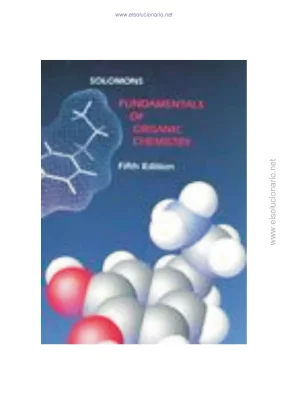
Giáo trình Hóa học hữu cơ cơ bản - Tác giả Solomons

Trường đại học

Yale University

Chuyên ngành

Hóa học hữu cơ

Người đăng

Ẩn danh

Thể loại

Sách giáo khoa
533
0
0

Phí lưu trữ

135 Point

Tóm tắt

I. Tổng quan về giáo trình Fundamentals of Organic Chemistry Solomon

Fundamentals of Organic Chemistry của tác giả T.W. Graham Solomons và Craig B. Fryhle là một trong những giáo trình hóa học hữu cơ được sử dụng rộng rãi nhất trên toàn thế giới. Cuốn sách cung cấp nền tảng vững chắc về cấu trúc, tính chất và phản ứng của các hợp chất hữu cơ.

Giáo trình bắt đầu từ những khái niệm cơ bản nhất. Phần đầu giới thiệu về hợp chất carbon và liên kết hóa học. Tiếp theo là các hợp chất carbon đại diện. Người học được làm quen với phản ứng hữu cơ thông qua acid và base.

Các chương tiếp theo bao gồm ankan và cycloankan. Chủ đề lập thể học được trình bày chi tiết. Alken và alkyn được giới thiệu qua hai phần riêng biệt. Phản ứng gốc tự do cũng được đề cập đầy đủ.

Cuốn sách còn bao gồm các hợp chất có oxy như alcohol và ether. Hệ cộng hợp không bão hòa được phân tích kỹ lưỡng. Phản ứng của hợp chất thơm được trình bày rõ ràng. Aldehyde và ketone được giới thiệu qua phản ứng thêm nucleophil. Cuối cùng là acid cacboxylic và dẫn xuất của chúng.

Giáo trình Solomon nổi bật bởi cách trình bày logic. Mỗi chương xây dựng dựa trên kiến thức từ chương trước. Điều này tạo nên hệ thống kiến thức liền mạch cho người học.

1.1. Cấu trúc tổng thể của giáo trình Solomon

Giáo trình Fundamentals of Organic Chemistry Solomon được xây dựng theo nguyên tắc từ đơn giản đến phức tạp. Phần đầu tiên tập trung vào hợp chất carbon và liên kết hóa học cơ bản. Người học nắm được cách nguyên tử carbon liên kết với các nguyên tử khác.

Phần tiếp theo giới thiệu hợp chất carbon đại diện. Các loại phản ứng hữu cơ cơ bản được trình bày. Acid và base trong hóa học hữu cơ là chủ đề then chốt đầu tiên.

Các chương về ankan, cycloankan và lập thể học cung cấp kiến thức nền tảng. Sau đó, người học tiếp cận với alken, alkyn và phản ứng addition. Phần cuối bao gồm hợp chất thơm, aldehyde, ketone và acid cacboxylic.

1.2. Đặc điểm nổi bật của giáo trình Solomon so với các sách khác

Giáo trình Solomon có nhiều ưu điểm vượt trội so với các cuốn sách hóa học hữu cơ khác. Cách trình bày rõ ràng giúp người học dễ tiếp cận kiến thức phức tạp. Ngôn ngữ đơn giản nhưng vẫn đảm bảo tính học thuật nghiêm túc.

Cuốn sách cung cấp nhiều bài tập thực hành đa dạng. Các câu hỏi trong chương giúp củng cố kiến thức ngay sau mỗi phần học. Đáp án được cung cấp để người học tự kiểm tra tiến độ.

Hình ảnh minh họa chất lượng cao hỗ trợ hiểu bài hiệu quả. Mô hình phân tử ba chiều giúp hình dung cấu trúc dễ dàng. Giáo trình cũng bao gồm lời khuyên học tập quý báu từ chính tác giả.

II. Các vấn đề thường gặp khi học hóa học hữu cơ Solomon

Học hóa học hữu cơ từ giáo trình Solomon đặt ra nhiều thách thức cho người học. Bản chất tích lũy của môn học khiến nhiều sinh viên gặp khó khăn. Một khái niệm không hiểu sẽ ảnh hưởng đến toàn bộ kiến thức sau đó.

Nhiều người học không theo kịp tiến độ bài giảng trên lớp. Hóa học hữu cơ đòi hỏi học đều đặn hàng ngày. Việc dồn kiến thức cuối kỳ sẽ không mang lại hiệu quả.

Khó khăn lớn nhất là hiểu cơ chế phản ứng hữu cơ. Người học cần biết nguyên tử nào liên kết với nguyên tử nào. Cần xác định liên kết nào bị cắt đứt và liên kết nào được hình thành. Khía cạnh ba chiều của cấu trúc cũng gây nhiều bối rối.

Việc ghi nhớ số lượng lớn phản ứng là thách thức khác. Mỗi loại hợp chất có phản ứng đặc trưng riêng. Nếu không hiểu nguyên lý, người học sẽ chỉ học vẹt. Điều này dẫn đến quên nhanh và không áp dụng được vào bài tập.

Ngoài ra, nhiều sinh viên thiếu kỹ năng viết công thức cấu trúc. Việc chuyển đổi giữa các dạng biểu diễn gây nhầm lẫn thường xuyên.

2.1. Khó khăn trong việc hiểu cơ chế phản ứng hữu cơ

Cơ chế phản ứng là phần khó nhất trong giáo trình Solomon. Mỗi phản ứng gồm nhiều bước riêng biệt. Người học cần theo dõi sự di chuyển của electron giữa các nguyên tử.

Việc xác định chất cho điện tử và chất nhận điện tử gây nhầm lẫn. Các mũi tên cong biểu diễn sự dịch chuyển electron. Nhiều sinh viên không biết vẽ đúng mũi tên cơ chế.

Hình học không gian của phân tử cũng phức tạp. Phản ứng có thể xảy ra ở mặt trên hoặc mặt dưới phân tử. Điều này ảnh hưởng trực tiếp đến cấu hình lập thể của sản phẩm.

2.2. Vấn đề ghi nhớ và áp dụng kiến thức hóa học hữu cơ

Số lượng phản ứng trong giáo trình Solomon rất lớn. Từ ankan đến acid cacboxylic, mỗi chương bổ sung nhiều phản ứng mới. Người học dễ bị choáng ngợp trước khối lượng kiến thức đồ sộ.

Học vẹt là sai lầm phổ biến nhất khi học hóa học hữu cơ. Ghi nhớ phản ứng mà không hiểu cơ chế sẽ nhanh quên. Khi gặp dạng bài mới, người học không thể áp dụng kiến thức đã học.

Thiếu kỹ năng viết khi học cũng là vấn đề lớn. Đọc sách mà không ghi chép sẽ giảm hiệu quả tiếp thu đáng kể.

III. Phương pháp học hiệu quả từ giáo trình Solomon

Giáo trình Solomon và các chuyên gia khuyến nghị nhiều phương pháp học hiệu quả. Đầu tiên, học đều đặn mỗi ngày. Không bao giờ để mình bị tụt lại phía sau. Tốt nhất nên đi trước bài giảng một chút.

Học theo từng đơn vị nhỏ là chiến lược thông minh. Đảm bảo hiểu rõ mỗi phần trước khi chuyển sang phần tiếp theo. Tính chất tích lũy của hóa học hữu cơ đòi hỏi nền tảng vững chắc ở mỗi bước.

Viết khi học là phương pháp quan trọng nhất được Solomon nhấn mạnh. Viết lại các phản ứng, cơ chế và cấu trúc nhiều lần. Cần biết kỹ đến mức có thể giải thích cho người khác. Mức độ hiểu biết sâu sắc này đạt được chủ yếu thông qua việc viết.

Làm tất cả bài tập trong chương và bài tập được giao. Sử dụng sách hướng dẫn học tập để kiểm tra đáp án. Chỉ tra đáp án khi đã hoàn thành bài tập. Giá trị của bài tập nằm ở quá trình giải quyết vấn đề.

Sử dụng mô hình phân tử khi học cấu trúc ba chiều. Học cùng bạn bè và giải thích khái niệm cho nhau. Phương pháp học qua giảng dạy giúp củng cố kiến thức vững chắc.

3.1. Kỹ thuật viết và ghi chép khi học hóa học hữu cơ Solomon

Việc viết đóng vai trò trung tâm trong phương pháp học hóa học hữu cơ. Chỉ bằng cách viết cơ chế phản ứng mới chú ý đủ chi tiết cần thiết. Cần biết nguyên tử nào liên kết với nguyên tử nào trong mỗi phản ứng.

Viết đi viết lại nhiều lần giúp ghi nhớ kiến thức sâu sắc. Không chỉ đọc sách mà phải chủ động ghi chép bài. Mỗi phản ứng cần viết đầy đủ từ chất tham gia đến sản phẩm cuối cùng.

Viết công thức cấu trúc ở các dạng khác nhau rất quan trọng. Từ công thức gạch ngang sang công thức rút gọn. Thực hành vẽ công thức đường gạch thường xuyên. Điều này giúp nhận biết đồng phân cấu tạo chính xác.

3.2. Phương pháp học nhóm và giải thích kiến thức cho nhau

Học nhóm là phương pháp hiệu quả cao cho hóa học hữu cơ. Nguyên tắc dạy học giúp hiểu sâu hơn kiến thức. Khi giải thích cho người khác, kiến thức được củng cố tự nhiên.

Mỗi thành viên trong nhóm nên giải thích một khái niệm khác nhau. Những người khác đặt câu hỏi để làm rõ vấn đề. Cách học này phát hiện lỗ hổng kiến thức nhanh chóng và chính xác.

Sử dụng mô hình phân tử khi thảo luận nhóm rất hữu ích. Mô hình giúp cả nhóm cùng nhìn thấy cấu trúc ba chiều. Hình ảnh trực quan tăng khả năng hiểu và nhớ lâu dài.

IV. Ứng dụng thực tiễn của hóa học hữu cơ Solomon

Hóa học hữu cơ từ giáo trình Solomon có ứng dụng rộng rãi trong đời sống hiện đại. Lịch sử phát triển ngành bắt đầu từ việc chiết xuất hợp chất từ sinh vật sống. Năm 1828, Friedrich Wöhler tổng hợp urea từ ammonium cyanate vô cơ. Sự kiện lịch sử này bác bỏ thuyết sinh lực và mở ra kỷ nguyên mới.

Hiện tại, hóa học hữu cơ hiện diện khắp mọi nơi trong đời sống. Quần áo từ chất liệu tự nhiên hoặc tổng hợp. Đồ gia dụng trong mỗi gia đình chứa nhiều hợp chất hữu cơ. Ô tô với nhiều thành phần nhựa và polymer.

Y học phụ thuộc lớn vào hóa học hữu cơ hiện đại. Thuốc điều trị bệnh được tổng hợp từ hợp chất carbon. Thuốc trừ sâu bảo vệ mùa màng cũng từ nguồn gốc hữu cơ. Tuy nhiên, một số chất gây ô nhiễm môi trường nghiêm trọng.

Chất diệt côn trùng tổng hợp có thể tồn tại lâu trong tự nhiên. Dioxin và CFC là những chất gây hại cho tầng ozone. Việc hiểu hóa học hữu cơ giúp phát triển sản phẩm thân thiện với môi trường.

Giáo trình Solomon cung cấp nền tảng vững chắc cho tất cả ứng dụng này. Kiến thức từ sách là bước đệm quan trọng cho nghiên cứu chuyên sâu.

4.1. Ứng dụng hóa học hữu cơ trong đời sống hiện đại

Hóa học hữu cơ ứng dụng trong nhiều lĩnh vực quan trọng. Ngành dược phẩm sử dụng hợp chất carbon để tạo ra thuốc chữa bệnh. Aspirin là ví dụ điển hình nhất. Hàng nghìn loại thuốc mới được tổng hợp mỗi năm.

Ngành công nghiệp nhựa và polymer dựa hoàn toàn vào hóa học hữu cơ. Polyethylene, polypropylene và nylon là sản phẩm phổ biến nhất. Chúng có mặt trong mọi vật dụng hàng ngày của con người.

Ngành thực phẩm cũng ứng dụng kiến thức hóa học hữu cơ rộng rãi. Phụ gia thực phẩm, hương liệu và chất bảo quản đều từ hợp chất carbon. Nhuộm vải sử dụng hợp chất hữu cơ từ thời cổ đại Ai Cập.

4.2. Tầm quan trọng của giáo trình Solomon trong đào tạo hóa học

Giáo trình Solomon đã đồng hành cùng nhiều thế hệ sinh viên toàn cầu. Nội dung được cập nhật liên tục qua các phiên bản mới. Cách trình bày logic phù hợp với người mới bắt đầu học hóa học.

Cuốn sách được sử dụng tại nhiều đại học danh tiếng trên thế giới. Chương trình hóa học 220A tại Đại học Yale sử dụng giáo trình này. Sinh viên xuất sắc được mời đóng vai trò cố vấn cho khóa sau.

Giáo trình cung cấp nền tảng vững chắc cho nghiên cứu nâng cao. Kiến thức về cấu trúc là chìa khóa giải quyết mọi bài toán. Solomon nhấn mạnh rằng cấu trúc là yếu tố quyết định trong hóa học hữu cơ.
21/04/2026

Trích đoạn nội dung tài liệu

net Table of Contents Partial table of contents: Carbon Compounds and Chemical Bonds. Representative Carbon Compounds. An Introduction to Organic Reactions: Acids and Bases. Alkanes and Cycloalkanes: Conformations of Molecules. Stereochemistry: Chiral Molecules. Alkenes and Alkynes I: Properties and Synthesis. Alkenes and Alkynes II: Addition Reactions.net Radical Reactions. Alcohols and Ethers. Conjugated Unsaturated Systems. Reactions of Aromatic Compounds. Aldehydes and Ketones I: Nucleophilic Additions to the Carbonyl Group. Aldehydes and Ketones II: Aldol Reactions. Carboxylic Acids and Their Derivatives: Nucleophilic Substitution at the Acyl Carbon. Answers to Selected Problems.net Solomons/Advices ADVICES FOR STUDYING ORGANIC CHEMISTRY 1. Keep up with your studying day to day –– never let yourself get behind, or better yet, be a little ahead of your instructor. Organic chemistry is a course in which one idea almost always builds on another that has gone before. Study materials in small units, and be sure that you understand each new section before you go on to the next. Because of the cumulative nature of organic chemistry, your studying will be much more effective if you take each new idea as it comes and try to understand it completely before you move onto the nest concept. Work all of the in-chapter and assigned problems. Write when you study. Write the reactions, mechanisms, structures, and so on, over and over again. You need to know the material so thoroughly that you can explain it to someone else. This level of understanding comes to most of us (those of us without photographic memories) through writing. Only by writing the reaction mechanisms do we pay sufficient attention to their details: 1) which atoms are connected to which atoms. 2) which bonds break in a reaction and which bonds form. 3) the three-dimensional aspects of the structure. Learning by teaching and explaining (教學相長). Study with your student peers and practice explaining concepts and mechanisms to each other. Use the answers to the problems in the Study Guide in the proper way: 1) Use the Study Guide to check your answer after you have finished a problem. 2) Use the Study Guide for a clue when you are completely stuck. The value of a problem is in solving it! ~1~ www.net Solomons/Advices 7. Use the introductory material in the Study Guide entitled “Solving the puzzle –– or –– Structure is everything (Almost)” as a bridge from general chemistry to your beginning study of organic chemistry. Once you have a firm understanding of structure, the puzzle of organic chemistry can become one of very manageable size and comprehensible pieces. Use molecular models when you study.net ADVICES FROM STUDENTS TAKING ORGANIC CHEMISTRY COURSE CHEM 220A AT YALE UNIVERSITY The students listed below from the 2000 fall term have agreed to serve as mentors for Chem 220a during the 2001 fall term. They are a superb group of people who did exceptionally well in Chem 220a last year. They know the material and how best to approach learning it. Some of them have provided their thoughts on attaining success in the course. Partial List as of April 20, 2001 • Catherine Bradford My advice on Organic Chemistry: 1. Figure out what works for you and stick with it. Tests: I think the key to doing well on the tests is as much about getting a lot of sleep as it is about studying. It's important to be sharp when you walk into a test, so that you'll be able to think clearly about the tricky problems. As far as studying goes, start studying for them a few nights early. My suggestion for a test on ~2~ www.net Solomons/Advices Friday is to go through the material on Monday, Tuesday, and Wednesday nights, then relax on Thursday night and review as needed. Problem Sets: Don't save them for Sunday night. Work out the problem sets so that YOU understand them. Get people's help when needed, but the most important thing is actually understanding how to get the right answer. Don't look at Organic Chemistry as if it were a monster to be battled. Rather, think about it as a challenge. When you come across a problem that looks long and complicated, just start writing down what you know and work from there. You might not get it completely right, but at least you have something. As far as I'm concerned, the only way to do well in orgo is to do your work all along.net I wish there were a less obnoxious way to say it, but there it is. You probably already think I'm a dork by now, so I'm going to go ahead and say this, too: I like orgo. There is a really beautiful pattern to it, and once you get past the initial panic you'll realize that most of what you're learning is actually interesting. The thing is, if you do your work regularly, you'll realize that there really isn't ALL that much of it, and that it really isn't as hard as you think. I can't really give you advice on HOW to do your work, because everybody learns differently. I hate memorizing, and I am proud to say that I have never used a flash card in my life. I found the best way to learn the reactions was to do as many problems as possible. Once you've used your knowledge a couple of times, it sort of memorizes itself. Last thing: there are a ton of people out there who know a lot about orgo, and a lot about explaining orgo to other people. The STARS help sessions are really helpful, as are the tutors. • Caroline Drewes So I'm sure by now all of you have heard the “nightmares” that organic chemistry is universally associated with. But don't worry!! The rumored nights of endless memorization and the “impossible” tests that follow them are completely optional.net Solomons/Advices By optional I mean that if you put the work in (some time before the night before a test) by reading the textbook before class, taking notes in Ziegler's (helpful) lectures, spending time working through the problem sets and going to your invaluable TA's at section, then you'll probably find orgo to be a challenging class but not unreasonably so. And don't let yourself be discouraged! Orgo can be frustrating at times (especially at late hours) and you may find yourself swearing off the subject forever, but stick with it! Soon enough you'll be fluent in the whole “orgo language” and you'll be able to use the tools you have accumulated to solve virtually any problem –– not necessarily relying on memorization but rather step-by-step learning. I would swear by flashcards, complete with mechanisms, because they're lighter to lug around than the textbook meaning you can keep them in your bag and review orgo when you get a free minute at the library or wherever. Going over the reactions a whole bunch of times well before www.net the test takes 5-10 minutes and will help to solidify the information in your head, saving you from any “day-before-anxiety”. One more hint would be to utilize the extensive website –– you never know when one of those online ORGO problems will pop up on a test! So good luck and have fun!! • Margo Fonder I came to the first orgo class of the year expecting the worst, having heard over and over that it would be impossible. But by mid-semester, the class I'd expected to be a chore had become my favorite. I think that the key to a positive experience is to stay on top of things –– with this class especially, it’s hard to play catch-up. And once you get the hang of it, solving problems can even be fun, because each one is like a little puzzle. True –– the problem sets are sometimes long and difficult, but it's worth it to take the time to work through them because they really do get you to learn the stuff. Professor Ziegler makes a lot of resources available (especially the old exams, old problem sets, and study aids he has on his website) that are really helpful while studying for exams. I also found copying over my (really messy) class notes to be a good way to study, because I could make sure that I understood everything presented in class at my own pace. My number one piece of advice would probably be to use Professor Ziegler's ~4~ www.net Solomons/Advices office hours! It helped me so much to go in there and work through my questions with him. (Plus, there are often other students there asking really good questions, too.) • Vivek Garg There's no doubt about it, organic chemistry deals with a LOT of material. How do you handle it and do well? You've heard or will hear enough about going to every class, reading the chapters on time, doing all of the practice problems, making flashcards, and every other possible study technique. Common sense tells you to do all of that anyway, but let's face it, it's almost impossible to do all the time. So, my advice is a bit broader. You've got to know the material AND be able to apply it to situations that aren't cookie-cutter from the textbook or lecture. We'll assume that you can manage learning all of the facts/theories. That's not enough: the difference between getting the average www.net on an orgo test and doing better is applying all of those facts and theories at 9:30 Friday morning. When you study, don't just memorize reactions (A becomes B when you add some acid, Y reacts with water to give Z), THINK about what those reactions let you do. Can you plot a path from A to Z now? You better, because you'll have to do it on the test. Also, it's easy to panic in a test. DON'T leave anything blank, even if it seems totally foreign to you. Use the fundamentals you know, and take a stab at it. Partial credit will make the difference. For me, doing the problem sets on my own helped enormously. Sure, it's faster to work with a group, but forcing yourself to work problems out alone really solidifies your knowledge. The problem sets aren't worth a lot, and it's more important to think about the concepts behind each question than to get them right. Also, the Wade textbook is the best science text I've ever had. Tests are based on material beyond just lecture, so make the text your primary source for the basics. Lastly, you're almost certainly reading this in September, wondering what we mean by writing out mechanisms and memorizing reactions.come back and re-read all of this advice after the first test or two, and it will make much more sense. Good luck! • Lauren Gold ~5~ www.net Solomons/Advices Everyone hears about elusive organic chemistry years before arriving at college, primarily as the bane of existence of premeds and science majors. The actual experience however, as my classmates and I quickly learned, is not painful or impossible but rather challenging, rewarding, and at times, even fun. All that's required, moreover, is an open mind and a willingness to study the material until it makes sense. No one will deny that orgo is a LOT of work, but by coming to class, reading the chapters, starting problem sets early and most of all, working in study groups it all becomes pretty manageable. By forming a good base in the subject it becomes easier and more interesting as you go along. Moreover, the relationships you'll make with other orgo'ers walking up science hill at 9 am are definitely worth it. • Tomas Hooven www.net When you take the exams, you'll have to be very comfortable WRITING answers to organic problems quickly. This may be self-evident, but I think many students spend a lot of time LOOKING at their notes or the book while they study without writing anything.

Nội dung được bảo vệ bản quyền — Tải xuống đầy đủ