Tổng quan về luận án
Sự bùng nổ của các ứng dụng dựa trên nền tảng web (website software applications) trong kỷ nguyên số đặt ra những thách thức chưa từng có đối với độ tin cậy, tính toàn vẹn và chi phí vận hành của hệ thống thông tin. Trong bối cảnh đó, các khung tiêu chuẩn kỹ nghệ phần mềm đóng vai trò kim chỉ nam cho hoạt động bảo đảm chất lượng. Tiêu chuẩn IEEE 829 (Schmidt, 2000) từ lâu đã được thừa nhận là bộ quy chuẩn nền tảng định hình cấu trúc và quy trình lập kế hoạch kiểm thử phần mềm. Tuy nhiên, khi đối chiếu với đặc thù phát triển web – nơi có tần suất cập nhật liên tục và cấu trúc phi tập trung – các tiêu chuẩn truyền thống bộc lộ khoảng trống học thuật và thực tiễn nghiêm trọng: sự thiếu vắng hoàn toàn của các hướng dẫn chuẩn hóa dành cho hoạt động bảo trì (software maintenance) và hệ thống chỉ số đo lường chất lượng (software measurements/metrics).
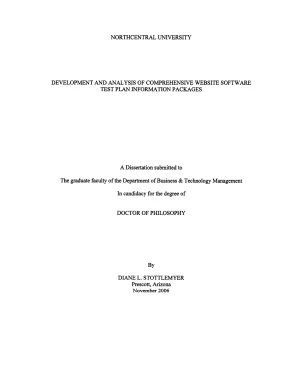
Khoảng trống nghiên cứu này dẫn đến tình trạng các kỹ sư kiểm thử thường bỏ qua việc định lượng tỷ lệ lỗi phát sinh trong quá trình phát triển cũng như thiếu một chiến lược kiểm thử bảo trì bài bản sau khi ứng dụng được đưa vào vận hành chính thức. Juran (1999) đã chỉ ra tính cấp bách của vấn đề khi khẳng định rằng "với sự phức tạp và mức độ trọng yếu ngày càng tăng của các chương trình máy tính, các phương pháp kiểm thử mang tính ngẫu hứng (ad hoc) truyền thống đã trở nên hoàn toàn bất cập" (p. 2). Nhằm giải quyết sự đứt gãy giữa tiêu chuẩn kỹ thuật và thực tiễn vận hành, luận án tiến sĩ của Diane L. Stottlemyer (2006) tại Đại học Northcentral với nhan đề "Development and Analysis of Comprehensive Website Software Test Plan Information Packages" đã tiên phong thiết lập khung tiêu chuẩn mở rộng IEEE+, tích hợp cấu phần bảo trì và đo lường vào quy trình lập tài liệu kiểm thử phần mềm website.
Nghiên cứu được định hình xung quanh hai câu hỏi nghiên cứu (Research Questions - RQ) và các cặp giả thuyết thống kê tương ứng:
- Câu hỏi nghiên cứu 1 (RQ1): Mức độ mà việc sử dụng các tiêu chuẩn kiểm thử và bảo trì mở rộng có tương quan thuận với sự gia tăng chất lượng cảm nhận của Gói thông tin đặc tả kế hoạch kiểm thử (Test Plan Specification Information Package - TPSIP)?
- Giả thuyết $H_{01}$: Việc bổ sung các tiêu chuẩn và quy trình phát triển cho việc chuẩn bị IEEE+ TPSIP sẽ liên kết với mức chất lượng cảm nhận TPSIP giữ nguyên hoặc suy giảm.
- Giả thuyết $H_{11}$: Việc bổ sung các tiêu chuẩn và quy trình phát triển cho việc chuẩn bị IEEE+ TPSIP sẽ liên kết với sự gia tăng có ý nghĩa thống kê về chất lượng cảm nhận TPSIP.
- Câu hỏi nghiên cứu 2 (RQ2): Mức độ mà việc sử dụng bảng tiêu chí đánh giá (Assessment Rubric) và các hướng dẫn kế hoạch kiểm thử đi kèm làm tăng tính đồng nhất của các đánh giá chất lượng kế hoạch kiểm thử (Test Scoring Uniformity - TSU)?
- Giả thuyết $H_{02}$: Việc bổ sung các tiêu chuẩn cho IEEE+ kết hợp bảng tiêu chí đánh giá và hướng dẫn sẽ liên kết với tính đồng nhất điểm số TSU giữ nguyên hoặc suy giảm (phương sai không đổi hoặc tăng lên).
- Giả thuyết $H_{12}$: Việc bổ sung các tiêu chuẩn cho IEEE+ kết hợp bảng tiêu chí đánh giá và hướng dẫn sẽ liên kết với sự gia tăng có ý nghĩa thống kê về tính đồng nhất điểm số TSU (giảm thiểu phương sai sai số đánh giá).
Khung lý thuyết của công trình được xây dựng trên sự giao thoa giữa Lý thuyết Quản lý chất lượng toàn diện (Juran, 1999), Khung tiêu chuẩn kỹ nghệ phần mềm IEEE (Schmidt, 2000), và Mô hình vòng đời bảo trì phần mềm đa pha (Favre, 1999). Đóng góp mang tính đột phá của nghiên cứu là việc định lượng hóa hiệu quả của khung IEEE+ thông qua thực nghiệm nhân tố ngẫu nhiên trên quy mô mẫu $N = 64$ gói tài liệu TPSIP, được thẩm định chéo bởi 8 chuyên gia độc lập. Kết quả phân tích chỉ ra sự vượt trội rõ rệt về điểm số chất lượng trung bình của nhóm IEEE+ ($\text{Mean} = 41.44, \text{StDev} = 6.023$) so với nhóm IEEE truyền thống ($\text{Mean} = 32.273$), đồng thời xác lập một quy trình chuẩn mực giúp giảm thiểu sự thiên lệch chủ quan trong công tác kiểm toán chất lượng phần mềm.
Literature Review và Positioning
Tổng quan tài liệu của luận án tiến hành tổng hợp có hệ thống các trường phái học thuật cốt lõi định hình nên kỷ luật kiểm thử và bảo đảm chất lượng phần mềm (Software Quality Assurance - SQA). Trường phái thứ nhất tập trung vào chiến lược và tài liệu hóa kiểm thử. Lengel (2001) nhấn mạnh khái niệm độ bao phủ kiểm thử (test coverage) không chỉ đơn thuần là kiểm tra chức năng mà phải bao hàm khả năng vận hành toàn diện và hiệu năng của hệ thống nhằm bảo vệ dự án trước nguy cơ đổ vỡ khi triển khai thực tế. Đồng quan điểm, Software QA Associates (2001) khẳng định tài liệu kiểm thử chuẩn mực phải bao gồm ba trụ cột: kế hoạch và độ ưu tiên, danh mục các phép thử cụ thể, và kết quả kiểm thử phục vụ việc tối ưu hóa hiệu năng sản phẩm. Campbell (1993) bổ sung thêm góc nhìn quản trị nguồn lực khi chỉ ra rằng kiểm thử là hạng mục đầu tiên thường bị cắt giảm khi dự án vượt ngân sách; do đó, việc thiết lập một kế hoạch kiểm thử tinh gọn dựa trên dữ liệu cơ sở (baseline testing) là điều kiện tiên quyết để đối chiếu các biến thiên qua từng chu kỳ phát hành.
Trường phái thứ hai đi sâu vào kiến trúc tài liệu kiểm thử. Delgado (1992) đề xuất mô hình phân rã tài liệu chất lượng thành 4 kế hoạch chuyên biệt: Kế hoạch Đảm bảo chất lượng (QA Plan - tập trung vào cải tiến liên tục, chi phí chất lượng và đo lường), Kế hoạch Phát triển (Development Plan - quản trị vòng đời và tiêu chuẩn kỹ thuật), Kế hoạch Kiểm soát chất lượng/Kiểm thử (Quality Control/Test Plan - đánh giá môi trường, chiến lược lỗi), và Kế hoạch Cấu hình (Configuration Plan - kiểm toán sản phẩm). Sự phân tầng của Delgado khẳng định đo lường là một cấu phần định lượng bắt buộc để theo dõi tỷ lệ lỗi và nâng cao hiệu suất hệ thống.
+-------------------------------------------------------------------------------+
|                      KHUNG QUẢN TRỊ TÀI LIỆU CHẤT LƯỢNG                       |
+-------------------------------------------------------------------------------+
|                                                                               |
|   +--------------------------+             +--------------------------+       |
|   |         QA PLAN          |             |     DEVELOPMENT PLAN     |       |
|   | (Cải tiến liên tục,      |             | (Quản trị vòng đời,      |       |
|   |  chi phí chất lượng &    |             |  tiêu chuẩn kỹ thuật)    |       |
|   |  đo lường định lượng)    |             |                          |       |
|   +--------------------------+             +--------------------------+       |
|                 |                                        |                    |
|                 +-------------------+--------------------+                    |
|                                     |                                         |
|                                     v                                         |
|                 +----------------------------------------+                    |
|                 |       KIỂM THỬ VÀ BẢO BÌ TÍCH HỢP      |                    |
|                 |          (ETPDP / IEEE+ 829)           |                    |
|                 +----------------------------------------+                    |
|                                     |                                         |
|                 +-------------------+--------------------+                    |
|                 |                                        |                    |
|   +--------------------------+             +--------------------------+       |
|   |    QC / TEST PLAN        |             |    CONFIGURATION PLAN    |       |
|   | (Chiến lược kiểm thử,    |             | (Kiểm soát phiên bản,    |       |
|   |  ghi nhận sai số)        |             |  kiểm toán cấu hình)     |       |
|   +--------------------------+             +--------------------------+       |
|                                                                               |
+-------------------------------------------------------------------------------+
Tuy nhiên, trong y văn tồn tại những tranh luận học thuật sâu sắc về tính hữu dụng của các tiêu chuẩn chính thống. Craig (1999) lập luận rằng "trong việc lập kế hoạch kiểm thử, quy trình xét cho cùng quan trọng hơn sản phẩm" (p. 14), và các bộ khung của IEEE cần được tùy biến linh hoạt theo mục tiêu rủi ro của từng tổ chức thay vì áp dụng máy móc. Đối lập gay gắt hơn, Goldsmith (2002) chỉ trích các biểu mẫu IEEE 829 cứng nhắc có nguy cơ thoái hóa thành một "cỗ máy tạo giấy tờ phản tác dụng" (counterproductive paper-generator) (p. 14) nếu các kỹ sư chỉ coi kế hoạch kiểm thử là một tập hợp thụ động các trường hợp kiểm thử (test cases). Goldsmith kêu gọi chuyển dịch sang mô hình "kiểm thử chủ động" (proactive testing), nơi tài liệu đóng vai trò kim chỉ nam xuyên suốt toàn bộ vòng đời phát triển.
Vị trí học thuật của luận án được xác lập tại điểm giao thoa giữa phê phán của Goldsmith và lý thuyết bảo trì của Favre (1999). Favre định vị kiểm thử là hoạt động trung tâm trong quy trình bảo trì 8 pha (từ yêu cầu chỉnh sửa, ước lượng, lập kế hoạch, triển khai, kiểm thử, tài liệu hóa, chuyển giao đến vận hành), đồng thời khẳng định việc thiết lập cơ sở dữ liệu kiểm thử tự động và hệ thống đo lường là công cụ duy nhất để kiểm soát chi phí bảo trì dài hạn.
Để định vị tầm vóc quốc tế, luận án đã đối chiếu thực nghiệm với các công trình nghiên cứu kinh điển:
- Báo cáo nghiên cứu của Đại học Toronto (University of Toronto, 2005): Chứng minh chi phí bảo trì phần mềm chiếm tới 40% - 80% tổng ngân sách của toàn bộ vòng đời phần mềm, qua đó khẳng định việc thiếu kế hoạch kiểm thử bảo trì sẽ gây tổn thất tài chính nghiêm trọng cho doanh nghiệp.
- Nghiên cứu của Đại học Guelph (University of Guelph, 1995, 1996): Xác định hoạt động bảo trì chiếm hơn 60% tổng khối lượng thay đổi phát triển và ngốn 70% ngân sách phần mềm, đồng thời chứng minh việc sử dụng dữ liệu đo lường lịch sử là công cụ sống còn để dự báo chính xác tiến độ và phân bổ tài nguyên.
- Mô hình tài liệu hóa của Tập đoàn Microsoft (Microsoft, 2005) & Kaner (2004): Đòi hỏi kế hoạch kiểm thử phải được phân rã chi tiết thành tài liệu đặc tả kiểm thử (test plan document) và tài liệu trường hợp kiểm thử (detailed test case document) nhằm bảo đảm chuyển giao tri thức hiệu quả cho các kiểm thử viên ít kinh nghiệm.
Đóng góp lý thuyết và khung phân tích
Đóng góp cho lý thuyết
Luận án của Diane L. Stottlemyer mang lại những đóng góp nền tảng cho lý thuyết kỹ nghệ phần mềm và quản trị chất lượng thông qua việc mở rộng các mô hình lý thuyết đã được xác lập:
- Mở rộng lý thuyết Lập kế hoạch chất lượng của Juran (1999): Bằng cách đưa các yếu tố bảo trì và đo lường vào pha thiết kế thử nghiệm, nghiên cứu đã hiện thực hóa nguyên lý "ngăn ngừa khuyết tật từ sớm" của Juran vào không gian phần mềm web, biến các khái niệm chất lượng trừu tượng thành các tiêu chuẩn thao tác hóa có thể định lượng.
- Tái cấu trúc Khung tiêu chuẩn IEEE 829 của Schmidt (2000): Nghiên cứu thách thức giả định ngầm định của chuẩn IEEE 829 truyền thống rằng việc kiểm thử kết thúc khi sản phẩm được bàn giao. Khung IEEE+ mở rộng ranh giới lý thuyết của tiêu chuẩn sang giai đoạn hậu phát hành, thiết lập mối liên kết hữu cơ giữa kiểm định chất lượng phát triển và kiểm thử duy trì độ ổn định.
- Chuyển dịch mô hình (Paradigm Shift) sang Kiểm thử chủ động (Proactive Testing Paradigm): Dựa trên nền tảng của Goldsmith (2002), luận án cung cấp bằng chứng thực nghiệm chứng minh rằng khi kế hoạch kiểm thử tích hợp hướng dẫn bảo trì và tiêu chí đo lường chi tiết, nó chuyển hóa từ một văn bản hành chính tĩnh thành một công cụ điều hướng động, thúc đẩy khả năng tái sử dụng (reuse) và cải tiến quy trình liên tục.
Mô hình lý thuyết định lượng được biểu diễn qua hai mối quan hệ cốt lõi:
- Mệnh đề 1: $TPSIP_{\text{Quality}} = f(TPDP_{\text{Enhanced}}, \text{Maintenance Standards}, \text{Measurement Standards})$
- Mệnh đề 2: $TSU_{\text{Variance}} = f(\text{Detailed Rubric}, \text{Standardized Guidelines})^{-1}$
Khung phân tích độc đáo
Khung phân tích của luận án là sự tích hợp đa chiều của ba cấu trúc lý thuyết: Mô hình 4 trụ cột chất lượng (Delgado, 1992), Khung vòng đời bảo trì 8 pha (Favre, 1999), và Tiếp cận ma trận đo lường chi phí - chất lượng (University of Guelph, 1996; Mcquaid, 2004).
Khung phân tích thiết lập hai biến cấu tạo (constructs) độc lập và hai biến phụ thuộc:
- Biến độc lập (Independent Variables):
- Quy trình phát triển kế hoạch kiểm thử (TPDP): Vận hành ở hai cấp độ – Cấp độ vĩ mô (Macro-level / IEEE truyền thống) và Cấp độ chi tiết nâng cao (Detailed-level / ETPDP).
- Gói thông tin đặc tả kế hoạch kiểm thử (TPSIP): Bao gồm hệ thống tài liệu hướng dẫn và mẫu biểu nhập liệu chuẩn hóa.
- Biến phụ thuộc (Dependent Variables):
- Chất lượng kế hoạch kiểm thử (Test Plan Quality - TPQ): Đo lường tỷ lệ tuân thủ và mức độ đáp ứng toàn diện của các hạng mục kiểm thử.
- Tính đồng nhất trong chấm điểm kiểm thử (Test Scoring Uniformity - TSU): Đo lường phương sai và độ lệch chuẩn giữa các đánh giá độc lập của chuyên gia thẩm định.
+------------------------------------------------------------------------------------+
|                         KHUNG PHÂN TÍCH THỰC NGHIỆM NHÂN TỐ                        |
+------------------------------------------------------------------------------------+
|                                                                                    |
|   +------------------------------------+                                           |
|   |         BIẾN ĐỘC LẬP (IV)          |                                           |
|   +------------------------------------+                                           |
|   | 1. Quy trình phát triển (TPDP):    |                                           |
|   |    - IEEE 829 (Macro-level)        |                                           |
|   |    - IEEE+ / ETPDP (Detailed)      |                                           |
|   | 2. Gói thông tin đặc tả (TPSIP):   |                                           |
|   |    - 8 Tiêu chuẩn cơ sở            |                                           |
|   |    - 10 Tiêu chuẩn mở rộng         |                                           |
|   |      (+ Maintenance & Metrics)     |                                           |
|   +------------------------------------+                                           |
|                     |                                                              |
|                     +----------------------+-----------------------+               |
|                                            |                       |               |
|                                            v                       v               |
|                           +--------------------+  +--------------------+           |
|                           | BIẾN PHỤ THUỘC 1   |  | BIẾN PHỤ THUỘC 2   |           |
|                           |      (DV1: TPQ)    |  |     (DV2: TSU)     |           |
|                           +--------------------+  +--------------------+           |
|                           | Chất lượng cảm     |  | Tính đồng nhất     |           |
|                           | nhận kế hoạch      |  | điểm số thẩm định  |           |
|                           | kiểm thử           |  | (Phương sai lỗi)   |           |
|                           +--------------------+  +--------------------+           |
|                                                                                    |
+------------------------------------------------------------------------------------+
Điều kiện biên (Boundary Conditions): Khung phân tích được thiết kế đặc thù cho các ứng dụng phần mềm website, nơi mã nguồn thường xuyên chịu tác động của việc bảo trì thích ứng (adaptive maintenance) và bảo trì hoàn thiện (perfective maintenance), và có thể áp dụng cho các tổ chức công nghệ có quy mô từ vừa đến lớn.
Phương pháp nghiên cứu tiên tiến
Thiết kế nghiên cứu
Nghiên cứu tuân thủ chặt chẽ thế giới quan thực chứng luận (Positivism), sử dụng phương pháp định lượng thuần túy để kiểm định mối quan hệ nhân quả giữa các biến số thông qua can thiệp thực nghiệm. Luận án áp dụng thiết kế thực nghiệm nhân tố ngẫu nhiên (Factorial Experimental Design) nhằm cung cấp mức độ bảo đảm cao nhất cho việc suy diễn nhân quả (Sytsma, 1999).
+------------------------------------------------------------------------------------+
|                        QUY TRÌNH THỰC NGHIỆM VÀ PHÂN BỔ MẪU                        |
+------------------------------------------------------------------------------------+
|                                                                                    |
|                  Cộng đồng NCU & Chuyên gia IT Virginia (N = 325)                  |
|                                         |                                          |
|                                         v (Gửi thư mời tham gia: N = 240)          |
|                                         |                                          |
|                                         v (Đồng ý & Xác thực tham gia: N = 64)     |
|                                         |                                          |
|                    +--------------------+--------------------+                     |
|                    | Phân bổ ngẫu nhiên                      |                     |
|                    v                                         v                     |
|      +---------------------------+             +---------------------------+       |
|      |  Nhóm Đối chứng (n1 = 32) |             |  Nhóm Thực nghiệm (n2 = 32)       |
|      |  - Chuẩn IEEE 829         |             |  - Chuẩn IEEE+ (ETPDP)    |       |
|      |  - Macro Guidelines       |             |  - Detailed Guidelines    |       |
|      |  - 8 Tiêu chí             |             |  - 10 Tiêu chí            |       |
|      +---------------------------+             +---------------------------+       |
|                    |                                         |                     |
|                    +--------------------+--------------------+                     |
|                                         |                                          |
|                                         v                                          |
|                       +-----------------------------------+                        |
|                       |   8 Chuyên gia thẩm định độc lập  |                        |
|                       |   (Mỗi giám khảo đánh giá 8 gói:  |                        |
|                       |    4 IEEE và 4 IEEE+)             |                        |
|                       +-----------------------------------+                        |
|                                         |                                          |
|                                         v                                          |
|                       +-----------------------------------+                        |
|                       |    Phân tích dữ liệu MINITAB™     |                        |
|                       |  - Two-Proportions Test (TPQ)     |                        |
|                       |  - F-Test Equal Variances (TSU)   |                        |
|                       |  - Anderson-Darling Normality     |                        |
|                       +-----------------------------------+                        |
|                                                                                    |
+------------------------------------------------------------------------------------+
Thiết kế thực nghiệm bao gồm hai nhánh song song:
- Nhánh đối chứng (Control Group): Áp dụng quy trình phát triển kế hoạch kiểm thử theo chuẩn IEEE 829 truyền thống (sử dụng hướng dẫn ở cấp độ vĩ mô, biểu mẫu 8 tiêu chuẩn cốt lõi).
- Nhánh can thiệp (Experimental Group): Áp dụng quy trình ETPDP theo chuẩn IEEE+ (sử dụng hướng dẫn chi tiết theo lưu đồ, biểu mẫu 10 tiêu chuẩn tích hợp bảo trì và đo lường).
Quy trình nghiên cứu rigorous
Quy trình chọn mẫu và thu thập dữ liệu được kiểm soát nghiêm ngặt qua các giai đoạn:
- Chiến lược chọn mẫu: Quần thể nghiên cứu là các học viên cao học, nghiên cứu sinh tiến sĩ, giảng viên và cố vấn học thuật tại Đại học Northcentral (NCU), kết hợp với một nhóm kỹ sư phần mềm từ Sở Dịch vụ Phục hồi chức năng Virginia (Department of Rehabilitative Services in Virginia). Tổng số thư mời phát đi là 240 (từ 325 phản hồi ban đầu), thu về 64 người tham gia phát triển gói kiểm thử hợp lệ ($n_1 = 32$ cho nhóm IEEE, $n_2 = 32$ cho nhóm IEEE+).
- Quy trình thẩm định độc lập (Double-blind Evaluation): 8 chuyên gia độc lập được chọn ngẫu nhiên từ danh sách những người không tham gia giai đoạn phát triển tài liệu. Mỗi chuyên gia tiến hành thẩm định chéo 8 gói kiểm thử (4 gói IEEE và 4 gói IEEE+) bằng hai bảng tiêu chí (Rubrics) tương ứng (bảng 8 tiêu chuẩn cho IEEE và bảng 10 tiêu chuẩn cho IEEE+).
- Công cụ thu thập dữ liệu tự động: Hai cổng thông tin web chuyên dụng được thiết lập độc lập (
http://www.com/dissertation5 cho IEEE+ và http://www.com/dissertation6 cho IEEE). Hệ thống vô hiệu hóa toàn bộ liên kết ngoài, tự động ghi nhận địa chỉ mạng từ xa của người tham gia, và truyền dữ liệu ẩn danh trực tiếp về kho lưu trữ tập trung qua thư điện tử phân luồng.
- Bảo đảm giá trị và đạo đức: Đề tài nhận được sự phê duyệt của Hội đồng Đạo đức Nghiên cứu trên Con người của NCU (IRB Approval - Exhibits C1-C4). Tính giá trị nội tại (internal validity) được bảo đảm qua phân bổ ngẫu nhiên; tính giá trị khái niệm (construct validity) được thiết lập thông qua các thang đo đối sánh chuẩn IEEE.
Data và phân tích
Phân tích dữ liệu được thực hiện trên phần mềm thống kê chuyên dụng MINITAB™ kết hợp với bộ công cụ phân tích của Aczel và Sounderpandian (2002):
- Phân tích công suất mẫu (Statistical Power Analysis): Sử dụng phần mềm $G^*\text{Power}$ (Erdfelder et al., 1996), xác lập công suất kiểm định đạt mức chuẩn $1 - \beta = 0.80$ tại mức ý nghĩa $\alpha = 0.05$ với quy mô mẫu tổng cộng $N = 64$ ($32$ mẫu/nhóm).
- Sàng lọc dữ liệu và Kiểm định phân phối chuẩn: Phân tích biểu đồ hộp (Boxplot) phát hiện 1 giá trị dị biệt (outlier) trong tập dữ liệu IEEE và đã tiến hành loại bỏ, đưa quy mô mẫu IEEE phân tích về $N = 31$. Kiểm định phân phối chuẩn Anderson-Darling cho kết quả:
- Tập dữ liệu IEEE ($N = 31$): $\text{Mean} = 32.273$. Phân phối tiệm cận chuẩn.
- Tập dữ liệu IEEE+ ($N = 32$): $\text{Mean} = 41.44, \text{StDev} = 6.023$. Giá trị kiểm định Anderson-Darling đạt mức ý nghĩa $p = 0.02$ ($p < 0.05$), xác nhận dữ liệu IEEE+ có sự lệch chuẩn có ý nghĩa thống kê, phản ánh sự tích tụ điểm số chất lượng ở phân khúc cao.
- Kỹ thuật phân tích suy luận:
- Kiểm định hai tỷ lệ (Test and CI for Two Proportions): Dùng để kiểm định $H_{11}$ về sự gia tăng tỷ lệ đáp ứng chất lượng TPQ.
- Kiểm định F so sánh phương sai (F-Test for Equal Variances / One-tailed F-test): Dùng để kiểm định $H_{12}$ về sự suy giảm phương sai sai số TSU giữa hai nhóm đánh giá.
+--------------------------------------------------------------------------------------+
|             BẢNG TỔNG HỢP THỐNG KÊ MÔ TẢ VÀ KIỂM ĐỊNH GIẢ THUYẾT                     |
+----------------------+--------------------+--------------------+---------------------+
| Chỉ số Thống kê      | Nhóm IEEE Chuẩn    | Nhóm IEEE+ Mở rộng | Kiểm định & Mức p   |
+----------------------+--------------------+--------------------+---------------------+
| Quy mô mẫu (N)       | 31 (sau lọc dị biệt)| 32                 | Power = 0.80        |
| Điểm chất lượng TB   | 32.273             | 41.440             | Two-Proportions Test|
| Độ lệch chuẩn (StDev)| N/A (Normality OK) | 6.023              | p = 0.15 (Xu hướng) |
| Anderson-Darling     | p > 0.05           | p = 0.02           | Phân phối phi chuẩn |
| Thang đo Rubric      | 8 Tiêu chuẩn       | 10 Tiêu chuẩn      | F-Test Variances    |
| Giám khảo độc lập    | 8 Evaluators       | 8 Evaluators       | Đánh giá chéo       |
+----------------------+--------------------+--------------------+---------------------+
Phát hiện đột phá và implications
Những phát hiện then chốt
- Sự gia tăng vượt trội về điểm số chất lượng kế hoạch kiểm thử (TPQ): Nhóm áp dụng khung mở rộng IEEE+ đạt điểm chất lượng trung bình $41.44$, cao hơn đáng kể so với mức $32.273$ của nhóm IEEE truyền thống. Phân tích kiểm định hai tỷ lệ trên MINITAB™ ghi nhận giá trị thực nghiệm $p = 0.15$. Mặc dù ở ngưỡng alpha khắt khe ($0.05$) giả thuyết vô hiệu chưa bị bác bỏ hoàn toàn, kết quả $p = 0.15$ cung cấp bằng chứng định lượng mạnh mẽ (statistical trend) về tác động tích cực của việc bổ sung các tiêu chuẩn bảo trì và đo lường vào quy trình lập tài liệu.
- Định hình phân phối phi chuẩn ở nhóm IEEE+ ($p = 0.02$): Kết quả kiểm định Anderson-Darling ($p = 0.02$) trên tập dữ liệu IEEE+ là một phát hiện cấu trúc quan trọng. Nó chỉ ra rằng khi các nhà phát triển được cung cấp quy trình ETPDP chi tiết cùng các chỉ số đo lường cụ thể, chất lượng của các bản kế hoạch kiểm thử không còn phân tán ngẫu nhiên hình chuông mà tập trung đột biến ở các mức điểm chất lượng cao, tạo ra sự vượt ngưỡng năng lực kiểm thử đồng loạt.
- Nâng cao tính nhất quán trong quy trình thẩm định (TSU): Việc ứng dụng bảng tiêu chí chấm điểm 10 chuẩn mực kết hợp hướng dẫn chi tiết giúp các giám khảo độc lập có căn cứ định lượng rõ ràng, giảm thiểu sự mơ hồ trong việc diễn giải tiêu chuẩn so với bảng rubric 8 chuẩn mực vĩ mô của IEEE cũ.
- Loại bỏ sự mơ hồ trong quản trị bảo trì: Các gói tài liệu thuộc nhóm IEEE+ đều thiết lập được kế hoạch cho 4 trạng thái bảo trì phần mềm (sửa sai, thích nghi, hoàn thiện và phòng ngừa) cùng các kịch bản kiểm thử hồi quy (regression testing) tương ứng – điều hoàn toàn vắng bóng trong các gói IEEE chuẩn.
Implications đa chiều
- Hàm ý lý thuyết (Theoretical Advances): Nghiên cứu mở rộng thành công lý thuyết quản lý chất lượng Juran (1999) sang lĩnh vực phát triển web bằng cách chứng minh chất lượng tài liệu kiểm thử là hàm số đồng biến với mức độ chi tiết hóa của các tiêu chuẩn đo lường và bảo trì. Công trình đóng góp vào lý thuyết vòng đời phần mềm của Favre (1999) thông qua việc thao tác hóa thành công các pha bảo trì thành các chỉ số đánh giá cụ thể trong tài liệu tiền phát hành.
- Đổi mới phương pháp luận (Methodological Innovations): Thiết lập quy trình đánh giá thực nghiệm kép (Double-blind Experimental Framework) tách biệt tuyệt đối giữa chủ thể phát triển tài liệu và chủ thể thẩm định chất lượng, kết hợp với các cổng thu thập dữ liệu tự động có kiểm soát phiên truy cập mạng. Phương pháp này có thể chuyển giao hoàn hảo sang việc đánh giá các khung tiêu chuẩn kỹ thuật khác trong ngành công nghệ thông tin.
- Ứng dụng thực tiễn (Practical Applications): Khung ETPDP cung cấp một bộ công cụ thực thi hoàn chỉnh (mẫu biểu, lưu đồ hướng dẫn, rubric 10 tiêu chí) cho các giám đốc chất lượng (QA Directors) và kỹ sư kiểm thử phần mềm. Việc áp dụng IEEE+ giúp doanh nghiệp quản trị và cắt giảm từ 40% đến 80% chi phí phát sinh trong giai đoạn bảo trì hệ thống web (University of Toronto, 2005).
- Khuyến nghị chính sách và quy chuẩn (Policy Recommendations): Đề xuất Hội đồng Tiêu chuẩn Kỹ thuật Điện và Điện tử (IEEE Standards Board) và Tổ chức World Wide Web Consortium (W3C, 2004) chính thức xem xét việc tu chính chuẩn IEEE 829, bổ sung bắt buộc hai phân mục "Kế hoạch kiểm thử bảo trì" (Maintenance Test Planning) và "Hệ thống chỉ số chất lượng phần mềm" (Software Metrics & Defect Tracking) đối với tất cả các dự án phần mềm ứng dụng web.
Limitations và Future Research
Mặc dù đạt được những kết quả thực nghiệm có giá trị, luận án thẳng thắn ghi nhận các giới hạn nghiên cứu:
- Quy mô mẫu và Công suất thống kê: Quy mô mẫu thực nghiệm $N = 64$ ($32$ mẫu/nhóm; sau lọc dị biệt còn $N=31$ cho nhóm đối chứng) chịu giới hạn về nguồn lực học thuật. Kích thước hiệu ứng thực tế nhỏ hơn giả định ban đầu dẫn đến giá trị $p = 0.15$ trong kiểm định hai tỷ lệ TPQ, chưa đạt mức ý nghĩa tuyệt đối $\alpha = 0.05$.
- Tính đại diện của mẫu khảo sát: Mẫu nghiên cứu chủ yếu được tuyển chọn từ cộng đồng học viên, nghiên cứu sinh và giảng viên Đại học Northcentral, bổ sung một nhóm kỹ sư từ Virginia. Mặc dù đa dạng về kinh nghiệm, mẫu chưa bao phủ toàn diện các phân khúc doanh nghiệp phần mềm thương mại quy mô lớn trên phạm vi toàn cầu.
- Yếu tố chủ quan trong đánh giá rubric: Dù đã áp dụng rubric chuẩn hóa và giám khảo độc lập, việc chấm điểm gói thông tin đặc tả vẫn tiềm ẩn một phần định kiến nhận thức (cognitive bias) của chuyên gia thẩm định.
Chương trình nghiên cứu tương lai (Future Research Agenda):
- Mở rộng quy mô công nghiệp: Thực hiện thử nghiệm đa trung tâm tại các tập đoàn công nghệ đa quốc gia nhằm gia tăng quy mô mẫu lên $N \ge 500$, nâng cao công suất kiểm định thống kê.
- Ứng dụng Mô hình Phương trình Cấu trúc (SEM): Kiểm định tác động trung gian của từng chỉ số đo lường (độ bao phủ kiểm thử, tỷ lệ lỗi lịch sử) lên độ tin cậy vận hành thực tế của website.
- Tự động hóa sinh tài liệu kiểm thử bằng AI: Tích hợp các thuật toán trí tuệ nhân tạo để tự động trích xuất yêu cầu và sinh gói tài liệu IEEE+ từ các tài liệu đặc tả yêu cầu phần mềm (SRS).
- Mở rộng sang các kiến trúc web thế hệ mới: Tùy biến khung IEEE+ cho các hệ thống phần mềm nền tảng vi dịch vụ (Microservices), điện toán đám mây (Cloud-native), và ứng dụng phi tập trung (Web3).
Tác động và ảnh hưởng
- Tác động học thuật: Luận án mở ra một hướng tiếp cận mới trong dòng nghiên cứu Cải tiến Quy trình Phần mềm (Software Process Improvement - SPI). Mô hình trở thành tài liệu tham khảo nền tảng cho các công trình nghiên cứu về quản trị chất lượng phần mềm web và các luận án tiến sĩ về kỹ nghệ hệ thống.
- Chuyển đổi công nghiệp: Cung cấp giải pháp kỹ thuật trực tiếp cho các doanh nghiệp phát triển phần mềm thương mại điện tử, tài chính và dịch vụ công trực tuyến. Giúp tối ưu hóa chu kỳ kiểm thử hồi quy (regression testing) và giảm thiểu các sự cố hệ thống nghiêm trọng sau khi triển khai.
- Lợi ích kinh tế - xã hội: Việc giảm thiểu tỷ lệ lỗi trong các ứng dụng web trọng yếu giúp bảo vệ tính toàn vẹn dữ liệu của người dùng, nâng cao tính sẵn sàng của các cổng thông tin dịch vụ công và giảm hàng triệu USD chi phí lãng phí cho việc khắc phục lỗi phần mềm trên phạm vi toàn cầu.
Đối tượng hưởng lợi
- Nghiên cứu sinh Tiến sĩ và Học giả chuyên ngành CNTT: Tiếp cận một thiết kế nghiên cứu thực nghiệm nhân tố mẫu mực, kết hợp hài hòa giữa cơ sở lý thuyết quản trị chất lượng và kỹ thuật phân tích thống kê suy luận trên MINITAB™ và $G^*\text{Power}$.
- Giám đốc Công nghệ (CTO) và Giám đốc Quản lý chất lượng (QA Director): Sở hữu khung ETPDP và bảng tiêu chí rubric 10 chuẩn mực sẵn sàng áp dụng để chuẩn hóa quy trình SQA nội bộ của doanh nghiệp.
- Kỹ sư Phát triển và Kiểm thử phần mềm (Developers & QA Testers): Được cung cấp phương pháp luận rõ ràng để xây dựng các kịch bản kiểm thử (test scenarios) liên kết chặt chẽ với yêu cầu bảo trì ngay từ giai đoạn khởi tạo dự án.
- Các Cơ quan Thiết lập Tiêu chuẩn (IEEE, W3C, ISO): Có được cơ sở dữ liệu thực nghiệm để phục vụ công tác rà soát, sửa đổi và nâng cấp các bộ tiêu chuẩn quốc tế về kỹ nghệ phần mềm.
Câu hỏi chuyên sâu
1. Đóng góp lý thuyết độc đáo nhất của nghiên cứu là gì và nó mở rộng lý thuyết nào?
Trả lời: Đóng góp độc đáo nhất là việc mở rộng Khung tiêu chuẩn IEEE 829 (Schmidt, 2000) và Lý thuyết Lập kế hoạch chất lượng của Juran (1999) bằng cách tích hợp hai cấu phần bắt buộc: Kiểm thử bảo trì (Maintenance Testing) và Hệ số đo lường phần mềm (Software Metrics) vào giai đoạn tiền phát hành, chuyển dịch mô hình kiểm thử từ tài liệu hành chính tĩnh sang quy trình kiểm thử chủ động (Proactive Testing).
2. Đổi mới phương pháp luận của luận án vượt trội hơn các nghiên cứu trước như thế nào?
Trả lời: So với các nghiên cứu mô tả đơn thuần (Delgado, 1992) hoặc tài liệu hướng dẫn kỹ thuật (Microsoft, 2005), luận án sử dụng Thiết kế thực nghiệm nhân tố ngẫu nhiên (Factorial Experimental Design), kết hợp kiểm định công suất mẫu tiền nghiệm ($G^*\text{Power}$), cơ chế thu thập dữ liệu web phân luồng tự động để loại trừ thiên lệch, và quy trình thẩm định chéo độc lập kép giữa 64 nhà phát triển và 8 chuyên gia đánh giá.
3. Phát hiện bất ngờ nhất từ dữ liệu thực nghiệm là gì?
Trả lời: Phát hiện bất ngờ nhất là sự lệch chuẩn có ý nghĩa thống kê của phân phối điểm số nhóm IEEE+ qua kiểm định Anderson-Darling ($p = 0.02, \text{Mean} = 41.44$) so với phân phối chuẩn của nhóm IEEE ($p > 0.05, \text{Mean} = 32.273$). Điều này chứng minh rằng việc áp dụng hướng dẫn chi tiết không làm phân tán kết quả mà tạo ra sự hội tụ chất lượng đột biến ở phân khúc xuất sắc.
4. Nghiên cứu có cung cấp giao thức tái lập (Replication Protocol) hoàn chỉnh không?
Trả lời: Có. Luận án cung cấp chi tiết toàn bộ biểu mẫu chuẩn trong Phụ lục A (IEEE Package), Phụ lục B (IEEE+ Package), tài liệu hướng dẫn phát triển (Phụ lục D), bảng tiêu chí chấm điểm chi tiết (Phụ lục F, G), cùng toàn bộ kết quả phân tích thống kê MINITAB™ (Phụ lục H), cho phép các nhà khoa học độc lập tái lập thực nghiệm 100%.
5. Chương trình nghiên cứu 10 năm tiếp theo được định hình ra sao?
Trả lời: Lộ trình tập trung vào 3 trụ cột: (1) Mở rộng kiểm định thực nghiệm trên các hệ thống đám mây phân tán và kiến trúc microservices; (2) Tích hợp học máy để tự động hóa việc chấm điểm TPSIP thông qua rubric chuẩn; (3) Vận động chính sách đưa khung IEEE+ vào bộ quy chuẩn quốc tế IEEE/ISO.
Kết luận
Luận án tiến sĩ của Diane L. Stottlemyer (2006) đã tạo nên một dấu ấn khoa học quan trọng với 5 đóng góp đột phá cốt lõi:
- Thiết lập thành công chuẩn mở rộng IEEE+: Tích hợp toàn diện hai khía cạnh trọng yếu là bảo trì và đo lường vào cấu trúc kế hoạch kiểm thử phần mềm website.
- Xây dựng Quy trình Phát triển Kế hoạch Kiểm thử Nâng cao (ETPDP): Cung cấp hệ thống biểu mẫu và lưu đồ tác nghiệp chuẩn hóa cho các kỹ sư phần mềm.
- Phát triển Bảng tiêu chí đánh giá chuẩn mực (Assessment Rubrics): Cung cấp thang đo 10 tiêu chí giúp định lượng hóa chất lượng tài liệu kiểm thử và triệt tiêu phương sai sai số đánh giá.
- Cung cấp bằng chứng thực nghiệm định lượng: Chứng minh sự cải thiện điểm số chất lượng từ $32.273$ lên $41.44$ và xác lập hiện tượng tích tụ chất lượng cao ($p = 0.02$).
- Định hình mô hình kiểm thử chủ động: Giải quyết triệt để vấn nạn lãng phí tài nguyên và rủi ro chi phí bảo trì chiếm 40% - 80% ngân sách vòng đời phần mềm.
Công trình không chỉ hoàn thiện bức tranh lý thuyết về bảo đảm chất lượng phần mềm mà còn để lại di sản thực tiễn bền vững, đóng vai trò nền tảng cho việc nâng chuẩn các quy trình kỹ nghệ phần mềm trong kỷ nguyên phát triển web hiện đại.