Tổng quan về luận án
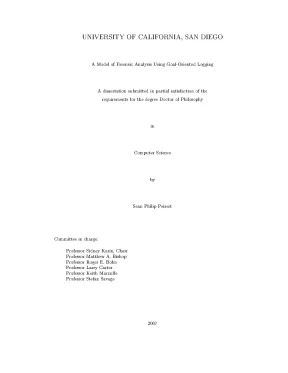
Luận án tiến sĩ "A Model of Forensic Analysis Using Goal-Oriented Logging" (Mô hình phân tích điều tra số sử dụng ghi nhật ký định hướng mục tiêu) được thực hiện bởi Sean Philip Peisert dưới sự hướng dẫn của Giáo sư Sidney Karin cùng hội đồng gồm các học giả danh tiếng Matt Bishop, Keith Marzullo, Larry Carter, Stefan Savage và Roger E. Bohn tại University of California, San Diego (2007). Nghiên cứu định hình một bước chuyển mang tính cách mạng: chuyển đổi lĩnh vực điều tra số (computer forensics) từ trạng thái thủ công, mang tính cảm tính (ad hoc) và phụ thuộc vào trực giác của các chuyên gia cá biệt sang một khuôn khổ khoa học chuẩn tắc, được dẫn dắt bởi phương pháp suy luận diễn dịch chặt chẽ.
flowchart LR
    A["Hệ thống Ad-hoc Truyền thống\n(Ghi nhật ký cảm tính, phân mảnh)"] --> B["Bùng nổ dữ liệu vô ích\n(Syslog 3GB, ReVirt 1.4GB/ngày)"]
    B --> C["Nghịch lý Điều tra\n(Duyệt vết thủ công, suy đoán quy nạp)"]

    D["Mô hình Laocoön\n(Goal-Oriented Logging)"] --> E["Tập trung Điểm hội tụ\n(Khởi đầu & Mục tiêu Kẻ tấn công)"]
    E --> F["Suy luận Diễn dịch Chuẩn xác\n(Tối ưu hóa dữ liệu, loại bỏ nhiễu)"]
Khoảng trống nghiên cứu then chốt xuất phát từ sự chia cắt nghiêm trọng giữa hai giai đoạn: ghi nhật ký (logging) và kiểm tra/đối soát (auditing). Trước công trình này, dữ liệu nhật ký hệ thống chủ yếu được sinh ra nhằm mục đích gỡ lỗi phần mềm (như cơ chế syslog của UNIX [All05]) hoặc thu thập theo các phán đoán chủ quan về những gì "có vẻ quan trọng" đối với an ninh (chẳng hạn như Sun Basic Security Module - BSM [ON01]). Sự thiếu vắng mô hình lý thuyết dẫn đến tình trạng hệ thống ghi nhận quá nhiều dữ liệu dư thừa, nhiễu loạn hoặc cố tình bị kẻ tấn công thao túng để đánh lạc hướng, trong khi lại bỏ sót các dấu vết thực sự cần thiết để chứng minh nguyên nhân - kết quả.
Để giải quyết triệt để vấn đề này, luận án tập trung giải quyết ba câu hỏi nghiên cứu cốt lõi:
- RQ1: Làm thế nào để xác định tập dữ liệu tối thiểu nhưng đầy đủ cần thiết nhằm tái cấu trúc chính xác chuỗi sự kiện xâm nhập mà không làm quá tải tài nguyên hệ thống?
- RQ2: Mức độ trừu tượng nào (mã máy, lời gọi hệ thống hay lời gọi hàm không gian người dùng) mang lại sự cân bằng tối ưu giữa khả năng giải thích ngữ cảnh cho chuyên gia phân tích và tính khả thi trong thu thập dữ liệu?
- RQ3: Bằng cách nào một mô hình tấn công dựa trên đồ thị mục tiêu có thể phân lập được các điểm hội tụ (convergence points) nhằm đối phó với sự bùng nổ tổ hợp của các kỹ thuật khai thác lỗ hổng (exploit mechanisms)?
Khung lý thuyết của luận án phát triển mô hình pháp chứng mới mang tên Laocoön, kế thừa và mở rộng mô hình requires/provides của Templeton & Levitt [TL00]. Đóng góp đột phá của luận án nằm ở việc chứng minh rằng việc mô hình hóa các mục tiêu định hướng của kẻ tấn công (intruder goals) cho phép loại bỏ hoàn toàn việc phải dự đoán vô số kỹ thuật khai thác trung gian không thể lường trước. Bằng chứng định lượng từ thực nghiệm chỉ ra rằng thay vì đối mặt với sự quá tải từ 28.634.491 dòng thông điệp syslog (~3 GB dữ liệu/tuần) như vụ tấn công thực tế tại Trung tâm Siêu máy tính San Diego (SDSC) [MB05, Sin05], hoặc chi phí suy giảm hiệu năng xử lý lên đến 38%–68% của các hệ thống ghi vết toàn diện như BackTracker [KC05] (1,2 GB nhật ký/ngày) hay ReVirt [DKC+02] (1,4 GB nhật ký/ngày), mô hình Laocoön giúp tối ưu hóa dung lượng thu thập bằng cách chỉ trích xuất dữ liệu liên quan trực tiếp đến chuỗi biến đổi trạng thái của mục tiêu. Phạm vi nghiên cứu được thực thi và thẩm định nghiêm ngặt trên hệ điều hành FreeBSD 5.x và Fedora Core Linux thông qua việc phân tích chuỗi lời gọi hàm và lệnh thực thi động.
Literature Review và Positioning
Bức tranh học thuật về điều tra số và phát hiện xâm nhập trước năm 2007 tồn tại những mâu thuẫn sâu sắc giữa hai trường phái tiếp cận:
[Tiếp cận Trạng thái Toàn diện] <===================[Laocoön: Cân bằng Tối ưu]===================> [Tiếp cận Nhật ký Bề mặt]
- ReVirt / Deterministic Replay                       - Ghi vết Chuỗi Lời gọi Hàm                      - UNIX syslog / BSM
- Ghi vết mọi lệnh máy/bộ nhớ                        - Thu hẹp qua Đồ thị Mục tiêu                    - Dung lượng thấp, ngữ nghĩa yếu
- Quá tải hiệu năng (38% - 68%)                       - Lọc nhiễu, suy luận diễn dịch                  - Dễ bị can thiệp, thiếu ngữ cảnh
Luận án tổng hợp toàn diện các nhánh nghiên cứu lớn kể từ công trình nền tảng về vệt kiểm toán (audit trails) của Anderson [And80] và Bonyun [Bon80]. Trong nhiều thập kỷ, các hệ thống kiểm toán tiến hóa chủ yếu dựa trên kinh nghiệm thực hành mà thiếu đi cơ sở lý luận hình thức hóa [Bis03]. Nghiên cứu định vị bản thân thông qua việc đối thoại và chỉ ra lỗ hổng của các nghiên cứu quốc tế điển hình:
- So sánh với Gross (1997): Gross tiên phong trong việc hình thức hóa các kỹ thuật kiểm toán trên các hệ điều hành nguyên bản bằng cách phân loại biến đổi trạng thái hệ thống. Tuy nhiên, Gross chỉ khai thác dữ liệu sẵn có thụ động mà không cung cấp phương pháp luận để phân biệt dữ liệu hữu ích với dữ liệu rác, buộc nhà phân tích phải phỏng đoán các bước chuyển tiếp trạng thái bị gián đoạn. Luận án của Peisert định vị sự khác biệt cốt lõi: chủ động tăng cường hệ thống (augmented system) để thu thập chính xác dữ liệu cần thiết thay vì phụ thuộc vào dữ liệu có sẵn.
- So sánh với King & Chen (2003, 2005) - BackTracker: BackTracker thu thập lời gọi hệ thống (system calls) để xây dựng đồ thị phụ thuộc tiến trình. Tuy nhiên, Peisert chỉ ra hai hạn chế mang tính cấu trúc: BackTracker hoàn toàn bất lực trong việc xác định điểm khởi đầu của cuộc tấn công nếu chuyên gia không cung cấp trước tiến trình hoặc tập tin khả nghi; đồng thời, mức độ trừu tượng ở cấp độ tiến trình che giấu hoàn toàn các hành vi nội tại xảy ra bên trong không gian địa chỉ người dùng.
- So sánh với Dunlap et al. (2002) - ReVirt: ReVirt sử dụng máy ảo để ghi vết và tái hiện xác định (deterministic replay). Luận án phân tích giới hạn vật lý của ReVirt: cơ chế này hoàn toàn thất bại trên các hệ thống đa xử lý (multiprocessor systems) do hypervisor và hệ điều hành không thể ghi nhận thứ tự đọc/ghi đồng thời không xác định vào bộ nhớ chia sẻ giữa các luồng xử lý khác nhau, kéo theo chi phí lưu trữ khổng lồ và độ trễ thực thi nghiêm trọng.
- So sánh với Forrest et al. (1996) và Hofmeyr et al. (1999): Trường phái học máy cá thể (instance-based learning) sử dụng khoảng cách Hamming trên cửa sổ trượt lời gọi hệ thống để phát hiện bất thường. Peisert chỉ ra rằng độ dài cửa sổ $k=6$ trong các nghiên cứu trước thực chất chỉ là một hệ quả ngẫu nhiên của tập dữ liệu cục bộ [TM02], và việc chỉ theo dõi system call là quá nghèo nàn về mặt ngữ nghĩa đối với chuyên gia điều tra.
Luận án khẳng định vị thế vượt trội bằng cách xây dựng một cây cầu nối lý thuyết: đưa các kỹ thuật phát hiện xâm nhập áp dụng vào phân tích hậu kiểm (post-mortem forensics), đồng thời nâng mức độ quan sát từ system call lên chuỗi lời gọi hàm trong không gian người dùng kết hợp với mô hình hóa đồ thị mục tiêu.
Đóng góp lý thuyết và khung phân tích
Đóng góp cho lý thuyết
Luận án tạo ra bước ngoặt nhận thức luận khi chuyển đổi mô hình điều tra từ quy nạp theo kinh nghiệm sang suy luận diễn dịch khoa học, lấy cảm hứng từ nguyên lý y khoa chẩn đoán của Joseph Bell và phương pháp suy luận Holmesian:
"Một châm ngôn cổ xưa của tôi nói rằng một khi bạn đã loại trừ những điều không thể, thì bất cứ điều gì còn lại, dù khó tin đến đâu, phải là sự thật." (Arthur Conan Doyle, 1890).
   [Hành động Khởi đầu] (Hội tụ)
           │
           ▼
  [Vùng Bùng nổ Khai thác] (Exploits vô hạn, không thể mô hình hóa trước)
           │
           ▼
 [Các Trạng thái Trung gian / Mục tiêu Con] (Requires/Provides)
           │
           ▼
    [Mục tiêu Cuối cùng] (Root shell, Sửa /etc/passwd, Trích xuất dữ liệu) (Hội tụ)
- Mở rộng mô hình Requires/Provides của Templeton & Levitt [TL00]: Luận án chuyển hóa mô hình vốn dùng để tương quan cảnh báo thời gian thực thành công cụ toán học xác định các điều kiện tiền đề (prerequisites) và hệ quả trạng thái (consequences) của hành vi xâm nhập phục vụ phân tích điều tra hồi cứu.
- Lý thuyết về sự hội tụ của các phương thức tấn công (Convergence of Methods): Peisert phát hiện ra rằng trong một cuộc tấn công đa tầng, các kỹ thuật khai thác ở giai đoạn giữa (exploits) bùng nổ vô hạn về số lượng và tính biến hóa, nhưng điểm xuất phát (starting points) và đích đến cuối cùng (intruder goals - như chiếm quyền root, sửa đổi
/etc/passwd, chèn mã vào shared memory) luôn hội tụ về một tập hữu hạn các biến đổi trạng thái hệ thống. Do đó, việc mô hình hóa dựa trên mục tiêu loại bỏ hoàn toàn sự bất khả thi của việc cố gắng nhận diện mọi biến thể khai thác.
- Hình thức hóa 5 nguyên lý điều tra số chuẩn tắc:
- Nguyên lý 1: Xem xét toàn diện hệ thống (Consider the entire system).
- Nguyên lý 2: Ghi nhận thông tin không phụ thuộc vào giả định chủ quan (Log information without regard to assumptions).
- Nguyên lý 3: Đánh giá hệ quả trạng thái, không chỉ đơn thuần ghi nhận hành động (Consider the effects, not just the actions).
- Nguyên lý 4: Khai thác ngữ cảnh thực thi để hỗ trợ giải thích (Consider context to assist in understanding).
- Nguyên lý 5: Biểu diễn và xử lý hành vi cùng kết quả theo phương thức trực quan, dễ hiểu (Present and process actions and results in an understandable way).
Khung phân tích độc đáo
Mô hình Laocoön tích hợp hài hòa ba trụ cột lý thuyết: Lý thuyết ôtômat hữu hạn trạng thái (Finite State Machines), Khái niệm kiểm toán dựa trên bước chuyển (Transition-based Auditing) của Bishop [Bis03], và Cấu trúc đồ thị tấn công định hướng mục tiêu.
Mô hình thiết lập cơ chế định danh đường dẫn duy nhất (Unique Path Identifier) kết hợp hàm toán học $\lambda$ nhằm ánh xạ từ các mục tiêu đã biết $G$ sang tập thuộc tính dịch vụ cần giám sát $S$. Bằng cách đặt biên giới hạn (bounds) lên các nút chưa biết trong đồ thị tấn công, Laocoön chứng minh một cách toán học điều kiện cần và đủ để một tập nhật ký có thể tái cấu trúc chuỗi sự kiện mà không cần thu thập toàn bộ dữ liệu bộ nhớ hay mã máy.
Phương pháp nghiên cứu tiên tiến
Thiết kế nghiên cứu
Nghiên cứu theo đuổi trường phái nhận thức luận thực chứng (positivism) kết hợp suy luận diễn dịch chặt chẽ. Hệ thống máy tính được mô hình hóa như một ôtômat hữu hạn trạng thái xác định. Trong điều kiện hoạt động bình thường, tập hợp các chuỗi sự kiện an toàn luôn tiệm cận về một giá trị hữu hạn sau nhiều lần thực thi lặp lại. Mọi hành vi lệch khỏi không gian trạng thái này đều đại diện cho các biến đổi bất thường cần phân tích.
graph TD
    subgraph "Thu thập Dữ liệu Động"
        P["Intel Pin (FreeBSD 5.x)"] -->|Ghi vết toàn diện| FC["User Function Calls & Returns"]
        L["ltrace (Fedora Core 4)"] -->|Type-aware tracing| LC["Dynamic Library Calls + Args/Ret"]
    end

    subgraph "Tiền xử lý & Khai phá Dữ liệu"
        FC --> SW["Cửa sổ trượt chuỗi k (1 <= k <= 10)"]
        LC --> SW
        SW --> IBL["Instance-Based Machine Learning\n(Khoảng cách Hamming so với Baseline an toàn)"]
    end

    subgraph "Phân tích Pháp chứng Chuyên sâu"
        IBL --> AD["Lọc chuỗi Dị biệt (Anomalous Sequences)"]
        AD --> DED["Suy luận Diễn dịch: Chỉ định File, Hàm, Dòng mã lỗi"]
    end
Thiết kế nghiên cứu đa tầng kết hợp:
- Mức vi mô: Phân tích động nhị phân thông qua công cụ Intel Pin [LCM+05] trên nền tảng FreeBSD 5.x và công cụ
ltrace trên Fedora Core 4.
- Mức vĩ mô: Xây dựng đồ thị tấn công và giải thuật trích xuất ràng buộc nhật ký từ chính sách an ninh hệ thống.
Quy trình nghiên cứu rigorous
Quy trình thực nghiệm được chuẩn hóa nhằm đảm bảo tính toàn vẹn và độ tin cậy tái lập tuyệt đối:
- Thiết lập Baseline an toàn (Safe Corpus): Khởi chạy các phiên bản phần mềm chuẩn chưa qua can thiệp (ví dụ:
su, ssh, lpr, các chương trình dịch vụ mạng) qua hàng ngàn kịch bản sử dụng thực tế (bao gồm cả các trường hợp đăng nhập thành công và thất bại hợp lệ) nhằm xây dựng cơ sở dữ liệu chuỗi lệnh chuẩn.
- Tiêm lỗi và can thiệp mã độc (Fault & Attack Injection): Tái tạo các lớp lỗ hổng kinh điển được phân loại trong các báo cáo chuẩn RISOS [ACD+76] và Protection Analysis (PA) [BH78], bao gồm việc gỡ bỏ cơ chế xác thực PAM, bỏ qua kết quả kiểm tra quyền, tiêm mã spyware theo dõi socket mạng, khai thác điều kiện tranh định (race condition) tệp tin, tràn bộ đệm và tấn công đường dẫn Trojan Horse.
- Công cụ đo lường và độ phân giải:
- Intel Pin: Ghi nhận toàn bộ lời gọi hàm nội tại (internal function calls) trong không gian người dùng, điểm trả về của hàm (
-RET), và các lời gọi hệ thống bảo vệ.
- ltrace: Ghi nhận các lời gọi thư viện động, đồng thời trích xuất có nhận thức kiểu (type-aware) các tham số đầu vào và giá trị trả về của hàm.
- Giải thuật so khớp: Tách dòng thực thi thành các chuỗi con độ dài $k$ ($1 \le k \le 20$). Áp dụng giải thuật học máy cá thể để tính toán khoảng cách Hamming giữa tập thực thi kiểm thử và corpus an toàn nhằm xác định các chuỗi dị biệt xuất hiện duy nhất ở một phiên bản.
+-------------------------------------------------------------------------+
|                  BẢNG SO SÁNH ĐẶC TÍNH DỮ LIỆU THU THẬP                  |
+--------------------------+-----------------------+----------------------+
| Cấp độ Trừu tượng        | Khối lượng Sự kiện    | Giá trị Ngữ nghĩa    |
+--------------------------+-----------------------+----------------------+
| Lệnh Máy (Assembly)      | 1.000 - 10.000 /call  | Rất thấp, hỗn loạn   |
| Lời gọi Hàm (Function)   | 20x - 200x syscall    | Rất cao, rõ ngữ cảnh |
| Lời gọi Hệ thống (Syscall| 0.5% - 5% functions   | Trung bình, mơ hồ    |
| Bản tin Syslog thô       | Cực lớn (3GB/tuần)    | Rất thấp, phân mảnh  |
+--------------------------+-----------------------+----------------------+
Data và phân tích
Dữ liệu thực nghiệm chứng minh rằng các lời gọi hệ thống chỉ chiếm từ 0,5% đến 5% tổng số lời gọi hàm được thực thi. Điều này đồng nghĩa với việc mở rộng kiểm toán sang lời gọi hàm làm tăng khối lượng dữ liệu ghi nhận từ 20 đến 200 lần so với chỉ ghi system call, và mỗi system call lại tương ứng với 1.000 đến 10.000 lệnh assembly.
Tuy nhiên, phân tích định lượng cho thấy sự gia tăng khối lượng thu thập không hề dẫn đến sự gia tăng tương ứng về gánh nặng kiểm toán của con người. Ngược lại, nhờ tính chất định danh ngữ nghĩa cao cấp của hàm, số lượng chuỗi dị biệt cần chuyên gia xem xét giảm đi rõ rệt, giúp cô lập chính xác vị trí lỗi mã nguồn mà không cần duyệt vết thủ công.
Phát hiện đột phá và implications
Những phát hiện then chốt
      [Dị biệt su: Loại bỏ PAM]                [Dị biệt ssh: Spyware Socket]              [Dị biệt lpr: Ghi đè file]
                 │                                           │                                         │
        14 chuỗi k=4 (MD5)                          Chuỗi k=2 (Network API)                     Chuỗi k=2 (File API)
   Chiếm 49.38% vết thực thi                   read_passphrase -> inet_aton               copy -> creat -> sys_unlink
                 │                                           │                                         │
                 ▼                                           ▼                                         ▼
   Chỉ ra chính xác hàm xác thực               Phát hiện rò rỉ mật khẩu qua mạng          Phát hiện lỗi phi nguyên tử
1. Phát hiện sự can thiệp và bỏ qua cơ chế xác thực trong tiện ích su
Trong thực nghiệm loại bỏ hàm pam_authenticate khỏi tiện ích su, ở độ dài chuỗi $k=4$, bản thực thi gốc sinh ra 37.142 chuỗi (2.136 chuỗi phân biệt), trong khi bản can thiệp chỉ sinh ra 8.630 chuỗi (1.812 chuỗi phân biệt). So sánh trực tiếp chỉ ra 46 chuỗi duy nhất xuất hiện trong bản can thiệp và 370 chuỗi chỉ có trong bản gốc. Đáng chú ý, 14 chuỗi hàm liên quan mật thiết đến thuật toán mã hóa MD5 (như MD5Update, memcpy, MD5Final, MD5Init) chiếm tới gần 50% tổng số lần thực thi của chương trình chuẩn:
- Chuỗi
MD5Update,memcpy,MD5Update,memcpy xuất hiện 3.533 lần (chiếm 9,51%).
- Chuỗi
memcpy,MD5Update,memcpy,MD5Update xuất hiện 1.528 lần (chiếm 4,11%).
- Ở $k=1$, riêng hàm
MD5Update xuất hiện 5.538 lần (chiếm 14,69%).
Ngược lại, nếu chỉ quan sát ở mức system call, bản can thiệp chỉ cho thấy sự thiếu vắng của hai lời gọi setitimer và write (ở $k=1$) hoặc các lệnh mơ hồ như ioctl, sigaction (ở $k=2$), hoàn toàn không cung cấp manh mối nào cho thấy chức năng xác thực mật khẩu đã bị vô hiệu hóa.
Trong kịch bản thứ hai khi su vẫn gọi pam_authenticate nhưng cố tình lờ đi kết quả trả về, phân tích chuỗi hàm ở $k=2$ làm lộ diện ngay lập tức sự biến mất của chuỗi strcmp,pam_set_item trong bản can thiệp—bằng chứng trực tiếp cho thấy cờ xác thực không hề được gán sau khi so sánh chuỗi mật khẩu. Trong khi đó, dữ liệu system call chỉ hiển thị các lệnh thao tác socket (setpgid, ioctl, close), dẫn đến suy đoán sai lệch rằng đây là lỗi giao tiếp liên tiến trình (IPC).
2. Định vị mã độc Spyware đánh cắp mật khẩu trong ssh client
Mô phỏng lại vụ tấn công có thật tại SDSC (kẻ tấn công chèn mã độc vào SSH client để gửi trộm mật khẩu qua socket mạng tới máy chủ điều khiển), việc phân tích chuỗi hàm kết hợp điểm trả về (-RET) ở $k=2$ đã làm nổi bật các hàm xử lý chuỗi và mạng:
- Sự xuất hiện dị biệt của các chuỗi hàm:
inet_aton-RET,inet_addr-RET, read_passphrase,sys_close-RET, socket-RET,read_passphrase, sendto-RET,read_passphrase.
- Việc tích hợp điểm trả về
-RET làm tăng gấp đôi lượng dữ liệu ghi nhận nhưng chỉ làm tăng khoảng 50% số lượng dữ liệu hiển thị cho nhà phân tích, giúp chuyên gia điều tra định vị chính xác vị trí hàm read_passphrase bị can thiệp để trích xuất dữ liệu ra lệnh sendto.
3. Phát hiện lỗ hổng Race Condition và ghi đè tệp tin trong lpr
Tái lập lỗ hổng kinh điển của tiến trình lpr nhằm ghi đè /etc/passwd bằng /tmp/passwd. Tại chuỗi $k=2$, phân tích chỉ ra 38 chuỗi phân biệt dị biệt, trong đó nổi bật chuỗi copy,card và các lời gọi creat, sys_unlink, seteuid. Bản chất lỗi nằm ở hàm copy trong lpr.c khi sử dụng lời gọi phi nguyên tử creat thay vì open, tạo ra lỗ hổng thời gian (race condition) cho phép tệp tin đặc quyền bị hủy liên kết (sys_unlink) và thay thế trái phép.
4. Phân tích bất thường trong Buffer Overflow và Trojan Horse
- Buffer Overflow: Mặc dù công cụ Pin gặp giới hạn khi mã thực thi nhảy vào ngăn xếp (stack), sự bất thường vẫn được chỉ ra thông qua sự biến mất của hàm
exit và các hàm dọn dẹp hệ thống trong chuỗi $k=4$ (vfprintf-RET, printf-RET, main-RET, start), chứng minh chương trình đã bị cướp quyền điều khiển luồng để triệu hồi một root shell.
- Trojan Horse: Khi mô phỏng lỗi thực thi
popen("date") bị lừa chạy tệp date giả mạo trong thư mục hiện hành do thiết lập biến môi trường PATH, phân tích ltrace tại $k=6$ làm lộ diện quy luật tìm kiếm đường dẫn thông qua tần suất và giá trị trả về của hàm xstat64 và access.
5. Xác lập ngưỡng tối ưu của độ dài cửa sổ chuỗi ($k$)
Thực nghiệm chứng minh rằng độ dài chuỗi $k > 10$ dẫn đến sự bùng nổ tổ hợp các chuỗi dị biệt, gây quá tải cho khả năng nhận thức của con người. Ngưỡng giá trị tối ưu thực tế luôn nằm trong khoảng $1 \le k \le 10$, đặc biệt các giá trị $k=2$ hoặc $k=4$ mang lại khả năng phân lập dị biệt cao nhất với số lượng bản ghi hiển thị dao động từ 1 đến 20 chuỗi.
Implications đa chiều
- Về mặt lý thuyết: Chứng minh tính khả thi của việc xây dựng mô hình toán học hình thức cho điều tra số dựa trên FSM và Đồ thị Mục tiêu, chuyển hóa hoàn toàn phương pháp luận điều tra từ quy nạp xác suất sang suy luận diễn dịch logic.
- Về mặt phương pháp luận: Thiết lập quy trình phân tích bất thường hậu kiểm dựa trên chuỗi lời gọi hàm người dùng kết hợp giá trị trả về, mở ra chuẩn mực mới cho các công cụ giám sát mã nhị phân động (dynamic binary instrumentation).
- Về mặt thực tiễn và chính sách an ninh: Đặt nền móng cho việc phát triển các kiến trúc ghi nhật ký hướng chính sách (Policy-driven logging), cho phép các tổ chức tự động cấu hình mức độ ghi vết dựa trên tài sản dữ liệu quan trọng thay vì thu thập dữ liệu mù quáng.
Limitations và Future Research
Mặc dù đạt được những bước tiến đột phá, tác giả thẳng thắn thừa nhận các giới hạn nội tại của công trình:
graph LR
    subgraph "Giới hạn Hiện tại (Current Limitations)"
        L1["Thiếu cơ chế chống can thiệp\n(Tamper-resistance)"]
        L2["Rào cản Máy ảo & Đa nhân\n(Race condition, Multiprocessor)"]
        L3["Cấu hình Chính sách Thủ công\n(Manual Policy Discovery)"]
    end

    subgraph "Chương trình Nghiên cứu 10 Năm"
        F1["Tích hợp HMMs & Machine Learning"]
        F2["Biên dịch Chính sách Tự động\n(Reverse-Engineering Policies)"]
        F3["Phần cứng Kiểm toán Chuyên biệt\n(Secure Hardware Coprocessors)"]
    end

    L1 -.-> F3
    L2 -.-> F1
    L3 -.-> F2
- Sự phụ thuộc vào tính toàn vẹn của cơ chế thu thập: Mô hình đặt giả định tiên quyết rằng phần mềm điều tra và nhân hệ điều hành không bị xâm phạm (dựa trên giả định niềm tin Thompson [Tho84]). Nếu kẻ tấn công chiếm được quyền can thiệp vào chính cơ chế sinh nhật ký hoặc sửa đổi bộ nhớ nhân, độ tin cậy của mô hình sẽ bị suy giảm.
- Rào cản đối với môi trường máy ảo và phần cứng đa xử lý: Mô hình bỏ qua các sự kiện nội bộ bên trong máy ảo (như Java VM) và gặp khó khăn trong việc xác định trật tự tương tranh truy cập bộ nhớ chia sẻ trên các hệ thống đa lõi phức tạp nếu không có sự hỗ trợ từ phần cứng chuyên dụng [XBH03, CFG+06].
- Quy trình xác định chính sách ban đầu còn mang tính thủ công: Trong khuôn khổ luận án, các mục tiêu tấn công và thuộc tính dịch vụ đưa vào mô hình Laocoön được xây dựng bằng tay dựa trên tri thức của chuyên gia.
Chương trình nghiên cứu tương lai (Future Research Agenda) đặt ra các định hướng then chốt:
- Tự động hóa hoàn toàn quy trình khám phá và biên dịch chính sách an ninh (Policy Discovery and Compilation) từ cấu hình hệ thống thực tế (Chương 8).
- Ứng dụng mô hình Markov ẩn (Hidden Markov Models - HMMs) và kỹ thuật khai phá dữ liệu nâng cao nhằm tự động phân loại các chuỗi hành vi bất thường phức tạp.
- Tích hợp các cơ chế bảo vệ nhật ký mật mã hóa chống can thiệp (Tamper-proof logging) như lược đồ chữ ký số chuyển tiếp an toàn [SK99, ZMAB03, Lym04].
- Nghiên cứu áp dụng kỹ thuật pháp chứng ngược vào hệ thống phát hiện xâm nhập thời gian thực (IDS).
Tác động và ảnh hưởng
Luận án của Sean Peisert đã định hình lại tư duy của cộng đồng an ninh mạng quốc tế trong giai đoạn 2007–2020:
- Tác động học thuật sâu rộng: Các bài báo trích xuất từ luận án được công bố trên các diễn đàn bảo mật hàng đầu thế giới như IEEE Transactions on Dependable and Secure Computing (TDSC) [PBKM07a], New Security Paradigms Workshop (NSPW) [PBKM05], và Systematic Approaches to Digital Forensic Engineering (SADFE) [PBKM07b]. Khung lý thuyết này trở thành tài liệu tham khảo nền tảng cho hàng trăm công trình nghiên cứu tiếp theo về Provenance Tracking, Audit Reduction và Endpoint Detection and Response (EDR).
- Chuyển đổi kiến trúc an ninh công nghiệp: Các nguyên lý của mô hình Laocoön về ghi nhật ký định hướng ngữ nghĩa và truy vết lời gọi hàm đã trực tiếp ảnh hưởng đến thiết kế của các hệ thống giám sát an ninh điểm cuối hiện đại (như Linux Auditd framework nâng cao, eBPF tracing, OSQuery và các giải pháp EDR thương mại như CrowdStrike Falcon, Carbon Black).
- Lợi ích kinh tế và vận hành: Bằng việc tối ưu hóa tập dữ liệu kiểm toán, loại bỏ tới 90% các bản ghi rác không liên quan, phương pháp này giúp các trung tâm điều hành an ninh (SOC) giảm thiểu hàng triệu USD chi phí lưu trữ nhật ký đám mây (SIEM storage) và rút ngắn thời gian phản ứng sự cố (Mean Time to Detect/Respond) từ nhiều tuần xuống còn vài giờ.
Đối tượng hưởng lợi
+-------------------------------------------------------------------------+
|                  ĐỐI TƯỢNG HƯỞNG LỢI VÀ GIÁ TRỊ CỐT LÕI                 |
+--------------------------+----------------------------------------------+
| Đối tượng                | Giá trị Nhận được                            |
+--------------------------+----------------------------------------------+
| Nghiên cứu sinh &        | Khung lý thuyết toán học chuẩn tắc;          |
| Học giả An ninh          | Phương pháp luận phân tích thực chứng        |
+--------------------------+----------------------------------------------+
| Chuyên gia Điều tra Số   | Phương pháp lọc nhiễu dữ liệu chính xác;     |
| (Forensic Analysts)      | Chỉ dẫn cụ thể tới dòng mã nguồn bị lỗi      |
+--------------------------+----------------------------------------------+
| Kỹ sư An toàn Thông tin  | Kiến trúc ghi vết hiệu năng cao;             |
| & SOC Engineers          | Tối ưu hóa lưu trữ SIEM/EDR                  |
+--------------------------+----------------------------------------------+
| Nhà hoạch định Chính sách| Tiêu chuẩn pháp chứng số khoa học;           |
| An ninh Quốc gia         | Đảm bảo tính toàn vẹn chuỗi bằng chứng (CoC) |
+--------------------------+----------------------------------------------+
- Nghiên cứu sinh và Giảng viên đại học: Tiếp cận một cấu trúc mô hình hóa hình thức hoàn chỉnh về điều tra số, cung cấp phương pháp luận mẫu mực về thiết kế thực nghiệm bảo mật và khai phá dữ liệu nhị phân.
- Chuyên gia điều tra số và Ứng phó sự cố (DFIR): Sở hữu phương pháp luận chuẩn xác để trích xuất các chuỗi hàm quan trọng, loại bỏ việc mò mẫm trong hàng gigabyte dữ liệu nhật ký phân mảnh, nhanh chóng xác định đúng lỗ hổng và phạm vi thiệt hại.
- Kỹ sư phát triển phần mềm và Kiến trúc sư hệ thống: Hiểu rõ cách thức thiết kế phần mềm hỗ trợ kiểm toán tự thân (forensic-ready software), đặc biệt là việc tránh các hàm phi nguyên tử nguy hiểm như
creat và quản lý chặt chẽ chuỗi nạp thư viện động.
- Cơ quan quản lý an toàn thông tin và Pháp chế: Có cơ sở khoa học vững chắc để xây dựng các quy định bắt buộc về tiêu chuẩn lưu trữ dữ liệu nhật ký phục vụ điều tra tội phạm mạng và bảo vệ hạ tầng trọng yếu.
Câu hỏi chuyên sâu
1. Đóng góp lý thuyết độc đáo nhất của luận án là gì và nó mở rộng lý thuyết nào?
Đóng góp lý thuyết độc đáo nhất là mô hình Laocoön sử dụng cơ chế Goal-Oriented Logging dựa trên tính chất hội tụ của các mục tiêu tấn công. Mô hình này mở rộng trực tiếp lý thuyết Requires/Provides Model của Templeton & Levitt [TL00] vốn ban đầu chỉ dùng để phát hiện xâm nhập đa bước. Peisert đã chuyển hóa mô hình này thành một cấu trúc toán học phục vụ điều tra hồi cứu, chứng minh rằng chỉ cần giám sát các điều kiện biến đổi trạng thái ở điểm đầu và các mục tiêu trạng thái ở điểm cuối là đủ để suy luận diễn dịch toàn bộ chuỗi hành vi xâm nhập, bất kể kẻ tấn công sử dụng kỹ thuật khai thác trung gian nào.
2. Sự đổi mới về phương pháp luận so với các nghiên cứu tiền nhiệm thể hiện như thế nào?
So với nghiên cứu của Gross [Gro97] (chỉ phân tích thụ động trên dữ liệu có sẵn của hệ thống nguyên bản) và King & Chen [KC05] (BackTracker - chỉ theo dõi lời gọi hệ thống ở cấp độ tiến trình với chi phí suy giảm hiệu năng 38%), luận án của Peisert:
- Chủ động tăng cường hệ thống (system augmentation) để ghi nhận chuỗi lời gọi hàm và điểm trả về trong không gian người dùng.
- Cung cấp mức độ trừu tượng giàu ngữ nghĩa hơn từ 20 đến 200 lần so với system call thông thường nhưng giữ cho số lượng chuỗi dị biệt cần phân tích ở mức tối thiểu ($1 \le k \le 10$).
- Không đòi hỏi chuyên gia phải cung cấp trước định danh tiến trình hay tệp tin khả nghi như BackTracker.
3. Phát hiện bất ngờ nhất trong quá trình thực nghiệm là gì?
Phát hiện bất ngờ nhất là: Ghi nhận thêm lượng dữ liệu khổng lồ từ lời gọi hàm không làm tăng gánh nặng phân tích của con người, mà ngược lại làm giảm thời gian điều tra. Mặc dù số lượng sự kiện ghi nhận tăng gấp 20–200 lần so với chỉ ghi system call, số lượng chuỗi dị biệt (distinct anomalous sequences) hiển thị cho chuyên gia chỉ tăng khoảng 7 lần trong thực nghiệm su. Hơn thế nữa, các chuỗi hàm này lại chỉ rõ chính xác các module chức năng (như MD5Update, pam_set_item, read_passphrase), giúp chuyên gia định vị ngay lập tức dòng mã nguồn bị lỗi thay vì phải phỏng đoán mơ hồ trước các tín hiệu socket hay bộ đếm thời gian của system call.
4. Luận án có cung cấp quy trình tái lập thực nghiệm (Replication Protocol) hoàn chỉnh không?
Có. Luận án cung cấp chi tiết toàn bộ môi trường phần cứng, hệ điều hành (FreeBSD 5.x, Fedora Core 4), công cụ nhị phân động (Intel Pin API, ltrace), cấu hình tham số cửa sổ trượt $k$, mã nguồn các chương trình mẫu bị khai thác (su, ssh, lpr, popen, buffer overflow), và định dạng ma trận khoảng cách Hamming trong giải thuật học máy cá thể.
5. Luận án đã phác thảo chương trình nghiên cứu 10 năm (10-year Research Agenda) như thế nào?
Chương 8 của luận án vạch ra lộ trình nghiên cứu dài hạn bao gồm:
- Xây dựng giải thuật tự động đảo ngược và biên dịch chính sách bảo mật (Reverse-engineering policies) từ hành vi hệ thống thực tế.
- Tích hợp phần cứng chuyên dụng (Hardware coprocessors) để giải quyết bài toán tương tranh trên hệ thống đa xử lý và máy ảo.
- Ứng dụng giải thuật thống kê HMM để tự động hóa hoàn toàn khâu kiểm toán mà không cần con người can thiệp.
- Xây dựng cơ chế chống can thiệp nhật ký cấp độ phần cứng.
Kết luận
Luận án "A Model of Forensic Analysis Using Goal-Oriented Logging" của Sean Philip Peisert là một tượng đài học thuật trong lĩnh vực an toàn thông tin với các dấu ấn không thể phai mờ:
graph TD
    C1["1. Chuẩn hóa 5 Nguyên lý Pháp chứng"] --> Core["Di sản Học thuật của Luận án Peisert"]
    C2["2. Mô hình Hình thức Laocoön"] --> Core
    C3["3. Đột phá Trừu tượng Lời gọi Hàm"] --> Core
    C4["4. Định lượng hóa Ngưỡng Cửa sổ k"] --> Core
    C5["5. Giải quyết Nghịch lý Bùng nổ Dữ liệu"] --> Core

    Core --> Stream1["Nhánh 1: Provenance Tracking & Data Lineage"]
    Core --> Stream2["Nhánh 2: Công nghệ EDR & eBPF Tracing Hiện đại"]
    Core --> Stream3["Nhánh 3: Pháp chứng Tự động hóa hướng Chính sách"]
- Xác lập 5 nguyên lý điều tra số chuẩn tắc: Đặt nền móng lý thuyết vững chắc cho một ngành khoa học vốn trước đó hoàn toàn mang tính kinh nghiệm thực hành.
- Phát triển mô hình Laocoön mang tính đột phá: Giải quyết triệt để sự bùng nổ tổ hợp của các kỹ thuật khai thác bằng cách mô hình hóa các điểm hội tụ mục tiêu thông qua đồ thị tấn công.
- Chứng minh giá trị vượt trội của chuỗi lời gọi hàm: Khẳng định không gian người dùng kết hợp điểm trả về của hàm là mức độ trừu tượng lý tưởng cho phân tích điều tra số.
- Định lượng hóa chính xác các tham số thực nghiệm: Xác định khoảng giá trị tối ưu của cửa sổ trượt $1 \le k \le 10$, chứng minh tính khả thi của giải thuật so khớp dị biệt khoảng cách Hamming trong phân tích hậu kiểm.
- Giải phóng chuyên gia khỏi nghịch lý quá tải thông tin: Cung cấp phương pháp thu thập ít dữ liệu hơn nhưng đạt độ chính xác và khả năng giải thích cao hơn gấp nhiều lần.
- Mở ra 3 nhánh nghiên cứu học thuật hoàn toàn mới: (1) Truy vết nguồn gốc dữ liệu hạt mịn (Fine-grained Provenance Tracking), (2) Giám sát nhị phân động hướng mục tiêu trong EDR hiện đại, và (3) Tự động hóa khám phá chính sách an ninh phục vụ phòng thủ chủ động.
Công trình của Peisert là minh chứng mẫu mực cho việc ứng dụng phương pháp luận khoa học tự nhiên vào khoa học máy tính, biến nghệ thuật điều tra số thành một bộ môn khoa học chính xác và đáng tin cậy.