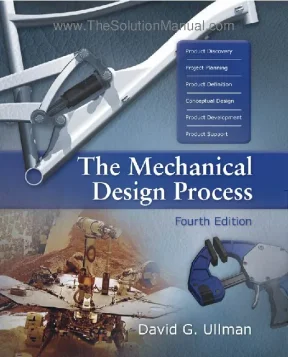
Sách giáo trình The Mechanical Design Process (Ấn bản 4) - Tác giả David G. Ullman

Trường đại học

Oregon State University

Chuyên ngành

Kỹ thuật Cơ khí

Người đăng

Ẩn danh

Thể loại

Sách giáo khoa

2010

449
0
0

Phí lưu trữ

75 Point

Tóm tắt

I. Tổng quan về quy trình thiết kế cơ khí Ullman

Quy trình thiết kế cơ khí là tập hợp các bước có hệ thống nhằm biến ý tưởng thành sản phẩm thực tế. David G. Ullman trình bày phương pháp tiếp cận toàn diện trong cuốn sách nổi tiếng. Cuốn sách bao gồm các giai đoạn từ phân tích nhu cầu đến sản xuất cuối cùng. Quá trình này đòi hỏi sự hiểu biết sâu sắc về nguyên lý kỹ thuật. Mỗi bước trong quy trình đều có vai trò quan trọng riêng. Thiết kế không chỉ là vẽ bản vẽ kỹ thuật đơn thuần. Nó bao gồm việc xác định yêu cầu, tạo khái niệm, chi tiết hóa và đánh giá. Phương pháp concurrent engineering khuyến khích sự hợp tác đa ngành. Nhóm thiết kế cần có chuyên gia từ nhiều lĩnh vực khác nhau. Điều này đảm bảo sản phẩm đáp ứng đầy đủ yêu cầu kỹ thuật. Quy trình thiết kế cũng xem xét toàn bộ vòng đời sản phẩm. Từ giai đoạn ý tưởng cho đến khi sản phẩm ngừng sử dụng.

1.1. Định nghĩa và tầm quan trọng của thiết kế cơ khí

Thiết kế cơ khí là hoạt động kỹ thuật tạo ra sản phẩm mới hoặc cải tiến sản phẩm hiện có. Quy trình này đóng vai trò trung tâm trong phát triển công nghiệp. Nó kết hợp kiến thức về vật liệu, cơ học và sản xuất. Thiết kế tốt giúp giảm chi phí sản xuất và tăng hiệu suất. Sản phẩm cơ khí có mặt trong mọi lĩnh vực đời sống. Từ máy móc công nghiệp đến thiết bị y tế đều cần thiết kế. Ullman nhấn mạnh tầm quan trọng của tư duy sáng tạo. Kỹ sư phải cân nhắc nhiều yếu tố cùng lúc. Chức năng, độ bền và khả năng sản xuất là những yếu tố chính.

1.2. Cấu trúc cuốn sách The Mechanical Design Process

Cuốn sách được tổ chức theo từng giai đoạn của quy trình thiết kế. Phần đầu giới thiệu tổng quan về thiết kế và vòng đời sản phẩm. Các chương tiếp theo đi sâu vào từng bước cụ thể. Việc xác định yêu cầu và thông số kỹ thuật được trình bày chi tiết. Thiết kế khái niệm và thiết kế cấu hình là nội dung trọng tâm. Cuốn sách cũng đề cập đến thiết kế cho sản xuất và lắp ráp. Các kỹ thuật đánh giá và thử nghiệm được giải thích rõ ràng. Tài liệu học tập bao gồm ví dụ thực tế từ dự án NASA MER. Đây là nguồn tài liệu quý giá cho sinh viên kỹ thuật.

II. Phân tích vấn đề trong quy trình thiết kế cơ khí

Quy trình thiết kế cơ khí đối mặt với nhiều thách thức phức tạp. Một vấn đề lớn là xác định đầy đủ yêu cầu từ khách hàng. Thông tin ban đầu thường không đầy đủ để đưa ra quyết định tốt. Ví dụ về ổ bi cho thấy điều này rõ ràng. Kích thước trục, lực hướng kính và tốc độ tối đa là thông tin cơ bản. Nhưng nhiêu đó chưa đủ để chọn loại ổ bi phù hợp. Thiết kế cấu hình là loại vấn đề phức tạp hơn. Tất cả các linh kiện đã được thiết kế riêng lẻ. Vấn đề là cách sắp xếp chúng thành sản phẩm hoàn chỉnh. Thiết kế MER minh họa thách thức này. Mỗi bộ phận có kích thước riêng và ràng buộc vị trí cụ thể. Thiết kế chi tiết đòi hỏi tính toán kỹ thuật chính xác. Sai sót nhỏ có thể dẫn đến hỏng hóc nghiêm trọng. Việc đánh giá và kiểm tra là bước không thể bỏ qua.

2.1. Bài toán xác định yêu cầu và thông số kỹ thuật

Xác định yêu cầu là bước đầu tiên và quan trọng nhất. Thông tin từ khách hàng thường mơ hồ và không đầy đủ. Kỹ sư phải đặt câu hỏi đúng để hiểu rõ nhu cầu thực sự. Thông số kỹ thuật cần được định lượng hóa chính xác. Ví dụ, thay vì nói 'nhanh', cần xác định tốc độ cụ thể. Bài toán lựa chọn ổ bi minh họa vấn đề này. Có năm lựa chọn tiềm năng nhưng thiếu thông tin để quyết định. Cần biết chức năng cụ thể và điều kiện làm việc. Không có đủ dữ liệu, quyết định sẽ mang tính chủ quan. Điều này có thể dẫn đến lựa chọn sai và tốn kém.

2.2. Thách thức trong thiết kế cấu hình và chi tiết

Thiết kế cấu hình tương tự việc lắp ráp đồ chơi xây dựng. Tất cả linh kiện có sẵn nhưng cần sắp xếp hợp lý. Dự án MER cho thấy thách thức thực tế. Rover Equipment Deck phải ở phía trên và Warm Electronics Box ở phía dưới. Mỗi vị trí có ràng buộc riêng về không gian và chức năng. Thiết kế chi tiết yêu cầu tính toán stress và biến dạng. Phải chọn vật liệu phù hợp cho từng bộ phận. Kích thước và dung sai phải được xác định chính xác. Lỗi thiết kế có thể gây ra hỏng hóc nghiêm trọng khi vận hành. Kiểm tra và đánh giá là bước cuối cùng trước khi sản xuất.

III. Giải pháp và phương pháp thiết kế cơ khí hiệu quả

Ullman đề xuất nhiều phương pháp để giải quyết các vấn đề thiết kế. Concurrent engineering là cách tiếp cận quan trọng nhất. Phương pháp này yêu cầu chuyên gia từ nhiều lĩnh vực làm việc cùng nhau. Chuyên gia sản xuất tham gia ngay từ giai đoạn thiết kế. Điều này đảm bảo sản phẩm có thể chế tạo được với chi phí hợp lý. Design for Manufacturing tập trung vào khả năng sản xuất. Design for Assembly giúp sản phẩm dễ lắp ráp hơn. Các kỹ thuật đánh giá được áp dụng xuyên suốt quy trình. Nguyên mẫu và mô phỏng giúp kiểm tra thiết kế trước khi sản xuất. Phân tích chi phí được thực hiện song song với thiết kế. Phương pháp lặp lại cho phép cải tiến liên tục. Mỗi lần lặp, thiết kế được đánh giá và tối ưu hóa. Tài liệu hóa đầy đủ là yêu cầu bắt buộc cho mọi dự án.

3.1. Phương pháp concurrent engineering trong thiết kế

Concurrent engineering thay thế cách tiếp cận truyền thống qua tường. Trước đây, kỹ sư thiết kế ném sản phẩm qua tường cho sản xuất. Điều này dẫn đến nhiều vấn đề không lường trước. Concurrent engineering đưa chuyên gia sản xuất vào nhóm thiết kế. Họ đóng góp kiến thức về quy trình chế tạo từ đầu. Nhóm đa ngành bao gồm thiết kế, sản xuất và kiểm tra. Họ làm việc song song thay vì tuần tự. Kết quả là sản phẩm có thể sản xuất dễ dàng hơn. Chi phí giảm đáng kể nhờ tránh sửa đổi sau này. Thời gian phát triển sản phẩm cũng rút ngắn rõ rệt.

3.2. Kỹ thuật Design for Manufacturing và Assembly

Design for Manufacturing tập trung vào khả năng chế tạo sản phẩm. Kỹ sư xem xét nguyên liệu thô và quy trình hình thành. Mục tiêu là giảm số lượng bước sản xuất. Mỗi bộ phận nên có hình dạng đơn giản nhất có thể. Design for Assembly giúp sản phẩm dễ lắp ráp. Số lượng linh kiện được giảm thiểu tối đa. Các chi tiết có thể lắp ráp theo một hướng duy nhất. Thiết kế cũng xem xét đến khía cạnh phân phối sản phẩm. Bao bì và vận chuyển an toàn là yêu cầu quan trọng. Sản phẩm phải vừa trong container tiêu chuẩn hoặc pallet. Chi phí vận chuyển được tối ưu hóa ngay từ giai đoạn thiết kế.

IV. Kết luận và ứng dụng thực tế của quy trình thiết kế

Quy trình thiết kế cơ khí là nền tảng cho mọi sản phẩm công nghiệp. Cuốn sách của Ullman cung cấp framework toàn diện cho kỹ sư. Các nguyên tắc được áp dụng trong nhiều lĩnh vực khác nhau. Dự án NASA MER là ví dụ điển hình về ứng dụng thực tế. Sản phẩm phải hoạt động trong điều kiện khắc nghiệt trên sao Hỏa. Mỗi quyết định thiết kế đều ảnh hưởng đến thành công của sứ mệnh. Quy trình thiết kế cũng áp dụng cho sản phẩm thương mại hàng ngày. Từ đồ gia dụng đến xe ô tô đều tuân theo nguyên tắc tương lai. Vòng đời sản phẩm được xem xét từ đầu đến cuối. Giai đoạn sản xuất, phân phối và cuối vòng đời đều quan trọng. Thiết kế tốt giúp sản phẩm bền và dễ bảo trì. Kiến thức từ cuốn sách là hành trang quý giá cho kỹ sư trẻ. Thực hành thường xuyên giúp nắm vững quy trình thiết kế.

4.1. Ứng dụng trong dự án không gian và công nghiệp nặng

Dự án Mars Exploration Rover minh họa ứng dụng cao cấp của quy trình. Mỗi bộ phận của xe tự hành phải được thiết kế cẩn thận. Thiết kế phải chịu được phóng và điều kiện trên sao Hỏa. Hệ thống RED, REM, IMU và WEB được tích hợp chặt chẽ. Công nghiệp nặng áp dụng nguyên tắc tương tự cho máy móc lớn. Tuabin, động cơ và máy CNC đều cần thiết kế tỉ mỉ. Phân tích mỏi và tuổi thọ là yếu tố quyết định. Nguyên mẫu được thử nghiệm trong điều kiện vận hành thực tế. Kết quả thử nghiệm giúp cải thiện thiết kế trước khi sản xuất hàng loạt.

4.2. Hướng phát triển và tầm nhìn tương lai

Thiết kế cơ khí đang phát triển mạnh với công nghệ mới. Mô phỏng máy tính giúp giảm thời gian và chi phí thử nghiệm. Thiết kế tham số hóa cho phép thay đổi nhanh các thông số. Công nghệ in 3D tạo nguyên mẫu nhanh chóng. Trí tuệ nhân tạo hỗ trợ tối ưu hóa thiết kế. Thiết kế bền vững ngày càng được chú trọng. Sản phẩm phải thân thiện với môi trường và dễ tái chế. Nguyên tắc circular economy ảnh hưởng đến quyết định thiết kế. Kỹ sư tương lai cần nắm vững cả kỹ năng kỹ thuật và sáng tạo. Quy trình thiết kế sẽ tiếp tục tiến hóa cùng công nghệ.
21/04/2026

Trích đoạn nội dung tài liệu

com ullman-38162 ull75741_fm December 18, 2008 16:19 www.com The Mechanical Design Process ullman-38162 ull75741_fm December 18, 2008 16:19 www.com McGraw-Hill Series in Mechanical Engineering Alciatore/Histand Heywood Introduction to Mechatronics and Measurement System Internal Combustion Engine Fundamentals Anderson Holman Fundamentals of Aerodynamics Experimental Methods for Engineers Anderson Holman Introduction to Flight Heat Transfer Anderson Hutton Modern Compressible Flow Fundamental of Finite Element Analysis Barber Kays/Crawford/Welgand Intermediate Mechanics of Materials Convective Heat and Mass Transfer Beer/Johnston Meirovioeh Vector Mechanics for Engineers Fundamentals of Vibrations Beer/Johnston Norton Mechanics of Materials Design of Machinery Budynas Palm Advanced Strength and Applied Stress Analysis System Dynamics Budynas/Nisbett Reddy Shigley’s Mechanical Engineering Design An Introduction to Finite Element Method Cengel Schey Heat Transfer: A Practical Approach Introduction to Manufacturing Processes Cengel Shames Introduction to Thermodynamics & Heat Transfer Mechanics of Fluids Cengel/Boles Smith/Hashemi Thermodynamics: An Engineering Approach Foundations of Materials Science & Engineering Cengel/Clmbala Turns Fluid Mechanics: Fundamentals and Applications An Introduction to Combustion: Concepts and Cengel/Turner Applications Fundamentals of Thermal-Fluid Sciences Ugural Dieter Mechanical Design: An Integrated Approach Engineering Design: A Materials & Processing Approach Ullman Doebelin The Mechanical Design Process Measurement Systems: Application & Design White Dorl/Byers Fluid Mechanics Technology Ventures: From Idea to Enterprise White Dunn Viscous Fluid Flow Measurement & Data Analysis for Engineering and Science Zeid Fianemore/Franzial CAD/CAM Theory and Practice Fluid Mechanics with Engineering Applications Zeid Hamrock/Schmid/Jacobson Mastering CAD/CAM Fundamentals of Machine Elements ullman-38162 ull75741_fm December 18, 2008 16:19 www.com The Mechanical Design Process Fourth Edition David G. Ullman Professor Emeritus, Oregon State University ullman-38162 ull75741_FM December 30, 2008 9:25 www.com THE MECHANICAL DESIGN PROCESS, FOURTH EDITION Published by McGraw-Hill, a business unit of The McGraw-Hill Companies, Inc., 1221 Avenue of the Americas, New York, NY 10020. Copyright © 2010 by The McGraw-Hill Companies, Inc. All rights reserved. Previous editions © 2003, 1997, and 1992. No part of this publication may be reproduced or distributed in any form or by any means, or stored in a database or retrieval system, without the prior written consent of The McGraw-Hill Companies, Inc., including, but not limited to, in any network or other electronic storage or transmission, or broadcast for distance learning. Some ancillaries, including electronic and print components, may not be available to customers outside the United States. This book is printed on acid-free paper. 1 2 3 4 5 6 7 8 9 0 DOC/DOC 0 9 ISBN 978–0–07–297574–1 MHID 0–07–297574–1 Global Publisher: Raghothaman Srinivasan Senior Sponsoring Editor: Bill Stenquist Director of Development: Kristine Tibbetts Senior Marketing Manager: Curt Reynolds Senior Project Manager: Kay J. Brimeyer Senior Production Supervisor: Sherry L. Kane Lead Media Project Manager: Stacy A. Patch Associate Design Coordinator: Brenda A. Rolwes Cover Designer: Studio Montage, St. Louis, Missouri Cover Image: Irwin clamp: © Irwin Industrial Tools; Marin bike: © Marin Bicycles; MER: © NASA/JPL. Senior Photo Research Coordinator: John C. Leland Compositor: S4Carlisle Publishing Services Typeface: 10.5/12 Times Roman Printer: R. Donnelley Crawfordsville, IN Library of Congress Cataloging-in-Publication Data Ullman, David G., 1944- The mechanical design process / David G. ISBN 978–0–07–297574–1—ISBN 0–07–297574–1 (alk.com ullman-38162 ull75741_fm December 18, 2008 16:19 www.com ABOUT THE AUTHOR David G. Ullman is an active product designer who has taught, researched, and written about design for over thirty years. He is president of Robust Decisions, Inc., a supplier of software products and training for product development and decision support. He is Emeritus Professor of Mechanical Design at Oregon State University. He has professionally designed fluid/thermal, control, and transporta- tion systems. He has published over twenty papers focused on understanding the mechanical product design process and the development of tools to support it. He is founder of the American Society Mechanical Engineers (ASME)—Design Theory and Methodology Committee and is a Fellow in the ASME. He holds a Ph. in Mechanical Engineering from the Ohio State University. ullman-38162 ull75741_fm December 18, 2008 16:19 www.com ullman-38162 ull75741_fm December 18, 2008 16:19 www.com CONTENTS Preface xi 2.10 On the Web 45 Why Study the Design Process? 1 1.2 Measuring the Design Process with Product Designers and Design Teams 47 Cost, Quality, and Time to Market 3 3.3 The History of the Design Process 8 3.2 The Individual Designer: A Model of Human 1.4 The Life of a Product 10 Information Processing 48 1.5 The Many Solutions for Design 3.3 Mental Processes That Occur Problems 15 During Design 56 1.6 The Basic Actions of Problem Solving 17 3.4 Characteristics of Creators 64 1.7 Knowledge and Learning During Design 19 3.5 The Structure of Design Teams 66 1.8 Design for Sustainability 20 3.6 Building Design Team Performance 72 1.10 On the Web 80 CHAPTER 2 Understanding Mechanical CHAPTER 4 Design 25 The Design Process and Product 2.2 Importance of Product Function, Behavior, 4.1 Introduction 81 and Performance 28 4.2 Overview of the Design Process 81 2.3 Mechanical Design Languages and Abstraction 30 4.3 Designing Quality into Products 92 2.4 Different Types of Mechanical 4.4 Product Discovery 95 Design Problems 33 4.5 Constraints, Goals, and 4.6 Summary 109 Design Decisions 40 4.9 On the Web 110 vii ullman-38162 ull75741_fm December 18, 2008 16:19 www.com viii Contents CHAPTER 5 6.9 Step 8: Identify Relationships Between Planning for Design 111 Engineering Specifications: How Are the Hows Dependent on Each Other? 166 5.10 Further Comments on QFD 168 5.2 Types of Project Plans 113 6.3 Planning for Deliverables— 6.12 Sources 169 The Development of Information 117 6.14 On the Web 170 5.5 Design Plan Examples 134 5.6 Communication During the Design Process 137 CHAPTER 7 5.7 Summary 141 Concept Generation 171 5.2 Understanding the Function of Existing 5.10 On the Web 142 Devices 176 7.3 A Technique for Designing with Function 181 CHAPTER 6 7.4 Basic Methods of Generating Concepts 189 Understanding the Problem and 7.5 Patents as a Source of Ideas 194 the Development of Engineering 7.6 Using Contradictions to Generate Ideas 197 Specifications 143 7.7 The Theory of Inventive Machines, TRIZ 201 6.2 Step 1: Identify the Customers: 7.9 Other Important Concerns During Concept Who Are They? 151 Generation 208 6.3 Step 2: Determine the Customers’ 7.10 Summary 209 Requirements: What Do the Customers 7.4 Step 3: Determine Relative Importance of the 7.13 On the Web 211 Requirements: Who Versus What 155 6.5 Step 4: Identify and Evaluate the Competition: How Satisfied Are the Customers Now ? 157 CHAPTER 8 6.6 Step 5: Generate Engineering Concept Evaluation and Specifications: How Will the Customers’ Selection 213 Requirement Be Met? 158 8.7 Step 6: Relate Customers’ Requirements to 8.2 Concept Evaluation Information 215 Engineering Specifications: How to Measure 8.3 Feasibility Evaluations 218 What? 163 8.8 Step 7: Set Engineering Specification Targets and Importance: How Much Is Good 8.5 The Decision Matrix—Pugh’s Method 221 Enough? 164 8.6 Product, Project, and Decision Risk 226 ullman-38162 ull75741_fm December 18, 2008 16:19 www.com Contents ix 8.7 Robust Decision Making 233 10.11 On the Web 240 CHAPTER 11 Product Evaluation: Design For Cost, Manufacture, Assembly, CHAPTER 9 and Other Measures 315 Product Generation 241 11.2 DFC—Design For Cost 315 9.3 DFV—Design For Value 325 9.4 DFM—Design For Manufacture 328 9.4 Materials and Process Selection 264 11.5 DFA—Design-For-Assembly 9.5 Vendor Development 266 Evaluation 329 9.6 Generating a Suspension Design for the 11.6 DFR—Design For Reliability 350 Marin 2008 Mount Vision Pro Bicycle 269 11.7 DFT and DFM—Design For Test and 9.8 DFE—Design For the Environment 358 9.10 On the Web 278 11.12 On the Web 362 Product Evaluation for Performance and the Effects of Variation 279 CHAPTER 12 10.1 Introduction 279 Wrapping Up the Design Process 10.2 Monitoring Functional Change 280 and Supporting the Product 363 10.3 The Goals of Performance Evaluation 281 12.4 Trade-Off Management 284 12.2 Design Documentation and 10.5 Accuracy, Variation, and Noise 286 Communication 366 10.6 Modeling for Performance Evaluation 292 12.9 Robust Design by Analysis 305 12.6 Design for End of Life 375 10.10 Robust Design Through Testing 308 12.8 On the Web 378 ullman-38162 ull75741_fm December 18, 2008 16:19 www.com x Contents APPENDIX A C.2 The Classical Rule-of-Thumb Factor Properties of 25 Materials Most of Safety 405 Commonly Used in Mechanical C.3 The Statistical, Reliability-Based, Design 379 Factor of Safety 406 C.2 Properties of the Most Commonly Used APPENDIX D Materials 380 Human Factors in Design 415 A.3 Materials Used in Common Items 393 A.2 The Human in the Workspace 416 APPENDIX B D.3 The Human as Source of Power 419 Normal Probability 397 D.4 The Human as Sensor and Controller 419 B.2 Other Measures 401 APPENDIX C Index 427 The Factor of Safety as a Design Variable 403 C.1 Introduction 403 ullman-38162 ull75741_fm December 18, 2008 16:19 www.com PREFACE have been a designer all my life. I have designed bicycles, medical equipment, I furniture, and sculpture, both static and dynamic. Designing objects has come easy for me. I have been fortunate in having whatever talents are necessary to be a successful designer. However, after a number of years of teaching mechanical design courses, I came to the realization that I didn’t know how to teach what I knew so well. I could show students examples of good-quality design and poor- quality design. I could give them case histories of designers in action. I could suggest design ideas. But I could not tell them what to do to solve a design problem. Additionally, I realized from talking with other mechanical design teachers that I was not alone. This situation reminded me of an experience I had once had on ice skates. As a novice skater I could stand up and go forward, lamely. A friend (a teacher by trade) could easily skate forward and backward as well. He had been skating since he was a young boy, and it was second nature to him. One day while we were skating together, I asked him to teach me how to skate backward. He said it was easy, told me to watch, and skated off backward. But when I tried to do what he did, I immediately fell down. As he helped me up, I asked him to tell me exactly what to do, not just show me. After a moment’s thought, he concluded that he couldn’t actually describe the feat to me. I still can’t skate backward, and I suppose he still can’t explain the skills involved in skating backward. The frustration that I felt falling down as my friend skated with ease must have been the same emotion felt by my design students when I failed to tell them exactly what to do to solve a design problem. This realization led me to study the process of mechanical design, and it eventually led to this book. Part has been original research, part studying U. in- dustry, part studying foreign design techniques, and part trying different teaching approaches on design classes. I came to four basic conclusions about mechanical design as a result of these studies: 1. The only way to learn about design is to do design. In engineering design, the designer uses three types of knowledge: knowl- edge to generate ideas, knowledge to evaluate ideas and make decisions, and knowledge to structure the design process. Idea generation comes from ex- perience and natural ability. Idea evaluation comes partially from experience and partially from formal training, and is the focus of most engineering ed- ucation. Generative and evaluative knowledge are forms of domain-specific knowledge. Knowledge about the design process and decision making is largely independent of domain-specific knowledge. A design process that results in a quality product can be learned, provided there is enough ability and experience to generate ideas and enough experi- ence and training to evaluate them. xi ullman-38162 ull75741_fm December 18, 2008 16:19 www.com xii Preface 4. A design process should be learned in a dual setting: in an academic envi- ronment and, at the same time, in an environment that simulates industrial realities. I have incorporated these concepts into this book, which is organized so that readers can learn about the design process at the same time they are developing a product.

Nội dung được bảo vệ bản quyền — Tải xuống đầy đủ