Tổng quan nghiên cứu
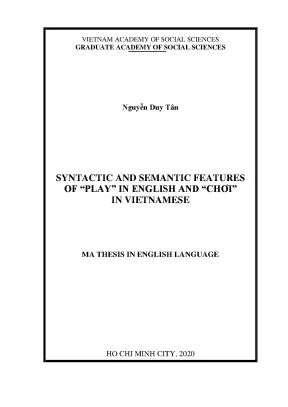
Ngôn ngữ là công cụ thiết yếu trong giao tiếp, giúp con người truyền đạt và diễn đạt quan điểm. Trong đó, từ vựng đóng vai trò quyết định, liên kết các kỹ năng nghe, nói, đọc, viết. Tuy nhiên, từ vựng tiếng Anh và tiếng Việt có những đặc điểm riêng biệt, gây khó khăn cho người học và giảng dạy. Từ "play" trong tiếng Anh và từ "chơi" trong tiếng Việt là những từ phổ biến nhưng có tính đa nghĩa và đa dạng về mặt cú pháp, ngữ nghĩa, khiến người học dễ nhầm lẫn. Nghiên cứu này tập trung phân tích các đặc điểm cú pháp và ngữ nghĩa của "play" và "chơi" nhằm làm rõ sự tương đồng và khác biệt giữa hai từ, từ đó hỗ trợ việc học, dạy tiếng Anh và dịch thuật hiệu quả hơn.
Mục tiêu chính của nghiên cứu là: (1) điều tra đặc điểm cú pháp của "play" và "chơi"; (2) phân tích đặc điểm ngữ nghĩa của hai từ; (3) làm rõ điểm giống và khác nhau về cú pháp và ngữ nghĩa giữa "play" và "chơi". Phạm vi nghiên cứu dựa trên dữ liệu từ các từ điển hiện hành, phản ánh cách sử dụng phổ biến của người bản ngữ. Nghiên cứu có ý nghĩa thực tiễn trong việc nâng cao hiệu quả giảng dạy tiếng Anh, hỗ trợ người học phân biệt và sử dụng đúng từ, đồng thời cung cấp cơ sở khoa học cho công tác dịch thuật.
Cơ sở lý thuyết và phương pháp nghiên cứu
Khung lý thuyết áp dụng
Nghiên cứu dựa trên hai lý thuyết chính: lý thuyết phân tích tương phản và lý thuyết cú pháp - ngữ nghĩa.
-
Lý thuyết phân tích tương phản: Theo König và Gast (2008), phân tích tương phản so sánh các đặc điểm ngôn ngữ giữa hai ngôn ngữ có liên kết xã hội - văn hóa, nhằm phát hiện điểm giống và khác để ứng dụng trong giảng dạy và dịch thuật. Chaturvedi (1973) đề xuất nguyên tắc phân tích độc lập từng ngôn ngữ, so sánh từng mục, phân loại đặc điểm thành giống, tương đồng một phần và khác biệt.
-
Lý thuyết cú pháp: Cú pháp nghiên cứu cách kết hợp từ thành cụm từ, câu, quy tắc sắp xếp từ trong câu. Theo Dixon (1991), cú pháp là lý thuyết về cấu trúc câu, trung gian giữa hình thức câu và ý nghĩa. Cú pháp tập trung vào thứ tự từ và quan hệ giữa các thành phần trong câu.
-
Lý thuyết ngữ nghĩa: Ngữ nghĩa nghiên cứu ý nghĩa của từ, cụm từ, câu trong ngôn ngữ. Theo Katz (1972), ngữ nghĩa tập trung vào ý nghĩa biểu đạt, không quan tâm đến cấu trúc cú pháp hay phát âm. Ngữ nghĩa liên quan mật thiết đến giao tiếp, nhận thức và văn hóa.
Ngoài ra, nghiên cứu còn tham khảo các khái niệm về đa nghĩa (polysemy), phân loại từ loại, và các công trình nghiên cứu trước về cú pháp và ngữ nghĩa từ vựng tiếng Anh và tiếng Việt.
Phương pháp nghiên cứu
-
Nguồn dữ liệu: Dữ liệu được thu thập từ các từ điển chuẩn hiện hành của tiếng Anh và tiếng Việt, đảm bảo tính khách quan và đại diện cho cách sử dụng phổ biến.
-
Phương pháp phân tích: Sử dụng phương pháp mô tả chi tiết (descriptive method) để phân tích đặc điểm cú pháp và ngữ nghĩa của "play" và "chơi". Phương pháp phân tích tương phản (contrastive analysis) được áp dụng để so sánh, làm rõ điểm giống và khác biệt giữa hai từ.
-
Cỡ mẫu và timeline: Nghiên cứu tập trung vào hai từ đơn lẻ "play" và "chơi" với toàn bộ các dạng và nghĩa được ghi nhận trong từ điển. Quá trình nghiên cứu diễn ra trong năm 2020 tại Thành phố Hồ Chí Minh.
-
Lý do lựa chọn phương pháp: Phương pháp mô tả và phân tích tương phản phù hợp với mục tiêu làm rõ đặc điểm ngôn ngữ và hỗ trợ ứng dụng trong giảng dạy, học tập và dịch thuật.
Kết quả nghiên cứu và thảo luận
Những phát hiện chính
-
Đặc điểm cú pháp của "play" và "chơi"
- "Play" trong tiếng Anh có năm dạng động từ: base, s-form, past, -ing participle, -ed participle. Trong khi đó, "chơi" trong tiếng Việt giữ nguyên dạng động từ không biến đổi theo thì, thời gian được biểu thị bằng trạng từ hoặc từ chỉ thời gian (ví dụ: đã, đang, sẽ).
- Cả hai từ đều có thể làm vị ngữ, chủ ngữ, tân ngữ, trạng ngữ hoặc bổ ngữ trong câu.
- "Play" có thể đóng vai trò danh từ với các chức năng chủ ngữ, tân ngữ, bổ ngữ, trong khi "chơi" không có chức năng danh từ mà còn có thể là trạng từ bổ nghĩa cho động từ khác.
- "Play" có thể kết hợp với các dạng câu danh ngữ (that-clause, wh-clause, to-infinitive clause, -ing clause), các mệnh đề trạng ngữ (thời gian, điều kiện, nguyên nhân, mục đích...), trong khi "chơi" không có các dạng này.
-
Đặc điểm ngữ nghĩa của "play" và "chơi"
- "Play" có nhiều nghĩa đa dạng, bao gồm: tham gia hoạt động giải trí, chơi thể thao, biểu diễn nghệ thuật, chơi nhạc cụ, hành động giả vờ, thao túng cảm xúc, di chuyển nhẹ nhàng...
- "Chơi" chủ yếu mang nghĩa tham gia hoạt động giải trí, chơi thể thao, hoặc dùng trong các cụm động từ mang nghĩa bóng (ví dụ: chơi chữ, chơi hụi).
- Có 11 nghĩa chung được chia sẻ giữa "play" và "chơi" khi làm động từ. Tuy nhiên, "play" có khoảng 21 nghĩa riêng biệt không có trong "chơi", còn "chơi" có khoảng 7 nghĩa riêng biệt không có trong "play".
-
So sánh về tính đa nghĩa và chức năng từ loại
- "Play" là từ đa nghĩa phong phú, có thể là động từ hoặc danh từ, có nhiều dạng biến đổi và kết hợp phức tạp.
- "Chơi" là động từ không biến đổi, có thể làm trạng từ, ít đa dạng về chức năng từ loại hơn.
- Sự khác biệt này phản ánh đặc điểm ngôn ngữ và văn hóa riêng của tiếng Anh và tiếng Việt.
Thảo luận kết quả
Sự đa dạng về dạng thức và chức năng của "play" trong tiếng Anh phản ánh tính phức tạp của hệ thống ngữ pháp tiếng Anh, trong đó động từ biến đổi theo thì và có thể chuyển đổi thành danh từ. Ngược lại, tiếng Việt là ngôn ngữ không biến đổi hình thái động từ, thời gian và khía cạnh được biểu thị bằng từ phụ trợ hoặc trạng từ, làm cho "chơi" giữ nguyên dạng trong mọi ngữ cảnh.
Về ngữ nghĩa, sự đa nghĩa của "play" vượt trội hơn "chơi" do tiếng Anh có nhiều cách biểu đạt sắc thái nghĩa khác nhau, bao gồm cả nghĩa bóng và nghĩa chuyên ngành (ví dụ: chơi vai, chơi nhạc cụ, chơi bài). "Chơi" trong tiếng Việt cũng có nghĩa bóng nhưng phạm vi hẹp hơn, chủ yếu liên quan đến hoạt động giải trí và các cụm từ cố định.
Kết quả này phù hợp với các nghiên cứu trước về đa nghĩa và phân loại từ loại trong tiếng Anh và tiếng Việt, đồng thời nhấn mạnh tầm quan trọng của việc hiểu rõ đặc điểm ngôn ngữ để hỗ trợ người học và dịch thuật. Dữ liệu có thể được trình bày qua bảng so sánh dạng thức và chức năng của "play" và "chơi", biểu đồ thể hiện số lượng nghĩa chung và riêng biệt của hai từ.
Đề xuất và khuyến nghị
-
Tăng cường giảng dạy đặc điểm đa nghĩa và cú pháp của từ "play" và "chơi"
- Động từ: Tập trung vào việc giải thích các dạng biến đổi của "play" và cách sử dụng "chơi" trong các ngữ cảnh khác nhau.
- Mục tiêu: Nâng cao khả năng sử dụng từ chính xác trong giao tiếp và viết.
- Thời gian: Triển khai trong các khóa học tiếng Anh trung cấp và nâng cao.
- Chủ thể: Giáo viên tiếng Anh và tiếng Việt.
-
Phát triển tài liệu học tập so sánh tương phản
- Soạn thảo tài liệu minh họa các điểm giống và khác biệt giữa "play" và "chơi" qua ví dụ thực tế.
- Mục tiêu: Giúp người học nhận diện và tránh nhầm lẫn khi dịch và sử dụng từ.
- Thời gian: Trong vòng 6 tháng.
- Chủ thể: Nhà xuất bản giáo dục, trung tâm ngoại ngữ.
-
Tổ chức các buổi hội thảo, tập huấn cho giáo viên và dịch giả
- Nội dung: Phân tích sâu về cú pháp và ngữ nghĩa của từ đa nghĩa, ứng dụng trong giảng dạy và dịch thuật.
- Mục tiêu: Nâng cao năng lực chuyên môn, cập nhật kiến thức mới.
- Thời gian: Hàng năm.
- Chủ thể: Các trường đại học, viện nghiên cứu ngôn ngữ.
-
Xây dựng công cụ hỗ trợ dịch thuật và học tập dựa trên dữ liệu từ điển chuẩn
- Phát triển phần mềm hoặc ứng dụng tra cứu, so sánh nghĩa và cách dùng của từ "play" và "chơi".
- Mục tiêu: Hỗ trợ người học và dịch giả tra cứu nhanh, chính xác.
- Thời gian: 1 năm.
- Chủ thể: Các tổ chức công nghệ giáo dục, nhóm nghiên cứu ngôn ngữ.
Đối tượng nên tham khảo luận văn
-
Giáo viên tiếng Anh và tiếng Việt
- Lợi ích: Hiểu rõ đặc điểm cú pháp và ngữ nghĩa của từ để thiết kế bài giảng phù hợp, giúp học sinh sử dụng từ chính xác.
- Use case: Soạn giáo án, giải thích từ vựng đa nghĩa.
-
Người học tiếng Anh và tiếng Việt
- Lợi ích: Nắm bắt được sự khác biệt và tương đồng giữa "play" và "chơi", nâng cao kỹ năng giao tiếp và viết.
- Use case: Học từ vựng, luyện tập dịch thuật.
-
Dịch giả và biên tập viên
- Lợi ích: Có cơ sở khoa học để lựa chọn từ tương đương chính xác trong dịch thuật, tránh sai sót do đa nghĩa.
- Use case: Dịch tài liệu, biên tập văn bản song ngữ.
-
Nhà nghiên cứu ngôn ngữ học và giảng viên đại học
- Lợi ích: Tham khảo phương pháp nghiên cứu, dữ liệu phân tích về từ vựng đa nghĩa, cú pháp và ngữ nghĩa trong tiếng Anh và tiếng Việt.
- Use case: Phát triển đề tài nghiên cứu, giảng dạy chuyên ngành.
Câu hỏi thường gặp
-
Tại sao từ "play" trong tiếng Anh có nhiều dạng biến đổi còn "chơi" trong tiếng Việt thì không?
Tiếng Anh là ngôn ngữ biến hình, động từ thay đổi theo thì, ngôi và thể, trong khi tiếng Việt là ngôn ngữ không biến hình, thời gian được biểu thị bằng trạng từ hoặc từ phụ trợ. Ví dụ: "He plays" (Anh ấy chơi), "Tôi chơi" (không thay đổi).
-
"Play" và "chơi" có bao nhiêu nghĩa chung?
Hai từ có khoảng 11 nghĩa chung khi làm động từ, chủ yếu liên quan đến hoạt động giải trí, chơi thể thao, biểu diễn. Tuy nhiên, "play" có nhiều nghĩa riêng hơn do tính đa dạng của tiếng Anh.
-
"Chơi" trong tiếng Việt có thể là từ loại nào ngoài động từ?
Ngoài động từ, "chơi" còn có thể là trạng từ bổ nghĩa cho động từ khác, ví dụ: "Tôi nói chơi một câu" (tôi chỉ nói đùa).
-
Làm thế nào để học viên phân biệt và sử dụng đúng "play" và "chơi"?
Học viên cần hiểu đặc điểm cú pháp và ngữ nghĩa của từng từ, luyện tập qua ví dụ thực tế, và chú ý đến ngữ cảnh sử dụng. Tài liệu so sánh tương phản sẽ hỗ trợ hiệu quả.
-
Nghiên cứu này có ứng dụng gì trong dịch thuật?
Nghiên cứu giúp dịch giả nhận biết các nghĩa tương đương và khác biệt giữa "play" và "chơi", từ đó chọn lựa từ phù hợp, tránh dịch sai hoặc mất nghĩa trong quá trình chuyển ngữ.
Kết luận
- Luận văn làm rõ đặc điểm cú pháp và ngữ nghĩa của từ "play" trong tiếng Anh và "chơi" trong tiếng Việt, góp phần nâng cao hiểu biết về từ vựng đa nghĩa.
- Phát hiện chính là sự khác biệt về dạng thức động từ và phạm vi nghĩa giữa hai từ, phản ánh đặc trưng ngôn ngữ và văn hóa riêng biệt.
- Nghiên cứu có ý nghĩa thực tiễn trong giảng dạy tiếng Anh, học tập, và dịch thuật, giúp người học và dịch giả sử dụng từ chính xác hơn.
- Đề xuất các giải pháp cụ thể nhằm cải thiện hiệu quả giảng dạy và hỗ trợ dịch thuật dựa trên kết quả nghiên cứu.
- Các bước tiếp theo bao gồm phát triển tài liệu học tập, tổ chức tập huấn, và xây dựng công cụ hỗ trợ tra cứu từ vựng đa nghĩa.
Mời quý độc giả và các nhà nghiên cứu tiếp tục khai thác và ứng dụng kết quả nghiên cứu để nâng cao chất lượng giảng dạy, học tập và dịch thuật tiếng Anh - tiếng Việt.